Top Grain Leather Sofas: A Friendly Buying Guide


A family can stand in a showroom on a Saturday, sit on a beautiful sofa, and still not know what top grain leather really means. The tag sounds premium, the color looks right, and the price can feel like a big decision, so it's easy to ask the wrong question first. The better question is simpler, and a lot more useful for Milwaukee homes, what part of the hide is on the sofa, how is it built, and will it fit the way the room gets used?
That's the kind of conversation we've been having at BILTRITE since 1928. We're a fourth-generation, family-owned showroom in Greenfield, and we like helping people sort through leather grades without the jargon or pressure. If a shopper walks in curious about top grain leather sofas, we'd rather break it down in plain language than let the label do all the talking, and our leather furniture buying guide is a good place to start.
Walking Into the Showroom Knowing What Top Grain Really Means
A lot of shoppers hear “top grain” and assume it means the whole sofa is wrapped in the same leather from top to bottom. That's not always the case, and it's exactly why the label deserves a closer look. Wirecutter notes that some manufacturers use top-grain leather only on the visible surfaces and substitute lower-quality materials elsewhere, so the smarter question is where the leather lives on the piece, not just what the hang tag says. That distinction matters because it changes both durability and value.
What a good shopping conversation sounds like
A family from Wauwatosa might sit down and ask whether the sofa is leather on the arms, back, sides, and around the frame, or just on the parts everyone sees first. That's a practical question, not a picky one. It helps separate a surface upgrade from a sofa that's built to age well in a busy house.
Practical rule: If the salesperson can only talk about color and finish, the construction conversation still isn't finished.
At BILTRITE, that's the part we like to slow down and explain. We've spent decades helping Metro Milwaukee families compare pieces that look similar on the floor but behave very differently at home. A top-grain sofa can be a strong long-term choice, especially in a living room that sees homework, movie night, guests, and the occasional snack spill, but only when the shopper knows what to inspect beyond the headline label.
The rest of the guide keeps that same mindset. It's less about memorizing a leather quiz and more about learning how to ask the questions that reveal real quality.
What Top Grain Leather Actually Is and How It Gets Made
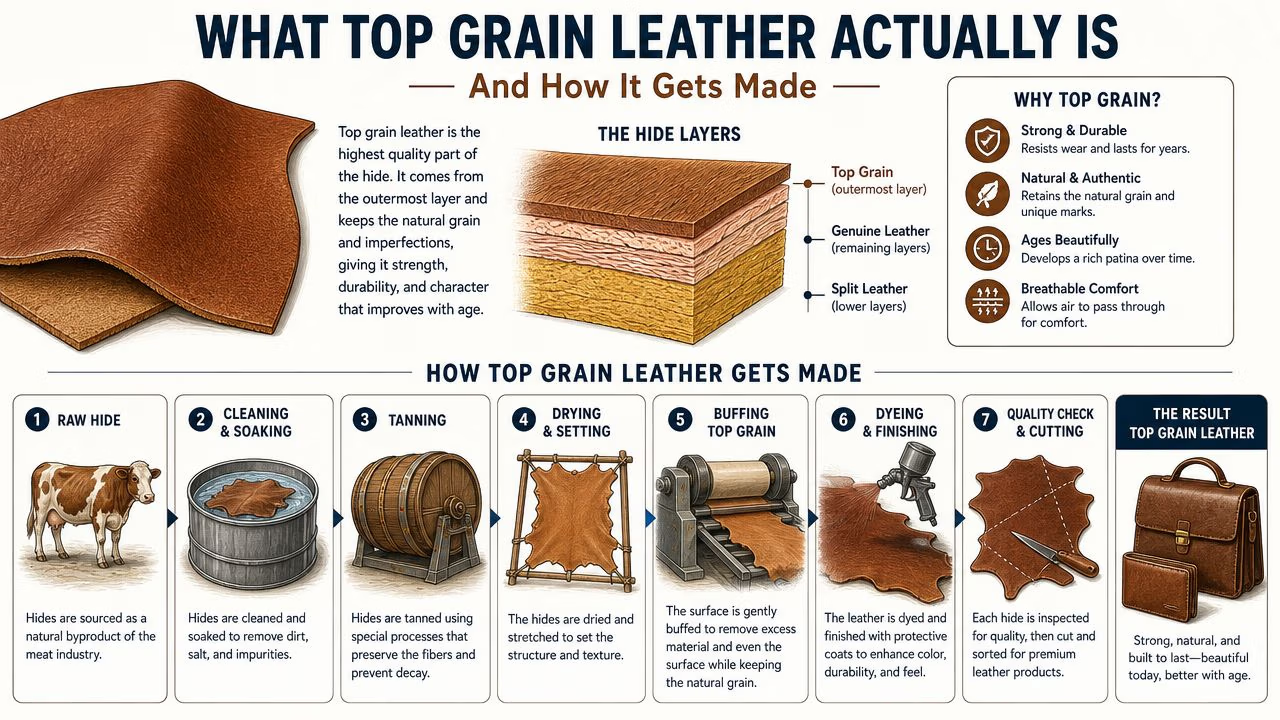
Top-grain leather comes from the outermost layer of the hide, which means it's real leather, not a synthetic or lower-grade composite. Leather Express explains that the hide is split and the upper surface layer is used for top grain, preserving the natural grain while allowing light correction or finishing for a smoother sofa surface. That upper-layer detail is what makes the grade so specific.
Think of it like finishing a tabletop
A wooden tabletop can be left rough, or it can be sanded and finished until the surface feels more even and looks cleaner. Top-grain leather works in a similar way. The hide is lightly sanded or buffed to remove deeper imperfections, then finished to create a more uniform surface that's easier to live with in everyday rooms.
That finishing step is why top grain is usually described as the second-highest grade of leather after full-grain leather. Atunus Home describes it that way and also notes that the upper layer is sanded and finished to create a more uniform look and feel than full-grain leather. The grading difference matters because it helps shoppers understand why two sofas can both be “real leather” and still feel very different.
| Leather Grade | Source Layer | Typical Look | Best For |
|---|---|---|---|
| Top Grain | Outermost layer of the hide | Smooth, more uniform, lightly corrected | Daily-use sofas and families who want real leather with easier upkeep |
| Full Grain | Outermost layer with more natural surface left intact | More natural texture and visible character | Buyers who want the least-corrected leather look |
| Genuine Leather | Real leather, broader and less specific grading | Variable, depending on construction | Shoppers who need more detail before deciding |
| Bonded Leather | Lower-cost composite construction | Often more uniform, less natural | Budget-focused purchases |
| Faux Leather | Synthetic material | Can mimic leather visually | Buyers who want a non-leather option |
A useful takeaway sits right there in the structure. Top grain is still real leather, but it's been refined enough to feel smoother and look more consistent, which is why so many living rooms gravitate toward it.
Comparing Top Grain to Full Grain, Corrected, Bonded, and Faux
Shoppers often compare leather types as if they were all just different shades of the same thing. They're not. Each one brings a different mix of feel, durability, appearance, and upkeep, and the right choice depends on how a family uses the room.
The simple way to sort the field
Full-grain leather keeps more of the hide's natural surface intact, so it usually shows more character and visible marks. Top-grain leather sits just below that and gets a corrected finish, which makes it smoother and more even. Corrected-grain leathers are more heavily finished, bonded leather is a lower-cost composite, and faux leather is synthetic.
That's also where price expectations come in. A major 2026 guide places well-cared-for top-grain leather sofas at 15-30 years of potential life, while lower-grade genuine leather is listed at 5-7 years. The same guide puts typical top-grain sofa pricing around $1,200-$3,000, versus $500-$1,200 for bonded leather and $2,000+ for full-grain leather. Those ranges reflect the labor and finishing involved in making the leather more uniform and stain-resistant.
| Option | Feel | Maintenance Style | Good Fit For |
|---|---|---|---|
| Top Grain | Smooth, real leather, refined | Easier daily upkeep than more natural hides | Families wanting a long-term everyday sofa |
| Full Grain | More natural, more character | Wants a bit more care and acceptance of visible marks | Buyers drawn to natural patina and texture |
| Corrected Grain | Heavily finished surface | Practical, but details vary widely by maker | Shoppers who want a more processed leather look |
| Bonded | Less durable feel, lower-cost composite | Basic care, shorter expectations | Tight budgets and lighter use |
| Faux | Synthetic, leather-like appearance | Often simple wipe-down care | Homes that want a non-leather alternative |
Wirecutter's caution still matters here. A sofa can be marketed as top grain and still have lower-quality material in less visible areas, so shoppers should ask about the sides, backs, and frame-adjacent zones. That's the question that separates a nice-looking floor model from a smarter long-term purchase.
The Real Pros and Cons of Top Grain Sofas in Busy Homes
Top grain has a strong reputation for a reason. The sanded, finished surface tends to be easier to live with than more natural leathers, which is helpful when the sofa sits in a family room, a den, or a smaller apartment where the same seat handles snacks, pets, laptop time, and guests. That practical surface also makes it a common choice for households that want real leather without committing to a highly textured, more visibly marked hide.
What families usually like about it
The big win is balance. Top grain gives a room the feel of leather, but with a more even look that blends into everyday decorating more easily. It also tends to hold up well when a family is willing to clean it properly and keep up with basic maintenance.
Clean leather regularly, keep it out of strong sun, and don't treat it like a no-care material. That's where the finish stays pleasant longer.
The trade-off is just as real. Leather lovers who want the most natural grain, scars, and patina may prefer a less corrected surface. And in lower-priced sofas, the label can hide weaker construction or partial leather use, so the grade alone shouldn't carry the whole decision. For homes with dogs, that distinction becomes even more important, which is why BILTRITE keeps a separate leather furniture and dogs guide for shoppers weighing scratches, shedding, and daily wear.
Who tends to like top grain most
- Busy families: The smoother surface is easier to wipe after ordinary messes.
- Apartment dwellers: A refined look can make a smaller room feel more finished.
- Seniors and caregivers: Simpler upkeep and consistent seating comfort often matter more than rustic texture.
- Pet households: Real leather can be easier to clean than many fabrics, as long as expectations stay realistic.
The honest bottom line is simple. Top grain is a strong middle ground, not a magic shield. It works best when the household wants a real leather sofa that feels polished, fits the room, and can handle real life with a reasonable care routine.
How to Judge Construction, Comfort, and Fit Before You Buy
Leather grade only tells part of the story. A top-grain cover can still sit on a frame that flexes, squeaks, or loses support too soon, and that is a letdown no matter how nice the surface looks. Start by checking the sofa's bones, then test how it feels under real body weight.
Start with the bones of the sofa
Ask what the frame is made from, how the joints are put together, and whether the sofa stays steady when weight shifts from one side to the other. A well-built frame should feel solid, not hollow or wobbly, because the structure underneath is what keeps the leather looking and feeling right over time. Then pay attention to the seat. High-resilience foam wrapped in Dacron gives a firmer, more supportive sit, while a down-and-feather blend feels softer and more relaxed.
Spring systems matter too. Eight-way hand-tied springs and sinuous wire do not feel the same, and the difference shows up after years of daily use. A shopper does not need to memorize every technical term, but it helps to ask how the suspension supports the seat and what kind of wear it was built for. If you want a simple checklist for that kind of showroom inspection, our guide on what to look for in a new sofa or chair is a useful place to start.
Fit the sofa to the way the room really works
Sit the way you live, then check seat depth and measure the path the sofa has to travel before it reaches the room. If a sofa has to pass through a narrow hall, turn a stair landing, or fit around existing furniture, those measurements decide whether the purchase is practical. A sofa that looks perfect on the showroom floor can still feel wrong at home if it overwhelms the room or leaves too little space to move.
A few questions help fast:
- Seat depth: Does the sofa support upright sitting, lounging, or both?
- Entry path: Will the piece clear the doorway and stair turns?
- Room scale: Does the sofa match the size of the wall and floor plan?
- Use case: Is this a formal seat, a family movie sofa, or a daily hangout spot?
Practical rule: A sofa can look right and still sit wrong if the seat is too deep, too shallow, or too large for the room.
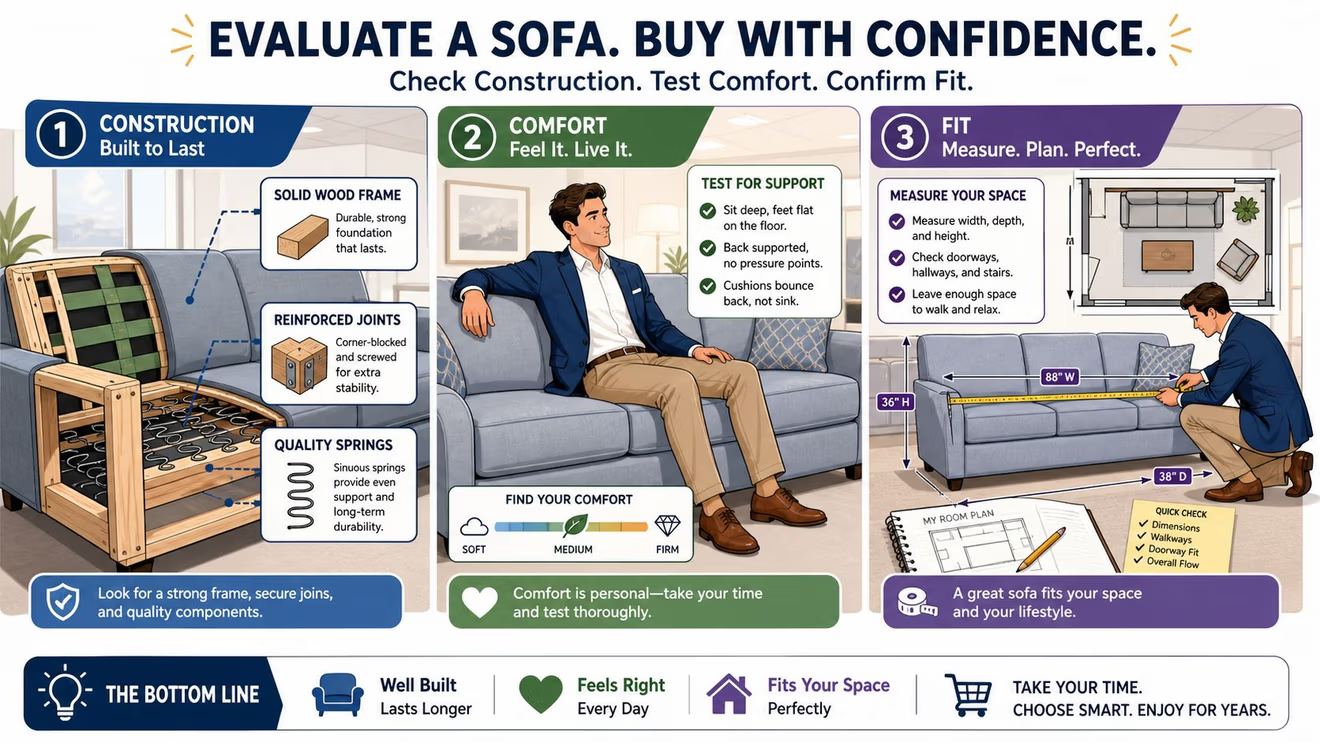
Local shoppers often learn the most by testing pieces in person, especially when a showroom offers come-apart delivery details, room-fit guidance, and a chance to compare styles side by side. That kind of visit helps families see how much of the leather covers the visible and touch points of the sofa, how the seat depth feels after a few minutes, and whether the piece fits the way the household uses the room. BILTRITE Furniture-Leather-Mattresses is one Milwaukee-area showroom where those questions can be checked before anyone makes a final decision.
Caring for Your Top Grain Sofa So It Lasts for Years
A top grain sofa stays handsome when it gets steady, simple care. The routine is easy to keep up with in a busy home, and the reward is a finish that looks better for longer and a surface that still feels good to sit on.
The routine that keeps leather happy
Start with the everyday basics. A soft, damp cloth and a little mild soap take care of most dust, crumbs, and body oils, and a gentle wipe-down works better than letting buildup sit on the surface. Keep the sofa out of direct sunlight when you can, because long exposure can fade the color or dry the leather, and use leather conditioner on a regular schedule so the material does not lose moisture. For a complete breakdown, see our leather furniture care guide. Those rules are concrete and they matter more than fancy products.
A simple care rhythm looks like this:
- Wipe weekly: Use a soft, slightly damp cloth for dust and everyday grime.
- Spot clean carefully: Use mild soap only when needed, then dry the area afterward.
- Condition regularly: Apply leather conditioner at least twice a year.
- Watch the light: Keep the sofa away from direct sun when possible.
- Avoid heat sources: Don't park it beside vents or radiators.
What to do when life happens
Spills should be blotted quickly, not rubbed in, and pet mishaps should be handled right away before they have time to settle into seams. The goal is straightforward, protect the finish without soaking the material. Harsh cleaners, bleach, and random oils can do more harm than good, especially on a sofa that already has a protective finish.
Sunlight, heat, and neglect cause more trouble than normal use does. A little routine care goes a long way.
That is why top grain makes sense for families who want leather that feels refined but still practical. It is not a no-maintenance fabric, and it should not be treated like one. It also does not require a museum-level cleaning routine to stay handsome in a room that gets real daily use.
Shopping for Top Grain Sofas at BILTRITE in Greenfield
The local advantage shows up fast when a shopper can sit on the sofa, open the cushion, check the scale, and ask what happens during delivery. That's the part of buying furniture that online photos can't solve, and it's especially helpful for top grain because the grade is only one part of the story.
What the showroom visit adds
At our Greenfield showroom at 5430 West Layton Avenue, families can compare in-stock sofas, loveseats, sectionals, and recliners, along with custom options for leather, fabric, wood, finish, and hardware. We also mark pieces with icons that point out USA Made, Amish Made, solid wood, heavy-duty, and small-scale construction, which helps shoppers spot the features that matter most to them.
Delivery is another big reason to shop in person. Come-apart sofas and sectionals can make life much easier in older Milwaukee homes, narrow stairways, and tighter entry paths where a one-piece delivery would be a headache. That practical delivery detail often matters more than the leather conversation itself once a family starts measuring door frames.
Helpful habit: Measure the doorway, hallway, and stair turns before falling in love with a floor model.
Our team brings a lot of accumulated knowledge to those conversations, with over 400 years of combined experience across our sales associates. We talk through warranties, leather care, and long-term service without pushing people into a rushed decision. And because we don't sell online, the showroom visit is where the comparison happens. We're also closed on Sundays and Mondays so our team can be with their families, which fits the way we've done business since 1928.
Wrapping Up and Answering Milwaukee-Area Sofa Questions
Top grain leather sits in a very useful place for many homes. It's real leather from the upper layer of the hide, it gets a more refined finish than full-grain, and it can work well when the sofa is built properly and cared for the right way. The best questions aren't just about the leather grade, though, they're about where the leather is used, how the sofa fits the room, and whether the delivery path makes sense in a real house.
Quick answers to the questions shoppers ask most
Does top-grain leather peel or flake?
Quality top grain shouldn't peel or flake when it's cared for properly. When people see peeling on a “leather” sofa, the issue is often construction, coverage, or another material choice, not the top-grain label itself.
How can someone tell if it's real top grain?
Ask where the leather is used, on the seat, arms, back, and sides, and ask whether the visible surfaces are matched with other materials elsewhere. That one question clears up a lot of confusion fast.
What about warranties and service?
A well-built sofa should come with clear warranty information and honest care guidance. The strongest conversation usually happens before purchase, when the buyer can compare construction, finish, and fit in the showroom.
Can a top grain sofa work in an older Milwaukee home?
Yes, if the dimensions and delivery path are checked first. Come-apart options make a big difference in homes with narrow hallways, steep stairs, or tight turns.
That's the heart of the decision. A good sofa should feel right on day one and still make sense years later. If that kind of shopping sounds helpful, come visit us in Greenfield and let our team help sort out the details in person.
A CTA for BILTRITE Furniture-Leather-Mattresses.