Solid Wood Furniture Amish: What Makes It Built to Last


A bookshelf starts to sag, a drawer stops closing squarely, and a tabletop that once looked handsome begins showing every scratch. Most homeowners don't notice the material problem until furniture has already become a daily annoyance. Solid wood furniture Amish craftsmanship offers a different path, one built around real hardwood, durable joinery, repairable surfaces, and pieces intended to stay in the family.
That doesn't mean every item carrying an Amish label deserves an automatic pass. Buyers still need to inspect the wood, joints, underside, finish, and sourcing. The best purchase combines authentic construction with a retailer willing to answer direct questions, which is exactly why an in-person showroom visit matters.
Why Your Furniture Keeps Letting You Down
A homeowner reaches for a book, and the old particleboard shelf gives a tired creak. The center bows beneath the weight, a cam-lock has loosened again, and pale flakes spill from the chipped edge. The piece may still look acceptable from across the room, but close inspection tells the truth. The surface is a printed or paper-like layer over a weaker core, and the fasteners have little durable material to grip.
That kind of failure creates more than an ugly corner. A loose shelf becomes unsafe, a swollen nightstand becomes difficult to use, and a dining table with a damaged surface can turn every family meal into a cautionary exercise. Homeowners often replace the same category of furniture repeatedly because the first purchase was selected for a low initial price rather than for structural service life. Guidance on how long furniture should last helps frame that decision in practical terms.
The materials tell the story
Engineered wood has legitimate uses, especially where weight, stability, or cost matters. But a composite core with a thin decorative surface doesn't behave like a thick hardwood board when screws loosen, edges take a hit, or the finish needs restoration. Veneer can look convincing, yet the visible layer may conceal a different material beneath it.
Solid hardwood changes the repair conversation. A quality surface can often be sanded, repaired, and refinished multiple times, allowing a table or dresser to recover from ordinary household wear instead of heading straight for disposal. Independent furniture guidance places solid wood furniture commonly in the 30 to 50 year range, with some high-quality pieces lasting 50 years or more when maintained properly, as explained by independent solid wood furniture lifespan guidance.
A different kind of household object
Amish furniture grew from a self-reliant craft tradition in Pennsylvania communities in the late eighteenth century. It gained wider attention in the 1920s, as early American folk art was rediscovered and dealers and historians began valuing the beauty and quality of these pieces, according to the history of Amish furniture.
That history matters because the furniture isn't merely styled to look old-fashioned. The category connects hand craftsmanship with durability and authenticity. A solid oak dining table, a cherry bedroom set, or a walnut bookcase can become part of a home's story, gathering honest marks and a richer appearance instead of looking worn out the first time life gets busy.
What Solid Wood Really Means
Solid wood means natural wood boards form the furniture's substantial structural surfaces. Common species include oak, maple, cherry, and walnut. The grain should behave like a continuous material, with natural variation visible across the top, edge, and exposed ends rather than stopping abruptly at a thin decorative layer.
A useful comparison is a deck of cards. A solid board is like a thick stack that remains the same material throughout. Veneer over a composite core is more like a single attractive card placed on top of another stack. The face may look right, but the material underneath determines how well screws hold, how the edge handles impact, and whether a future refinishing job is practical.
Three constructions shoppers should separate
Engineered wood uses manufactured fibers, particles, or layers pressed into panels. It can provide consistent dimensions, but damaged edges and stripped fastener locations can be difficult to restore.
Veneer furniture places a thin real-wood layer over MDF, plywood, or particleboard. It may offer an attractive appearance and efficient use of a valuable species, but deep scratches, bubbling, or peeling can limit repair options.
Hollow-core construction reduces weight by leaving open space inside a frame or panel. That can suit temporary or lightweight applications, yet it doesn't deliver the dense feel or fastening strength associated with a substantial hardwood piece.
The phrase “real wood” deserves caution. In broad retail language, it can include veneers and composite materials, while solid wood identifies furniture made from natural wood without engineered components in its principal construction. Buyers can use this solid wood versus particle board guide to understand why the distinction matters before comparing prices.
What to inspect before believing a label
Look for grain continuity on broad surfaces and edges. Repeating patterns, abrupt changes, or a visible layered edge can signal veneer or a composite core. Then examine construction details. Dovetail and mortise-and-tenon joints indicate a different structural approach from staples, light blocking, and glue alone.
Solid wood also tends to feel heavier and more substantial in the hands. That weight isn't proof by itself, but it becomes meaningful alongside continuous grain, strong joints, and an underside that matches the quality visible on top. Those checks provide a better baseline than a vague “real wood” sticker.
How Amish Craftsmanship Is Built
A well-made Amish piece starts long before the finish reaches the surface. The maker chooses suitable hardwood, prepares it for indoor conditions, builds the frame with proven joinery, then protects the surface without covering the wood's character. Those decisions show up in a dining table, dresser, bed, or bookcase that feels deliberate rather than merely attractive.
Hardwood prepared for furniture
Furniture makers generally use kiln-dried hardwood instead of bringing boards with uncontrolled moisture into a heated home. Oak, maple, cherry, walnut, hickory, and elm each offer different grain, color, hardness, and visual character. The choice should match the room, intended use, stain, and expected wear.
A trestle dining table makes the point. Its top must handle daily meals and gatherings, while its base carries weight without twisting. Properly prepared boards let the maker plan for natural movement. Board movement is directional. Wider boards shift across the grain, so a skilled builder leaves room for that change rather than trapping the wood in a rigid design.
Joinery carries the load
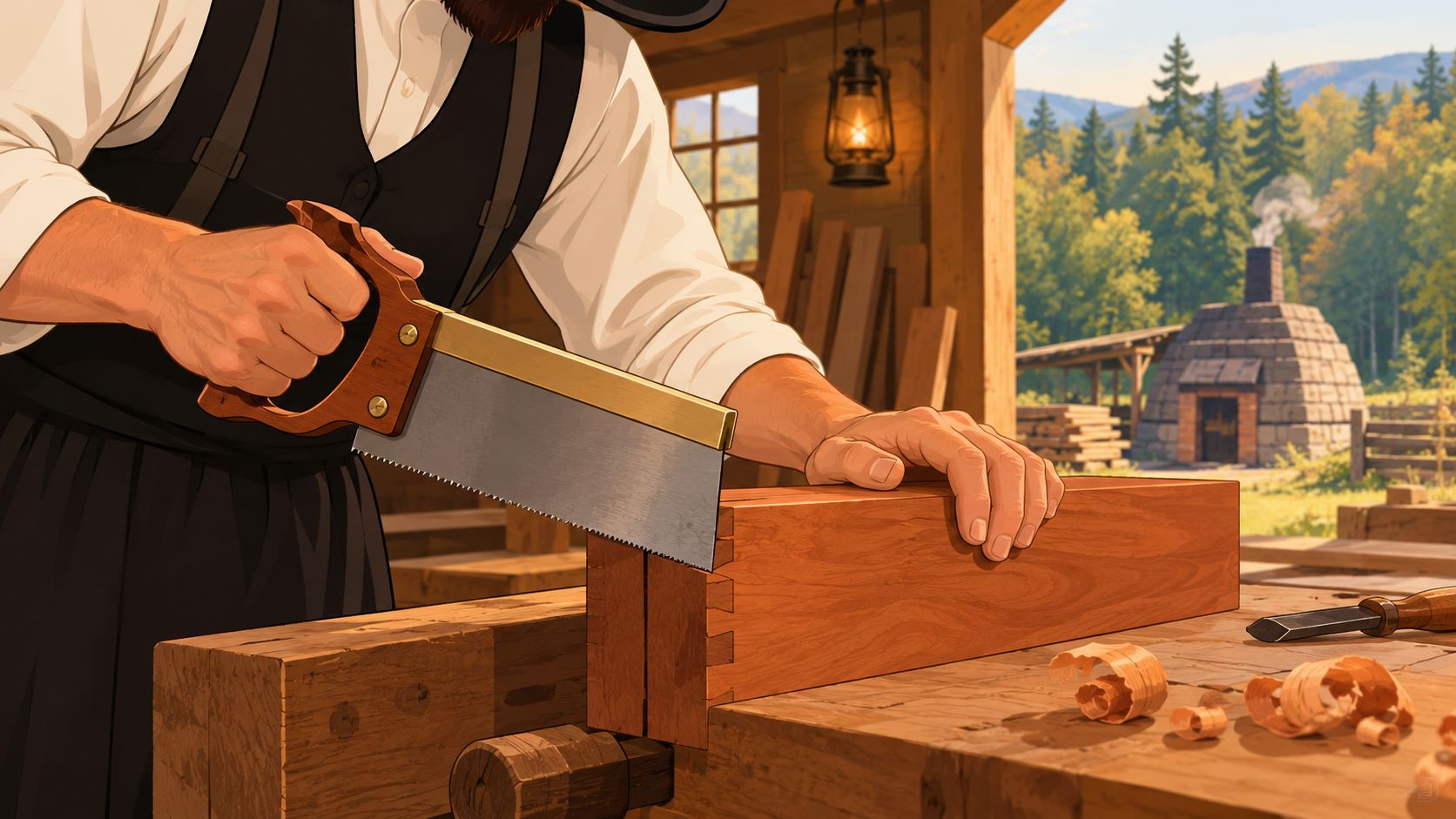
Traditional joints create mechanical connections throughout the frame. Dovetails interlock drawer sides. Mortise-and-tenon joints fit one member into another, helping the structure resist racking and loosening. Tongue-and-groove panels hold their alignment while leaving the wood room to respond to indoor conditions.
On a trestle table, wedged tenons may connect the legs to the aprons, while geared slides let the top expand and contract. That arrangement addresses the way the table carries weight and accommodates seasonal movement. It reflects construction choices, not decoration. Independent construction guidance describes mortise-and-tenon and dovetail joinery as mechanically strong methods, and notes that hardwood pieces can often be repaired and refinished repeatedly in this technical summary of Amish furniture quality.
Finish protects without hiding everything
A finish should handle ordinary spills, fingerprints, and surface wear while leaving the grain visible. Low-VOC oil finishes can create a hand-rubbed appearance. Conversion varnish forms a tougher protective film. Ask what finish was used and how it should be maintained before approving a custom piece.
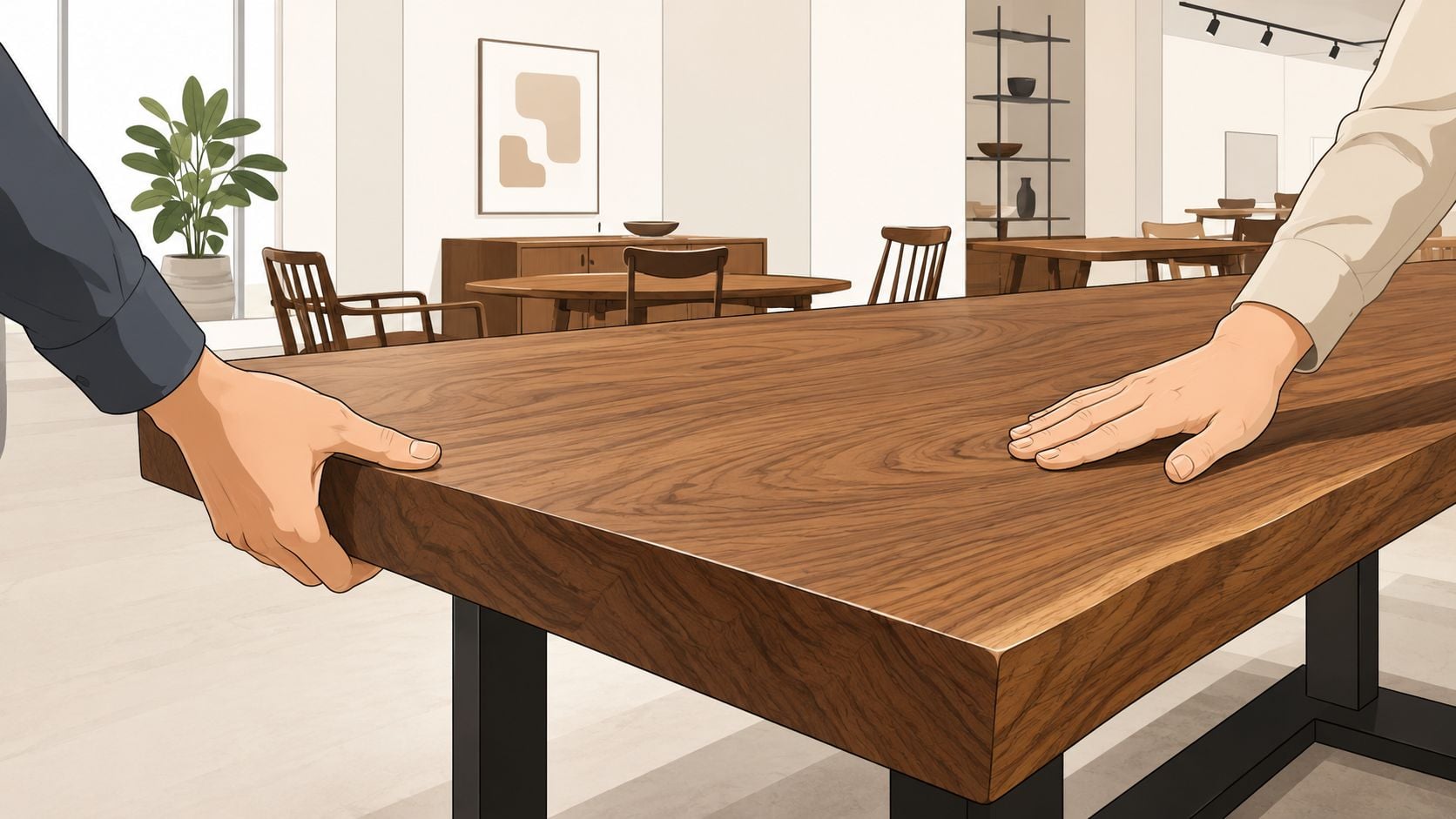
Time-tested methods still matter, yet a label alone cannot verify craftsmanship. Use this explanation of Amish furniture to understand the category, then ask the showroom to show the joinery, finish, and construction details in person. A maker who stands behind the work will welcome those questions.
Practical rule: A proud maker won't mind careful questions. Confident furniture invites inspection instead of asking shoppers to rely on a label.
How to Spot the Real Deal in Person
A showroom visit should feel like a hands-on evaluation, not a test the shopper is afraid to take. The following checklist helps separate authentic solid wood construction from furniture that only borrows the appearance.
Start with weight
Lift a drawer, open a door, or place a hand beneath an accessible edge. Genuine hardwood usually feels denser and more substantial than a hollow panel or thin veneer over a lightweight core.
A heavy piece isn't automatically well made, though. Treat weight as the opening clue, not the final verdict. A dense composite panel can still be heavy, so the next checks matter.
Trace the grain
Follow the grain across the top, edge, and end. Natural variation should make sense as the board turns. A sudden pattern break, a paper-thin edge, or a repeated design may indicate veneer.
Ask to see a sample or unfinished area if one is available. This guide to identifying real wood furniture offers additional inspection cues without requiring specialist equipment.
Study the stress points
Open drawers and look at the corners. Dovetail pins should interlock rather than relying solely on staples. On a chair, table, or bed frame, inspect where rails meet legs and where weight enters the structure. Mortise-and-tenon work should look intentional and fitted, not like a surface joint covered by trim.
Red flag: A piece that wobbles during ordinary handling, shows excessive glue squeeze-out, or depends visibly on staples at major load points deserves harder questions.
Turn the piece around
Inspect the underside, back, drawer bottom, and interior. These hidden areas often reveal whether the maker treated the whole piece seriously. Ask what parts are solid hardwood and whether any plywood appears in drawer boxes, backs, or bookshelf components. Some hidden plywood parts can serve a useful structural purpose, so the important point is honest disclosure, not a simplistic demand that every concealed panel match the top.

Feel the finish
Run clean fingers across an accessible surface. A well-applied finish should feel smooth and consistent, with the wood's character still present. A thick, plasticky sensation, uneven ridges, or rough edges can signal rushed finishing.
Sales associates should welcome these questions. Buyers aren't being difficult by asking about species, joinery, hidden materials, and finish. They're making sure the furniture matches the promise.
Caring for Solid Wood the Easy Way
Solid wood care is simpler than many owners expect. The routine centers on stable indoor humidity, gentle cleaning, and protection from concentrated heat or light.
Wood gains and loses moisture as indoor humidity changes, and most movement occurs across the grain rather than along it. Practical woodworking guidance commonly recommends an indoor relative humidity range of 35% to 50%, and explains that a 12-inch-wide flat-sawn hardwood board can move by roughly one-quarter inch across seasonal humidity swings, as detailed in this guide to humidity and wood movement.
A simple seasonal rhythm
During dry heating months, watch for shrinking joints, tight drawers, or small openings. During damp weather, doors and drawers may fit more snugly. Good furniture accounts for movement with floating panels, expansion gaps, and suitable grain orientation, but the room still affects performance.
Clean dust with a soft, dry cloth. For a sticky spot, use a small amount of mild soap and water on a barely damp cloth, then dry the surface promptly. Avoid flooding joints or leaving moisture pooled around hardware.
Protect the finish from direct sunlight and heating vents. Felt pads beneath lamps, electronics, and decorative objects help prevent rings and concentrated marks. Rotating tabletop accessories and drawers can also distribute everyday wear instead of creating one heavily used zone.
Skip the furniture-care folklore
Heavy polish isn't a substitute for cleaning. Repeated product buildup can leave a dull or gummy surface, and wax debates distract from the basics. The safest approach is to follow the maker's finish instructions and avoid mixing products without guidance. This wood furniture cleaning guide provides a practical starting point for routine care.
Routine maintenance handles dust, light marks, and ordinary use. Refinishing becomes appropriate when the surface has widespread wear, deep scratches, water damage, or a finish that no longer protects evenly. A careful owner can keep a well-made piece looking handsome for decades without treating it like a museum artifact.
Why Amish Solid Wood Is Worth the Investment
The price conversation gets clearer when furniture is judged by more than the ticket at the register. Engineered, imported, and Amish solid wood pieces can all fill a room, but they differ in how they respond to damage, movement, repairs, and changing household needs.
A veneered piece with a particleboard core may look polished on delivery day. Once the surface bubbles, chips, or wears through, sanding can expose the core rather than restore the top. A hardwood table offers more workable options. Its surface can often be repaired and refinished, and its joints can be serviced rather than discarded.
A practical comparison
| Factor | Engineered/Veneered | Imported Solid Wood | Amish Solid Wood |
|---|---|---|---|
| Core construction | Composite or layered core beneath a decorative surface | Natural wood construction can vary by maker and specification | Typically solid hardwood boards, with traditional joinery |
| Repairability | Surface damage may be difficult to restore | Depends on wood, joints, finish, and available service | Often repairable and refinishable when properly maintained |
| Structural inspection | Edges and underside may reveal layered materials | Requires careful inspection of species and joinery | Buyers should still verify grain, joints, underside, and finish |
| Long-term role | Practical for temporary or budget-focused rooms | Can suit buyers seeking solid wood with varied origins | Suits heirloom-minded buyers who value American craft and serviceability |
| Ownership experience | Lower initial commitment, possible replacement after major damage | Depends on construction quality and support | Higher craftsmanship focus, customization, and repair potential |
The solid wood category isn't automatically flawless. Boards move with humidity, heavy pieces take more effort to relocate, and a custom order requires patience. Those are tradeoffs, not defects, when the furniture has been engineered for them.
The value of time
Independent guidance commonly describes quality solid hardwood furniture as lasting 30 to 100 or more years, depending on species, craftsmanship, and maintenance, as outlined in this lifespan overview for solid hardwood furniture. That range should never be treated as a guarantee for every item. It does explain why a higher upfront price can make sense when a table remains useful through several household chapters.
Environmental value follows the same logic. A piece that stays in service longer can reduce the need for repeated replacements, while responsible sourcing, reclaimed wood, and certified wood address the separate question of where the material came from. Durability is valuable, but it doesn't prove responsible forestry or answer finish-related indoor-air questions. Buyers should ask about both.
A long-lived table isn't automatically sustainable. Ask about its wood source and finish, then consider how long the furniture can remain useful.
Why Buying Local Changes the Whole Experience
A photograph can't tell a shopper how a drawer feels, whether a tabletop fits a narrow dining area, or how a finish changes under showroom lighting. In person, a buyer can open every sample drawer, compare wood species, examine hardware, and hold fabric or leather swatches beside the room's colors. Those small observations prevent expensive surprises.
BILTRITE is a fourth-generation, family-owned furniture showroom serving Metro Milwaukee since 1928. That history creates a different buying conversation. The store isn't an anonymous warehouse handing over a box. Its team can discuss USA-made and Amish-made options, solid wood construction, custom choices, small-scale furniture for apartments, and heavy-duty pieces for active households.
Local service has a physical shape
A shopper can bring room measurements, doorway widths, and a photograph of the truck bed or delivery path. Staff can look at the actual space requirements instead of guessing from an online image. That matters for a large walnut dining table, a come-apart sectional, a lift chair, or a bedroom set that must pass through a tight hallway.
BILTRITE's showroom is in Greenfield, and the business also references showrooms in Indianapolis and Bloomington for shoppers planning visits in those areas. The Greenfield location is closed on Sundays and Mondays to support family time, so customers should check current weekday showroom hours before traveling. A Sunday closure isn't a weakness in the experience. It's a clear expression of the family-first, buy-local values the business has maintained.
Craft connects to community
The broader furniture industry remains a substantial U.S. manufacturing base. IndustrySelect reports 5,649 furniture and fixtures manufacturers, 269,177 workers, and $104 billion in average reported sales, with the South holding 33% of manufacturers and the Midwest 28%, according to the cited U.S. furniture manufacturing overview. Those figures provide context for choosing American-made furniture, but local purchasing also makes the experience personal and accountable.
The Amish furniture story carries regional economic weight as well. USDA research found that the Holmes County, Ohio cluster used about 44 million board feet of wood per year, equal to 11% of Ohio's hardwood lumber production and 19% of the state's hardwood lumber used in appearance-based applications. The same research estimated about 3,000 employees and 500 firms in 2005, while another report found 71% of firms expanded during 2006 to 2008 even as the broader domestic industry contracted, as documented in the USDA research on the Amish furniture cluster.
That is the local-economy story behind the showroom floor. A customer isn't just comparing colors. The customer is choosing whether to support a chain of makers, retailers, delivery crews, and service professionals who stand behind tangible work.
BILTRITE also carries more than Amish solid wood. Its mattress department includes over 60 models, and the broader showroom offers living room, dining, bedroom, home office, entertainment, and home décor options. Customers can find small-scale furniture for compact homes, heavy-duty choices for demanding use, come-apart seating for difficult entrances, and mattress guidance from a team with over 400 years of combined experience.
BILTRITE Furniture-Leather-Mattresses offers USA-made and Amish-made solid wood furniture, custom choices in wood species, finish, stain, and hardware, plus mattresses and practical furnishings for different homes. Visit BILTRITE Furniture-Leather-Mattresses in Greenfield with room measurements and questions in hand, and let the showroom team help verify the construction before the furniture becomes part of the family.