Find the Right Furniture Risers for Your Home


Helping a parent up from a low sofa can turn into a whole family moment. One person offers an arm, another steadies the coffee table, and everybody pretends it's no big deal. In plenty of Milwaukee homes, that little struggle shows up every day. A favorite chair sits just a bit too low. A bed needs more clearance underneath. A dining chair works for dinner but not for a long afternoon at the laptop.
That's where furniture risers can make life easier. They're small, simple, and often surprisingly useful. They can add comfort, improve access, and create breathing room in a home without replacing the furniture a family already loves.
Families who are comparing risers with more advanced mobility seating often find it helpful to also read about lift chairs for seniors. The two solutions solve different problems, and the right choice depends on the person, the room, and the furniture itself.
Giving Your Furniture and Yourself a Little Lift
Furniture risers are exactly what they sound like. They sit under the legs or base of a piece and raise it higher off the floor. That sounds modest, but the effect can be noticeable the first time someone sits down and stands back up without that extra strain in the knees and hips.
In real homes, the need usually shows up in ordinary ways. A son notices his mother rocking forward twice before standing from her upholstered chair. A couple in a bungalow wants more room under the guest bed for off-season blankets. A condo owner realizes the desk chair sits just low enough to make shoulders creep upward all afternoon.
Why this small change matters
The appeal of furniture risers is that they work with furniture already in the home. There's no need to replace a solid wood bed, a well-loved reading chair, or the dining set that still looks great. A careful height adjustment can make a familiar room function better.
They also suit the way many Milwaukee families live. Older homes often have a mix of inherited pieces, newer purchases, and hardworking furniture that needs to serve more than one purpose. A practical upgrade tends to go a long way.
A few inches can change how a room feels and how a body moves through it.
What trips people up early
Most confusion starts with one question. Are risers just for storage, or are they really for comfort and accessibility too?
They're both. Some people buy them for under-bed bins and discover the bed is easier to get into. Others start with mobility in mind and end up appreciating the extra vacuuming space underneath a chair or sofa. The key is choosing the right riser for the piece, the floor, and the person using it.
More Than Just a Boost The Benefits of Risers
Furniture risers do more than lift a piece off the ground. They change how furniture works in everyday life. For many households, the biggest advantages fall into three buckets: easier movement, better use of space, and improved posture.
Easier sitting and standing
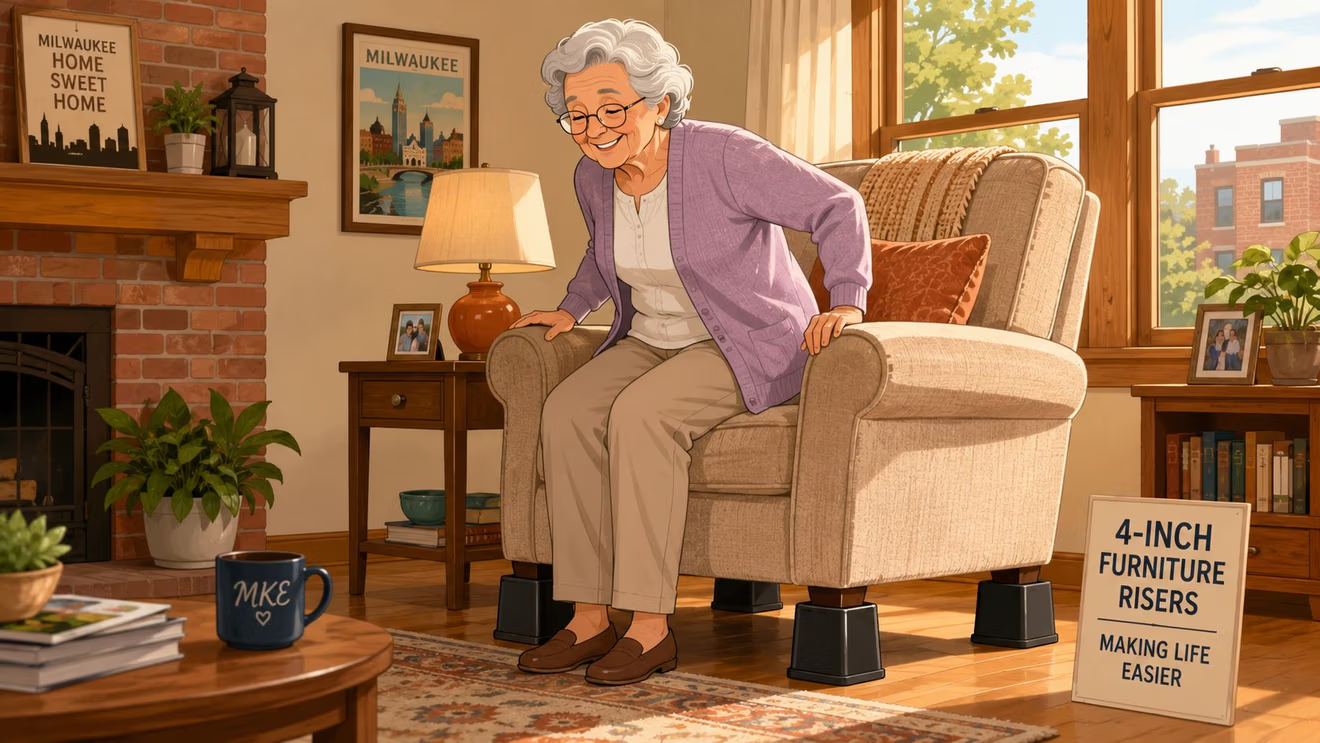
This is the benefit families usually notice first. Furniture risers can help by increasing the height of beds and chairs, reducing the hip flexion angle needed to stand and decreasing the force on the knee extensors during the move from sitting to standing. In plain language, that means less bending and less effort.
That matters for seniors, anyone recovering from surgery, people with sore knees, and pregnant mothers who don't want to drop low into a seat and fight their way back up. A favorite chair can feel much more usable with a thoughtful height change.
Storage that doesn't feel like clutter
Under-bed storage is the classic example, but it isn't the only one. Raising a sofa or bench can make room for slim baskets, cleaning tools, or toys that need a quick home by the end of the day.
In smaller Milwaukee apartments and condos, that added clearance can help a room stay organized without adding another cabinet or shelf. A home feels calmer when hidden space starts doing some of the work.
Practical rule: If a room feels crowded, check the unused space under existing furniture before buying more storage furniture.
Better ergonomics around the house
A chair that's a little too low can make posture sloppy fast. Knees rise too high, shoulders tense, and the whole body starts compensating. A modest lift can help a dining chair or desk chair sit more naturally with the table or work surface.
For people who are also thinking about floor care, leg pressure, and movement across hardwood, it helps to review how to protect floors from furniture. Height changes and floor protection should always be considered together.
Three everyday examples
- A reading chair in the den: Easier for a grandparent to get up without needing a push from the armrest.
- A bed in a smaller bedroom: More room for practical storage without adding visual bulk.
- A work chair at a compact table: A better seated position for homework, bills, or remote work.
Finding the Right Fit for Your Furniture
A riser has one job. It needs to match the furniture above it and the floor below it.
That sounds simple, but in Milwaukee homes, it often means dealing with older hardwood, heavier solid wood furniture, and pieces that have been in the family for years. In our family business, we see this all the time. A riser that works fine under a light metal bed frame may be a poor match for a maple dresser, a deep upholstered chair, or a vintage bed with thick turned legs.
Start with what the furniture is really carrying
Before you look at color or style, look at the piece itself. Is it mostly decorative, like a small accent table? Or does it carry serious load every day, like a bed, a recliner, or a dresser packed with clothes?
That difference matters because furniture weight is not just the empty frame. It includes the mattress, the stored items, and the people using it. A chair for a senior who pushes off the arms to stand creates a different kind of force than a side table that rarely moves. The riser needs to handle real-life use, not showroom conditions.
A good rule is to total the expected weight, divide it by the number of legs or support points, and choose a riser with enough capacity to handle that share comfortably. If a piece gets frequent daily use, especially sitting or standing use, leave extra margin instead of cutting it close.
A quick decision table
| Furniture type | Main concern | Better riser direction |
|---|---|---|
| Light bed frame | Steady support and proper fit | Standard or reinforced model |
| Solid wood dresser | Heavier load from frame and contents | Reinforced or heavy-duty option |
| Heavy sofa or sectional | Repeated force from sitting and standing | Heavy-duty option with a wide, secure cup |
Height should solve a specific problem
The best riser height is the one that fixes the issue you have. Maybe you want a bed high enough for easier entry. Maybe you need a chair to sit a little taller for aging knees. Maybe you want just enough clearance under a piece to make cleaning easier.
More height is not always better. Too much lift can make a chair feel awkward, change how your feet meet the floor, or make a dresser look top-heavy. In older Milwaukee homes, where floors are not always perfectly level, extra height can also make a poor fit more noticeable.
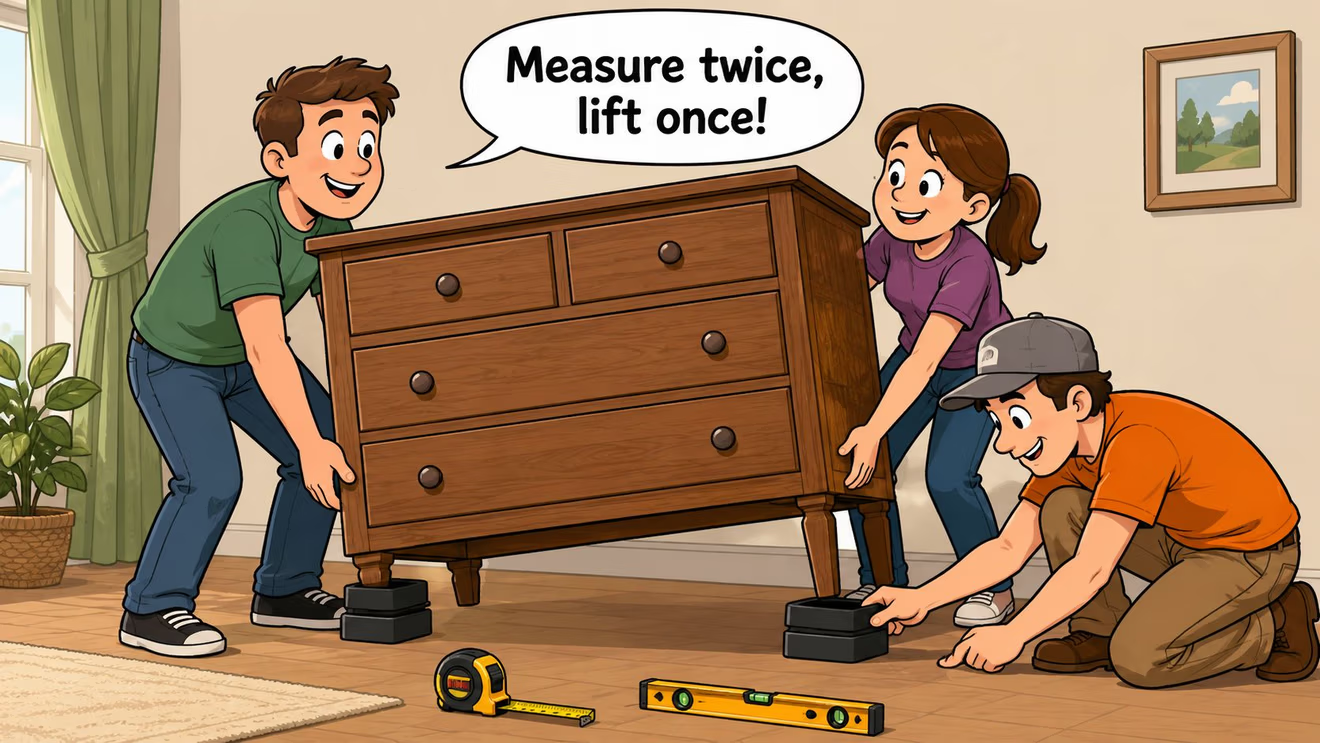
Measure first. Then buy. If you want a refresher on dimensions, our guide on how to measure furniture before choosing risers walks through the basics.
The right riser should fit the piece you own, the way your family uses it, and the room it lives in.
The shape of the leg matters as much as the height
This is the part many homeowners skip.
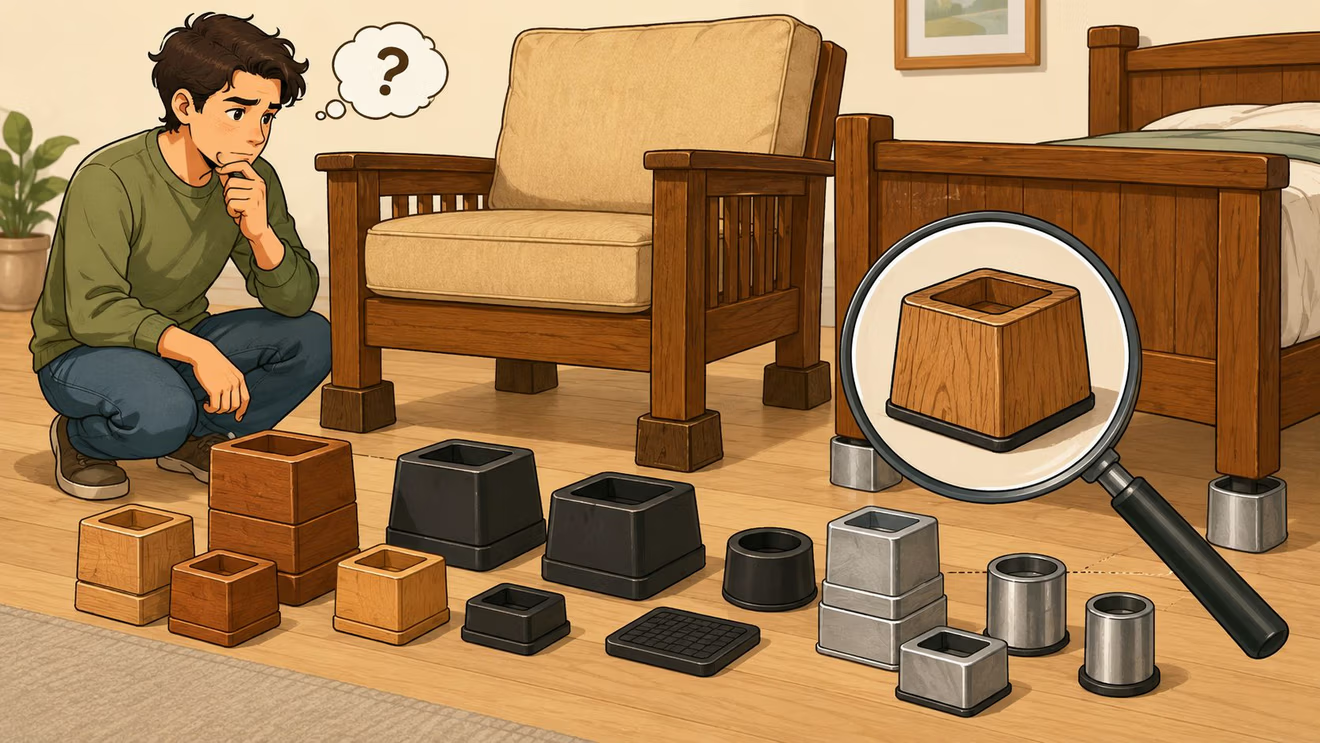
The top of the riser has to hold the leg securely, the same way a good shoe needs the right size heel cup. A narrow leg in a wide opening can shift. A wide bun foot may not sit down into a shallow cup at all. Tapered wood legs, square posts, casters, and sled-style bases each need a different kind of support.
That is why older, better-built furniture often takes a little more care. Many Milwaukee homes still have solid wood pieces with carved feet or uncommon leg shapes. Those pieces are worth the extra minute with a tape measure. A careful fit check now helps prevent wobble, floor marks, and the uneasy feeling that the furniture never quite settled into place.
A Step-by-Step Guide to Safe Installation
Installing furniture risers safely takes patience more than strength. In Milwaukee-area homes, that often means working around older flooring, slight slope, and furniture that's heavier than it looks. A methodical setup makes a big difference.
Prep the room before lifting anything
Clear the area around the piece first. Rugs that bunch, cords that snag, and small décor nearby all create distractions at the wrong moment. If the furniture has drawers, loose cushions, or removable contents, take them out so the piece is easier to handle.
For anyone working with especially bulky items, moving heavy furniture upstairs offers useful handling principles that also apply here. The same rule holds true on one level. Extra planning beats rushed lifting.
Check the floor, especially in older homes
This step gets skipped all the time. It shouldn't. Industry experts recommend selecting risers certified at 2–3 times the estimated load, and they also note that many guides leave out floor levelness checks, which are critical in older homes.
In practical terms, a solid riser on an uneven floor can still lead to rocking or uneven stress. A simple level check helps identify whether a shim is needed before the furniture is placed fully onto the risers.
Safety note: A riser setup is only as stable as the floor underneath it.
A clean installation sequence
Use a helper. That's the first rule. One person steadies while the other lifts or tilts.
- Empty the piece: Remove drawers, stored items, or anything loose.
- Position the risers first: Put each one where it needs to go before lifting.
- Lift one side just enough: The goal is clearance, not drama.
- Set the legs carefully: Each leg should land centered in its riser.
- Repeat on the other side: Slow and even beats quick and uneven.
- Test for wobble: A gentle shake should reveal any problem right away.
Don't ignore the wiggle test
Once the furniture is in place, hands should press lightly from different angles. If the piece shifts, leans, or clicks, something isn't right. Common issues include uneven floors, mismatched riser height, or leg cups that don't fit the furniture profile.
That final check matters most on frequently used pieces. A chair might seem fine when empty and become unstable when someone sits down with force. Installation isn't finished until the furniture feels planted and calm.
Common Uses for Risers in Milwaukee Homes
Furniture risers earn their keep in all kinds of rooms. In Metro Milwaukee, the most practical uses usually show up in homes with older layouts, compact bedrooms, sturdy solid wood pieces, and family members who need easier access without a major remodel.

Helping seniors stay comfortable
A favorite armchair often has sentimental value along with comfort value. Raising it can make daily sitting and standing less stressful, especially when the person wants to keep using the furniture they already know and like.
For senior households, risers can support independence when they're used thoughtfully. They're not a cure-all, but they can make a room easier to move through and less tiring to use.
Making small spaces work harder
In apartments, condos, and smaller homes, every inch matters. Risers can create under-bed storage, improve chair height at a desk, or make a compact room feel more functional without crowding it with more pieces.
People furnishing tighter spaces often benefit from looking at furniture ideas for small spaces. The strongest rooms usually come from combining scale, clearance, and comfort instead of just squeezing in more items.
Practical uses seen often
- Bedroom storage: Seasonal clothes, extra linens, and flatter bins fit underneath more easily.
- Living room access: A low lounge chair becomes easier to use for someone with limited mobility.
- Compact work zones: Seat height can line up better with a small desk or table.
The bed height trap
This is the safety issue that deserves more attention than it gets. Some bed riser guidance notes that risers can increase fall risk for older adults if the bed is already at or above the optimal ergonomic height of 20–24 inches, which challenges the idea that higher is always better.
That's an important point for caregivers and adult children helping a parent at home. If a person sits on the mattress edge and their feet already rest well, adding more height may make transfers less safe, not more safe.
Raising a bed should help the person using it feel steadier. If it makes climbing in or sliding out harder, the setup has gone too far.
Your Riser Questions Answered and Where to Find Us
A few riser questions come up again and again, and they're worth answering plainly.
Can risers go under recliners
Usually, that's not the first choice. Recliners shift weight as they move, and that motion changes stability. A standard chair or stationary sofa is usually a better candidate for furniture risers than a reclining mechanism.
Will risers mark the floor
They can if the bottom surface is rough or if grit gets trapped underneath. Felt protection and a clean floor help a lot. Hardwood, older finished floors, and some laminate surfaces all deserve extra care.
Do risers need maintenance
Not much, but they shouldn't be forgotten. A quick wipe-down and an occasional stability check are smart, especially after moving the furniture, rearranging the room, or adding weight to the piece.
When should someone ask for in-person help
When the furniture is unusually heavy, solid wood, irregularly shaped, or being used by a senior with balance concerns, in-person guidance is a wise move. Local shoppers who want to talk things through can find store details at BILTRITE's locations page.
Milwaukee families often prefer that kind of real conversation, and for good reason. A fourth-generation business that's served the area since 1928 tends to understand how older homes, quality furniture, and family needs all intersect. That local perspective matters. So do family values, which is one reason the showroom is proudly closed on Sundays and Mondays for family time. With over 400 years of combined experience on the floor, the team offers thoughtful help without pressure.
Ready to make a room more comfortable, functional, and easier to live in? BILTRITE Furniture-Leather-Mattresses would love to welcome Milwaukee-area shoppers to the showroom in Greenfield. Stop in, say hello, and get hands-on help with better-quality furniture, solid wood pieces, Amish-made options, small-scale solutions, heavy-duty choices, and a mattress department with over 60 models.