Small Scale Upholstered Chairs: Your Milwaukee Guide


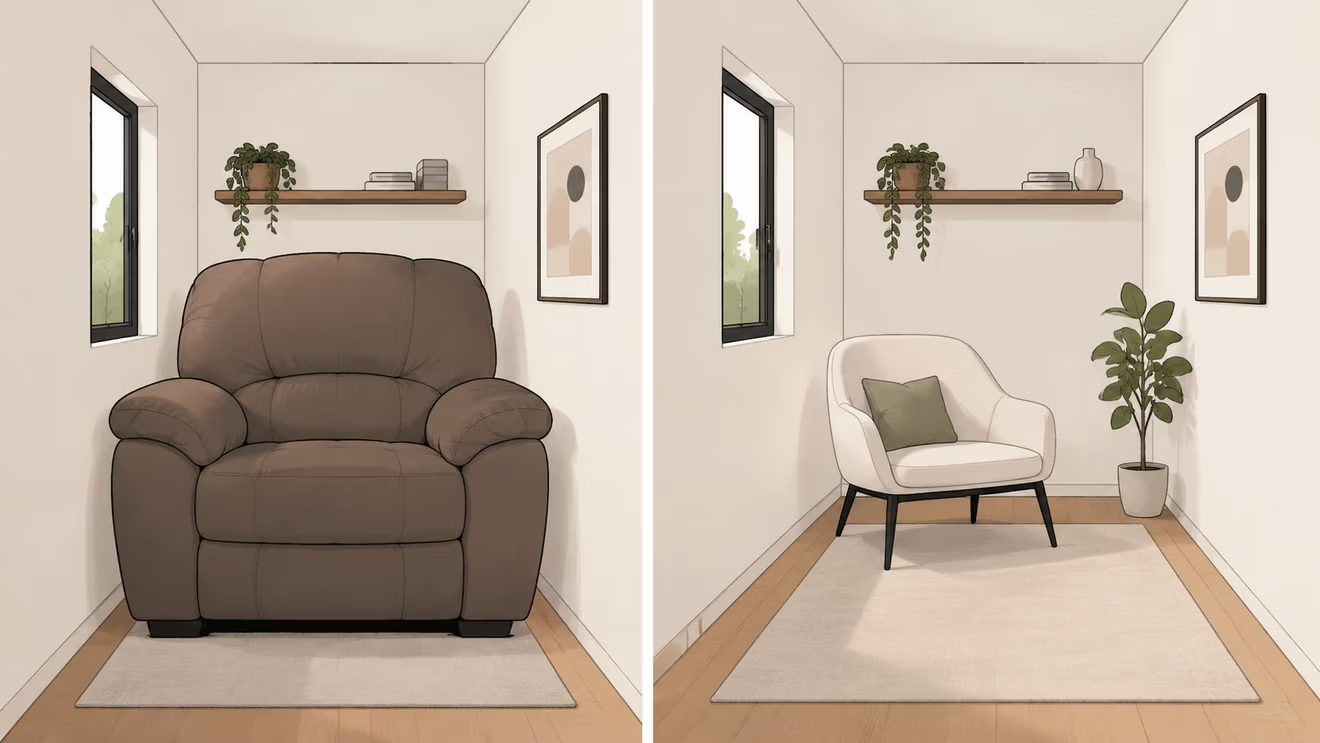
Small scale upholstered chairs usually land in the 26 to 32 inch width range and about 29 to 31 inches deep, which is the sweet spot for compact rooms where every walkway matters. If a chair goes much deeper than 31 inches, it can start eating into clearance and make the whole room feel tighter, even if the chair looks good on its own.
That's the situation a lot of Milwaukee-area homeowners run into. The sofa fits. The coffee table fits. Then comes the chair, and suddenly the room feels crowded, the traffic path gets awkward, and the whole layout loses its rhythm. Small scale upholstered chairs solve that problem when they're chosen with discipline. Not tiny. Not flimsy. Just scaled right for the room and the people living in it.
That's a category BILTRITE knows well. Since 1928, this fourth-generation, family-owned Greenfield showroom has helped local families furnish bungalows, apartments, condos, and senior living spaces with pieces that work in real homes. Small rooms need smart furniture, not oversized showroom drama.
Table of Contents
- Welcome to the World of Small Scale Chairs
- Measure Twice Buy Once A Practical Guide
- Choosing Materials That Last A Lifetime
- Finding Your Ultimate Comfort Zone
- Styling Your Space with the Right Chair
- Come Say Hello at Our Greenfield Showroom
Welcome to the World of Small Scale Chairs
A familiar scene plays out all over Bay View, Wauwatosa, Shorewood, and the South Side. A homeowner has a warm, comfortable room, but the scale is tight. They want one upholstered chair for reading, guests, or a morning cup of coffee. Then they start shopping and everything looks built for a giant great room instead of a Milwaukee bungalow.
That's where small scale upholstered chairs earn their keep. They aren't a compromise. They're a smarter response to how people live now. The broader history of chairs helps explain why. Chairs trace back to very early seating traditions, and over time they moved from elite, oversized symbols into more practical forms for everyday homes. A useful historical overview from the history of chairs and the shift toward more space-efficient designs shows that today's compact upholstered chairs are part of that evolution.
Small scale chairs exist because homes changed. Rooms got tighter, uses became more flexible, and furniture had to earn its footprint.
That practical shift matters. A chair in a smaller room has to do several jobs at once. It has to look right with the rest of the space, feel good for daily use, and avoid turning the room into an obstacle course.
BILTRITE has been part of that conversation in Metro Milwaukee since 1928. Family-owned stores pay attention to the homes around them. Older bungalows with narrower rooms. Condos that need cleaner lines. Apartments where every inch has to pull its weight. Small scale upholstered chairs aren't a trend piece in those homes. They're often the difference between a room that feels settled and one that feels cramped.
Measure Twice Buy Once A Practical Guide
People usually make the same mistake. They fall for the chair first and think about measurements later. That's backwards. In a compact room, measurement comes first every time.

Start with the footprint
For compact rooms, a practical target for small scale upholstered chairs is 26 to 32 inches wide and 29 to 31 inches deep, and guidance on chair sizing for small spaces notes that going deeper than roughly 31 inches can start to consume walkway clearance and tighten up the room visually.
That gives shoppers a solid filter. If a chair falls outside that range, it isn't automatically wrong, but it needs a very specific reason to be there.
A good measuring routine looks like this:
- Measure the open floor area where the chair will sit.
- Mark the footprint with painter's tape so the size is visible on the floor.
- Walk around it like normal. If knees clip the taped edge or the traffic path feels pinched, the chair is too big.
- Check the relationship to the sofa. A chair that visually competes with the sofa usually looks clumsy in a small room.
Practical rule: If the chair makes the room harder to move through, it's not the right chair, no matter how nice the fabric is.
A lot of people only measure wall-to-wall space. That's not enough. The room has to function after the chair arrives.
Check the path before the purchase
The second mistake is forgetting the delivery path. The chair has to get into the home, around corners, through halls, and sometimes up a stairwell that was never designed for bulky furniture.
Use this checklist before committing:
- Doorways: Measure the opening, not just the door slab.
- Hallways: Include trim, turns, and anything that narrows the passage.
- Staircases: Watch for ceiling height and tight landings.
- Elevators or condo entries: Measure those too if they apply.
For a more detailed walkthrough, BILTRITE offers a helpful guide on how to measure furniture before delivery.
Some homes need more than careful measuring. They need furniture built for tricky access. That's where come-apart models can make life easier. A chair that fits the room but can't fit the path isn't useful. The right piece has to do both.
Choosing Materials That Last A Lifetime
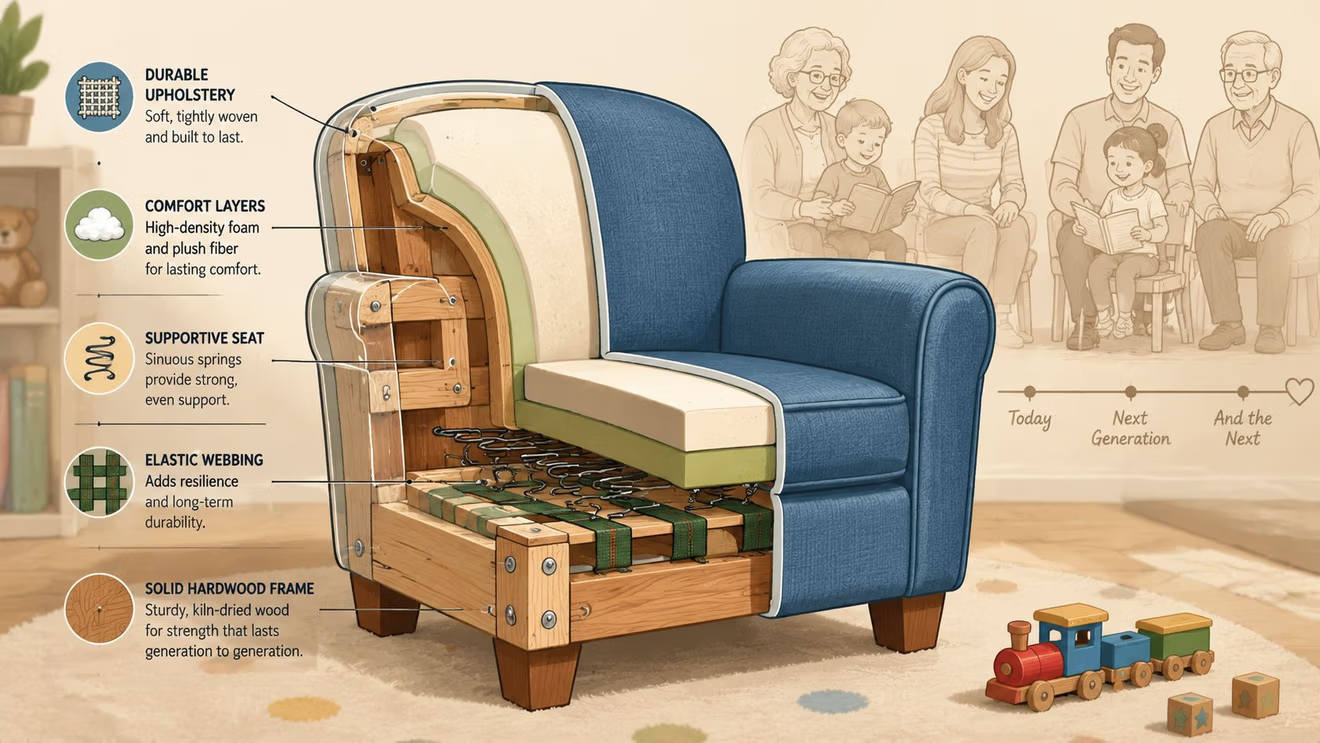
Small scale doesn't mean disposable. That's one of the strongest opinions any experienced furniture advisor will hold. A chair for a compact room often gets heavy daily use. It may be the reading chair, the guest chair, the TV chair, and the spot where the dog tries to nap when nobody's looking. Cheap construction doesn't hide for long.
What matters under the fabric
The frame matters first. Strong chairs start with better bones. That's one reason so many shoppers looking for lasting value lean toward USA-made and Amish-made furniture, especially when solid wood construction is part of the build. A chair can have a beautiful cover and still disappoint if the structure underneath isn't built for years of use.
Cushion construction matters next. Foam quality changes how a chair feels on day one and how it holds up after repeated sitting. A useful industry note from CertiPUR-US on chair comfort, foam, and certification points out that modern upholstered chairs often use foam certified for content, emissions, and durability. That matters for comfort, and it matters for confidence in what's inside the seat and back.
A buyer doesn't need to memorize furniture jargon. The practical questions are simple:
- Does the frame feel steady? No wobble, no twisting, no light flimsy feel.
- Does the seat recover well after sitting? A cushion should feel supportive, not exhausted.
- Does the chair feel built for daily life? A compact chair often works harder than a larger occasional chair.
Upholstery that matches real life
Fabric choice should match the household, not just the mood board. Homes with kids, pets, frequent guests, or busy everyday routines need upholstery that can handle repeat use and easy cleanup. Leather can be a strong fit in some spaces. So can tightly woven fabrics and performance-minded upholstery choices.
A room-sized chair still deserves room-sized standards. For this, one factual option fits naturally. BILTRITE Furniture-Leather-Mattresses provides upholstery guidance that helps shoppers sort through fabric and leather choices based on wear, feel, and maintenance needs.
Buy the chair for the way the room gets used on a Tuesday night, not just for how it looks on delivery day.
That's the whole game. Better materials cost attention up front, but they usually save frustration later. In a smaller home, each piece has less room to fail.
Finding Your Ultimate Comfort Zone
A chair can fit the room and still feel wrong. That's why comfort has to be tested, not assumed. Dimensions tell part of the story. The body tells the rest.
Comfort is built from several small details
A well-scaled chair isn't automatically a comfortable one. Several features work together, and each one changes the sitting experience.
| Comfort detail | What to pay attention to | Why it matters |
|---|---|---|
| Seat depth | Feet should rest naturally, with space behind the knees | Too deep can feel awkward for shorter sitters |
| Seat height | Easy entry and exit | Too low can feel like a drop |
| Back pitch | How upright or relaxed the chair feels | Changes whether the chair suits reading or lounging |
| Arm style | Open, low, high, or absent | Affects posture, support, and visual openness |
Shorter users often prefer a shallower seat that lets them sit fully back without their legs floating. Taller users may want more room through the seat and back. Firmness matters too. Some people want a supportive sit that's easy to get out of. Others prefer a softer, more relaxed feel.
For shoppers comparing proportions, this chair width guide helps clarify how dimensions affect fit and room balance.
Why in-store sitting still matters
A chair reveals itself when someone sits in it for a few minutes. Not a quick drop-and-stand. A real sit. Elbows on the arms. Back against the cushion. Feet flat. That's when pressure points, awkward arm height, or too much seat depth show up.
BILTRITE's sales associates bring more than 400 years of combined experience, and that kind of in-person guidance matters because comfort is personal. One customer may need firmer support for easier standing. Another may want a looser, casual sit for reading and relaxing. The chair has to fit the person, not just the floor plan.
A good fit feels quiet. Nothing pinches, nothing strains, and the body settles in naturally.
That's the advantage of shopping in a showroom instead of guessing from a screen. Comfort isn't a spec sheet. It's a lived experience.
Styling Your Space with the Right Chair
A small room still deserves some character. The trick is choosing a chair that adds style without making the whole space feel crowded. In tighter Milwaukee bungalows, condos, and apartments, a chair with the right shape can make the room feel finished instead of full.
Heavy-looking versus light-looking
In compact spaces, visual lightness usually wins. Chairs with visible legs, open arms, and cleaner lines leave more breathing room and help the eye move through the room. That matters just as much as the chair's actual measurements.
Use this approach when you narrow your choices:
- Choose open instead of boxed-in: Open backs and exposed legs keep the room from feeling closed off.
- Choose trim instead of bulky: Slimmer arms and a tighter silhouette look cleaner and take less visual space.
- Choose one strong chair instead of a pair that crowds the room: One well-placed chair often does more than two oversized ones.
- Choose shapes that show some floor: Space underneath a chair helps a room feel lighter and less packed.
Skip heavy wingback shapes if the room already feels tight. Skip thick rolled arms if your sofa has plenty of visual weight already. A smaller room rewards restraint, and good restraint always looks intentional.
Use the chair as a style move
Small scale upholstered chairs give you a great chance to add personality. Since the footprint stays controlled, you can bring in a bolder fabric, warmer color, or sharper silhouette without overwhelming the room. That is often the smartest place to add interest, especially if the sofa is staying neutral.
A few style directions tend to work especially well:
- For traditional homes: Pick fitted upholstery with exposed legs instead of fuller skirted shapes.
- For condos or apartments: Low-arm, open-arm, or armless chairs help keep sightlines clear.
- For mixed-style rooms: A compact accent chair can tie together wood pieces, upholstery, and accessories without stealing the whole show.
If you want more ideas, see five smart ways to use an accent chair in rooms that need both function and personality.
Online photos can point you in the right direction, but they rarely tell the full story about color, scale, or presence. That is one advantage of shopping at a local family store like BILTRITE. You can stand back, study the proportions, compare fabrics under real lighting, and see how a USA-made or Amish-made chair lives in a room. That hands-on part matters. A chair should look right in your space, not just on a screen.
Come Say Hello at Our Greenfield Showroom
Furniture is still a hands-on purchase. That's especially true with small scale upholstered chairs, where comfort, proportion, and fabric all matter at once. Screens can show shape. They can't tell someone whether the seat feels supportive, whether the arm hits at the right height, or whether the scale feels calm in real life.
That's one reason BILTRITE doesn't sell online. The in-store experience matters. Families can sit, compare, ask questions, and get help from people who know furniture and know Milwaukee-area homes. The showroom in Greenfield gives shoppers the chance to see small-scale options, USA-made selections, Amish-made craftsmanship, and better-quality materials up close.
This fourth-generation, family-owned business has served Metro Milwaukee since 1928, and that local history shows in the way the store operates. It's proud to be community-focused, proud to be family-first, and proud to be closed on Sundays and Mondays so time with family stays part of the business values too.
For directions and store details, shoppers can visit the BILTRITE showroom location page. The showroom is at 5430 West Layton Avenue in Greenfield, and it's worth the trip for anyone who wants a chair that fits the room and feels right the first time.
Ready to find a chair that fits a smaller room without giving up comfort or quality? BILTRITE Furniture-Leather-Mattresses welcomes Metro Milwaukee shoppers to stop by the Greenfield showroom, try different styles in person, and get friendly help from a family-owned team that's been serving the area since 1928.