OPEN MONDAY, NOVEMBER 23 10AM TO 6PM!
GREBE'S DONUT GIVEAWAY MONDAY, NOVEMBER 23 ONLY!
BLACK FRIDAY + SMALL BUSINESS SATURDAY DEALS ON NOW!
NO CREDIT CARD FEES!
1000's of Items IN-STOCK + 500 Mattresses!
Largest selection of USA Made Furniture & Mattresses + Amish Made!
FREE In-Store Design Services!
BUY LOCAL & LOVE YOUR HOME!
Tuesday-Thursday 10am to 6pm | Friday 10am to 7pm | Saturday 10am to 5pm | Sunday Closed To Be With Family & Friends | Monday Showroom Closed
5430 West Layton Ave, Greenfield - Metro Milwaukee
A buyer who asks only for the Janka number gets an incomplete answer. Hardness matters, but it cannot tell you whether a piece suits your room or how it will age. Construction, moisture movement, finish and room fit all shape the result, and a single hardness ranking leaves those factors out.
In most homes, the room decides the wood before the species does. A hard maple table can feel out of place in a dim, traditional dining room with dark trim, while red oak may dominate a bright room with white walls. Consider the light, the home's architecture and daily use alongside the wood itself. For ideas in lighter tones, browse light wooden furniture.
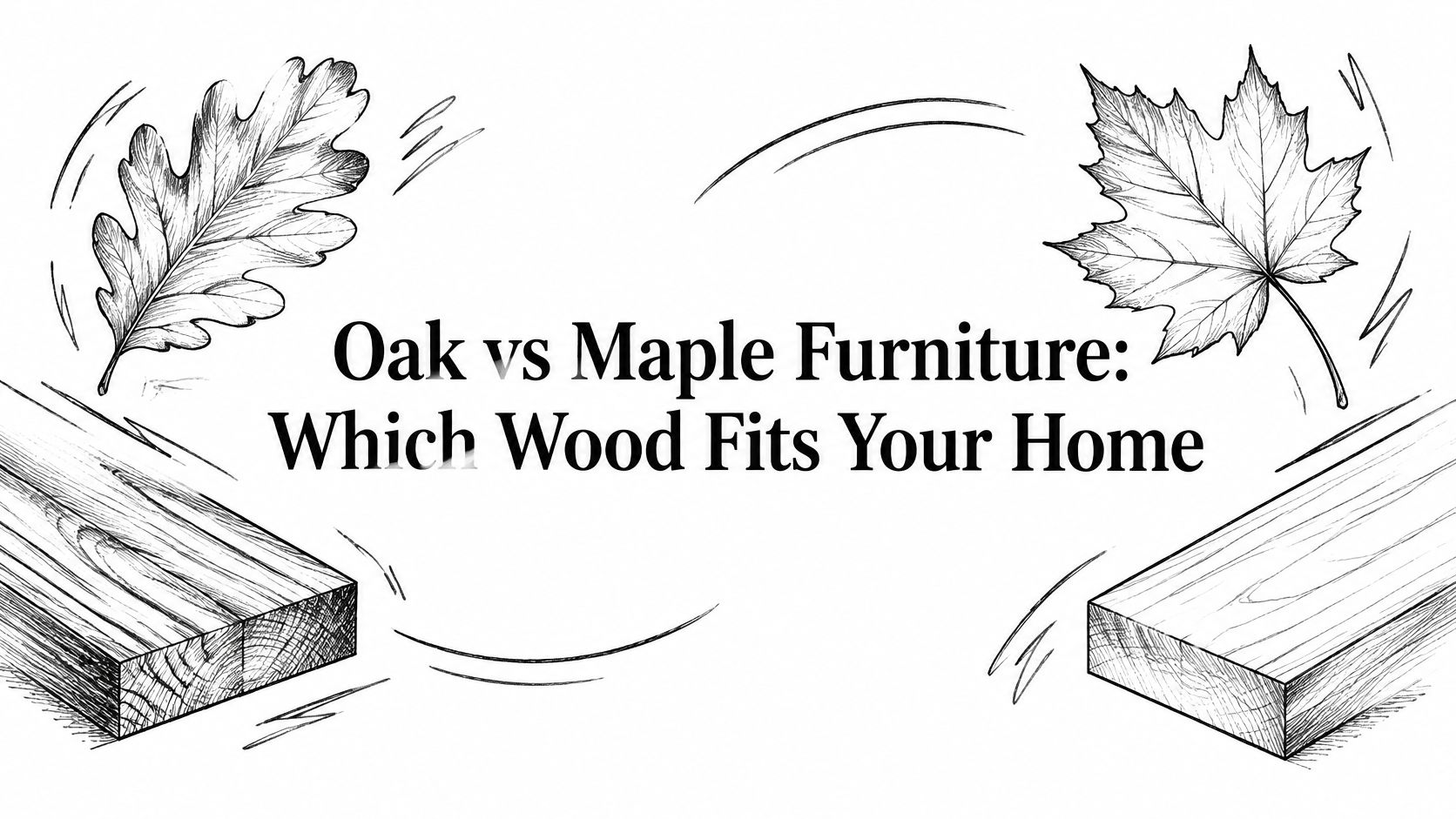
Oak and maple are both classic North American hardwoods used in solid-wood furniture. BILTRITE Furniture-Leather-Mattresses carries solid wood furniture, including USA-made and Amish-made pieces. Our family has served customers' home furnishing needs since 1928. At our Greenfield showroom, seeing oak and maple pieces side by side makes their visual differences clear.
Start by comparing how each species looks in your room, then consider everyday wear, movement with humidity and finish care. Finally, match the wood to the room you're furnishing. The hardest wood is not automatically the better fit; the right choice balances appearance, construction and the demands of the space.
Oak's distinctive grain brings visible texture and warmth; hard maple's finer grain gives furniture a quieter, more even appearance. Choose by how you want the whole piece to read in your room, then check the finish and wood species before deciding.
Feature
Oak
Maple (hard)
Grain
Coarse, straight and clearly visible
Fine, uniform and subtle
Color
Light-brown sapwood; red oak heartwood can be warm reddish-pink
Creamy-white sapwood; heartwood ranges from light to reddish brown
Hardness (Janka)
White oak 1,360 lbf; red oak 1,290 lbf
1,450 lbf
Bending and staining
Excellent steam-bending; porous grain takes stain well
Good steam-bending; smooth surface gives clean finishes
The American Hardwood Export Council's species guide describes the grain, color and working qualities behind these differences. Its Janka figures put hard maple at 1,450 lbf, white oak at 1,360 lbf and red oak at 1,290 lbf. Those numbers provide context, but a finished piece's appearance also depends on the cut, stain and finish.
Why the two woods read so differently
American red oak has a straight, coarse, distinctive grain that gives furniture a visibly textured look. Its sapwood is light brown, while its heartwood can be warm reddish-pink. Hard maple has creamy-white sapwood, heartwood ranging from light to reddish brown, and a fine, uniform texture. Oak makes its grain a stronger part of the design; maple leaves more visual attention for the furniture's shape and the room around it.
Oak's open pores help it bend and take stain. A deeper stain can emphasize contrast across the grain, giving the surface more visual depth. Maple's tighter structure creates a smoother, more even result, so light stains and natural finishes tend to keep its appearance clean.
What this means at home: choose oak when you want the grain to contribute texture and character. Choose maple when you want a more restrained wood surface that lets other details stand out.
Putting the looks into actual rooms
Oak's pronounced pattern and warm staining suit traditional rooms, mission-style furniture and interiors where visible wood character feels at home. An oak trestle table can give a dining area a strong architectural presence, while a slat-back oak chair brings a grounded look. Leather, wool, brick and dark trim pair naturally with oak's visual weight.
Maple suits contemporary, transitional and minimalist spaces. In a bright room with pale walls, metal accents and soft fabrics, its fine grain can keep the overall look calm and open. For a full bedroom or dining set, compare the pieces together rather than judging a single board; the maple furniture collection offers examples of how the wood reads across furniture.
Maple still shows natural figure and color variation. Pale maple has visible grain, and its heartwood can range from light to reddish brown, so boards in the same piece may not look identical. Expecting a perfectly uniform surface can lead to disappointment; look for the variation that comes with the actual wood.
The sample board test that settles it
A species name alone cannot predict the final look. The lumber cut, stain, finish and choice of red or white oak all affect the result. The American Hardwood Export Council recommends judging sample boards to see how the wood and finish work together.
Take two boards home. Ask for red oak and hard maple samples in the finishes you are considering.
Set them near a window during the morning. Daylight makes differences in grain and color easier to spot.
Check them again at night with a lamp on. Warm evening light can change how each finish looks in the room.
Stand back six feet. Judge the samples from across the room, where the overall impression matters more than details visible up close.
In the showroom, compare the grain as well as the color, and view both samples under the same light. Ask which species the maker means, because “maple” can refer to hard maple or a softer type with a different appearance. Then use the sample that looks right from across the room as your guide for the finished piece.
Hardness, Dents and Everyday Wear
Hardness is one part of how furniture holds up, not a complete measure of durability. The Janka test measures the force needed to press a standard steel ball halfway into wood, so it predicts resistance to dents. Construction, moisture movement, finish, and how well a piece fits the room also shape how it ages.
Calculated from those Janka figures, hard maple has roughly 6.6% more dent resistance than white oak and 12.4% more than red oak. These percentages describe the difference in the test figures, not a guarantee about how long a table or chair will last.
What a 6% edge buys you
A modest hardness advantage can matter on surfaces that take repeated impacts or concentrated pressure. Hard maple is a practical choice for dining tables, work surfaces, chair seats, and cabinet edges, where utensils, laptop corners, and everyday contact can leave dents over time.
The location of the wear matters. A dining table takes repeated contact in the same areas; a chair seat and cabinet edge face their own knocks. Choose hard maple where resistance to dents is a priority, then weigh the rest of the piece's construction and finish before deciding.
Choose hard maple for the tabletop, desk, chair seat, or cabinet edge when dent resistance is your priority.
Oak offers a different balance
White and red oak are valued for structural strength, pronounced grain, and resistance to everyday wear. USDA Forest Service technical information describes hard maple as heavy, strong, stiff, hard, and shock-resistant, while also noting its relatively high shrinkage. That combination shows why hardness alone cannot settle the choice: a wood's properties and the way a piece is built both matter.
Oak's slightly lower hardness can make it more forgiving during manufacturing, while its open grain can help small surface scratches blend into the visible pattern. If you like prominent grain and want a hardwood suited to everyday use, oak remains a strong option.
The "maple" trap that catches buyers
The figures above apply specifically to hard maple. The Hardwood Manufacturers Association's wood species reference lists soft maple at about 950 lbf. Calculated from the Janka figures, that is a roughly 34.5% gap from hard maple, larger than the difference between hard maple and either oak in the table.
Ask whether a piece is made from hard maple or soft maple before comparing hardness. A label that says “maple” alone does not identify which one it is. When a piece is specified as hard maple, it is usually Acer saccharum, the species described by these hard maple figures.
Hardness also leaves out board thickness, joinery, moisture control, finish quality, and whether a piece is solid wood or veneer over a composite core. Those choices influence how furniture wears and how it should be cared for. For practical advice on protecting wood furniture from scratches and stains, consider how the finish will handle the way you use the piece.
Choose hard maple when dent resistance and a fine, uniform appearance lead your priorities. Choose oak when you want prominent grain alongside durable hardwood performance. A good comparison looks beyond the Janka figures to the construction and the demands of the room.
Movement, Finish and Long-Term Care
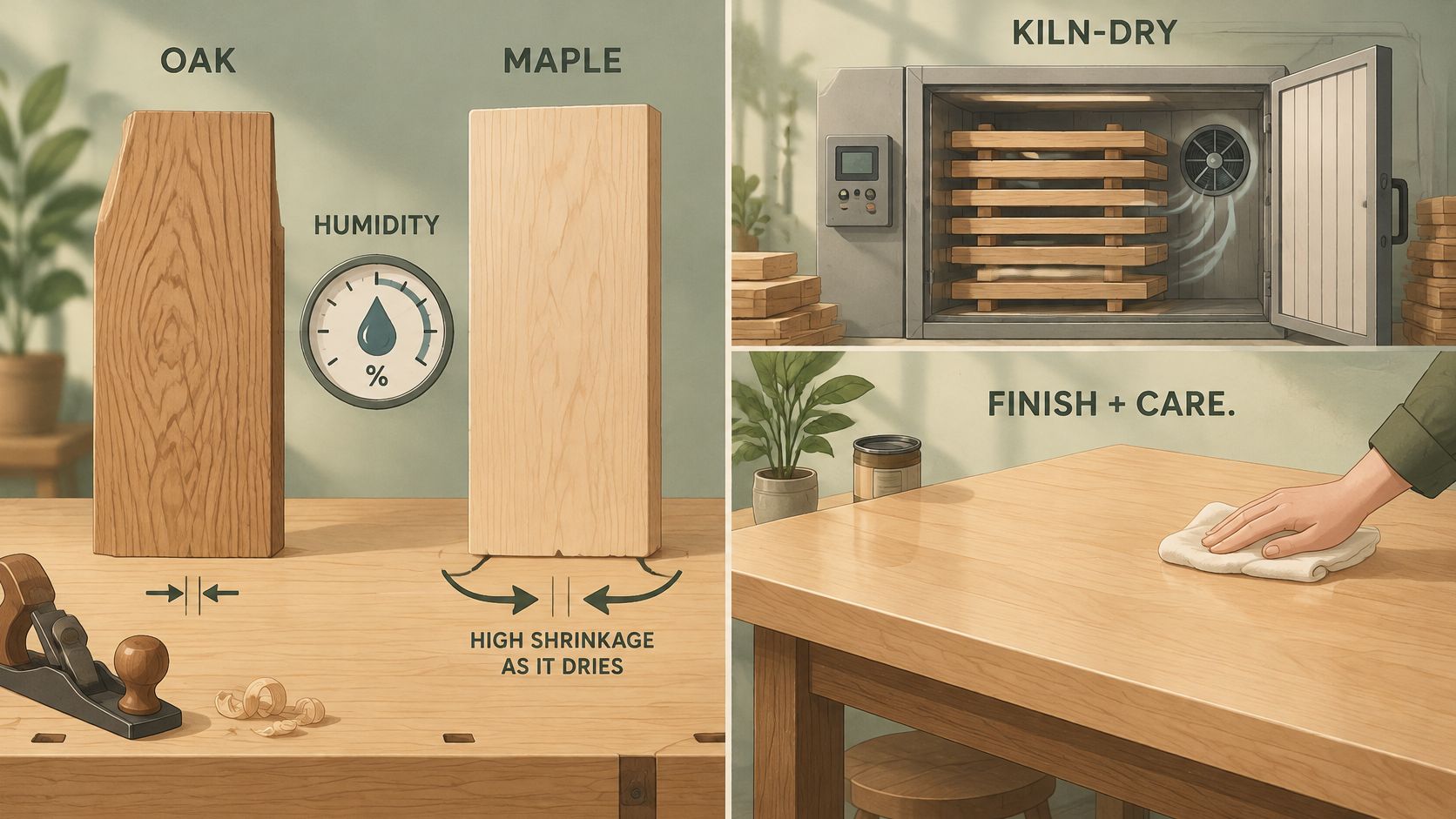
Hardness is only part of the story. Moisture movement, construction and finish all affect how oak and maple hold up over time. Wood moves as humidity changes, and that movement can influence whether a tabletop stays flat more than a small difference in hardness.
The USDA Forest Products Laboratory hardwood species guide describes hard maple as heavy, strong, stiff, shock-resistant and high-shrinkage. Its fine, even texture suits a clean contemporary look, while its higher shrinkage makes careful drying, acclimation and allowance for seasonal movement important.
Oak has its own strengths. The same guide describes oak as structurally strong, with high crushing strength and excellent steam-bending capability. It also reports that American red oak dries easily with relatively little degrade and has good dimensional stability after drying. Those properties make construction and moisture control worth asking about for furniture in a home with seasonal humidity changes.
The care routine that matters most
A few consistent habits help protect the finish:
Wipe spills promptly. Blot standing water rather than scrubbing, which can mark the finish.
Use coasters and placemats. They limit contact with heat and moisture.
Keep indoor humidity steady through the seasons. Avoid large humidity swings that can contribute to wood movement.
Refresh the finish when it looks dull. Follow the maker's care instructions rather than waiting until the wood itself appears dry.
Neither species is free from movement. Solid panels need joinery that allows for cross-grain expansion. Keep furniture away from persistent heat or humidity swings, including heat vents, direct sun and exterior doors that collect moisture.
Ask about the finish, not just the wood
The finish is the surface you touch, and it affects how the piece should be cared for. A water-based topcoat and a solvent-based conversion varnish can age and repair differently. Ask which finish your furniture has before choosing cleaning or repair products.
Ask the maker about moisture content, acclimation and panel construction, too. These details help explain how a piece is prepared for seasonal changes. For another look at how lumber cut affects movement, read about quarter-sawn oak furniture. At BILTRITE Furniture-Leather-Mattresses, each customer receives written care information for wood, fabric or leather furniture and mattresses, so the instructions go home with the purchase.
Which Wood Suits Each Room in Your Home
A busy room makes wood choice practical. In a family home, the dining table may take daily meals, homework, birthday cake, and craft projects, while the living room calls for a different feel. Match the wood to each room's use, then consider how its size and finish fit the space.
Room or use
Lean toward
Why
Busy family dining table
Hard maple
A harder surface better resists dents from daily use
Traditional living room
Oak
Visible grain takes a warm stain well
Bedroom or contemporary space
Maple
Fine, even grain gives the room a quieter look
Chairs or curved bentwood parts
Oak
Oak performs well in steam-bent parts
Home office desk or work surface
Hard maple
Better suited to repeated contact and wear
Apartment or condo with limited space
Either
Choose by appearance, finish, and construction
For a table used every day, hard maple is a practical choice. Its harder surface stands up better to dropped utensils, chair scrapes, and repeated contact in the same spots. In a living room, oak's visible grain can add warmth. An oak side table can carry that character through the room without requiring every piece to match.
When the space is small
In apartments, condos, and senior living residences, dimensions may matter more than species. A large piece can crowd a compact room regardless of whether it is oak or maple. Measure the available space, account for doorways and circulation, and make sure the furniture suits the room's daily routines.
Finish and grain affect how a piece reads in a small room. Oak's pronounced grain can draw the eye, while maple's finer grain may feel quieter. Neither is automatically the better fit. BILTRITE carries small scale furniture suited to apartments, condos, small homes, and senior living residences.
Where mixing works
Oak and maple can share a home without matching. Choose one as the dominant wood in a room, then use the other in a supporting role. For example, an oak dining table can work with maple chairs finished in a complementary tone. In a bedroom, a maple set can pair with an oak bench.
A useful rule is to coordinate the overall tone and finish, rather than trying to make different woods look identical. If two species compete for attention in a small room, the mix can feel unsettled. Let one piece lead, and keep the second wood visually quieter.
Room use should guide the choice as much as appearance. A table used daily for meals, homework, and bills calls for a surface suited to repeated contact. A dining room used only occasionally has a different workload. Compare solid wood dining tables to see how oak and maple grain and finishes look across full-size pieces.
Choose Your Wood and Test It in Person
Start with the job the piece will do. A table used for holiday meals and mail has a different workload from one used every day for meals, laptops, and homework. Match the wood and construction to daily use before choosing a finish.
Then narrow the choice. Hard maple suits high-contact surfaces and a quieter look; oak brings visible grain and traditional character. If either would work in the room, compare the specific pieces rather than deciding by hardness alone. Their construction, finish, and how each fits your space all matter.
Finally, compare them in person. Photos can't show grain depth or how a finish feels. Bring your room measurements and a photo, then view oak and maple samples side by side under the same light.
The buyer checklist. Ask these questions before you commit.
Where was the lumber harvested? Ask about its origin and what the seller can tell you about the piece.
What care does the piece need? Get guidance suited to the wood and finish.
Can it be repaired with replacement parts? Find out what repair options are available if a part wears or breaks.
What delivery access should I plan for? Check whether the piece can fit through your doorways and into the room.
At BILTRITE, you can compare oak and maple pieces in person, with custom options for fabric, leather, wood, finish, and hardware. Bring your measurements and questions, and take your time at the showroom.
Oak and maple can both suit a home well. Choose based on the room, your household's daily habits, and the specific piece, not the Janka number alone. BILTRITE is a fourth-generation, family-owned business that has served home furnishing needs since 1928. Visit BILTRITE Furniture-Leather-Mattresses in Greenfield to see the woods up close and decide which one fits your home.