OPEN MONDAY, NOVEMBER 23 10AM TO 6PM!
GREBE'S DONUT GIVEAWAY MONDAY, NOVEMBER 23 ONLY!
BLACK FRIDAY + SMALL BUSINESS SATURDAY DEALS ON NOW!
NO CREDIT CARD FEES!
1000's of Items IN-STOCK + 500 Mattresses!
Largest selection of USA Made Furniture & Mattresses + Amish Made!
FREE In-Store Design Services!
BUY LOCAL & LOVE YOUR HOME!
Tuesday-Thursday 10am to 6pm | Friday 10am to 7pm | Saturday 10am to 5pm | Sunday Closed To Be With Family & Friends | Monday Showroom Closed
5430 West Layton Ave, Greenfield - Metro Milwaukee
If the hardest mattress is always best for a sore back, why do some sleepers wake up feeling worse on one? The connection between soft mattress back pain and firmness isn't as simple as choosing the bed with the least cushioning.
A mattress needs to cushion the body without letting it settle into an uncomfortable position. For Metro Milwaukee families comparing mattresses, the useful question isn't which label sounds most supportive. It's which surface feels comfortable, allows easy movement, and continues to work after a full night's sleep.
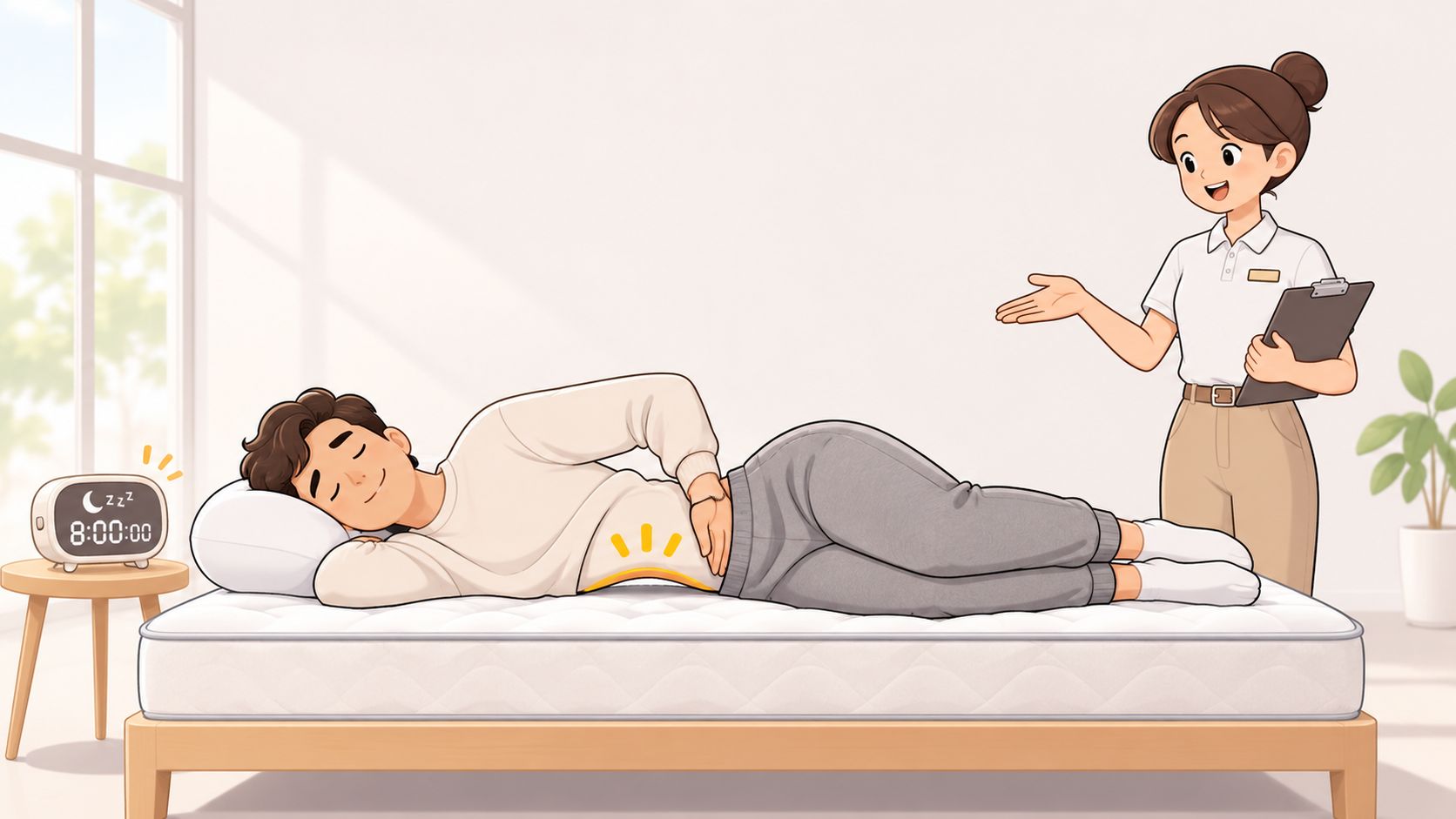
Softer isn't automatically better for the back, but a soft mattress isn't automatically harmful either. A surface becomes a concern when excessive sinking leaves the sleeper's pelvis, shoulders, and trunk poorly supported.
Think of a hammock with a deep hollow in its middle. The body follows that hollow instead of resting in a gently supported position. A mattress shouldn't behave like a board, but it shouldn't leave the sleeper folded into a sagging center, either.
The practical issue is load distribution, meaning how the mattress carries weight across the body. The shoulders and pelvis need room to settle, while the trunk and lower back still need support. A 2021 systematic review of 39 studies concluded that medium-firm mattresses generally offered better comfort, sleep quality, and spinal alignment than very soft or very firm surfaces.
Firmness levels and what they mean for back comfort
The descriptions below are starting points for comparison, not medical prescriptions. The sleeper recommendations describe candidates for testing, rather than guarantees of pain relief.
Firmness Level
Typical Feel
What the Evidence Shows
Often Suits
Very soft
Deep sink with a body-hugging feel
Excessive sinking can compromise alignment and contribute to morning discomfort
Side sleepers seeking deep pressure relief, with careful checking for sag
Medium-soft
Cushioned with some push-back
No clear category-wide recommendation; body weight and construction affect fit
Lighter sleepers seeking cushioning who test support carefully
Medium-firm
Balanced resistance with gentle contouring
Most consistently supported in the cited clinical literature
Adults with nonspecific chronic low-back pain seeking a starting point
Firm
Less give beneath shoulders and hips
Not established as superior to medium-firm for back pain
Heavier sleepers who sink too far into softer beds
Very firm
Hard feel with little contouring
No universal back-pain advantage established
Some stomach sleepers, provided pressure remains comfortable
Firmness and support aren't interchangeable. Firmness describes the resistance a sleeper feels. Support describes whether the whole mattress carries that sleeper comfortably without excessive sinking or unsupported areas.
A plush upper layer can feel inviting while the structure beneath it provides useful resistance. Conversely, a hard surface can feel substantial without accommodating the body comfortably.
Practical rule: Look for cushioning without collapse, not hardness for its own sake.
The most defensible starting zone sits around the middle of the range. The final choice still requires a personal fit test, because the label alone can't describe what happens beneath a particular sleeper.
Why Medium-Firm Keeps Coming Up in the Research
The best-known clinical comparison challenges the familiar advice to buy the firmest mattress available. In a randomized, double-blind, multicenter trial published in The Lancet14792-7/abstract), 313 adults with chronic nonspecific low-back pain received either a firm mattress with a hardness value of Hs = 2.3 or a medium-firm mattress with Hs = 5.6; after 90 days, the medium-firm group had better outcomes, with odds ratios favoring improvement of 2.36 for pain in bed, 1.93 for pain on rising, and 2.10 for disability.
Those odds ratios describe differences between study groups. They don't mean that an individual shopper should expect pain to fall by a matching percentage, and they aren't a promise that a mattress will resolve symptoms.
Why the middle can work better
A mattress can resist sinking too strongly as well as too weakly. Excessive resistance can concentrate pressure at the shoulders and hips, making a bed uncomfortable even when the sleeper doesn't sink far.
Both groups in the trial improved, with greater improvement in the medium-firm group, as described in the systematic review of mattress choice and back symptoms. That distinction matters: the result supports a useful comparison, not an all-or-nothing verdict against every firm mattress.
The broader orthopedic literature points in the same direction. A 25-year review covering 47 studies identified medium firmness as the most defensible general recommendation for adults with nonspecific low-back pain or morning stiffness.
Turn the findings into a shopping decision
The study's hardness values aren't a universal retail scale. A store's firmness label shouldn't be treated as a direct conversion of the trial's measurements.
A sensible comparison asks:
Pressure relief: Can the shoulders and hips settle without uncomfortable concentrated pressure?
Support: Does the trunk feel held rather than dropped into a hollow?
Movement: Can the sleeper change position without struggling against deep sink?
The mattress firmness guide provides a practical vocabulary for comparing those sensations. Medium-firm is a starting point for testing constructions, not a treatment prescription for sciatica, fracture, or every other cause of back pain.
How Sleep Position and Body Shape Change the Answer
Consider a back sleeper who enjoys a plush mattress during the first lie-down. After settling, the pelvis feels noticeably lower than the rib cage, and the sleeper keeps shifting to find a supported position. That person may need more resistance beneath the hips, even though the surface initially felt pleasant.
A side sleeper can have the opposite experience. On a hard mattress, the shoulder feels compressed before the waist settles comfortably. Moving toward a more cushioned surface may help, but only if the waist doesn't dip enough to bend the trunk sideways.
For a stomach sleeper, the useful observation is what happens through the middle of the body. If the hips settle far while the chest stays higher, the lower back may feel excessively arched. A firmer comparison can be worthwhile, although changing mattress firmness won't necessarily resolve neck discomfort from turning the head.
The same bed can feel different beneath different bodies
Body mass changes how much a sleeper compresses a mattress. A lighter person may barely engage its cushioning, while a heavier person sinks farther into the same construction. Body shape also changes where weight lands and where the surface needs to give.
A review of mattress design and sleep outcomes describes substantial variation across mattress designs and study methods. Broad descriptions such as soft or firm don't establish a standardized clinical category that works identically for every sleeper.
Sleep position, pressure points and the sign of too much softness
Sleep Position
Where Pressure Builds
Sign the Surface Is Too Soft
Firmness Tendency
Back sleeper
Lower back and pelvis
Pelvis sits substantially below the rib cage
Medium-firm is a useful starting point
Side sleeper
Shoulder and hip
Waist dips and the trunk bends sideways
Medium-soft to medium-firm, with shoulder relief
Stomach sleeper
Chest and hips
Midsection drops and the lower back arches
Firmer surfaces often merit comparison
Combination sleeper
Contact areas change with position
Hips settle unevenly or turning becomes difficult
Medium-firm or individually adjustable configurations
Heavier sleeper
Pelvis, trunk, and other weight-bearing contact areas
Greater sinking into the same surface
Often needs more resistance than a lighter sleeper
These are screening clues, not diagnoses. A shopper shouldn't force a particular firmness because a chart associates it with a sleep position.
Couples need separate observations, too. A shared mattress can feel supportive to one partner and overly yielding to the other, so each person should test independently before comparing notes. The guide to choosing a mattress for body type can help organize that conversation without reducing either sleeper to a weight category.
How to Test Firmness in the Showroom
A showroom visit can reveal obvious discomfort, difficult movement, and differences between surfaces. It can't reproduce a whole night or establish whether a mattress will improve a medical condition. The most useful visit is a consistent comparison, not a quick contest for the plushest first impression.
Follow a repeatable comparison
Settle into the usual sleeping position. Give the body time to relax rather than judging the bed immediately. Use a pillow arrangement similar to the normal setup, and avoid unfamiliar positions that already cause discomfort.
Check beneath the small of the back. A hand placed gently beneath the lumbar curve can help identify a noticeable unsupported space. This isn't a diagnostic test, and the spine's natural curve means that some space isn't automatically a problem.
Notice the pelvis relative to the trunk. A sinking sensation through the hips deserves attention, especially if the rest of the body feels higher. A partner can describe an obvious dip, but neither shopper should treat a visual check as a precise alignment measurement.
Roll naturally. Move from the usual position onto the side and back again, provided those movements are comfortable. Unusual effort or a feeling of climbing out of a hollow can help identify an unsuitable surface.
Listen for pressure complaints. Compressed shoulders, sore hips, or developing tingling shouldn't be dismissed as something to tolerate. Change position or stop the test if symptoms appear.
Sit up and stand carefully. Notice whether getting out feels manageable and whether stiffness appears afterward. A comfortable lying position and an easy transition out of bed are separate considerations.
Compare contrasting options under similar conditions. Keep the pillow and sleeping position consistent. Record a short observation such as comfortable shoulder, difficult turning, or unsupported waist instead of relying on a vague overall impression.
Don't confuse immediate comfort with morning relief
The common slip is choosing whichever mattress feels nicest at first contact. Deep cushioning can make a strong first impression, but that impression doesn't establish overnight suitability.
In a study of mattress support and sleeping position, the experimental mattress produced an 18% reduction in pain scores while lying down and a 25% increase in comfort ratings, yet participants had no measured improvement in pain on rising, stiffness on rising, or overall sleep quality compared with their own mattresses. The study doesn't establish that softer mattresses cure back pain; it shows why comfort and morning symptoms deserve separate attention.
A showroom test can help reject an uncomfortable fit. It can't certify a pain-free morning.
The hands-on mattress testing guide offers another way to prepare for comparisons. BILTRITE's sales associates can help clarify what each shopper notices without turning the visit into a pressure-filled decision.
How to Test a Mattress at Home Over Several Weeks
A home comparison works best when the sleeper records observations rather than trying to remember how the previous bed felt. The routine should be simple enough to continue on an ordinary workday, with separate notes for discomfort during sleep and discomfort after getting up.
An evidence review from the Canadian Agency for Drugs and Technologies in Health describes possible benefits from medium-firm mattresses and certain air-overlay systems while emphasizing limitations in the certainty of the evidence. A personal log can guide a purchase decision, but it isn't a validated diagnostic tool or proof that the mattress caused a change.
A practical home-trial routine
Establish a baseline before delivery. For a suggested week, record morning stiffness, pain when getting up, and how rested the sleeper feels. A personally chosen rating scale can make comparisons easier, provided the same definitions are used consistently.
Change a single variable where practical. Replace the mattress without simultaneously adding a different pillow and topper. If several changes happen together, the sleeper won't know which change was helpful or uncomfortable.
Record sleeping position rather than forcing it. Note the usual starting position and any memorable changes overnight. There's no need to stay in a painful position merely to make the test consistent.
Compare patterns across nights. Review whether discomfort repeatedly appears in the same place or at the same time. An unusually good or bad evening shouldn't outweigh the broader pattern.
Describe the complete setup. Include pillow height, the supporting base, the old mattress's approximate age, and visible dips. Record unusual daytime activity as well, since a demanding day can complicate the next morning's comparison.
Keep partners' records separate. Each sleeper should describe pressure, movement, and morning comfort independently. Different results may justify discussing independently configurable surfaces rather than compromising on a feel neither person likes.
Review and decide within the written terms. At the end of each suggested week, identify what improved, what stayed unchanged, and what became worse. Any adjustment or return decision needs to respect the actual purchase conditions.
Confirm the conditions before committing
The mattress return policy should be reviewed before purchase. BILTRITE Furniture-Leather-Mattresses can explain the applicable written conditions in person, including whether a particular purchase permits an adjustment, exchange, or return; a home-testing routine doesn't itself create those rights.
Keep the loop simple: Test, track, compare, adjust when appropriate, then decide.
Worsening symptoms shouldn't be endured merely to complete a trial. Sleepers with recent surgery or diagnosed spinal conditions need individualized clinical guidance before experimenting with configurations.
When Firmness Is Not the Real Problem
A better mattress can make resting more comfortable. It can't identify why the back hurts, and buying progressively firmer beds isn't a substitute for an assessment.
Morning discomfort also doesn't prove that the mattress caused the problem. A pillow that holds the head at an awkward angle, a long day in the same desk-chair position, or a worn sleeping surface can all be relevant details to discuss. None provides a diagnosis on its own.
When a clinician should take priority
The following symptoms or circumstances call for medical assessment rather than another showroom comparison:
Persistent or worsening pain: Discomfort continues, becomes more severe, or interferes increasingly with normal activity.
Radiating symptoms: Pain travels down a leg, particularly when accompanied by numbness or weakness.
An injury-related onset: Symptoms follow a fall, accident, or other injury.
A known medical context: Pain occurs after recent surgery or alongside a diagnosed condition such as inflammatory disease, spinal stenosis, sciatica, or hypermobility.
New weakness or significant neurological symptoms deserve prompt medical attention. A shopper shouldn't try to explain those symptoms away as an adjustment to a new mattress.
Separate comfort changes from treatment
The strongest clinical comparison concerns chronic nonspecific low-back pain. That term doesn't include every spinal diagnosis, and the results shouldn't be extended automatically to people with different conditions.
A clinician or physical therapist can help identify which observations matter and whether a sleeping-position change is appropriate. The guide to sleeping positions for lower-back comfort can support a practical discussion, but individualized care instructions take priority.
Useful appointment notes include when pain starts, whether it changes after standing, and whether similar symptoms occur away from the bed. Those details are more informative than a firmness label alone.
This is general information, not medical advice. The honest limit is straightforward: a mattress can support comfortable rest, but it can't replace diagnosis or a treatment plan.
Test Your Next Mattress in Our Greenfield Showroom
BILTRITE is a fourth-generation, family-owned business serving Metro Milwaukee since 1928. Its Greenfield showroom gives local families a place to slow down, compare comfort in person, and ask questions without needing to make a rushed decision.
BILTRITE doesn't sell online. The hands-on visit is central to its approach, although no showroom test can settle every question about overnight comfort. Its sales associates bring over 400 years of combined experience to helping shoppers describe and compare what they feel.
Bring observations, not just a firmness preference
A useful visit starts with the sleeper's usual position, any relevant clinical restrictions, and notes about the current bed. Couples benefit from bringing separate observations rather than deciding in advance that both need the same feel.
BILTRITE's mattress department has over 60 models, with Extra Firm, Ultra Plush, Plush, Medium, and Firm comfort levels. Options include hybrid, innerspring, memory foam, latex, flip-able, heavy-duty, and semi-heavy-duty mattresses, along with adjustable bases; its Mattress Center was updated in 2025 with an expanded gallery of flip-able, two-sided, and heavy-duty mattresses.
A local, family-focused approach
Beyond mattresses, BILTRITE emphasizes affordable, better-quality furniture, including USA-made, Amish-made, and solid-wood pieces. Small-scale furnishings and heavy-duty options reflect the different needs of apartments, growing households, and families planning for changing mobility.
The store is closed Sundays and Mondays to support family time. Visitors can plan a visit to 5430 West Layton Avenue in Greenfield and bring the questions that a label or photograph can't answer.
BILTRITE Furniture-Leather-Mattresses offers hands-on mattress comparisons and guidance for finding a comfortable balance of cushioning and support. Visit BILTRITE Furniture-Leather-Mattresses in Greenfield with sleeping-position notes and questions for a relaxed, no-pressure opportunity to test comfort in person.