What Is a Visco Foam Mattress? a Friendly Guide


A lot of mattress shoppers walk into a store feeling like they've already fallen behind. One sign says memory foam. Another says visco foam. A third talks about open-cell design, contouring, recovery, and support layers. By the time a couple has tested two or three beds, they may not be sure whether they're comparing real differences or just different words for the same thing.
That confusion is normal. Mattress shopping mixes comfort, engineering, and a lot of marketing language, which isn't always helpful when someone just wants to sleep better and wake up without aches. Families often show up wanting a simple answer, then realize there are several mattress types, several feels, and several tradeoffs to sort through.
Since 1928, BILTRITE has helped Metro Milwaukee families make sense of those choices in plain English. As a fourth-generation family business, the focus has always been on helping customers understand what they're feeling, what they're paying for, and what will hold up over time. A visco foam mattress is a great example of that. It can feel wonderful for the right sleeper, but it isn't automatically right for everyone.
Table of Contents
- Feeling Lost in the Mattress Maze?
- What Exactly Is a Visco Foam Mattress
- How Visco Foam Mattresses Perform
- The Honest Pros and Cons of Visco Foam
- Tips for Choosing Your Visco Foam Mattress
- Come Find Your Comfort at BILTRITE
Feeling Lost in the Mattress Maze?
A family comes in on a Saturday. One person says the old mattress feels too hard. The other says it feels too saggy. They've read about memory foam online, heard the word visco from a salesperson somewhere else, and now they're trying to remember whether “open-cell” meant cooler, softer, or both.
That kind of conversation happens all the time.
The confusion isn't because shoppers haven't done their homework. It arises because mattress terms often get thrown around without enough context. A shopper might hear “contouring” and think that sounds cozy. Another might hear the same word and worry about getting stuck in the bed. Both reactions make sense.
A good place to start is understanding the broad types of mattresses explained in BILTRITE's mattress guide. Once shoppers know where visco foam fits, the rest starts to click. It becomes easier to tell the difference between a mattress that feels gently cradling and one that feels too slow or too warm.
A mattress label doesn't tell the whole story. What matters is how the material behaves when a real person lies on it for more than thirty seconds.
That hands-on part matters even more with visco foam because this material has a very particular feel. Some sleepers lie down and relax right away. Others notice the slower response and want something more springy. Neither one is wrong.
That's where a family-run showroom can help. Instead of rushing through a script, a trained mattress team can watch how a sleeper settles into the bed, ask a few practical questions, and help connect the feel to real nightly comfort. After decades of helping Milwaukee-area families, that no-pressure, local approach still works better than trying to decode every buzzword alone.
What Exactly Is a Visco Foam Mattress
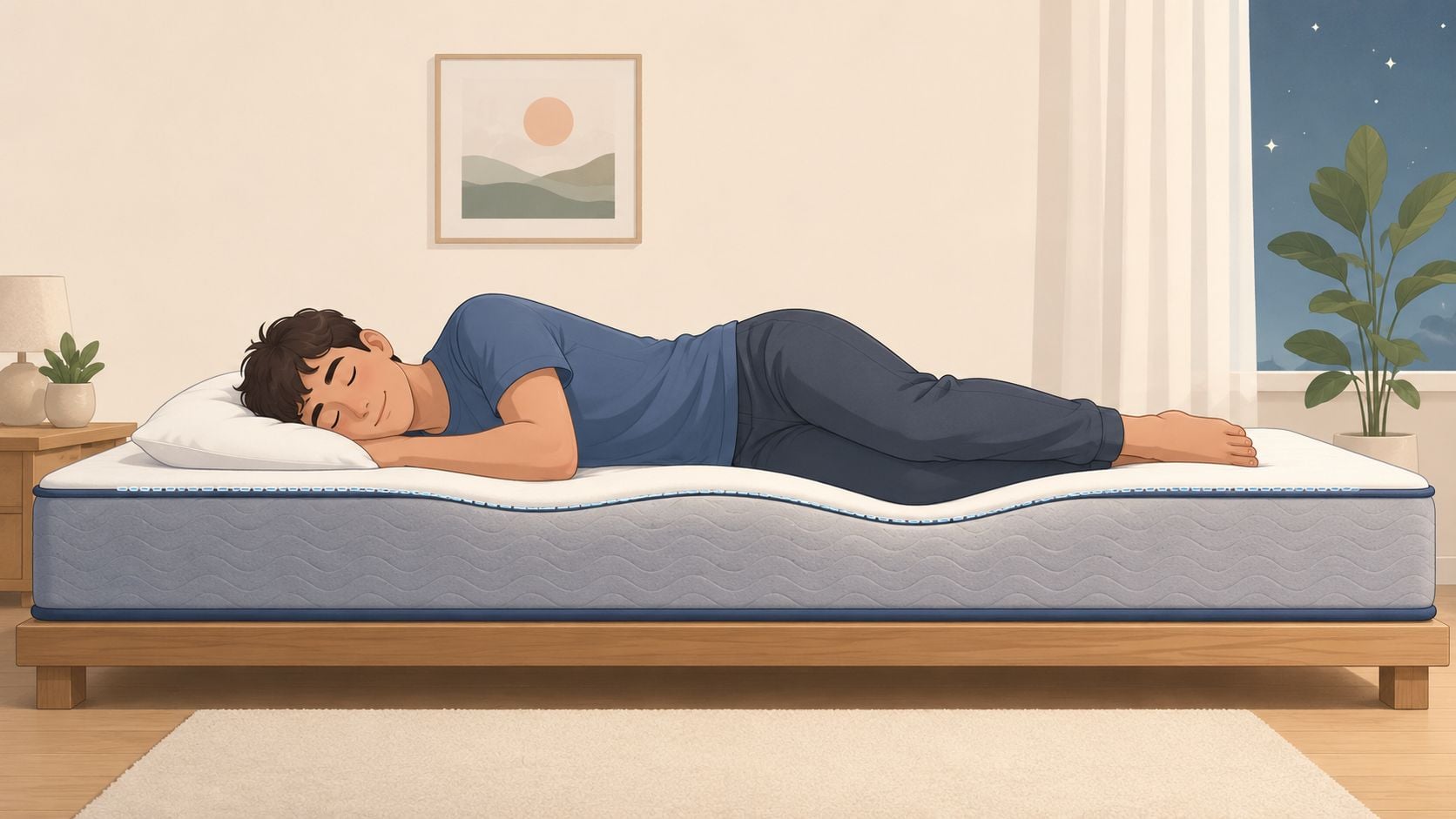
Visco foam is the technical name
A visco foam mattress is what many shoppers know as a memory foam mattress. “Visco” is short for viscoelastic, which sounds technical, but the feel is easy to understand.
Press a hand into bread dough or soft modeling clay, and the shape lingers for a moment before smoothing back out. Visco foam behaves in a similar way. It responds to pressure, conforms around the body, and has a slow recovery after that pressure is removed. That's a big part of why it feels different from a traditional springy bed.
The foam itself is an open-cell, flexible polyurethane foam with slow recovery, according to the Polyurethane Foam Association's guidance on viscoelastic foam behavior and testing conditions in household and healthcare uses (technical overview from the Polyurethane Foam Association).
Why shoppers hear so many different terms
The reason this material gets so much attention is that it wasn't created as a fad product. Its roots go back to aerospace engineering. NASA says memory foam technology traces back to 1966, when NASA-funded work led to the first viscoelastic polyurethane foam for cushioning test pilots and improving shock absorption. NASA also notes that the technology moved into consumer sleep products later, and by 1991 the first mattress-oriented product in the modern market was sold as Tempur-Pedic (NASA's memory foam history).
That history helps explain why visco foam is designed the way it is. It was built to cushion, conform, and distribute weight more evenly. Those qualities later made it attractive in mattresses, pillows, and seating.
For shoppers who want a little more background, BILTRITE also shares a broader look at the history of mattresses from straw mats to memory foam. That bigger picture can make modern foam choices feel a lot less mysterious.
A simple way to think about it is this:
- Traditional spring feel: more pushback, more bounce, faster response
- Visco foam feel: more contouring, less bounce, slower response
- Layered mattress feel: depends on how visco foam is combined with other support materials
Practical rule: If a shopper likes the feeling of the mattress gently shaping around shoulders and hips, visco foam is often worth a closer look.
How Visco Foam Mattresses Perform
A visco foam mattress doesn't just have a different name. It has a different behavior under the body, and that's what shoppers notice first in a showroom.
Pressure relief and body contouring
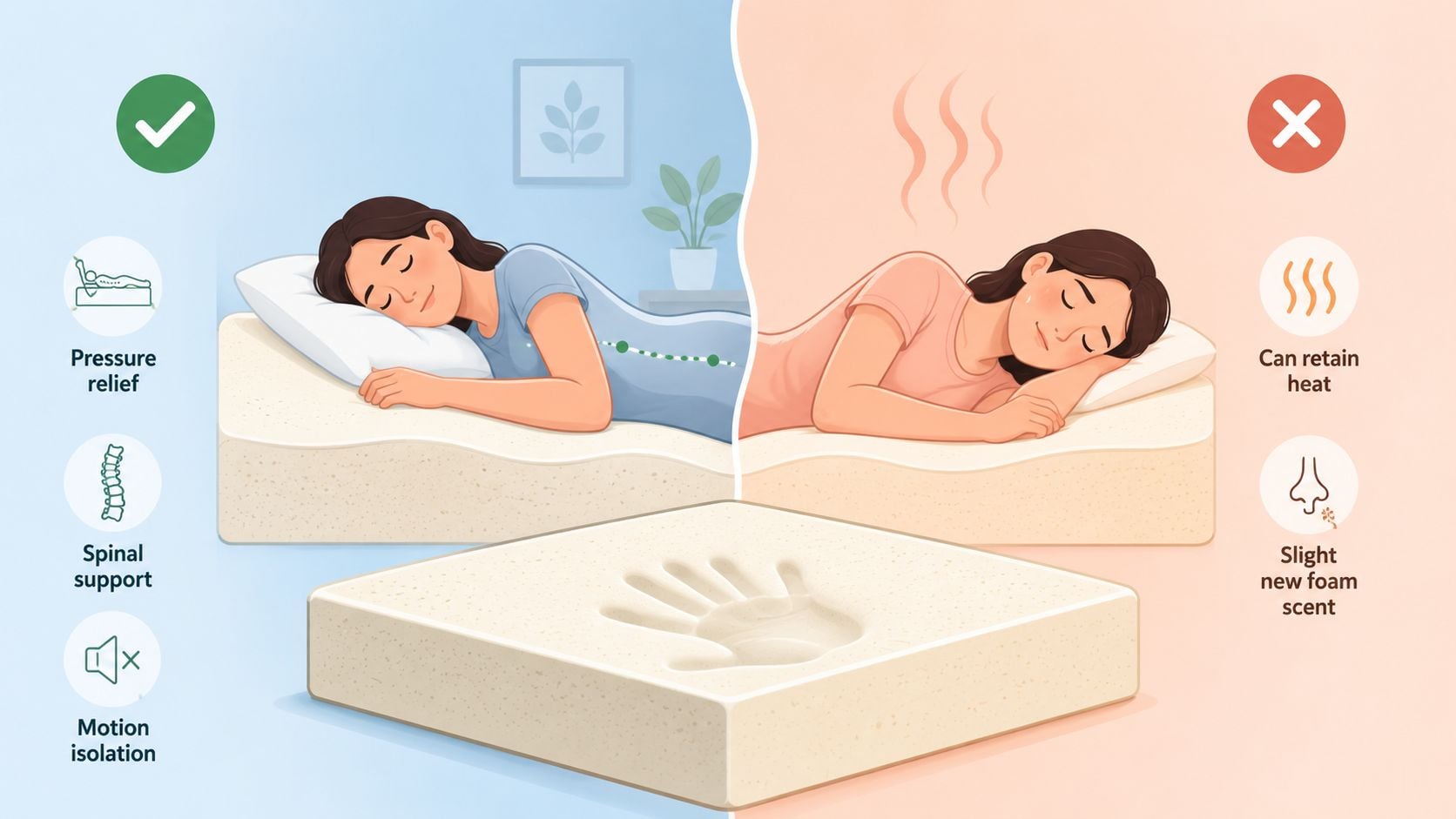
When someone lies on visco foam, the surface tends to compress more where the body is heavier and less where it is lighter. That creates a cradling effect around common pressure areas like shoulders and hips. Side sleepers often notice this quickly because those points usually carry more concentrated weight.
That contouring can feel reassuring, almost like the mattress is filling in the spaces around the body instead of pushing up in the same way everywhere. A shopper testing two beds may describe one as “it meets the body” and the other as “it presses back.” That first feeling is often what draws people to visco foam.
Still, contouring only feels good when it's balanced. Too much sink can make a mattress feel mushy. Too little can make the foam feel flat and unhelpful.
Motion control and partner disturbance
Another reason couples often ask about a visco foam mattress is movement. This material tends to absorb motion instead of sending it across the whole bed.
A simple showroom example helps. One partner rolls over or sits on one side of the mattress. On some beds, the other side reacts right away. On many visco foam models, that movement feels more contained. That can matter for light sleepers, different bedtimes, or households where one sleeper gets up earlier.
If one person tosses and turns and the other wakes easily, motion control can matter just as much as firmness.
That doesn't mean every visco foam mattress feels identical. Construction changes a lot, especially when the foam is paired with other support materials.
Density and firmness affect feel
While mattress shopping can get technical, it doesn't have to get confusing. Bedding-grade memory foam typically has densities of 48 to 72 kg/m^3, which is about 3 to 4.5 lb/ft^3, and firmness often falls in the IFD 12 to IFD 16 range. The same summary also notes that memory foam overall can range from 16 to 80 kg/m^3, which shows how much manufacturers can tune the material (memory foam density and firmness summary).
Those numbers matter because two mattresses can both be called memory foam and still feel very different.
A quick cheat sheet helps:
| What a shopper notices | What may be happening in the mattress |
|---|---|
| Softer initial hug | Lower firmness in the comfort layer |
| Slower, denser feel | Higher foam density |
| Easier movement on top | Firmer build or less visco foam near the surface |
| More contour at shoulders and hips | Softer or thicker comfort layers |
For shoppers comparing models, BILTRITE's guide to gel memory foam mattress vs memory foam can help sort out another common point of confusion.
The key lesson in the showroom is simple. Specs matter, but the body's response matters more. A mattress can sound good on paper and still not feel right after a few quiet minutes of lying in a real sleeping position.
The Honest Pros and Cons of Visco Foam
No mattress type works for every sleeper. That's especially true with visco foam, because people tend to either enjoy its slow, contouring feel or notice the tradeoffs right away.

Why many sleepers love it
The biggest strength of visco foam is comfort through body conformance. It can cushion bony or sensitive areas in a way that feels gentler than a firmer, more responsive surface. That's one reason people looking for pressure relief often stop and pay attention when they first try it.
Many couples also like the quieter, less bouncy feel. If one sleeper gets in late, shifts often, or gets up during the night, the other may notice less disturbance than on a mattress that transfers more movement.
There's also a “settled in” sensation that some people enjoy. Instead of sleeping on top of a mattress, they feel nestled into it a bit. For the right sleeper, that can feel secure and calming.
Where some sleepers hesitate
The most common concern is heat. Independent sleep and pressure-care discussion around viscoelastic foam notes that the material slowly conforms to the body, which can reduce air circulation. That means the fundamental question isn't merely whether memory foam is good or bad. It's under what conditions it helps or hurts sleep, and that often depends on the mattress construction and layering rather than the foam name alone (discussion of visco foam and sleep climate).
That's an important distinction. A mattress with visco foam near the surface may feel different from one where the foam sits deeper in the build. Cover materials, quilt layers, and support layers also affect whether the bed feels stuffy, balanced, or easier to move on.
Another hesitation is the “stuck” feeling some shoppers mention. This isn't always a flaw. For some people, it's the very thing they like. For others, especially those who change positions often, it can feel like the mattress is slow to let go.
Here's a plain-language way to sort the pros and cons:
- A strong fit: sleepers who want contouring and a quieter surface
- A maybe: combination sleepers who move a lot and don't like slow response
- A caution sign: shoppers already worried about warmth or deep sinkage
The foam name alone doesn't decide comfort. Layer placement, thickness, and the full mattress build shape the nightly experience.
After years of helping families compare beds in person, one pattern stands out. The happiest visco foam buyers usually know they like that distinct feel before they take it home. The disappointed ones often bought the idea of memory foam without testing whether they liked sleeping on it.
Tips for Choosing Your Visco Foam Mattress
A visco foam mattress is one of those products that really needs to be felt, not just described. Reading specs helps narrow the field, but lying down tells the full picture.
What to test in person
The first test is simple. Spend a few quiet minutes in a normal sleep position, not just sitting on the edge or bouncing once with a hand. A mattress can feel soft at first touch and still fail to support the body once the foam has a moment to respond.
Shoppers can use this short checklist:
- Check shoulder and hip comfort: Side sleepers should notice whether those areas settle in without feeling jammed.
- Notice ease of movement: Roll from one side to the other. If the foam feels slow and bothersome, that matters.
- Test edge confidence: Sit and lie near the edge to see whether it feels stable enough for daily use.
- Compare two different builds: One plusher and one firmer model can reveal personal preference fast.
For anyone trying to narrow choices before a store visit, BILTRITE shares a helpful overview on how to choose the right mattress.
Who should slow down before buying
Pressure relief sounds great, and often it is. But deep sinkage can make repositioning harder for some sleepers, especially older adults or bariatric users, according to pressure-care guidance that treats viscoelastic foam as part of a broader support system rather than a one-size-fits-all answer (reactive mattress pressure-care white paper).
That's one reason in-person testing matters so much. A shopper may love the softness for the first minute, then realize getting out of bed feels harder than expected. Caregivers and seniors often need to pay close attention to support, edge firmness, and ease of movement, not just surface comfort.
One practical advantage of shopping locally is that trained staff can help match the feel to the person, not just to a label. BILTRITE Furniture-Leather-Mattresses offers a large mattress selection in Greenfield, including heavy-duty options and flip-able, two-sided models that give shoppers more ways to compare support, durability, and long-term value in person.
A good visco foam choice should feel comfortable when the shopper lies down and manageable when the shopper turns, sits up, and gets out of bed. All of those motions count.
Come Find Your Comfort at BILTRITE
The last step in understanding a visco foam mattress is getting off the screen and onto the bed itself. That's where all the terms become real. Contouring becomes a shoulder feeling. Support becomes a lower-back feeling. Edge firmness becomes something a shopper can judge in five seconds.
Why a local showroom still matters
A local showroom gives shoppers a chance to compare different mattress feels side by side without guessing. That matters with visco foam more than almost any other category because response speed, contouring, and surface feel are hard to judge from product descriptions alone.
It also helps to have real conversation instead of canned sales talk. A family dealing with shoulder pain, a couple with different sleep styles, or an older adult who needs easier mobility may all need different things from the same mattress category.
BILTRITE has been serving Metro Milwaukee since 1928, and that family-run approach still shows up in how the mattress department works. There's room to ask questions, test different feels, and slow down enough to notice what the body is saying.
What families can expect in Greenfield
The Greenfield showroom gives shoppers access to a wide mattress selection, including over 60 models, small-scale and heavy-duty options, and exclusive flip-able and two-sided mattresses that many people don't realize are still available. For shoppers who want to make a smarter decision, it helps to know how to test a mattress in a showroom before visiting.
A store visit also gives families something online shopping often can't. They can compare comfort and value at the same time. One mattress may feel plush but too warm. Another may feel supportive but too firm. A third may land in the sweet spot. That kind of side-by-side clarity is hard to replace.
There's also something very Milwaukee about buying local from people who plan to be here for the long haul. BILTRITE is closed on Sundays and Mondays to support family time, and that says a lot about the kind of business it is. The goal isn't to rush people through a transaction. The goal is to help them choose well.
A mattress should fit the sleeper's body, habits, and budget. A showroom visit helps all three come into focus.
If visco foam has sounded confusing, that's okay. Once a shopper feels the difference for real, asks a few questions, and compares a few builds, the picture gets much clearer.
For anyone ready to explore a visco foam mattress in person, BILTRITE Furniture-Leather-Mattresses welcomes shoppers to the Greenfield showroom to try different feels, compare flip-able and heavy-duty options, and get friendly, no-pressure guidance from a family-owned team that's served Metro Milwaukee since 1928.