Leather Furniture and Dogs: A Pet Owner’s Guide 2026

A lot of dog owners sit on the same question for months. They want a living room that feels warm, grown-up, and pulled together, but they also know their dog isn't going to hover politely beside the sofa like a museum guest. The dog is going to jump up, nap hard, leave a little hair behind, and occasionally bring the outdoors in.
That doesn't mean leather is off the table. It means the wrong leather is off the table.
Families around Metro Milwaukee have been working through this exact decision for generations, and since 1928 BILTRITE has helped them choose furniture that can handle real life. The smart conversation around leather furniture and dogs isn't just “Will it scratch?” It's “What kind of leather ages well, cleans up without drama, and still looks good in a family room that sees regular use?” That's a much better question.
The other thing worth saying plainly is this. Leather is often described as easy to clean, but that shortcut leaves out the tradeoffs. Pet hair, dander, and slobber can still build up on leather, and guidance for pet households points out that cleaning frequency matters more than material choice alone, as discussed in this look at leather couches with dogs. Good leather helps. Good habits matter just as much.
Table of Contents
- Can You Really Have Nice Furniture and a Dog?
- Finding the Best Leather for Life with Dogs
- Happy Paws Happy Home Daily Furniture Care
- Your Guide to Cleaning Pet Messes on Leather
- Loving the Look Repairing Scratches and Wear
- Ready for a Sofa Your Whole Family Will Love?
Can You Really Have Nice Furniture and a Dog?
One of the most common stories goes like this. A family finally decides it's time to replace the tired old sofa. They want leather because it feels rich, lasts well, and gives the room some polish. Then somebody looks at the dog sprawled across the floor and says, “Maybe we should wait.”
That's usually the wrong conclusion.
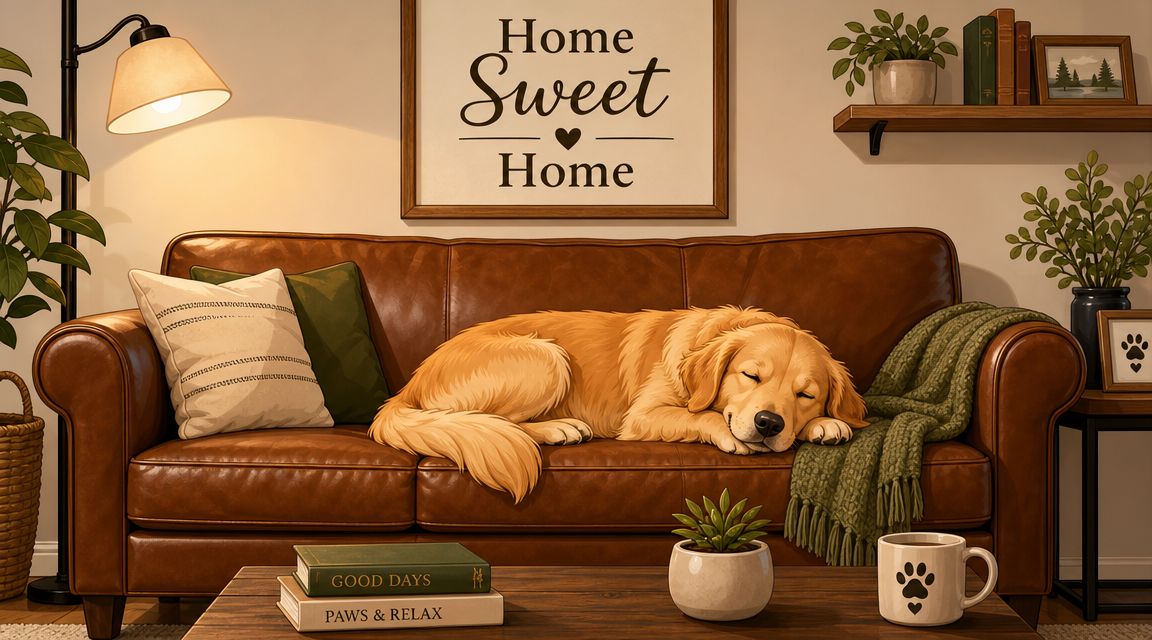
A nicer home and a dog-friendly home can absolutely be the same home. The trick is choosing furniture with real life in mind instead of shopping by looks alone. Leather furniture and dogs can work beautifully together when the leather is selected for durability, cleanability, and the way it will age over time.
Nice furniture isn't furniture that never gets touched. Nice furniture is furniture that still looks inviting after years of family use.
That's why the conversation should shift away from fear. A dog doesn't automatically ruin leather. Bad material choices do. Thin, low-quality surfaces tend to disappoint fast. Better leather, built on a solid frame and finished for everyday use, gives a family a much longer runway.
There's also a big emotional difference between buying a sofa that has to stay “untouched” and buying one that can be lived on. The second option is the one most families find enjoyable. A deeper dive into pet-friendly furniture choices for real homes usually makes that point clear pretty quickly.
A family room should feel lived in
A dog snoozing at one end of the sofa doesn't ruin the room. If anything, it proves the room is doing its job. Our goal isn't to freeze the furniture in time. It's to choose a piece that still feels handsome and comfortable after movie nights, muddy paws, and lazy Sunday naps.
That's where quality matters. American-made upholstery with better leather and stronger construction tends to reward patience. It doesn't just survive family life. It settles into it.
Finding the Best Leather for Life with Dogs
The biggest mistake shoppers make is treating all leather like it performs the same way. It doesn't. That single word on a tag can hide a huge range of quality, finish, and long-term behavior.
For homes with dogs, the smart move is simple. Prioritize full-grain leather or other protected top-grain leather. Skip bonded, faux, and flimsy lookalikes. Guidance from furniture specialists describes genuine full-grain leather as highly resistant to puncture and tearing, while faux leather, bonded leather, and vinyl are more likely to fail under claw contact, as explained in this guide to furniture for homes with pets.
Start with the hide, not the sales tag
Here's the plain-English version.
Full-grain leather keeps more of the hide's natural strength and character. In a dog home, that matters. It has substance. It can take everyday contact better, and when chosen in practical colors, it often ages in a way people like.
Protected top-grain leather is also a strong choice. It offers a more finished surface, which can make regular cleanup easier and reduce visible day-to-day wear. For many families, this is the comfortable middle ground between beauty and low-stress maintenance.
Bonded leather, faux leather, and heavily compromised materials often look fine in a showroom and disappoint in a family room. Claws, repeated friction, and daily traffic expose weaknesses fast.
Practical rule: If a sofa is being bought for a house with dogs, the buyer should care less about glossy looks and more about what happens after a year of jumping, spinning, napping, and wiping.
A helpful place to get familiar with the vocabulary is this explanation of top-grain and full-grain leather. Once those terms click, shopping gets much easier.
Dog-Friendly Leather Cheat Sheet
| Leather Type | Best For… | Good to Know |
|---|---|---|
| Full-grain leather | Families who want long-term durability and don't mind natural character developing over time | Strong and substantial. Minor wear often reads as lived-in character rather than damage |
| Protected top-grain leather | Busy homes that want easier cleanup and a more controlled appearance | A practical choice for daily use with dogs because the finish helps with maintenance |
| Delicate aniline-style leather | Formal spaces or households where pets rarely touch the furniture | More natural-looking, but less forgiving in everyday pet use |
| Bonded or faux leather | Short-term use or low-contact spaces | More likely to show failure under claw contact and repeated wear |
What to do in the showroom
Shoppers don't need to guess. They should ask for a swatch.
A smart evaluation includes a few hands-on checks:
- Drag a fingernail lightly across the sample. A pet-friendly leather should handle light contact better than a fragile decorative surface.
- Try a scratch check on the swatch. Furniture specialists often recommend testing how the finish reacts before committing.
- Look for a protected or waxed finish. Surface protection affects water repellency and how visible everyday scuffs become.
- Assess the color realistically. Darker, practical shades are often easier to live with in an active family room.
This is one reason the showroom matters so much. Leather is tactile. People need to sit on it, touch it, compare finishes, and ask questions. That old-fashioned way of shopping still works because it gives buyers the information a product photo never can.
One factual option families may run into while researching is BILTRITE Furniture-Leather-Mattresses, which publishes in-store guidance on leather furniture and dogs and focuses on better-quality furniture with American-made options. That kind of hands-on shopping is useful with leather because buyers can compare the feel and finish directly rather than guessing from a screen.
Happy Paws Happy Home Daily Furniture Care
The households that enjoy leather the longest usually don't rely on rescue missions. They rely on routine. That's the difference.
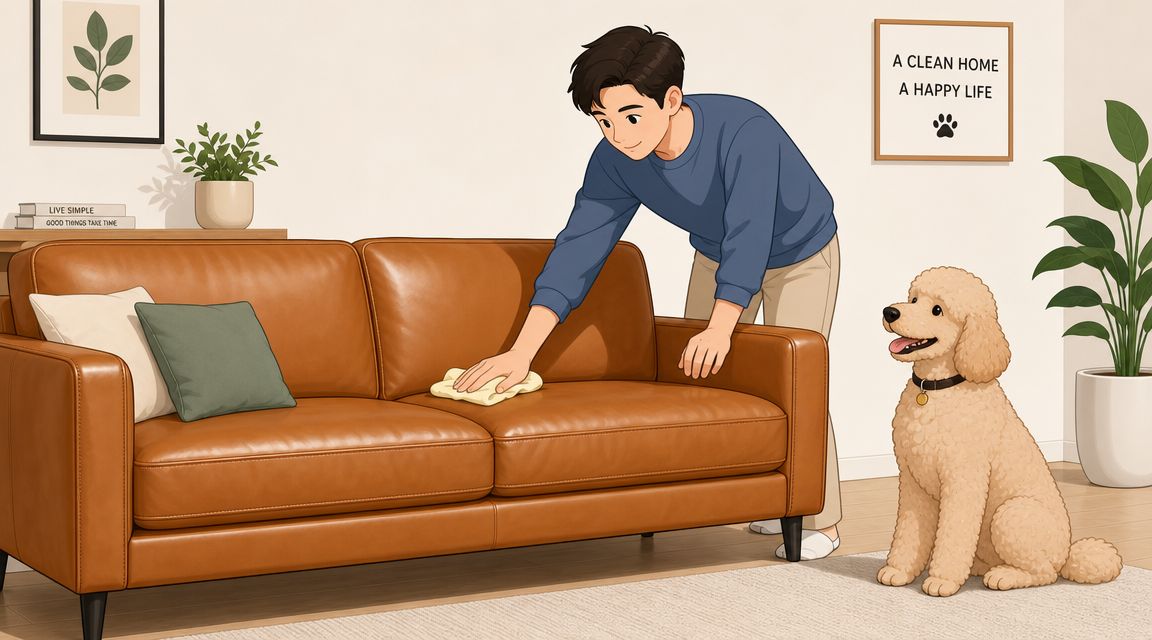
Leather care in a dog home doesn't need to become a hobby. It just needs a rhythm. Specialists recommend a fast weekly surface-cleaning routine instead of waiting for buildup or reacting only after a mess. That routine includes keeping dog nails trimmed and filed, then removing hair and dander with vacuuming or a lint roller across contact points, as noted in this leather furniture care advice for pet owners.
The weekly routine that works
The beauty of leather is that pet hair and grime stay on the surface instead of sinking into woven fibers. That makes the cleanup faster, but only if someone does it.
A realistic weekly routine looks like this:
- Trim and smooth the nails. Short nails are kinder to leather than sharp ones.
- Vacuum the seating areas and seams. Hair and dander collect where the cushions meet.
- Use a lint roller if needed. It's quick and gets the last bits without much effort.
- Wipe the high-contact spots. Arm tops, seat fronts, and the dog's favorite cushion usually need the most attention.
Some households also keep a washable throw on the dog's usual spot. That isn't admitting defeat. It's just smart. The sofa still looks like a leather sofa, but the highest-contact zone gets an extra layer between cleanings.
Small habits that protect the investment
People often overthink leather care and underdo the basics. The basics are what matter.
A designated dog blanket helps reduce body oils, dirt, and slobber on one area. Brushing the dog regularly helps keep loose hair off the furniture in the first place. A quick wipe-down after a rainy walk prevents grime from turning into a weekend project.
A sofa holds up better when care happens in small doses. Waiting until it looks dirty is what makes leather feel like work.
For homeowners who want a solid maintenance refresher, this leather furniture care guide is a helpful place to start. The benefit is simple. Less buildup. Less panic. More years of comfortable use.
Your Guide to Cleaning Pet Messes on Leather
Dog owners don't need a dramatic cleanup plan. They need a calm one.
When something lands on leather, speed matters more than scrubbing skill. For pet households, more protected, corrected, or pigmented grades are commonly recommended because they better resist wear, staining, and scratching, as discussed in this article on choosing leather for a sofa when dogs are in the house. That's one more reason the right finish pays off after the sale.
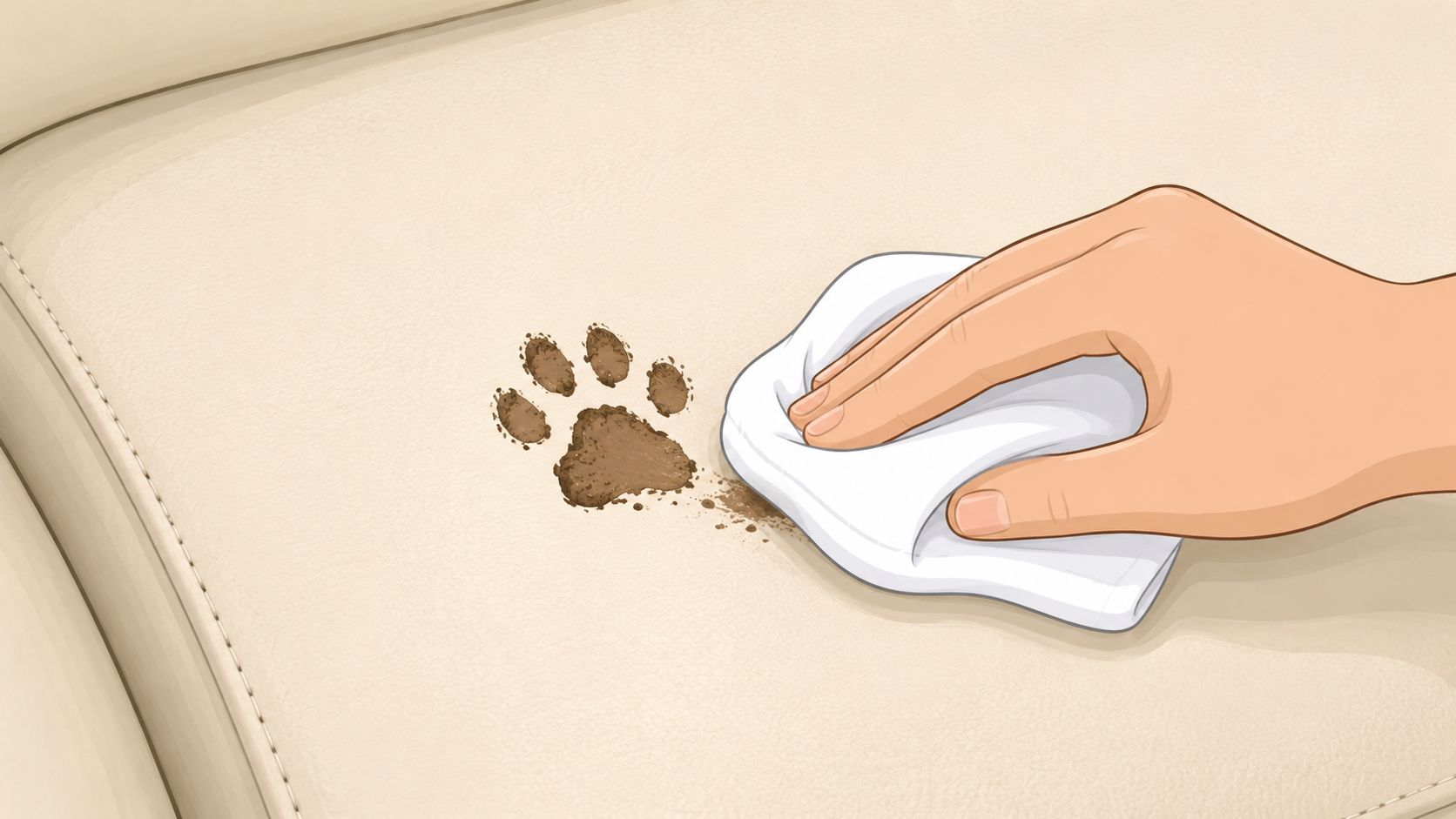
Act fast and stay calm
The first response should be gentle and immediate.
For muddy paws, drool, or a fresh spill, this order works well:
- Blot first. Use a dry cloth. Don't grind the mess into the surface.
- Use a clean damp cloth next. Light moisture is usually enough for fresh surface messes.
- Work from the outside in. That helps keep the mess from spreading.
- Dry the area with a soft cloth. Don't leave moisture sitting there.
If a dog has an accident, specialists recommend immediate blotting with a dry cloth, followed by a clean damp sponge or rag. If odor or staining goes deeper, enzymatic cleaners are reserved for those tougher events. The important part is timing. Waiting gives the liquid more opportunity to sink into unfinished or poorly protected leather.
What to use and what to avoid
Good cleanup is boring. That's a compliment.
Use soft cloths. Use a little water when the mess calls for it. Use products intended for leather when stronger cleaning is needed. Avoid turning the sofa into a chemistry experiment.
A few practical reminders help:
- Don't rub aggressively. Friction can make a small problem look bigger.
- Don't assume every cleaner is safe for leather. A tough household cleaner can create a new issue.
- Don't let wet spots linger. Prompt drying matters.
- Don't ignore seams and creases. Liquids like to settle there.
Some pet messes look worse than they are. Mud usually cleans up fine when caught early. Drool is mostly a maintenance issue. The bigger trouble starts when people hesitate, then attack the spot too hard.
The right leather gives families more forgiveness. It doesn't remove the need to clean. It makes cleanup manageable.
Homeowners who want more stain-specific tips can review this guide to removing stains from leather furniture.
Loving the Look Repairing Scratches and Wear
Scratches are the fear that stops many dog owners from buying leather in the first place. That fear is understandable, but it's often pointed at the wrong target.
High-quality leather is supposed to live a little. In pet-home guidance, full-grain leather in darker colors is widely recommended as the most durable option, and that same guidance notes that it can develop an attractive patina with gentle daily use rather than deteriorating, as described in this discussion of dogs and leather couches.
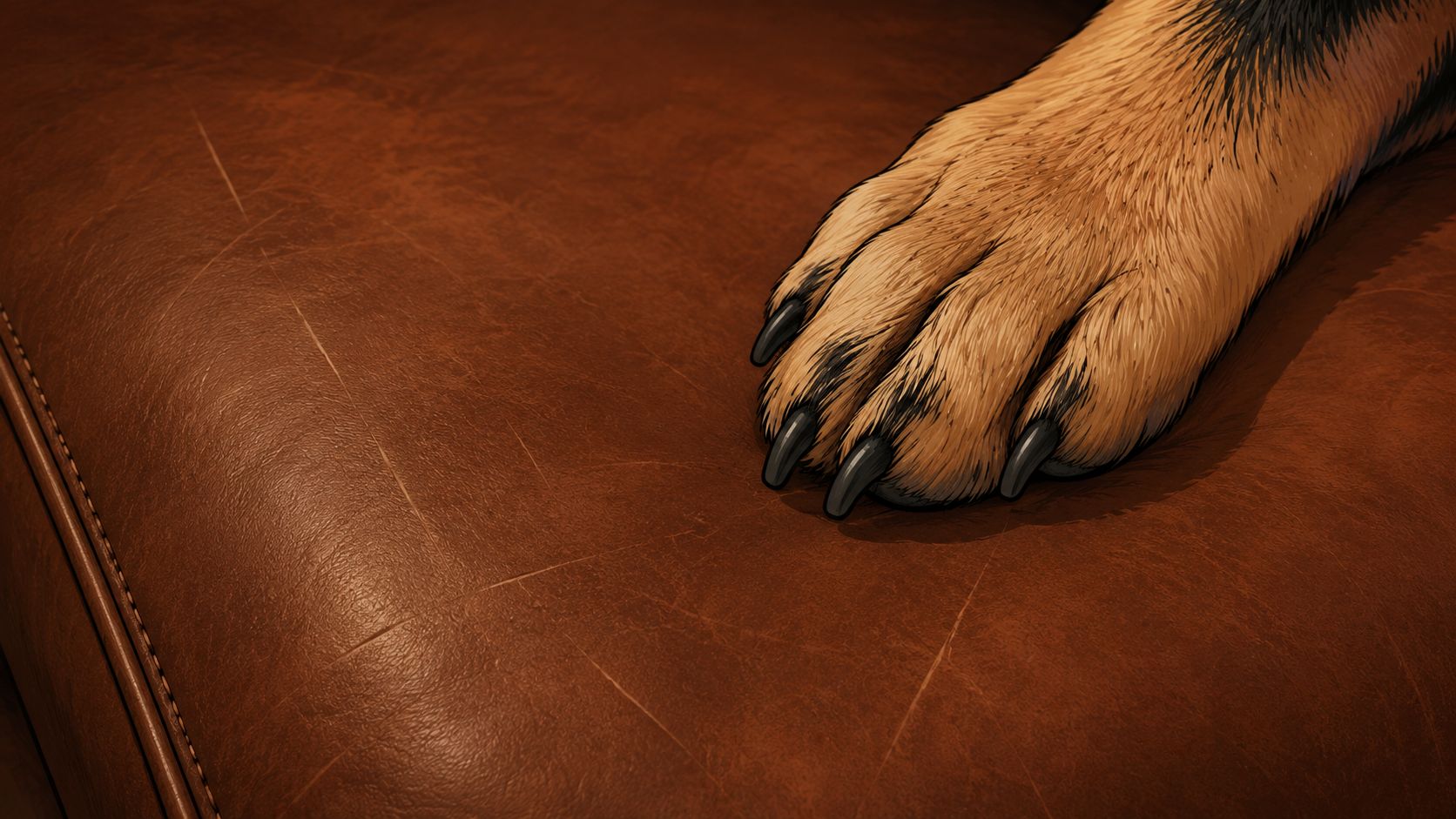
Some marks are character, not failure
That word matters. Patina.
On better leather, light wear can soften the look in a good way. The sofa starts to tell the truth about the home it lives in. A dog naps there. Kids pile in for movies. Guests sit down. Nothing about that is a problem.
Shoppers need to be honest with themselves. If they want a sofa that always looks untouched, leather in a dog home may frustrate them. If they want a sofa that becomes more comfortable and more personal over time, quality leather can be truly satisfying.
A leather sofa doesn't have to stay brand new to stay beautiful.
When to smooth it out
Not every scratch needs a repair plan. Some just need perspective.
For light surface marks, gentle buffing with a soft cloth and an appropriate leather conditioner can help soften the appearance. If a mark is more noticeable, a leather repair product designed for that finish may help. The key is restraint. Overworking a small scratch can draw more attention to it than the scratch did.
A few sensible habits make a difference:
- Keep expectations realistic. A family sofa should look lived in, not neglected.
- Treat small marks early. They're easier to blend when they're fresh.
- Match the repair approach to the leather. A protected finish behaves differently than a more natural one.
The long view is the useful one. A well-made leather sofa with a bit of character often looks better after years of real use than a lower-quality piece that stayed technically “cleaner” but never had the substance to age well.
Ready for a Sofa Your Whole Family Will Love?
The short answer is yes. Leather furniture and dogs can absolutely belong in the same home. The catch is choosing wisely and caring for it like it matters.
That means buying the right leather, not just any leather. It means understanding that weekly care beats occasional panic. It means accepting that quality furniture doesn't need to stay frozen in time to stay handsome. In many homes, it gets better when it settles into family life.
Since 1928, BILTRITE has helped Milwaukee-area families furnish homes for everyday living, not showroom fantasy. That matters with leather because people need to compare textures, colors, finishes, cushion comfort, and overall scale in person. A sofa is too important, and too tactile, to reduce to a guess.
There's also real value in walking into a local showroom and talking with people who know furniture. BILTRITE's team brings more than 400 years of combined experience, and the store focuses on affordable, better-quality furniture with strong American-made and Amish-made options. For shoppers starting the process, this sofa buying guide can help narrow down what to look for before visiting.
Families around Greenfield and Metro Milwaukee don't need to choose between a beautiful room and a happy dog. They just need a sofa built for both.
Ready to see and feel the difference for yourself? BILTRITE Furniture-Leather-Mattresses welcomes shoppers to the Greenfield showroom to explore leather options in person, compare American-made quality, and get friendly guidance without pressure.