Box Spring Replacement: A Friendly BILTRITE Guide


That little creak under the mattress can send a homeowner down a rabbit hole fast. One night the bed feels fine, and the next morning there's a dip, a wobble, or that nagging thought that the mattress may not be the problem at all. That's usually when box spring replacement jumps onto the to-do list.
Around Metro Milwaukee, that question comes up all the time. BILTRITE Furniture was founded in 1928 by Irwin Kerns and his wife Frieda Kerns as an upholstery shop in Milwaukee, and it remains a 4th-generation family-owned business with 98 years of service to the Metro-Milwaukee community according to BILTRITE's company history. That kind of history teaches a simple lesson. A bed only feels as good as what's supporting it.
The bigger change today is that mattresses have changed. Many newer foam, latex, and hybrid beds don't want the same support older two-sided innerspring mattresses used years ago. So the question isn't just whether a box spring should be replaced. It's why this mattress needs this kind of support, and whether the current setup is helping or hurting.
Table of Contents
- Time for a Change or Just a Squeaky Bed
- Do You Even Need a New Box Spring
- Choosing Your New Bed Support
- How to Measure for a Smooth Swap
- The Easy Guide to Removing and Replacing
- What to Do with the Old Box Spring and Next Steps
Time for a Change or Just a Squeaky Bed
A lot of bed problems announce themselves the same way. First comes a squeak when someone rolls over. Then the mattress starts looking uneven. Then somebody sits on the edge and says, “Something underneath this thing isn't right.”
That's the moment where a lot of people assume the answer is obvious. Buy a new mattress, buy a new box spring, replace everything, move on. Sometimes that's the right move. Sometimes it's money spent in the wrong place.
The sound underneath matters
A squeak doesn't always mean the mattress is worn out. It can point to a tired frame, an aging box spring, loose hardware, or slats that have shifted over time. If the support under the mattress has started to flex unevenly, the mattress above it can begin to act worn long before it actually is.
Practical rule: If the bed feels different in one area than another, check the support system before blaming the mattress.
Families often notice this with guest rooms, kids heading off to college and coming back, or a main bedroom where the mattress still looks decent but the sleep quality has slipped. What changed may not be the top layer. It may be the layer no one sees.
The old answer isn't always the right answer
Traditional box springs were designed for older mattress styles that benefited from some give underneath. Many current mattresses are built differently. They're often heavier, more rigid, and less forgiving of weak or uneven support.
That's why box spring replacement has become less about swapping one box spring for another and more about choosing the right base for the mattress now in the home. In some rooms, that means replacing a worn support. In others, it means switching to a solid foundation, a bunkie board, or a platform setup that fits the mattress better.
BILTRITE has spent generations helping Milwaukee-area homeowners sort through exactly that kind of decision. The honest answer is usually the most useful one. Some beds need a full support overhaul. Others just need a careful inspection and one smart change.
Do You Even Need a New Box Spring
Before anyone starts hauling a foundation down the hallway, it pays to inspect what's already there. A lot of stores default to “replace it all,” but that isn't always the right answer for the room, the mattress, or the budget.

One of the more useful truths in this category is simple. Many retailers advise replacing box springs with new mattresses to avoid voided warranties, but that's often the simplest answer rather than the right answer. Modern mattresses such as memory foam, latex, and hybrids perform best on solid foundations or platform beds, so an undamaged, newer foundation may not need immediate replacement, as noted in this foundation guidance on modern mattress support.
Start with the warranty
The first check isn't even physical. It's paperwork.
Some mattress warranties require a very specific support system. If the manufacturer says the mattress needs a matching foundation, a flat base, or slats within a certain spacing, that requirement matters. Skipping it can create a support problem and can also affect warranty coverage. Anyone sorting through this should compare the current setup with the guidance in BILTRITE's box spring and mattress support overview.
Try a simple inspection at home
This part is straightforward and usually takes only a few minutes.
- Use a straight edge: Lay a level, yardstick, or another straight piece across the top of the foundation. Look for sagging, uneven gaps, or a visible dip in the middle.
- Press across the surface: Push down on several areas. A healthy support surface should feel consistent. Soft spots, hollow sections, or one corner dipping more than another are warning signs.
- Listen to the bed: Loud creaks and pops don't always mean failure, but they do signal that something below the mattress deserves attention.
- Check slats and frame contact: If the mattress sits on slats, spacing matters. Slats that are too far apart or bowed can create trouble even when the mattress itself still looks good.
A foundation doesn't have to look broken to stop doing its job. Uneven resistance is often the giveaway.
For homeowners trying to decide on box spring replacement, this inspection is the difference between guessing and knowing. If the support is flat, sturdy, and compliant with the mattress requirements, replacement may not be necessary. If it's soft, uneven, or visibly sagging, the issue underneath needs attention before any new mattress can perform the way it should.
Choosing Your New Bed Support
If the current support has reached the end of the line, there's more than one good replacement path. That's where the “why” matters most. The right choice depends on the mattress type, desired bed height, room layout, and how much long-term durability the household needs.
Why modern mattresses changed the rules
Older support systems were built around older mattress construction. Newer hybrids and foam beds changed that. According to this industry discussion of box spring lifespan and modern mattress load, the common 8 to 10 year lifespan often doesn't account for newer rigid mattresses that transfer more static load to the support below, which is one reason the market has shifted toward solid, low-profile foundations for better long-term support.
That shift makes sense in real homes. A flexible old box spring under a rigid hybrid mattress can create a mismatch. The mattress wants a flat, steady surface. The aging support underneath may still be springing, dipping, or softening in spots.
A support system should match the mattress sitting on it, not the mattress that used to be there years ago.
For shoppers comparing wood support styles, this explanation of wood box spring construction and support helps show why many people now move toward sturdier, less flexible designs.
Bed Support Options at a Glance
| Support Type | Best For | BILTRITE Advantage |
|---|---|---|
| Traditional box spring | Older two-sided mattresses that were designed to work with a springy base | Familiar feel and height for classic setups |
| Solid foundation | Foam, latex, and many hybrid mattresses that need flat, steady support | Strong match for modern mattress construction |
| Bunkie board | Lower bed height, platform beds, or simple support upgrades without bulk | Slim profile that helps keep the bed from sitting too high |
| Platform bed | Homes that want all-in-one support without a separate box spring | Cleaner setup with fewer pieces to manage |
What works and what usually doesn't
A traditional box spring still has a place, but it's a narrower place than it used to be. It makes the most sense when the mattress was designed for that style of support. If the bed is an older two-sided mattress and the owner likes that traditional feel and height, a true box spring can still fit.
A solid foundation is often the practical answer for a modern mattress. Many homeowners opt for such a foundation after replacing a tired old support under a hybrid or foam bed. Low-profile versions are especially useful for taller mattresses or rooms where the overall bed height already feels high.
A bunkie board is handy when the frame is fine but the support surface needs help. It's also useful when the goal is to keep the mattress lower without sacrificing support. For a lot of guest rooms, apartments, and smaller spaces, that slimmer profile solves two problems at once.
A platform bed removes the extra layer altogether. With the right slat construction, it can be a clean, sturdy setup that keeps things simple.
BILTRITE Furniture-Leather-Mattresses also carries support options such as replacement foundations and all-in-one mattress support systems, which can make sense for households that want a simpler setup without a separate traditional frame and box spring.
For homeowners who care about long-term durability, material quality matters. BILTRITE specializes in USA-made and Amish-made furniture, with store identifiers for pieces crafted by skilled Amish artisans and built with real solid wood, as noted in this feature on BILTRITE's craftsmanship focus. That matters in bed support too. Wood construction, secure slats, and heavy-duty options often hold up better for busy family homes than light, flexible alternatives that start shifting over time.
How to Measure for a Smooth Swap
A replacement that fits the mattress but feels awkward every night isn't much of a win. Bed support changes the total height of the bed, and that affects comfort every single day.
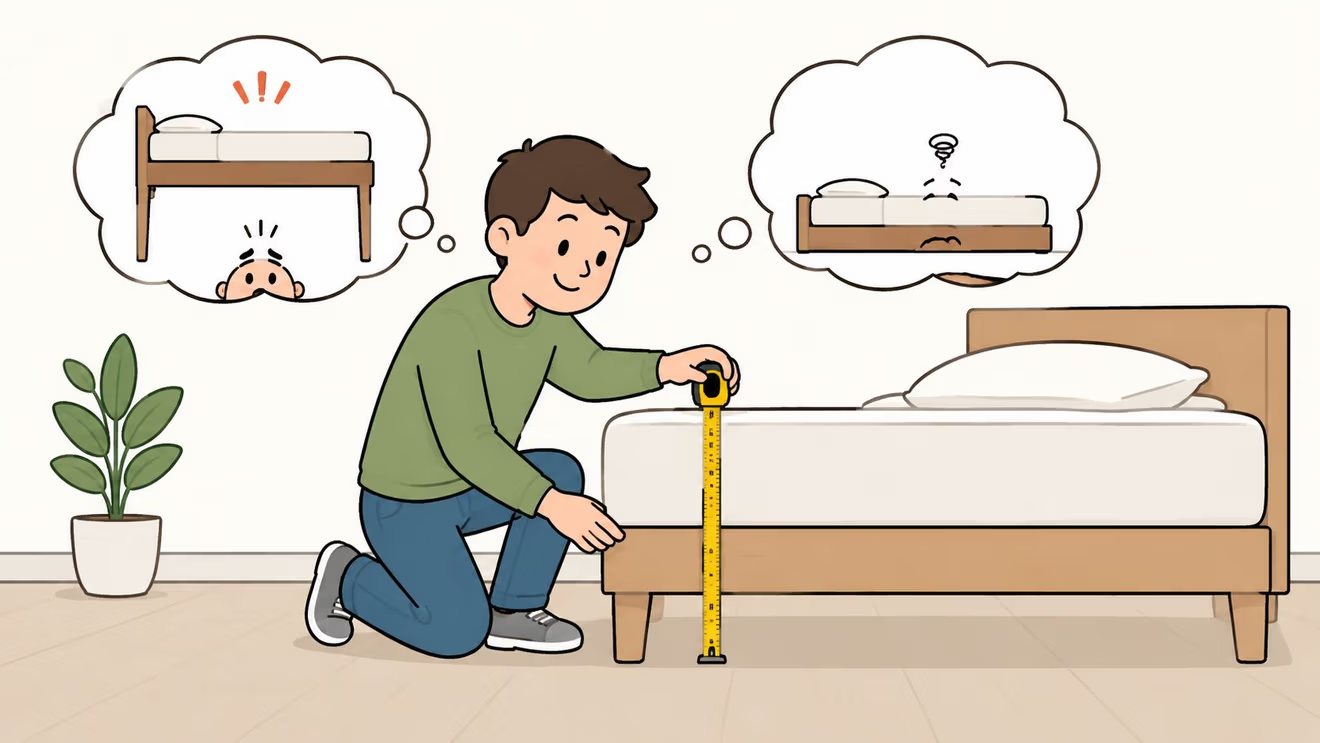
Measure the height you actually want
Start from the floor and measure to the top of the current mattress. Then decide whether that height feels easy, awkward, or too low. A new low-profile foundation can bring the bed down. A taller support can bring it up.
This matters a lot for seniors, caregivers, and anyone with mobility concerns. If someone has to climb into bed or sink down too far to sit, the support choice should be adjusted before the old piece is replaced with something that creates the same problem again.
A useful way to think about it is simple:
- Too high: Feet dangle when sitting on the edge, and getting in feels like a climb.
- Too low: Standing up takes extra effort, especially first thing in the morning.
- Comfortable: Sitting and rising feels steady and natural.
Measure the path into the room
A box spring replacement can stall out before it ever reaches the bedroom. Tight stair turns, apartment hallways, older bungalow entries, and narrow upstairs landings all matter.
Use a tape measure on the full path:
- Entry doors: Measure width and check for storm door clearance.
- Hallways and corners: Tight turns can be trickier than straight openings.
- Stairwells: Watch ceiling slope and handrail pinch points.
- Bedroom doorway: The final turn is often the one people forget.
For anyone replacing more than one bedroom piece at the same time, BILTRITE's measuring guide for furniture delivery spaces is a helpful planning tool. The same measuring habits that help with sectionals and recliners help with foundations too. A few minutes with a tape measure can save a lot of frustration on delivery day.
The Easy Guide to Removing and Replacing
The physical swap is usually easier than people expect. It's bulky work more than complicated work, and a helper makes it safer.
A simple swap order
Follow the steps in this order so the mattress and frame stay protected:
- Strip the bed first. Remove pillows, sheets, protectors, and anything else that adds drag.
- Move the mattress off carefully. Lean it against a wall if the room allows, and keep it away from sharp corners or rough surfaces.
- Lift out the old support. If the bed is a larger size with split pieces, remove one section at a time.
- Check the frame while it's exposed. Tighten loose hardware, inspect center support, and make sure the contact points are level.
- Set the new support in place. Make sure it sits squarely and doesn't rock.
- Return the mattress and recheck alignment. The mattress should sit evenly with no overhang caused by a shifted base.
If a new foundation doesn't sit flat on the frame, stop there and fix the frame issue first. A good support can't compensate for a twisted base underneath it.
A quick test at the end helps. Sit on both sides, lie in the center, and listen for movement. The bed should feel steady and even.
When delivery help makes sense
DIY works fine for many homes, but not every replacement is worth wrestling through a stairwell. Larger supports, upstairs bedrooms, and tight turns can turn a simple job into an exhausting one.
That's also why some households choose delivery and setup when replacing a mattress and support together. On the planning side, this BILTRITE guide for moving heavy furniture upstairs shows the kinds of obstacles that often catch people off guard. When access is tricky, having the move handled carefully can save walls, door trim, and backs.
What to Do with the Old Box Spring and Next Steps
The old support is usually the least glamorous part of the whole project, and it's often the part that lingers in the basement or garage longest. Better to decide on disposal before the swap happens.

Don't let the old foundation linger
A few local-minded options usually make the cleanup easier:
- Check municipal bulk pickup: Many communities around Metro Milwaukee schedule bulky item collection on certain dates.
- Ask about recycling: Some facilities accept mattress and foundation materials, though rules vary by location.
- Arrange removal with delivery: If replacement is happening with a new mattress set, removal may be available depending on condition and service details.
For homeowners who want to look into removal options before making the switch, BILTRITE's mattress and foundation removal information is a useful place to start.
A local stop is still the easiest way to compare support
This is one category where seeing the pieces in person helps. Height, rigidity, wood construction, and overall feel are easier to judge on a showroom floor than by guessing from a description. That's especially true for families balancing mattress type, room size, bed height, and long-term durability.
BILTRITE has been part of the Metro Milwaukee furniture story since 1928, and that family approach still matters. The store focuses on affordable, better-quality furniture, with a strong mix of USA-made, Amish-made, solid wood, small-scale, and heavy-duty options. The mattress department includes over 60 models, and the sales team brings over 400 years of combined experience helping shoppers sort through real-life trade-offs. The showroom is in Greenfield, and the store is closed on Sundays so families can spend time together.
If box spring replacement is on the list, a visit to BILTRITE Furniture-Leather-Mattresses can make the decision a lot easier. Come down to the showroom in Greenfield, see the support options in person, and talk with a team that knows how Milwaukee homes are built and how families live. There's no rush and no hard sell. Just friendly help, solid choices, and the kind of guidance that comes from generations of doing this work the right way.