Custom Made Furniture USA: A Buyer’s Guide for Your Home


A lot of Milwaukee families land in the same spot. The living room needs help, the dining set has seen better days, or a new condo needs furniture that fits. Then the search starts. One sofa is too long, another comes in the wrong fabric, and that “Made in USA” label suddenly feels a little fuzzy once questions come up.
That's where custom furniture starts to make sense. Not in a fancy, intimidating way. In a practical, everyday way. A family needs a sectional that can get through a narrow stairwell. A couple wants solid wood in a stain that works with older trim. A caregiver needs a chair that's supportive, durable, and easier for daily use. Custom made furniture in the USA gives people room to solve real problems instead of settling for “close enough.”
For families around Metro Milwaukee, that matters. Since 1928, a fourth-generation family business has helped neighbors sort through those choices with a straightforward approach: affordable, better-quality furniture, a strong focus on USA-made and Amish craftsmanship, and honest guidance that respects both style and budget.
Table of Contents
- Welcome to the World of Custom Furniture
- Why Choose USA and Amish Made Furniture
- The Custom Furniture Process From Dream to Delivery
- Let's Talk Budget How Much Does Custom Furniture Cost
- Design Tips for Every Milwaukee Home
- How to Know It's Truly USA Made
- Ready for a Change Come Say Hi at Our Showroom
Welcome to the World of Custom Furniture
A common story goes like this. A family moves into a new place, measures the room once, shops online for hours, and still can't find a sofa that fits the wall, the doorway, and the way they live. The pieces look fine on a screen, but once the details matter, “standard size” starts causing trouble.
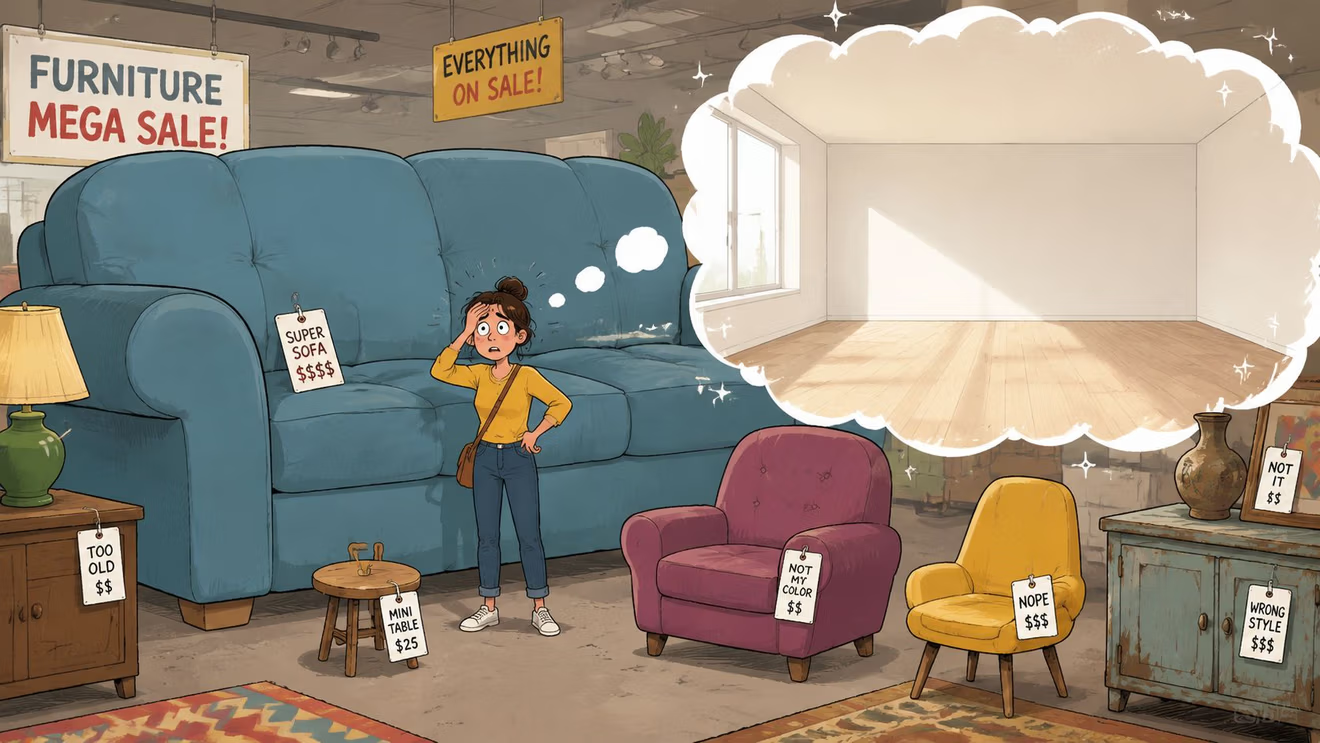
Custom furniture works differently. Instead of asking a home to adapt to the furniture, the furniture adapts to the home. That can mean a smaller sofa, a different arm style, a solid-wood table in a warmer finish, or seating built for everyday family use instead of showroom looks.
The interest in that kind of flexibility keeps growing. The global custom furniture market is projected to grow by 9.4% annually from 2026, driven by stronger demand for personalized home décor and bespoke furniture solutions that mass producers can't offer, according to Coherent Market Insights on the custom furniture market.
What custom really means
Some shoppers hear “custom” and think it means designing furniture from scratch with a pencil sketch and a big budget. Usually, it's much simpler than that. A custom order often starts with an existing frame or style, then adds choices such as:
- Size adjustments: better fit for a room, condo, apartment, or tricky wall
- Fabric or leather options: a look that suits kids, pets, or everyday use
- Wood species and finish: oak, maple, cherry, and stain choices that match the home
- Hardware details: small changes that make a piece feel more personal
Practical rule: Custom furniture isn't only about style. It's often about fit, function, and getting something that works for daily life.
A lot of confusion disappears once shoppers see the process in plain language. That's why resources like custom furniture made simple help break it down into real-world choices instead of design jargon.
Why families start here now
Mass-produced furniture can be fast, but fast doesn't always solve the right problem. A room with unusual dimensions, a family with active kids, or a homeowner who wants solid wood often needs more than an off-the-floor option.
Custom made furniture in the USA gives families more say in what comes into the home. For many people, that's the difference between buying something temporary and choosing something they'll feel good about for years.
Why Choose USA and Amish Made Furniture
“Made in USA” and “Amish made” get attention for good reason, but its inherent value isn't the label by itself. It's what usually comes with that label. Better materials, steadier construction, and a level of craftsmanship that people can see and feel when they open a drawer, run a hand across a finish, or sit down on a sofa.
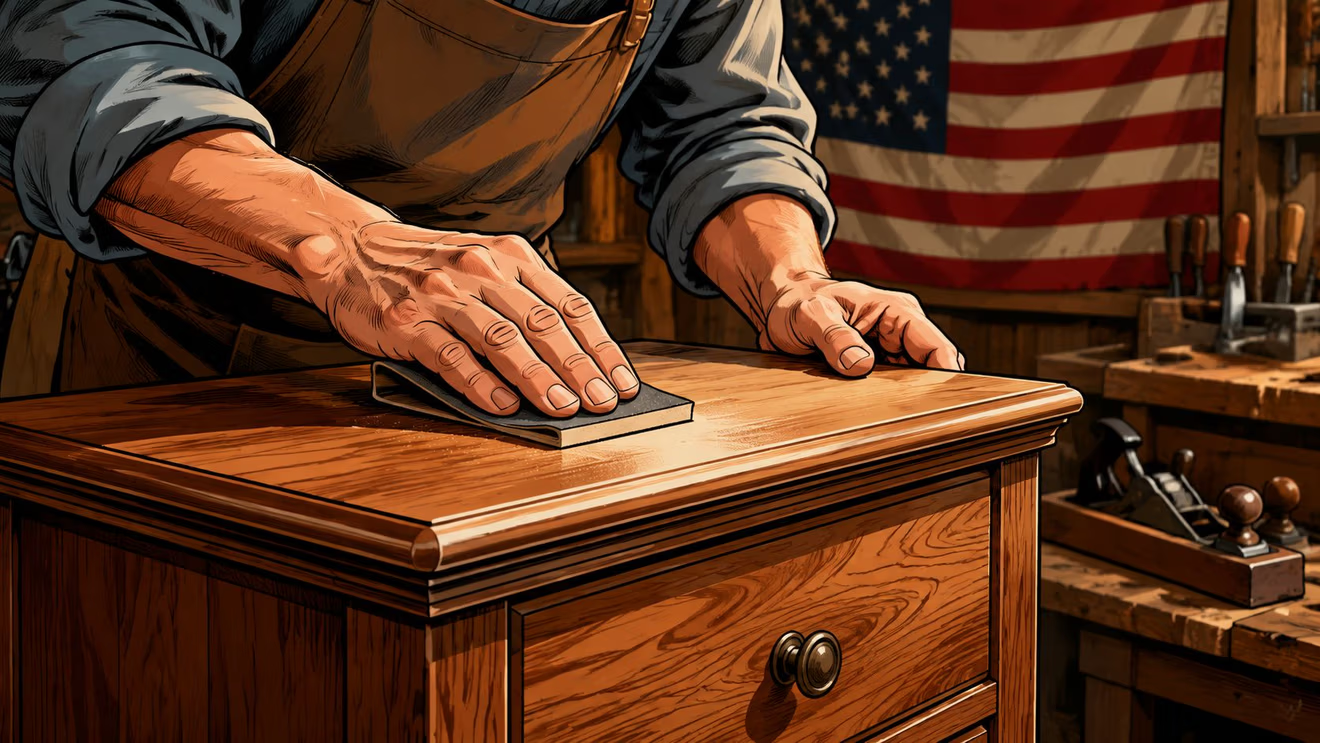
For solid-wood furniture, Amish craftsmanship stands out because the standards are so specific. Authentic Amish craftsmanship mandates kiln-dried solid hardwoods like Oak and Maple with stabilized moisture content to help prevent warping. Combined with traditional joinery, that furniture can retain 70-80% of its resale value over a decade.
That point matters because many shoppers get tripped up by the phrase “real wood.” In everyday furniture talk, that phrase can mean very different things.
Solid wood versus look-alike construction
A solid-wood piece is built from actual hardwood, not a fiberboard core or veneered particleboard. That changes how the furniture ages, how it handles daily use, and how repairable it is later.
A quick comparison helps:
| Construction type | What shoppers usually get |
|---|---|
| Solid hardwood | Natural grain, stronger structure, longer usable life, easier refinishing |
| Composite core with veneer | Lower-cost appearance of wood, but less durable edges and fewer repair options |
That's one reason many Milwaukee homeowners lean toward Amish and USA-made wood furniture for dining rooms, bedrooms, and home offices. A solid piece tends to feel steadier because it usually is steadier.
Why the build quality shows up in everyday life
The craftsmanship isn't abstract. It shows up when drawers slide smoothly, chairs stay tight over time, and table tops hold up to family dinners, homework, and holidays. It shows up in hand-applied finishes that don't just sit on top of the wood, but protect it while still letting the grain show.
Furniture with honest materials tends to age better because the construction gives it something solid to age from.
For shoppers who want a clearer explanation of why domestic craftsmanship matters, the advantages of buying furniture made in the USA lays out the practical side of the choice.
Community matters too
There's also a local value in buying this way. When furniture is made by American workers and Amish artisans, families support skilled trades and keep traditional methods in use. That doesn't make a piece right for every budget or every room, but it does give buyers a clearer connection between what they pay for and what they bring home.
For people shopping custom made furniture in the USA, that connection often becomes the deciding factor. They aren't only buying a style. They're buying the materials, the workmanship, and the confidence that the piece was built with care.
The Custom Furniture Process From Dream to Delivery
Custom sounds complicated until the steps are laid out. Then it starts to feel a lot more approachable. Most orders follow a practical path, and each step answers a question shoppers usually have in the back of their minds.
Step one starts with real life
The starting point usually isn't a design sketch. It's a problem that needs solving. The sofa is too deep for the room. The chair needs firmer support. The dining table has to match existing wood tones. A sectional has to work around a radiator, a condo elevator, or a narrow stairway.
That's why measurements matter early. Room size matters, of course, but so do doorways, stairwells, corners, ceiling height, and traffic flow. A custom order can fix a lot, but it can't fix missing measurements.
Step two turns choices into a working plan
Once the practical limits are clear, the fun part begins. Shoppers compare arm styles, seat depths, cushion feels, wood species, finish tones, hardware, and fabric or leather options, making custom made furniture in the USA personal without becoming confusing.
A useful way to think about it is to sort decisions into three buckets:
Function first
Decide how the piece will be used. Daily family seating needs something different than a formal accent chair. A bedroom dresser for heavy use should be planned differently than an occasional table.Fit second
Set dimensions that suit the room and the people using it. A compact condo sofa and a deep family-room sectional solve two different problems.Style third
Fabric, leather, finish, and hardware bring the piece home visually. This is the layer typically noticed first, but it works best when the first two buckets are already right.
A good custom order feels less like “designing furniture” and more like making a series of clear, manageable decisions.
For shoppers who want a more hands-on look at the early planning stage, getting started with a custom order walks through the basics.
Step three is patience with a purpose
Custom orders usually take longer than in-stock furniture, and that's part of the value. The piece is being built with chosen materials and chosen details instead of pulled from a standard run. That extra time can feel hard when a room is unfinished, but it often prevents the bigger frustration of bringing home something that never felt right.
The team guiding those choices matters too. BILTRITE Furniture-Leather-Mattresses offers custom options in fabric, leather, wood, finish, and hardware, and its sales associates bring over 400 years of combined experience to those conversations. For many shoppers, that kind of guidance keeps the process clear and low-pressure.
Step four is delivery without surprises
Before delivery day, it helps to confirm paths into the home one more time. Tight hallways, older homes, apartment entries, and lower-level family rooms can all change the plan. This is also where come-apart sofas and sectionals can save the day.
Custom furniture works best when the journey stays practical from start to finish. Measure carefully, ask plain questions, choose details with purpose, and keep the home's real needs at the center.
Let's Talk Budget How Much Does Custom Furniture Cost
Budget is the question people usually ask gingerly first. It doesn't need to be quiet. It's one of the smartest parts of the conversation.
Custom furniture often costs more than a stock piece because more decisions, more labor, and more material options are involved. That doesn't mean every custom order is out of reach. It means the price depends on what's being changed and what materials are chosen.
Why shoppers get surprised by the quote
A big reason for sticker shock is that many people compare a custom order to a basic stock version without noticing all the extras built into the custom piece. A 2025 National Furniture Industry Report reveals that 68% of shoppers underestimate the 25-40% cost increase for genuine custom orders compared to stock lines.
That gap is understandable. On paper, two sofas can sound similar. In reality, one may include upgraded fabric, different dimensions, better cushion options, and a more specialized build.
What usually changes the price
A custom quote often moves up or down based on a small set of factors:
- Material choice: Solid hardwood, leather grade, and upgraded fabrics all affect cost.
- Size and scale: A longer sectional or a wider table usually needs more materials.
- Construction details: Special arms, seat depth changes, or customized dimensions can add labor.
- Finish and hardware: Wood stain choices and decorative details may shift the final number.
A simple way to think about it is this. The closer a piece stays to a standard frame with modest changes, the easier it is to manage cost. The more a buyer changes size, materials, and details, the more the quote reflects that flexibility.
How to shop custom without losing the budget
The strongest approach is to pick priorities before shopping. Some families care most about durable fabric. Others want solid wood first and can stay simpler on finish details. Some need the exact dimensions and are flexible on everything else.
A short planning list helps:
| Budget question | Why it matters |
|---|---|
| What problem must this piece solve? | Keeps spending focused on function |
| Which material matters most? | Helps decide where to invest |
| What can stay standard? | Prevents over-customizing |
| How long should this piece last? | Frames cost as short-term or long-term value |
Shoppers usually feel better about a custom price once they can see which choices created it.
That's the cost of customization. It isn't just “more expensive furniture.” It's the cost of changing size, materials, finishes, and features so the piece serves the household better. For many families, the goal isn't the cheapest path. It's the smartest balance between affordability and lasting quality.
Design Tips for Every Milwaukee Home
Milwaukee homes don't all play by the same rules. A downtown apartment, a Bay View bungalow, a condo, and a senior living space each ask different things from furniture. That's why room planning works better when it starts with the home people have, not the one shown in a giant showroom display.
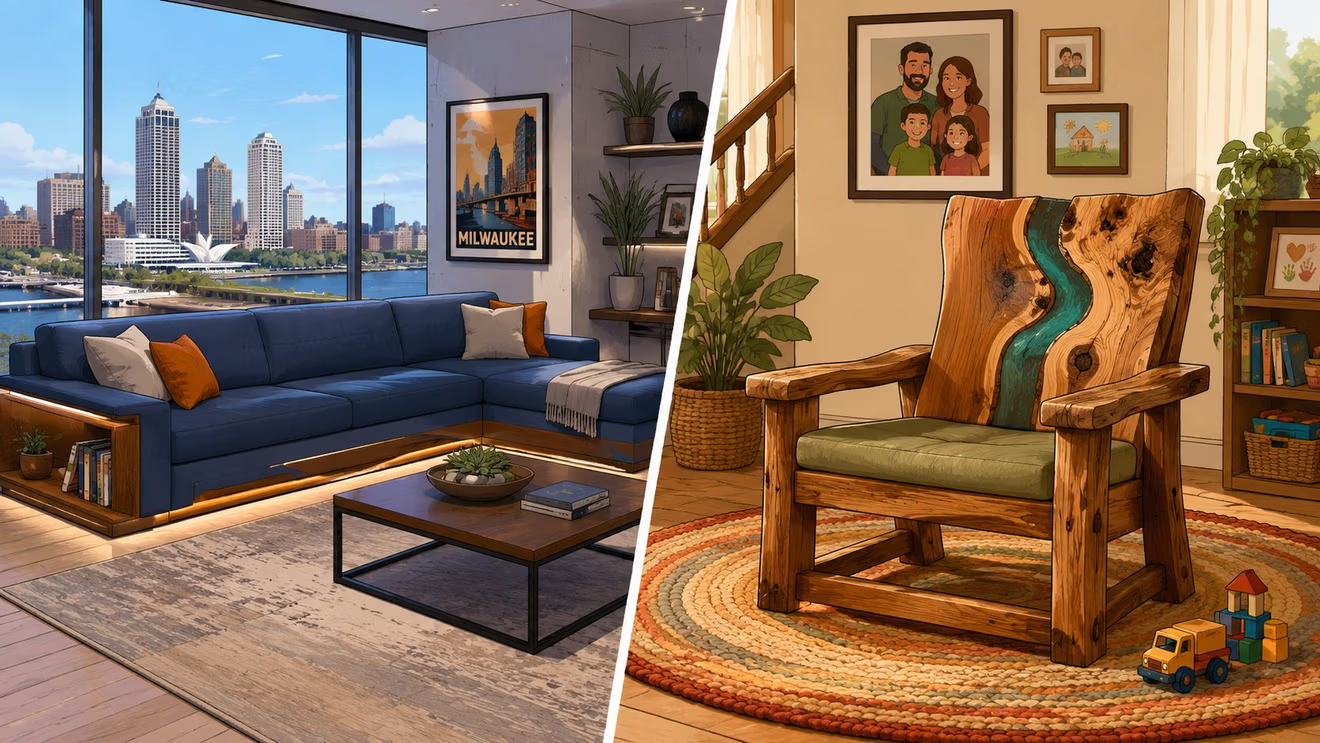
There's a local reason this matters. With 34% of Metro Milwaukee households in apartments, condos, or senior communities, there's a huge need for custom, space-saving designs. Most guides focus on large pieces, ignoring the growing demand for small-scale and senior-friendly furniture.
For apartments condos and smaller rooms
Small-scale furniture doesn't mean cramped furniture. It means furniture with smarter proportions. A sofa with a slightly shorter length, trimmer arms, or a shallower depth can keep a room open while still feeling comfortable.
These choices help right away:
- Measure more than the wall: Check doorways, stairwells, elevators, and corners.
- Choose visual breathing room: Raised legs and slimmer arms can make a room feel less crowded.
- Look for flexible delivery: Come-apart sofas and sectionals can help in tight entries.
- Keep function honest: A compact loveseat may serve the room better than forcing a full sectional.
For readers collecting room ideas, how to style a living room offers a helpful starting point.
For busy households and heavy daily use
Some homes need furniture that can take a beating. Kids jump. Pets sprawl. Guests gather. Recliners get used every night. In those homes, construction matters just as much as color.
A practical checklist for family spaces looks like this:
| Need | Helpful furniture choice |
|---|---|
| Frequent use | Heavier-duty frames and supportive cushions |
| Pets or kids | Easier-care fabrics and forgiving colors |
| Tight delivery path | Pieces designed to come apart |
| Multi-use rooms | Storage-friendly layouts and adaptable scale |
A room works better when furniture matches the rhythm of the household, not just the style on the mood board.
For seniors and easier everyday living
Senior-friendly furniture often gets overlooked in style conversations, but it shouldn't. Supportive seating, manageable seat height, durable cushions, and lift-chair-compatible layouts can make daily life smoother without making the room feel clinical.
Custom made furniture in the USA can solve very specific needs. A chair may need firmer support. A loveseat may need a smaller footprint. A recliner may need to work beside an end table at a usable height. Those details may seem small until someone uses the room every day.
Good furniture planning starts with honest living patterns. How people sit, move, gather, and enter the room should shape the design.
How to Know It's Truly USA Made
A lot of furniture carries American-sounding language, but shoppers should know what the claim means. “Made in USA” isn't supposed to be a vague style description. It has a legal standard.

The FTC requires that for a product to be advertised as “Made in USA,” all or virtually all of its components and labor must be sourced domestically. This supports stronger quality control and American jobs, and it helps preserve the meaning of “handcrafted.”
That's a stronger standard than many shoppers realize. It doesn't mean a product merely passed through a U.S. warehouse or got final touch-up work here.
Questions worth asking in the store
Shoppers don't need legal training to sort this out. They just need a few direct questions.
- Where was the piece built? Ask where final assembly happened.
- Where did the major materials come from? Wood, fabric, hardware, and leather all matter.
- Is the claim full or qualified? If foreign parts are involved, the labeling should reflect that.
- Can the retailer explain the sourcing clearly? A clear answer is a good sign.
A good retailer should be able to answer those questions without dancing around them.
What to look for beyond the tag
Labels matter, but so does consistency. If a store talks a lot about domestic craftsmanship, the details in the furniture should support that story. Solid wood should look and feel like solid wood. Construction should feel deliberate. Custom options should sound like part of a real build process, not a marketing script.
For shoppers comparing categories and makers, American-made furniture companies can help frame the conversation.
The goal isn't to memorize regulations. It's to ask enough clear questions that “Made in USA” means something real before the order is placed.
For families shopping custom made furniture in the USA, that confidence matters. When the label is accurate, it tells buyers something useful about sourcing, labor, and accountability. That's worth knowing before a single fabric swatch gets picked.
Ready for a Change Come Say Hi at Our Showroom
Furniture shopping gets easier when it stops being a guessing game. A family can sit on the sofa, open the drawers, compare wood finishes in person, and talk through the practical details with someone who knows how custom orders work. That's especially helpful when the choice involves small-scale sizing, heavy-duty construction, Amish craftsmanship, or questions about what “Made in USA” really means.
Since 1928, a fourth-generation family business has served Metro Milwaukee with that kind of in-person guidance. The focus stays simple. Affordable, better-quality furniture and mattresses. Strong USA-made and Amish-made options. Real solid wood. Help for families furnishing apartments, condos, senior living spaces, and busy homes that need durable pieces built for everyday life.
There's also a lot to see in person. The showroom in Greenfield includes living room, dining room, bedroom, home office, and mattress choices, including over 60 mattress models. Some shoppers come in looking for a custom sofa. Others discover they also need a supportive recliner, a smaller-scale loveseat, a solid-wood dining set, or a two-sided mattress for a guest room.
The in-store experience matters because this business doesn't sell online, and that's by design. It gives shoppers space to ask questions, compare options, and work with a team that isn't there to pressure anyone. The store is also closed on Sundays and Mondays to support family time, which says a lot about the values behind the business.
Milwaukee families don't need furniture that only looks good in a photo. They need furniture that fits the room, suits the budget, and holds up in real life. That's what makes custom worth considering, and that's why a showroom visit can make all the difference.
Ready to find a new favorite piece for the home? BILTRITE Furniture-Leather-Mattresses welcomes visitors to the Greenfield showroom to explore USA-made, Amish-made, solid-wood, small-scale, heavy-duty, and custom options in person. Come say hi, look around, and have a relaxed conversation with a team that's been helping Metro Milwaukee families since 1928.