Flat Box Spring Guide: What It Is and When You Need One


A shopper walks into a mattress department with a simple goal, replace an old bed and choose the right support underneath it. Then the labels appear: box spring, foundation, low-profile foundation, platform support. One looks tall and springy, another looks flat and firm, and suddenly “flat box spring” seems like the safest search term. The confusion is understandable. The name is common, but it often describes the wrong product category.
A flat box spring is usually a rigid, level foundation, not a traditional spring-filled box. The right choice depends on the mattress, the desired bed height, the frame, and the route from the delivery truck to the bedroom. Those details matter just as much as the mattress itself, especially in older Milwaukee homes, apartments with narrow stairs, and bedrooms where a tall bed creates an everyday accessibility problem.
What a Flat Box Spring Really Is
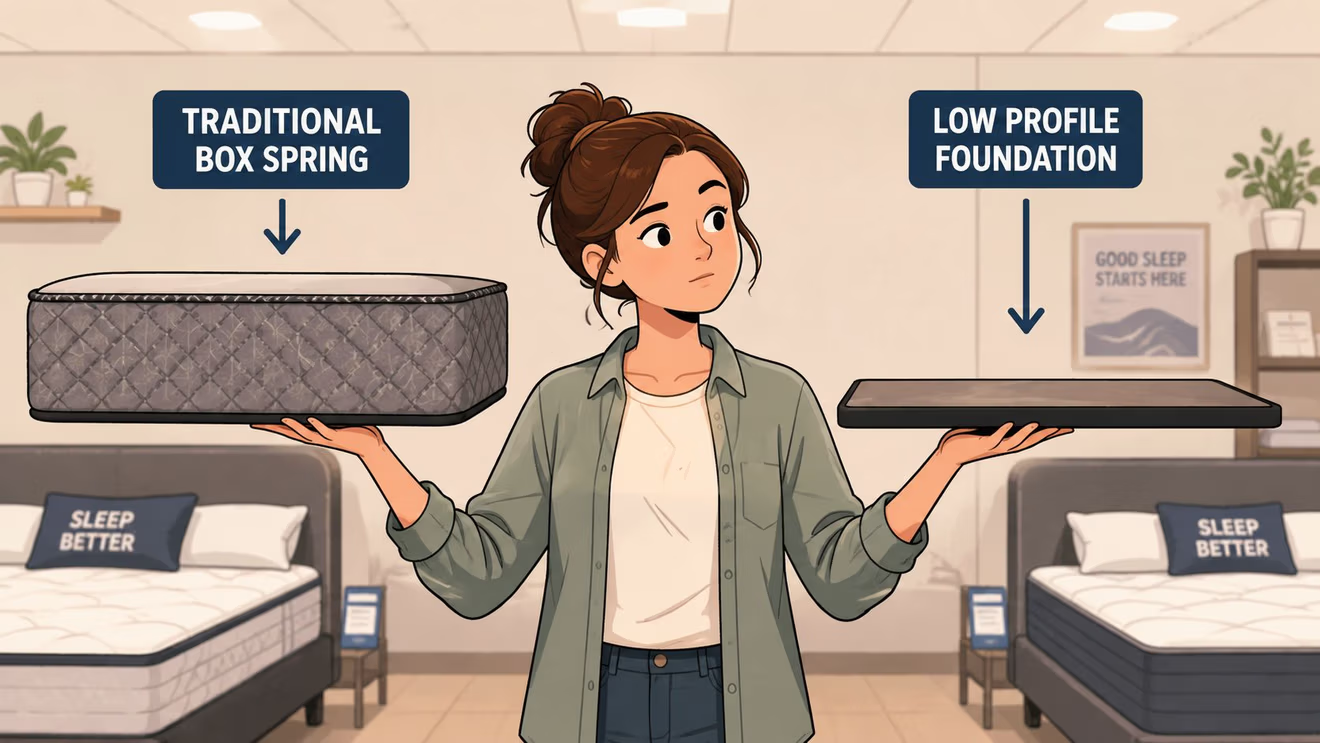
A shopper standing in a mattress showroom may hold two foundations side by side and ask, “Which one goes under this new mattress?” One support unit may have a familiar springy feel. The other may look almost plain, with a flat top and sturdy frame. The second option is usually what shoppers mean when they search for a flat box spring.
More accurately, it's a flat foundation. Instead of relying on open coils that flex under weight, it uses a rigid wood or steel structure with closely spaced slats, a wire grid, or a solid deck. The design creates a level support plane across the mattress footprint. A traditional box spring adds upward give, while a flat foundation stays firm and spreads the load more evenly across the underside of the mattress. Sealy's comparison of flat foundations and traditional box springs explains why that distinction matters for modern mattress materials.
The floor versus the trampoline
A useful showroom analogy is a solid floor versus a trampoline. A trampoline moves and pushes back when someone steps on it. A solid floor gives the mattress a stable surface, so the mattress materials do most of the cushioning work. A flat foundation is closer to the floor, while an open-coil box spring is closer to the trampoline.
That doesn't make one support style universally right. A traditional innerspring mattress may be designed to work with another spring layer underneath it. Foam, latex, and many hybrid mattresses generally need more uniform contact. A foundation that bows, flexes unevenly, or leaves wide gaps can create pressure points beneath those materials.
The phrase “flat box spring” persists because shoppers are familiar with the older name. Anyone unsure about the terminology can review BILTRITE's explanation of when a box spring is actually needed, then bring the mattress model and frame details to the showroom. The first question shouldn't be “Which box spring looks right?” It should be “What kind of support does this mattress require?”
A Quick Look at How Box Springs Evolved
Box springs solved a real problem when mattresses were built differently. They emerged in the 1890s as a response to early mattress and bed-frame design problems, adding a springy support layer beneath thin cotton- or straw-filled mattresses. That extra give helped reduce sagging and made those early beds more comfortable. This history of box springs places their rise in the context of older mattress construction.
By the 1950s, box springs had become standard in North American bedrooms. The familiar mattress-and-box-spring pair became the default setup, so the name entered everyday furniture language. Families often bought the two pieces together, and “box spring” became shorthand for almost any raised mattress base.
The mattress industry later introduced materials that changed the support equation. Foam, latex, and hybrid designs depend more heavily on an even surface beneath them. Their comfort layers can respond poorly to inconsistent support, especially when the foundation flexes at isolated points instead of supporting the full underside.
Why the old name remains
Product names often outlive the design they originally described. Shoppers still ask for a box spring because that's what previous generations used, even when they own a mattress that needs a rigid foundation. Current consumer guidance notes that traditional box springs are mainly associated with older innerspring mattresses, while foundations have replaced spring-based bases in many mainstream setups. This explanation of modern box spring terminology addresses that shift.
That makes the flat foundation a practical evolution, not a passing fad. It keeps the raised bed format many families prefer while changing the support surface to suit modern mattresses. BILTRITE has been helping Metro Milwaukee families sort through changing furniture and mattress designs since 1928, so the terminology may change, but the useful showroom question stays the same: what support will help the selected mattress perform as intended?
Flat Box Spring vs Traditional vs Tapered Foundations
The three labels become easier to understand when the feel is compared directly. A traditional box spring is flexible and spring-assisted. A flat foundation is rigid and level. A tapered foundation may resemble a traditional box spring from the outside, but its construction usually offers little flex and uses a more compact shape.
The simplest analogy is this:
- Traditional box spring: Like a trampoline, it gives under load and creates a more buoyant feel.
- Flat foundation: Like a hardwood floor, it stays firm and supports the mattress evenly.
- Tapered foundation: Like a thin plywood sheet, it has some structure and minimal movement, but it isn't the same as a full rigid deck.
Foundation Type Comparison at a Glance
| Foundation Type | Core Structure | Feel Under Load | Best Paired With |
|---|---|---|---|
| Traditional box spring | Open coils or spring-based internal support | Springy, with noticeable give | Traditional innerspring mattresses |
| Flat foundation | Rigid wood or steel frame with slats, wire grid, or solid deck | Firm and steady | Foam, latex, many hybrids, and compatible innerspring mattresses |
| Tapered foundation | Streamlined rigid or semi-rigid construction with minimal flex | Mostly firm, with limited movement | Mattresses whose manufacturer allows that foundation style |
A traditional metal frame supports the foundation from underneath but doesn't automatically provide the correct surface for the mattress. A bunkie board adds a thinner firm layer, while a platform bed builds the support directly into the frame. Those options belong to the broader foundation family, but they solve different problems involving height, structure, and room layout.
Shoppers comparing a platform setup with a separate foundation can use BILTRITE's platform bed and box spring guide as a starting point. A platform bed may eliminate the need for a separate base, but it still has to meet the mattress maker's support requirements.
Showroom shortcut: If the support surface feels like it's designed to bounce, it's not the same product as a rigid flat foundation.
The “best” category depends on the mattress rather than the label. A traditional spring mattress may benefit from coordinated flex. A memory foam mattress usually needs a steady plane. A tapered foundation may be suitable when the mattress specifications allow it, but its appearance alone doesn't prove that it provides adequate support.
Matching the Right Foundation to Your Mattress
The mattress type should lead the decision. The foundation isn't merely a decorative platform or a way to add height. It affects how the mattress distributes weight, how evenly its layers compress, and whether the setup follows the manufacturer's support requirements.
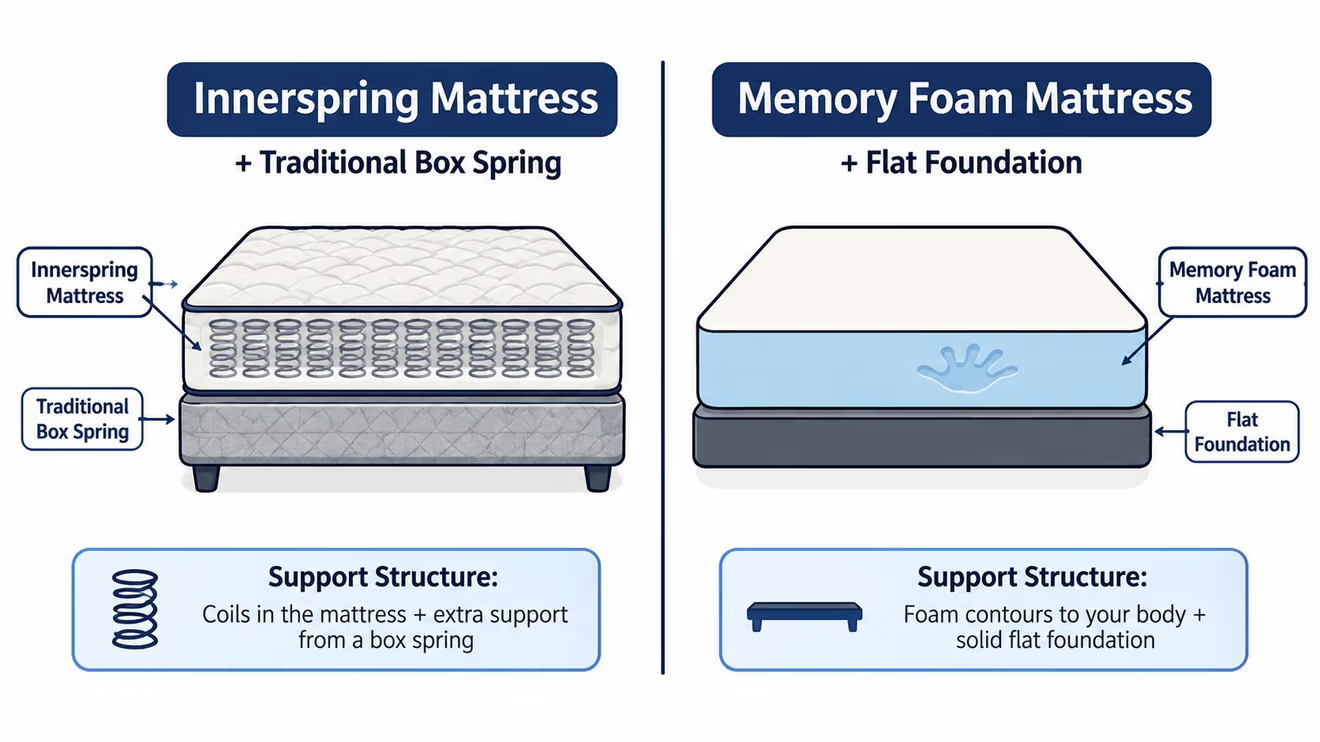
Traditional innerspring mattresses are the clearest match for a traditional box spring. The mattress already contains coils, and a compatible spring foundation can share some of the movement beneath it. That combination preserves the more responsive, buoyant feel many innerspring sleepers expect.
Hybrid mattresses need closer attention. Their coil cores may tolerate some movement, but foam comfort layers on top generally perform more consistently over a rigid, evenly supported surface. A flat foundation often makes more sense than assuming every hybrid belongs on a traditional spring base.
Foam, latex, and slat spacing
Memory foam and latex mattresses generally need solid, uniform support. On a rigid slatted foundation, the gaps should be tight enough to maintain a near-continuous support surface. Guidance for foam and latex commonly places the maximum spacing at about 2 to 3 inches, with one independent guide specifying no more than about 2.5 to 3 inches. This foundation guidance for different mattress types explains why wide gaps can allow foam to compress unevenly.
A shopper shouldn't rely on appearance alone. A foundation may look sturdy but still have gaps that are too wide for a particular mattress. The mattress warranty may also specify a particular support style or spacing requirement. If the foundation doesn't meet those conditions, warranty coverage could be at risk.
Two-sided, flippable mattresses deserve the same care. Their reversible construction allows sleepers to change which surface receives the nightly load, but both sides still need an even base. Uneven support underneath can make wear inconsistent no matter how often the mattress is flipped or rotated.
The BILTRITE Mattress Center has over 60 models, including two-sided and flippable options, so shoppers can compare the mattress feel and foundation support together. More guidance is available in BILTRITE's mattress foundation article, where the focus remains on matching the base to the bed rather than buying by habit.
Sizing, Height, and Setup Tips That Actually Matter
Height is one of the main reasons shoppers search for a flat box spring. A standard flat foundation is typically about 8.5 to 9 inches tall, while a low-profile version is around 5 to 5.5 inches. This low-profile foundation guidance connects those profiles with accessibility, mattress performance, and the finished height of the bed.
A lower foundation can help when a thick mattress already makes the bed difficult to enter, when a window sill sits close to the mattress, or when a delivery route includes narrow stairs. It can also suit a smaller bedroom where the overall setup feels visually heavy. However, a low profile isn't automatically the right choice for someone who needs a taller sitting height. The final measurement includes the frame, foundation, and mattress together.
A measurement checklist
Before choosing a foundation, a shopper should measure more than the mattress label.
- Finished bed height: Measure from the floor to the top of the mattress, then determine whether the sleeper can sit down and stand up comfortably.
- Frame opening: Check the interior space where the foundation rests, not only the nominal mattress size.
- Delivery path: Measure doorways, hallways, landings, and stair turns. A foundation that fits the bedroom may still be difficult to carry there.
- Support surface: Look across the foundation with the mattress removed. The top should be completely flat, without a bowed center.
- Frame structure: Full-size and larger metal frames need rigid center support with legs reaching the floor. Manufacturer foundation guidance also calls for wooden or platform-style frames to use at least five 1-by-4 hardwood or metal slats, with leg supports beneath the center slats.
Practical rule: A foundation that bows in the middle can make a sound mattress look as if it has failed.
An old, sagging foundation shouldn't go under a new mattress just because the dimensions match. The uneven support can reproduce the same dip in the new bed and may conflict with warranty requirements. The frame, center supports, slats, foundation, and mattress need to work as one system.
Lifespan, Maintenance, and How to Know When to Replace
Over time, the wood, metal, joints, and center supports in any foundation can weaken under repeated use. Children jumping on the bed, especially heavy mattresses, and frames without adequate center support can speed up wear.
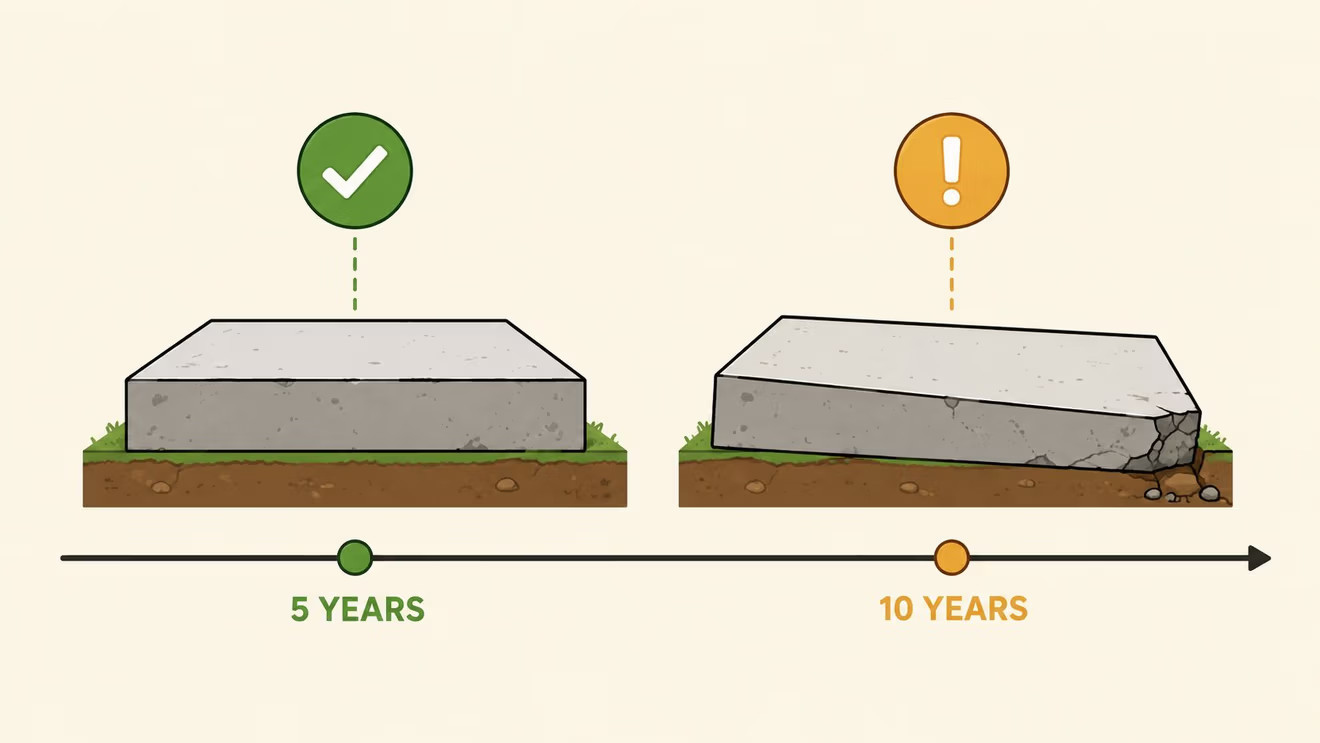
A problem may show up when someone sits on the edge. A squeak, shift, or slight tilt can point to a loose frame connection or foundation issue. A hollow center, cracked slat, or visible rust deserves attention before the mattress goes back on top.
Inspection signs that matter
A short inspection helps separate a mattress concern from a support concern.
- Center condition: Remove the mattress and view the foundation from the side. A visible dip or bow means the support surface is no longer level.
- Noise under pressure: Press the center and corners. Persistent squeaking, popping, or shifting may indicate loose joints, damaged slats, or worn frame hardware.
- Material damage: Cracked wood, bent metal, or rust around structural supports can reduce stability.
- Cleanliness: Dust and stains can collect on an older foundation's fabric. Cleaning the cover may improve its condition, but it cannot restore weakened structure.
A mattress may benefit from rotating or flipping when its design allows it, but those steps cannot correct a foundation that has lost a level plane. If the mattress itself may have reached the end of its useful service, review BILTRITE's mattress replacement guidance and inspect the foundation separately.
Replacement works best as a whole-bed decision. At BILTRITE's Greenfield showroom, the conversation can cover the mattress, foundation, frame, and delivery route together. Qualifying mattress purchases may include free white-glove delivery, old mattress removal when the mattress is in donatable condition, and a complimentary heavy-duty frame or protector on select sets. For a local household, that can simplify replacing a worn foundation while arranging the new bed.
Why Shopping Locally at BILTRITE Makes This Easier
You arrive with a mattress question, then realize the foundation must also fit the frame, room, and delivery route. At BILTRITE's Mattress Center in Greenfield, shoppers can lie on different beds, compare firm and spring-assisted support, and see how a low-profile foundation changes the finished height. The store carries over 60 mattress models and 500-plus mattresses in stock, so families can review the complete setup in person.
The phrase “flat box spring” can describe several different ideas: a rigid foundation, a low-profile base, or a traditional box spring with less height. A sleep specialist can ask about the current mattress, frame dimensions, slat spacing, bedroom access, and preferred bed height. That conversation helps sort out which product fits before a foundation reaches a tight stairway or doorway.
Understanding the benefits of local purchasing, covered in our guide to why buy locally when buying a new mattress, also explains why showroom evaluation matters for foundation selection.
Practical help from a local team
BILTRITE's sales associates have over 400 years of combined experience. They can help shoppers examine:
- Mattress compatibility: Whether a traditional innerspring, foam, latex, hybrid, or two-sided mattress needs firm or spring-assisted support.
- Frame fit: Whether the existing frame provides adequate center support, stable rails, and a level resting surface.
- Delivery access: Whether a rigid foundation can pass through a narrow stairway, hallway, doorway, or sharp landing.
- Finished height: Whether the mattress and foundation together make sitting down and standing up comfortable.
In-store evaluation lets shoppers touch materials, test the feel, and discuss details face to face, advantages that online-only retailers cannot replicate. The showroom also carries affordable, better-quality furniture, including USA-made, Amish-made, and solid-wood pieces, with choices for apartments, smaller homes, seniors, and families who need heavy-duty construction.

The store has served the Metro Milwaukee community as a fourth-generation, family-owned business since 1928. It is located at 5430 West Layton Avenue in Greenfield, Wisconsin, and is closed on Sundays and Mondays so the team can spend time with family. That local, family-first approach gives shoppers a straightforward conversation without pressure.
For qualifying purchases, available value extras can include free white-glove delivery, old mattress removal in donatable condition, and a complimentary protector or heavy-duty frame on select sets. These services can simplify a full bedroom replacement when the foundation, mattress, frame, and delivery plan need to be arranged together.
Quick Answers to the Questions Shoppers Ask Most
Does a flat box spring work with a pillow-top mattress?
Usually, yes, but the mattress warranty should be checked first. A pillow top describes the comfort surface, not the support system underneath. The mattress may still need a rigid foundation, closely spaced slats, or a compatible traditional box spring depending on its construction.
Can a flat foundation go on a platform bed?
A platform bed usually already includes the support the mattress needs, so a separate foundation often isn't necessary. Adding one can raise the mattress, but it also changes the finished height and may create a setup that's too tall. The platform slats or deck should be checked before adding another layer.
Do two-sided mattresses need a flat foundation?
They benefit from one. A firm, even support plane helps both sleeping surfaces wear more consistently when the mattress is flipped or rotated. The base still needs to meet the manufacturer's support requirements.
Is a flat foundation worth choosing over a traditional box spring?
For a modern foam, latex, or many hybrid mattresses, a rigid foundation is usually the more appropriate match. The value comes from consistent support and protecting the mattress requirements, not from choosing the least expensive base. For a compatible innerspring mattress, a traditional box spring may still provide the intended feel.
What should shoppers bring to the showroom?
The mattress name or model, frame measurements, current bed height, and the dimensions of the delivery path are useful. Photos of the frame, center support, and stairway can also help a sleep specialist identify possible fit issues before delivery.
A flat box spring is easier to choose once the name is translated into the right category. The key questions are simple: does the mattress need flex or firmness, how high should the finished bed sit, and can the foundation reach the bedroom safely?
BILTRITE Furniture-Leather-Mattresses offers mattresses, box springs, flat foundations, frames, and bedroom furniture for Metro Milwaukee homes, with in-store guidance for matching the support to the mattress. Visit BILTRITE Furniture-Leather-Mattresses in Greenfield to compare options in person and talk through mattress compatibility, bed height, and delivery access with the local sleep team.