Tan Cloth Couch Guide: Fabrics, Cleaning and Style

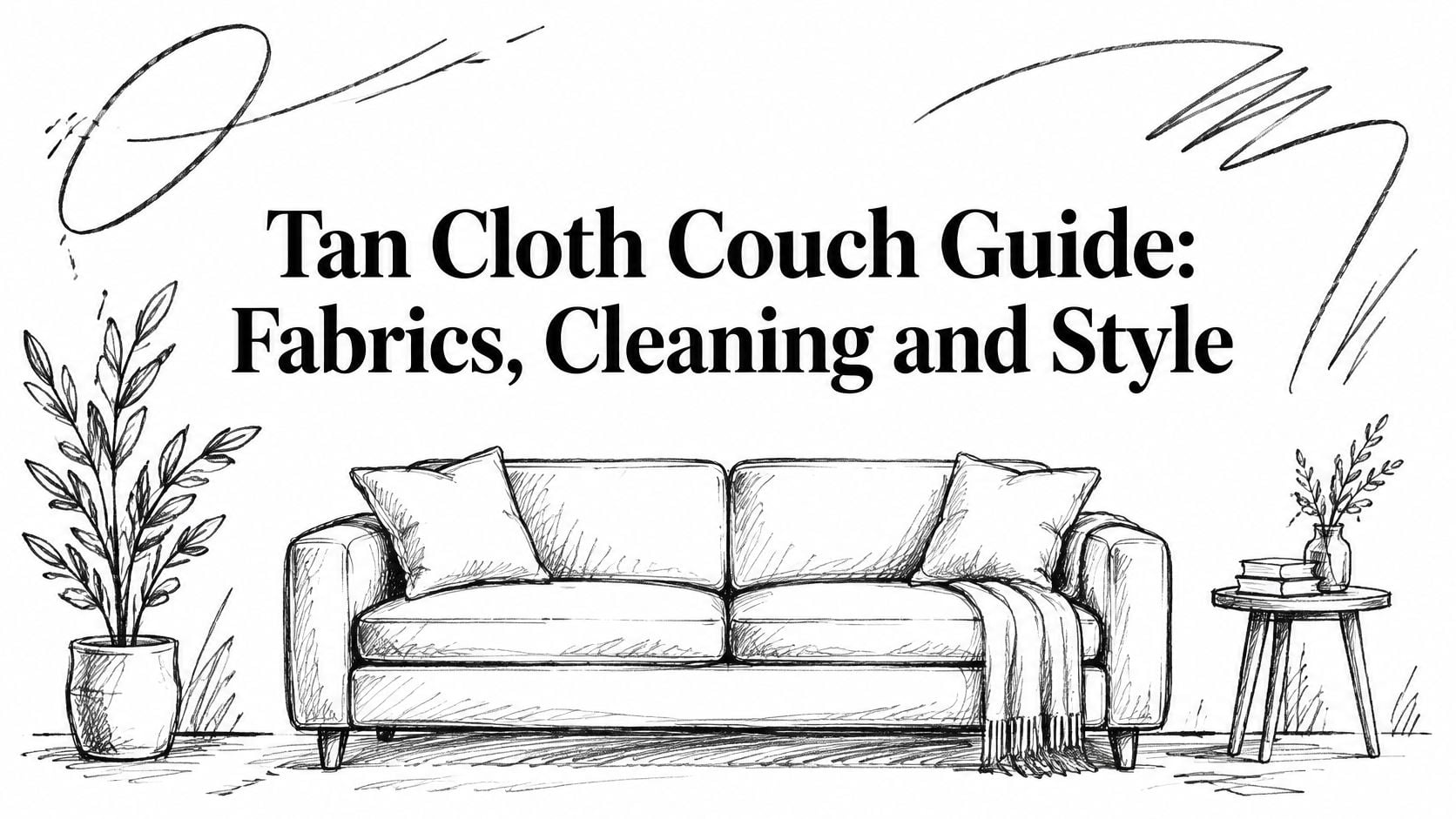
A tan sofa can look calm and welcoming in the showroom, then show a darkened arm or a denim mark after a busy week at home. The shade helps with some everyday dust, but the fabric's construction and care instructions matter more than color alone.
Table of Contents
- Why Tan Cloth Couches Make Sense for Real Homes
- Fabric Durability Ratings Worth Checking
- Fabric Types That Work With Real Family Life
- Cleaning Codes, Stains and Protection Choices
- Measuring Your Space and Your Doorways
- Pairing Tan Upholstery With Your Room
- Come Test Tan Fabrics in Our Greenfield Showroom
Why Tan Cloth Couches Make Sense for Real Homes
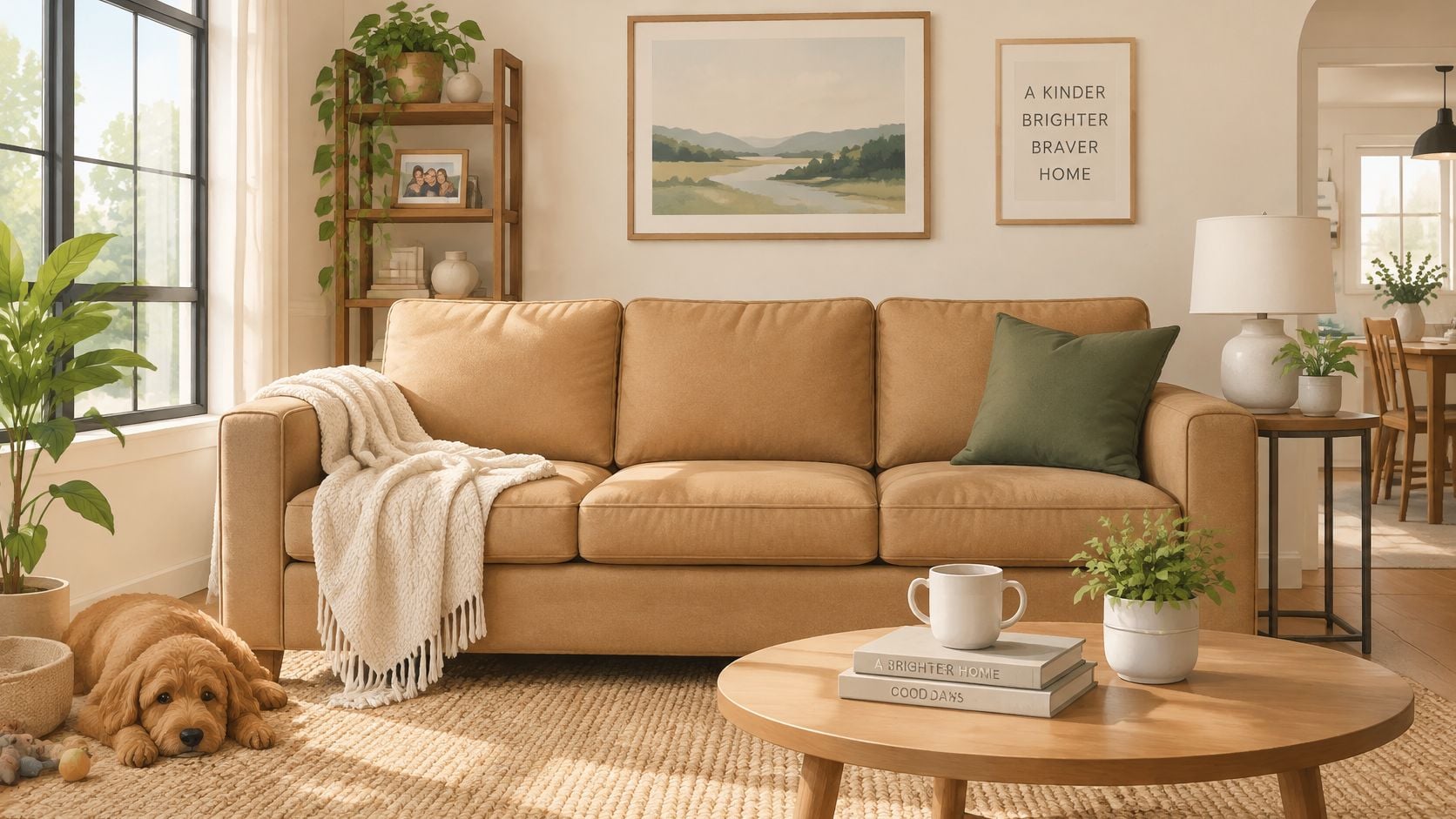
A tan cloth couch can give a room warmth without competing with its other furnishings. Its frame and upholstery do different jobs: the frame supports the sofa over time, while the fabric shapes its look and can eventually be replaced.
A Philadelphia sofa made between 1765 and 1790 had a frame of mahogany, ash, and oak, and its upholstery had been replaced by 1991. The Decorative Arts Trust's account of the sofa offers a helpful example: a covering may change while a well-made frame remains in service. Upholstery has included haircloth, cotton, linen, wool, and silk, in colors and patterns that varied over time. Tan is a current style choice, not a timeless rule.
For a sofa you plan to use for years, consider both parts. A pleasing fabric can be changed, but the frame and suspension carry the structure. The fabric's durability rating and cleaning code help you judge how it may perform in daily life.
BILTRITE Furniture-Leather-Mattresses has served Metro Milwaukee customers since 1928. The family business began with Irwin Kerns' upholstery shop, which sold custom-made sofas for $1000 in 1929. When choosing a couch, consider how the fabric suits your routine, how it should be cleaned, and whether the sofa can get through your doorways.
Fabric Durability Ratings Worth Checking
Abrasion ratings are easy to miss when a tan fabric looks soft and sturdy on a showroom floor. The numbers help compare how upholstery responds to repeated rubbing, but the test method matters just as much as the result.
| Use level | Wyzenbeek double rubs | Martindale cycles | What it means for a tan couch |
|---|---|---|---|
| General residential sofa use | 15,000 to 30,000 | 20,000 to 30,000 | Suits light, adult-only living rooms |
| Heavy-use family seating | 30,000 to 50,000 or more | 30,000 to 40,000 | Better fit for kids, pets, and daily sitting |
| Very high rub counts | Above 100,000 | Not directly comparable | Does not reliably predict longer service life, so check the full specification |
These ranges come from the American Home Furnishings Alliance fabric standards and guidelines. A family-room sofa usually calls for a result near or above the medium-to-heavy residential range, especially if children or pets use it every day.
Two tests, two motions
Wyzenbeek rubs fabric back and forth along its warp and weft, the two directions in which its yarns run. Martindale uses a figure-eight motion against standard wool. Because the motions differ, their scores aren't interchangeable: a result from one test can't be treated as the equivalent result from the other.
The AHFA guidance also cautions that counts above 100,000 Wyzenbeek double rubs don't reliably predict longer service life. A very high number alone doesn't guarantee that a fabric will keep its color, resist pilling, or hold together at the seams. Shoppers can compare ratings and what they mean in this guide to fabric durability ratings.
Look beyond abrasion
On a pale tan surface, body oils can leave darker areas, a fabric's nap can flatten, and dye from clothing can transfer well before the upholstery is worn through. That's why the abrasion figure is only one part of the specification. Ask the retailer which test method was used, what the fiber composition is, and whether the rating applies to the finished upholstery rather than only the raw fiber.
Also look for documented resistance to pilling, seam slippage, and color transfer. Then check the cushion construction and whether covers can be removed or professionally cleaned. Abrasion testing addresses rubbing, not every change a sofa can develop in a busy home.
Fabric Types That Work With Real Family Life
A tan weave can hide everyday dust and minor discoloration better than very light white upholstery. It won't hide everything: food oils, denim transfer, pet accidents, and repeated friction can leave dark patches or alter the fabric's texture. In a survey reported by Consumer Insights Now, 96% of sofa shoppers considered ease of cleaning important, and 88% specifically wanted performance fabric.
| Fabric type | Strengths | Watch for | Tan look over time |
|---|---|---|---|
| Performance synthetic blend | Strong wear resistance and often a stain-resistant finish | Finish quality varies from one product to another | Stays crisp and shows less wear |
| Cotton or linen blend | Breathable and soft to the touch | Wrinkles and wears faster without a tight weave | Shows texture and can fade in strong sun |
| Wool or wool blend | Naturally resilient and resists crushing | Often needs professional cleaning | Warm, heathered tan that hides dust well |
| Microfiber or polyester | Easy to wipe and resists fading | Can pill and show body oils on pale tones | Smooth tan that can darken around high-touch areas |
“Performance fabric” is a broad category, not a single test or promise. Its resistance to stains and wear depends on the particular textile and finish, so the label isn't a substitute for the fabric's test results and care directions.
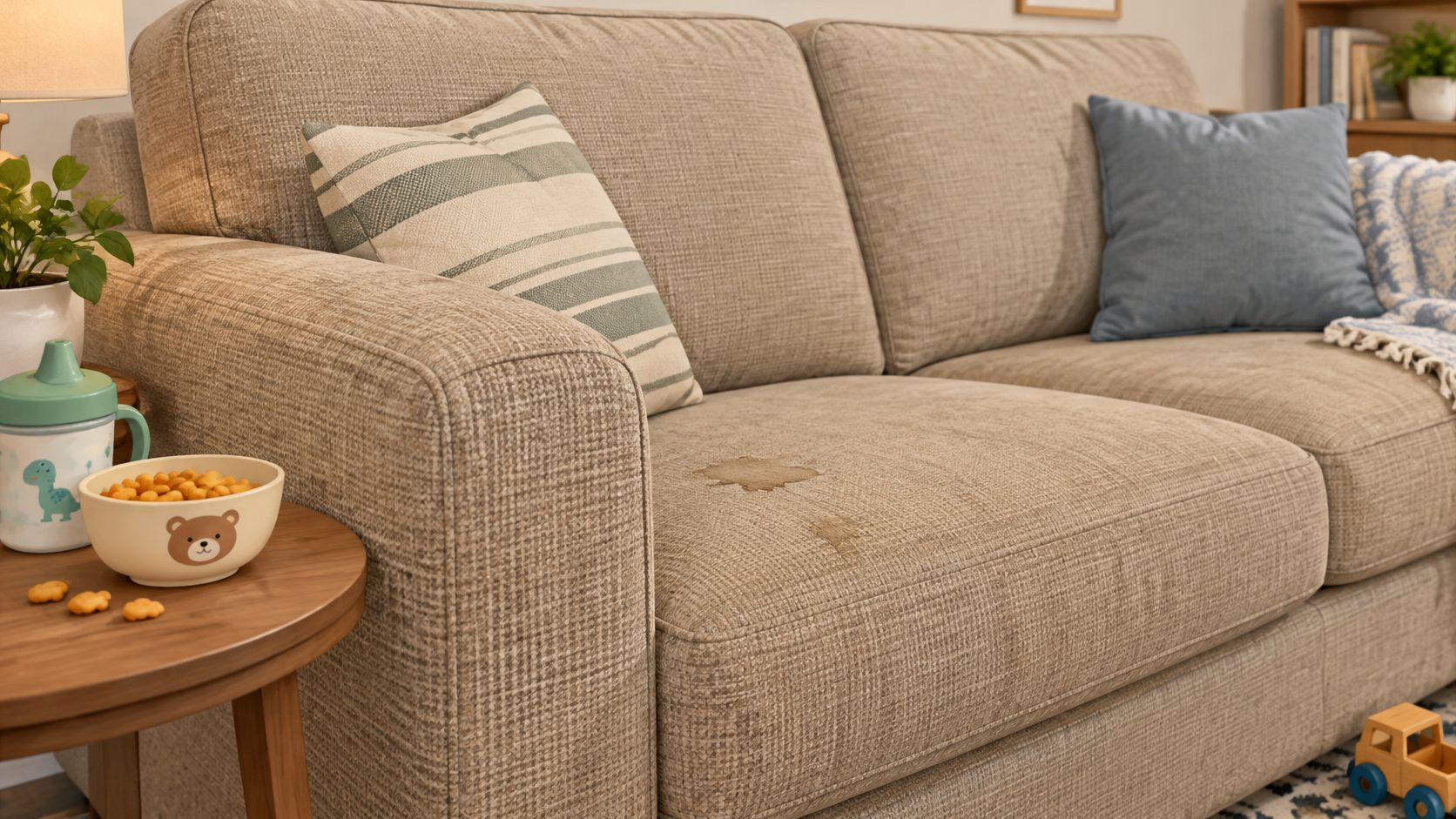
For a household with frequent spills, compare the cleaning code, fiber composition, abrasion rating, stain-treatment information, and removable-cover options. A sturdy abrasion score won't prevent a cushion from compressing or a spill from leaving a mark. Cushion fill, cover construction, and the approved cleaning method all affect how a sofa looks in daily use.
A tightly woven synthetic blend may suit a busy family room; a softer natural-fiber blend may feel at home in a quieter space. Either way, check the frame and suspension, too. A tan sample viewed in daylight and evening light can reveal undertones that look different under the showroom lights. For more on comparing upholstery options, see this guide to sofa set cloth materials.
Cleaning Codes, Stains and Protection Choices
A cleaning code tells shoppers which cleaning media a fabric is compatible with. It doesn't certify that the upholstery can tolerate every cleaning process, so the code should guide the care routine, not replace the manufacturer's directions.
| Code | Approved cleaning | Avoid | Best for |
|---|---|---|---|
| W | Water-based shampoo or foam | Solvent cleaners unless the code allows them | Family rooms that need regular spot care |
| S | Water-free solvent cleaner | Water-based cleaners that can leave rings | Fabrics where moisture causes trouble |
| WS | Approved upholstery shampoo or solvent | Steam unless the manufacturer approves it | Most flexible for mixed households |
| X | Vacuuming or light brushing only | Any liquid cleaner | Low-traffic, display-style seating |
These definitions and care cautions are set out in the residential upholstery colorfastness code guidance. The practical difference is important: a W fabric is compatible with water-based shampoo or foam, while an S fabric calls for a water-free solvent. A WS fabric permits either approved option, and an X fabric should only be vacuumed or lightly brushed.
A simple care routine
Vacuum with a soft upholstery attachment to lift dust without roughing up the fabric. Blot spills rather than rubbing, which can push soil deeper or disturb the weave. Before using a cleaner, test it in a hidden spot and use only a product allowed by the fabric's code.
Saturation is the bigger risk on tan upholstery. Excess water can move into the cushion filling, contribute to browning or shrinkage, and leave visible rings as the fabric dries. And colorfast doesn't mean steam-cleanable: water and solvent fastness are separate properties, and a cleaning code doesn't approve every method.
For a fresh spill, take these steps:
- Blot with a dry cloth. Lift liquid instead of spreading it across the surface.
- Work from the edge inward. This helps keep the spot from growing.
- Test the approved cleaner in a hidden area. Check for a color or texture change.
- Apply sparingly. Follow the fabric maker's instructions and avoid soaking the cushion.
- Let the fabric air-dry fully. Don't sit on a damp cushion or cover it while it dries.
Before buying, ask for the cleaning code, fiber blend, lightfastness information, and any restrictions on stain treatments. A removable or professionally cleanable cover can be useful in a high-traffic room. BILTRITE Furniture-Leather-Mattresses provides customers with written care information for fabric, wood, or leather furniture and mattresses. One policy to know before adding a treatment: additional fabric protection applied by a store or a customer voids the manufacturer's warranty on upholstered furniture fabric. More upholstery care advice is available in this fabric cleaning guide.
Measuring Your Space and Your Doorways
A sofa can suit the living room and still be too large for the delivery route. Measure the full path from the entrance to the sofa's final spot, not just the wall where the piece will sit.
- Measure the narrowest opening on the route. Include exterior and interior doors, hallways, stairwells, turns, and elevators, because one tight spot can prevent delivery.
- Measure the sofa's width, height, and depth. Check the arms as well as the body to understand its largest dimensions.
- Plan the walking space. Leave about 30 inches around the coffee table and between pieces so people can move through the room.
- Mark the sofa's location. Note the wall, outlets, windows, and nearby furniture to see how the piece will fit the room.
- Ask what separates. Find out whether the arms, back, base, or sectional pieces can be removed, and how the sofa reconnects.
A come-apart sofa or sectional separates into smaller components for transport, then reconnects inside the home. This can help in apartments, condominiums, older houses, and senior-living communities where a fixed sofa may not clear a narrow doorway or stair landing. The narrow-doorway furniture guide explains why it's useful to confirm the reassembly method, hardware access, and whether delivery crews handle separation and reconnection.
A small-scale sofa can be a good match for a compact room, while a full-size piece may suit a larger family space. The right size is the one that gets inside, leaves a comfortable walking path, and gives the household enough room to sit together.
Pairing Tan Upholstery With Your Room
Tan is easy to coordinate, but a room can look washed out if every surface stays in the same beige range. The trick is to make the sofa feel intentional by choosing colors and textures that pick up its undertone. Warm tans often work with oak or honey-colored wood, warm metal finishes, and cream walls. A cooler, greige-leaning tan can sit comfortably beside gray or black accents and chrome.
Four color directions
- Sage or olive brings a natural, settled feeling to a room with plants, wood, or woven textures.
- Navy or deep teal creates clear contrast against tan, especially on pillows or an accent chair.
- Rust or terracotta adds warmth and works well with a tan sofa that has golden or reddish undertones.
- Charcoal or black gives the room a sharper, more modern edge without taking over the sofa's neutral role.
A rug with a darker border can anchor the seating area and give the sofa a visual frame. Throw pillows are an easy way to introduce color, and they can change with the seasons. A textured throw can make the couch feel softer and more layered, while a fine herringbone or nubby weave can disguise everyday wear better than a flat, solid surface.
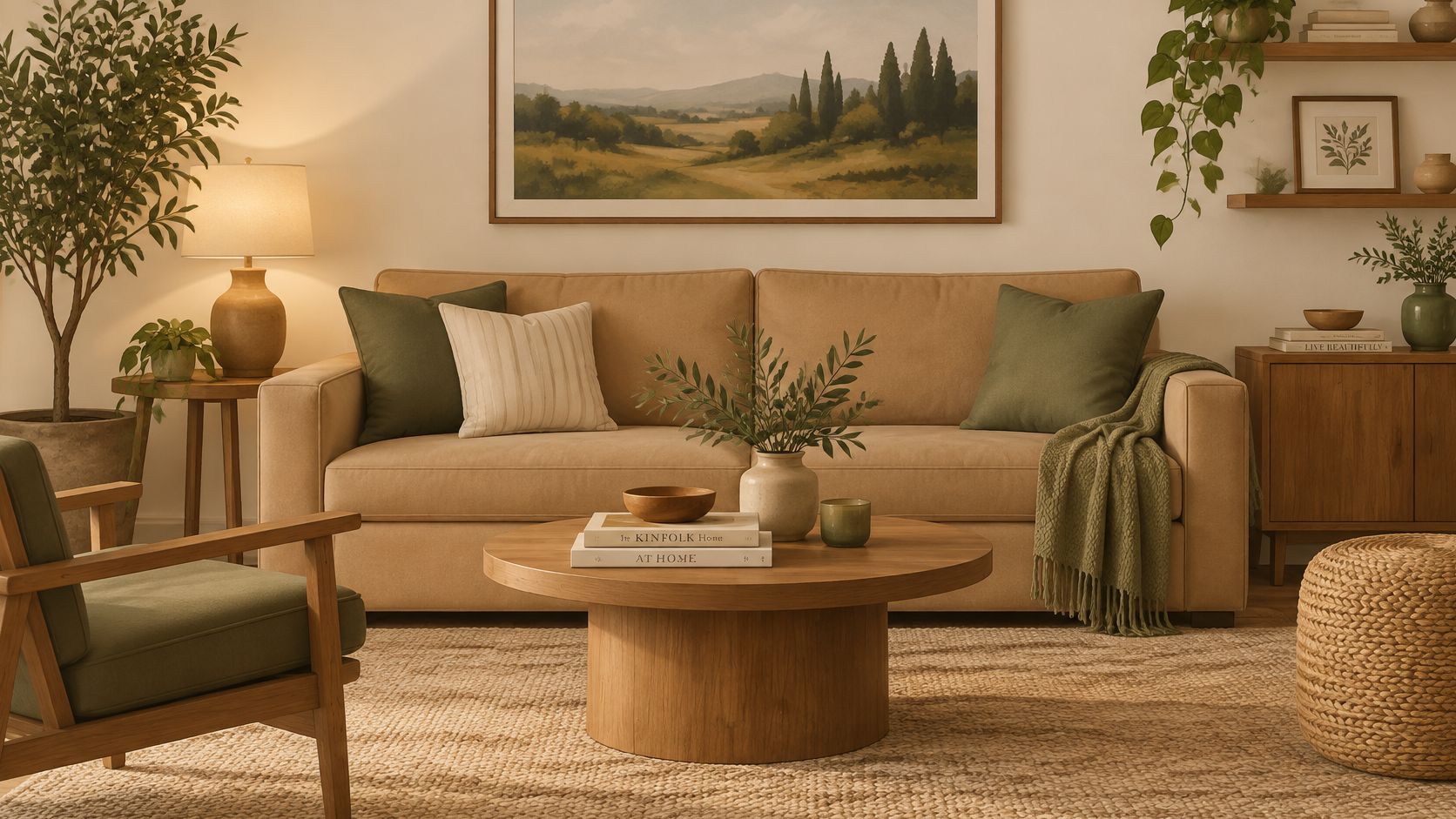
In a small, bright room, a lighter tan can help the space feel open. A deeper tan can give a larger family room a stronger visual anchor. To avoid an all-beige look, mix in wood, metal, woven materials, and greenery rather than relying on a single color family. For more ideas on choosing a neutral, browse this guide to neutral sofa colors.
Before settling on a shade, take a fabric sample home and compare it with the wall paint and flooring in morning and evening light. The same tan can appear golden beside warm wood and more gray beside cool flooring, so seeing it in the actual room makes the decision easier.
Come Test Tan Fabrics in Our Greenfield Showroom
A tan swatch can shift from warm to gray under different lighting, and its texture can feel different once it's on a sofa. Comparing fabrics in person helps you judge the color, weave, and cushion feel together. Ask about the fabric's abrasion rating and cleaning code: the first indicates resistance to wear, while the second describes which cleaning methods are suitable.
BILTRITE Furniture-Leather-Mattresses, a fourth-generation, family-owned business serving Greenfield and Metro Milwaukee since 1928, offers a large in-stock selection and custom options. Customers can choose fabric, leather, wood, finish, and hardware, and ask which pieces are USA-made or Amish-made.
Bring your room's colors to mind as you compare swatches. A tan that looks sandy under showroom lights may read more golden or gray at home. Check the care information before deciding, since a fabric that hides everyday marks well may still need careful cleaning.
Come down to the Greenfield showroom to compare tan fabrics, try sofa cushions, and ask practical questions. BILTRITE Furniture-Leather-Mattresses offers affordable, better-quality furniture, including USA-made and Amish-made options.