Suede Microfiber Sofa Guide: Fabric, Care and Fit

If a tag says durable and stain-proof, what has been tested? For many shoppers, that's the gap. A suede microfiber sofa can feel wonderfully soft in a showroom, yet softness alone doesn't tell a buyer how the fabric handles friction, which cleaner it allows, or whether the whole sofa carries the required safety label.
A better approach is friendly and simple. Trade broad marketing words for specific answers that can be compared side by side. Fiber composition, a named abrasion test, a cleaning code, and written treatment details turn guesswork into a calm, confident decision.
Table of Contents
- What a Suede Microfiber Sofa Is Made Of
- The Spec Sheet Checklist Before You Buy
- Reading Durability Ratings Without Getting Fooled
- Cleaning Codes and What Each One Allows
- Spills, Pet Accidents and Deep Cleaning Limits
- Safety Labels and Chemical Questions to Ask
- Which Households Get the Most from Suede Microfiber
- What Quality and Value Look Like at Your Price
- Compare Fabric Samples in Greenfield
What a Suede Microfiber Sofa Is Made Of
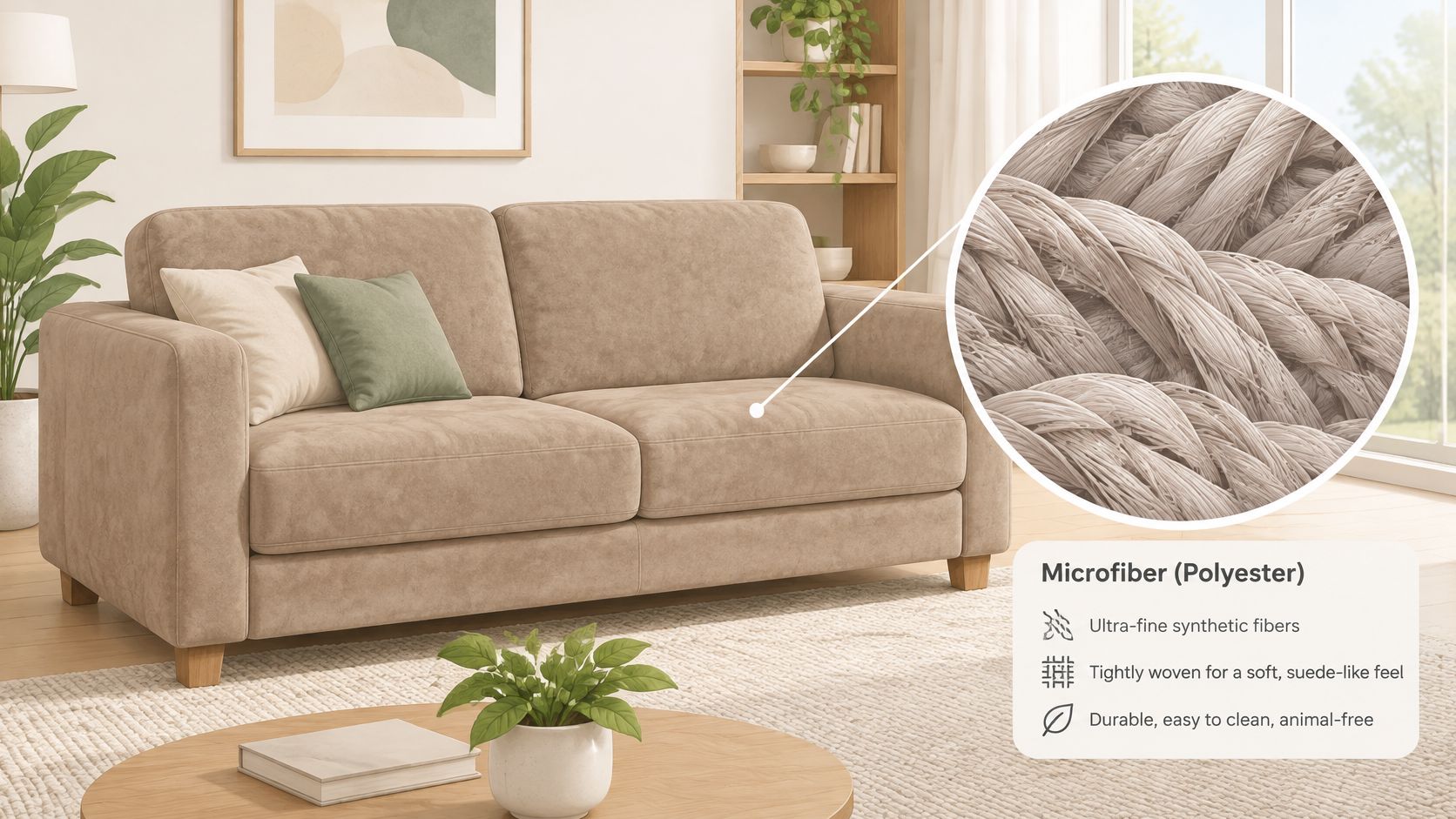
A suede microfiber sofa is usually covered in extremely fine synthetic fibers, most commonly polyester. In the name, suede describes the look and hand feel, and the fabric comes from synthetic fibers. Those fibers are packed into a dense construction, which is what gives the cover its soft, close surface.
The Rain Jacket Comparison
A loose cotton sweater has more open space between yarns, so liquid and grit move through it more easily. A tightly woven rain jacket slows that movement. A suede microfiber sofa sits closer to the jacket side of that comparison while still feeling soft.
Those fine fibers are packed closely, then brushed or buffed to raise a velvet-like nap. Nap means the direction the tiny fibers lean. Brush them one way and the surface can look lighter. Brush them the other way and it can look deeper, because the fibers reflect light differently. That shift surprises buyers who expect one flat color from every angle.
A dense surface can slow many spills from soaking in right away. It does not seal the sofa against every spill. Results change with the fiber blend, backing, finish, seams, and any stain-resistant coating. Soft hand feel is a construction detail. It is not the same thing as a stain-proof or durable claim, which still depends on the tests, cleaning code, and compliance documents a seller can show.
Readers comparing coverings can start with an overview of upholstery materials and then look past the outer fabric. Cushions, seams, filling, frame, and care rules all shape how a sofa lives in a real home.
The Spec Sheet Checklist Before You Buy
A sofa described only as durable gives a shopper almost nothing to compare. A named fiber, a named test, a number, and a care code give that same shopper solid ground. The seven items below turn a friendly sales conversation into a clear checklist that works for every suede microfiber sofa on a shortlist.
| Spec | Where to find it | What a strong answer looks like |
|---|---|---|
| Fiber composition | Fabric label or spec sheet | Named polyester or polyamide microfiber, with backing listed |
| Abrasion test and rating | Manufacturer documentation | Test name (Wyzenbeek or Martindale), a number and the failure endpoint |
| Cleaning code | Fabric care label | W, S or WS, matching the cleaner you plan to use |
| Compliance label | Permanent label on the sofa | States that it meets the federal upholstered-furniture flammability requirements |
| Stain treatment | Written answer from the seller | Says whether a topical finish or stain-resistant coating was applied |
| Replacement fabric | Ask the seller | Confirms whether matching fabric is available for repairs |
| Seam and frame construction | Inspect in person | Reinforced seams and a stable frame at stress points |
Why Each Row Earns Its Place
Fiber composition sets expectations for feel, cleaning, and how the surface responds to friction. A vague answer such as synthetic blend is less useful than a named microfiber with its backing identified.
The abrasion test and rating show how the fabric handled repeated rubbing under stated conditions. The test name matters because different methods don't produce interchangeable numbers, even when the numbers look similar.
A cleaning code prevents the most avoidable mistake, using a cleaner the fabric doesn't allow. Requesting the fabric care label and manufacturer documentation before a visit lets a buyer review those details at home without rushing.
Labels and Answers to See Directly
The compliance label is permanent and sits on the sofa itself, so a shopper can check it in person rather than relying on a verbal assurance. That small label carries more weight than a general claim that a piece is fire safe.
For stain treatment, a written answer should say whether a finish was applied, who applied it, and whether it changes routine care. Written details also help later, when a cleaner needs to know what's already on the fabric.
Replacement fabric decides whether a torn or badly stained cushion can be repaired to match. Seam and frame construction complete the picture, because a hard-wearing cover can't compensate for weak stress points.
Practical rule: Write the same seven answers beside every sofa on the shortlist, so each option gets judged on identical facts.
That habit keeps the process upbeat instead of overwhelming. A missing answer isn't automatically a rejection, but it is a reason to pause and ask again before money changes hands.
Reading Durability Ratings Without Getting Fooled
Say two sofas both carry a 50,000 label. One result came from the Wyzenbeek double-rub method, the other from Martindale cycles. Those sofas haven't proven the same thing, because the tests use different abrasives, motions, pressures, and failure criteria.
The Association for Contract Textiles abrasion guidelines identify 30,000 Wyzenbeek double rubs or 40,000 Martindale cycles as high-traffic woven-upholstery benchmarks, with general contract thresholds of 15,000 and 20,000, respectively. ACT also states that results from one method cannot be converted reliably into the other.
| Test method | General contract threshold | High-traffic benchmark | Microfiber suede (reported) | Standard polyester (reported) |
|---|---|---|---|---|
| Wyzenbeek double rubs | 15,000 | 30,000 | 30,000 to 100,000 | 15,000 to 30,000 |
| Martindale cycles | 20,000 | 40,000 | 30,000 to 50,000 | 20,000 to 40,000 |
How to Read the Table
The table helps a buyer place a rating in context. A microfiber result near the high-traffic benchmark under its own method is a useful screening sign. A very large number without a method name is much less informative, no matter how impressive it sounds.
These figures are screening references, not promises of how many years a sofa will last. Laboratory rubbing can't copy a child climbing over an arm, a dog choosing the same corner daily, or grit working into a seat front.
Longevity also depends on fiber content, weave or nonwoven construction, cushion compression, furniture geometry, cleaning, and user behavior. A deep, soft cushion changes pressure across the fabric, while a firmer seat spreads contact differently. More background on comparing ratings is available in this guide to fabric durability ratings.
A Sensible Busy-Home Screen
For a busy Milwaukee household, a sensible screen combines three things. Look for a documented high-traffic rating, reinforced seams, and a fabric sample that still looks acceptable after rubbing and an approved cleaning test.
Inspect the nap and seam areas closely during that check. Wear often shows first where hands grip, bodies pivot, and stitched edges take repeated stress.
Compare only numbers produced by the same test method, and ask for the test standard, pressure, backing construction, and failure endpoint.
That single rule prevents most rating mix-ups. It also keeps attention where it belongs, on documented performance rather than the biggest marketing number in the room.
Cleaning Codes and What Each One Allows
A common suede rule of thumb doesn't fully fit a suede microfiber sofa. Surface finishes and coatings differ, construction differs, and one sofa may welcome water while another may develop rings from it. The care code on the label is the rule that counts.
| Code | Meaning | Suitable cleaner |
|---|---|---|
| W | Water-based cleaning only | Water-based upholstery cleaner, used sparingly |
| S | Solvent-based cleaning only | Solvent-based upholstery cleaner; water can leave rings |
| WS | Either system, if the manufacturer permits | Water-based or solvent-based cleaner, as the care sheet allows |
What Happens When the Code Is Ignored
Water on an S-coded sofa can leave rings, move dye, or damage the backing. The spot may look worse after cleaning than it did before, even if the original spill lifts. Aggressive brushing creates a different problem, since it can permanently change the direction and appearance of the nap.
Shoppers who already own a preferred upholstery cleaner should match that product to the code before buying. Guidance on narrowing fabric choices is available through this fabric selection guide, but the individual sofa label remains the final authority.
Five Steps Before the First Cleaning
- Find the code. Check the fabric care label before buying any cleaner or borrowing a method from another sofa.
- Request the care sheet. Ask for the manufacturer's sheet before purchase, including any limits tied to a finish or backing.
- Test out of sight. Apply the cleaner to an unseen area, follow the directions, and let the spot dry fully before judging color or texture.
- Brush gently. Use light, consistent strokes to keep the nap even, and avoid forceful scrubbing that bends or roughens the fibers.
- File the paperwork. Keep the care sheet with the receipt, so the code stays easy to find months later.
That short routine protects both appearance and warranty rights. It also gives a professional cleaner useful information if a later stain needs specialist help.
One caution deserves special attention. Additional fabric protection applied by a store or a customer voids the manufacturer's warranty on upholstered furniture fabric. A spray that sounds helpful can therefore create a costly paperwork problem, so the warranty terms should be checked before any extra treatment is applied.
A code that matches a household's cleaning habits makes ownership simpler. A code that clashes with products already at home adds friction every time a spill happens.
Spills, Pet Accidents and Deep Cleaning Limits
Microfiber spot-cleans easily but can be hard to deep-clean once a spill has dried. The nap works like a dense lawn of tiny fibers. A fresh splash rests near the tips, where a cloth can lift it. Once the liquid evaporates, sugar or oil can stick between those fibers, past the reach of ordinary blotting.
The Cleanfax guide to cleaning microfiber upholstery explains that microfiber's very fine fibers can absorb more than seven times their weight in water. That same absorbency is why dried sugary spills may sit far enough into the fabric to need preconditioning and hot-water extraction. Too much extraction vacuum, or a cleaning tool with a sharp edge, can also leave a permanent mark.
A water-based spill, such as plain tea, usually responds to prompt blotting with a clean cloth. Lift the liquid instead of rubbing it into a wider ring, and keep the cushion from getting soaked. An oil-based mark, like salad dressing, still starts with blotting, then only a cleaner the fabric code already allows. A pet accident needs the same blot, an approved product, and strong airflow so moisture does not linger inside the cushion. If you cannot name the substance, stop. A qualified upholstery cleaner can choose a safer method than a guess from the kitchen cabinet.
Fresh liquid often stays near the surface long enough for blotting to help. Dried juice, sweetened coffee, or sticky food behaves differently. As moisture leaves, the residue bonds around the fibers. Tuesday's small splash can come up cleanly. The same drink, forgotten until the weekend, may need a professional.
Seat fronts and arms take the most traffic, so those areas can flatten or look uneven after repeated cleaning. A home treatment can also leave a darker halo or shift the nap, so the cleaned patch still shows. These upholstery cleaning tips pair best with the sofa's own care sheet. Ask whether the cushion covers come off, and how long a cleaned cushion should dry before anyone sits down.
Plan on professional extraction for dried or deep-set stains. Fiber nap, soil type, cleaning method, and traffic patterns decide how the sofa looks a year from now.
Safety Labels and Chemical Questions to Ask
Fire safety creates another common misunderstanding. The soft outer fabric is visible, so shoppers may assume it determines how the entire sofa performs. Federal compliance looks at the whole construction, not the cover alone.
The U.S. Consumer Product Safety Commission announcement on the federal upholstered furniture standard states that upholstered furniture manufactured, imported, or reupholstered on or after June 25, 2021 must meet the federal upholstered-furniture flammability standard. A compliant piece must carry a permanent label stating that it meets U.S. Consumer Product Safety Commission upholstered-furniture flammability requirements.
What the Standard Examines
The standard evaluates the cover fabric, resilient filling material, barrier material, and decking material. A sofa can comply through a passing barrier that completely surrounds the filling, or through a passing combination of cover fabric and filling material. Either route shows why microfiber describes only one layer of the safety system.
That distinction keeps the conversation grounded. A buyer doesn't need to become a fire engineer, but checking the permanent label and asking about the barrier or filling system takes only a few minutes.
Chemical Questions Need Separate Answers
Stain resistance can come from the fiber structure, a backing, or a topical finish. Fire-safety compliance is not the same subject as a chemical flame-retardant treatment, and neither topic should be inferred from the phrase performance fabric. Some states now restrict certain chemicals in upholstered furniture, so local rules are worth asking about as well.
Three written questions keep the record clear:
- Compliance label: Does this sofa carry the permanent federal compliance label?
- Internal construction: What barrier and filling materials does it use?
- Applied treatments: Was any stain-resistant or flame-retardant treatment applied, and which chemicals were used?
Written answers protect a shopper from fuzzy memory later. They also avoid unsupported assumptions that a suede microfiber sofa is safer or less safe than another upholstery choice.
Which Households Get the Most from Suede Microfiber
Household routines matter more than a showroom first impression. The profiles below offer an honest fit check for a suede microfiber sofa, including where expectations should stay realistic. Families comparing everyday durability can also review guidance on kid-friendly and pet-friendly furniture before narrowing the list.
- Homes with children and pets: Often a strong fit when the rating is documented for high traffic and seams are reinforced. Busy corners and favorite seats can still show nap wear over time.
- Households that entertain often: A good match when the cleaning code suits the cleaner kept on hand and products are tested in a hidden area first. Quick blotting matters more than heroic scrubbing later.
- Formal, low-traffic living rooms: A comfortable choice when soft appearance and feel lead the decision. Cleaning demands are usually lighter, though brushing still helps the surface look even.
- Households wanting low-effort upkeep: Suitable for routine spot cleaning, with one clear limit. Dried or deep-set stains may call for professional extraction rather than repeated home treatments.
- Smaller homes, apartments, and condos: A compact suede microfiber sofa can bring a soft, custom look to a tight room. Clearance for delivery and space to rotate cushions deserve a quick measurement check.
If deep cleaning after dried food or pet accidents is the main worry, confirm the care sheet and cleaner options before choosing, and don't rely on the word stain-proof.
That caution doesn't spoil the fun of shopping. It matches the fabric to the life happening around it, which is where satisfaction usually lasts longest.
What Quality and Value Look Like at Your Price
A fair value check comes down to three questions: can the seller document the spec, will the build hold up to daily use, and can a damaged part be repaired instead of replacing the whole piece? BILTRITE Furniture-Leather-Mattresses describes its aim as affordable, better-quality furniture, a practical frame for comparing a suede microfiber sofa with any other contender.
- Check the spec answers. A named fiber, a named abrasion test with a number, and a compliance label show that claims can be checked rather than taken on faith.
- Check the build. Reinforced seams, a stable frame, and cushions that recover their shape support daily use long after delivery day.
- Ask about repair. Matching replacement fabric can keep one damaged cushion in service instead of retiring the whole sofa.
Then divide the purchase price by the years you expect to keep the sofa and add likely repairs. A sofa priced at $1,800 and kept 12 years costs $150 per year. A $900 sofa replaced after six years costs the same $150 per year. The higher-priced piece wins on value only if it lasts longer, needs fewer repairs, or both. Ask what one replacement cushion cover costs against a new sofa. A cover at a fraction of the price keeps the frame and springs in service.
Custom fabric, wood, finish, and hardware choices let a piece suit the room. BILTRITE Furniture-Leather-Mattresses specializes in USA-made and Amish-made solid wood furniture, so construction details can be inspected in person.
Compare Fabric Samples in Greenfield
A showroom visit works best when it has a job to do. Bring the spec sheet answers, note the cleaning code and care-sheet details, and carry the written compliance and treatment questions with you. Touch the nap in both directions, since nap direction changes how the surface looks and feels. Sit on the cushions and inspect seams and corners. A photo cannot show how a fabric catches light or how a cushion feels after a few minutes.
BILTRITE Furniture-Leather-Mattresses is a fourth-generation, family-owned business serving Metro Milwaukee since 1928. Custom furniture options let customers choose the fabric, leather, wood, finish, and hardware. Compare several suede microfiber samples against those choices, then ask how each one would be handled if a spill or pet accident occurs.
Time the visit for a weekday. The showroom is closed on Sundays and Mondays, which leaves Tuesday through Saturday for comparing samples without rushing. Keep the fabric swatches together, write the cleaning code beside each one, and note any care instructions you would need to follow at home.
BILTRITE Furniture-Leather-Mattresses offers sofas and fabric choices that shoppers can sit on, touch, and compare in person. Use the visit to compare durability ratings, cleaning codes, and construction details side by side. Families ready to test a suede microfiber sofa can visit BILTRITE Furniture-Leather-Mattresses for showroom information, then head to Greenfield with a written comparison in hand.