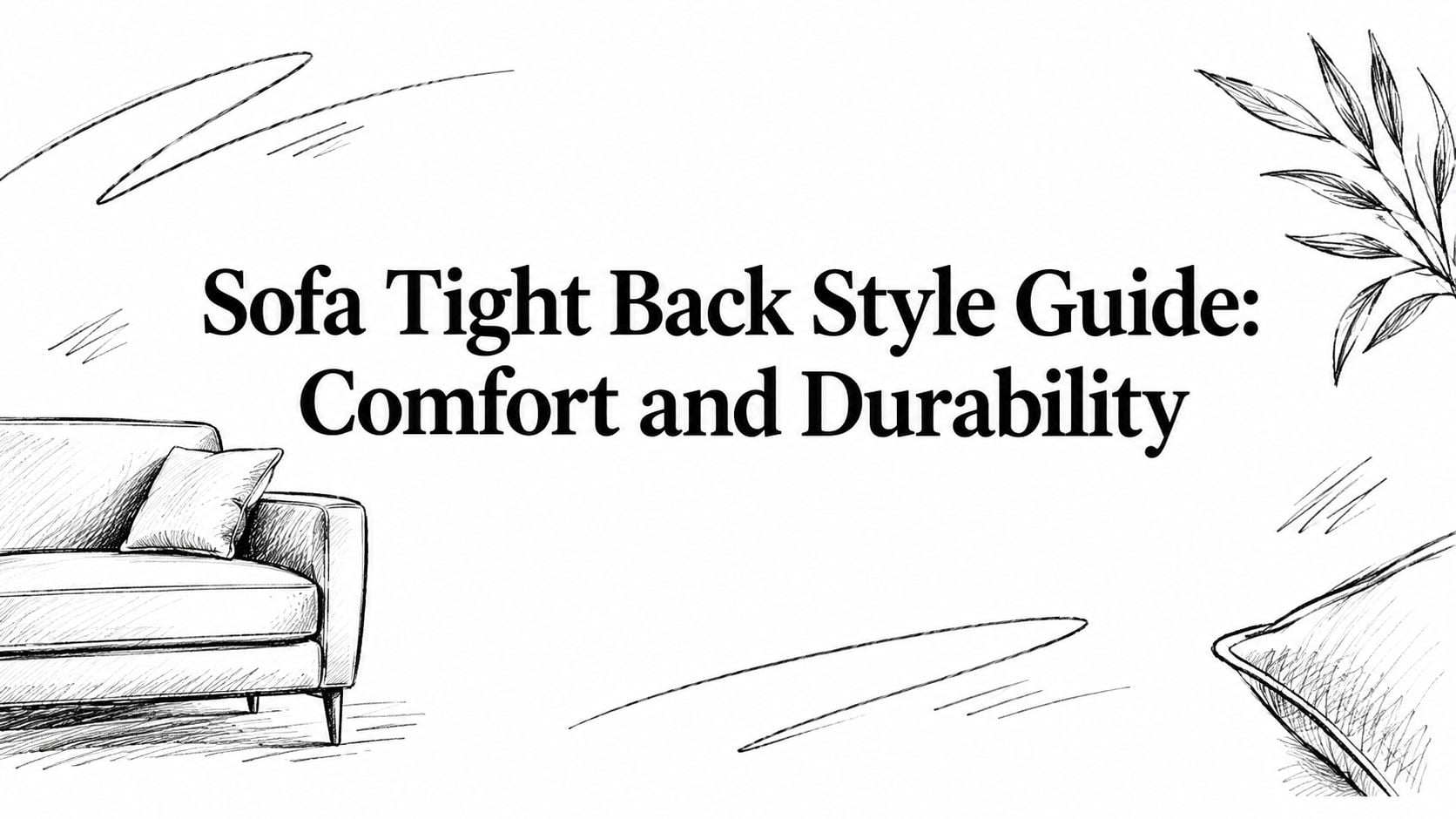
Sofa Tight Back Style Guide: Comfort and Durability

The living room needs a new sofa, and the choices are starting to blur together. One has big back pillows, another has a smooth upholstered back, and both look inviting. But which one will still feel comfortable after an evening of reading, television, or catching up with family?
At BILTRITE, the most useful sofa conversation starts with how someone sits, not just how the furniture looks. A sofa tight back design deserves particular attention because its shape stays fixed. Understanding that construction helps shoppers separate a handsome silhouette from a comfortable fit.
Table of Contents
- What Makes a Sofa Tight Back Different
- How Tight Back Sofas Are Built and Where They Came From
- Tight Back vs Loose Cushion Sofas Side by Side
- Why Fit Matters More Than Style on a Fixed Back
- Your Showroom Test Drive for a Tight Back Sofa
- Cleaning, Care, and Long-Term Durability
- Who Should Choose a Tight Back Sofa
What Makes a Sofa Tight Back Different
A shopper runs a hand across a smooth sofa back, straightening the fabric almost out of habit. There aren't any pillows to rearrange. Nothing lifts away, and the back stays neatly in place.
That's the defining feature of a tight-back sofa: the back padding and upholstery are fixed directly over the back frame rather than contained in separate, removable cushions. Think of it as an upholstered surface built into the furniture, not a row of pillows resting against it.
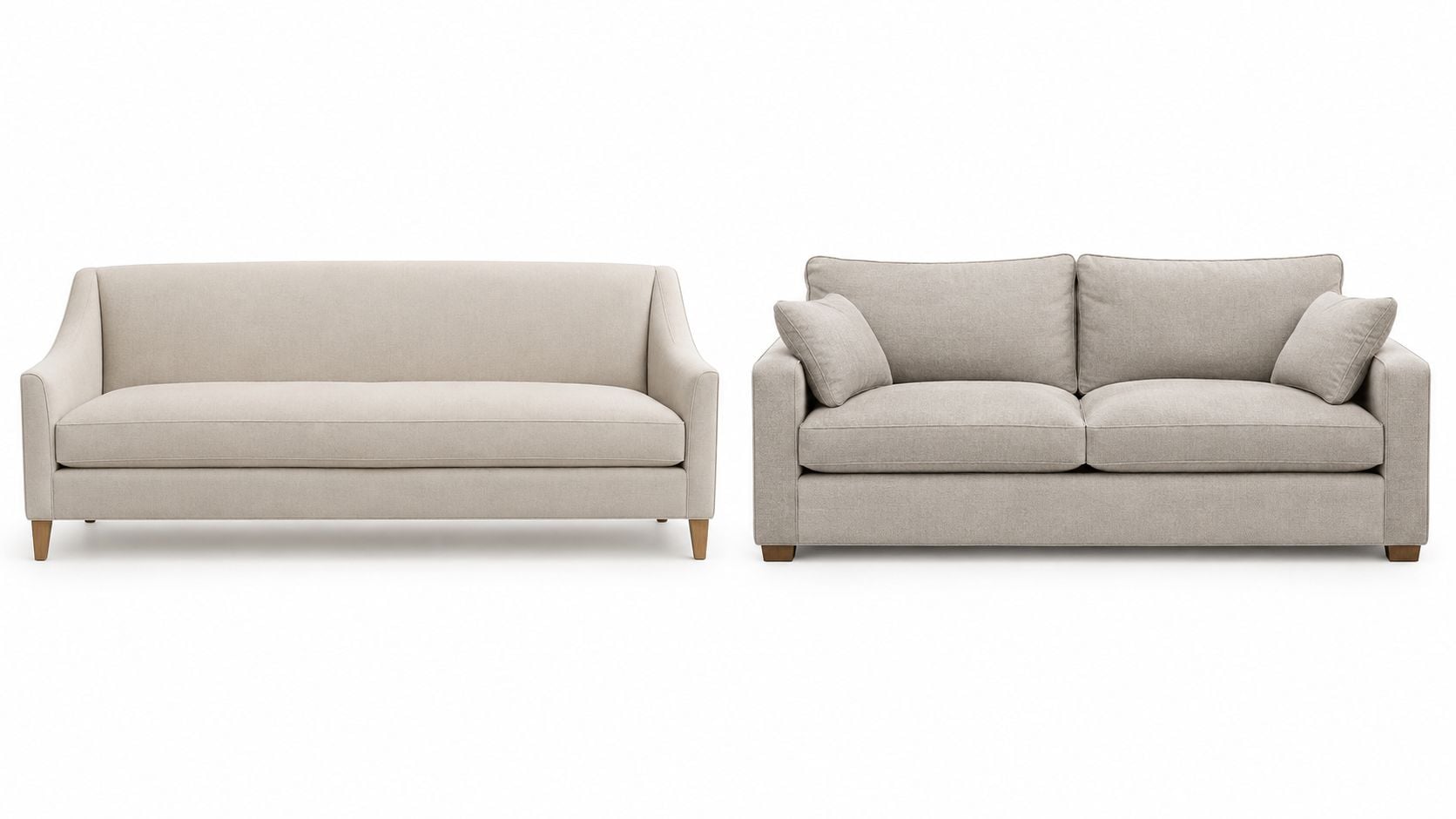
Recognizing the construction
The basic anatomy is straightforward. The frame establishes the shape, the padding softens that structure, and the upholstery covers the assembly. Together, they create a continuous back surface.
That surface doesn't have to be plain. A tight back can have buttons, tufting, or channels while still using fixed upholstery. Those decorative details change its appearance, not the basic construction.
- Look at the back edges. Separate pillows have their own outlines; a tight back reads as an integrated upholstered surface.
- Separate back style from seat style. The term describes the back, so the seat construction still needs its own inspection.
- Check the description. When the construction isn't obvious, ask whether the back padding is fixed or removable.
Showroom shorthand: “Tight” describes how the back is upholstered, not a promise that the sofa will feel hard.
That distinction clears up a common misunderstanding. Shoppers sometimes reject a tight back because they expect a stiff seat, or choose one because they assume it must provide stronger support. Neither conclusion follows from the name alone.
The useful takeaway is visual and practical: a tight back offers an integrated, fitted appearance. Its actual sitting feel requires a closer look beneath the fabric and a comfortable seat test.
How Tight Back Sofas Are Built and Where They Came From
When you test a tight-back sofa, the fixed upholstery makes the material beneath it part of the fit. The frame gives the sofa its shape, the suspension supports the seat, and the filling affects how the back and seat feel against your body.
Frame material and joinery are worth asking about separately. A sofa's published construction specifications may describe a hardwood frame, corner blocks, or mortise-and-tenon joints. Corner blocks reinforce points of stress, while joinery connects structural parts. These terms describe how a sofa is assembled, but they don't tell you whether its back shape will suit your posture.
Understanding the layers underneath
The suspension supports the seat beneath the cushions. Sinuous springs are continuous, S-shaped steel wires that flex under weight. A sofa can pair this type of suspension with a solid-and-engineered-wood frame and blended down-filled seat cushions. Fixed upholstery at the back can therefore sit alongside a softer seat package.
Filling matters, too. Foam, fiber, and blends feel and perform differently, so ask what is inside the back and seat separately. The back is fixed, which means its shape offers less room for adjustment. Sit against it and notice whether it supports your usual posture, rather than judging by the fabric or outline alone.
- Frame: What materials form the structure, and how are the joints connected?
- Suspension: What supports the seat beneath the cushions?
- Filling: What is inside the back and seat? Is foam density available?
A construction method with a long history
Tight backs have appeared in traditional and modern furniture. The Chesterfield tradition is associated with deep button tufting and tightly upholstered backs. The Swan sofa, designed in 1958 for a hotel in Copenhagen, used a continuous, sculptural form. These examples show how the same fixed-back construction can take on distinct shapes and surface treatments.
That history offers useful context, not a guide to fit. A tufted traditional back and a smooth modern one may support the body differently, so test the actual sofa. BILTRITE's focus on USA-made, Amish-made, and solid wood furniture gives shoppers a useful starting point for asking about construction. The guide to American-made sofas can help organize those questions before a Greenfield showroom visit.
Tight Back vs Loose Cushion Sofas Side by Side
After a movie, someone straightens the sofa's back pillows before heading to bed. Would that small routine suit your household, or become another chore?
A tight back keeps its upholstered surface in place. A loose-cushion design lets you reposition and reshape individual back cushions, rather like adjusting a pillow behind you in a chair. Neither label guarantees softness. The useful comparison is how each sofa accommodates your sitting habits, and how much adjustment you want to make.
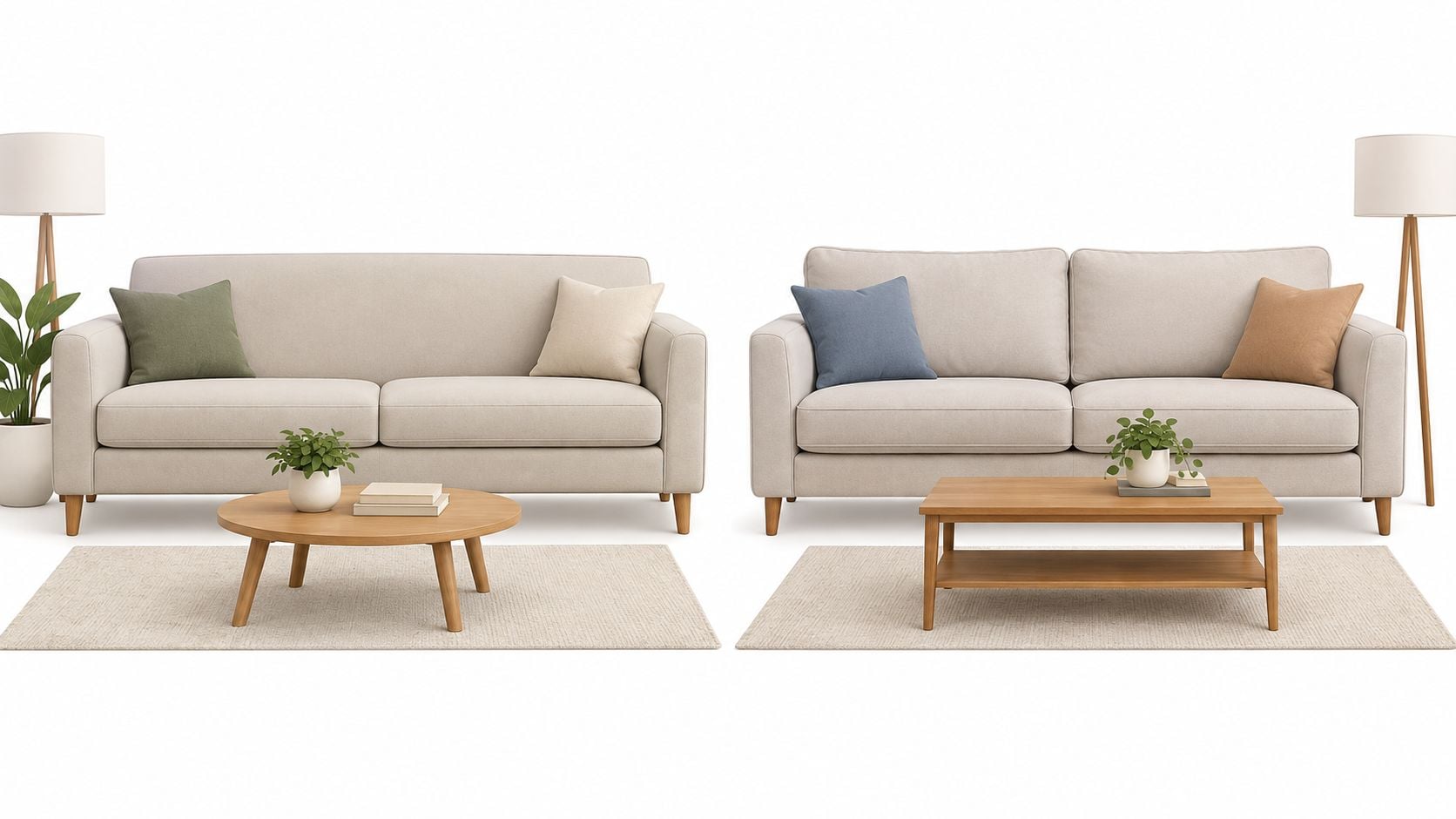
Quick Comparison of Tight Back and Loose Cushion Sofas
| Feature | Tight Back Sofa | Loose Cushion Sofa |
|---|---|---|
| Back appearance | Integrated, fitted surface | Separate cushion outlines |
| Daily adjustment | No loose back pillows to straighten | Cushions may need repositioning |
| Comfort personalization | Built-in back shape stays fixed | Cushion position can be adjusted |
| Space planning | Check the full footprint | Check the full footprint and cushion projection |
| Cleaning access | Back upholstery stays attached | Cushions can be lifted away, but care instructions still apply |
| Replacement options | Back work involves integrated upholstery | Ask whether individual cushions can be serviced or replaced |
For a living room used mainly for conversation, a back that stays in place may suit the household's routines. Someone who changes position throughout a movie may prefer movable cushions. Try your usual positions on both designs: a fixed back leaves fewer ways to change the support behind you. These are preferences to test, rather than rules about which sofa belongs in which room.
A cleaner outline doesn't automatically mean a smaller sofa. Compare overall dimensions, arm size, and the surrounding walking space. A fitted back may look less bulky while the complete piece still occupies substantial floor area.
Choose the maintenance routine the household will follow, not the one that sounds easiest on shopping day.
Cleaning deserves the same practical approach. Removable doesn't mean machine-washable, and attached doesn't mean stain-resistant. Ask about the cover and its cleaning instructions on either design.
BILTRITE's living room sofa buying guide helps organize these comparisons around room layout and household habits. Include comfort in that decision: the right choice should suit the people sitting on it as well as the space around it.
Why Fit Matters More Than Style on a Fixed Back
A tight-back sofa isn't automatically ergonomic. Its usefulness depends on whether the sitter can maintain contact with the back without uncomfortable pressure or awkward positioning.
Usable seat depth matters more than the sofa's outside depth. Common sofa seat depths are around 21 to 24 inches; roughly 20 to 22 inches generally favors upright sitting, while 24 inches or more provides additional lounging room, according to this sofa comfort testing guidance. These are shopping references, not a universal prescription.
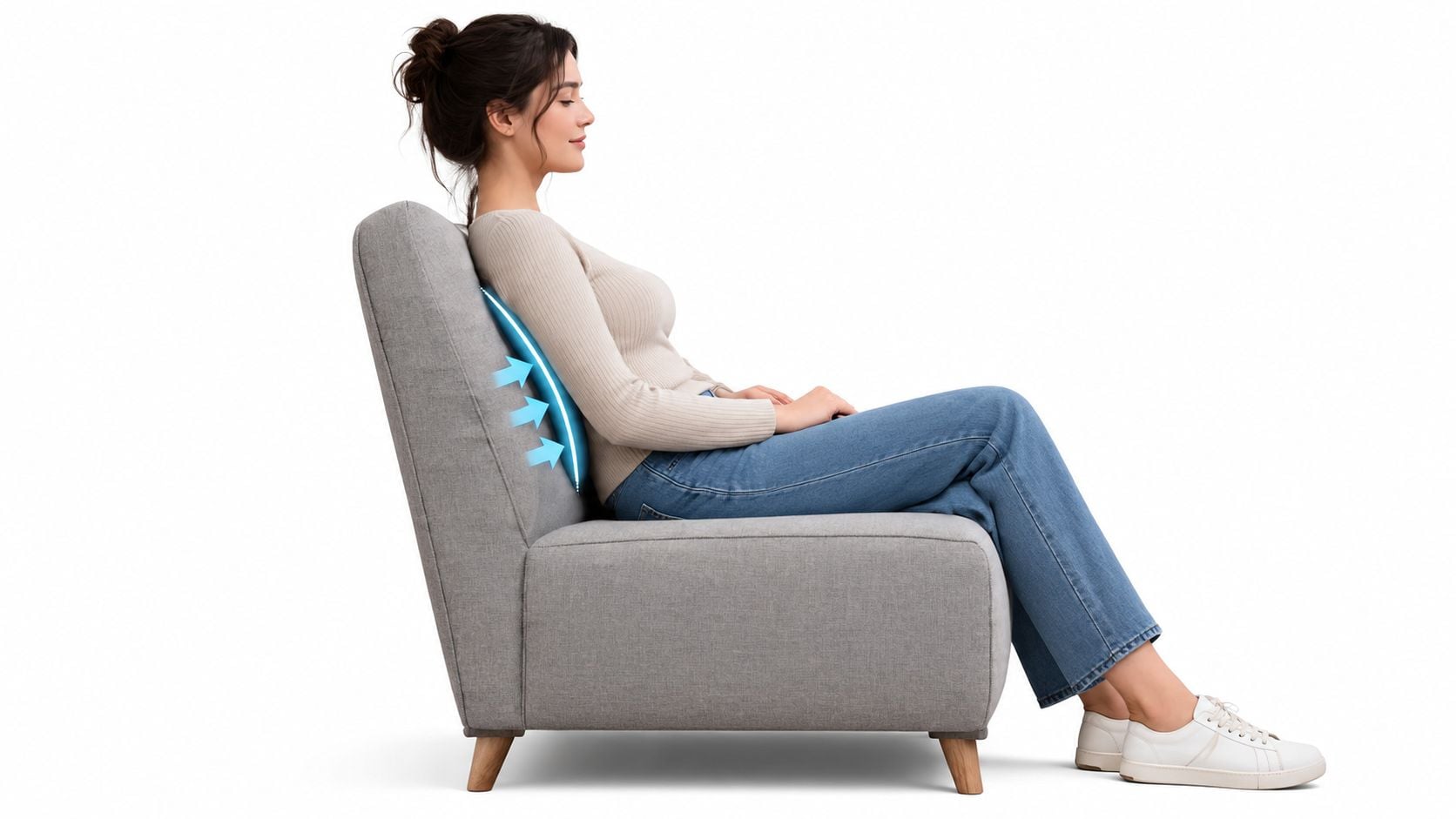
Matching the seat to the sitter
A shorter adult may slide forward in a deep seat to reach the floor, losing contact with the back. A taller adult may find a shallow seat provides insufficient thigh support. Leg length and sitting posture, rather than height alone, deserve attention.
One ergonomic recommendation places usable seat depth at approximately 80% to 95% of buttock-to-popliteal length, the distance from the back of the buttocks to the back of the knee; another suggests 2 to 3 inches of clearance behind the knee, as summarized in this seating fit guidance.
Back angle and lumbar shape
Backrest geometry matters alongside depth. Ergonomic research summarized by Cornell reports decreasing muscle activity with increasing backrest inclination up to approximately 110 degrees; a separate study described there found that back support reduced peak back pressure by 35% and average pressure by 20%, while a 3 cm lumbar pad helped prevent flattening of the lumbar spine.
Those findings explain why support location matters, but they don't promise identical results from a household sofa. The practical question is whether its contour supports the lower back without pushing the pelvis forward.
- Lower back: Contact should feel supportive, not like a hard lump.
- Shoulders: The back angle shouldn't force reaching or hunching.
- Family fit: Regular users should evaluate the same model individually.
The sofa dimensions guide helps distinguish room-planning measurements from sitting measurements. For a fixed back, that distinction is especially important before purchase.
Your Showroom Test Drive for a Tight Back Sofa
A quick sit can reveal an obviously uncomfortable sofa. A longer, deliberate trial helps uncover problems that don't appear during the first impression.
Start with a tape measure, room measurements, and a realistic description of daily use. Reading upright, watching television, and curling up don't place the body in the same position. If throw pillows will be part of everyday sitting, bring one along to evaluate the intended arrangement.
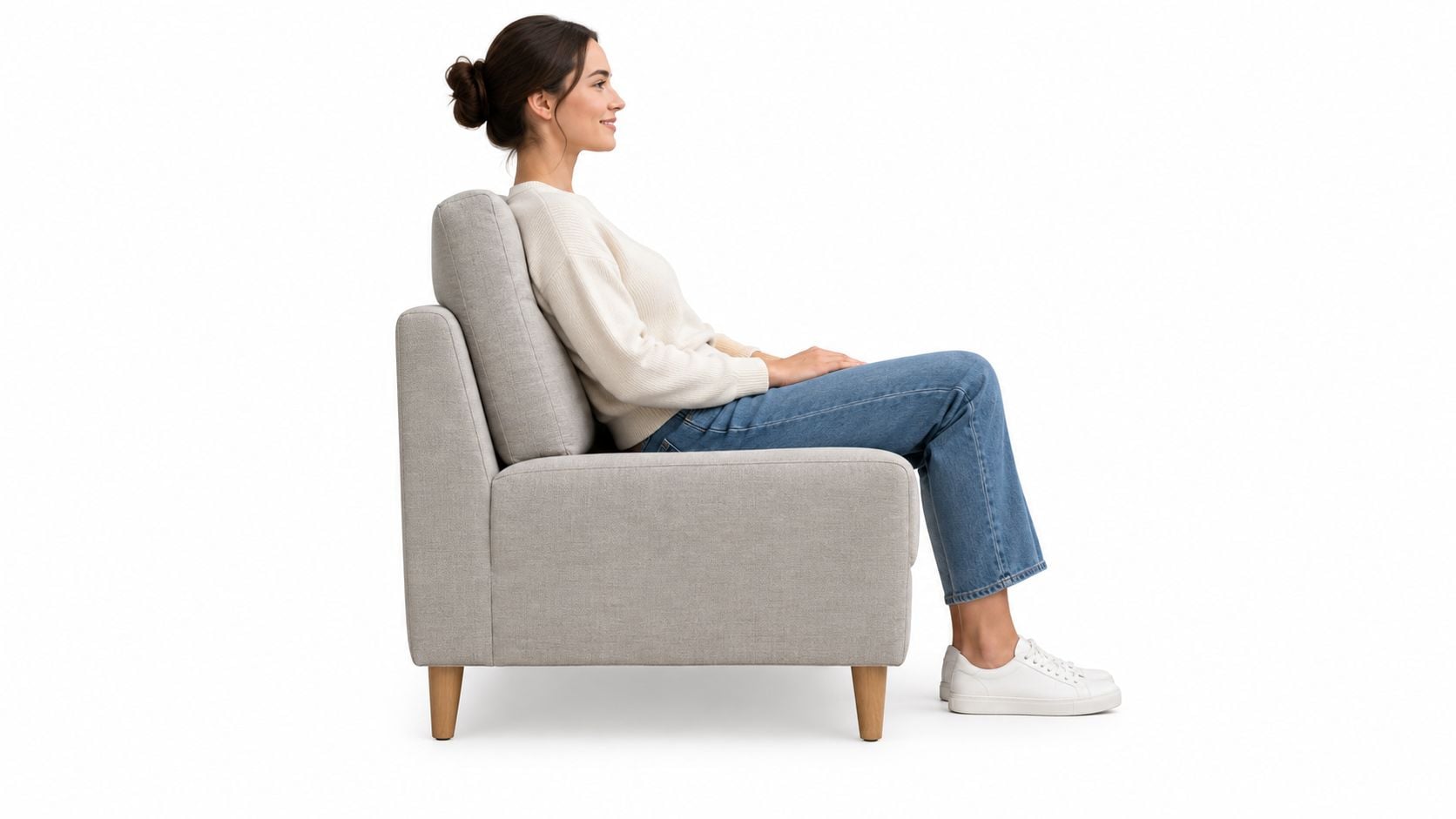
Make the trial repeatable
- Measure the delivery route. Record doorway openings, hallway restrictions, and stair turns alongside the room's available footprint.
- Measure usable depth separately. Start where the lower back meets the upholstery and measure toward the seat's front edge.
- Settle into the intended posture. Sit fully back and check foot stability, knee comfort, and lower-back contact.
- Stay long enough to notice changes. Allow 10–15 minutes in each intended posture, rather than judging only the initial softness.
- Stand naturally. Notice whether rising requires an uncomfortable forward struggle or heavy pushing against the arms.
Seating research addressing body-size variation and older adults reinforces the importance of matching furniture to the user and sitting task. Seniors and caregivers should pay particular attention to the transition from sitting to standing, not just comfort while settled.
Ask about the exact model
Request the frame material, suspension description, back filling, and available fill density. Ask whether structural testing information is available, and whether the specification covers the configuration being considered. BILTRITE's sofa and chair inspection checklist provides a useful starting point.
BILTRITE offers come-apart sofas and sectionals for challenging delivery routes and heavy-duty furniture for households seeking those options. Neither category should be assumed to apply to every tight-back model; a sales associate can confirm the individual piece.
Bring the real-life test: Regular users should try the furniture themselves whenever possible, including anyone who needs assistance standing.
A showroom trial isn't an endurance contest. It's an opportunity to discover whether the furniture supports ordinary life without requiring constant workarounds.
Cleaning, Care, and Long-Term Durability
Less pillow straightening doesn't mean a tight-back sofa is maintenance-free. Daily neatness and long-term durability are different questions.
Fixed construction reduces back-cushion movement, but the integrated frame, support system, filling, and attachment points still carry the workload. Fabric appearance alone can't establish structural quality.
Read durability claims carefully
European seating standards distinguish structural performance from upholstery performance. EN 1728 specifically addresses seating structure rather than the aging or durability of upholstery materials, as explained in the European domestic seating standard documentation.
Ask which structural standard applies and what load and cycle program was used. Separately, request information about the cover and filling. A structural test shouldn't be treated as proof that fabric won't stain or that padding won't change with use.
Firmness isn't a shortcut, either. Research on sofa pressure comfort considers both subjective experience and body-pressure distribution, including the effects of seat and back hardness. A firm surface can still feel uncomfortable in the wrong places.
Build care around the actual upholstery
- Confirm cleaning instructions. Ask which methods are approved for the selected fabric or leather before using a household cleaner.
- Discuss stain protection. Clarify what any treatment covers, its limitations, and whether it changes the recommended cleaning process.
- Ask about professional access. Explain that the back is fixed so the cleaner or upholsterer can assess the work involved.
- Inspect changes early. Flag pulling seams, uneven padding, or a persistent loss of support before attempting a home repair.
BILTRITE's upholstery cleaning tips can help shoppers prepare questions for their specific covering. General advice should never override the furniture's own care directions.
Repairability deserves attention before purchase. Integrated back upholstery can require specialized work, so ask who can service it and what parts are accessible. For a busy family room or senior living space, the useful combination is appropriate construction, suitable upholstery, and a manageable care routine, not an unsupported promise of maintenance-free furniture.
Who Should Choose a Tight Back Sofa
A household that keeps putting loose back pillows back in place may welcome a tight back. Its upholstery stays attached, giving the sofa a defined shape. The question is whether that fixed shape suits the people sitting against it. Like a chair with a set backrest, it offers less room to change the support by rearranging cushions.
Body fit comes first.
A tight back can suit a smaller apartment, a conversation-focused living room, or a family space where loose pillows become a nuisance. Someone who regularly shifts cushions between upright sitting and lounging may prefer more flexibility. With a fixed back, the exact model deserves careful testing because the support cannot be repositioned in the same way.
Translate preferences into a decision
| Household priority | Useful direction |
|---|---|
| An orderly appearance with less back-pillow arranging | Shortlist tight-back models that feel comfortable |
| Frequent changes between upright sitting and lounging | Compare loose-cushion arrangements |
| Different body sizes sharing the sofa | Have regular users try the same model |
| Easier standing or mobility assistance | Evaluate seat geometry and compare seating categories |
| Long-term service flexibility | Ask about upholstery access and replacement options |
For seniors and caregivers, the back style shouldn't be the deciding factor. Arm position, seat height, stability, and the effort needed to rise deserve attention. If powered assistance is needed, discuss a power lift recliner as a separate seating option.
In Wisconsin, power lift recliners may qualify for a sales-tax exemption when prescribed for medical use; ask your sales associate or check the state revenue department's current rules before budgeting. A sofa and a lift recliner serve different purposes, and a household may need to consider both.
Choose value without skipping the sit test
BILTRITE's family-owned approach centers on affordable, better-quality furniture. Small-scale pieces, heavy-duty options, and American and Amish craftsmanship give Metro Milwaukee households choices to match their rooms and needs.
BILTRITE doesn't sell online, so questions and comfort comparisons happen face to face. Its showroom is closed Sundays and Mondays for family time; plan your visit accordingly.
Choose the exact piece the household can live with comfortably, allowing room dimensions, posture, maintenance expectations, and service options to guide the decision.
Family-owned since 1928, BILTRITE Furniture-Leather-Mattresses offers affordable, better-quality furniture, USA- and Amish-made options, a mattress department with over 60 models, and sales associates with over 400 years of combined experience. Visit the Greenfield showroom to compare tight-back seating and ask questions without pressure. Bring room measurements and the family members who'll use the sofa, so the conversation stays focused on a comfortable fit for home.