Amish Furniture Prices: What You’ll Actually Pay in 2026


A single Amish nightstand can cost a few hundred dollars, while a full bedroom set can climb past $10,000. In 2026, Amish furniture prices depend far more on the piece, wood, construction, and options than on one flat “Amish premium.”
A couple furnishing their first home may discover this quickly. They walk into a showroom, point to two dining chairs that look nearly alike, and find one tagged at $450 and the other at $1,200. Both say “solid wood” and “handcrafted.” So why is one so much more?
That question comes up often, especially for families trying to balance a welcoming home with a sensible budget. The answer isn't hidden in a mysterious label. It usually sits in the wood species, dimensions, joinery, finish, customization, delivery, and wait time.
BILTRITE Furniture has served the Metro Milwaukee community since 1928, and its fourth-generation, family-owned team has helped shoppers compare those details without pressure. A useful starting point is learning where Amish furniture is made, then looking beyond the sticker price to the full cost of owning the piece.
Table of Contents
- Why Amish Furniture Prices Feel All Over the Map
- What Makes Amish Furniture Different From the Rest
- Typical 2026 Price Ranges by Furniture Piece
- The Four Things That Move the Price Up or Down
- Amish Furniture vs Mass-Market Furniture
- The Hidden Costs Most Shoppers Forget
- Why Amish Furniture Is a Long-Term Value Play
- How to Budget and Shop Smart for Amish Pieces
Why Amish Furniture Prices Feel All Over the Map
A couple comparing two similar chairs may see one price several times higher than the other. That is not necessarily a contradiction. Amish furniture covers many workshops, hardwood species, construction choices, and product sizes, from a modest accent table to a complete office suite.
A chair's price can change with the wood, back design, component thickness, hardware, finish, and labor required. Two chairs may share a silhouette while using different materials and demanding different amounts of hands-on work. The visible shape is only the cover of the book. The specifications tell you what is inside.
A practical rule: Compare the specifications, not just the silhouette.
Four questions make the price easier to read
Before comparing two tags, ask:
- What piece is it? A chair, nightstand, dining table, and bedroom suite sit at very different points on the pricing ladder.
- What is it made from? Hardwood species can carry different material costs. Veneer and engineered materials represent a different product category.
- How is it built? Joinery, drawers, finish work, and structural details affect labor and expected durability.
- What happens after checkout? Delivery, setup, customization, and lead time shape the final purchase decision, not just the showroom price.
For a current market reference, coffee tables are listed at about $808 to $2,744, while bedroom sets range from roughly $7,997 to $10,148 in these current Amish furniture pricing examples. The same examples list bookshelves at $186 to $2,766 and bedroom sets at $4,616 to $14,146.
Those figures show why a simple average can mislead. A table with a custom finish may carry a different bill from a ready-made piece, and delivery or setup can raise the landed cost after checkout. Lead times can matter too, especially when a buyer is furnishing a room by a specific deadline.
The spread is understandable once you separate the category, materials, labor, options, and full delivered cost. Knowing where Amish furniture is made gives that comparison useful context.
What Makes Amish Furniture Different From the Rest
Amish furniture generally refers to pieces built in small workshops with substantial hands-on craftsmanship. Many makers work in furniture-producing areas such as Pennsylvania, Ohio, and Indiana, using solid hardwoods and traditional construction rather than treating furniture as a disposable flat-pack product.
That doesn't mean every piece has identical construction or that every workshop follows one formula. It does mean the buyer should look closely at the choices underneath the finish.
Follow the material
The wood is one of the first places the money goes. Solid domestic hardwood requires careful selection, drying, milling, and finishing. Kiln-dried lumber helps makers work with stable material, while the species affects color, grain, availability, and price.
A solid-wood drawer also feels different from a thin engineered panel. A substantial top, properly fitted doors, and sturdy legs require more material than lightweight components designed primarily for efficient shipping.
Look inside the joints
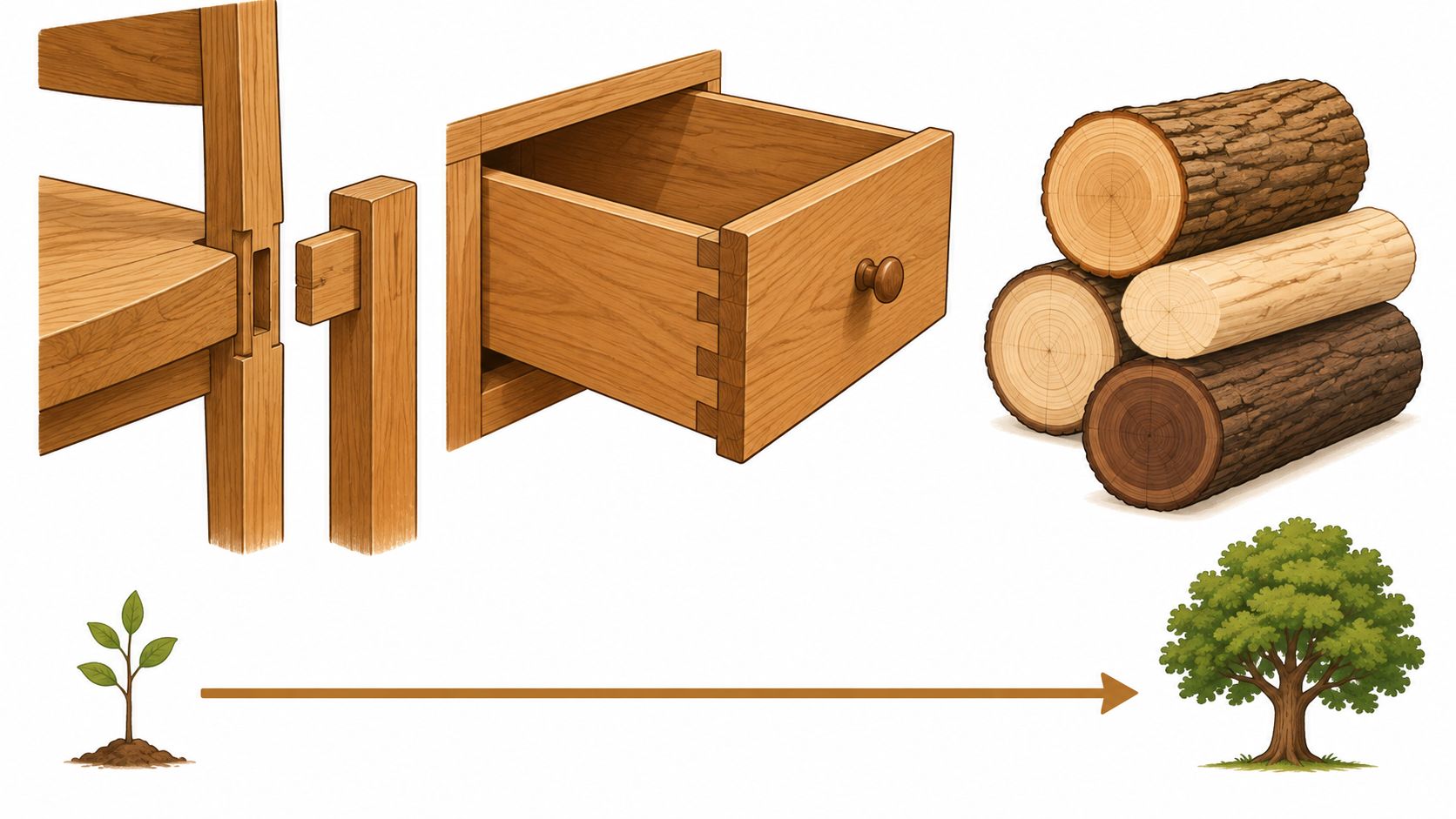
Traditional joinery can include mortise-and-tenon connections in frames and dovetailed construction in drawers. These methods require accurate cutting and fitting. They aren't merely decorative details, because the joints help determine how the piece handles daily movement and use.
Hand-applied finishes add another layer of labor. A craftsman may sand, stain, seal, and inspect the surface through several stages rather than sending an identical panel through a fast, standardized process.
BILTRITE's guide to Amish furniture quality helps shoppers focus on those underlying details instead of judging a piece only by its appearance.
Compare the experience with flat-pack furniture
A flat-pack item is designed around efficient manufacturing, compact packaging, and quick assembly. Amish furniture is often made to order, which can allow choices in dimensions, wood, finish, and hardware. That flexibility adds value for a family with an unusual room, a narrow passage, or a strong preference for a particular look.
The price, then, supports more than a rustic appearance. It can include domestic lumber, skilled labor, careful fitting, finishing time, and a piece designed for a specific home. A table priced in the thousands makes more sense once those inputs are visible.
Typical 2026 Price Ranges by Furniture Piece
A shopper furnishing one room may see a nightstand priced in the hundreds, while a complete bedroom set reaches well into five figures. The gap reflects more than size. Wood, dimensions, finish, storage, and made-to-order choices all affect the final price, so the figures below are market examples rather than a universal price list.
| Furniture Piece | Low End, 2026 | High End, 2026 | Notes |
|---|---|---|---|
| Nightstands | A few hundred dollars | About $1,000 | Current examples place smaller pieces around $400 to $800 2026 Amish furniture marketplace examples, with design affecting the final figure. |
| End and side tables | About $400 | About $1,200 | Smaller occasional pieces can cost less than larger hardwood examples. |
| Dining chairs | About $449 each | About $529 each in common listings | Arm styles, upholstery, wood, and finish can change the total. |
| Dining tables | About $1,200 | Several thousand dollars | Solid-wood tables commonly begin around $1,200 to $2,000, while larger or customized designs cost more. |
| Benches and stools | Hundreds of dollars | More than $1,000 | Seating size, back design, and wood choice matter. |
| Bedroom dressers | More than $1,000 | Several thousand dollars | Storage capacity and drawer construction affect labor and material use. |
| Bed frames | About $874 | About $4,500 or more | Current examples begin around $874 to $1,655, with design and storage influencing price. |
| Kitchen and pub tables | More than $1,000 | Several thousand dollars | Dimensions, extensions, and finish options create a wide spread. |
| Full room sets | Several thousand dollars | More than $10,000 | Current bedroom-set examples range from roughly $4,616 to $14,146. |
Large packages make the pricing spread easier to see. Current dining-room collections run around $2,663 to $7,759, while office sets range from about $11,844 to $14,805, with another listed range reaching $21,501 to $26,707 2026 Amish furniture marketplace examples. These totals show how several individually reasonable pieces can create a much larger order.
Use the table as a starting map. A standard-size table in a common wood may stay near its category's lower end, while unusual dimensions, premium materials, added storage, or a special finish can push the order higher. Delivery fees and lead times also belong in the budget, because a lower sticker price does not always mean a lower landed cost.
A single piece can be a practical entry point. Ohio Amish furniture affordability explains how shoppers can consider individual purchases instead of furnishing an entire home at once. That approach lets a household spread out spending while choosing pieces room by room.
The Four Things That Move the Price Up or Down
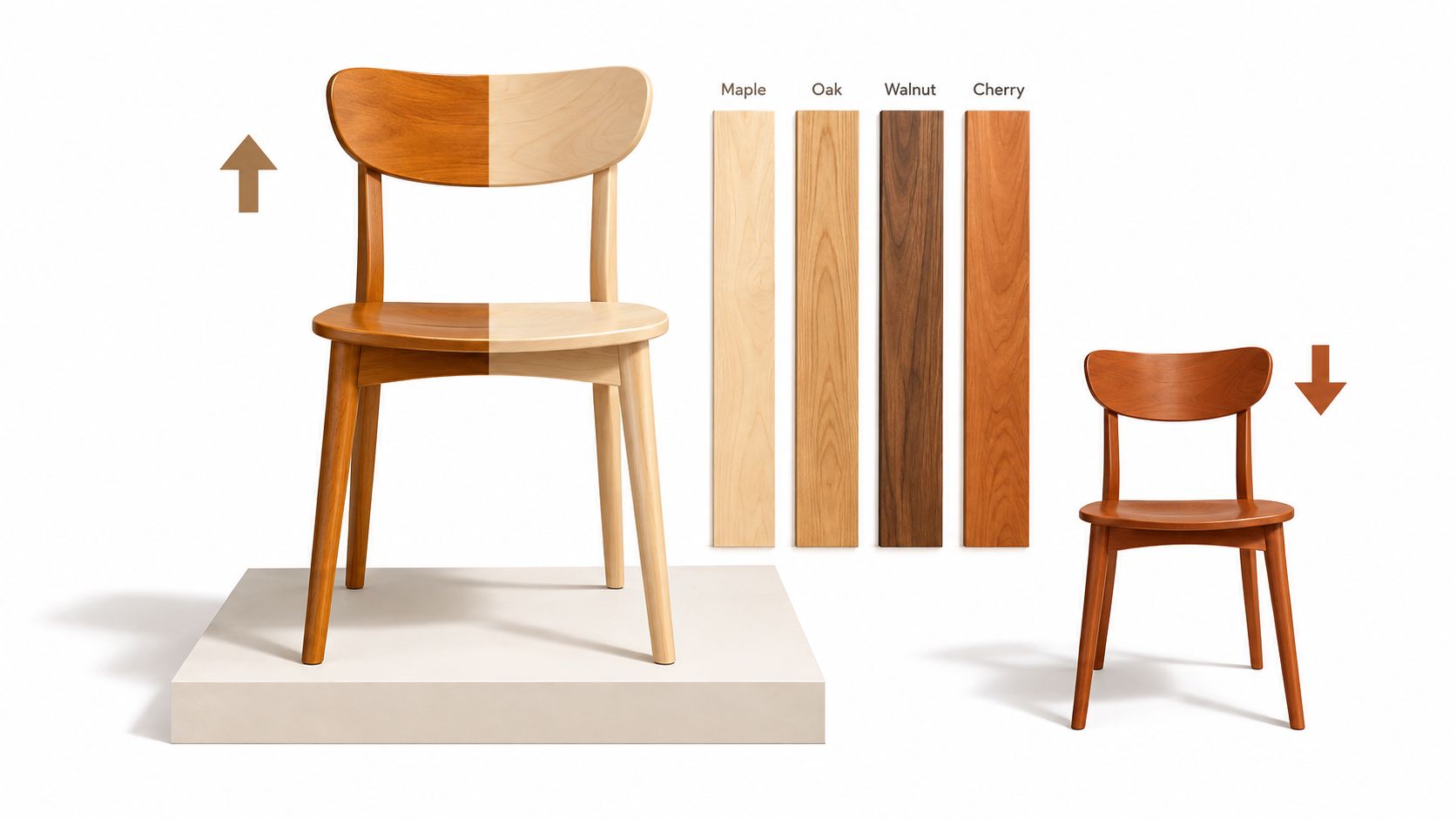
A dining chair may look nearly identical to another chair and still carry a very different price. For example, one brown maple chair may cost $1,400, while an oak version is offered at $900. That gap can reflect the wood, design, availability, finish, and construction rather than arbitrary pricing.
The four largest variables are wood species, joinery, size, and customization. They work together, much like ingredients in a recipe. Changing one may have a small effect, while changing several can reshape the full quote, delivery cost, and lead time.
Wood species changes the material bill
Brown maple often offers a more accessible solid-hardwood choice. Oak and cherry commonly fall in the middle, while walnut and quarter-sawn white oak can raise the price because of material cost, grain character, scarcity, or the visual effect created by the cut.
Solid hardwood generally costs more than veneers or MDF. Scarcer hardwoods and custom dimensions can raise the total as well. Product listings show armoires around $1,718 and office furniture sets ranging from about $10,436 to $26,707, illustrating how category, material, and complexity combine in the final figure Amish furniture material and product pricing information.
Joinery affects labor
Mortise-and-tenon joints require careful fitting between components. Dovetailed drawers also demand accurate cuts so the parts hold together cleanly. Staples and simpler fasteners can support a different manufacturing process, with different labor requirements.
A guide to how a mortise-and-tenon joint works can help shoppers understand what they are paying for beneath the finish. The practical question is whether the construction suits the family's expected use, not just whether the piece looks traditional from across the room.
Size and customization add work
A larger table needs more lumber, preparation, and finishing surface. Extensions, deeper storage, unusual widths, specialty hardware, and non-standard dimensions add work beyond the base model. They may also affect delivery planning and the final landed cost.
A useful budgeting formula is simple: start with the standard piece, then ask what each requested change adds. Industry pricing guidance places a solid hardwood dining table around $1,500 to $3,000, bedroom sets around $3,000 to $8,000, and smaller pieces such as nightstands or end tables around $400 to $800 an Amish furniture pricing guide focused on wood, size, and customization.
Request a line-item quote instead of applying one percentage to every order. A wood upgrade may have a modest effect on a small item but a much larger effect on a full suite. A custom dimension can also be worthwhile if it prevents a room from feeling cramped. Ask about delivery fees and lead times at the same time, because the sticker price is only part of what the order will cost.
Amish Furniture vs Mass-Market Furniture
The cheapest option usually wins the sticker-price comparison. The more useful comparison asks what the buyer receives, how the piece can be repaired, and whether the furniture suits the household for the long haul.
The ranges below illustrate the broad difference between solid-wood Amish construction and mass-market furniture made with particleboard or similar materials. The available verified market data supports Amish price examples, but it doesn't establish reliable figures for imported alternatives, expected lifespans, or annual costs. Those fields should therefore be treated as questions to ask, not as invented promises.
| Furniture Piece | Amish Price Range, 2026 | Mass-Market Price Range, 2026 | Expected Lifespan | Avg. Cost Per Year |
|---|---|---|---|---|
| Queen bed frame | About $874 to $4,500 or more | Varies by construction and retailer | Ask about materials, joints, and repair options | Calculate from the actual quote and expected use |
| Dining table | About $1,200 to several thousand dollars | Varies widely | Ask whether the surface can be repaired or refinished | Divide the full landed cost by realistic years of use |
| Upholstered sofa | Category and construction vary | Category and construction vary | Ask about frame materials, suspension, and service coverage | Use the quoted price and expected service life |
The comparison isn't just “expensive versus cheap.” Solid hardwood may allow refinishing, hardware replacement, and repairs that aren't practical on a damaged particleboard surface. BILTRITE's explanation of solid wood furniture versus particle board gives shoppers a way to inspect that distinction.
Ask for evidence rather than assumptions
A buyer can ask:
- What is inside the drawer? Look for sturdy construction and smooth operation.
- What is the frame made from? This matters especially for seating.
- Can the finish be refreshed? Solid wood may offer more options than a thin printed surface.
- What does the warranty cover? Coverage varies, so the written terms matter.
- What happens if a part needs repair? A local showroom may be able to explain the service path.
The best value depends on use. A family dining table that receives daily meals, homework, and celebrations deserves a different evaluation from a rarely used accent piece. Price per year can help, but only after the shopper has a realistic estimate for both service life and ownership costs.
The Hidden Costs Most Shoppers Forget
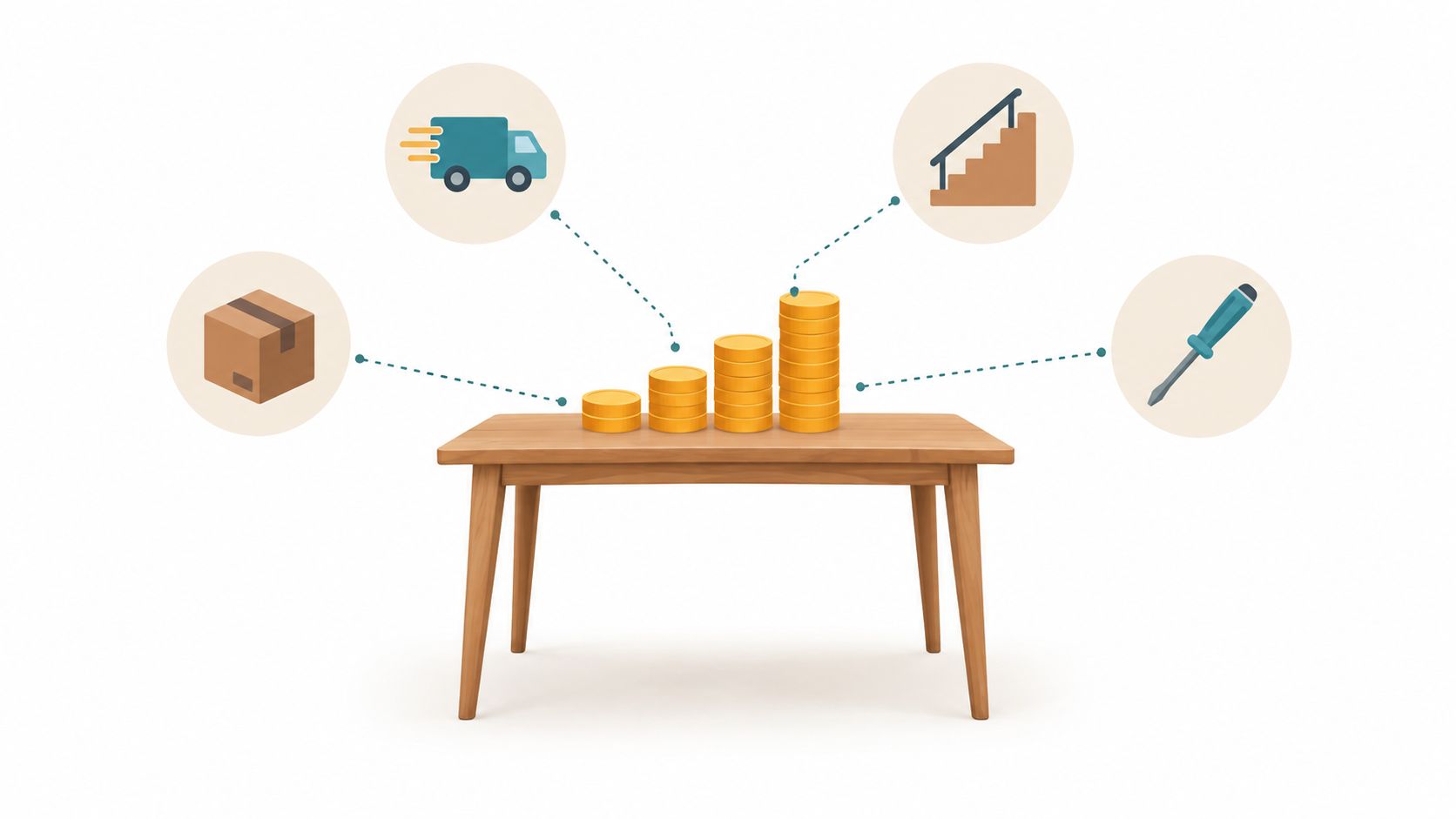
A dining table may fit the showroom budget, then strain it once delivery, placement, assembly, and custom details enter the quote. The sticker price is the starting line, not the full cost of bringing furniture into your room.
Current delivery guidance shows charges of about $199 to $299 for curbside or white-glove service in some orders, while made-to-order lead times may reach 2 to 6 months, as outlined in delivery terms and lead-time information for Amish furniture. Another ordering guide describes custom orders as taking 8 to 14 weeks, so the quoted schedule deserves the same attention as the price.
Build the landed cost before ordering
Ask four direct questions before approving an order:
- What is the furniture price?
- What delivery service is included?
- Where will the crew place or assemble the piece?
- When will the order arrive?
Quick-ship inventory can reduce the wait, but availability depends on the specific piece and finish. Guidance lists quick-ship availability in 2 to 6 weeks, while some quick-ship collections are listed at 10 to 12 weeks, according to Amish furniture ordering and quick-ship guidance. Confirm the timing for your exact item rather than assuming “quick” means immediate.
Customization adds another layer. A non-standard width, special finish, upgraded hardware, or extra storage can raise the price while leaving the basic design unchanged. Sales tax follows applicable local rules, too.
Request a written, line-item quote. It turns an uncertain Amish furniture price into a landed cost your household can compare.
Why Amish Furniture Is a Long-Term Value Play
Long-term value starts with the parts a family touches and uses repeatedly. Solid hardwood, fitted joints, sturdy drawer construction, and a protective finish can give a piece a better chance of remaining useful as children grow, rooms change, and styles evolve.
That doesn't make every Amish piece indestructible, and it doesn't mean every household needs the most elaborate option. It means the buyer can evaluate furniture as a repairable household asset rather than a short-term decoration.
Durability has practical value
Mortise-and-tenon joinery, dovetailed drawers, and kiln-dried hardwoods such as oak, maple, cherry, and walnut are construction choices shoppers can inspect. Solid wood may also allow a future owner to refresh the finish, replace hardware, or address a repair instead of discarding the entire piece.
A useful example can be framed without pretending that every item has the same lifespan. A $4,500 dining table used for 40 years works out to about $112.50 per year, before delivery, maintenance, or repairs. That calculation is simple arithmetic, but it only makes sense if the table receives the care and use needed to remain in service. The $4,500 market example is consistent with current furniture pricing guidance, while the annual figure is calculated from those stated amounts.
A less expensive table can be the right choice for a temporary home, a changing household, or a room that sees little use. Value depends on fit, not just longevity.
Heirloom value includes memory
Families often remember the table more than the receipt. A solid dining table can host birthday meals, holiday gatherings, homework, and quiet conversations, then move into another room or another home.
A parent may describe a table as the place where the family gathered, and later pass it to grandchildren. That sentiment isn't a substitute for construction quality, but it explains why shoppers sometimes choose a piece that can mature with the household. Wood can develop a richer patina, while a new finish or hardware can help the design adapt to a different room.
The strongest long-term purchase is the one that suits the room, the budget, and the family's daily habits. An heirloom isn't created by a price tag alone. It earns that role through years of useful life.
How to Budget and Shop Smart for Amish Pieces
A calm shopping process begins with the total budget, not with a single display tag. Families can set a comfortable ceiling, identify the pieces that matter most, and leave room for the practical details that affect the final quote.
Use a three-part plan
Start with the complete budget. Include the furniture, delivery, taxes, and requested options. One industry source advises allowing a 10 to 15 percent buffer for delivery and customization, but the exact amount depends on the order and should be confirmed with the seller.
Prioritize daily-use pieces. A dining table, bed frame, or desk may deserve attention before occasional chairs or accent tables. A household can furnish the rooms in stages instead of forcing every purchase into one weekend.
Phase in secondary pieces. A nightstand, side table, bench, or occasional chair can be added when the budget and room are ready. This approach keeps the main purchase intentional without making the home feel unfinished.
Current examples place a starter solid-wood nightstand around $400 to $700, a mid-range dining set around $3,500 to $6,000, and an heirloom bedroom suite around $8,000 to $12,000. These are planning examples, not guaranteed quotes, so shoppers should verify the exact wood, design, dimensions, and delivery terms.
Bring a short checklist
- Confirm the wood: Ask about species, grade, and whether the listed price changes with an upgrade.
- Inspect the construction: Open drawers and ask how the joints are made.
- Write down timing: Get the estimated delivery window in writing, especially for made-to-order furniture.
- Request itemization: Ask for furniture, options, delivery, setup, and applicable charges as separate lines.
- Measure the route: Check doorways, stairways, elevators, and the final room before ordering.
BILTRITE offers USA-made, Amish-made, solid-wood, small-scale, and heavy-duty furniture, along with a mattress department carrying over 60 models. Its sales associates bring more than 400 years of combined experience, and the showroom experience gives families a chance to sit, open drawers, compare finishes, and discuss Amish furniture prices in person.
BILTRITE Furniture-Leather-Mattresses offers American-made, Amish-made, solid-wood furniture and a broad mattress selection for Metro Milwaukee homes. Visit BILTRITE Furniture-Leather-Mattresses in Greenfield to compare materials, finishes, delivery details, and Amish furniture prices with a helpful local team, without pressure.