Bench Seating: Your Guide to Styles & Tips 2026


Some evenings, the whole family piles into the kitchen, somebody's standing, somebody's balancing a plate, and the bench becomes the seat everyone reaches for. That is the beauty of bench seating, it solves a real-life problem without making a room feel crowded or stiff. At BILTRITE, we've helped Milwaukee families sort out these everyday seating puzzles since 1928, and the right bench can make a dining room, entryway, or bedroom feel more welcoming the moment it comes home.
Bench seating has deep roots because it has always done one job well, seating people together with fewer parts and less fuss. In earlier homes and gathering spaces, benches were a common answer for shared sitting, which says a lot about how practical they have always been for group living. That same shared-sitting idea still matters today, whether the goal is family dinners, a tidy mudroom, or a little extra landing spot near the front door.
Welcome to the Family Bench Seating Solutions
A family room can feel unfinished when there is no easy place for kids to sit while pulling off boots, or when the dining table ends up one chair short for Sunday supper. A bench fixes that in a simple, practical way. It adds seating without crowding the room, and it often makes the space feel more relaxed the moment it is in place.
There is also a familiarity to it that people respond to right away. Benches have long served as shared seating in gathering spaces, and that basic idea still fits modern homes because it is straightforward and useful. The form did not need a dramatic reinvention, because the logic behind it was already sound.
Why a bench feels so at home
A bench earns its spot by doing more than one job. It can give a family extra dinner seating, anchor a breakfast nook, or provide a place to pause in an entryway before the day starts. In smaller homes, that kind of flexibility matters even more, because every piece needs to pull its weight.
Practical rule: if a room needs seating but does not need a row of bulky individual chairs, a bench is often the cleaner answer.
That is the kind of thinking families bring into our showroom in Greenfield. They are not looking for furniture that shouts for attention, they are looking for pieces that fit the way they live and hold up over time. Bench seating usually makes sense when people want shared comfort, simple upkeep, and a look that feels timeless instead of trendy. If you are comparing heights for a counter area or a raised gathering spot, our guide to a bar height bench can help you start with the right fit.
Finding Your Style Different Types of Benches
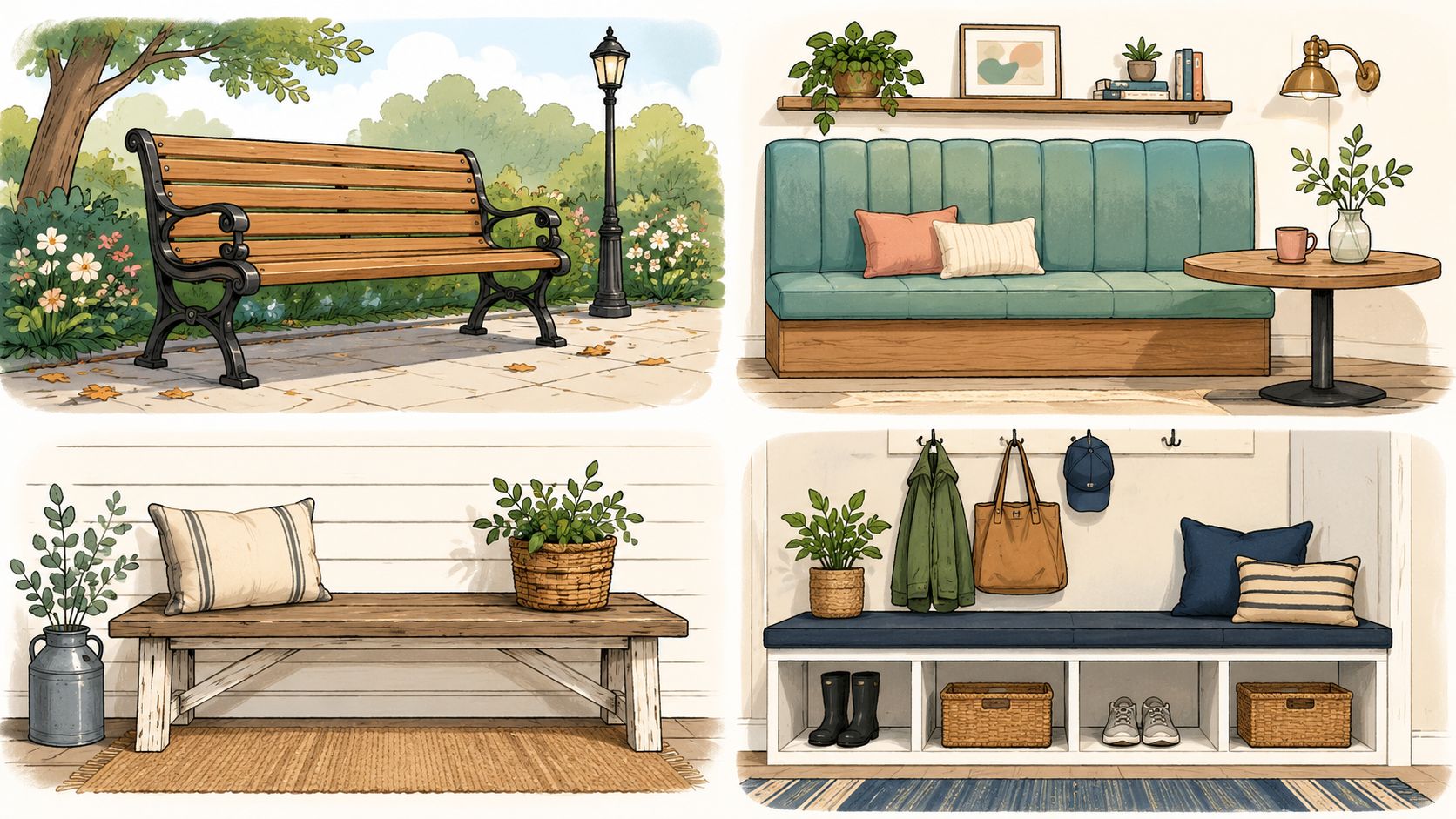
The easiest way to shop for a bench is to start with the job it needs to do. A dining bench, an entry bench, a storage bench, and an accent bench all share the same basic shape, but they behave very differently once they're in a home.
| Bench Type | Best For | Key Features |
|---|---|---|
| Dining bench | Family meals and kitchen tables | Clean profile, stable seat height, easy-to-slide-in seating |
| Entryway bench | Shoes, bags, quick sit-down moments | Narrower footprint, durable finish, often paired with storage or hooks |
| Storage bench | Blankets, toys, seasonal items | Lift-top or compartment storage, sturdy lid support, practical hidden space |
| Accent bench | Bedroom footboards, living rooms, hallways | Style-forward shape, upholstered or wood details, decorative flexibility |
A dining bench makes sense when the room already has a table and the goal is to seat more people with less visual weight. An entryway bench, on the other hand, has to earn its spot by helping the family get out the door faster. A storage bench is the quiet hero for homes that need order but don't want another cabinet crowding the wall.
If the bench is there mostly to look beautiful and soften a space, an accent bench is the one that usually fits best. It might live at the foot of a bed, under a window, or in a hallway where a chair would feel too bulky. For shoppers who need a taller seated spot for a counter-style area, BILTRITE also keeps a bar-height bench option in the mix, which can be useful when the room layout calls for a different seating level.
Start with use first, style second. The right bench usually feels obvious once the room's main job is clear.
Getting the Measurements Just Right
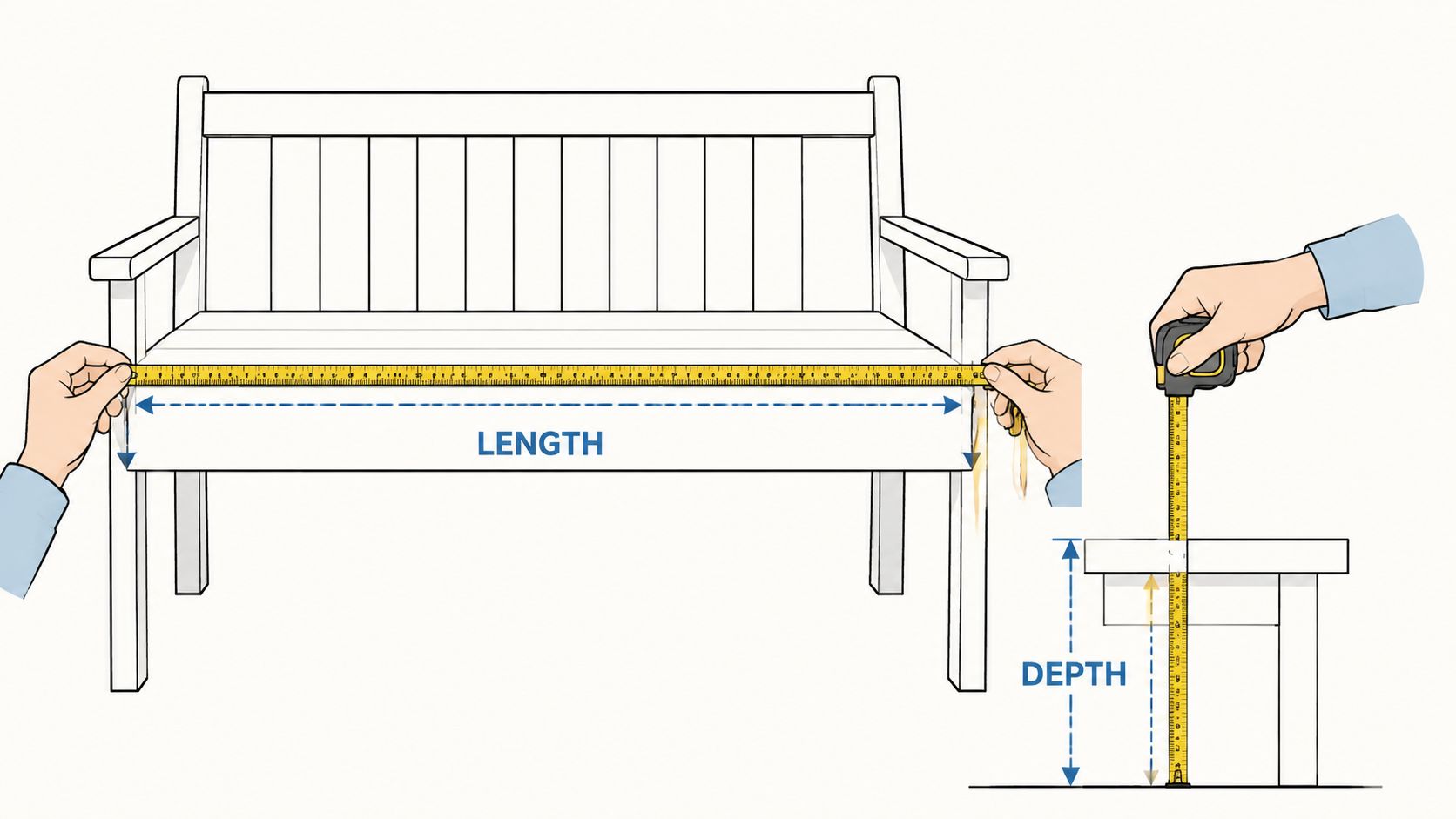
A bench can look perfect in the room and still feel off once someone sits down. Seat height, seat depth, and overall length all work together, and if one of them misses the mark, the whole piece can feel awkward. Bench seating is often built around a seat height of 17–19 inches (430–480 mm), which fits common sitting comfort and accessibility needs, while public-space guidance often places most seats at 470–480 mm above the surface and allows at least one seat at 380 mm, 480 mm, and 580 mm where several seats are used. Wheels for Wellbeing
Seat depth deserves the same attention. Public guidance often places it at 300–400 mm for compact or flip-down installations, while broader bench standards commonly use 15–20 inches (380–510 mm) to support the thighs without pressing hard behind the knees. That is the sort of detail people feel right away, even if they would not phrase it that way.
Measure for the room, then for the bodies using it
A bench for two adults should give both people enough room to sit comfortably without bumping elbows. A family bench needs a little extra breathing room so the person on the end does not feel like they are perched on the edge. Wider planning clearances, such as 500–700 mm between paired armrests and 1.2 m side clearances in accessible layouts, also make the bench easier to approach and use. Wheels for Wellbeing
Start by measuring the floor space, then compare it with the table, wall, or nook where the bench will live. After that, check whether the people using it need a easier sit-down height, a deeper seat, or room to enter from the side. The process is simple, but it prevents a lot of regret later.
For a room-by-room measuring refresher, the team often points shoppers to our furniture measuring guide before they come in. That way, they can think about the space they already have, not only the bench they like.
Choosing Materials That Last for Generations
A bench should feel solid the moment someone sits down. If it wobbles, flexes too much, or starts wearing out at the finish, the whole piece loses trust fast. That's why material choice matters just as much as the shape.
One strong example of durable construction is a bench built with a welded steel frame and a solid oak slatted seat. That hybrid approach uses each material for what it does best, steel for rigidity and oak for comfort and a premium feel. It's a good reminder that sturdy furniture doesn't have to look heavy, and attractive furniture doesn't have to be delicate.
What quality construction usually looks like
Solid wood bench seating tends to age better than furniture built around thin skins or flimsy supports, especially when the joinery is strong and the finish protects the surface from everyday wear. That's one reason BILTRITE keeps a close eye on USA-made, Amish-made, and solid wood pieces, because those builds are usually designed with long-term use in mind. For a deeper look at that approach, our solid wood furniture guide is a helpful place to start.
A few signs usually point toward better quality:
- Frame stability: The bench should feel steady when someone shifts weight or sits down quickly.
- Material honesty: Real wood, honest upholstery, and dependable hardware matter more than surface gloss.
- Finish durability: A protective finish helps the bench keep its look through regular use.
- Joinery quality: Tight, well-made joints usually hold up better than pieces that depend on appearance alone.
In heavier-use homes, that kind of construction matters more than fancy styling. A bench gets sat on, leaned on, climbed over, and sometimes treated like a stepping stool whether it wants to be or not. Better materials and better build methods make all of that less risky.
Placing and Styling Your Bench Like a Pro
Bench placement changes how a room feels. Put one in the right spot and it smooths traffic, adds a landing zone, and makes the room feel more intentional. Put it in the wrong spot and it just becomes one more object to walk around.
In an entryway, a bench should help the room do its job without blocking the path. In a dining area, it needs enough clearance for people to slide in and out easily. In a bedroom, it can sit at the foot of the bed and give the room a more finished look without demanding much floor space.
Style it for comfort, then for personality
A few pillows can make a wooden bench feel softer, while a throw can make an accent bench look more settled into the room. Upholstered benches already bring some cushioning, so they often need less layering. The trick is not to overload the piece, because a bench looks best when its shape still reads clearly.
For social spaces, the angle matters just as much as the fabric. Public-space experts recommend that paired benches work best at a 90 to 120-degree angle rather than facing each other directly, because rows of benches can make conversation harder (Project for Public Spaces). That idea translates well at home, too, especially in sitting areas where people want to talk without turning the whole room into a formal setup.
Benches feel friendlier when they invite movement and conversation, not when they force everyone into a straight line.
For shoppers building out an entry area, the right seating can be paired nicely with storage and wall organization. BILTRITE keeps solid wood entryway furniture in the conversation because the bench works even harder when the whole zone supports daily routines.
Come See the Difference in Our Showroom
Reading about bench seating is a good start, but furniture changes once it's in the room and under real hands. A seat height that sounds fine on paper may feel off in person, and a finish that looks warm online may look even better under showroom light. That's why BILTRITE doesn't sell online, and why the in-store visit matters so much.
Our showroom in Greenfield gives families a chance to compare USA-made, Amish-made, and solid wood benches side by side, with help from people who know the difference between a quick fix and a long-lasting purchase. Our sales associates bring more than 400 years of combined experience, and they're here to guide, not push. If a shopper needs a place to start, the showroom location details are right here: BILTRITE Furniture-Leather-Mattresses locations.
We're also proud to keep family time at the center of what we do. That's why we're closed on Sundays, and why so many neighbors have trusted our fourth-generation store for generations of home decisions. Bench seating is one of those pieces that seems simple until the details matter, and in person those details become much easier to judge.
BILTRITE Furniture-Leather-Mattresses carries bench seating, solid wood furniture, and a wide range of furniture built for real homes, real families, and real daily use. If a bench is on the list for your dining room, entryway, or bedroom, visit BILTRITE Furniture-Leather-Mattresses in Greenfield and see the quality, materials, and options for yourself.