LJ Gascho Furniture: Quality & Amish Options

A lot of furniture searches start the same way. Someone is sitting at the kitchen table with too many browser tabs open, trying to sort out which brands are solid, which ones are mostly marketing, and which pieces will still look good years from now. That's especially true when a shopper starts looking beyond big national names and runs into a brand like LJ Gascho Furniture.
That kind of search can get confusing fast. Terms like solid wood, Amish-made, heirloom quality, domestic hardwoods, and handcrafted all sound promising, but they don't always mean the same thing from one company to the next. A brand can sound traditional online and still leave a shopper with real questions once it's time to choose a dining table, bedroom set, or living room piece for everyday use.
For Milwaukee-area homeowners, that's where a local expert's perspective helps. A family furniture business that has been serving Metro Milwaukee since 1928 and values local relationships can often spot the difference between surface-level claims and meaningful craftsmanship. This guide takes a friendly, practical look at LJ Gascho Furniture so shoppers can understand what the brand is, what makes it distinct, and what to pay attention to before making a decision.
Table of Contents
- Starting Your Search for Quality Furniture
- The Story Behind LJ Gascho Furniture
- The Hallmarks of LJ Gascho Craftsmanship
- What to Consider When Buying LJ Gascho
- How LJ Gascho Compares to Other Quality Options
- Find Your Ideal Solid Wood Furniture Here in Milwaukee
Starting Your Search for Quality Furniture
A typical furniture shopper might begin with one simple goal. Find a dining set that doesn't wobble after a few holidays, or a bedroom group that won't feel dated after a short stretch of ownership. Then the search broadens, and suddenly a lesser-known solid wood brand like LJ Gascho Furniture enters the picture.
That's usually a good sign, not a bad one. It often means the shopper has moved past surface-level browsing and started asking better questions about construction, materials, and long-term value. A brand like LJ Gascho tends to come up when someone is specifically looking for furniture made from real wood instead of look-alike materials.
For many households, the confusion starts with language. “Solid wood” sounds straightforward, but shoppers still need to ask what species are being used, how the pieces are built, whether customization is available, and how buying works in practice. A quick visit to a general buying guide like how to buy quality furniture can help shoppers build a strong base before narrowing in on any one brand.
Why this brand catches attention
LJ Gascho Furniture tends to stand out for shoppers who care about three things:
- Material honesty. The brand is associated with solid wood furniture rather than mixed-material construction.
- Traditional craftsmanship. Shoppers often connect the name with Amish and American furniture making.
- Long-term mindset. The appeal is less about fast furniture and more about furniture intended to stay in the home.
Furniture research gets easier once the shopper stops asking, “What's popular?” and starts asking, “What is this piece actually made of?”
Where shoppers usually get stuck
The biggest stumbling block isn't whether LJ Gascho sounds good. It's whether the shopper knows how to evaluate what “good” means in a real home.
A family with young kids may care about durability and easy care. A downsizing couple may care more about wood character, finish tone, and whether the piece feels timeless. Someone furnishing a first home may be trying to balance investment quality with budget reality. Those are all reasonable concerns, and they shape how LJ Gascho should be evaluated.
The Story Behind LJ Gascho Furniture
LJ Gascho Furniture has the kind of backstory that many furniture shoppers still want to find. It's rooted in family ownership, regional craftsmanship, and a clear focus on wood furniture made in the United States.
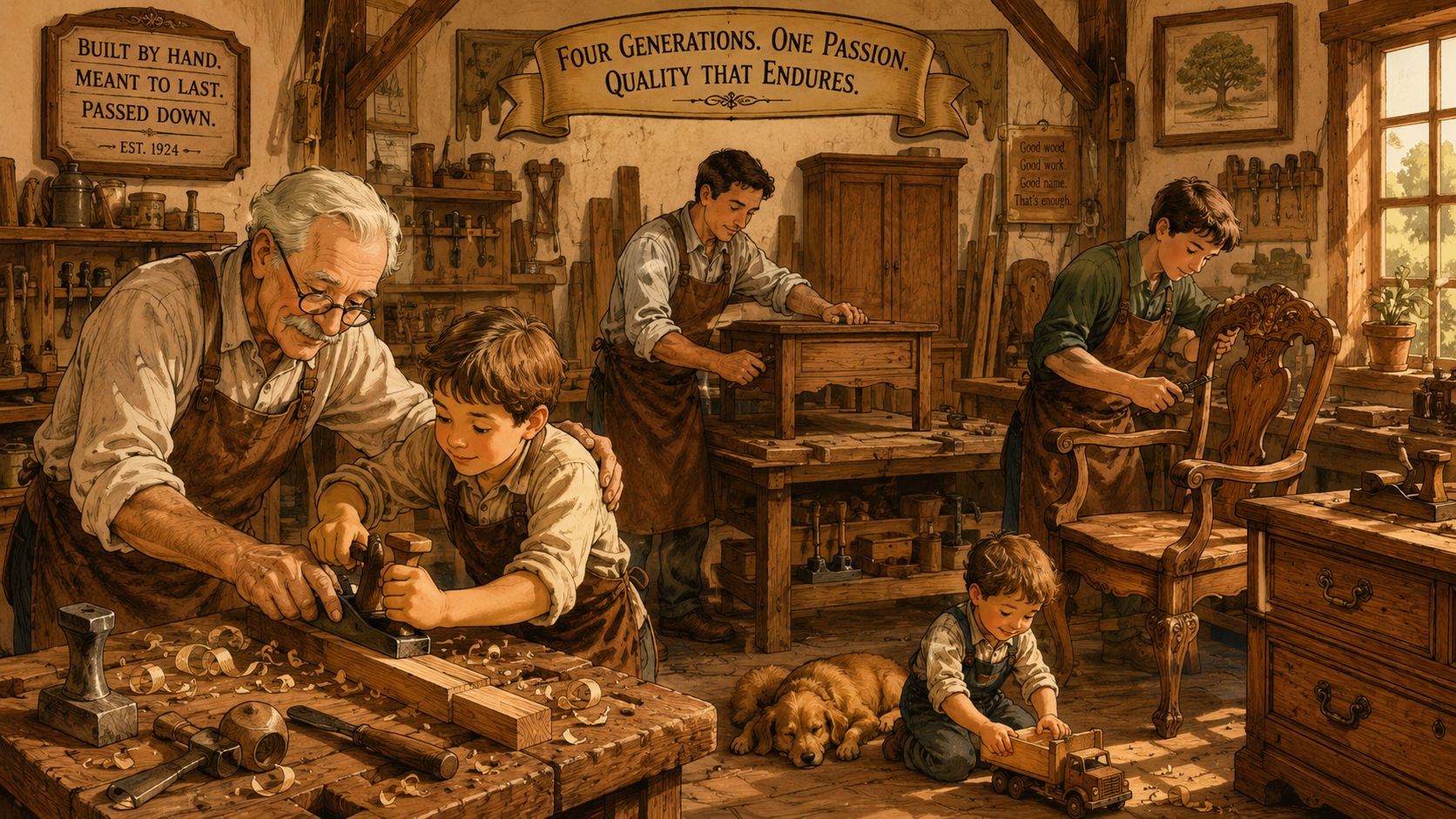
According to LJ Gascho's company background, LJ Gascho Furniture Company was founded in 1986 by Lyle and Jeannie Gascho in Pigeon, Michigan, marking the start of a legacy of family-owned solid wood furniture manufacturing in the United States. That origin matters because it tells shoppers this isn't a brand built around imported trend pieces or broad lifestyle branding. It began with a specific product focus and a specific way of making furniture.
A brand with that kind of beginning often appeals to people who care about continuity. Family-owned companies usually build their reputation the slow way. They depend on repeat business, local relationships, and the trust that comes from making furniture that has to hold up in real homes.
A local family business in Milwaukee can appreciate that kind of story. Shoppers who enjoy reading about regional roots may also like this piece on a local legacy in Milwaukee, which reflects the same kind of pride that often surrounds longstanding furniture names.
What the origin story tells a shopper
The founding story says several useful things without much fluff.
| What shoppers learn | Why it matters |
|---|---|
| Founded in 1986 | The company has had time to build a real reputation |
| Started by Lyle and Jeannie Gascho | It has family-owned roots, not anonymous corporate origins |
| Based in Pigeon, Michigan | The brand is tied to a real furniture-making region |
| Focused on solid wood | Material choice is central to the brand identity |
That doesn't automatically make every piece right for every home. It does mean the shopper is looking at a company with a defined lane.
The value of an American-made identity
LJ Gascho is also associated with furniture made entirely in the U.S. using domestically sourced solid woods, including maple, cherry, and oak, as noted in the earlier source. For some shoppers, that matters because they want to support domestic manufacturing. For others, it matters because they want a clearer trail from raw material to finished product.
A furniture brand's story matters most when it lines up with what the shopper can actually see in the piece itself. Heritage should show up in the wood, the joinery, and the finish.
That's the lens worth using with LJ Gascho. The history is appealing, but the ultimate test comes when that story turns into visible craftsmanship.
The Hallmarks of LJ Gascho Craftsmanship
The easiest way to understand LJ Gascho Furniture is to focus on what the shopper can inspect. Forget buzzwords for a minute. Good solid wood furniture usually reveals itself through materials, construction, and finishing details.
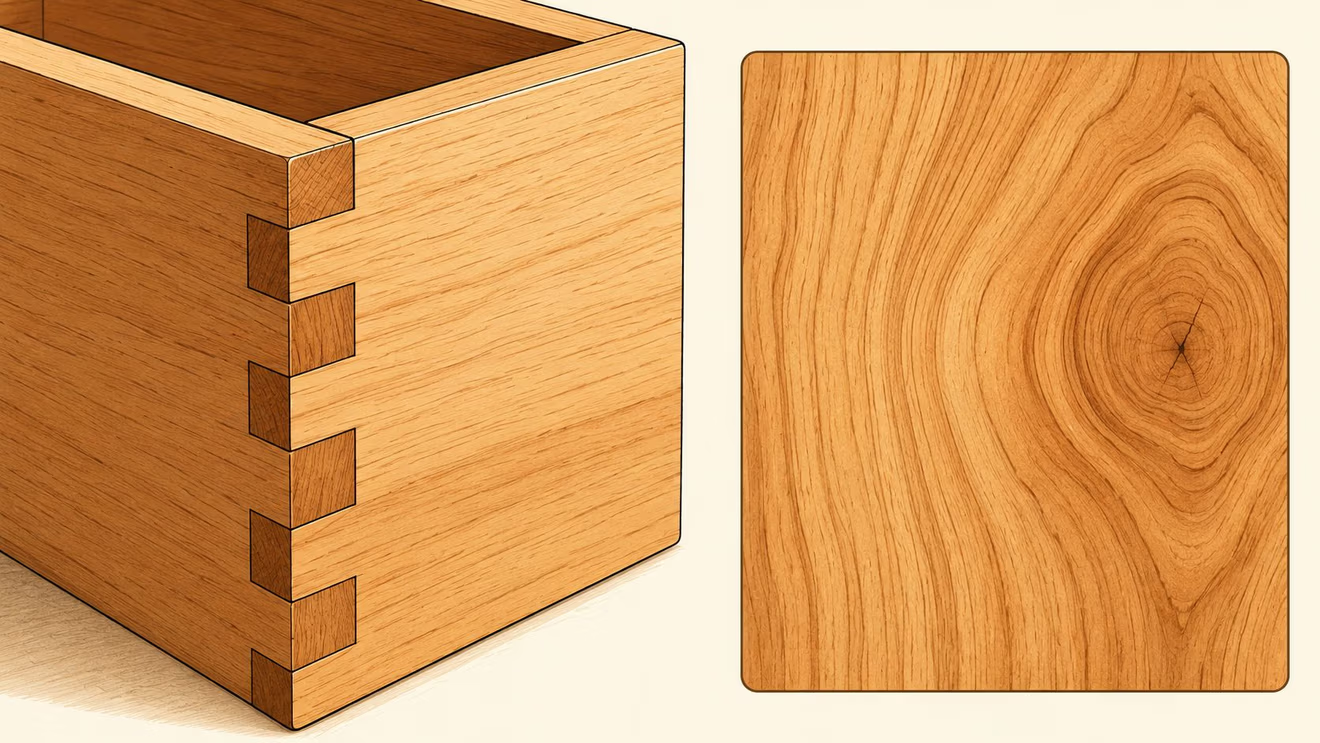
A useful starting point comes from the company's showroom information, which notes that the company has a network encompassing over 40 Amish and Mennonite sub-shops across Michigan, Indiana, and Ohio, allowing them to produce durable, heirloom-grade furniture from hand-selected solid oak, maple, and cherry wood. That gives shoppers a concrete picture of the brand's manufacturing style. It's not a single giant production floor trying to mimic handcraft. It's a network tied to traditional woodworking communities.
Start with the wood species
When LJ Gascho shoppers hear oak, maple, and cherry, that's not just a style note. Those woods behave differently in a home.
- Oak tends to show more grain. It often appeals to shoppers who want texture, character, and a more visibly natural look.
- Maple usually reads smoother and cleaner. It often fits transitional or simpler interiors well.
- Cherry is often chosen by shoppers who like warmth and a more refined appearance.
A good sales floor conversation often starts there. Not with color. With wood.
Construction tells the deeper story
A strong piece of furniture needs good “bones.” In furniture language, that means the way parts are joined and supported.
Shoppers often hear about dovetails, mortise-and-tenon joints, and other traditional methods. Those terms can sound technical, but the idea is simple. The better the connection between the parts, the better the furniture handles daily use. A plain-language walkthrough of what a mortise and tenon joint is can help shoppers spot these details with more confidence.
Here are a few practical signs to look for when evaluating LJ Gascho pieces in person:
- Drawer feel. Open and close drawers slowly. They should move with control, not chatter or scrape.
- Top stability. Rest a hand on the table or dresser top. It should feel planted and substantial.
- Interior details. Look inside the case piece, not just at the front. Hidden areas often reveal the maker's standards.
- Consistent finish. Check around edges, corners, and undersides. A careful finish usually looks intentional from multiple angles.
Practical rule: A solid wood piece should look honest from the back, inside, and underneath. The front alone never tells the full story.
Why craftsmanship matters in daily life
The appeal of Amish and Mennonite workshop production isn't just romance. It can matter in the everyday wear points of furniture. Dining chairs get dragged. Dressers get loaded unevenly. Table tops see heat, spills, and repeated cleaning.
That's why a shopper should pay attention to more than broad labels. LJ Gascho's profile suggests furniture aimed at long-term use, but the best buying habit is still to inspect how a specific piece is assembled, how the grain is selected, and whether the finish looks built for the way the room will function.
For an heirloom-minded buyer, craftsmanship isn't decoration. It's structure.
What to Consider When Buying LJ Gascho
Once a shopper likes the look and build of LJ Gascho Furniture, the next questions become practical. How does buying work? Is it a value brand or an investment brand? What tradeoffs come with customization or direct purchasing?
One important detail comes from Gascho's direct-to-retail model, which states that Gascho's direct-to-retail model, operational at their Pigeon, Michigan facility, allows wholesale-grade quality to be delivered at 25–30% lower cost than traditional retail channels, eliminating third-party markup. That doesn't mean every piece will feel inexpensive. It means shoppers should think in terms of value relative to construction, not bargain-basement pricing.
Price should be judged by what the shopper is getting
Solid wood furniture usually asks shoppers to think differently than they would with short-term furniture. The comparison shouldn't be “Is this the cheapest table?” The better question is “What am I buying for the money?”
A practical way to assess LJ Gascho is to weigh these factors:
| Buying factor | What it means for the shopper |
|---|---|
| Solid wood construction | The piece may cost more up front than mixed-material furniture |
| Direct-to-retail approach | Pricing may reflect fewer added layers between maker and buyer |
| Craft-centered production | Some choices may involve more patience than quick-ship furniture |
| American-made focus | Buyers who value domestic production may see stronger value here |
A shopper comparing materials might also benefit from reading about solid wood furniture vs veneer, because that distinction shapes both price and expectations.
Customization changes the decision
Many solid wood shoppers don't want furniture that looks copied from a catalog page. They want the right wood species, a finish that works with their floors, and proportions that make sense in the room. That's where brands in this category often become more appealing.
Customization can also slow decision-making, because the shopper has to think through more variables. A table isn't just a table anymore. It becomes a question of wood, stain, edge profile, chair match, and how the top will live with children, guests, and sunlight.
That's usually a good thing. Furniture that lasts should be chosen carefully.
Questions worth asking before buying
Shoppers looking at LJ Gascho should bring a short list of questions with them:
- What is the exact wood species on this piece?
- Which details are standard, and which are optional?
- How should the finish be cared for in daily use?
- What does the warranty cover, and what doesn't it cover?
- How will this piece age with normal household use?
The smartest furniture buyers aren't the fastest ones. They're the ones who ask enough questions before the order is written.
A final note matters here. Solid wood furniture is often described as an investment, but that only holds true if the piece fits the household. The right dining set for a busy family may be different from the right dining set for a formal room. LJ Gascho can be a strong option, but only when the shopper matches the piece to the life it's going to live.
How LJ Gascho Compares to Other Quality Options
LJ Gascho Furniture sits in a category that many shoppers find appealing. It blends American-made identity, solid wood construction, and ties to Amish craftsmanship. That combination puts it in a thoughtful part of the market, but it also creates one of the biggest points of confusion for buyers.
As noted in this discussion of Gascho's Amish and U.S. artisan messaging, an underserved angle for shoppers is understanding the specific long-term durability differences between a brand's 'Amish-crafted' solid wood versus their standard 'US-made' solid wood lines, making in-person evaluation critical for heirloom buyers. That is a very useful caution for anyone trying to shop from labels alone.
Why labels alone don't settle the question
“USA-made” and “Amish-made” are both meaningful categories, but neither one guarantees the same exact result from one piece to another. A shopper still has to inspect proportions, finish quality, joinery, wood selection, and the overall feel of the item.
Some households strongly prefer the visual character and workshop feel associated with Amish-crafted pieces. Others may care more about style fit, finish consistency, or available options within a broader U.S.-made line. Neither approach is automatically better for everyone.
A simple way to compare in person
When looking at LJ Gascho alongside other solid wood choices in the same broad category, these checkpoints help:
- Look past the tag. The label matters less than how the piece is built.
- Touch every use point. Open drawers, sit in chairs, and test table stability.
- Study the finish under light. Good finishing work tends to reveal itself on corners and edges.
- Ask what makes one line different from another. If the distinction isn't clear, the shopper should keep asking.
The closer a shopper gets to heirloom-level buying, the more valuable in-person comparison becomes.
The key takeaway is simple. LJ Gascho belongs in the conversation when a shopper wants real wood furniture with a handcrafted identity. But the best decision usually comes from direct comparison, not from assuming every Amish-crafted or American-made label means the same thing.
Find Your Ideal Solid Wood Furniture Here in Milwaukee
Research is helpful, but solid wood furniture is still one of those categories that's best understood in person. A shopper can read about oak, maple, cherry, joinery, and handcraft all day long. Clarity often comes when that shopper stands in front of a dining table, runs a hand across the top, opens the drawers, and compares how different pieces feel side by side.
That hands-on experience matters even more for Milwaukee-area shoppers trying to decide among USA-made and Amish-made options. A local showroom gives them the chance to compare scale, finish, comfort, and construction without guessing from photos. It also gives them a chance to talk through practical concerns like room size, family use, wood character, and value.

Why local guidance still matters
According to OnMilwaukee's profile of BILTRITE Furniture, BILTRITE Furniture was founded in 1928 by Irwin Kerns, an upholsterer and furniture builder, establishing the company as a 4th-generation, family-owned business serving the Metro-Milwaukee area for nearly a century. That kind of long local history gives Milwaukee shoppers something valuable. Not pressure. Context.
A store with deep roots in the area has seen generations of customers furnish first apartments, family homes, downsized condos, and retirement spaces. That's useful when someone is trying to decide whether a substantial solid wood piece fits their lifestyle or whether a smaller-scale option makes more sense.
What Milwaukee shoppers can gain from visiting in person
A local showroom visit helps answer questions that online research usually can't settle:
- Scale in real life. A bedroom set may look balanced online and still feel oversized in a modest room.
- Wood personality. Maple, cherry, and oak all carry a different visual mood once seen together.
- Construction confidence. Shoppers can inspect drawers, backs, undersides, and finish work directly.
- Lifestyle fit. Families, empty nesters, apartment dwellers, and caregivers often need different solutions.
Milwaukee shoppers who want to browse strong solid wood choices locally can start with Amish furniture near Milwaukee.
A practical next step for the shopper
For someone who started this search by looking up LJ Gascho Furniture, the smartest move now is simple. Keep the brand on the list, then compare it in person against other USA-made and Amish-made solid wood furniture with a similar quality focus.
That's how a shopper learns what really matters to them. Some people respond to grain character. Others care most about drawer construction, edge profiles, or whether the finish reads more casual or more formal. A good showroom helps make those preferences visible.
BILTRITE's family-focused identity is part of that experience too. The store doesn't sell online, and according to BILTRITE's history page, it is closed on Sundays to be with family and friends, and also closed on Mondays to allow the team to recharge, while remaining open Tuesday through Saturday. That says something important about how the business operates. It values the in-person experience and the relationships behind it.
The same spirit carries through the showroom itself. There's something for different homes and stages of life, from small-scale furniture for tighter spaces to heavier-duty options for busy households, along with a major mattress selection that includes over 60 models. The team brings over 400 years of combined experience, which means shoppers can ask real questions and get practical help without feeling rushed.
A strong furniture purchase usually starts with curiosity and ends with confidence. The showroom is where that confidence is built.
For Milwaukee-area shoppers who want affordable, better-quality furniture with a strong focus on USA-made, Amish-made, and solid wood options, BILTRITE Furniture-Leather-Mattresses is a welcoming next stop. Come on down to the Greenfield showroom, see the furniture in person, and chat with a team that's been helping local families furnish their homes since 1928.