How to Remove Water Rings from Wood Furniture The Easy Way

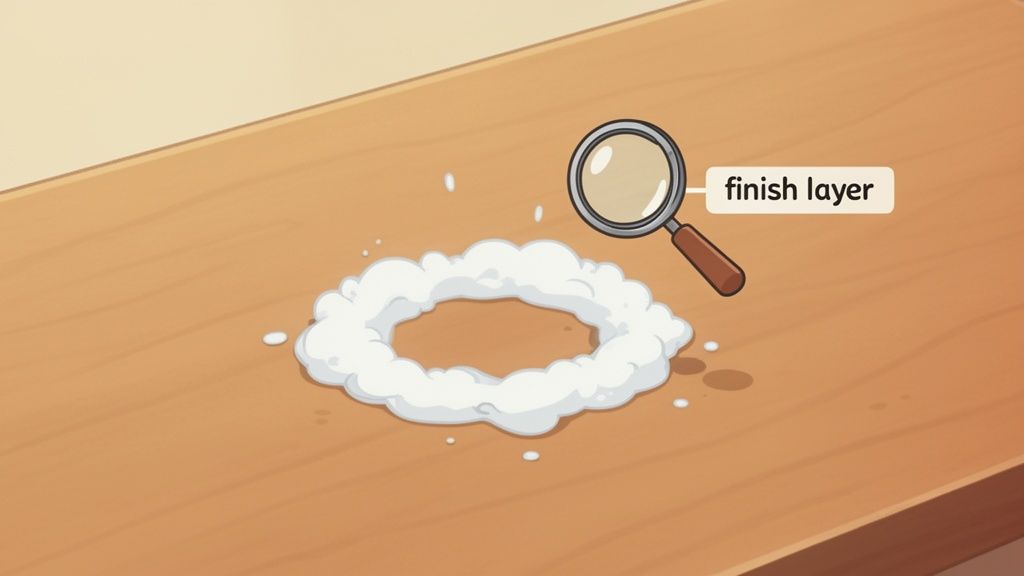
It's a familiar moment of panic: you lift a glass from your beautiful wood table only to find a cloudy, white ring has appeared. But don't worry! More often than not, this is a surprisingly easy fix. That ghostly mark just means moisture is trapped in the top finish layer, not deep within the wood itself. With a few simple household items, you can usually clear up this "fog" and restore your furniture in no time.
What That White Ring on Your Wood Furniture Really Is
We get it—that sinking feeling when you see that white ghost of a ring. Here at BILTRITE, we've been helping Metro Milwaukee families with their furniture since 1928, so believe us when we say we’ve seen it all! The good news is these marks are rarely as bad as they seem.
Before you start scrubbing, it helps to understand what you’re up against. Water stains on wood generally come in two types, and knowing the difference is the key to a successful repair.
White Rings vs. Dark Rings
A white, cloudy ring is the most common kind of water stain you'll see. This happens when condensation or a small spill seeps into the top protective layer of the finish—think lacquer, shellac, or polyurethane. The moisture gets trapped, creating that hazy look. Crucially, it's sitting on top of the wood, not in it. This is great news because these are usually the easiest to remove!
On the other hand, a dark or black ring signals a more serious issue. This type of stain means moisture has managed to get all the way through the finish and has been absorbed by the wood fibers. This can cause the wood to discolor and is often a sign of longer-term water exposure. These are trickier to deal with and might require more intensive methods. For a deeper dive into the different materials used in furniture, you can learn more about choosing the right hardwood for longevity and style in our detailed guide.
This quick decision tree helps visualize the difference.
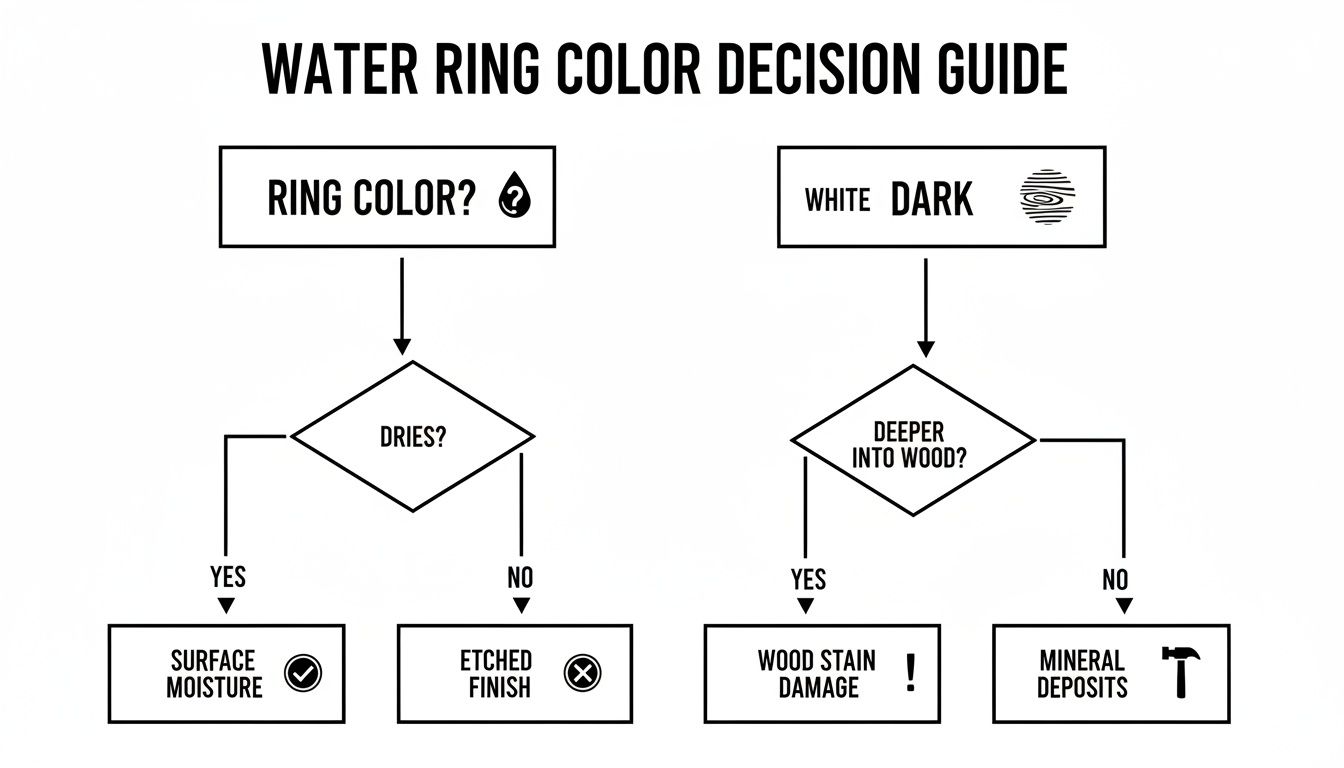
The key takeaway here is simple: the color of the ring tells you everything you need to know about how deep the damage goes.
To make it even simpler, here's a quick reference table to help you identify what you're dealing with at a glance.
Quick Guide to Identifying and Treating Water Rings
| Ring Color | What It Means | First Method to Try |
|---|---|---|
| White or Cloudy | Moisture is trapped in the top finish layer only. | The Hair Dryer Method |
| Dark Brown or Black | Water has penetrated the finish and soaked into the wood itself. | Steel Wool & Lemon Oil |
This table should be your first stop. It gives you a starting point so you can choose the right technique from the very beginning and avoid making the problem worse.
Simple Household Fixes for Light-Colored Water Stains
Ready to tackle that pesky ring? Believe it or not, the best solutions are probably already hiding in your kitchen pantry. We’ve seen these simple, family-safe methods work wonders on beautiful solid wood furniture time and time again.
But before you dive in, here’s a crucial tip we live by at BILTRITE: always test any new method on a small, hidden spot first. The back of a table leg or the underside of a tabletop is a great spot. This little step ensures the method is safe for your specific finish before you apply it to the main event.
The Gentle Heat of a Hairdryer
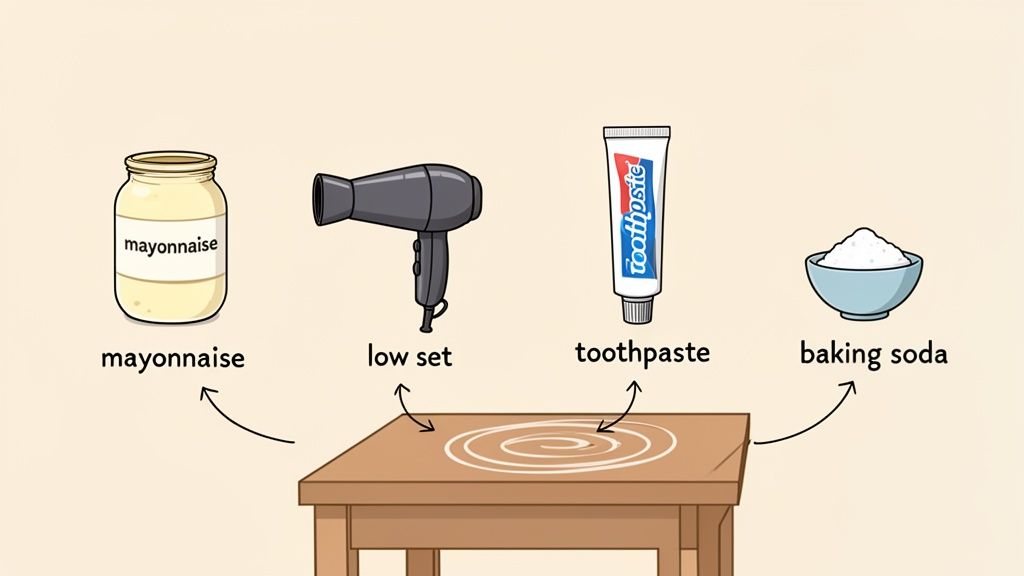
One of the easiest first attempts is using a hairdryer. Since a white ring is really just moisture trapped in the finish, a little gentle heat can help it evaporate right out.
Here’s how to do it:
- Set your hairdryer to its lowest heat setting. You’re aiming for gentle warmth, not a blast of intense heat.
- Hold it about six inches away from the stain.
- Keep it moving back and forth over the ring, almost like you’re painting the spot with warm air.
Keep a close eye on it—you should see the ring start to fade within a few minutes. It’s a surprisingly effective trick for fresh stains.
The Classic Mayonnaise Trick
Yes, you read that correctly—mayonnaise! It might sound odd, but the oils in full-fat mayo are fantastic at displacing trapped moisture while nourishing the finish. This is a classic for a reason.
Just dab a generous amount onto a soft cloth and apply it directly to the white ring. Let it sit for at least an hour, or even overnight for a more stubborn mark. Then, simply wipe it all away with a clean, soft cloth and buff the area. The results can be amazing!
Using a Mild Abrasive Paste
For rings that need a little more persuasion, a mild abrasive can gently buff the moisture right out of the finish. You can easily create a paste with items you already have.
- Baking Soda: Mix one part baking soda with one part water to create a thin paste.
- Non-Gel Toothpaste: A small amount of plain white, non-gel toothpaste works great (avoid the gel types!).
Using your finger or a soft cloth, gently rub the paste onto the ring. It’s very important to always move with the grain of the wood. Don't scrub! The idea is to lightly polish the surface. After a minute or so, wipe the paste away with a clean, damp cloth and dry the area immediately.
After trying these methods, you might notice the area looks a bit dull. That's completely normal. Check out our guide on how to clean wood furniture properly for tips on restoring its beautiful shine. If one of these tricks did the job, fantastic! If not, don't lose hope—we have more advice for tougher stains coming right up.
How to Tackle Stubborn Dark Rings and Older Stains
If the household fixes we talked about earlier didn't quite do the trick, or if you’re staring down a much darker ring, don't lose hope! A dark stain just means that moisture has soaked past the finish and into the wood itself. It simply requires a little more patience and a slightly different approach.
At this point, we're graduating to a more advanced, but still very manageable, technique. Think of it less as cleaning and more as a very gentle restoration.
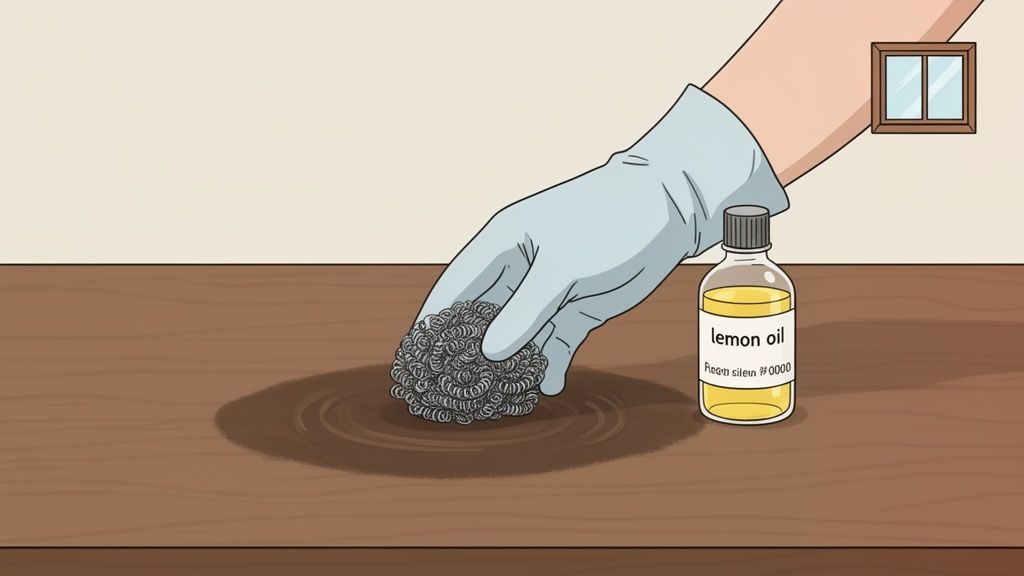
The Steel Wool and Lemon Oil Method
For a dark ring, you'll need a very gentle abrasive to work on the stain without harming the surrounding finish. We're talking about the finest grade of steel wool you can find: #0000 steel wool. Be sure to check the grade, because anything coarser will absolutely leave scratches.
You’ll also need a lubricant to help the steel wool glide smoothly and prevent any damage. Lemon oil or even mineral oil works great for this.
- Start by applying a small amount of the oil directly to the dark ring.
- Take a small piece of the #0000 steel wool and very, very gently rub the stained area.
- Always, always rub with the grain of the wood! Going against the grain will create noticeable scratches that are much harder to fix than the original water ring.
- Use light pressure and work slowly, checking your progress every few seconds.
The goal here is to carefully lift the very top layer of the finish where the stain is trapped. Once the ring vanishes, wipe the area clean with a soft, dry cloth. You might need to apply a bit of matching furniture polish to blend the sheen back in with the rest of the surface.
When to Bring in Commercial Wood Restorers
If the steel wool method feels a bit too hands-on for your comfort, or if that stain is just plain stubborn, it might be time for a specialty product. Commercial wood restorers and stain removers are designed specifically for these situations.
At BILTRITE, we always remind our friends and family that safety comes first. When using any commercial product, make sure you're in a well-ventilated area and follow the manufacturer's instructions to the letter.
These products often contain solvents that can penetrate the finish to dissolve the trapped moisture and discoloration. They can be incredibly effective, but it’s crucial to test them on a hidden spot first—like the underside of the table—to make sure they agree with your furniture’s finish.
For those very deep, black stains that look like they’ve been there for years, the solution might involve more than just a spot treatment. Sometimes, a full refinish is the only way to truly restore the wood. For those interested, we have a helpful guide on how to approach refinishing wood furniture.
Recognizing When It's Time to Call a Professional
We love helping our Milwaukee neighbors take pride in caring for their own furniture, but here’s some honest, family-to-family advice we’ve been sharing since 1928: sometimes the best DIY tool you can reach for is your phone. While so many water rings are fixable at home, there are certain situations that really demand an expert’s touch to avoid turning a small problem into permanent damage.
Knowing when to step back is a huge part of responsible furniture care, especially when you're working with valuable pieces. If you’ve tried the gentle methods we’ve outlined and that stubborn ring just won’t budge, it’s probably time to pause. The same goes for a cherished family heirloom—it’s almost always wiser to consult a professional furniture restorer. Their experience can be the difference between a successful repair and a very costly mistake.
Key Signs You Need an Expert
There are a few red flags that signal a DIY approach might do more harm than good. If you see any of these telltale signs, it's a good idea to get a professional opinion.
- A Flaking or Bubbling Finish: This is a big one. It means water has gotten under the finish, causing it to lift away from the wood itself. Trying to rub or treat this yourself can easily lead to widespread peeling and chipping.
- Extensive or Very Dark Staining: If a huge patch of your tabletop is discolored, or if the stain has turned nearly black, that points to deep-seated moisture. Home remedies just aren't going to reach that far into the wood grain.
- Damage to Delicate Finishes: Antiques often have specialized finishes like French polish or shellac. These are notoriously sensitive to the very things you might use to treat a stain—heat, alcohol, and even gentle abrasives can ruin them in seconds.
- High-Value or Sentimental Pieces: This is less about the damage and more about the risk. For furniture that’s irreplaceable, whether in dollars or memories, a DIY mishap is simply not worth it.
At BILTRITE, our main goal is to help you preserve your furniture for generations. Sometimes, that means trusting a seasoned professional to handle complex restorations.
While hard statistics on furniture repair are tricky to find, our decades of experience have shown that calling an expert for these kinds of issues is a sound investment. You can learn more about the challenges involved and the varying effectiveness rates of removal methods to get a better sense of the task. Ultimately, protecting your furniture is always the top priority. For more on that, take a look at our ultimate guide to protecting wood furniture.
Keeping Your Wood Furniture Beautiful and Ring-Free
Whew! Now that your beautiful wood furniture is looking great again, let's talk about how to keep it that way. The best fix for a water ring, after all, is preventing it from ever showing up in the first place. Think of it as playing a little defense in your own home!
Here at BILTRITE, we’ve been helping families in the Metro Milwaukee area care for their furniture since 1928, so we’ve learned a thing or two. These are our family’s favorite tips for protecting wood surfaces—the very same advice we give customers who invest in our affordable, better-quality, American-made solid wood furniture.
Make Prevention a Fun Family Rule
The number one defense against those dreaded water rings is simple: coasters! We know, we know—it can be tough to get everyone in the habit. Our advice? Don't make it a chore; make it a fun family rule.
Let everyone pick out their own unique coaster. When a drink is on a coaster, it's safe. It’s an easy, visual reminder for kids and adults alike. A little prevention here saves you a whole lot of elbow grease later on.
As a family business, we know that furniture is meant to be lived on and loved. The goal isn't to create a museum where no one can touch anything, but to build simple, happy habits that keep your home looking its best.
For family dinners or game nights at the dining table, placemats and tablecloths are your best friends. They create a protective barrier that not only stops spills and condensation but also adds a pop of style to your room.
Proper Cleaning Habits Go a Long Way
How you clean your wood furniture makes a huge difference in its long-term health and its ability to resist stains. Aggressive cleaning can actually weaken the finish over time, making it much more vulnerable to moisture.
Here’s the simple routine we recommend:
- Dust Regularly: Use a soft, dry microfiber cloth to gently wipe down surfaces.
- For Cleaning: Lightly dampen a clean cloth with water—it should never be dripping wet.
- Always Follow with a Dry Cloth: Immediately after wiping with the damp cloth, use a separate dry cloth to remove any lingering moisture. This is a critical step!
It's also important to know what not to use. Steer clear of harsh, all-purpose chemical cleaners, ammonia-based products, or anything with a high alcohol content. These can strip away the protective finish, leaving your beautiful wood exposed and susceptible to damage. While you're learning about protecting your wood from water, you might also find our guide on how to remove scratches from wood furniture helpful for other common mishaps.
A little care truly goes a long way in preserving the beauty and integrity of your furniture. And if you're ever in the market for a new piece that’s built to last for generations, come on down to our showroom and see for yourself! We'd love to show you the amazing quality of our USA and Amish-made furniture.
Common Questions About Water Rings on Wood
Here at BILTRITE, we’ve been part of the Metro Milwaukee community since 1928, and in that time, we've heard just about every furniture question you can imagine! We love helping our friends and neighbors, so we’ve put together a few of the most common questions we get about those pesky water rings.
Will These Methods Work on Any Type of Wood Furniture?
That’s a great question, and the answer is: it depends on the finish. These home remedies are generally safest for wood furniture with a hard, sealed finish like lacquer, varnish, or polyurethane. This is the kind of durable finish you’ll find on many modern pieces, including the USA-made furniture we carry in our showroom.
You'll want to be much more careful with other types of finishes, though.
- Oiled Finishes: These are designed to let the wood breathe. They might absorb remedies like mayonnaise in a way you don't expect.
- Antiques or Delicate Shellac Finishes: These can be extremely sensitive to heat, oils, or even gentle abrasives.
Our family motto for furniture care is simple: Always test any method on a small, hidden spot first! A quick test on the back of a table leg gives you peace of mind before you tackle the main spot.
How Long Should I Leave Mayonnaise on a Water Stain?
It might sound odd, but the oil in the mayonnaise is what does the heavy lifting here! It works by gently displacing the moisture that's trapped in the top layer of the finish.
For a fresh, light-colored ring, go ahead and apply a good dab and let it sit for about an hour. If you're dealing with a more stubborn white mark, many people have had great success leaving it on overnight. Afterward, just wipe it away with a soft cloth to see how it looks. You can always reapply if the ring is fading but not totally gone!
Can I Use an Iron Instead of a Hairdryer?
You can use an iron, but it’s definitely the riskier option. That’s why we always suggest starting with a hairdryer—the heat is gentler and much easier to control.
If you do decide to try the iron, proceed with caution. Make absolutely sure it's empty of water and set to the lowest, driest setting. Place a clean, thick cotton cloth (like a t-shirt or tea towel) over the water ring. Press the warm iron on the cloth for just a few seconds at a time, lifting it frequently to check your progress. The goal is gentle, even warmth, not intense heat that could melt or damage the finish.
Remember, the key to removing water rings from wood is patience. Start with the gentlest method first and work your way up only if needed. Rushing the process can sometimes cause more trouble than the original ring!
The Ring Is Gone But the Spot Looks Dull. What Now?
That's a very common outcome, especially if you used a mild abrasive like toothpaste or baking soda. It just means you’ve slightly dulled the very top of the finish while buffing out the moisture. Luckily, it’s an easy fix!
You can usually restore that beautiful shine with a high-quality furniture polish or wax that’s right for your wood's finish. Just apply a little to a clean, soft cloth and gently buff the area. Make sure to blend it outwards into the surrounding wood until the sheen returns and matches the rest of the surface. It’ll look good as new in no time.
At BILTRITE Furniture-Leather-Mattresses, our family is passionate about helping you find and care for furniture that your family will love for years to come. From solid wood dining sets to comfy living room seating, we specialize in affordable, better-quality pieces, with a huge selection of USA and Amish-made options. We'd love to see you in our store! Come say hi and let us help you find an amazing new piece for your home. https://www.biltritefurniture.com