Furniture Stores Rent To Own: Your Smart Guide

You just got the keys. The living room echoes. The kids need beds, the old couch should've been retired years ago, and the budget is already groaning from movers, deposits, paint, and a trip to the hardware store.
That's when a lot of people start searching furniture stores rent to own.
I get why. When you need furniture fast, rent-to-own sounds simple. Small payments. Fast approval. Furniture in the house now. For some households, that convenience solves a real short-term problem. But if you're trying to make a smart long-term decision, you need to look past the weekly payment and ask the harder question: what will this cost me by the end?
That's where many shoppers get tripped up. The furniture might arrive quickly, but the total price, the contract terms, and the actual quality of the piece often tell a very different story. If you're furnishing a Milwaukee home, especially an older house, a condo, or a busy family space, you need furniture that fits your budget and your real life.
Finding Furniture on a Budget Is Rent-to-Own the Answer?
A Milwaukee family moves into a tight bungalow with kids, a dog, and floors that put every piece of furniture to work. They need a bed frame, a sofa, and a dresser right away. Cash is thin after the deposit, the moving truck, and the first round of house fixes. So rent-to-own lands on the shortlist fast.
I understand the appeal. You need furniture now, not three months from now. Weekly payments look manageable, approval is often quicker than many shoppers expect, and an empty room can feel solved in one trip.
But here's my advice. Judge the decision by total cost of ownership, not by the payment that gets advertised on the sign.
That matters even more in Milwaukee homes. A small apartment in Bay View, a duplex on the South Side, or an older place with narrow stairs and hardworking family spaces needs furniture that fits properly and holds up. If you stretch payments over a long period for a lower-quality piece, you can end up paying premium money for something that wears out too soon.
People consider rent-to-own for real reasons:
- The need is immediate: The old set is broken, gone, or unusable.
- The move drained the budget: Deposits, paint, utility setup, and everyday bills came first.
- Credit feels like a roadblock: Some shoppers assume buying outright or financing is off the table.
- The house has to function now: Kids need beds. Adults need a place to sit and eat.
None of that is foolish. Signing a costly contract out of panic is.
Before you agree to rent-to-own, compare the full cost against buying better furniture with a payment plan designed for ownership from the start. Take a hard look at easy furniture financing options and ask one simple question: when the payments are over, will you own a piece that still serves your family well?
That's the standard I'd use. Convenience helps for a month. Quality, fit, and durability save money for years.
What Exactly Is Rent-to-Own Furniture?
Rent-to-own furniture is a lease agreement with an option to own later. You take the furniture home now, make recurring payments, and only become the owner after you complete the agreement.
Buying furniture outright means the piece is yours from day one. In contrast, rent-to-own means you're paying for the right to keep using it, and ownership comes at the end, not the beginning.
Here's a simple visual breakdown:
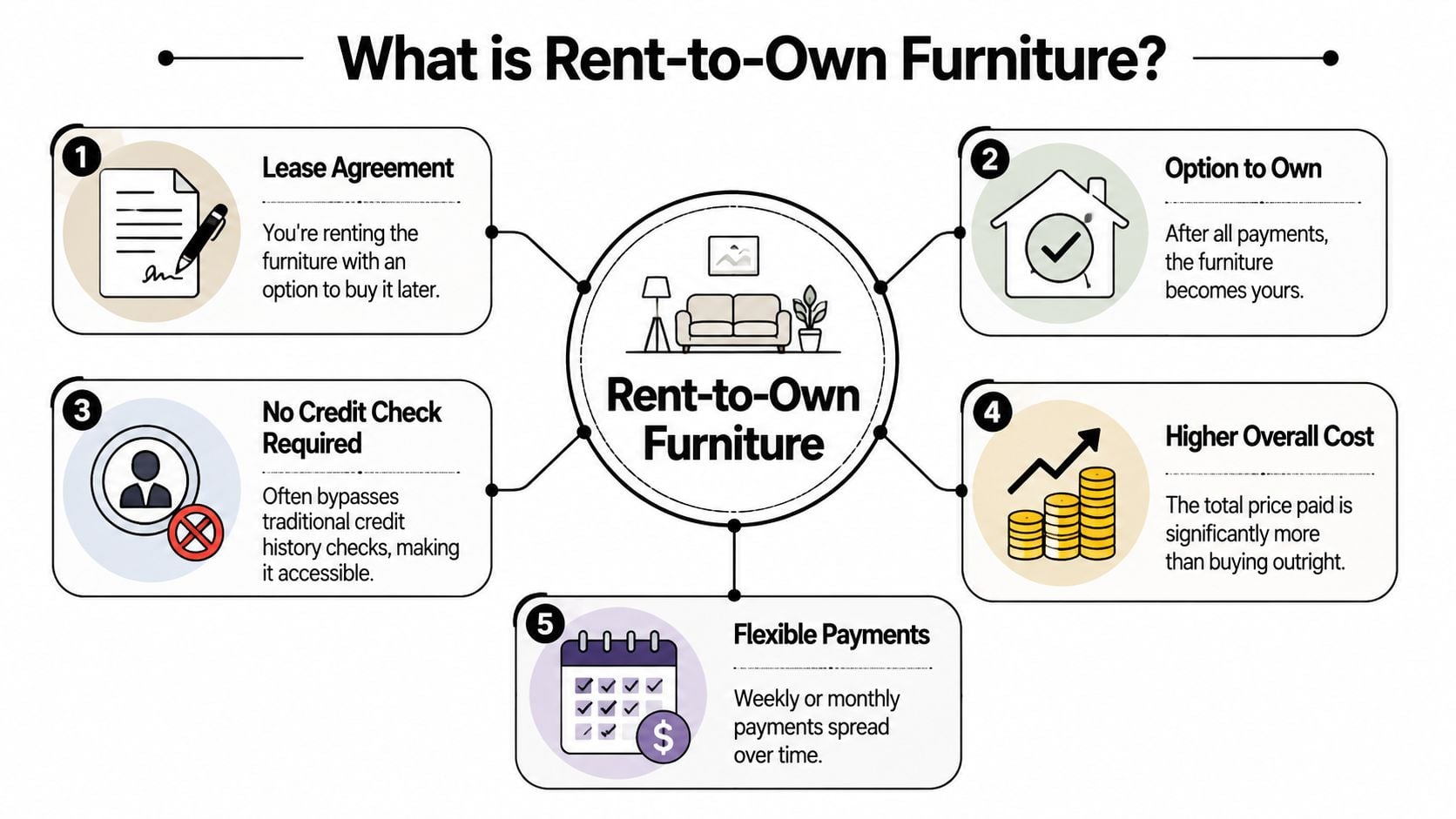
What you'll usually see in these stores
Rent-to-own businesses typically carry common household categories like sofas, beds, recliners, dining sets, appliances, and electronics. The appeal is straightforward. You can often get approved quickly, bring home what you need, and spread out the cost through smaller payments.
That model has been used by shoppers as more than just a temporary rental. A foundational FTC survey found that 70% of merchandise rented was ultimately purchased, and 67% of customers said they intended to buy the item when they started according to the FTC survey of rent-to-own customers. So when people talk about rent-to-own, they're usually not talking about borrowing a couch for a month. They're trying to own it.
Why the model appeals to shoppers
| What shoppers like | What it means in practice |
|---|---|
| Quick approval | Less emphasis on traditional credit history |
| Fast delivery or pickup | Useful when a home needs furniture right away |
| Smaller payment chunks | Weekly or monthly payments may feel easier to absorb |
| Flexibility | Some agreements let you return the item instead of finishing the full term |
That flexibility is real, but it can also distract from the bigger issue. The monthly payment is not the same thing as value.
For many shoppers, the better move is learning the full furniture buying process before deciding whether convenience is worth the premium. This guide on understanding the furniture buying journey from first research to final decision does a good job of laying out what smart buyers should be thinking about before they commit.
Rent-to-own can solve an access problem. It does not automatically solve a value problem.
Understanding Rent-to-Own Contracts and Payments
The contract is where the whole deal becomes clear. Or confusing, if you don't read it carefully.
Most rent-to-own agreements are built around weekly or monthly renewal payments, not a traditional installment loan. You're not building ownership with each payment the way many people assume. The store keeps ownership until the final required payment is made.
According to Rent-A-Center's description of furniture leasing terms, rent-to-own operators often use weekly or monthly schedules over 12 to 24 months, with no long-term commitment. That's the hook. The flexibility sounds consumer-friendly. It also protects the retailer, because they retain ownership of the item until the agreement is completed.
What your payments are actually doing
Here's the plain-English version of a typical arrangement:
You choose the furniture
The store sets a payment schedule based on its lease program.You make recurring payments
Those payments renew your right to keep the item.You keep paying until the contract is satisfied
Ownership transfers only after the agreement is fully completed.If you stop paying
You may return the item, or the company may recover it, depending on the agreement.
That's very different from walking into a traditional furniture store, paying cash, or using financing where you know exactly how the purchase is structured.
Contract details that deserve your full attention
Some shoppers focus only on whether they can handle the weekly amount. That's understandable, but it's not enough. Read for these details:
- Total of all payments: This is the number that matters most.
- Ownership trigger: Ask exactly when the furniture becomes yours.
- Return terms: Find out what happens if your budget changes.
- Repairs and service: Some agreements include service. Others may be narrower than you assume.
- Delivery and setup: Don't assume they're automatically included.
- Condition expectations: If the item is returned, ask what counts as acceptable wear.
Neighborly advice: Never judge a furniture deal by the payment alone. Judge it by the contract, the total cost, and the quality of the piece you'll live with every day.
Why stores structure it this way
From the retailer's side, this model lowers credit risk because they keep ownership during the lease. But that also means the business has to think about asset recovery, refurbishment, and re-renting inventory. In plain English, the system is built around the item being part product, part revenue stream.
That's why contract language matters so much. You're not just buying a sofa. You're entering a structured agreement where possession and ownership are not the same thing.
Calculating the True Cost of Rent-to-Own Furniture
You walk into a store because you need a sofa this week, not six months from now. The tag says the weekly payment looks easy. Then a year or two goes by, and you realize you paid far more than that sofa was worth.
That is the core rent-to-own problem. The convenience is upfront. The cost shows up later.
As noted earlier, this market often targets shoppers under pressure. That is exactly why the math matters so much. If your budget is tight, you cannot afford to judge a furniture deal by the weekly number alone. You need to know what the piece will cost you by the time it is yours, and whether it will still be worth owning when you get there.
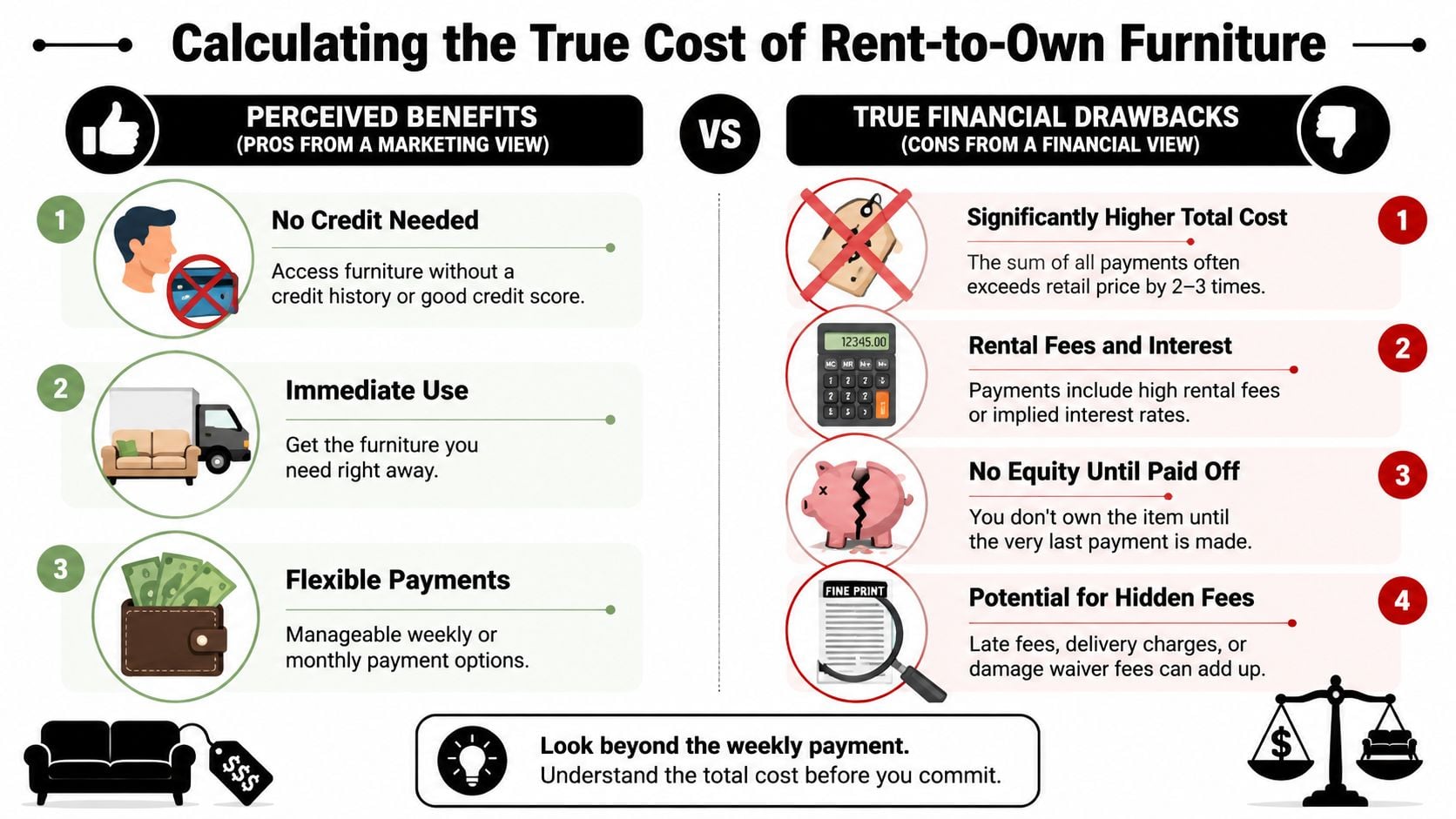
The problem with shopping by payment
Weekly payments can hide a bad deal in plain sight.
A store shows you a sofa for a low amount per week. What they do not lead with is the full price after every payment is made, plus any fees tied to the agreement. By the end, many shoppers have spent enough to buy a much better piece from a regular furniture store, often one built to last longer and feel better in daily use.
Here in Milwaukee, that matters. A sofa in a busy family room has to handle kids, pets, boots, winter layers, and plenty of hard use. In a smaller bungalow, duplex, or apartment, every piece has to earn its floor space. Overpaying for something with a weak frame or cheap fabric is a costly mistake.
A better way to compare offers
Use this checklist before you sign anything:
| Ask this question | Why it matters |
|---|---|
| What is the total amount I will pay if I keep this to ownership? | This shows the real price, not the sales pitch |
| What would a similar item cost at a traditional furniture store? | It gives you a fair side-by-side comparison |
| How long will I be making payments? | A longer term can make an overpriced item look affordable |
| What is the frame, fabric, or construction quality? | Cheap materials turn a high total cost into an even worse value |
| If I stop paying, what do I lose? | You need to know the financial downside before you commit |
If a salesperson keeps bringing the conversation back to the weekly payment, slow the whole thing down.
For shoppers dealing with rough credit, it makes more sense to compare mattress and furniture financing for bad credit and other retail options that show the price clearly from day one.
Why quality changes the math
Total cost of ownership is the part many furniture shoppers miss.
If you pay a premium for a piece that sags, wobbles, pills, peels, or breaks early, you do not just lose money on the contract. You lose money again when you have to replace the furniture sooner than expected. That is why cheap construction and expensive payment terms are such a bad combination.
A better-made piece costs more upfront, but it often costs less across the years you live with it. Solid frames, durable fabrics, repairable parts, and sizes that fit real Milwaukee homes hold their value better because they hold up better. That is the kind of furniture I would tell my own neighbor to buy. Fewer regrets. Better comfort. Lower cost over time.
Smarter Alternatives for Furnishing Your Milwaukee Home
If you need furniture and money is tight, rent-to-own isn't your only option. It might be the fastest option on paper, but fast and smart aren't always the same thing.
A major gap in rent-to-own marketing is that it rarely compares the total cost and durability of its furniture against buying a better-quality piece built for long-term use. That's exactly the opening many families need. As noted in this discussion of total cost versus durable furniture value, households planning to stay put often make a better financial decision by investing in furniture built to last, including USA-made or solid-wood pieces.
Here's a quick side-by-side look at the alternatives:
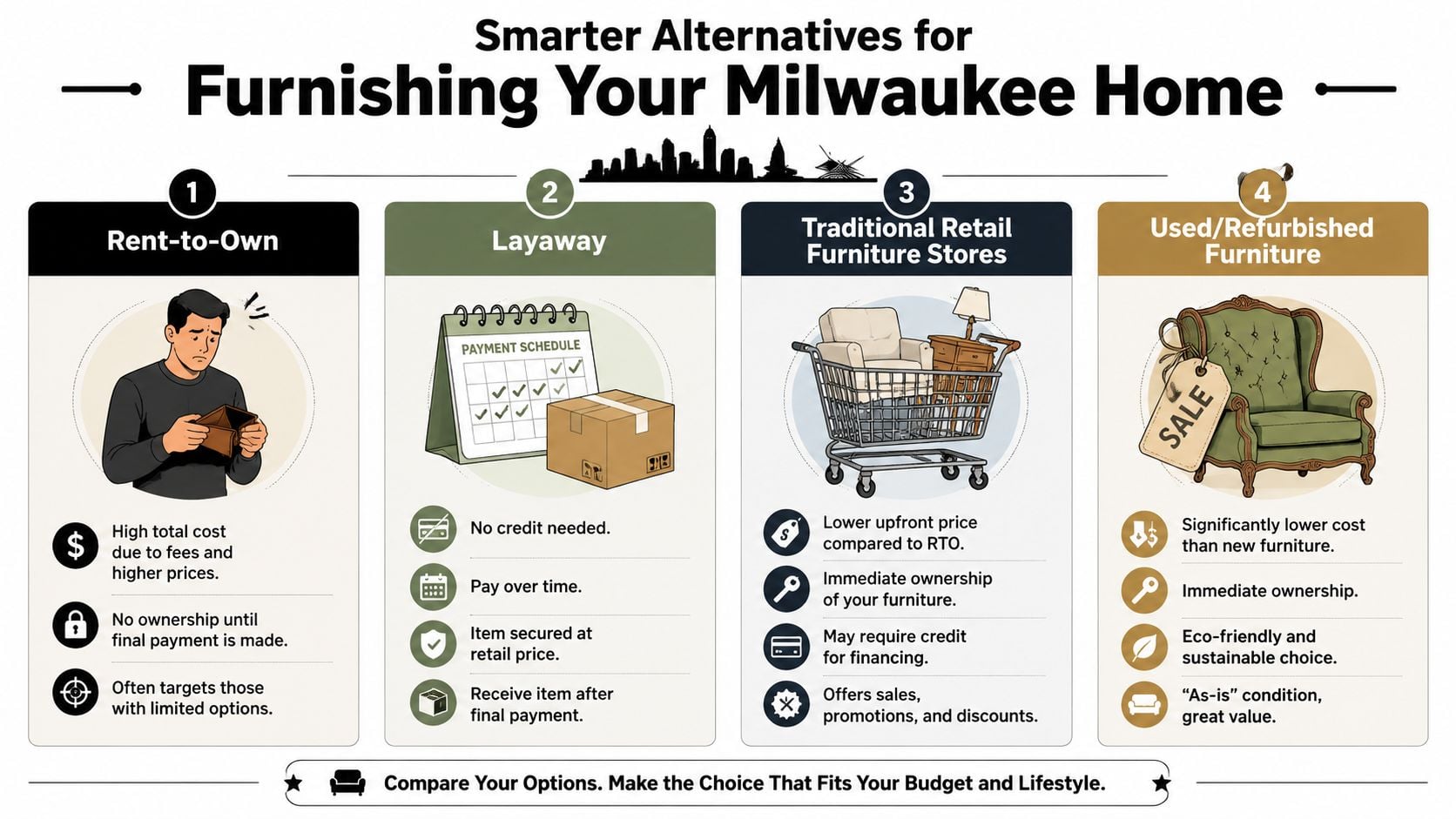
Option one, buy less but buy better
This is my favorite advice because it works.
If the budget won't stretch to a full room package, don't force it. Buy the pieces you need first. Get a solid sofa instead of a whole matching set. Get a real wood bedroom piece instead of filling the room with temporary furniture that won't hold up. A strong frame, durable fabric, and serviceable construction will outlast the “cheap now, replace later” cycle every time.
That matters in Milwaukee homes. We see older bungalows, tight staircases, smaller dining rooms, condos with narrow entries, and busy family rooms that put real wear on furniture. In those settings, fit and durability beat flashy convenience.
Option two, use financing that's transparent
Traditional furniture financing isn't automatically the answer, but when it's clear, straightforward, and attached to better merchandise, it's often a much better tool than rent-to-own.
Look for:
- Clear total purchase terms
- Known ownership from the start
- No confusion about what the item costs
- Furniture quality that justifies the investment
Some families also do well with room packages or furniture bundle deals because bundling can make a whole-home setup more manageable without sliding into an open-ended lease structure.
Option three, consider layaway or staged buying
Layaway doesn't get enough attention anymore, but for disciplined shoppers it can be a smart old-school solution. You lock in the piece, make payments over time, and avoid the ownership confusion that comes with leasing.
Staged buying works, too. Furnish the rooms in the order you use them most:
- Beds
- Sofa or sectional
- Kitchen or dining seating
- Storage pieces
- Accent furniture
That order keeps you focused on living needs instead of showroom temptation.
Worth remembering: Furniture is one of those categories where patience often saves money. Rushing usually rewards the expensive path.
Option four, buy for the house you actually live in
A lot of rent-to-own marketing focuses on access. It says much less about whether the furniture fits your life.
Maybe you need a small-scale sofa for an apartment or condo. Maybe your stairway requires a come-apart sectional. Maybe you've got kids, pets, or a high-use family room and need heavy-duty construction. Maybe you're furnishing for a parent and need a supportive recliner or lift chair.
Those are practical needs. They matter just as much as the payment.
Better furniture shopping starts with questions like:
- Will this frame hold up?
- Can this get through my doorway?
- Is this upholstery family-friendly?
- Can this piece work in five years, not just five months?
If you plan to stay in your home, the smartest money often goes toward furniture that won't need to be replaced anytime soon. Good construction isn't glamorous, but it's affordable in the long run.
Your Milwaukee Furniture Shopping Checklist
When you shop for furniture, don't let any store lead the whole conversation. You need your own checklist.
Many rent-to-own shoppers have practical concerns beyond payment flexibility. They may need smaller-scale pieces for apartments, furniture that can handle tight doorways, or more durable options for heavy daily use. As discussed in this article on changing rent-to-own furniture needs, those real-life needs are often better served by retailers focused on fit, quality, and purpose.
Use this checklist anywhere. Rent-to-own store. Local showroom. Big-box retailer. Doesn't matter.
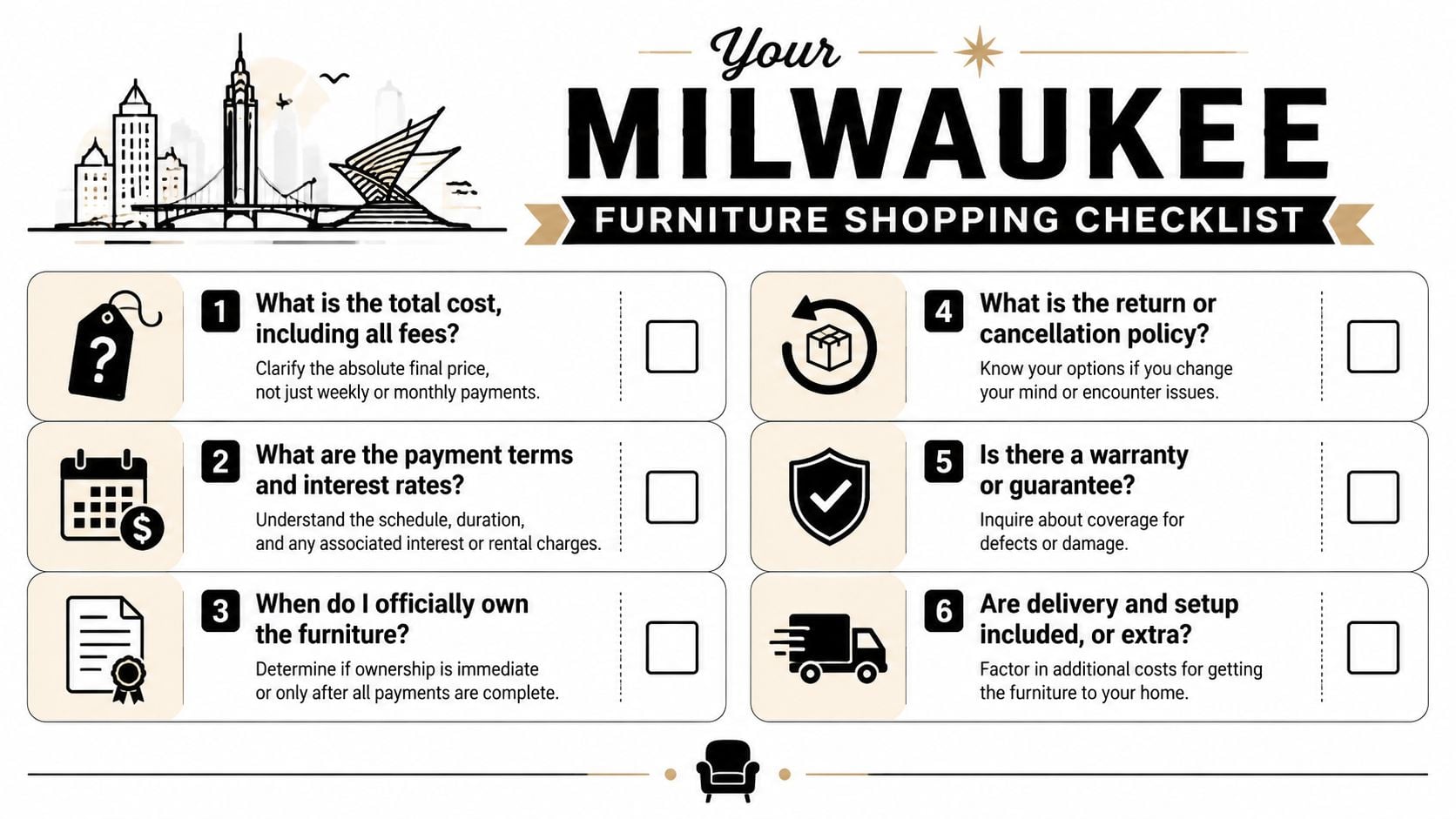
The six questions that protect your wallet
What is the total cost, including all fees?
Don't stop at the weekly or monthly number. Ask for the final all-in amount.What are the payment terms?
Find out how long the agreement runs and whether anything changes if you miss a payment or pay early.When do I officially own the furniture?
This is one of the biggest differences between leasing and buying.What is the return or cancellation policy?
Life changes. You want to know your options before you need them.Is there a warranty or service plan?
Good furniture should come with clear support.Are delivery and setup included, or extra?
Delivery can be a major part of the actual cost, especially with larger pieces or difficult access.
The questions most people forget
These are the ones furniture veterans ask right away:
| Ask this | Why it matters in Milwaukee homes |
|---|---|
| What is the frame made of? | Construction affects how long the piece lasts |
| Will this fit through my doorway or stairwell? | Older homes and narrow entries are common |
| Is the seat height and depth right for my family? | Comfort and function matter more than looks alone |
| Can this handle daily heavy use? | Kids, pets, and guests test furniture fast |
| Where was it made? | Often a clue to materials, serviceability, and craftsmanship |
A helpful add-on is understanding what delivery service really includes. If you've ever tried to wrestle a sofa through a narrow hallway, you already know why white-glove delivery service can make a big difference.
Ask enough questions that the deal becomes boring. Boring is good. Boring means you understand what you're buying.
My blunt advice
If a store can't answer basic questions clearly, walk away.
Furniture is too expensive, too visible in your home, and too important to daily comfort for vague answers and confusing paperwork. A good deal should be easy to explain. If it takes a sales script to make it sound good, it probably isn't.
Let's Find Furniture Your Family Will Love for Years
The smartest furniture decision usually isn't the fastest one. It's the one that fits your home, your budget, and your daily life without punishing you later.
Rent-to-own has a place. If you need something immediately and have limited options, it can fill a gap. But for many Milwaukee families, buying better-quality furniture with clear pricing is the stronger long-term move. You get better materials, better comfort, and fewer replacement headaches. That's not spending more. That's spending smarter.
And around here, that matters. We believe furniture should serve your family for years, not just get you through the month.
If you want honest help from a local team that's been serving Metro Milwaukee since 1928, visit BILTRITE Furniture-Leather-Mattresses in Greenfield. We're a fourth-generation family business, we don't sell online, and we're proud of it. Come see the furniture in person, sit on it, ask tough questions, and talk with people who know their stuff. We'd love to help you find durable, comfortable furniture that makes sense for your home and your budget.