Best Solid Wood Furniture Brands to Know


What separates a dresser that lasts twenty years from one that lasts a hundred? Three things: kiln-dried American hardwoods, time-tested joinery like dovetail joints, and a builder who stands behind the work. This guide explains how to evaluate the best solid wood furniture brands using those principles, which wood species and construction details matter, and where shoppers can find well-made pieces today.
How We Evaluate the Best Solid Wood Furniture Brands
BILTRITE Furniture-Leather-Mattresses has been a 4th generation, family-owned furniture store in Metro Milwaukee since 1928. That history shapes how we judge furniture—but we want you to be able to judge it too. When we decide whether a piece belongs on our floor, we score it against these criteria:
- Wood species: Is it a hardwood like oak, maple, or cherry, or a softer wood better suited to painted furniture?
- Solid vs. mixed construction: Is the case or frame solid wood, or particleboard with veneer on the surfaces?
- Joinery type: Dovetail and mortise-and-tenon joints signal investment; staples and butt joints signal a short lifespan.
- Finish durability: Multi-step finishes, especially catalyzed lacquers, resist water rings, scratches, and daily wipe-downs.
- Repairability: Can a scratch be sanded out and refinished, or does a surface chip end the piece's life?
- Warranty and support: Is there a written warranty, and can you get replacement hardware or parts years later?
- Customization: Can you choose wood, stain, hardware, and dimensions, or is it one fixed configuration?
- Lead times: Custom Amish and USA-made furniture often takes longer than stock pieces, a tradeoff for custom construction.
- Price tier: Value, mid-tier, or premium investment pieces.
What would disqualify a piece for us: thin veneer over particleboard in structural areas (table legs, bed rails, drawer runners), stapled drawer boxes, vague material descriptions like "wood-tone finish over engineered wood," or a brand with no warranty and no way to get parts. None of these automatically means the furniture is bad—but it's priced and built for a different lifecycle, and shoppers deserve to know which one they're buying.
Use this framework as you read the rest of the guide. Each brand below is described in the same terms: species, construction, style, price tier, and who it suits.
Your Guide to Lasting Solid Wood Furniture
Pieces built to handle lively family gatherings, homework sessions, and holiday dinners share a common trait: they're made from wood that was cut, dried, and joined with care. Four generations of our family have helped Metro Milwaukee shoppers find that kind of high quality wood furniture since 1928, and this guide passes along what we've learned about wood selection, construction, and value.
The scale of solid wood production is easy to underestimate. One industry estimate placed global solid-wood furniture production above 320 million units in 2024, with solid wood representing approximately 58% of premium furniture consumption worldwide—evidence that even as machine-made furniture dominates the mid-market, brands and shoppers still invest heavily in solid-wood furniture (solid-wood furniture market overview).
This infographic breaks down the core elements we look for in every piece that comes through our doors—durability, materials, and construction.
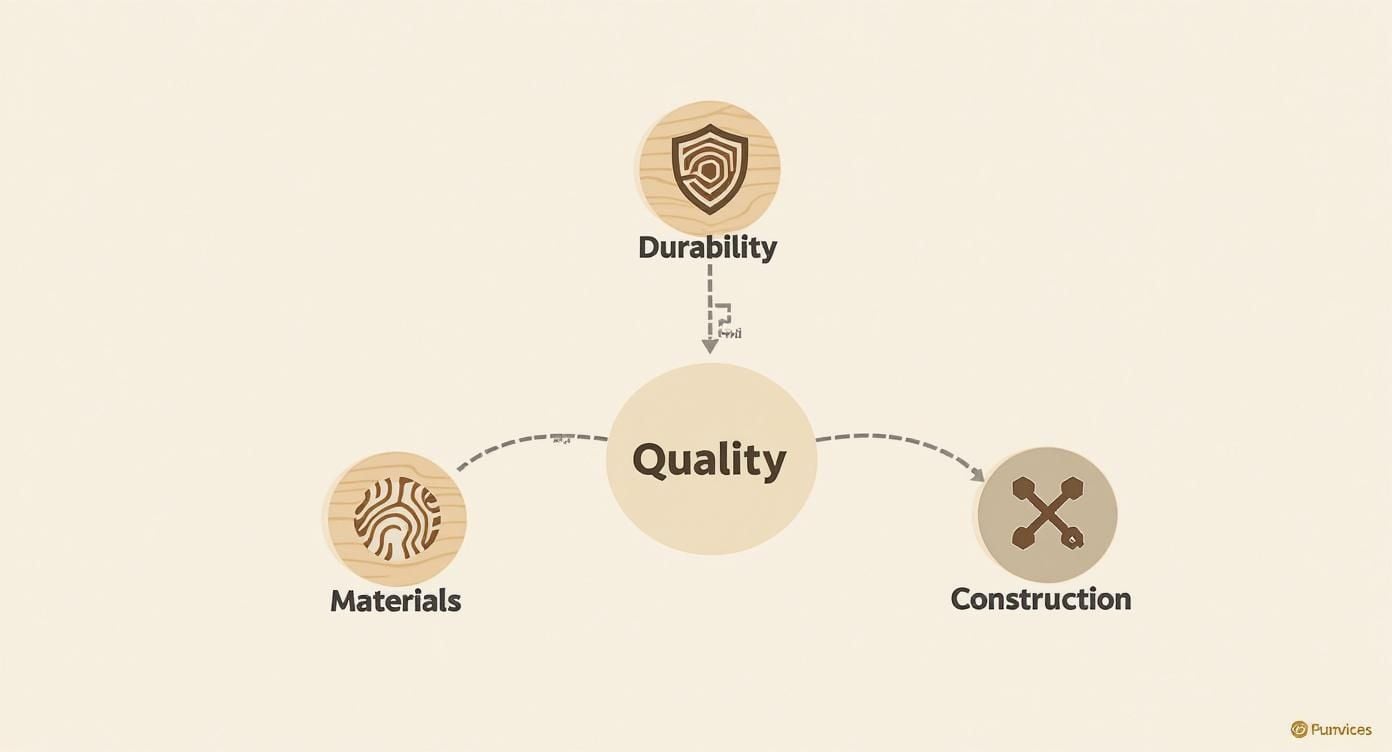
At BILTRITE, we believe furniture shouldn't be disposable. It should be a dependable part of your home, ready to handle everything from homework sessions at the dining table to holiday dinners with loved ones.
It's an investment in your family's comfort and future. To get a sense of what to expect from that investment, take a look at our guide on how long should furniture last.
Key Signs of Quality Wood Furniture
When you're in a showroom, it helps to know exactly what to look for. Use this quick guide to spot the differences between durable wood furniture and pieces that just won't hold up to family life.
| Quality Sign | What to Look For | Why It Matters for Your Family |
|---|---|---|
| Kiln-Dried Hardwood | Look for terms like "kiln-dried," especially with woods like oak, cherry, or maple. The wood should feel solid and heavy. | This prevents the wood from warping or cracking as humidity changes in your home, keeping it stable for years. |
| Dovetail & Mortise-and-Tenon Joints | Open a drawer to check the corners. You should see interlocking "pins" and "tails," not just staples or glue. | These joints are incredibly strong and create a durable frame that can withstand daily use without wobbling. |
| Smooth, Multi-Step Finish | Run your hand over the surface. A quality finish feels silky smooth, not rough or sticky. | A good finish protects the wood from spills, scratches, and stains—essential for a busy household. |
| Solid Wood Back Panels | Check the back of a dresser or cabinet. It should be a solid wood panel, not a flimsy piece of cardboard-like material. | This adds structural integrity and keeps the piece from racking or twisting over time. |
Keep these points in mind, and you'll be able to confidently identify furniture that offers real value and durability for your family.
Understanding What Solid Wood Really Means
The term "solid wood" gets used often in the furniture world, but what does it mean for your home? Let's clarify what distinguishes solid wood from other materials.
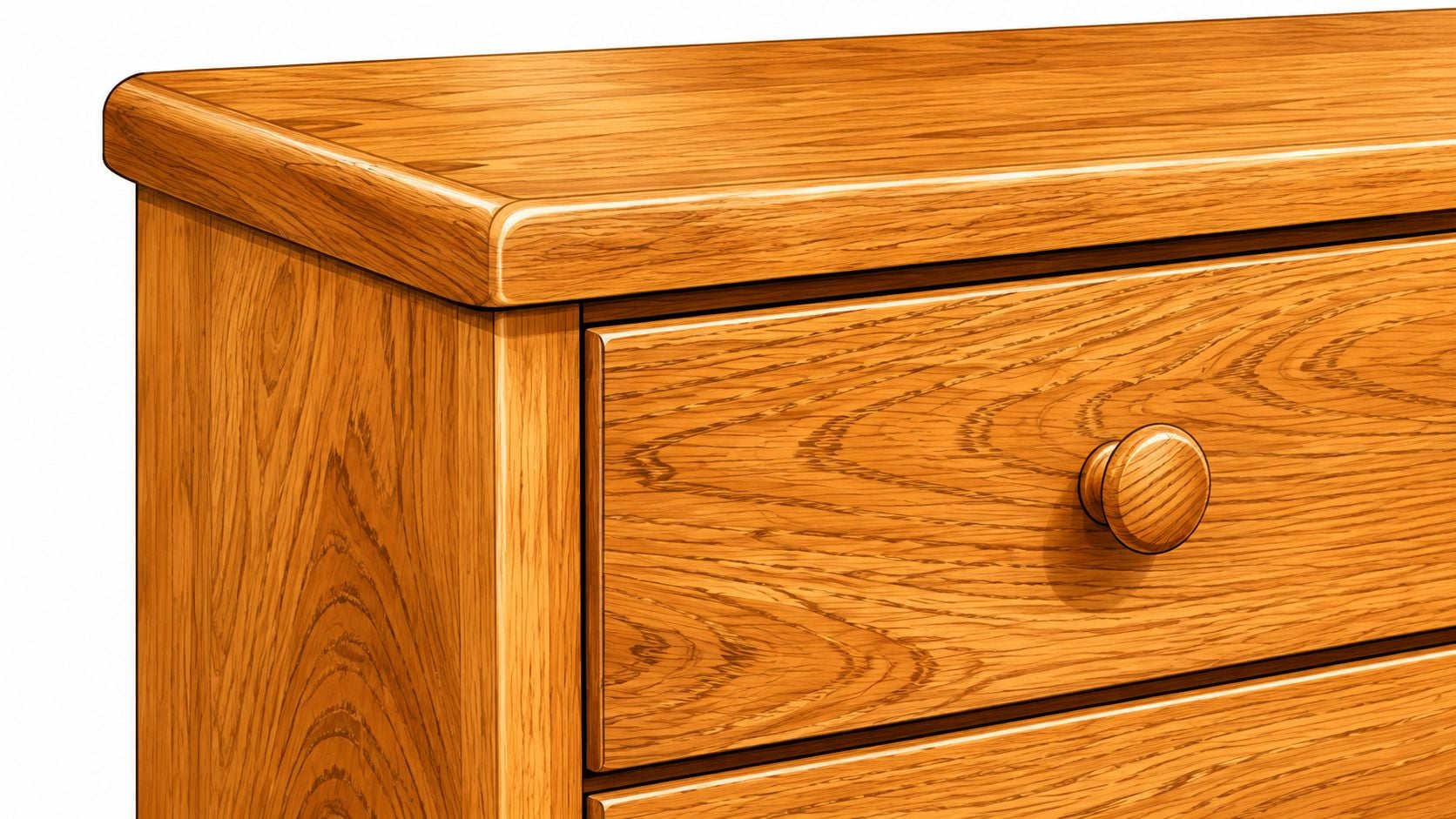
Think of it this way: Solid wood is like a steakhouse dinner. It's one solid, premium piece of material from top to bottom. It's substantial, authentic, and has a character all its own. This is the genuine article, built to stand the test of time.
Not All Wood Is Created Equal
Now, let's talk about the other options you'll find out there. Wood veneers are more like a beautifully decorated cake—they look fantastic on the surface. A very thin slice of real wood is glued over a core of a cheaper material, like particleboard. It can look impressive at first, but it's not nearly as durable. Once it's scratched or chipped, repairs are a real headache.
Then you have engineered woods, like particleboard or MDF (Medium Density Fiberboard). These are the furniture equivalent of a fast-food burger. They're quick, cheap, and get the job done for a little while, but they lack the substance, strength, and lasting quality of something made from 100% solid wood.
How Hardwood Species Differ
Even among solid woods, species matter more than most product pages let on when choosing quality hardwood furniture:
- Oak: one of the hardest, most dent-resistant common furniture woods. Its pronounced open grain hides dings well, making it a workhorse for dining tables and family-room furniture. Heavier weight means beefier delivery and moving, though.
- Maple: very dense and smooth-grained, so it resists dents and holds fine detail in carved legs and mouldings. Its tight grain takes paint and stain evenly; expect less visible character than oak.
- Cherry: moderately hard with a famous trait: it darkens and deepens in color with light exposure over the first few years. Softer than oak and maple, so it dents more readily, but it's a classic for formal dining furniture.
- Walnut: prized for rich chocolate tones and dramatic grain. It's a mid-density hardwood, durable enough for daily use, but often reserved for statement pieces where its color justifies a premium price.
The U.S. Forest Products Laboratory has documented historical wood consumption in American manufacturing, noting that in 1977, furniture, fixtures, and millwork manufacturers consumed an estimated 628 million cubic feet of wood products, representing 35% of all wood products used in U.S. manufacturing (historical wood-use data).
Where Veneer Is Fine—and Where It Isn't
Veneer gets a bad reputation it doesn't always deserve. A veneer over a plywood core can be more dimensionally stable than solid boards for wide, flat panels like dresser tops, because plywood resists splitting and warping. That's acceptable engineering.
Where you should insist on solid wood (or plywood-backed, not particleboard-backed) construction: drawer boxes, chair legs and joints, bed rails, table legs, and any load-bearing frame. These take stress every day, and particleboard or thin materials here are the first things that fail.
Reading Labels Like an Insider
Before you buy, run this checklist:
- Look for "solid hardwood" — not just "wooden" or "wood-finish," which can describe particleboard with a photograph of grain printed on it.
- Ask what the drawer boxes and drawer glides are made of, not just the exterior.
- Check whether finish terms are specific ("catalyzed lacquer," "hardwax oil") or vague ("protective coating").
- Ask if touch-up markers, replacement hardware, or refinishing guidance is available—repairability is a quality signal in itself.
How to Spot Real Solid Wood
Labels can be misleading, so use your senses to verify what you're buying:
- The Grain-Wrap Test: Look at the edge of a board. If the grain pattern wraps continuously over the edge and onto the adjacent side, it is likely solid wood. Veneers usually show a sharp seam or a repeating printed pattern at the corner where the thin layer folds over the substrate.
- The Weight and Push Test: Solid wood is significantly heavier than particleboard or hollow-core constructions. Press your thumb firmly into an inconspicuous area; solid wood resists indentation, whereas softer engineered cores may give slightly under pressure.
Knowing what to look for empowers you to make a choice you'll be happy with for decades. We've put together a great overview of our solid wood furniture so you can see the difference for yourself.
Why Quality Construction Matters
Having beautiful, solid wood is a fantastic start, but it's only half the story. Furniture built to last through decades of family dinners, homework sessions, and holiday gatherings depends on how it's put together. Skilled craftsmanship separates the best solid wood furniture brands from the rest.
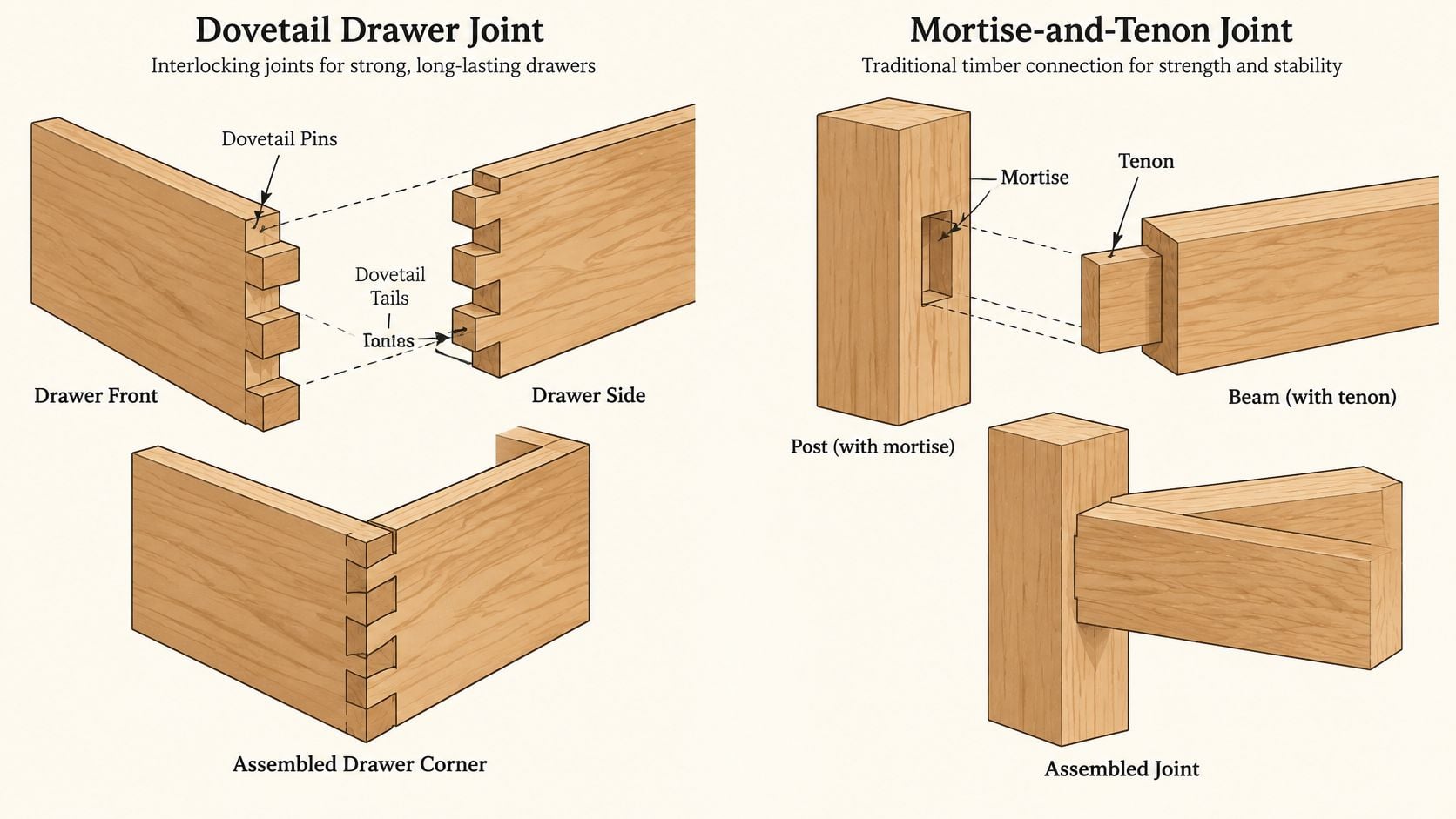
Think about building with LEGOs versus trying to stick smooth blocks together with a bit of glue. That's the difference between great joinery and furniture that relies on staples and screws. Techniques like dovetail joints and mortise-and-tenon joints are the interlocking LEGOs of the furniture world; they create a strong, self-reinforcing bond that can withstand years and years of use.
The Amish and USA-Made Difference
This commitment to time-honored construction is exactly why we're so passionate about the Amish and USA-made furniture in our showroom. These skilled artisans aren't just building furniture; they're practicing a craft passed down through generations.
They understand that taking the time to create strong, precise joints means a dresser or dining table won't wobble or weaken over time. It's a level of dedication that resonates with families who appreciate lasting value.
At BILTRITE, we believe you shouldn't have to guess if a piece is built to last. Our team is trained to spot these details, ensuring that what you see on our floor is something we'd be proud to have in our own homes.
For us, quality construction isn't just a feature—it's a promise. It means your furniture can handle the realities of daily family life and become a cherished heirloom, not a temporary placeholder.
Why Little Details Matter Big Time
Here's a quick rundown of what we look for when we evaluate construction quality. These are the details that ensure your furniture is an investment, not just a purchase:
- Dovetail Joints: Look inside a drawer. The interlocking, trapezoidal "pins" and "tails" create a joint that is nearly impossible to pull apart. This is a hallmark of high-quality case goods like dressers and chests.
- Mortise-and-Tenon Joints: This classic technique involves fitting a "tenon" (a projecting piece of wood) into a "mortise" (a hole or slot). It's the foundation of sturdy tables and chairs, providing exceptional stability and strength at key stress points.
- Corner Blocks: Check the underside of a table or the inside corners of a sofa frame. Triangular blocks of wood are often glued and screwed into place to add reinforcement and prevent legs from wobbling. It's a small detail that makes a huge difference.
We firmly believe in these methods, which is why we've always said we don't skip steps to ensure quality. Come on down to our showroom and we'll happily show you these details in person!
Spotlighting Our Favorite Amish and American Brands
Most shoppers assume quality solid wood furniture was a casualty of the flat-pack era. It wasn't—but finding it requires knowing where to look. Many solid wood furniture brands sell through local dealers and showrooms rather than direct ecommerce. The Amish furniture sector provides a measurable example of how solid hardwood production can support a regional manufacturing economy. A U.S. Forest Service study of Ohio's Amish furniture cluster estimated annual hardwood consumption at approximately 44 million board feet, equaling about 11% of all hardwood lumber produced in Ohio and 19% of the hardwood lumber used for appearance-based applications in the state. The same study estimated roughly 2,991 people employed in the cluster when furniture manufacturers, finishers, distributors, and related operations were considered (Forest Service cluster study).
Here's how some of the builders we carry map to different shopper needs:
- Best for heirloom dining furniture: Palettes by Winesburg: An Ohio family-owned builder that oversees everything from sustainably harvesting its own timber to applying a durable catalyzed finish. Suits families planning to keep a table for decades.
- Best for bedroom sets: Canal Dover Furniture: Another Amish-built Ohio brand focused on bedroom and dining collections. Known for drawer construction detail and hand-wiped stains.
- Best for USA-made value: Archbold Furniture and Vaughan Bassett: Both build domestically with solid hardwood construction, offering options for first-time buyers and growing families looking for affordable solid wood furniture brands.
- Best for customization: Amish-made custom orders: Custom pieces let you choose wood species, stain, hardware, and dimensions. BILTRITE offers this process across our custom furniture lines, where customers select fabric, leather, wood, finish, and hardware. Lead times run longer for custom work, but the result is built to your room, your way.
- Best overall balance: Whittier Wood and Alder & Tweed: Both offer distinct styling approaches for buyers seeking durable wood furniture across different design preferences.
Comparing the Brands at a Glance
| Brand | Primary Categories | Common Woods | Joinery & Construction | Finish | Repairability | Customization | Price Tier |
|---|---|---|---|---|---|---|---|
| Palettes by Winesburg | Dining | Oak, maple, cherry | Dovetails | Catalyzed finish | Sandable/refinishable | High (wood, stain, size) | Premium |
| Canal Dover | Bedroom, dining | Oak, maple | Dovetailed drawers | Hand-wiped stain | Refinishable | Moderate | Mid |
| Archbold Furniture | Bedroom, occasional | Hardwood solids | Mortise-and-tenon, corner blocks | Standard protective | Refinishable | Limited | Value–mid |
| Vaughan Bassett | Bedroom | Poplar, oak, maple | English dovetails, solid backs | Standard protective | Refinishable | Limited | Value–mid |
| Whittier Wood | Bedroom, office | Solid alder | Dovetails, heavy drawer boxes | Standard protective | Refinishable | Some | Value |
| Alder & Tweed | Dining, bedroom, accents | Alder, hardwoods | Solid-frame construction | Standard protective | Refinishable | Some | Mid–upper |
| Amish custom workshops | Full-home custom | Your choice (oak, maple, walnut, cherry, quartersawn oak) | Hand-cut dovetails, mortise-and-tenon | Customer selected | Highly refinishable | Highest | Premium |
For us, featuring a brand isn't just about selling furniture. It's about sharing a story of craftsmanship and community, connecting your family with another family's legacy of hard work and integrity.
The Amish Advantage
There's a reason we're so passionate about our Amish-made selections. These builders aren't chasing trends; they're focused on creating heirloom-quality furniture using skills passed down through generations. They understand wood—how it breathes, how it moves, and how to bring out its stunning natural beauty.
This commitment to craftsmanship is something you can feel. It's in the sturdiness of a chair, the superb alignment of a cabinet door, and the silky-smooth feel of a tabletop. However, shoppers should weigh the tradeoffs: Amish-built pieces typically require purchasing through a dealer or visiting a workshop, and custom orders involve longer lead times compared to mass-produced alternatives. If you're curious to learn more, we have a great article that dives into the advantages of Amish furniture and what makes it such a wonderful choice for any home.
When you invest in a piece from one of these brands, you're not just buying furniture. You're bringing home a piece of American heritage built with pride, care, and a dedication to lasting quality.
Where to Buy Solid Wood Furniture
Finding where to buy solid wood furniture today takes a bit more intention than it once did—here's where it still lives:
- Local family-owned dealers and showrooms. Stores like BILTRITE Furniture-Leather-Mattresses carry curated lines of solid wood and Amish-made furniture, staffed by people who can walk you through joinery, finish, and wood species in person. You can open every drawer and sit in every chair before you buy.
- Amish workshops and country furniture shops. In Ohio, Indiana, and North Carolina especially, many builders sell directly or through small regional retailers, often with full customization.
- Regional American manufacturers through their dealer networks. Many domestic brands reach customers through independent stores, so checking local authorized dealers is often the best route.
- Some direct-to-consumer brands. A handful of DTC companies now ship solid wood furniture nationwide—convenient, though you lose the ability to inspect construction before purchase, so read return policies carefully.
The tradeoffs are real: showroom buying costs a bit more than flash-sale furniture but lets you verify quality with your own hands; workshop-direct buying delivers maximum customization but longer wait; big-box and marketplace furniture is fastest and cheapest but rarely solid wood in structural areas. Written care information, warranty support, and in-person service are the reasons most families we've worked with over the decades choose to buy locally.
Experience the BILTRITE Difference in Person
Reading about quality construction and beautiful finishes is a great starting point, but let's be honest—furniture is something you need to experience firsthand. It's a personal choice that has to feel just right for your home and family.
That's exactly why, as a 4th generation, family-owned business, we've made the deliberate and proud choice not to sell our furniture online.
Our Greenfield showroom is the place to explore. We want you to come visit us, open the drawers on a solid wood dresser, feel the smooth, hand-sanded finish of a dining table, and sink into a chair to see how it feels. From small-scale apartment furniture to our huge mattress department with over 60 models, we have something for everyone!
A Team That's Here for You
When you walk through our doors, you're not just another customer; you're our neighbor. Our awesome team of sales associates has over 400 years of combined furniture experience, and they're here to share their knowledge, not to pressure you.
They can answer any question you have about the best solid wood furniture brands we carry and help you find something you'll love for a lifetime.
Since 1928, our family has believed in two things: putting our own families first and helping our neighbors furnish their homes with affordable, better-quality pieces. It's why we're proudly closed on Sundays to be with our loved ones.
This commitment to family and community is at the heart of everything we do. We've been a part of the Metro Milwaukee community for generations, and we wouldn't have it any other way.
We'd love to see you in our store! You can easily find directions and our showroom hours on our website. Come say hi and let us help you find a great new piece for your home!
Common Questions About Solid Wood Furniture
After being part of the Metro Milwaukee community since 1928, our family has heard just about every question about furniture! To help you feel even more confident, we've gathered some of the most common questions we hear in our showroom.
Is Solid Wood Furniture Worth the Higher Price?
Usually, yes—if you're shopping for furniture you plan to keep. A solid wood dining table has a realistic life of several decades and can be sanded and refinished if it gets battered; a veneered or engineered piece with a damaged surface is generally not repairable in a way that looks good. Solid wood is also heavier and costs more upfront, so if you're furnishing a temporary apartment or a space you'll move out of in a year or two, a well-made mixed-material piece can be the smarter budget call. The decisive factors are how long you'll keep it, whether kids and pets will test it daily, and whether you have the budget for a piece that outlives trends.
Does Anyone Still Sell Solid Wood Furniture?
Yes, several options exist, though they aren't concentrated on national marketplaces. Your best bets are local family-owned dealers, Amish workshops in Ohio and Indiana, regional American manufacturers sold through dealer networks, and a small number of direct-to-consumer brands. In metro Milwaukee, BILTRITE specializes in solid wood, Amish-made, and USA-made furniture, which is one of the reasons we don't sell online: we want you to inspect the joinery yourself.
Is Solid Wood Good for Furniture—and When Is Mixed Material Acceptable?
Solid wood is excellent for anything that takes daily stress: tables, chairs, drawer boxes, bed rails, and frames. It's heavy and it moves with humidity, so it needs stable indoor conditions and periodic care. Mixed-material construction is acceptable on wide, flat panels (veneer over plywood is more stable than solid boards there) and on decorative pieces that see light use. The rule of thumb: solid wood where it's structural, veneer where it's cosmetic, and walk away from particleboard in either role.
How Should I Care for My Solid Wood Furniture?
Proper care is what turns a piece of furniture into a true family heirloom. Your best friend is regular dusting with a soft, dry cloth. For cleaning, just use a damp (not soaking wet!) cloth and immediately follow it with a dry one. Steer clear of harsh chemical cleaners, silicone-based polishes, and too much moisture—they can wear down the protective finish over time.
A few other tips from our family to yours:
- Use Coasters and Placemats: This is the easiest way to prevent those pesky water rings and heat marks on your beautiful tabletops.
- Control Humidity: Solid wood is a natural material, so it breathes—expanding and contracting with humidity changes. Keeping your home's humidity fairly stable helps prevent the wood from warping or cracking.
- Avoid Direct Sunlight: Just like our skin, wood can be damaged by too much direct sun. Over time, it can cause the beautiful finish to fade.
Will My New Furniture Look Exactly Like the Showroom Model?
Because wood is a natural material, every single piece has its own distinct grain pattern, knots, and color variations. A piece of oak from one tree will have a slightly different character than oak from another. These aren't flaws; they are the signature of authentic, real wood.
Think of it like a fingerprint—no two pieces of solid wood are ever exactly alike. These natural variations are a sign of true quality and ensure that the furniture in your home is one-of-a-kind.
While the design, dimensions, and finish color will absolutely match, the beautiful, subtle differences in the wood grain are part of what you're investing in.
Is Solid Wood Furniture a Good Investment?
Absolutely, and it's something we believe in. When you choose a well-made piece, you're not just buying something for today—you’re investing in the future.
Unlike furniture made from particleboard or MDF that often ends up in a landfill after a few years, solid wood pieces are built to last for generations. They can handle the daily wear and tear of a busy family. Scratches can be repaired and finishes can be restored, giving the piece a lifespan that far exceeds its mass-produced counterparts.
This durability means you're making a choice that's both financially savvy and sustainable. You get to avoid the cycle of replacing cheap furniture every few years, which saves money in the long run and keeps more stuff out of the landfill. It's a purchase you can feel great about from every angle.
Ready to see and feel the difference for yourself? At BILTRITE Furniture-Leather-Mattresses, we invite you to come down to our Greenfield showroom. Let us show you the incredible craftsmanship of our USA and Amish-made furniture. We'd love to answer your questions in person and help you find something special for your home.