36 Height Table Guide for Metro Milwaukee Homes

A 36 height table is a counter-height table, usually 34 to 36 inches tall, sitting between standard 28 to 30 inch dining tables and 40 to 42 inch bar tables. It's also meant to pair with 24 to 26 inch counter stools, not regular dining chairs.
That's the sweet spot many Milwaukee households are after when a kitchen island feels useful, but a full bar setup would feel too tall or too formal. The right table height changes how a room works, how people sit, and how comfortably they gather around food, homework, or a laptop.
What a 36 Height Table Really Is
A Milwaukee family might be setting out coffee mugs in the morning, then clearing the same spot for homework, snacks, or a quick dinner after work. In a room like that, a 36 height table gives you lifted seating that feels relaxed without drifting into bar-style territory.
The name tells you the category
A 36 height table belongs in the counter-height table category. Standard dining tables are typically 28 to 30 inches tall, and bar-height tables are usually 40 to 42 inches standard height guide. In other words, 36 inches is the familiar counter-height benchmark, not a standard dining height dining table dimensions guide.
A 36-inch surface is made to feel like a kitchen counter, not a dining table or a pub table.
That difference changes the seating around it. Counter-height tables are built for stools, while standard dining tables are designed for lower chair seats. A helpful rule says counter-height seating needs about 10 to 12 inches of seat-to-table clearance, which is why ordinary dining chairs often feel too low for a true 36 height table table and chair height guidelines.
Why people keep choosing this height
A 36 height table fits the middle ground many homes need. It feels social and easy for serving, and it stays practical for mealtime instead of turning the room into a standing-only setup. That balance is part of why it shows up so often in casual dining areas, kitchen islands, and smaller homes that need one surface to do several jobs.
For Milwaukee shoppers, the decision often comes down to space and daily use. If a room needs something more relaxed than a standard dining set, but easier to live with than a bar table, 36 inches is usually the category to examine. We see that same question in our Greenfield showroom all the time, especially from neighbors looking for Amish-made solid wood pieces that fit real rooms, not just showroom photos.
See our counter-height dining table guide
How 36 Inches Compares to Other Table Heights
A good way to sort out 36 inches is to place it beside the other common furniture heights. Once you see the numbers together, the differences are easier to understand.
Table Height Comparison Chart
| Table Type | Table Height | Seat Height | Best For |
|---|---|---|---|
| Standard dining | 28 to 30 inches | Lower dining chairs | Formal meals, everyday dining rooms |
| Counter height | 34 to 36 inches | 24 to 26 inch stools | Casual meals, kitchen islands, open-plan spaces |
| Bar height | 40 to 42 inches | Taller bar stools | Pub-style seating, standing-adjacent social spaces |
The middle row is where a 36 height table sits. It feels more social than a standard dining table, yet easier to use every day than a bar table. That middle position also explains a common shopping mistake. A buyer picks bar stools for a counter-height table, then finds the seat sits too high and the posture feels strained.
Keep the proportions steady. If the table is 36 inches tall, the stool usually belongs in the 24 to 26 inch range, not higher. That pairing gives the knees room and keeps the seated position more relaxed.
Practical rule: if the seat feels like it climbs too close to the tabletop, the stool height is probably wrong.
Use this dining table height guide while you compare sizes
The Ergonomics Behind 36-Inch Counter Tables
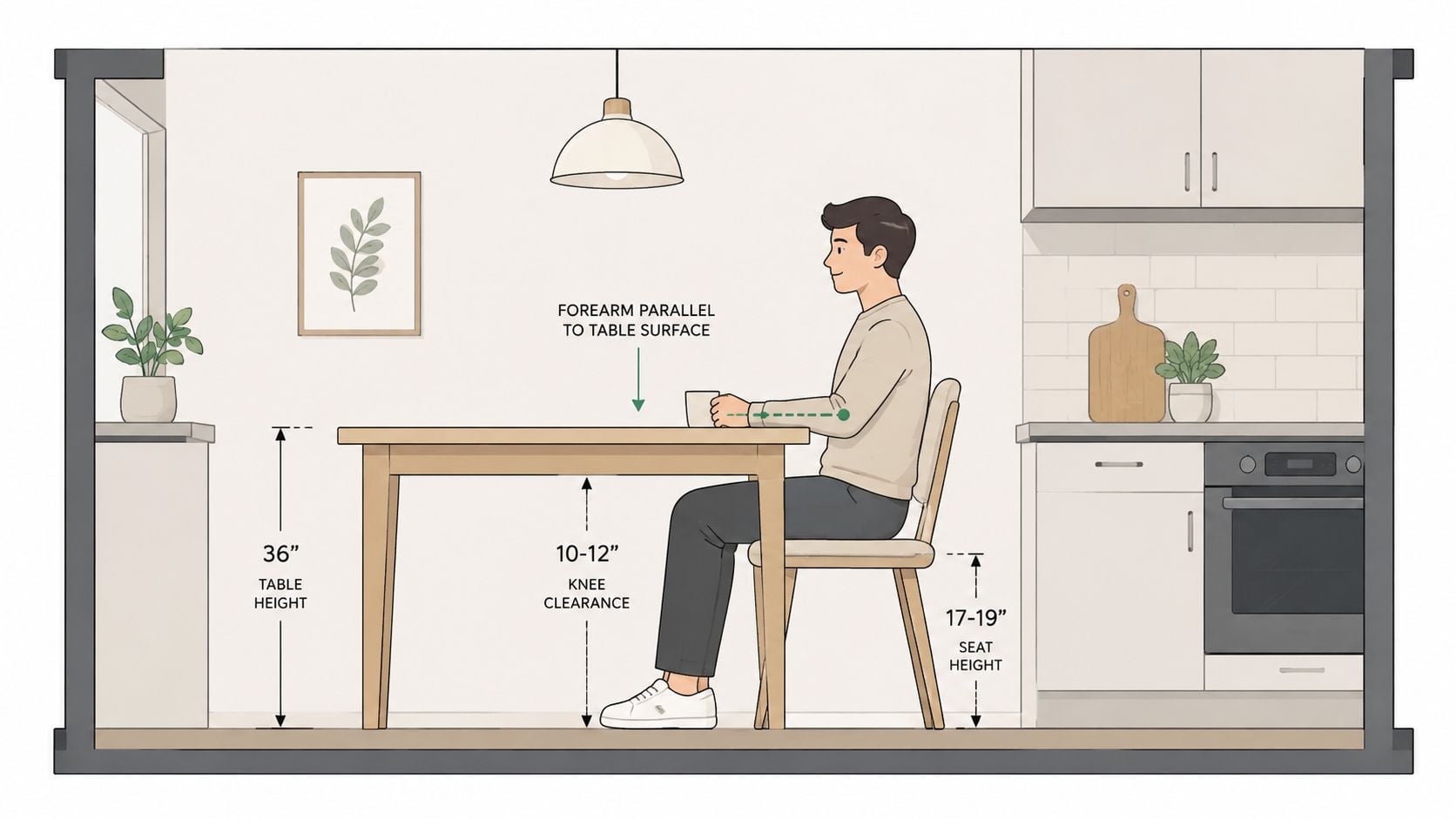
For Milwaukee families balancing weeknight dinners, homework, and quick kitchen tasks, a 36-inch surface often feels like the calm middle ground. It sits high enough to reduce the forward bend that a lower dining table encourages, yet it still feels comfortable for seated use around the house. That balance is why this height keeps showing up in our Greenfield showroom conversations.
Why the body likes the middle ground
A counter-height table gives the torso a more upright position than a standard dining table, which can make casual meals and prep work feel easier on the back and shoulders. CDC adult height data helps explain the fit, since average adult heights leave a 36-inch surface in a comfortable zone for many households. For seating, the right match usually falls in the 24 to 26 inch range, with enough knee room to keep legs from feeling pinned in.
That clearance matters more than many shoppers expect. If the knees bump the apron or the seat sits too low, people start shifting, hunching, and cutting conversations short. If the stool rides too high, the shoulders lift and the tabletop feels farther away than it should.
A 36 height table also keeps sightlines friendlier across the surface. People sit a little higher, so talking over coffee, helping with homework, or sharing a casual meal feels more natural than at a lower table. In a real home, that little change in posture can make the room feel more inviting.
What that means in everyday use
The ergonomic payoff shows up in ordinary tasks. Food prep, serving platters, laptop work, and fast meals all feel easier when the surface does not force a deep bend at the waist. In our showroom, that difference usually becomes clear the moment someone sits down, rests their forearms, and notices the posture feels relaxed instead of cramped.
The stool choice is part of that comfort. Our stool-height guide for checking seating pairings helps keep the table and seat in proportion, which matters just as much as the tabletop itself. When the height match is right, the whole setup feels steady, natural, and ready for daily use.
Where a 36 Height Table Shines in Milwaukee Homes
Milwaukee homes don't all look the same, and that's exactly why a 36 height table makes sense in so many of them. It can act like a kitchen extension, a compact dining spot, or a shared surface that changes with the day.
A few local situations make the choice clearer
In an open-concept Wauwatosa home, a counter-height table can help the kitchen and living area feel connected without forcing everyone into a formal dining room. The higher surface keeps conversation flowing while someone cooks, clears dishes, or helps with homework.
In a downtown Milwaukee condo, the same height can save floor space. A 36 height table often feels less bulky than a traditional dining set because the visual line is lighter, especially when the room needs to stay open for walking paths and extra seating.
In senior living communities across Brookfield and Mequon, the height can also feel convenient for casual meals and visiting with family. The seat position can make it easier to sit down, get up, and keep a comfortable posture during shorter gatherings.
A counter-height table earns its keep when one room has to do several jobs.
More than just dinner
These tables also work well as homework stations, craft tables, and holiday buffet extensions. That flexibility is part of the appeal, especially in smaller homes where every piece has to do more than one thing.
BILTRITE Furniture-Leather-Mattresses also carries small-scale furniture that fits apartments, condos, and senior living spaces, along with furniture meant to handle busier households. For Milwaukee families, that combination of size and usability often matters more than a flashy style name.
Choosing the Right Stools and Measuring Your Space
A 36 height table feels right only when the stools and the room work together. The tabletop sets the stage, but the seating height and the walking space around it decide whether the setup feels comfortable day after day.
Start with the seat height, then check the room
Begin with the stool seat. For a 36-inch table, the seat usually belongs around 24 to 26 inches high, as noted earlier. That range leaves room for your knees and keeps your body in a relaxed seated position.
From there, measure the room itself. Doorways, hallways, corners, and cabinet pullouts all affect how the table will live in the space, especially in older Milwaukee bungalows where furniture often has to turn a tight corner before it ever reaches the dining area. A table can fit on a floor plan and still feel cramped if the path around it is too narrow.
A simple measuring order helps. Check the table area first, then the stool footprint, then the walk path around both. Our measuring guide for bringing furniture home walks through that same habit, and it is the easiest way to avoid sizing surprises before delivery day.
Stool style changes how the table feels
- Backless stools slide in cleanly and keep a smaller room feeling open.
- Low-back stools add a bit more support for longer meals or homework time.
- Swivel stools make it easier to turn toward the kitchen, the TV, or the person speaking across the table.
Families with children often prefer stools that feel steady and simple to move. In homes where the table gets used for casual meals and conversation, lighter-looking styles can keep the room from feeling crowded.
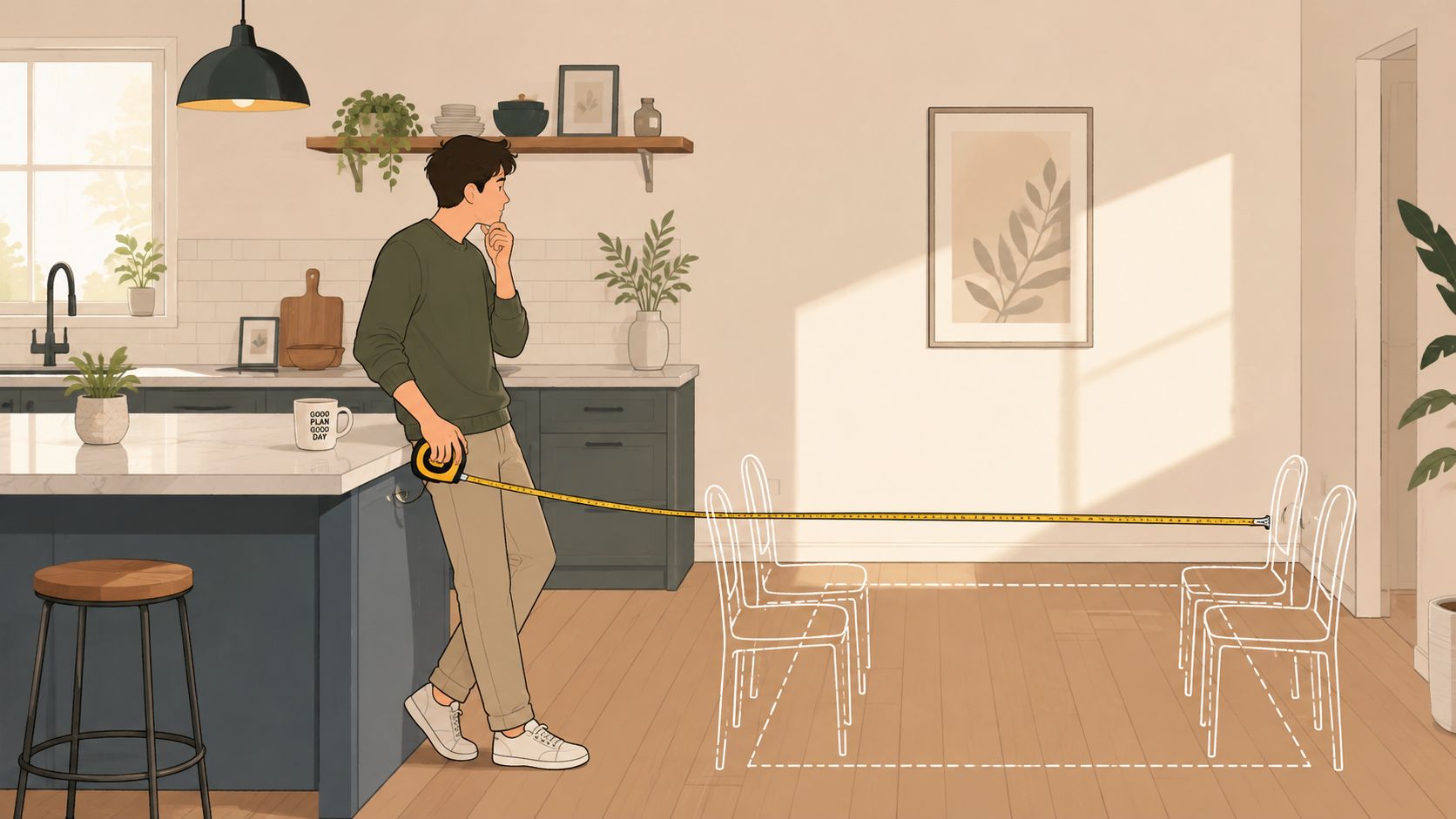
We covered the 24-to-26-inch seating range above, and now the test is your room. Tape out the table size on the floor, place a stool in the space, and check whether people can pass behind it without turning sideways. That quick check tells you more than a showroom photo ever will.
Why Amish-Made Solid Wood Is Worth the Investment
A 36 height table is one of those pieces that gets used every day, so construction matters more than almost anything else. Solid wood gives the table real weight, real stability, and real staying power, which is why so many Milwaukee homeowners choose it for dining and gathering spaces.
Craftsmanship shows up in the details
Amish-made furniture is built with care, patience, and traditional joinery, and that shows in how the piece feels under daily use. Wood grain, finish selection, and hardware choices also let the table feel personal instead of generic. Those details matter when the table is going to live in the center of the home.
A quality table also fits the way BILTRITE works with shoppers. Our Greenfield showroom includes USA-made and Amish-made pieces, plus custom options for finish, wood, fabric, leather, and hardware. That makes it easier to match a table to the rest of the room instead of settling for a one-size-fits-all look.
Solid wood is a practical choice when a table has to handle everyday life and still look good years later.
Read more about Amish furniture and why it holds up well
Visit BILTRITE in Greenfield to Find Your 36 Height Table
The best way to judge a 36 height table is to sit at one, test the stool height, and see how it feels in the room. That's hard to do from a screen, which is why our showroom matters so much to families across Metro Milwaukee.
We've been family-owned since 1928, and our sales associates bring over 400 years of combined experience to the conversation BILTRITE showroom and experience. That means visitors get straight answers, not pressure. It also means the guidance usually gets practical fast, especially when the room is small or the seating needs to work for more than one purpose.
Our store at 5430 West Layton Avenue in Greenfield is built around in-person selection, because touch, fit, and comfort are hard to judge any other way. We're closed on Sundays so our team can spend time with their families, and that same family-first mindset carries into how we help neighbors shop.
BILTRITE Furniture-Leather-Mattresses offers counter-height tables, solid wood dining options, and a wide range of seating that can help a 36 height table feel right in your home. Visit BILTRITE Furniture-Leather-Mattresses in Greenfield to see the wood, test the stools, and talk with our team about what fits your space best.