How to Choose Bar Stools: Expert Tips 2026


A lot of shoppers start in the same place. They stand at the kitchen island, glance at the counter, and think, “These stools can't be that hard to pick.”
Then the questions show up fast. Should the stools tuck in or stay out? Is a back worth it? Will wood hold up better than upholstery? How many seats fit before the kitchen starts feeling crowded?
That's where a little guidance helps. Families have been visiting local furniture stores with these same questions for generations, and the right answer usually comes down to three things: fit, comfort, and durability. Style matters too, of course, but a stool that looks good and feels awkward won't get much love after the first week.
For households that use island seating every day for breakfast, homework, coffee, or catching up, it makes sense to choose carefully. A well-made stool can become part of the daily rhythm of the home, especially when it's built from solid wood and made to last.
Table of Contents
- First Things First Getting the Height Right
- Finding Your Flow with Spacing and Layout
- Deciding on Features for Function and Flair
- Choosing Materials That Match Your Style and Life
- Ensuring Comfort and Long-Lasting Durability
- Why Buying Local Makes All the Difference
First Things First Getting the Height Right
You spot a stool you love online. The wood tone is right, the lines are clean, and you can already see it tucked under the island. Then it arrives, and the seat sits too low. Everyone leans forward to eat, or bangs knees on the apron. That is how a beautiful stool turns into an everyday annoyance.
Height decides whether a stool feels easy to live with. Style matters, but comfort starts with fit, and fit starts with a tape measure.
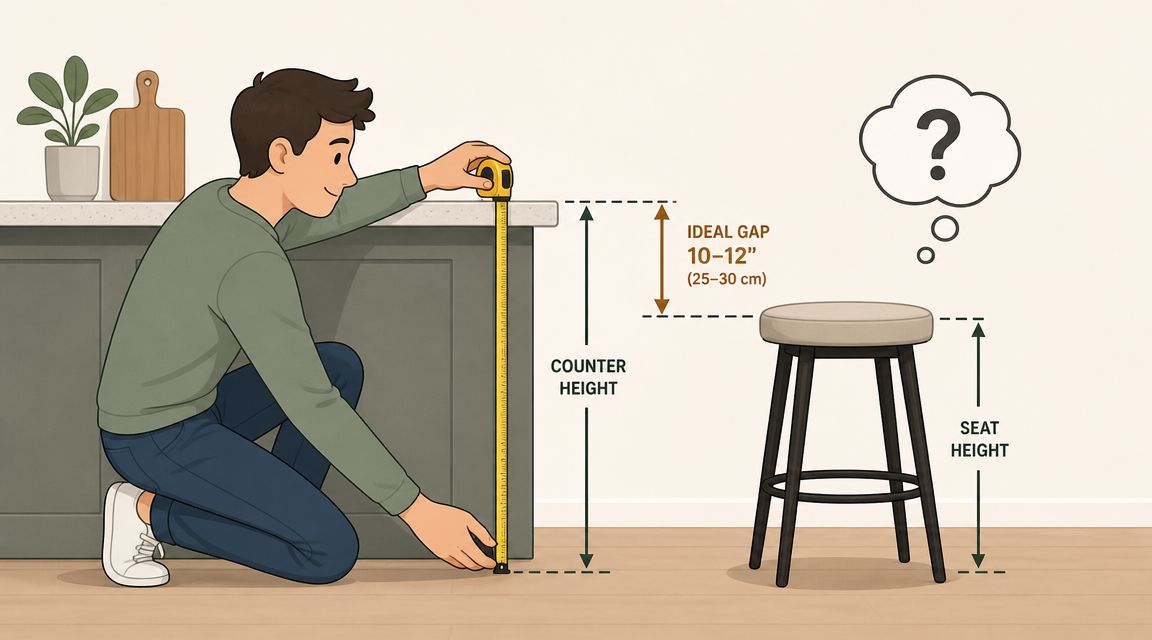
Measure the counter before shopping
Measure from the floor to the top of the finished counter or bar surface. Skip the guesswork. A difference of even an inch or two can change how relaxed people feel sitting there every day.
Industry sizing guidance from the National Kitchen and Bath Association places standard counters around 36 inches high, which usually pair well with seats around 24 to 27 inches high. Bar-height surfaces are typically taller and often pair with seats around 28 to 32 inches.
For households comparing gathering spaces, counter-height dining table options can help you picture how these proportions feel in real life, especially if the kitchen island doubles as a place for meals, homework, and conversation.
Practical rule: Match the seat height to the surface, not the label. A tag that says “counter stool” or “bar stool” is only a starting point.
That small measuring step also protects your investment. Well-built stools, especially solid wood styles made in America or by Amish craftspeople, are made to stay in the home for years. Getting the height right from the start means you are choosing a stool worth keeping, not one that looks good for a week and feels wrong for a decade.
Use the seat-to-counter gap as the comfort check
After you know the surface height, check the open space between the seat and the underside of the counter. A good target is about 9 to 12 inches of clearance, according to bar stool measurement guidance from The Spruce.
That gap works like legroom in a car. Too little, and people feel boxed in. Too much, and the seat can feel low and disconnected from the work surface.
Here is the quick reference:
| Surface type | Common surface height | Common seat height |
|---|---|---|
| Counter height | about 36 inches | 24 to 27 inches |
| Bar height | about 40 to 42 inches | 28 to 32 inches |
Adjustable stools can help in mixed-use spaces, but they still need to land in the right range for your counter. If a stool only feels right at one exact setting, it may not be the best long-term choice for a busy household. A sturdy fixed-height stool often gives better stability, better craftsmanship, and better value over time.
Finding Your Flow with Spacing and Layout
Saturday morning is usually when spacing problems show up. One person is pouring coffee, a child climbs onto a stool for breakfast, and someone else tries to pass behind them with a pan or a backpack. The stools may be the right height, yet the whole kitchen still feels tight. In our family business, that is often the moment we help people realize layout matters just as much as measurement.
A good stool layout gives each seat enough personal space and leaves room for real life to happen around it. That means looking at the usable stretch of counter, the width of each stool, and the walking path behind it. A pretty row of stools is only a good choice if people can use it with ease for years.
Measure the seating zone, not just the full island
Start with the part of the counter where a person can comfortably sit. Skip the inches near a wall, a corner, a refrigerator swing, or the end where someone would feel squeezed. On paper, an extra stool may fit. In daily use, that outside seat can feel like the bad seat at the dinner table.
A practical rule from a buying guide on stool spacing suggests planning about 25 to 31 inches from the center of one stool to the center of the next. That same guide recommends at least 6 inches between stools in tighter layouts, with 8 to 10 inches giving more comfortable elbow room.
That space works like place settings at a dining table. People do not sit perfectly still. They reach for a glass, turn to answer a question, shift a little, and settle in.
Households planning both island seating and a dining area often benefit from comparing stool spacing with table shapes and seating arrangements for better traffic flow.
Leave room for the room to work
The next question is simple. Can people get in and out without bumping into each other or blocking the walkway?
That is where many kitchens succeed or fail.
A stool that looks slim from the front may still ask for more breathing room if it has arms, a wide back, or a swivel seat. Swivel models need side clearance for turning. Backed stools often sit farther out from the counter. Backless stools usually tuck in more neatly, which can make a big difference in narrower kitchens or busy family spaces.
This is also where long-term value shows up. A well-crafted solid wood stool, especially one made in America or built by Amish makers, is furniture you expect to keep. If the layout is cramped, even a beautifully made stool will feel awkward every single day. If the spacing is right, that same stool becomes part of the home's rhythm instead of part of the traffic jam.
Use a simple planning check before you buy
A helpful benchmark from bar stool spacing guidelines from The Spruce is to allow about 26 to 30 inches of width per stool. Using that rule, a 6-foot island usually fits about three stools comfortably. That number is a good reality check for families tempted to squeeze in one extra seat.
Sometimes fewer stools create a better kitchen.
Three comfortable, durable stools that people enjoy using every day usually bring more value than four crowded stools that leave everyone elbow-to-elbow. That is especially true if you are choosing better-built seating from a local family-owned store, where the goal is not to pack in the maximum number of seats. The goal is to help you choose stools that fit your home, wear well, and still feel right long after the new-kitchen excitement has passed.
Deciding on Features for Function and Flair
This is the fun part. Once the fit is handled, the stool's features start shaping how the room works and how it feels.
A clean-lined backless stool sends a different message than a tall swivel stool with a supportive back. Neither is automatically right. The better choice depends on how the household uses the counter.
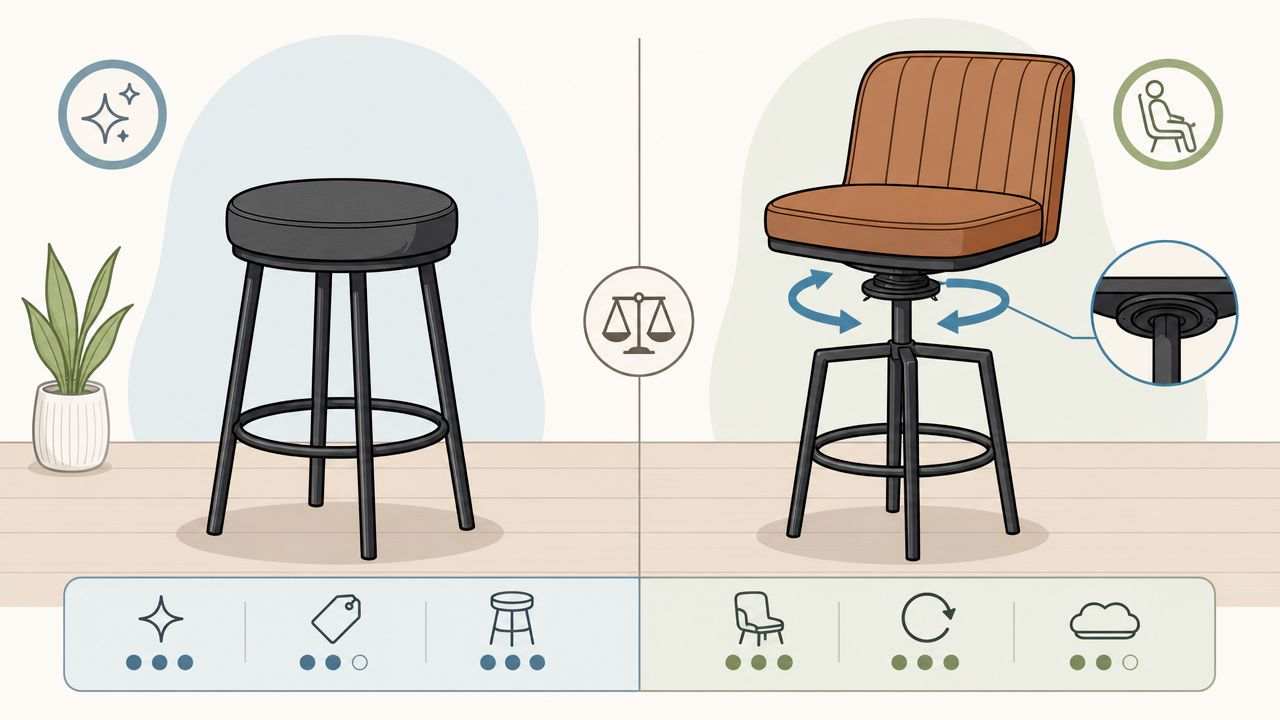
Backless, backed, and swivel compared
A quick side-by-side view helps:
| Feature | Often works well for | Tradeoff to keep in mind |
|---|---|---|
| Backless stool | Smaller kitchens, clean sightlines, easy tuck-under storage | Less support for longer sitting |
| Stool with back | Lingering over meals, conversation, work, and homework | Takes up more visual and physical space |
| Swivel stool | Social kitchens, easy turning, relaxed movement | Needs more side clearance |
| Fixed stool | Simple footprint, straightforward sit-down feel | Less flexible when turning |
Backless stools usually make sense when space is tight or the kitchen needs an uncluttered look. They're especially handy where the stools need to disappear under the overhang when not in use.
Stools with backs suit households that treat the island like a second dining table. If people sit there for more than a quick snack, the added support often makes a noticeable difference.
Small details that change daily use
Swivel is one of those features that sounds optional until someone uses it. It can make getting in and out easier because the sitter doesn't have to drag the whole stool backward. Homes that host often tend to like swivel seating for the same reason. People can turn toward the kitchen, the dining room, or the conversation.
At the same time, not every home needs it. Fixed stools can feel steadier in some situations and often look a little cleaner.
A few other details deserve attention:
- Footrests: They help the body settle into the seat more comfortably.
- Arms: They can add support, but they also require more room.
- Seat shape: A flatter seat may suit quick sitting, while a sculpted or cushioned seat often feels better for longer stretches.
For shoppers narrowing down motion features, swivel seating options can help show how different designs change both look and function.
Choosing Materials That Match Your Style and Life
Material changes more than appearance. It affects maintenance, feel, noise, aging, and long-term value.
That's why this part of how to choose bar stools deserves more thought than many people give it. A stool might look sharp on day one, but the better question is how it will look and feel after years of daily family use.
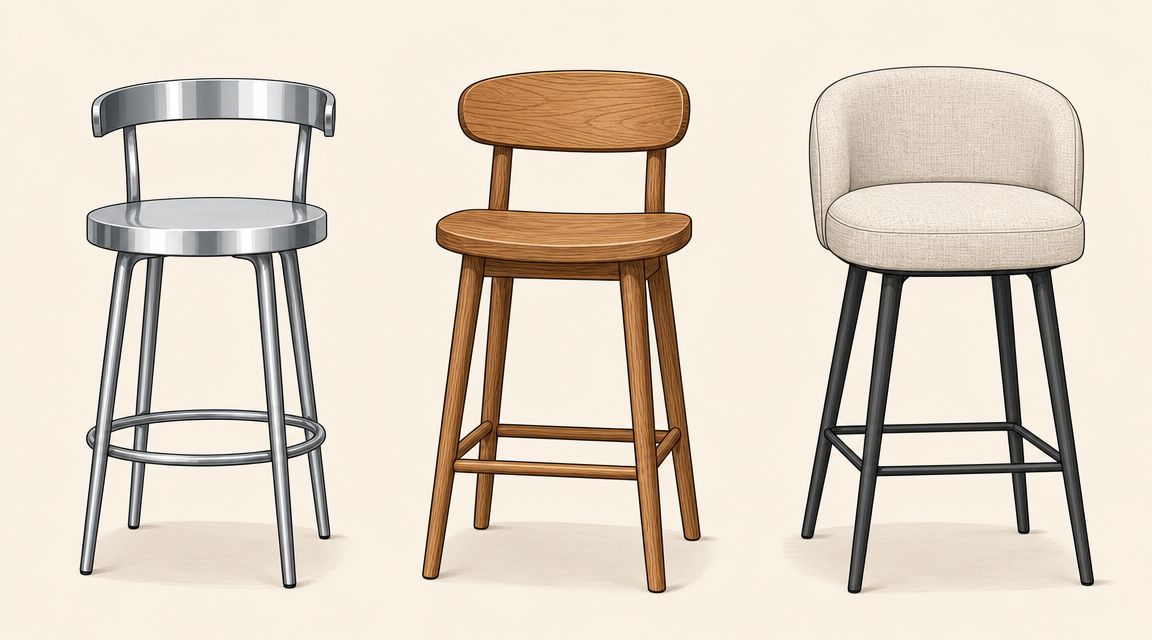
How common stool materials behave
Metal stools often bring a crisp, casual, or industrial look. They can work nicely in modern kitchens and usually keep a lean visual profile. Some families like that they feel light and simple. Others find them a little colder in appearance or less warm in a family-centered kitchen.
Upholstered stools add softness. They can make an island feel more finished and more inviting for long sitting. The tradeoff is maintenance. In a home with frequent snacks, spills, or young kids, fabric choice matters a lot.
Wood has a different personality altogether. It feels grounded, familiar, and timeless. It also works with a broad range of design styles, from farmhouse to transitional to classic.
Good furniture earns its keep when it still feels right after the room changes around it. That's one reason wood stays relevant for so long.
Why solid wood earns long-term value
In a family furniture business that's been serving Metro Milwaukee since 1928, solid wood keeps proving its value. It has visual warmth, repair potential, and a substance that many lighter materials just don't match. That's especially true when the stool is made with care and built for years of use rather than quick turnover.
American-made and Amish-made solid wood stools deserve a close look for that reason. Craftsmanship shows up in the details people touch every day. The smoothness of the finish, the steadiness of the frame, the way joints feel firm instead of wobbly, and the overall heft of the piece all tell a story.
Shoppers who want durable seating with customization options often look at wood species, finish color, seat shape, and whether the stool has a plain seat or upholstered top. BILTRITE Furniture-Leather-Mattresses carries USA-made and Amish-made furniture with a strong emphasis on real solid wood, which gives local shoppers a way to compare these details in person rather than guessing from a screen.
For many homes, that's the sweet spot. A stool can still reflect personal style, but it also brings long-term value and the kind of craftsmanship families notice over time.
Ensuring Comfort and Long-Lasting Durability
Saturday morning often tells the truth about a bar stool. One person lingers over coffee, a child climbs up for cereal, someone else pulls up a seat to pay bills or help with homework. If the stool is hard, shaky, or awkward to get in and out of, the family notices fast. The right stool feels easy to use and keeps feeling that way year after year.
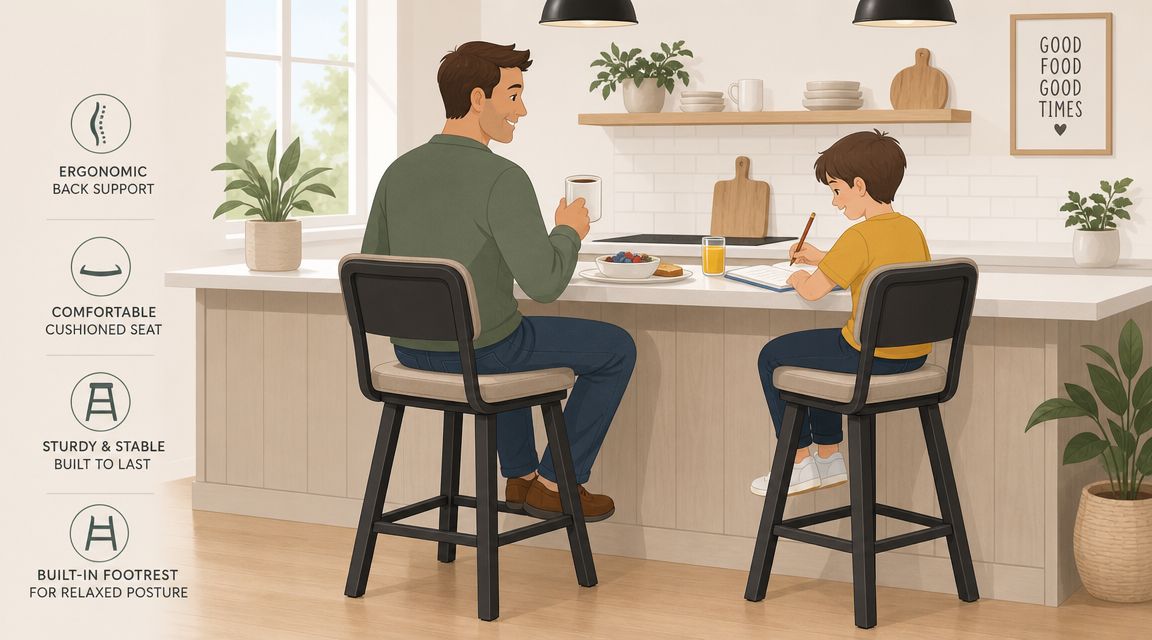
Comfort starts with support, not just softness. A cushioned seat can still feel tiring if the footrest hits the wrong spot or the back does not support a natural sitting position. A well-made stool works like a good pair of shoes. You notice the comfort while using it, not because it calls attention to itself.
What to test when sitting down
A quick sit rarely tells the full story. Stay seated for a few minutes and pay attention to how your body settles.
Try this simple comfort check in the showroom:
- Sit long enough to relax. A stool for daily meals or conversation should feel good after several minutes, not just the first ten seconds.
- Place both feet on the footrest. Knees and ankles should feel natural, not tucked too high or left hanging.
- Lean back, shift, and turn a little. The stool should feel steady through normal movement.
- Get on and off more than once. That shows whether the seat height, footrest placement, and overall balance make everyday use easy.
For a helpful way to judge whether a piece is built for the long haul, this guide to how long furniture should last explains what to look for in construction and long-term value.
Durability shows up in daily use
A stool does not have to look bulky to be strong. What matters is how it is built. Joinery, frame stability, and the feel of the stool under normal movement matter more than a stylish silhouette alone.
That is especially true in busy kitchens where stools are pulled out, turned, climbed on, and used several times a day. Over time, weak joints loosen, thin parts flex, and light construction starts to wobble. Better-built stools hold their shape and keep feeling secure.
A few signs point to stronger long-term value:
- Steady construction: The stool should stay planted without rocking during normal use.
- A footrest that feels solid: This area gets constant pressure and should not feel flimsy.
- Smooth, durable finishes: Hands, shoes, and pant legs rub these surfaces every day.
- Comfortable proportions: A strong stool should still feel inviting, not oversized or stiff.
- Materials that can age well: Solid wood often stands out here because it can be maintained and enjoyed for many years.
For families who want seating that lasts, this is often where American-made and Amish-made solid wood stools shine. Good craftsmanship is not just about appearance. It shows up in the way the stool feels on day one and how well it holds up after years of breakfasts, conversations, and ordinary family life. Buying from a local, family-owned furniture store also gives you a chance to test that difference in person instead of guessing from a photo.
Why Buying Local Makes All the Difference
Furniture is one of those purchases that still benefits from being personal. Photos can show the outline of a stool, but they can't show how the seat feels after several minutes or how the finish looks under real light.
That's one reason many families still prefer to shop locally for pieces they'll use every day. Sitting in the stool settles questions quickly. The wood tone makes more sense in person. The height feels obvious. The back support either works or it doesn't.
Seeing and sitting changes the decision
This matters even more with bar stools because small differences change the experience. One seat may feel supportive. Another may hit at the wrong spot in the back. One finish may warm up the whole kitchen. Another may feel too cool once it's next to the existing cabinetry.
That hands-on comparison is especially valuable for shoppers looking at USA-made furniture from a local showroom. American-made and Amish-made pieces often reveal their quality most clearly in person through wood character, finish depth, and overall construction.
The right stool usually becomes obvious once someone sits in a few options side by side.
Local guidance helps avoid expensive mistakes
A family-owned showroom brings another advantage. Questions get answered by people who spend their days helping neighbors sort through size, style, wood choices, and daily-use needs. In Greenfield and across Metro Milwaukee, that kind of guidance still matters.
BILTRITE has been family-owned since 1928, and that long history shapes the way help is given. The store doesn't sell online, which keeps the focus on in-person guidance, real material comparisons, and helping shoppers choose furniture that fits their homes and routines. The showroom is also closed on Sundays and Mondays to support family time, which says a lot about the values behind the business.
For households that want affordable, better-quality seating with a strong selection of solid wood, American-made, and Amish-made options, buying local often leads to a better decision and a stool that earns its place in the kitchen for years.
Ready to narrow down the right stools for the kitchen, island, or home bar? BILTRITE Furniture-Leather-Mattresses welcomes shoppers to visit the Greenfield showroom, sit in different styles, compare wood finishes in person, and talk with a team that brings generations of furniture knowledge to the process.