Bench Seating Buying Guide for Real Homes


You're standing in the showroom with a tape measure in one hand and a phone full of kitchen photos in the other, trying to answer a simple question that never stays simple for long. Is this bench for the front door, the dining table, the mudroom, or the foot of the bed? That answer matters, because bench seating can either make a room easier to live in or turn into one more piece of furniture everybody sidesteps.
Bench seating is one of those old ideas that keeps proving itself. It has been used for centuries, from Roman and medieval halls to churches, offices, and family homes, because it solves real problems: more seats, a cleaner line in a tight room, and a place to drop bags, shoes, or a stack of mail. When a homeowner knows what job the bench has to do, shopping gets a whole lot easier.
What Bench Seating Really Means for Your Home
A family walks into the store thinking they want “a bench,” but the room already tells a different story. The entryway needs a place to sit while shoes come off. The dining nook needs one more seat without crowding the table. The bedroom needs a landing spot at the foot of the bed that doesn't feel bulky.

That's the definition of bench seating, it's a problem-solver first and a style choice second. Britannica's history of benches makes the point plain, since benches have long served communal life in homes, churches, and even government chambers, while chairs were once the luxury item in many settings. The same logic still applies now, if a room needs shared seating, a narrow profile, or a place that can handle more than one job, a bench is often the right answer. Britannica's bench furniture history
Start with the room, not the look
A homeowner doesn't need to memorize furniture vocabulary. The better move is to match the bench to the room's daily traffic.
A dining bench belongs where people eat. An entryway bench belongs where shoes, coats, and backpacks collect. A bedroom bench belongs where the bed needs a visual anchor and an easy place to sit down. A mudroom bench belongs where wet boots and winter gear make a mess.
The right bench is the one that solves a habit in the house, not the one that just photographs well.
That mindset saves time on the floor. It also keeps buyers from choosing a beautiful piece that feels wrong the minute it gets home. Bench seating should earn its spot by making the room easier to use every day.
The Main Types of Benches Worth Knowing
A homeowner who knows the categories shops smarter. That's the difference between walking past everything and stopping at the right piece the first time.
Bench Types at a Glance
| Bench Type | Best Room | Typical Length | Household It Fits |
|---|---|---|---|
| Dining bench | Kitchen or dining room | Short to medium, often sized to the table run | Families, entertainers, apartment dwellers |
| Entryway bench | Front hall or foyer | Compact to medium | Busy households, kids, pet owners |
| Mudroom bench | Mudroom or side entry | Compact to medium | Active families, outdoor-heavy homes |
| Bedroom end-of-bed bench | Bedroom | Medium to long | Couples, guest rooms, dress-up spaces |
| Storage bench | Entryway, bedroom, mudroom | Varies by wall space | Small homes, clutter-prone households |
| Backless hall bench | Hallway or tight transition space | Narrow and linear | Small-scale homes, senior-friendly layouts |
| Backed settee | Living room, bedroom, reading nook | Medium to long | Homeowners who want a more lounge-like seat |
| Outdoor bench | Porch, patio, garden path | Varies by space | Homes with outdoor living areas |
| Convertible bench-and-table combo | Apartment, breakfast nook, compact kitchen | Small to medium | Downsizers, renters, small homes |
A dining bench is the cleanest way to squeeze extra seating along one side of a table. A storage bench earns its keep when the house has nowhere else to hide shoes, throws, or seasonal gear. A backed settee feels more like a small sofa and belongs where people linger, while a backless hall bench is the no-nonsense choice when the space has to stay open.
For shoppers who need a taller counter-height option, BILTRITE's bench seating guide includes a dedicated bar-height bench page. That's useful for breakfast nooks and pub-style setups where standard bench height won't match the table.
Practical rule: if the bench is for eating, standing up, or coming and going, keep it simple. If it's for lounging, you can lean softer and deeper.
The room decides the type. The household decides how hard the bench has to work.
Bench Dimensions That Matter
Specs only matter when they change how the body feels. A bench can look right on paper and still sit wrong in the room if the seat is too low, too deep, or too long for the way your household uses it.
Seat height and depth are comfort decisions
Adult bench seating usually lands around 18 to 19 inches high and 15 to 20 inches deep, because that range makes standing up easier and gives enough thigh support for sitting. Outdoor and public-bench guidance falls in roughly the same range, with accessibility references commonly placing seats around 470 to 480 mm, or 18.5 to 18.9 inches, and some standards allowing 17 to 19 inches for accessible seating. Bench sizing guidance Public seating accessibility guidance
A dining bench usually works best at about 16 to 18 inches deep so people sit upright at the table instead of sinking back. That keeps elbows, plates, and posture from bumping into each other. Standard bench dimensions
Seats that feel plush in the showroom can feel wrong at the table if they're too deep. Upright eating needs less lounge room and more control.
The fixes that matter most
A family with little kids usually wants a bench that does not feel like a climb. Older adults and anyone with knee or hip trouble need a seat that is easier to rise from, which is why the rise-assist question matters so much. Backless benches can work in hallways and dining areas, but a deeper seat or a backward slope can make standing harder than it looks at first glance.
For measuring around the house, BILTRITE's furniture measuring guide is the sensible place to start before anyone falls in love with the wrong size. Measure the wall, the walking path, and the table or doorway around it.
Here's the simple translation:
- Dining room use: choose a bench that matches the table edge and does not push diners too far back.
- Entryway use: keep the depth modest so shoes can still move through the path.
- Bedroom use: allow enough length to look intentional at the foot of the bed, not squeezed in.
- Mobility-sensitive use: favor a higher, steadier seat that is easier to stand from.
The right dimensions do not just fit the room. They fit the people who live there.
Materials and Build Quality Worth Paying For
A bench gets judged twice, once when it arrives, and again after a year of boots, backpacks, pets, and hard landings. That's why build quality matters more than a cute profile.
What lasts in a real home
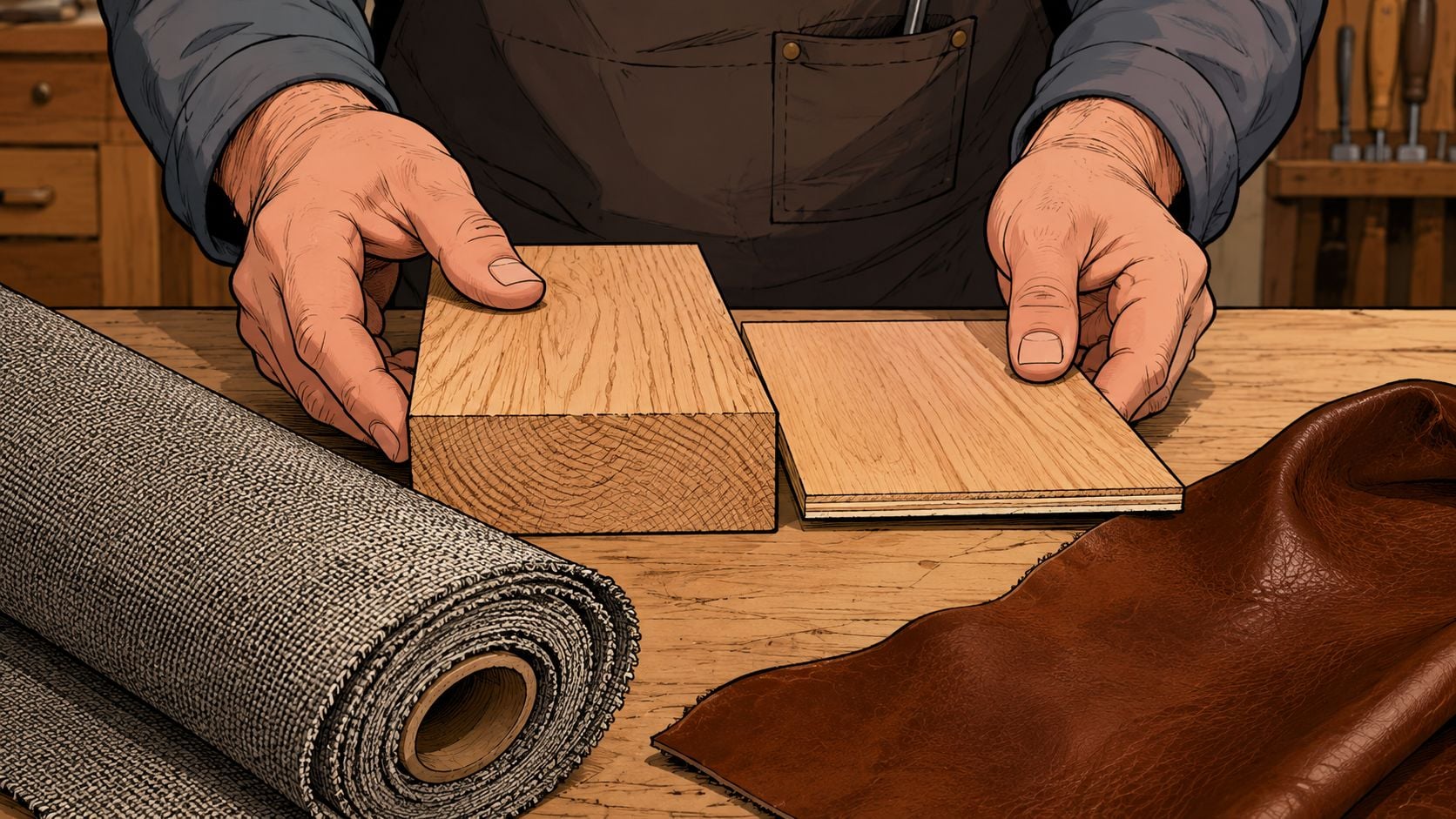
Solid wood is the first thing to ask for in a heavy-use bench. It stands up better in entryways and dining rooms than flimsy construction, and it carries that sturdy, heirloom feel people want in a home they plan to keep. BILTRITE's solid wood guide lays out why that matters for long-term value and day-to-day durability. Benefits of solid wood furniture
Upholstered benches make sense when the room needs softness, but the fabric choice has to match the household. A mudroom bench that catches wet coats needs different fabric than a bedroom bench that mostly gets used as a place to sit while tying shoes. Leather and performance fabric are the practical choices when cleanup matters.
Metal or wrought-iron frames fit some homes well, especially when the bench needs a lighter visual footprint or a more open look. They can be sturdy, but the buyer still has to look at the seat construction, because a strong frame doesn't fix a weak top.
Ask the store team these questions
BILTRITE's showroom carries USA-made, Amish-made, small-scale, and heavy-duty options, so the better question is not “Do you have benches?” It's “Which build matches the job?” That's the difference between a piece that merely fills space and one that handles daily use without drama.
- For entryways and mudrooms: choose real wood, clean joinery, and finishes that can take abuse.
- For dining: look for a seat that's comfortable enough to use often but firm enough to keep posture upright.
- For bedrooms: an upholstered top can be worth it if the bench is mostly for sitting and dressing.
- For senior-friendly spaces: support and rise ease matter more than deep cushioning.
If the bench has to survive dirty shoes, backpacks, and daily sitting, prioritize structure before style.
That's the simple rule. Pretty is nice. Stable is what keeps a bench in the house.
Why Customization Solves Most Bench Problems
Stock benches fail for the same reason a one-size-fits-all shirt does, the dimensions are close, but not close enough. A bench that's two inches too long, a shade too dark, or covered in a fabric that stains easily can throw off the whole room.
The fixes that actually matter
Custom order work gives a homeowner control over the part that usually causes regret. A specific length solves a narrow dining nook. A matching finish ties the bench to the table instead of making the room look patched together. A tougher fabric or leather choice keeps the bench usable in a house where spills and sticky hands are part of life.
BILTRITE's custom order process lets buyers choose the practical details that matter most, including fabric, leather, wood, finish, and hardware. That's the right place to solve real headaches, like a storage bench lid that needs sturdier hardware, or a wood tone that should blend with existing furniture instead of fighting it. Getting started with custom order
Pick the option that matches the routine
A family with young kids should lean toward surfaces that wipe clean and construction that won't wobble after repeated use. A couple furnishing a quieter dining nook can put more weight on finish matching and proportion. A homeowner choosing a bench for a guest room can favor comfort and appearance, because the daily wear is lighter.
BILTRITE also carries Amish-made and USA-made pieces, which matters when the buyer wants craftsmanship that feels intentional rather than disposable. That's especially useful for benches built to stay in the family room, the entryway, or the dining space for years.
A few smart custom questions usually save more regret than any sales pitch:
- Length: Will the bench fit the wall and still leave walking room?
- Finish: Does it need to match a table, floor, or nearby cabinet?
- Fabric or leather: Will the seat see spills, pets, or heavy daily use?
- Hardware: Does a storage top need smooth operation and reliable support?
The best custom bench is the one that makes a room easier to live in without looking like it was forced into place.
Placing and Styling Benches Around Your Home
Placement is where good bench seating either disappears into the room in the best way or turns into an obstacle. The rules are simple, but they're easy to ignore when a piece looks beautiful on the floor.
Let the room breathe
A bench needs clearance around it, and the safest habit is to leave space beyond the footprint so the room doesn't feel jammed. That's especially important in narrow passages and hallways, where a bench can help or hurt depending on how much room remains for traffic. BILTRITE's furniture for narrow hallways guide is the kind of practical reference that helps keep a pretty piece from becoming a tripping point.
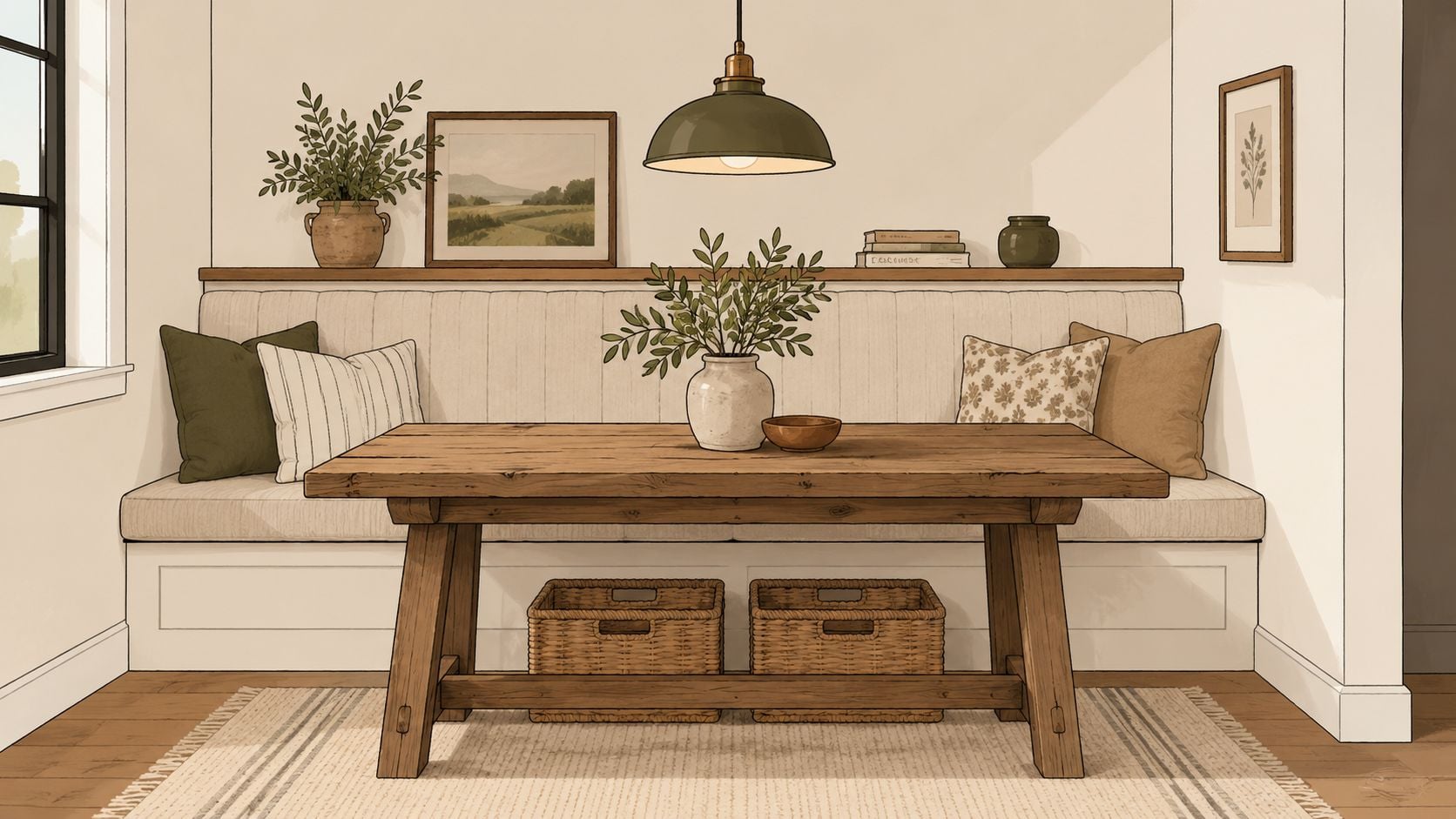
In an entryway, a bench works best with baskets underneath, hooks above, and a clear path in front. In a dining nook, it should tuck close to the table and still leave the room feeling open. In a bedroom, the bench belongs at the foot of the bed, where it can hold a throw or a pair of slippers without blocking drawers.
Style follows use
A backless bench is a strong choice where the space needs to stay visually light. A backed settee makes more sense where someone wants to sit and linger. A mudroom bench needs durability first, because wet boots and winter coats don't care about a styling plan.
A few placement habits keep the room honest:
- Keep the seat height in line with nearby chairs: that helps the bench look intentional, not awkward.
- Avoid bulky legs in tight traffic zones: little feet and carrying bags need room to move.
- Don't block the doorway: a bench should support movement, not fight it.
- Use the wall wisely: a bench under a window or along a blank run of wall usually works better than one floating in the middle of a tight room.
The prettiest bench in the store still loses if people keep bumping it on the way through.
That's why custom size and finish choices matter so much. A bench that fits the room and the routine is the one that gets used every day.
Bench Seating Questions Buyers Ask Us Most
Can a bench replace dining chairs entirely? Yes, if the table size, seat height, and household habits line up. A bench works especially well on one side of a table, while chairs handle the other side and the ends.
How should a hallway or entryway bench be measured? Measure the wall span, the depth available without blocking traffic, and the height needed for comfortable sitting. A narrow hall usually calls for a simpler, cleaner profile, not a deep piece that crowds the path.
What if the doorway is too narrow for the bench someone loves? That's where delivery know-how matters, because some furniture has to come apart to get through tight spots. BILTRITE already handles come-apart sofas and sectionals for tricky deliveries, and that same mindset helps when a bench or other piece needs special planning for an awkward route.
How does a household know whether it needs a heavy-duty build? Look at who uses the bench and how often. A family entryway, a busy mudroom, or a dining seat that gets hit every day usually deserves stronger construction than a guest-room bench.
What about the bedroom end-of-bed bench? That one can lean softer and more decorative, as long as the scale doesn't overpower the room. It should feel like a useful landing spot, not another bed.
A good showroom conversation makes these answers easier. The right bench in a mudroom won't always be the right bench in a breakfast nook, and that's exactly why the room matters first.
Your Next Step for Choosing the Right Bench
Measure the room, choose the bench type that matches the job, and decide where comfort can bend and where it can't. Then sort out the build, the finish, and any custom details that keep the piece useful after the first week. That's the whole game.
BILTRITE Furniture-Leather-Mattresses carries USA-made, Amish-made, small-scale, and heavy-duty furniture, so there's a real bench to match the way a house gets used. Visit BILTRITE Furniture-Leather-Mattresses in Greenfield and sit on a few benches in person, because seat height, depth, and build make a lot more sense after a real test drive.