Solid Wood Furniture Seattle: Expert Buyer’s Guide


A Seattle shopper often starts in the same place. A dining table looks good in the showroom, the finish looks smooth, and the price feels manageable. Then a year later, a corner chips, a drawer starts sticking, or the top shows every bit of daily wear. That's when “solid wood” suddenly matters a lot more than it did on shopping day.
That's where old furniture-store habits still help. The family behind BILTRITE has been helping people sort good furniture from short-term furniture since 1928 in Metro Milwaukee. Even though Seattle is a long way from Greenfield, the questions that matter are the same. What is this piece made of? How was it built? Will it hold up in real life, not just under showroom lights?
For shoppers searching for solid wood furniture Seattle advice, the biggest need usually isn't style inspiration. It's practical guidance. They want furniture that feels honest, lasts, and can handle daily living without becoming disposable.
Table of Contents
- A Friendly Guide to Finding Great Furniture in Seattle
- What Solid Wood Furniture Really Means and What It Is Not
- How to Spot Quality Craftsmanship in Minutes
- Choosing Woods and Finishes for the Pacific Northwest
- Our Family's Top Questions to Ask Any Furniture Seller
- Finding Your Forever Furniture with Amish and USA Makers
- Bringing It Home A Friendly Invitation from Our Family
A Friendly Guide to Finding Great Furniture in Seattle
A lot of Seattle homes ask a lot from furniture. Condos need smart scale. Busy family homes need durability. Older houses need pieces that don't feel flimsy next to real trim, old floors, and solid doors. That's why furniture shopping there can get frustrating fast. Shoppers aren't just buying a look. They're trying to buy fewer replacements.

That frustration isn't unusual. In North America, the solid wood segment held 42.3% of the wooden furniture market in 2024, making it the largest material category, driven by demand for durability, repairability, and premium craftsmanship, according to North America wooden furniture market data. That lines up with what long-time furniture families have seen for generations. People get tired of furniture that looks decent on day one but gives up too early.
Why long-view advice still helps
A fourth-generation furniture family tends to notice the same patterns over and over. Shoppers often focus first on color, size, or sale price. Then, after living with a piece, they start caring about joinery, drawer construction, wood thickness, and whether a scratch can be repaired.
Practical rule: The right piece should still make sense after years of meals, moves, spills, and everyday bumps.
That's why solid wood deserves a closer look before anyone falls in love with a finish sample. Families who want furniture with a longer life usually benefit from learning the difference between real wood and look-alike materials. A helpful starting point is this guide on the benefits of solid wood furniture.
What Seattle shoppers often want
Customers searching for solid wood furniture in Seattle aren't asking for anything fancy. They usually want a short list of very practical things:
- A table that can age well: Not one that's ruined by the first deep scratch.
- Storage that stays useful: Drawers should open smoothly and keep doing that.
- A frame with staying power: Beds, chairs, and case pieces need structure, not just style.
- Materials that feel honest: Buyers want to know what they're paying for.
That kind of shopping gets easier once “solid wood” stops sounding like a buzzword and starts meaning something concrete.
What Solid Wood Furniture Really Means and What It Is Not
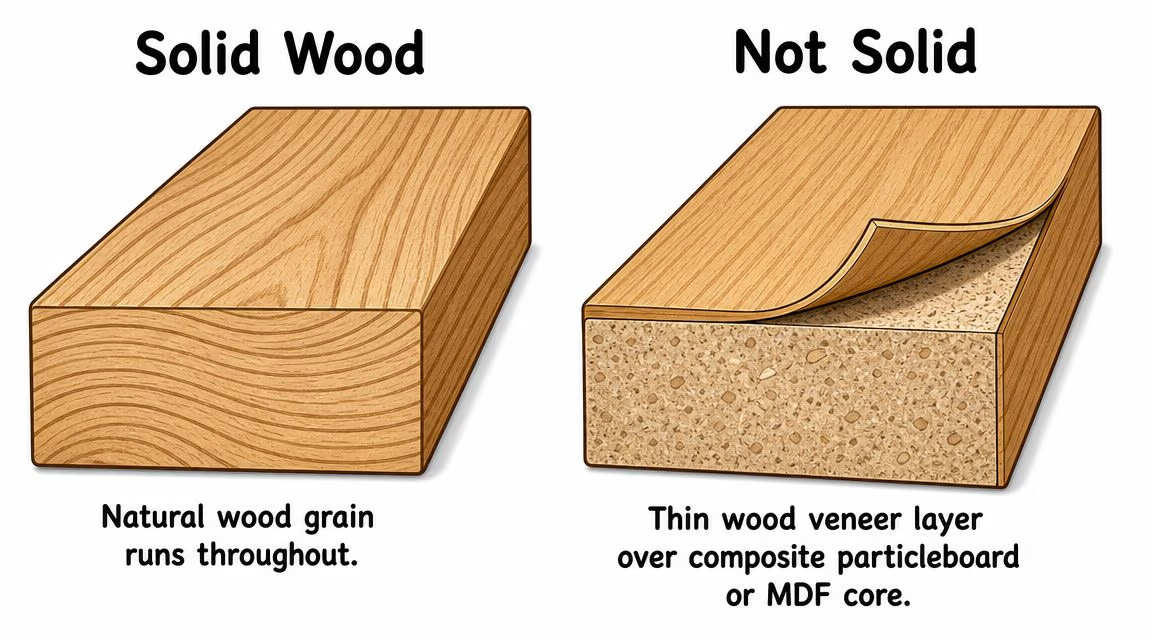
The simplest way to understand solid wood is this. If the working parts of the furniture are cut from real lumber, that's solid wood. If the piece depends mainly on particleboard, composite core, or other engineered substrate under a thin wood-looking surface, that's something else.
A grocery-store analogy helps. A real apple and an apple-flavored candy may share a name, but they don't behave the same way. One has natural structure all the way through. The other gives the impression of the thing without being the thing itself. Furniture works the same way.
What makes solid wood different
Solid wood furniture is structurally distinct because its components are real lumber, not particleboard. That means it can be sanded, refinished, and repaired over generations, extending its life and making it better suited for high-wear use, especially where joints and surfaces see repeated stress, as explained in this overview of furniture fundamentals and wood construction.
For a shopper, that difference shows up in everyday ownership.
- Scratches are less final: A real wood top often has repair options.
- Edges hold up better: Thin surface layers can fail at corners first.
- Aging can be attractive: Wear on solid wood often looks like character instead of damage.
What solid wood is not
A lot of furniture uses wood language loosely. “Wood finish,” “wood look,” and “wood veneer” can sound reassuring, but they don't all describe the same construction.
Here's a plain-language breakdown:
- Solid wood: Real lumber throughout the key structural parts.
- Veneer: A thin slice of real wood over another core material.
- Particleboard or similar composite: Manufactured panel material made from wood particles and binders.
- MDF and related panels: Dense engineered sheet goods that can look smooth but don't behave like lumber.
That doesn't mean every non-solid component is automatically bad. Some well-made furniture uses a mix of materials thoughtfully. But if a shopper expects long-term repairability, heavy daily use, and the kind of ownership that spans many years, construction matters more than labels.
A finish can make many pieces look similar from six feet away. Construction tells the truth when the piece gets used.
A good companion read for shoppers comparing materials is this explanation of solid wood vs engineered wood.
Why this matters in real homes
Practical considerations often bring clarity. Buyers don't need a woodworking degree; they just need to know what they're bringing home. A child dragging a backpack past a dining chair leg, a dog brushing a table base, or years of opening the same drawer will test a piece far more realistically than a showroom ever will.
That's why many furniture families still champion genuine wood. Not because it sounds romantic, but because it gives owners more ways to live with a piece, maintain it, and keep it in the home longer.
How to Spot Quality Craftsmanship in Minutes
Some furniture tells the truth as soon as a shopper touches it. A drawer glides with confidence or it doesn't. A chair stays planted or it wiggles. A table underside looks finished and deliberate or it looks like nobody expected anyone to check.
Global buyer preferences also point toward the kind of furniture that rewards close inspection. The solid wood furniture market is projected to be worth US$6.03 billion in 2026 and to reach US$8.36 billion by 2035, a projected 4.8% CAGR, and the same report says more than 55% of buyers prefer customizable designs while over 60% lean toward minimalist and Scandinavian styles, according to global solid wood furniture market projections and buyer preferences. Those styles don't hide poor construction very well. Clean lines put build quality out in the open.
Start with the parts that move
A fast quality check starts with drawers, doors, leaves, and chair joints.
- Open the drawer fully: It should feel steady, not loose or scratchy.
- Hold a chair by the top rail: A sturdy chair shouldn't feel like it wants to twist.
- Press lightly on the table: There shouldn't be a sway or wobble.
- Check extension pieces: On expandable tables, the mechanism should feel controlled, not flimsy.
One of the most revealing details is the joinery. Strong furniture often uses methods that lock wood parts together with intention. This guide to the mortise and tenon joint shows one of the classic construction details shoppers may hear mentioned in a showroom.
Look for structure, not showroom sparkle
Finishes can distract people. Lighting can too. That's why experienced shoppers look where the styling fades and the workmanship remains.
A useful checklist:
- Turn attention to the back: Finished wood or sturdy paneling usually tells a better story than a flimsy back.
- Look underneath: Corner blocking, thicker rails, and clean assembly matter.
- Study the edges: Crisp, durable edges usually signal better materials.
- Check alignment: Doors and drawer faces should sit evenly.
If a piece only looks convincing from the front, it probably wasn't built for a long life.
Minimal furniture can fool buyers because it looks simple. In reality, simple design leaves fewer places to hide shortcuts. Clean-lined furniture needs better proportions, stable construction, and careful wood selection or it starts to show problems quickly.
Common Hardwoods at a Glance
| Wood Type | Hardness & Durability | Grain & Color | Best For |
|---|---|---|---|
| Oak | Generally sturdy and dependable for everyday use | Visible grain, often warm and classic-looking | Dining tables, chairs, bedroom pieces |
| Maple | Dense feel, often chosen for hard-wearing surfaces | Smoother, subtler grain, lighter appearance | Dressers, tables, work surfaces |
| Cherry | Durable with a refined feel | Richer tone that deepens with age | Bedroom furniture, dining, accent pieces |
This table won't replace a hands-on inspection, but it helps shoppers ask smarter questions. A wood species choice should match how the piece will live, not just how it looks under store lighting.
Choosing Woods and Finishes for the Pacific Northwest
Seattle buyers have one extra factor to think about. Wood responds to moisture. It isn't plastic, and it isn't stone. It moves a little as conditions change. That's normal. Trouble starts when buyers don't know that movement exists, or when a piece wasn't built to handle it well.

Why Seattle buyers need different advice
One of the more overlooked parts of shopping for solid wood furniture in Seattle is climate fit. Guidance focused only on style misses what many Pacific Northwest homes demand. Buyers need to think about seasonal moisture changes, indoor humidity, acclimation time, and whether the construction allows the wood to do what natural wood always does, which is expand and contract.
That's also why broad claims like “solid wood lasts longer” don't go far enough. In a wetter climate, a good piece needs more than a nice species name. It needs thoughtful joinery, properly prepared lumber, and a finish suited to daily life. A practical overview of species considerations appears in this guide to choosing the right hardwood for longevity and style.
Wood movement isn't a defect. Poor planning for wood movement is the defect.
Woods and finishes worth asking about
Some hardwoods earn repeat attention because they balance beauty with everyday resilience. Oak, maple, and cherry are familiar examples shoppers often encounter. The bigger point isn't memorizing a ranking. It's asking how the chosen species fits the job.
For Seattle-area homes, buyers usually benefit from asking about these factors:
- Species stability: Some woods are chosen because they behave more predictably in home conditions.
- Kiln drying: Proper drying helps prepare lumber for furniture use.
- Joinery that allows movement: A well-built solid wood top should have room to move naturally.
- Finish type: Surface protection affects both appearance and maintenance.
Finishes deserve more attention than they usually get. A tough finish can help with daily abrasion, spills, and routine cleaning. Some finishes create more of a sealed surface. Others feel more natural but may require a different care routine. Neither category is automatically right for every household.
A family with young kids may want a finish that handles constant wipe-downs without fuss. A design-focused buyer may be willing to do a little more upkeep for a lower-sheen, furniture-grade look. The key is matching finish expectations to real behavior in the home.
A simple climate checklist
A Seattle shopper doesn't need to become a wood technologist. These questions usually do the job:
- Was the wood properly dried for furniture use?
- How is the top attached, and can it move naturally?
- What finish is on this piece, and how should it be cleaned?
- Should the piece acclimate indoors before heavy use?
Those questions tend to separate decorative furniture from furniture meant to stay useful for a long time.
Our Family's Top Questions to Ask Any Furniture Seller
Good questions change the whole shopping trip. Instead of reacting to tags and finishes, a shopper starts leading the conversation. That's often when the true quality level becomes much clearer.
Seattle buyers especially need that approach because wet-climate performance is often underexplained. Solid wood expands and contracts with humidity, so Pacific Northwest shoppers need guidance on species, joinery, and finishes for long-term stability, not just broad durability claims, as noted in this discussion of Seattle mission and shaker furniture considerations.
Questions that uncover the truth fast
These are the questions a seasoned furniture family would want answered before committing to a piece:
Where was this made?
Country, region, and workshop type can tell a shopper a lot about how the piece was built and what standards likely shaped it.What are the structural parts made from?
This gets past vague wording. Buyers want to know whether rails, legs, tops, drawer fronts, and frames are real lumber.How are the joints built?
A seller should be able to explain the joinery in plain language. If nobody can answer that, the piece may not have much of a story to tell.What finish is on it, and how is it cared for?
Buyers shouldn't leave with mystery maintenance.How will this handle Seattle-area humidity?
This is the question many people forget. It's also one of the most useful.
A shopper can even write these down in a phone note before visiting stores. That keeps the experience grounded when everything starts to look attractive under display lighting.
What strong answers usually sound like
A strong answer is usually specific, calm, and easy to follow. It doesn't dodge. It doesn't hide behind style words. It explains the materials, the construction, and the care routine without getting defensive.
A weak answer usually sounds vague. It leans on appearance. It talks around the question.
“How is this built?” is often more revealing than “How long will it last?”
That one shift matters because longevity depends on use, environment, and care. Construction, on the other hand, can be evaluated right there in the showroom.
Finding Your Forever Furniture with Amish and USA Makers
After a shopper learns how to inspect wood, joints, and finishes, the next question is where that kind of furniture tends to come from. Very often, it comes from smaller American makers who still build furniture with a cabinetmaker's mindset instead of a packaging mindset.
That's one reason Amish-made and USA-made furniture keeps earning such loyal attention. These shops often work with genuine hardwoods, time-tested joinery, and customizable options that let buyers choose size, wood species, finish, and hardware in a more intentional way.
Why small American workshops matter
Furniture from smaller American workshops often feels different because the priorities are different. The piece is usually expected to be lived with, maintained, and handed down, not replaced at the first sign of wear.
That approach fits what many Seattle shoppers want when they search for solid wood furniture. They're not only asking for rustic looks or traditional styling. Many want clean, modern, or transitional forms built with honest materials. That combination of design simplicity and material integrity is exactly where skilled Amish and USA makers often shine.
For readers who want a straightforward explanation of what sets this category apart, this overview of what Amish furniture is is useful.
Why seeing furniture in person still matters
High-quality wood furniture asks to be touched. The grain, weight, drawer action, finish sheen, and edge detail all make more sense in person than on a screen. That's especially true when a buyer is trying to judge whether a piece feels substantial or merely looks substantial.
This is also where a showroom with experienced staff can help. BILTRITE Furniture-Leather-Mattresses, for example, carries furniture with a strong focus on USA-made, Amish-made, and solid-wood construction in its Greenfield showroom. That matters for shoppers who want to compare wood species, finishes, and build details side by side rather than guessing from photos.
A careful furniture purchase usually slows people down in a good way. It asks them to sit, open, inspect, compare, and ask better questions. That's often how buyers end up with furniture they still enjoy long after the delivery truck leaves.
Bringing It Home A Friendly Invitation from Our Family
The heart of this topic is simple. A shopper looking for solid wood furniture in Seattle should focus less on labels and more on proof. Real lumber in the structural parts matters. Thoughtful joinery matters. Finish choice matters. In a damp climate, questions about wood movement and stability matter even more.
That kind of buying takes a little patience, but it usually saves frustration later. A good table, bed, dresser, or dining chair shouldn't feel disposable. It should feel settled into the home, ready for ordinary life.

Furniture families that have been at this for generations tend to trust the same habits. Check the underside. Open the drawers. Ask where it was made. Ask how it handles humidity. Ask what can be repaired. Those small steps can tell a buyer far more than a sales tag ever will.
There's also something reassuring about furniture built by people who still care how a joint fits, how a board is selected, and how a piece will age. That respect for craftsmanship travels well, whether a home is in Seattle, Milwaukee, or anywhere in between.
If travel ever brings someone to southeastern Wisconsin, the Greenfield showroom would be a warm stop. The store has served Metro Milwaukee since 1928, and it's still guided by family-first values. That includes being proudly closed on Sundays and Mondays for family time, which says a lot about how the business sees home life in the first place.
A shopper who wants to compare real wood furniture, Amish-made options, small-scale pieces, heavy-duty choices, or even explore a mattress department with over 60 models can learn more from BILTRITE Furniture-Leather-Mattresses. A visit to the Greenfield showroom gives people the chance to see construction details up close, ask questions, and get practical help from an experienced team without pressure.