3 DAY MATTRESS SALE! TUESDAY - WEDNESDAY - THURSDAY!
LABOR DAY SALE EXTENDED ENDS SATURDAY, OCTOBER 3RD AT 5PM!
NO CREDIT CARD FEES!
1000's of Items IN-STOCK + 500 Mattresses!
Largest selection of USA Made Furniture & Mattresses + Amish Made!
FREE In-Store Design Services!
BUY LOCAL & LOVE YOUR HOME!
3 DAY MATTRESS SALE! TUESDAY - WEDNESDAY - THURSDAY!
LABOR DAY SALE EXTENDED ENDS SATURDAY, OCTOBER 3RD AT 5PM!
NO CREDIT CARD FEES!
1000's of Items IN-STOCK + 500 Mattresses!
Largest selection of USA Made Furniture & Mattresses + Amish Made!
FREE In-Store Design Services!
BUY LOCAL & LOVE YOUR HOME!
OPEN LABOR DAY | Tuesday-Thursday 10am to 6pm | Friday 10am to 7pm | Saturday 10am to 5pm | Sunday Closed To Be With Family & Friends | Monday Showroom Closed
5430 West Layton Ave, Greenfield - Metro Milwaukee
Shopping for solid wood furniture in San Antonio often starts the same way. A shopper sees a beautiful dining table, runs a hand across the top, and hears the words “real wood” from a tag or salesperson. Then the questions start. Is the whole piece solid wood, or just the top? Will those drawers hold up after years of opening and closing? Is the higher price buying better construction, or just a nicer finish?
That confusion is normal. The furniture world uses plenty of overlapping terms, and some of them sound a lot more straightforward than they are. Families in Texas, Wisconsin, and just about everywhere else run into the same challenge. They want furniture that looks good now, holds up to daily life, and still feels like a smart buy years later.
If you're in the market for solid wood furniture in San Antonio, the smartest move is to shop with eyes open. A showroom visit should feel less like guesswork and more like checking a few reliable signs of quality.
“Solid wood” sounds straightforward, but its application isn't always clear. In furniture shopping, solid wood usually means a component is made from lumber rather than a manufactured core. That's very different from a veneer, which uses a thin layer of real wood over another material, and different again from engineered wood such as MDF or particleboard.
That distinction matters because one of the biggest gaps for shoppers in San Antonio is practical guidance on how to verify construction before buying. Local search results tend to lean heavily toward retailer listings and style claims instead of inspection advice on materials, joinery, and what to ask in-store, as noted by The Rustic Gallery's discussion of real wood furniture buying questions.
What to look at first
A good first check is the edge. On a solid wood top, the grain pattern and wood character usually continue naturally over the edge. On a veneered piece, the top may look convincing while the edge tells a different story.
Then open something. Drawers, doors, and removable leaves often reveal more than the front of the case ever will.
Check the edges: If an edge strip looks applied rather than continuous with the top, that's worth a second look.
Look underneath: The underside often reveals whether the piece is straightforward and honest or dressed up only where shoppers can see it.
Notice the back panel: Thin panels and lightweight backs can signal a mixed-material build.
Ask direct questions: Which parts are solid wood? Which parts are veneer? Which parts are engineered?
Practical rule: Don't ask, “Is this wood?” Ask, “Which parts are solid wood, and what are the other parts made from?”
What usually works and what usually disappoints
A mixed-material piece isn't automatically bad. Plenty of well-made furniture uses veneers appropriately for stability or design. The trouble starts when a shopper believes the entire piece is solid wood and pays for something else.
Another smart move is learning a few visual signs before stepping into the store. BILTRITE has a helpful guide on how to tell if furniture is real wood that walks through the kinds of clues shoppers can use in person.
What holds up best over time is honest labeling and construction that matches the way the piece will be used. What tends not to work is buying based only on color, distressing, or a tag that says “wood” without any specifics.
A Friendly Guide to Popular Wood Species
Once a shopper confirms a piece is solid wood where it counts, the next question is species. That part is worth paying attention to, because different woods don't just look different. They live differently in a home, too.
In broader market positioning, solid wood is estimated at about 60% of the wooden-furniture market versus 40% for engineered wood, and buyers are advised to verify species, joinery, and construction grade. Hardwood species such as oak, maple, cherry, walnut, and teak are commonly associated with longer service life, according to this overview of wood types and furniture durability.
The personality of common furniture woods
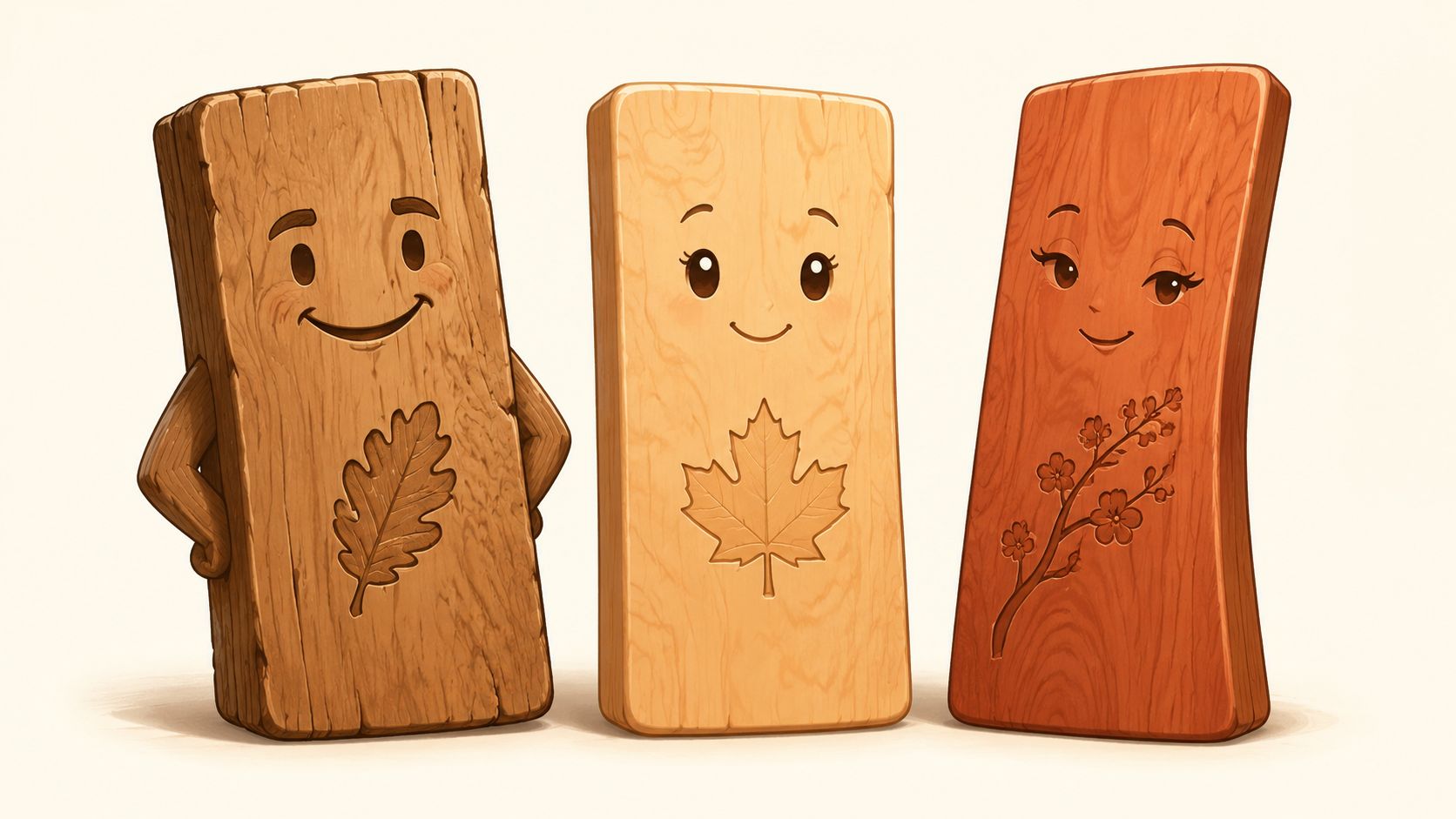
Oak has a steady, hardworking feel. It often shows visible grain, hides daily life fairly well, and suits homes where the dining table gets used for everything from homework to holiday meals.
Maple tends to look cleaner and a bit more refined. It fits well in simpler spaces and can bridge traditional and modern styles without much fuss.
Cherry usually brings warmth and a more refined look. It's often the wood that wins over shoppers who want furniture to gain character with age rather than just survive it.
Walnut has a richer, deeper presence. It can make a room feel grounded fast, especially on bedroom or office pieces.
A simple comparison helps:
Wood species
Typical feel in a room
Good fit for
Oak
Strong, classic, textured
Busy family spaces
Maple
Clean, smooth, versatile
Transitional and modern rooms
Cherry
Warm, elegant, traditional
Formal dining and heirloom looks
Walnut
Rich, deeper-toned, distinctive
Statement pieces and offices
Why craftsmanship matters as much as species
Good wood can still be wasted on weak construction. That's why seasoned shoppers look past the species name and ask how the piece is built. A drawer front in a beautiful hardwood doesn't mean much if the drawer box is flimsy.
That's also where American and Amish craftsmanship often stand out. Its true value isn't romance or nostalgia. It's consistency in joinery, fit, sanding, finish work, and the little details that don't announce themselves loudly in a showroom.
For shoppers comparing woods side by side, BILTRITE also has a useful read on what is the best wood for furniture. The answer usually isn't one single species. It's the wood that fits the room, the use, and the construction quality.
A beautiful species gets attention. A well-built piece earns trust.
The BILTRITE Family's In-Store Inspection Checklist
A showroom visit should include more than standing back and admiring the finish from six feet away. The strongest pieces invite inspection. In fact, they usually look better the closer a shopper gets.
This checklist is the kind of thing experienced furniture people do without thinking. For everyone else, it helps to slow down and inspect the piece the same way daily life will test it.
Start with the moving parts
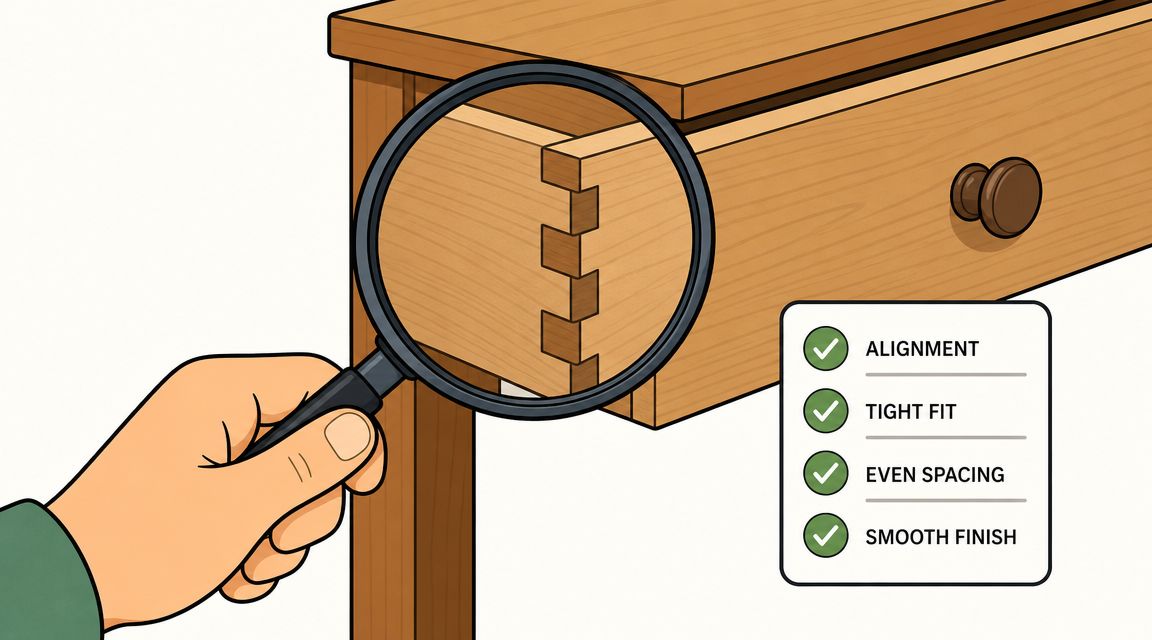
Drawers tell the truth fast. Open them all the way. Close them again. Check whether they rack, wobble, or drag. Then look at how the corners are joined.
Inspect drawer joinery: Dovetail joinery is a reassuring sign. Stapled or lightly pinned drawer boxes deserve a closer look.
Test the glide: Smooth travel matters, but so does stability. A drawer shouldn't feel loose just because it moves easily.
Check door alignment: Doors should sit evenly and close without rubbing.
Lift the leaf or extension: On tables, extensions should feel thought through, not like an afterthought.
Look where most shoppers don't
The back of the piece matters. The underside matters. The inside of the case matters. Those areas show whether the maker cut corners where a customer might not notice until later.
A strong inspection includes these questions:
What is the back made of? A solid panel or sturdy finished panel usually inspires more confidence than a thin, flimsy back.
Are the interior surfaces finished cleanly? Rough interiors can hint at rushed production.
Do the legs feel planted? Chairs and tables should sit firmly without rocking.
Is the hardware substantial? Lightweight pulls and weak attachment points can become nuisance repairs.
Furniture should be judged open, closed, upside down, and from the back. The front is only part of the story.
Pay attention to the finish and fit
A quality finish shouldn't feel gummy, rough, or uneven. Hands can catch what eyes miss. Run a hand along edges, corners, and high-touch spots like table aprons and drawer pulls.
Then step back and look at the whole piece again. Are the gaps even? Do the doors line up? Does the finish color stay consistent across tops, sides, and drawer fronts? Small inconsistencies happen in wood furniture, but sloppy fit should never be explained away as “character.”
Shoppers who want a fuller walkthrough can use BILTRITE's guide on how to buy quality furniture as a take-along reference before heading into local stores.
Planning Your Purchase for Your Home and Budget
Buying solid wood furniture without measuring first is one of the costliest avoidable mistakes in the business. The right piece can still become the wrong purchase if it overwhelms the room or won't make the turn through a hallway.
That's especially worth remembering with dining tables and desks. In North America, the solid wood segment held 42.3% of the wooden furniture market in 2024, making it the largest category, and tables accounted for 28.3% of the regional wooden furniture market the same year, according to North America wooden furniture market data. That says something important. Tables aren't a niche purchase. They're one of the most practical places to invest in lasting materials.
Measure the room and the route
Start with the obvious measurement: the wall or floor space where the piece will live. Then measure the route from the front door to that spot. Hallways, stair turns, elevator depth, and doorway width all matter.
A quick planning list helps:
Measure the destination: Include length, depth, and the space needed to walk around it comfortably.
Measure the path in: Entry doors and corners stop more deliveries than shoppers expect.
Account for chairs and movement: A dining table footprint isn't just the top. It's the pulled-out chair and the person using it.
Think about daily life: Desks, buffets, and bedroom cases need room for drawers and doors to open fully.
Budget for use, not just price tag
Solid wood usually asks for more upfront than lighter, short-term furniture. That doesn't make every expensive piece a smart buy, but it does mean the cheapest option often turns out to be the most replaceable.
An affordable, better-quality mindset proves helpful. Spend where the home gets the most wear. Dining tables, bed frames, dressers, and desks often earn that investment because families use them constantly.
You walk into a showroom, spot a dining table that looks right, and then the crucial question begins. Is the store going to help you evaluate the piece fairly, or just help you fall in love with the display?
That part matters as much as the furniture itself. A good local store gives straight answers about materials, construction, lead times, delivery, and service after the sale. In our family's business, that has always been the test. If a salesperson cannot clearly explain what you are buying, keep looking.
Signs a store is worth your time
Start by watching how the staff handles simple questions. Ask what parts are solid wood, what parts are veneer or plywood, where the piece is made, and what kind of finish is on it. Good stores answer in plain language. They do not hide behind broad labels like "all wood" or "heirloom quality."
A reliable showroom usually shows a few habits right away:
They welcome inspection: Opening drawers, checking the back, and looking underneath should feel normal.
They know the construction: Staff should be able to explain joinery, drawer glides, finish type, and wood species without guessing.
They explain the trade-offs: A store worth your time will tell you why one piece costs more, and where a lower-priced piece may use different materials or simpler construction.
They discuss delivery and service clearly: Ask what happens if a piece arrives with damage, needs adjustment, or develops a finish issue later.
They give care advice that matches the product: Stores that sell real wood every day should be able to point you toward practical maintenance, including guidance on how to clean wood furniture properly.
One more tip from the retail side. Look at the floor, not just the sales pitch. Stores that believe in what they sell usually let the furniture speak for itself.
Questions smart shoppers ask before buying
A strong local store does more than show attractive room settings. It helps you make fewer mistakes.
Ask questions like these:
What is solid wood on this piece, specifically?
What wood species is it made from?
Are the drawer boxes solid wood, plywood, or particle board?
How will this finish wear in a busy home?
Can I see another piece from the same maker?
What should I expect over the first year of use?
Those questions tell you a lot about the store. Helpful people answer calmly and specifically. Pressure usually shows up when details get thin.
What translates anywhere, including Milwaukee
Store quality is local, but good store habits travel. Whether someone is shopping in San Antonio, Milwaukee, or anywhere in between, the standards stay about the same. Look for a business with experienced staff, a clear point of view on construction, and enough pride to explain both strengths and limitations.
BILTRITE Furniture-Leather-Mattresses is one example of that family-store approach. We are a fourth-generation showroom in Greenfield serving Metro Milwaukee since 1928, and shoppers can use that same benchmark anywhere. Find a store that knows its merchandise, respects your budget, and treats questions like part of the job, not an obstacle to the sale.
A good furniture store does not just sell a table or bedroom set. It helps you judge what will still make sense after the excitement of the showroom wears off.
Caring for Your Furniture and Our Final Advice
Solid wood furniture asks for a little care, but not a fussy routine. Most pieces do best with steady habits instead of constant polishing or heavy product use. Day-to-day care is simple when families stay consistent.
Dust with a soft cloth. Wipe spills promptly. Use coasters, placemats, and felt pads where friction or moisture show up often. Keep furniture away from prolonged direct sunlight when possible, and don't crowd it against heating and cooling sources that can create unnecessary stress on the wood.
Easy habits that help wood age well
Many problems start with good intentions and the wrong cleaner. A harsh spray or overly wet rag can do more harm than a quiet layer of dust.
Dust gently: Dry or lightly damp soft cloths are usually safer than aggressive scrubbing.
Watch moisture: Water rings and standing moisture are common trouble spots on tables and case goods.
Rotate accessories: Lamps, trays, and décor can leave uneven light exposure over time if they never move.
Respect the season: Wood is a natural material, so small seasonal shifts can happen.
A smart purchase usually comes down to three things. Buy a piece made from materials the store can clearly explain. Inspect it like someone who plans to live with it for years. Choose a style and scale that suit the home instead of chasing whatever looks dramatic in a showroom.
That advice works whether someone is shopping for solid wood furniture in San Antonio or visiting stores closer to Milwaukee. Well-made wood furniture should feel honest. It should do its job. And after years of family dinners, late-night paperwork, kids' projects, and everyday life, it should still feel like money well spent.
If this guide helped narrow the search, BILTRITE Furniture-Leather-Mattresses would love to welcome shoppers to the Greenfield showroom. BILTRITE has served Metro Milwaukee since 1928 as a fourth-generation family-owned store with a strong selection of USA-made, Amish-made, and solid-wood furniture, plus a large mattress department with over 60 models. For anyone passing through southeastern Wisconsin, it's a friendly place to see furniture in person, open the drawers, compare wood species, and talk with a team that believes shopping should feel helpful, comfortable, and local.