Find Perfect Furniture Knobs: Your 2026 Guide

A lot of people are standing in the same spot right now. They're looking at a dresser, nightstand, buffet, or set of cabinets they still like, but something feels a little tired. The wood is still good. The shape still works. The room just needs a lift.
That's where furniture knobs earn their keep.
A knob looks small, but it does three jobs at once. It changes how a piece looks, how it feels in the hand, and how well it holds up to daily use. On high-quality solid wood furniture, that matters even more. A beautiful piece deserves hardware that doesn't feel like an afterthought.
The Easiest Way to Refresh Your Furniture
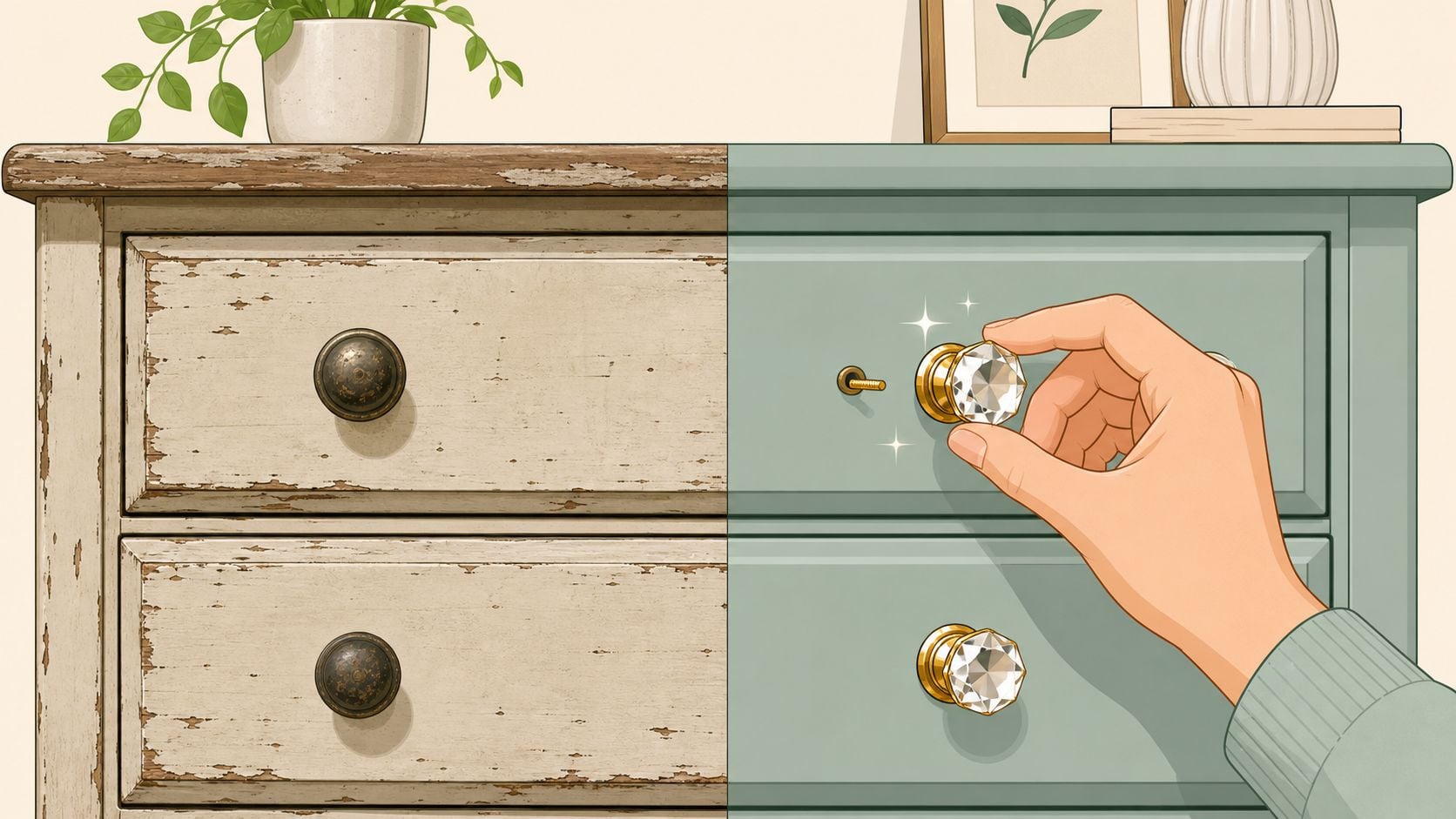
One of the simplest home updates starts with the hand, not the whole room. Every day, drawers open and close. Cabinet doors swing. Fingers reach for the same little point of contact over and over. Swap that one detail, and the whole piece can feel different.
A scratched-up painted chest can feel cleaner with a smooth round brass knob. A plain maple nightstand can lean farmhouse with ceramic. A traditional buffet can look sharper with a darker, lower-profile finish. None of that requires a full remodel.
Why such a small change works
Furniture knobs sit right at eye and hand level. People notice them quickly because they catch light, add contrast, and repeat across a piece. That repetition creates rhythm. Even readers who don't think in design terms can usually feel the difference right away.
A quick refresh usually works best when the furniture itself is worth keeping. Solid wood dressers, real wood cabinets, and well-built sideboards often have plenty of life left in them. In those cases, changing hardware isn't covering up a problem. It's bringing the piece back into focus.
Practical rule: If the frame is sturdy and the drawers still glide well, new knobs can be one of the smartest upgrades in the room.
There's also a bigger reason this topic matters. Furniture knobs are part of a large and growing category. The furniture knobs market was valued at about USD 2.5 billion in 2025, with a projection of USD 42.3 billion by 2033 and a stated CAGR of 5% from 2025 to 2033. That same report connects demand to custom home furnishings and replacing older hardware on vintage furniture.
A family-furniture way to think about it
Good hardware has always been part of good furniture. That's not new. In Wisconsin, local families have been shopping for long-lasting pieces from businesses with deep roots for generations. BILTRITE Furniture is a fourth-generation, family-owned business that has been serving the Metro Milwaukee community since 1928, establishing a 98-year history in Wisconsin as a local staple.
That kind of long view changes how a person thinks about knobs. The question isn't only, “Does this look nice today?” It's also, “Will this still feel right after years of use?”
A good knob can make an old favorite feel fresh again. A bad one can make a strong piece feel cheap in a hurry.
Matching Knobs to Your Home Style
The fun starts when style enters the room. Furniture knobs are a lot like earrings or cuff links for a piece of furniture. They don't have to shout, but they should belong.
The easiest way to choose is to look at the furniture first, then the room, then the finish. Many people do that in reverse, which is why a knob can look cute on its own but awkward once it's installed.
Pairing style with shape
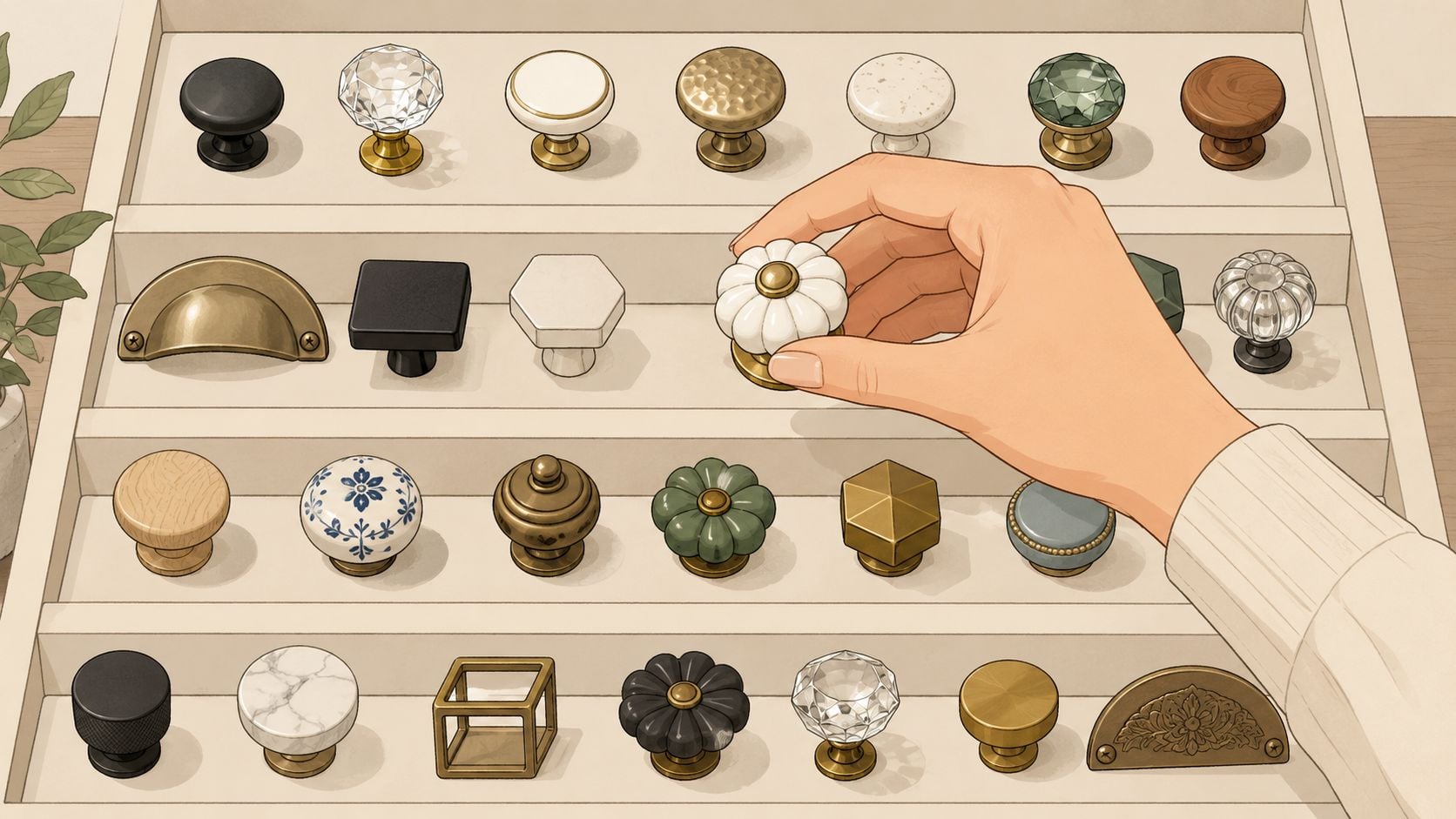
Different home styles tend to welcome different knob personalities.
- Farmhouse spaces usually look best with simple shapes and finishes that feel grounded. Matte black, aged-looking metal, wood, or ceramic often fit comfortably.
- Traditional rooms can carry more detail. Rounded brass knobs, gentle ornament, and warmer finishes usually feel at home.
- Mid-century inspired furniture likes restraint. Small wood knobs, clean brass forms, and tidy geometric shapes work well.
- Modern rooms often benefit from smoother silhouettes and less visual fuss. Polished metal, satin finishes, or crisp dark hardware can sharpen the look.
- Cottage or eclectic spaces can handle more play. Colored ceramic, glass, or a slightly whimsical profile can add charm without forcing it.
Readers sorting through room styles can get extra help from BILTRITE's guide to different types of furniture styles.
Match the piece, not just the trend
Style alone isn't enough. Scale matters.
A chunky oak dresser with deep drawers usually needs a knob that has visual weight. A tiny dainty knob may disappear on the drawer front and feel unsatisfying every time the drawer opens. On the other hand, a thick oversized knob on a slim end table can look clumsy.
That's why the best pairings usually sound like this:
| Furniture piece | Knob direction that tends to work |
|---|---|
| Broad dresser in oak or cherry | Slightly larger knob with solid presence |
| Painted bedside table | Medium round knob in metal, glass, or ceramic |
| Delicate accent chest | Smaller knob with a touch of detail |
| Rustic cabinet | Simple knob with texture or a hand-finished look |
A knob should feel like it belongs to the furniture, not like it wandered in from another room.
Keep the room cohesive
Mixing is fine. Random isn't.
One room can absolutely use knobs in different shapes if they share a common thread. That thread might be finish, color temperature, silhouette, or material. For example, a room with warm woods can handle different knob shapes if the metal finish stays warm too.
A handy gut check helps here. Set the knob next to the furniture and ask two questions. Does it echo the mood of the piece? Does it feel good to touch? If both answers are yes, the choice is usually on the right track.
A Guide to Knob Materials and Finishes
Material is where looks and longevity finally shake hands. Plenty of furniture knobs look nice in a package. Fewer still hold up well after years of grabbing, twisting, cleaning, and seasonal humidity.
That's especially important on solid wood furniture. The better the piece, the more obvious a weak knob becomes. If the drawer box is sturdy and the joinery is strong, flimsy hardware stands out fast.
What works best on quality wood furniture
For long-term use, metal is usually the safest bet. Some metals wear better than others, especially in kitchens, bathrooms, mudrooms, and busy family spaces.
For solid-wood furniture like Amish-made cabinetry, the optimal knob material is solid brass or 304-grade stainless steel, which outperform zinc alloy by resisting corrosion and mechanical wear for decades in high-use or humid environments; zinc alloy is only suitable for budget or temporary solutions due to its lower longevity and susceptibility to plating failure.
That one distinction clears up a lot of confusion. Two knobs may look nearly identical on the shelf, but the base material changes how they age.
Common Furniture Knob Materials Compared
| Material | Best For | Durability |
|---|---|---|
| Solid brass | Solid wood dressers, cabinetry, heirloom-style furniture | Excellent for long-term daily use |
| 304-grade stainless steel | Humid spaces, busy kitchens, practical modern pieces | Excellent resistance to wear and corrosion |
| Zinc alloy | Budget-minded updates or temporary projects | Lower longevity than solid brass or stainless steel |
| Ceramic | Decorative accent furniture, cottage or farmhouse looks | Good if handled with normal care |
| Glass | Accent pieces, vintage-inspired furniture, lighter-use areas | Good appearance, but needs gentler handling |
| Wood | Furniture that calls for a seamless, tone-on-tone look | Depends on finish and use conditions |
A related read on decorative metal details can help readers compare finishes and accents on wood furniture at what to know about metal accents.
Finishes matter too
The finish isn't just color. It's also protection.
A strong finish helps a knob resist scratches, fading, and the dull spots that show up where hands touch the same area every day. The verified guidance here is especially useful. PVD coatings provide better scratch and fade resistance than standard electroplating on metal knobs, which makes them a smart choice where traffic is heavy.
Material shortcut: For a long-haul piece in real wood, start with solid brass or stainless steel. Then choose the finish that fits the room.
Ceramic, wood, and glass still have a place. They can be wonderful on the right piece. They just ask the homeowner to think about use first, style second. A guest room chest can carry a more decorative knob. A hard-working kitchen drawer needs something tougher.
Getting the Size and Placement Just Right
A beautiful knob in the wrong size can throw off the whole piece. It can also feel awkward every single day, which is worse. The good news is that sizing furniture knobs is usually much easier than people expect.
For replacements, the simplest move is to start with what's already there. Measure the old knob at its widest point, or measure the hole if the old hardware is gone. That gives a reliable baseline.
Simple sizing cues that help
A few practical rules keep most projects on track.
- Smaller drawer, smaller knob. Slim nightstands and petite accent tables usually look better with a modest knob.
- Larger front, stronger presence. Wide drawers and substantial cabinet doors can handle more visual weight.
- Comfort counts. If fingers can't grip the knob easily, the knob is too small for the job, no matter how pretty it is.
People often get stuck between two sizes. In that case, the furniture style usually breaks the tie. Traditional pieces can handle a touch more fullness. Cleaner modern pieces usually look better with restraint.
Placement that looks balanced
For drawers, center placement is the default for a reason. It looks orderly and feels natural in the hand. On a single-knob drawer, centered horizontally is almost always the first place to test.
For doors, a common rule of thumb is to place the knob about one-third of the way in from the non-hinged edge. That tends to create a balanced look without pushing the hardware too close to the corner.
A measuring refresher on larger furniture dimensions can help readers think proportionally at how to measure furniture.
If a knob looks slightly too small in the hand, it usually is. If it looks slightly too big on a delicate drawer front, it probably is.
Before drilling anything new
Use painter's tape or a removable mark to test placement first. Step back. Open and close the drawer. Check it from standing height, not just up close.
That little pause saves a lot of regret.
When replacing old knobs, life is easier because the location already exists. For new installs, careful marking matters more than speed. Uneven hardware can make even beautiful furniture look off-center.
How to Install and Care for Your New Knobs
Installing most furniture knobs is a friendly beginner project. That's one reason people love it. The result feels dramatic, but the work itself is usually pretty straightforward.
On most pieces, a screw goes through the back of the drawer or door and threads into the knob. That means the basic tool list is short and familiar.
A clean, simple installation routine
A calm approach usually works best.
- Remove the old hardware first. Hold the knob from the front and unscrew from the back so nothing spins and scratches the finish.
- Check the screw length. A screw that's too long won't tighten properly. One that's too short won't catch enough thread.
- Tighten gently. Snug is enough. Over-tightening can stress the finish or damage the knob.
- Test the drawer or door. Open and close it a few times before calling the job done.
For fresh holes on unfinished fronts or new furniture, careful marking is everything. Measure twice, drill once is old advice because it still works. Solid wood deserves patience.
Daily care that keeps them looking sharp
Good knobs don't need fussy treatment. They do need consistent, gentle care.
A soft damp cloth handles most everyday dust and fingerprints on metal, glass, ceramic, and sealed wood knobs. Dry them after wiping so moisture doesn't sit around the base. Harsh cleaners are where many finishes get into trouble, especially on decorative coatings.
Readers caring for the furniture around the hardware can use these wood-safe basics from how to clean wood furniture.
Gentle cleaning beats aggressive polishing. Most damage comes from scrubbing too hard or using the wrong cleaner.
One detail people miss
Check knobs once in a while for looseness.
That sounds minor, but a slightly loose knob can slowly wear at the finish around the mounting point. A quick turn with a screwdriver every so often can prevent wobble, rattling, and unnecessary wear on a beautiful drawer front.
Find Quality Knobs and Furniture at BILTRITE
Furniture knobs make more sense when they're treated as part of the whole piece, not just decoration. On well-made furniture, the hardware should support the wood, the style, and the years ahead. That's where showroom shopping still has an edge. Seeing the grain, finish, scale, and hardware together helps people make a better decision than guessing from a tiny sample.
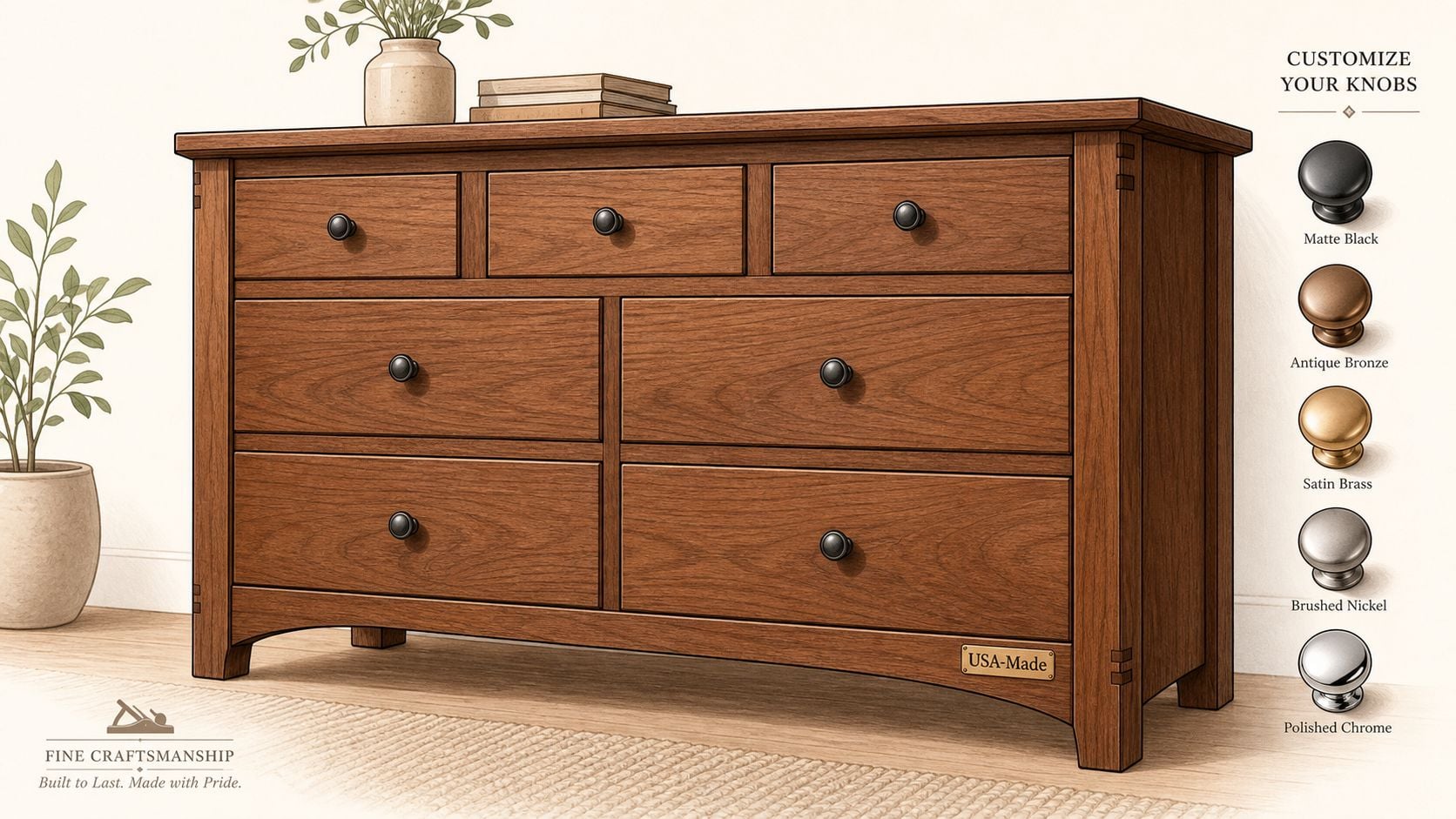
That matters a lot with USA-made, Amish-made, and solid wood furniture. These pieces are often built for the long run, and many are available with custom choices in wood, finish, fabric, leather, and hardware. A knob isn't just a finishing touch there. It's part of the piece's long-term value.
Why local showroom shopping helps
Photos can't tell the whole story. Weight, finish texture, drawer feel, wood tone, and hardware scale all need an in-person look. That's especially true for homeowners trying to match a piece to an existing room.
A local showroom also gives shoppers access to guidance from people who work with furniture every day. BILTRITE's team brings over 400 years of combined experience, which means readers don't have to sort through every decision alone. That kind of help is useful whether someone is furnishing a condo, replacing a family-room piece with something more heavy-duty, or looking for a handcrafted dining set that will age well.
What to look for in the showroom
BILTRITE makes it easier to spot construction and origin details that matter.
- USA Made icon helps identify pieces built by American makers.
- Amish made icon points shoppers toward handcrafted furniture with a strong focus on wood quality and durability.
- Solid wood indicators help separate real wood furniture from look-alikes.
- Small-scale and heavy-duty options give families, apartment dwellers, seniors, and downsizers more practical choices.
Readers browsing available collections can start with the BILTRITE showroom selection.
The business also stays open about what makes it different. The BILTRITE showroom operates on a strict family-first schedule, closing every Sunday to prioritize family time and remaining closed on Mondays for in-home delivery, reflecting their authentic #BUYLOCAL and community-first values. That's a local way of doing business, and plenty of Milwaukee-area families appreciate it.
More than knobs alone
A furniture purchase rarely happens in isolation. People updating a bedroom may also be thinking about a new mattress. Families moving into a new house may need living room, dining room, and storage pieces that feel coordinated. BILTRITE covers that wider picture with affordable, better-quality furniture and a mattress center that carries over 60 models and more than 500 mattresses in stock, along with white-glove delivery on qualifying purchases and other value extras described in the business background provided for this article.
That broad selection helps shoppers build a room that feels coherent from top to bottom. The hardware fits the furniture. The furniture fits the space. The space fits real life.
BILTRITE Furniture-Leather-Mattresses has been helping Metro Milwaukee families furnish their homes since 1928, with a Greenfield showroom full of affordable, better-quality furniture, including USA-made, Amish-made, solid wood, small-scale, and heavy-duty options. Readers ready to see finishes, feel construction, and talk with a knowledgeable team can visit BILTRITE Furniture-Leather-Mattresses and stop by the showroom in Greenfield.