Small Space Furniture Arrangement: A BILTRITE Guide

A small room can feel comfortable one day and frustrating the next. The usual trouble starts when a sofa crowds the walkway, a coffee table catches every shin, or a chair fits the floor plan but not real life. In apartments, condos, bungalows, and senior living spaces around Metro Milwaukee, that challenge shows up all the time.
Small space furniture arrangement works when the room supports the way people live. That means leaving room to move, choosing pieces that earn their keep, and paying attention to delivery, durability, and day-to-day comfort. A compact room doesn't need less personality. It needs smarter decisions.
For families who want practical ideas before they start dragging furniture around, small space furniture solutions from BILTRITE offer a helpful starting point grounded in real homes and real constraints.
Table of Contents
- Feeling Cramped? Let's Make Your Small Space Shine
- Start with a Plan Not a Push
- Choose Your Furniture Heroes
- Create Flow and Find Your Focus
- Go Vertical and Get the Lighting Right
- Ready to Find Your Fit? Come Say Hi
Feeling Cramped? Let's Make Your Small Space Shine
A lot of small rooms get arranged in a hurry. The sofa goes against the longest wall. The chair gets tucked into the corner. A storage piece gets added later because the room needs help. Then another piece comes in, and suddenly the space feels crowded even though none of the furniture looks oversized by itself.
That pattern is familiar because small rooms punish small mistakes. A few extra inches in the wrong spot can block a closet door, pinch the path to the kitchen, or make the whole room feel boxed in. People often assume the answer is to buy less. In practice, the better answer is usually to choose better.
That matters even more in homes where one room has to do several jobs. The living room might also be the office, reading nook, guest zone, and family TV space. In those homes, furniture arrangement becomes less about decorating and more about making daily routines easier.
A well-arranged small room doesn't feel stripped down. It feels intentional.
Since 1928, BILTRITE has served Metro Milwaukee as a fourth-generation family business, and that long history shows up in the advice given on compact spaces. Better-quality furniture with the right scale tends to outperform random bargains because it solves more than one problem at a time. It has to fit the room, fit through the doorway, and keep working for years.
Start with a Plan Not a Push
Moving furniture first is usually what creates the headache. A tape measure, a sketch, and ten honest minutes with the room can prevent most of the common layout mistakes.

Measure the room people actually use
Start with the obvious dimensions, then go one level deeper. Measure the room's width, depth, and height. After that, note the placement of doors, windows, vents, radiators, outlets, and any trim or bump-out that steals usable space.
The next step is the one many shoppers skip. Measure the paths people walk.
- Door swing space: Mark where doors open fully so furniture doesn't trap them.
- Natural travel path: Notice how people move from the entry to the sofa, from the sofa to the kitchen, or from the hallway to a bedroom.
- Access points: Keep outlets, windows, and storage pieces reachable without awkward stretching.
- Delivery route: Measure stair turns, apartment entries, elevators, and narrow halls before choosing bulky pieces.
A simple room sketch is enough. It doesn't need to look fancy. It needs to reveal problems early.
For anyone replacing a sofa, sectional, recliner, or bedroom piece, this furniture measuring guide is one of the smartest first stops before shopping.
Map the trouble spots before buying anything
Awkward rooms need more than a standard rectangle plan. In narrow spaces or rooms with multiple doors, the layout may need to break the usual rules. For those cases, guidance on small living room layouts for awkward spaces notes that diagonal placement or modular pieces can help avoid blocking traffic flow from tight hallways or competing doorways.
That idea matters because many real rooms don't behave nicely. A clean online inspiration photo may show one doorway and a blank wall. A Milwaukee bungalow or condo might have a radiator, a side window, a front door path, and a TV wall all competing at once.
Practical rule: The room's traffic pattern should decide the layout before the style does.
A quick paper test helps. Cut out rough furniture shapes, place them on your sketch, and try several arrangements before buying anything. That makes it easier to spot whether a loveseat works better than a full sofa, whether a chair should swivel, or whether the room needs modular seating instead of one heavy, fixed piece.
Choose Your Furniture Heroes
In a small room, every piece should justify the floor space it takes. Good looks still matter, but function carries more weight. The strongest rooms usually rely on a few hard-working pieces instead of a full matching set.
What earns a place in a small room
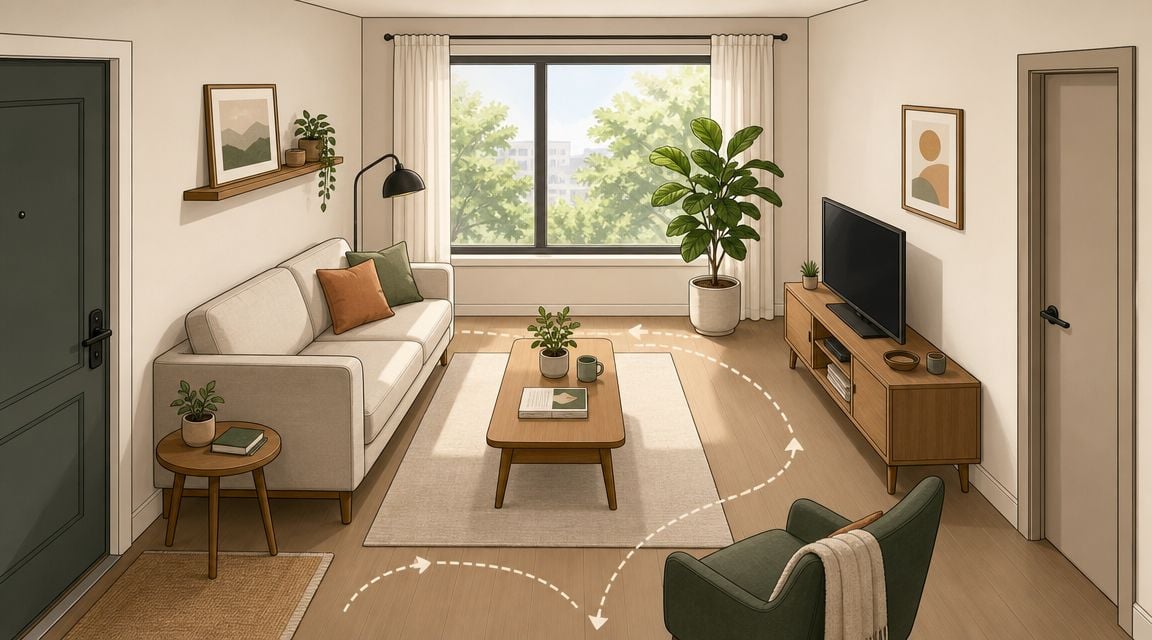
The best furniture heroes tend to fall into three groups: scaled pieces, dual-purpose pieces, and pieces that visually lighten the room.
A scaled piece isn't just smaller. It's proportioned for tighter spaces. That can mean slimmer sofa arms, shallower case goods, a compact recliner, or seating that comes apart for delivery into tight entries. A dual-purpose piece might be a storage ottoman, nesting table set, or lift-top table that supports work and lounging. Visually lighter pieces often use open bases, exposed legs, or narrower profiles so the room doesn't feel chopped up.
Modern guidance on arranging a living room in a small home has shifted toward multifunctional and vertically oriented furniture, including narrow bookcases, tall cabinets, and open-frame pieces that preserve sightlines. That change reflects how many smaller homes now need one room to do the work of several.
A helpful buying filter looks like this:
| Furniture type | What works well | What usually causes trouble |
|---|---|---|
| Sofa | Slimmer arms, modest depth, modular design | Overstuffed frame that dominates the room |
| Coffee table | Nesting, storage, lift-top, lighter profile | Large solid block that stops movement |
| Storage | Tall shelving, narrow cabinets | Wide low units spread across the floor |
| Accent seating | Moveable chairs, compact recliners | Bulky chairs with oversized arms |
For households comparing options, multi-functional furniture ideas for modern homes can help narrow the field.
Durability matters more in tighter spaces
Small-space advice often leans too hard on appearance. It praises compactness but ignores how the furniture will feel after months or years of real use. That gap matters for families, seniors, caregivers, and anyone who needs furniture that supports changing mobility needs.
Discussion around awkward living room needs and accessibility tradeoffs points out that compact furniture isn't automatically easier to live with if it gives up seat height, firmness, grip support, or long-term durability. That is where better-quality construction becomes a practical advantage, not a luxury.
BILTRITE Furniture-Leather-Mattresses offers small-scale, heavy-duty, USA-made, and Amish-made options in one showroom, which is useful for shoppers trying to balance size with longevity rather than treating them as separate decisions.
The smartest purchase in a small room is often the one that solves space, comfort, and durability at the same time.
Cheap furniture can seem like the safe choice in a compact home. Sometimes it's the expensive mistake. Replacing three weak pieces over time takes more money, more delivery hassle, and more frustration than starting with one well-built piece that fits correctly from day one.
Create Flow and Find Your Focus
Some small rooms feel crowded because of the furniture size. Others feel crowded because nothing is arranged around a clear idea. A room needs one visual anchor and one easy path through it. Without those two things, even good furniture can feel unsettled.
Set the room around one clear anchor
The focal point might be a TV wall, a fireplace, a large window, or a favorite cabinet. Once that anchor is decided, place the main seating to support it instead of letting every piece compete for attention.
That doesn't mean the room has to become rigid. It means the arrangement should answer one basic question quickly. Where is attention supposed to go when someone walks in?
A few practical choices usually help:
- Face the main seat correctly: Let the sofa or primary chairs acknowledge the room's anchor.
- Use the rug to define the zone: A rug helps the seating area read as one group instead of scattered pieces.
- Keep side pieces secondary: Consoles, end tables, and accent storage should support the room, not crowd the main view.
For more layout inspiration built around real living rooms, these living room arrangement ideas can help translate theory into a layout that feels livable.
Use spacing that supports real movement
Good small space furniture arrangement depends on clear circulation. Designers commonly recommend 30 to 36 inches between major furniture pieces, with a tighter fallback used only when necessary. Guidance from Emily Henderson's living room spacing rules also places a coffee table 16 to 18 inches from a sofa and suggests pulling the sofa 3 to 5 inches off the wall when possible.
Those numbers matter because they solve daily friction. A coffee table that's too close makes sitting down awkward. A sofa crushed tight to the wall can make the room feel flatter and more cramped than it is.
Leave enough space for the body, not just the blueprint.
There is another useful proportion worth keeping in mind. Small-room guidance also notes that a coffee table should generally be about half the sofa length and within about 4 in of the sofa seat height, as described in this compact-room staging guide. That kind of proportional match keeps the center of the room functional without making it look crowded or undersized.
Go Vertical and Get the Lighting Right
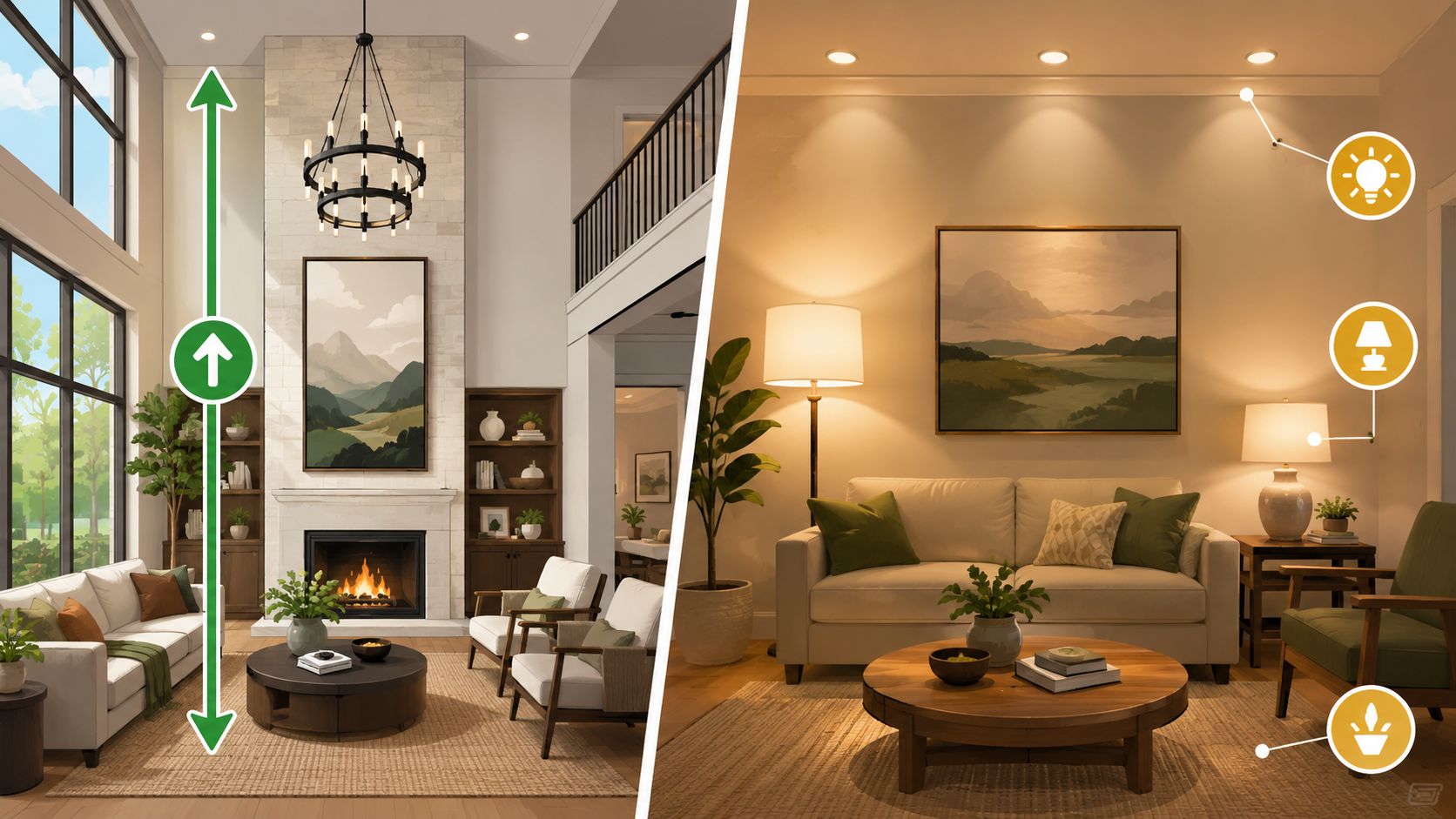
A room can have the right layout and still feel cramped if everything sits low and dark. That is why vertical storage and layered lighting matter so much. They change how the eye reads the room.
Move storage up instead of out
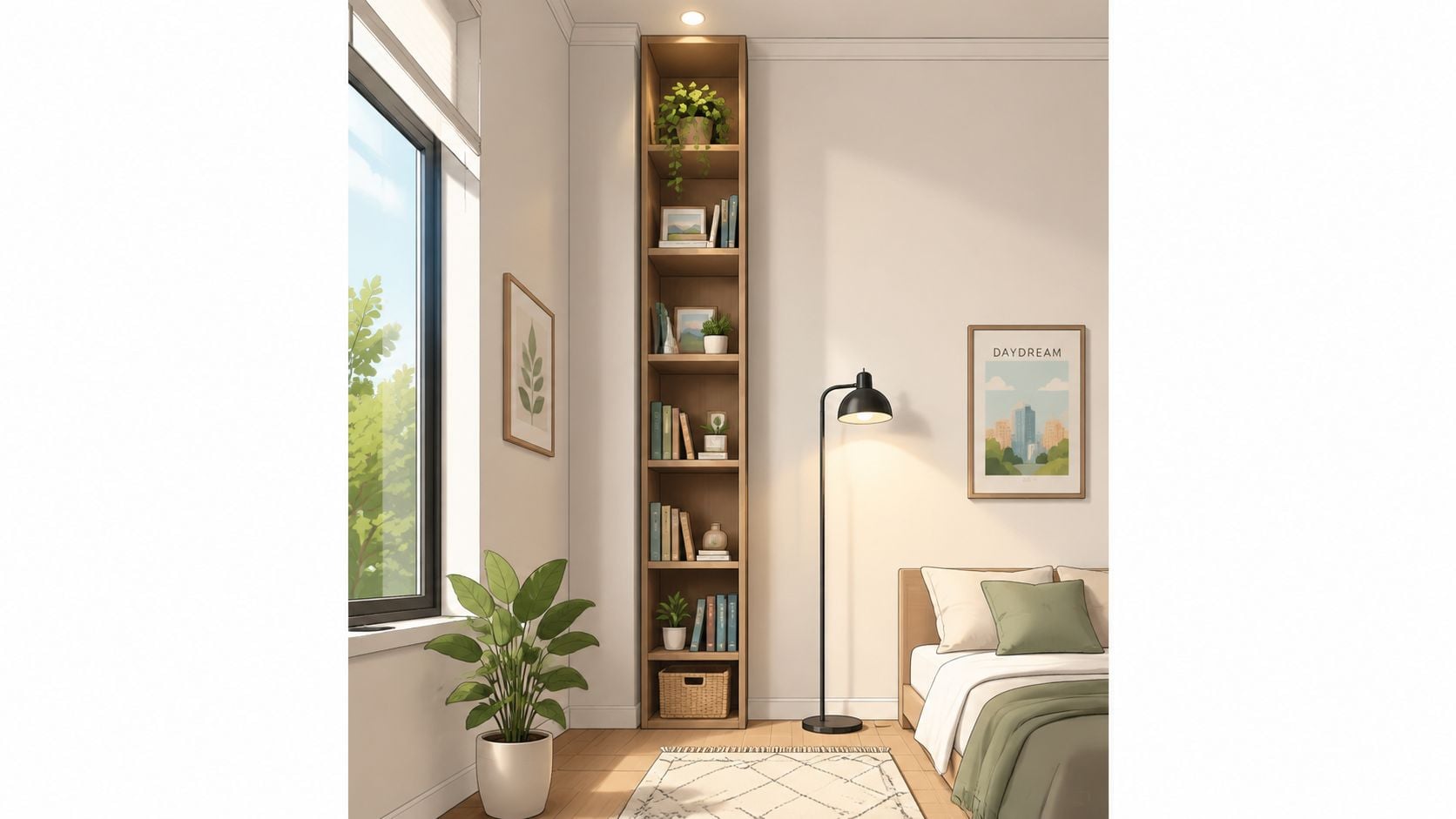
When floor area is limited, width becomes expensive. Height is often the better bargain. Tall shelving, narrow cabinets, wall-mounted storage, and open-frame pieces can hold a surprising amount without spreading across the room.
One useful benchmark appears in small-room planning guidance that recommends compact media consoles under 48 inches wide and favors vertical storage that keeps sightlines open. That approach is explained in the earlier linked guidance on arranging living rooms in smaller homes.
A practical consideration:
- Tall beats wide: A narrow bookcase often works better than a long, low storage unit.
- Open beats bulky: Furniture with visible legs or open framing usually feels lighter in compact rooms.
- One strong storage piece beats several small ones: Scattered baskets and mini cabinets can create visual clutter fast.
Light the room so it feels open
Lighting does more than brighten a room. It shapes depth. A single overhead light can flatten a small space and leave corners feeling closed off. A layered setup usually makes the room feel calmer and more usable.
Try combining a ceiling light, a task lamp near reading or work seating, and a softer lamp on a side table or console. That gives the room different levels of light and helps separate one function from another.
Small rooms open up when storage rises and light spreads outward.
Lighting also works with furniture arrangement, not apart from it. A floor lamp can define a reading chair. A lamp on a narrow console can soften a TV wall. A small bedroom can feel taller when a bookshelf and lamp pull the eye upward together. Those finishing touches are often what make a compact room feel settled instead of improvised.
Ready to Find Your Fit? Come Say Hi
A smaller home doesn't need to feel like a compromise. It needs a thoughtful plan, furniture that fits the way the room is used, and enough breathing room to make daily life easier. The strongest small space furniture arrangement usually comes down to a few steady choices. Measure accurately, respect the traffic path, choose pieces that do more than one job, and don't waste valuable floor area on furniture that only looks good from one angle.
That approach has guided BILTRITE's work in Metro Milwaukee since 1928. As a fourth-generation family business, the store has spent decades helping neighbors furnish apartments, condos, bungalows, senior living spaces, and family homes with affordable, better-quality furniture. That includes small-scale options, heavy-duty options, and a strong mix of USA-made, Amish-made, and solid wood pieces built for long-term use.
There is also a practical advantage to shopping in person. People can test seat height, firmness, scale, and finish before making a decision. They can bring room measurements, talk through awkward doorways, and compare compact pieces that still feel comfortable.
The Greenfield showroom is where that help happens. Shoppers can visit the BILTRITE locations page to plan a stop, then come in and talk with a non-commissioned team that focuses on guidance instead of pressure. Since the store doesn't sell online, the showroom experience is the point. It gives people the chance to see what fits, what feels right, and what will hold up in a real home.
Ready for furniture that fits your space and your life? Visit BILTRITE Furniture-Leather-Mattresses in Greenfield and talk with a team that's been helping Metro Milwaukee homes feel comfortable since 1928. Bring your measurements, walk the showroom, and find better-quality pieces that make a small home live larger.