Wood with Metal Wall Decor: Your Style Guide 2026

A lot of homeowners hit the same moment. The sofa is in place, the dining set looks beautiful, the bedroom feels settled, and then one wall still looks unfinished. That open space can make the whole room feel less warm than it should, even when the furniture itself is exactly right.
That's where wood with metal wall decor often helps. It adds texture without feeling fussy, and it can bridge the look between solid wood furniture and metal hardware, lighting, or accents already in the room. For families trying to make a space feel pulled together, that mix can be a smart finishing layer.
At BILTRITE, that kind of question comes up all the time. As a fourth-generation family business serving Metro Milwaukee since 1928, the team has spent decades helping people match wall pieces with solid wood, USA-made, and Amish-made furniture in a way that feels natural in real homes, not just in staged photos.
Table of Contents
- Bringing Your Walls to Life
- Choosing the Right Finishes and Scale
- Room-by-Room Wood and Metal Decor Ideas
- How to Measure and Plan Your Layout
- A Guide to Safe and Secure Hanging
- Long-Term Care and Our Family's Invitation
Bringing Your Walls to Life
A family brings home a new solid wood dining set. The chairs are tucked in, the rug is straight, and the light hits the tabletop just right. Then everyone looks up and sees the same thing. A big blank wall that suddenly feels louder than the furniture.
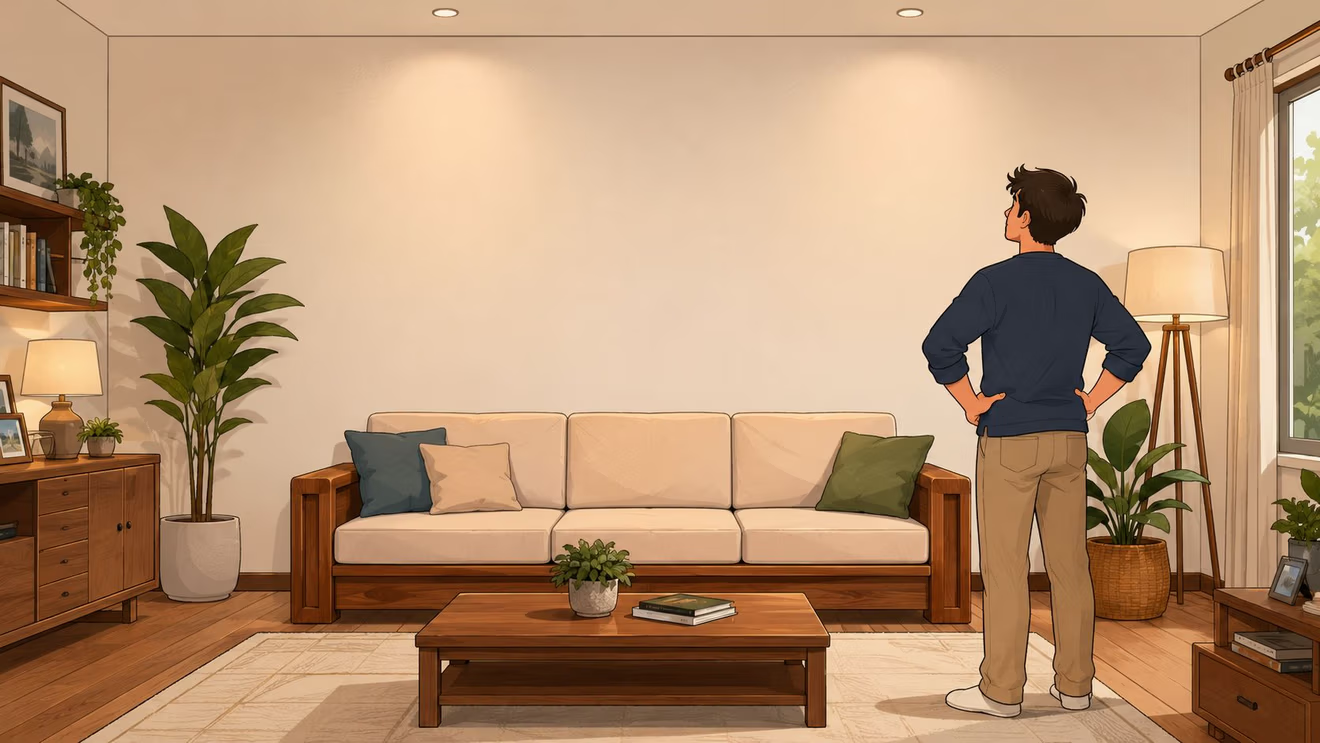
That's one reason wood with metal wall decor has become such a practical choice. It brings in warmth from the wood, definition from the metal, and enough texture to keep a room from feeling flat. It also tends to work well with the kinds of solid wood pieces many Milwaukee-area homeowners already have in their homes.
This isn't some tiny niche, either. The global wall decor market was valued at USD 32.68 billion in 2023, with North America generating about USD 11.09 billion, according to wall decor market data from GM Insights. That says something simple and useful. People are actively using wall decor to personalize their homes, and mixed-material pieces are part of that mainstream demand.
Practical rule: A blank wall usually doesn't need “more stuff.” It needs one piece that connects the room's furniture, finishes, and mood.
For homeowners who already have rich wood grains in the room, metal accents can keep the space from looking too heavy. For rooms with more metal lighting or hardware, wood tones can soften the edges. That's why these pieces often succeed where a plain canvas or a generic sign might not.
For anyone thinking about a larger feature wall, balanced accent wall ideas from BILTRITE can help frame the bigger picture before a single hook goes into the wall.
Choosing the Right Finishes and Scale
Matching wood with metal wall decor to existing furniture gets easier once the room is treated like a set of finishes that need to cooperate, not match exactly. The goal isn't sameness. The goal is harmony.
One common point of confusion is material quality. Some pieces look substantial from across the room, but they're built from engineered wood with a surface veneer rather than solid wood. As noted in this material discussion on wood and metal wall art, “wood and metal” isn't always premium. Solid wood construction often points to better durability and a healthier home environment than lower-grade substitutes.
Start with the wood tone already in the room
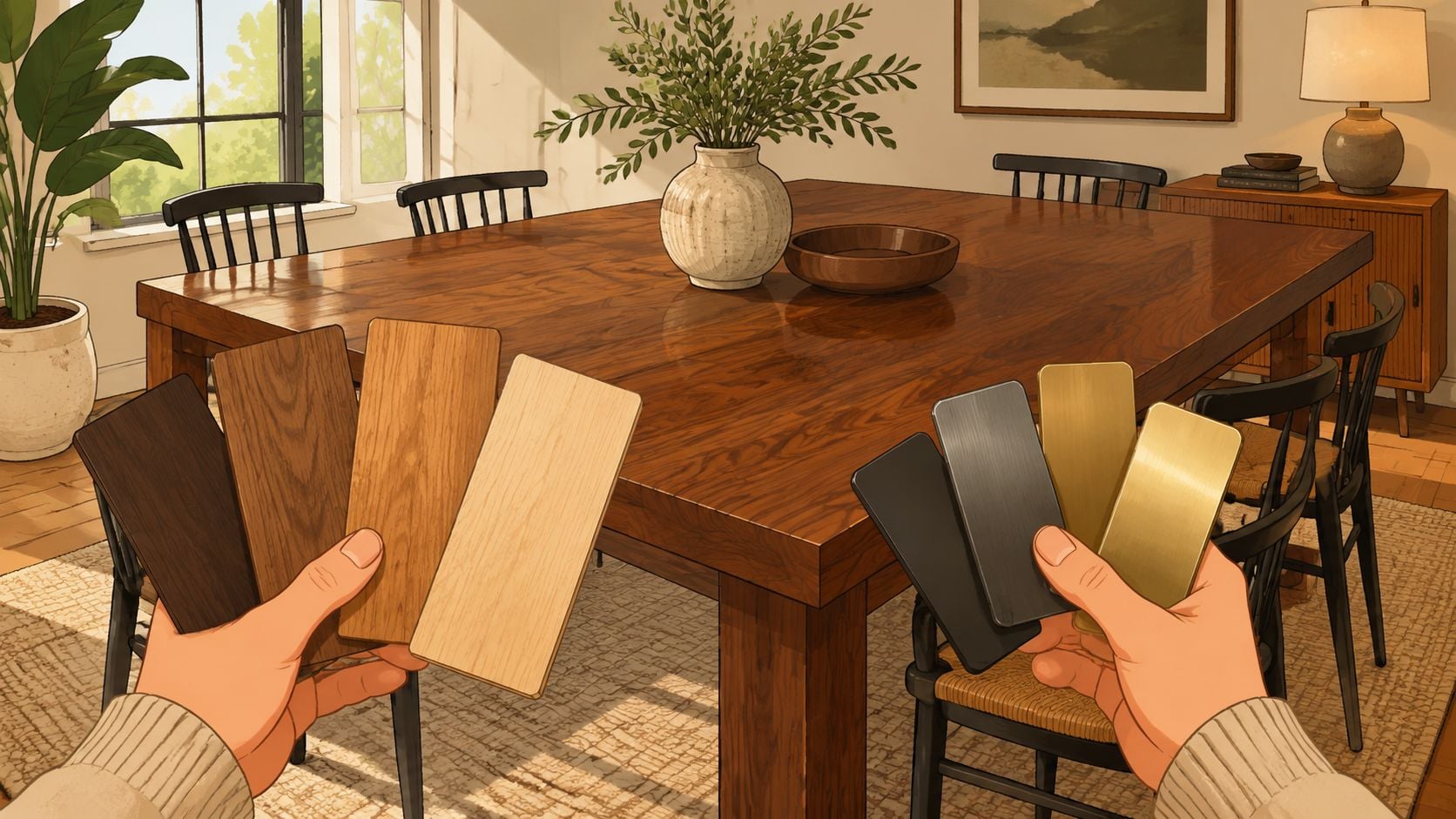
A warm oak table usually looks comfortable with wall decor that has warm brown, honey, caramel, or natural wood notes. A cooler espresso, gray-brown, or weathered finish often sits better with decor that feels deeper or more muted.
That doesn't mean the wall piece has to match board-for-board. In fact, a close-but-not-identical wood can look more natural than an exact imitation. The room feels layered instead of overly coordinated.
A quick way to think through it:
| Existing furniture finish | Decor wood direction |
|---|---|
| Warm honey or golden oak | Natural, amber, medium walnut |
| Deep espresso or smoky brown | Charcoal-brown, weathered wood, muted walnut |
| Light neutral wood | Blonde wood, sand tones, pale rustic finishes |
For readers comparing stain directions, this guide to choosing a wood finish for a dining table gives a useful foundation for reading undertones.
Match the metal like hardware, not like a separate theme
Metal often works best when it relates to details already in the room. Think lamp bases, drawer pulls, chair legs, mirror frames, or the finish on a nearby light fixture.
- Matte black adds contrast and usually works well when a room needs definition.
- Brushed metal finishes feel softer and less shiny, which helps in relaxed spaces.
- Warmer metals can suit cozy rooms, but they should still make sense with surrounding hardware.
If the wood is the room's warmth, the metal should act like punctuation, not noise.
Scale changes everything
A small piece above a long sofa can look like it floated to the wrong wall. A very large piece over a narrow chest can feel top-heavy. Proportion does a lot of the heavy lifting.
A simple visual guide helps:
- Above a sofa: choose a horizontal piece with enough width to hold the seating area together.
- Above a buffet or dresser: medium-to-wide pieces usually feel grounded.
- In a narrow entry: a vertical design often makes more sense than a wide one.
Many decorators use the idea that wall art should be about two-thirds the width of the furniture below it. That's a guideline, not a hard law, but it helps people avoid the most common sizing mistakes.
Room-by-Room Wood and Metal Decor Ideas
Some rooms almost tell people what kind of wall piece they want. Others need a little more thought. The easiest way to choose is to look at what the room is already doing well, then use wall decor to support that.

Living room
A living room usually needs one thing from wall decor. It needs help anchoring the seating area. A horizontal wood with metal piece above the sofa can do that nicely, especially if the sofa has a solid visual presence.
A room with a sturdy leather sofa and a wood coffee table may benefit from a wall piece that repeats both ideas. The wood keeps the room grounded. The metal ties into lamps, side tables, or black window frames. The result feels cohesive without looking too matched.
For households dealing with tight stairways, apartments, or narrow older homes, the furniture layout also matters. Large wall pieces should support the room's traffic flow rather than compete with it. If the room already has delivery constraints or compact zones, simpler wall shapes usually read better than highly intricate arrangements.
Dining room
Dining rooms often have a natural wall to decorate. It's usually the wall above a buffet, server, or sideboard. That spot can handle a statement piece because the furniture below already gives the wall some structure.
A few looks that tend to work well:
- Sunburst-inspired shapes bring energy to a dining space without requiring many extra accessories.
- Geometric mixed-material panels pair nicely with more modern dining sets.
- Simpler wood-backed metal forms work in homes that lean rustic, transitional, or farmhouse.
In rooms with solid wood tables, it helps when the wall decor doesn't repeat every detail. If the table has a heavy grain pattern, a cleaner wall piece can create balance. If the table is visually simple, the wall piece can carry more texture.
Bedroom and entryway
Bedrooms need a calmer touch. A dramatic industrial piece can feel too busy over a headboard, especially when the bed already has a strong wood frame. Softer lines usually work better. Think branches, abstract curves, layered panels, or quiet geometric shapes.
A bedroom wall piece should feel like part of the room's exhale, not its loudest voice.
Entryways are different. They often need height and presence because the footprint is small. A vertical wood with metal piece can pull the eye upward and help a compact area feel more intentional.
For homes that need practical storage as well as style, wood and metal wall shelf ideas from BILTRITE can be useful when decor also needs to hold keys, plants, baskets, or small everyday items.
How to Measure and Plan Your Layout
A good wall piece can still look wrong if it's hung too high, too low, or slightly off-center. Most frustration comes from layout, not from the decor itself. A few simple steps solve most of that.
A simple way to map the wall
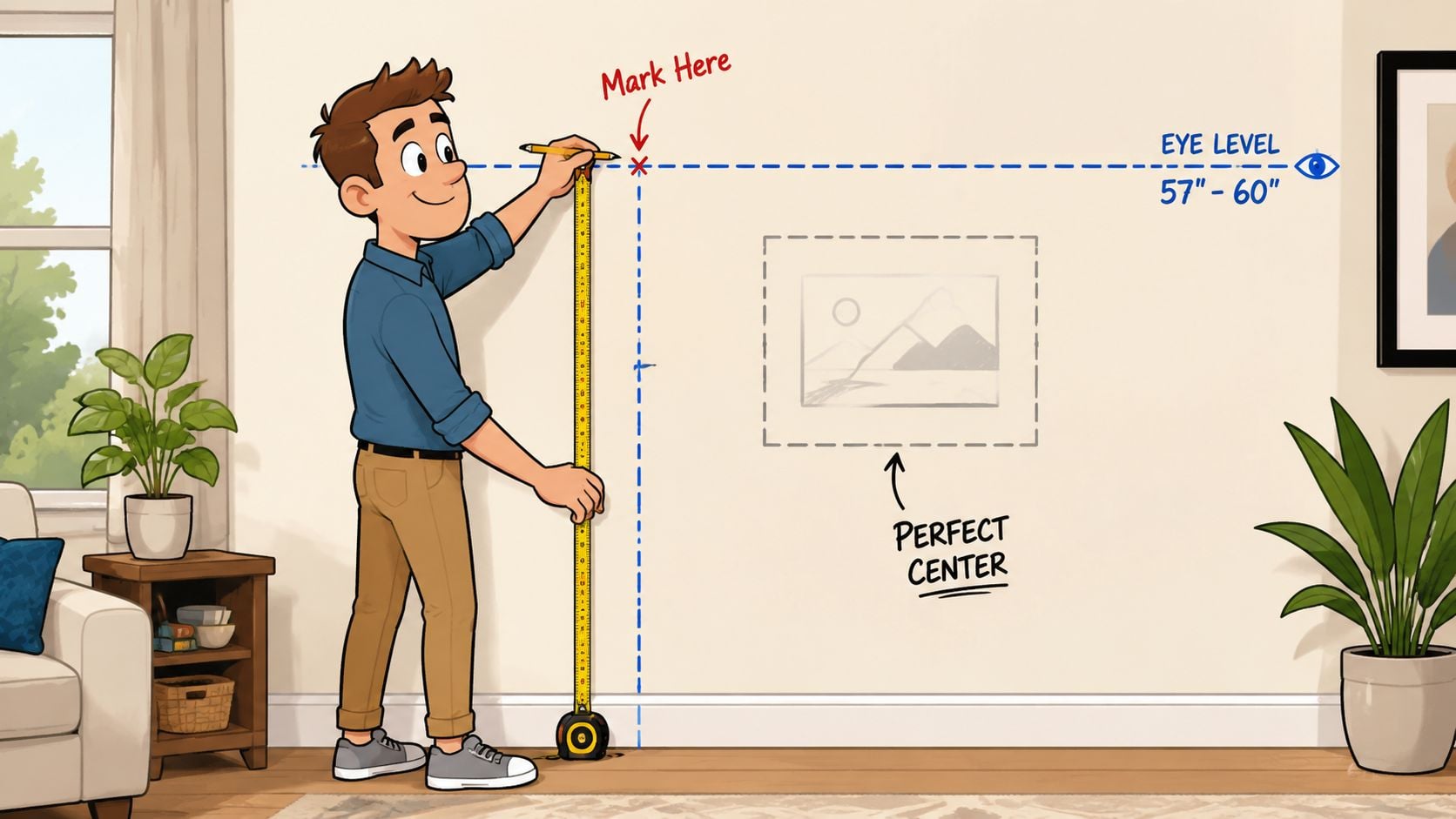
Before any holes are drilled, measure the furniture below the future wall piece. Then measure the wall decor itself. Those two numbers tell the story.
The center of wall art is commonly placed around eye level. Over furniture, the bottom of the piece should usually sit close enough to feel connected, not stranded high above it. Many people also find it helpful to leave a modest band of open wall between the furniture top and the decor.
The easiest low-stress trick is the paper or tape outline.
- Trace the shape on craft paper, or mark the outline with painter's tape.
- Tape it up first and step back from several angles.
- Check from seated height in a living room or bedroom, not just while standing.
- Adjust before drilling if the piece feels too narrow, too high, or too dominant.
That quick mock-up saves a lot of regret.
Placement rules that keep decor connected to furniture
Rooms look calmer when wall decor and furniture read as one composition. That's especially true with wood with metal wall decor, because these pieces often have enough visual weight to affect the whole wall.
A short checklist helps:
| Placement issue | What usually fixes it |
|---|---|
| Decor feels like it's floating | Lower it slightly toward the furniture |
| Wall piece looks tiny | Increase width or reduce surrounding clutter |
| Arrangement feels crowded | Simplify nearby accessories |
| Piece seems off-center | Center it to the furniture, not always the wall |
Another point that gets missed is side clearance. If a piece is close to a lamp, cabinet, doorway, or tall plant, the eye reads all of those items together. A little breathing room often makes the wall decor look more expensive and more settled.
For anyone working around room dimensions, stairwells, or tricky spaces, this furniture measuring guide from BILTRITE is helpful for planning the whole area, not just the wall.
A Guide to Safe and Secure Hanging
Style gets most of the attention, but safe hanging is where many people should slow down. Wood with metal wall decor can be heavier than it looks. The mixed materials may spread the weight unevenly, and that matters once the piece is on drywall, plaster, or masonry.
Why the mounting system matters more than most shoppers expect
Many style guides skip the practical question that matters most after purchase. Will this stay on the wall? As noted in this hanging and installation discussion, the highest-risk decision is often the mounting system, especially for heavier mixed-material pieces on drywall or plaster.
That point deserves real attention in family homes. A piece that isn't mounted well can damage the wall, damage the decor, and create a safety issue in a hallway, bedroom, or main living area.
Secure hanging isn't a finishing touch. It's part of choosing the decor responsibly.
A safer way to choose hardware
The first step is knowing what kind of wall is involved. Drywall, plaster, and masonry don't behave the same way. A nail that seems fine for a lightweight frame may not be the right answer for a heavier mixed-material panel.
A practical approach looks like this:
- Find a stud first when possible. Stud mounting is usually the most secure route.
- Check the wall type before buying anchors. Older plaster walls often need a different approach than standard drywall.
- Use hardware rated for the piece. The wall hardware should match the actual load, not a guess.
- Inspect the hanger on the decor itself. Some pieces include light-duty hardware that may not suit the final wall location.
Some shoppers also need renter-aware solutions. In those homes, the wall itself may limit what can be installed safely. It's better to know that before bringing home a large statement piece.
For a practical walkthrough on placement and hardware basics, this step-by-step hanging guide from BILTRITE can help homeowners think through the process carefully.
Long-Term Care and Our Family's Invitation
Once the piece is up, care is usually simple. Dust the wood with a soft, dry cloth. Wipe the metal gently with a clean microfiber cloth. In most homes, that light routine handles everyday upkeep just fine.
Easy care for mixed materials
Mixed-material decor tends to hold up well when it's made with thoughtful material choices. Metal contributes resistance to warping and breaking, while wood adds stiffness and substance. That combination is part of what gives these pieces their staying power.
Keep an eye on location, too.
- Avoid heavy moisture in places where wood finishes may be stressed.
- Keep direct glare in mind if the metal has a shinier surface.
- Dust regularly so grime doesn't build up in grooves or textured sections.
Why quality still matters years later
As noted in this style guide on wood and metal wall art, stronger woods such as oak and brushed metal finishes are often favored because they support durability and reduce glare. That lines up with what many homeowners already know from living with good furniture. Better materials tend to ask for less fuss over time.
That's one reason solid wood furniture and well-made wall decor often pair so naturally. They age with the room instead of fighting it.
For Milwaukee-area homeowners who want to see finishes, scale, and craftsmanship in person, BILTRITE Furniture-Leather-Mattresses is one local option with a showroom focus on affordable, better-quality furniture, including USA-made, Amish-made, and solid wood pieces that help shoppers coordinate wall decor with the rest of the home. The store has served Metro Milwaukee since 1928, and the family-first approach still shows in how the showroom experience is handled.
For anyone ready to pull a room together with confidence, visit BILTRITE Furniture-Leather-Mattresses in Greenfield. The showroom gives shoppers a chance to see real wood tones, compare finishes in person, and talk with an experienced team that understands how wall decor needs to work with the furniture already in the home. Since the store is family-owned and closed on Sundays and Mondays for family time, the invitation feels simple and genuine. Stop in, say hello, and get practical help choosing pieces that fit the space and the way the household lives.