Solid Wood Furniture for Living Room: 2026 Guide

A lot of living rooms reach the same moment. The old coffee table wobbles a little. The TV console has a chipped corner. The end table looked nice when it came home, but it never quite handled kids, pets, game nights, or moving day the way everyone hoped.
That's usually when solid wood starts sounding less like a luxury term and more like a practical one.
In Metro Milwaukee, living rooms do a lot of work. They host Packers watch parties, homework sessions, holiday visits, quiet mornings, and the occasional furniture shuffle when a new lamp or recliner comes home. Solid wood furniture for living room spaces makes sense in that kind of real life because it's built for use, not just for looks. For a fourth-generation family business rooted in Greenfield since 1928, that difference matters.
Table of Contents
- Why Choose Solid Wood for Your Family
- Finding Your Style with USA and Amish Made Woods
- A Look Under the Hood at Quality Construction
- Finding the Right Fit for Your Milwaukee Home
- Smart Budgeting for Lifetime Furniture
- Keeping Your Furniture Beautiful for Generations
- Come Say Hi and Find Your Family's Furniture
Why Choose Solid Wood for Your Family
A living room isn't a museum. It's where kids build blanket forts, guests set down coffee mugs, dogs cut corners too fast, and everyone drops onto the sofa at the end of a long Wisconsin day. Furniture in that room has to earn its keep.
That's one reason solid wood keeps winning families over. It gives living rooms a grounded, substantial feel, and it usually keeps that feel far longer than lighter, more temporary materials.

It stands up to real family life
Solid wood furniture is widely treated as a long-life category because quality hardwood pieces can last 30–100+ years, while veneer furniture is often estimated at 10–25 years and MDF or particleboard furniture at 5–15 years. The same reference notes that many solid-wood tables and cabinets made 50 to 100 years ago are still in daily use, which helps explain why families often treat living-room pieces as long-term purchases rather than short-cycle ones, as noted in this guide to how long solid wood furniture lasts.
That kind of lifespan changes the buying conversation. A coffee table stops being “something for now” and starts becoming a piece that may move from a first apartment, to a starter home, to the family room where grandkids someday spread out puzzles.
Practical rule: If a piece will take daily bumps, weight, and repeat use, solid wood usually makes more sense than a material built mainly for a lower opening price.
Families also like what happens visually over time. Real wood develops character. Small signs of use often feel like part of the story, not the end of the story.
It feels different because it is different
People often struggle to explain why solid wood furniture for living room settings feels more reassuring in person. The answer is simple. The material itself carries visual warmth and physical substance.
A few everyday examples make that easier to see:
- Coffee tables often become the hardest-working surface in the room. Snacks, remotes, feet, board games, and laptops all land there.
- End tables get tugged, bumped, and repositioned constantly.
- Media cabinets and consoles hold weight and need to stay square over time.
Those aren't tiny demands. They're daily demands.
There's also an emotional side to this choice. Families often want homes to feel steady, welcoming, and lived in. Solid wood supports that mood in a way that many lighter, more disposable pieces don't. It looks settled. It looks intentional.
For readers who want a broader look at the long-term appeal, these benefits of solid wood furniture line up with what many Milwaukee households are after. Better durability, better repair potential, and a style that doesn't go out of date every few seasons.
Finding Your Style with USA and Amish Made Woods
Style can get confusing fast. One shopper says a room needs warmth. Another says it needs clean lines. Someone else says the wood looks too dark, too orange, too formal, or too rustic. Most of the time, they're all reacting to the species, finish, and scale of the furniture.
That's why wood choice matters so much. The same media cabinet shape can feel casual, classic, modern, or cozy depending on the wood and finish.
How different woods shape the room
Oak often appeals to families who want a sturdy, familiar look. Its grain usually reads as honest and approachable, which works well in everything from bungalows to suburban family rooms.
Cherry tends to bring a more classic, rich personality. It can dress a room up without making it stiff, especially when paired with softer upholstery and simple accents.
Maple usually fits homes that want a cleaner or more versatile look. It plays well with many styles because it doesn't demand all the attention.
A quick way to think about it:
| Wood choice | Common feel in a living room | Good fit for |
|---|---|---|
| Oak | Grounded and dependable | Family rooms, casual traditional spaces |
| Cherry | Warm and refined | Classic rooms, heirloom-minded shoppers |
| Maple | Clean and adaptable | Transitional and lighter-looking spaces |
No chart can replace seeing the grain and color in person, but this gives shoppers a starting point.
Why USA and Amish made matters
Craftsmanship shows up in the little things. Drawer movement. Smooth edges. Joinery that feels tight. Finish work that looks even instead of rushed. That's where USA-made and Amish-made furniture often earns its reputation.
Amish craftsmanship especially connects with families who care about old-school building methods and patient attention to detail. Those shoppers usually aren't chasing a trend. They want something that feels steady, useful, and made by skilled hands.
Good furniture doesn't have to shout. It usually shows its quality in how calmly and confidently it's built.
For shoppers sorting through labels and wondering what they mean, this explanation of Amish furniture helps clear up the basics. It's a helpful starting point for anyone who's heard the term but wants to understand why it matters in the showroom.
Many Milwaukee-area homes also benefit from this kind of craftsmanship because styles here vary so much. A Bay View bungalow, a Whitefish Bay colonial, and a downtown condo won't need identical pieces. But they all benefit from furniture built with care and meant to last.
A few clues help narrow style without getting overwhelmed:
- Look at the grain first. Busy grain creates more visual motion. Quieter grain feels calmer.
- Check the finish tone near upholstery. Some woods warm up gray fabrics beautifully. Others can fight them.
- Notice edge details. Straight lines often feel more current. Softer shaping can feel more traditional.
- Ask how the piece was made. Construction often tells more about value than the first glance does.
That combination of style and substance is what makes solid wood furniture for living room spaces so satisfying. It can fit the look of the room, while still acting like a hardworking part of the home.
A Look Under the Hood at Quality Construction
Some furniture impresses from across the room. Better furniture usually impresses when the drawers open, the cabinet doors shut, and the whole piece stays steady when a child leans on one corner.
That's the part many shoppers don't get shown often enough. Construction.
What to check first
Solid wood living-room furniture has a durability advantage because the material is made from continuous wood fibers rather than a thin decorative layer over composite board. That makes solid wood commonly described as more durable, easier to repair or refinish, and free from veneer chipping or lifting. It's also usually heavier and more stable in use, which matters for coffee tables, end tables, consoles, and cabinets that need to resist racking and accidental movement. The tradeoff is greater sensitivity to humidity and temperature swings, which can lead to minor checking, warping, or discoloration if the room environment isn't controlled, according to this overview of what to expect from solid wood furniture.
That explanation sounds technical, but the shopping takeaway is simple. The inside matters as much as the outside.
Here are a few signs worth checking in person:
- Joinery that feels intentional. A quality piece shouldn't wobble or flex when lightly tested.
- Drawer action that stays smooth. Drawers should move without scraping, sticking, or dropping.
- Back panels and interiors that aren't an afterthought. Good makers pay attention to unseen areas too.
- Hardware that feels substantial. Pulls, hinges, and slides should feel dependable in the hand.
Why construction affects daily use
A media console that stays square makes doors line up better over time. An end table with strong joinery handles being moved for vacuuming, guests, or holiday decorating. A coffee table with real structural integrity is less likely to twist when someone puts weight on one edge.
That's where old-school joinery becomes more than a buzzword. Techniques like mortise-and-tenon construction matter because they help furniture stay strong at stress points where rails, legs, and frames meet. For readers curious about one of the most respected construction methods, this overview of the mortise and tenon joint explains why furniture makers still rely on it.
Construction quality also shapes the long-term options a family has. A scratched or worn solid wood surface can often be refreshed. A damaged thin surface usually leaves fewer repair paths.
A solid wood piece should feel settled before it ever enters the house. If it feels flimsy in the showroom, daily life won't improve it.
That's why experienced furniture shoppers often do less admiring and more testing. Open the drawer. Touch the underside. Check the corners. Gently move the piece. Good construction tends to reveal itself quickly.
Finding the Right Fit for Your Milwaukee Home
Scale trips up more living rooms than style does. A family can choose a handsome wood finish and a well-built table, then get it home and realize the room suddenly feels blocked, narrow, or heavy.
That's especially common with solid wood, because the material has more physical and visual weight. In real homes around Milwaukee, that matters a lot.
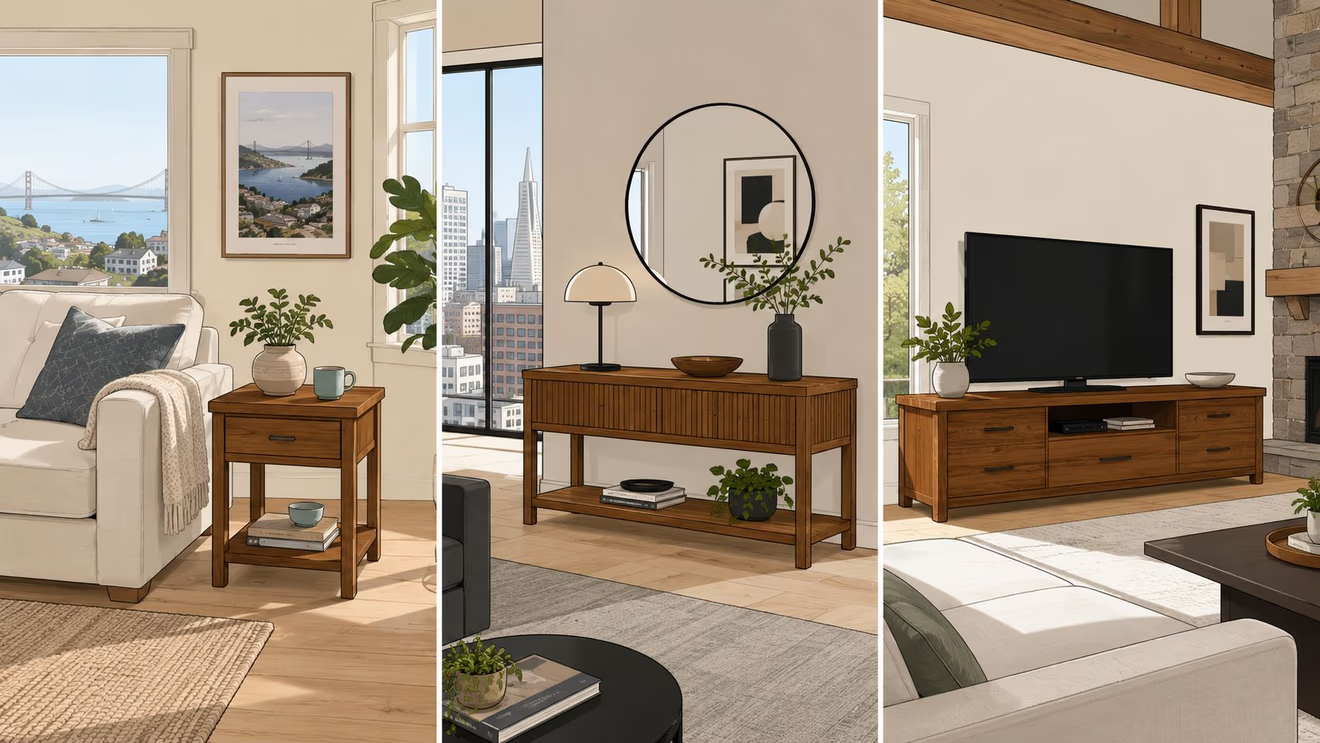
A strong underserved angle in this category is small-space planning and scale, especially for apartments, condos, and senior living rooms where solid wood pieces can feel visually or physically heavy. Existing content often talks about durability and craftsmanship but skips the practical question shoppers keep asking about tight rooms, narrow doorways, awkward layouts, fireplaces, angled walls, and traffic flow. That ongoing pain point is reflected in this discussion about layout challenges in living rooms.
A downtown condo needs a different plan
Take a typical condo near downtown Milwaukee. The room may have one long wall, a window that limits furniture height, and a walkway that can't be blocked. In that setting, a deep, chunky cocktail table may look beautiful on its own and still be the wrong answer.
A better plan often looks like this:
- Choose open-looking shapes. Legs that show more floor can help a wood piece feel lighter.
- Keep widths honest. Wider isn't always better if people have to sidestep around the table.
- Respect delivery realities. Tight stairwells and elevators can change what works before the room even comes into play.
In homes like that, small-scale furniture isn't a compromise. It's smart design.
A family room can go bigger but still needs balance
Now consider a larger suburban family room in Brookfield, Franklin, or Muskego. There may be more square footage, but that doesn't mean every piece should go oversized. A large sofa, a broad media wall, and thick wood tables can still make the room feel crowded if each item tries to be the star.
A balanced room usually has one anchor piece and supporting pieces around it. If the entertainment console has substantial presence, the coffee table may need a lighter footprint. If the sectional dominates the seating zone, the end tables should work hard without adding bulk.
A simple planning checklist helps:
| Question | Why it matters |
|---|---|
| Can people walk around it easily? | Traffic flow matters more than isolated measurements |
| Will it fit through the path into the room? | Doorways, stairs, and turns can eliminate options |
| Does it match the visual weight of the sofa? | Good scale keeps the room from feeling lopsided |
| Will it crowd fireplaces or windows? | Focal points need breathing room |
One useful local option for shoppers exploring solid wood furniture for living room spaces is BILTRITE Furniture-Leather-Mattresses, which includes small-scale furniture and come-apart delivery solutions that are relevant for tighter Milwaukee-area layouts.
Measure the room, then measure the pathway, then measure the piece. Most fitting mistakes happen because one of those three gets skipped.
That advice matters in older Milwaukee homes especially. Charming architecture often brings quirks. Radiators, narrow entries, fireplace offsets, and angled corners all ask for furniture with the right footprint, not just the right finish.
Smart Budgeting for Lifetime Furniture
Most families don't shop for living room furniture by asking only one question. They're really asking three at once. How much does it cost now, how long will it stay useful, and what happens if the room or family changes later?
That's where budgeting for solid wood gets more interesting than the sticker tag.
Price is only one part of value
A lower opening price can look appealing in the moment. But value gets stronger when a piece keeps functioning, keeps looking good, and still deserves a place in the home years later.
For many households, better value comes from asking practical questions such as:
- Will this still suit the room after the next move or remodel?
- Can the finish age gracefully with normal wear?
- Is the construction good enough that repair or refinishing would be worth considering later?
Those questions shift the focus from “How cheap is it?” to “How long will this purchase keep making sense?”
That's a healthier way to budget for solid wood furniture for living room spaces because the material often appeals to people who don't want to repeat the same purchase over and over.
What solid wood can mean today
Shoppers often get understandably confused. “Solid wood” doesn't always mean the exact same thing across every product line or collection.
A key modern issue is the difference between solid wood, solid wood mixed with engineered components, and sourcing claims such as reclaimed wood, North American hardwood, or sustainably sourced hardwoods. Those differences can affect price, durability, sustainability, and repairability, yet many product pages still use “solid wood” as a broad quality phrase without much explanation, as described in this look at modern solid wood sourcing and construction claims.
That means shoppers should ask better questions, not just broader ones.
A smart in-store conversation often includes:
- Which parts are solid wood? Tops, legs, door frames, and drawer fronts matter.
- What species is used? Different woods create different looks and wear patterns.
- How will this finish behave in daily family use? Some finishes hide fingerprints and minor wear better than others.
- Can this piece be refreshed later? That helps separate decorative furniture from long-term furniture.
Here's the honest budget mindset many families find most useful:
Buy the highest quality the room and budget can comfortably support, especially for pieces that take daily use.
That doesn't mean every table must be heirloom grade. It means the hardest-working pieces deserve the strongest thinking. A media console used every day should be judged differently than a decorative accent table used occasionally.
Good budgeting is less about chasing the lowest number and more about matching money to function. Families who do that tend to feel better about the purchase long after the receipt is gone.
Keeping Your Furniture Beautiful for Generations
Solid wood doesn't ask for fussy treatment. It asks for steady treatment. That's good news for busy households, because simple habits usually do more for wood furniture than complicated cleaning routines.
In Wisconsin homes, the biggest issue often isn't a dramatic spill. It's the indoor environment over time.
The room affects the wood
For living-room performance, wood species and indoor climate matter as much as style. One major furniture maker identifies oak as a sturdy, versatile option and recommends an indoor range of 64.4–73.4 °F with 40–60% relative humidity for best results. That benchmark matters because wood is hygroscopic, which means it absorbs and releases moisture until it balances with the room. When humidity moves outside that range, wood can expand or contract across the grain, increasing the risk of joint stress, seasonal gaps, or surface distortion, according to this solid wood climate and care guidance.
That's a fancy way of saying wood responds to the house it lives in.
In Metro Milwaukee, indoor conditions can swing with heating season, air conditioning, fireplaces, sunny windows, and forced-air vents. The furniture notices all of it, even if the people in the room don't.
Simple care that goes a long way
Most households do well with a basic routine:
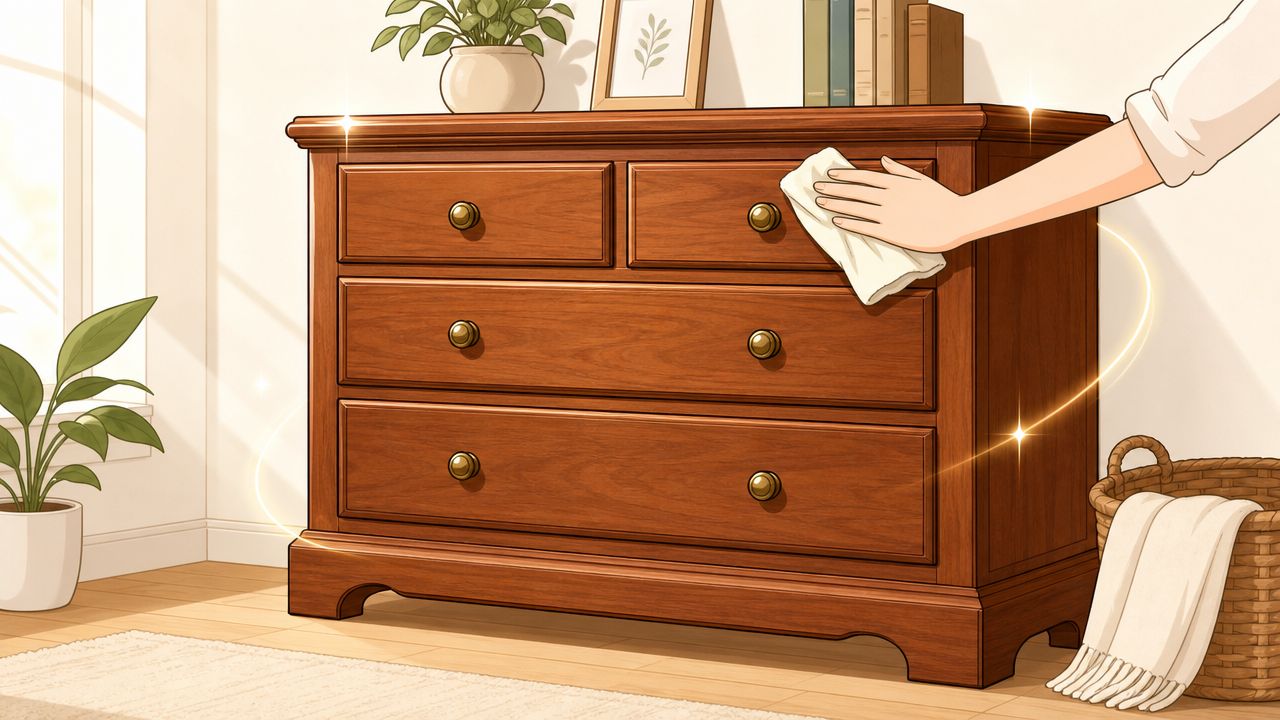
- Dust with a soft cloth. Grit and dust can act like tiny abrasives if left to build up.
- Wipe spills promptly. Fast cleanup is kinder to the finish than aggressive scrubbing later.
- Keep pieces away from direct heat and strong sun. Placement matters more than many people expect.
- Use the room thoughtfully. Coasters, felt pads, and a little common sense prevent a lot of frustration.
For homeowners who want a practical starting point, these wood furniture cleaning tips can help keep care simple and manageable.
Wood furniture likes consistency. Stable room conditions and gentle routine care usually beat heavy products and over-cleaning.
That idea reassures a lot of people. Solid wood furniture for living room spaces isn't delicate. It just benefits from everyday respect. Keep it reasonably clean. Don't park it in front of a heating blast. Don't let sunlight hammer the same spot every afternoon if placement can be adjusted.
Those small habits help the furniture keep doing what it was built to do. Look good, function well, and stay part of the home for a very long time.
Come Say Hi and Find Your Family's Furniture
Furniture is one of those purchases that still makes sense in person. Photos can show shape. They can't show heft, joinery, finish depth, seat height, drawer feel, or whether a console feels steady enough for the room it's headed into.
That's especially true with solid wood. The difference between “looks nice online” and “feels right in the house” is often obvious the second someone touches the piece.
Why seeing it in person still matters
A family-owned showroom that has served Metro Milwaukee since 1928 brings a different kind of shopping rhythm. There's more conversation, more comparison, and more attention to how the furniture will live in an actual home.
That matters for living rooms because buyers usually need help with more than style alone. They may be deciding between oak and maple. They may need a narrower table for a condo. They may need a piece that feels sturdy enough for grandkids, pets, or everyday family traffic.
A good showroom visit lets shoppers answer questions they can't solve from a screen:
- Does the wood tone work with the flooring and upholstery in the home?
- Does the scale feel right up close?
- Do the drawers, doors, and edges reflect the quality expected at that price?
- Will the piece feel too heavy, too formal, or just right once it's in the room?
A local showroom fits the way families shop
There's also something refreshingly straightforward about a business that stays rooted in local values. Family-first decisions still shape how many Milwaukee households shop, and that includes wanting honest help instead of pressure.
That local mindset fits furniture well. People want to talk through the room, the measurements, the entryway, the kids, the dog, the style, and the budget. They want someone to help them think it through.
The Greenfield showroom approach also makes sense for shoppers who want to see USA-made and Amish-made pieces, compare small-scale options, and ask direct questions about construction and materials. Since the store doesn't sell online and is closed on Sundays for family time, the emphasis stays where many households still want it. On in-person guidance and real conversations.
For solid wood furniture for living room spaces, that kind of shopping experience still has real value. Families can take their time, test what matters, and leave with more confidence than they would from a quick click.
Ready to see solid wood up close, compare styles, and talk through what fits a Milwaukee-area home? BILTRITE Furniture-Leather-Mattresses welcomes shoppers to the Greenfield showroom to explore USA-made and Amish-made furniture, small-scale options, and better-quality pieces built for real family life.