Innerspring vs Hybrid Mattress: How to Choose

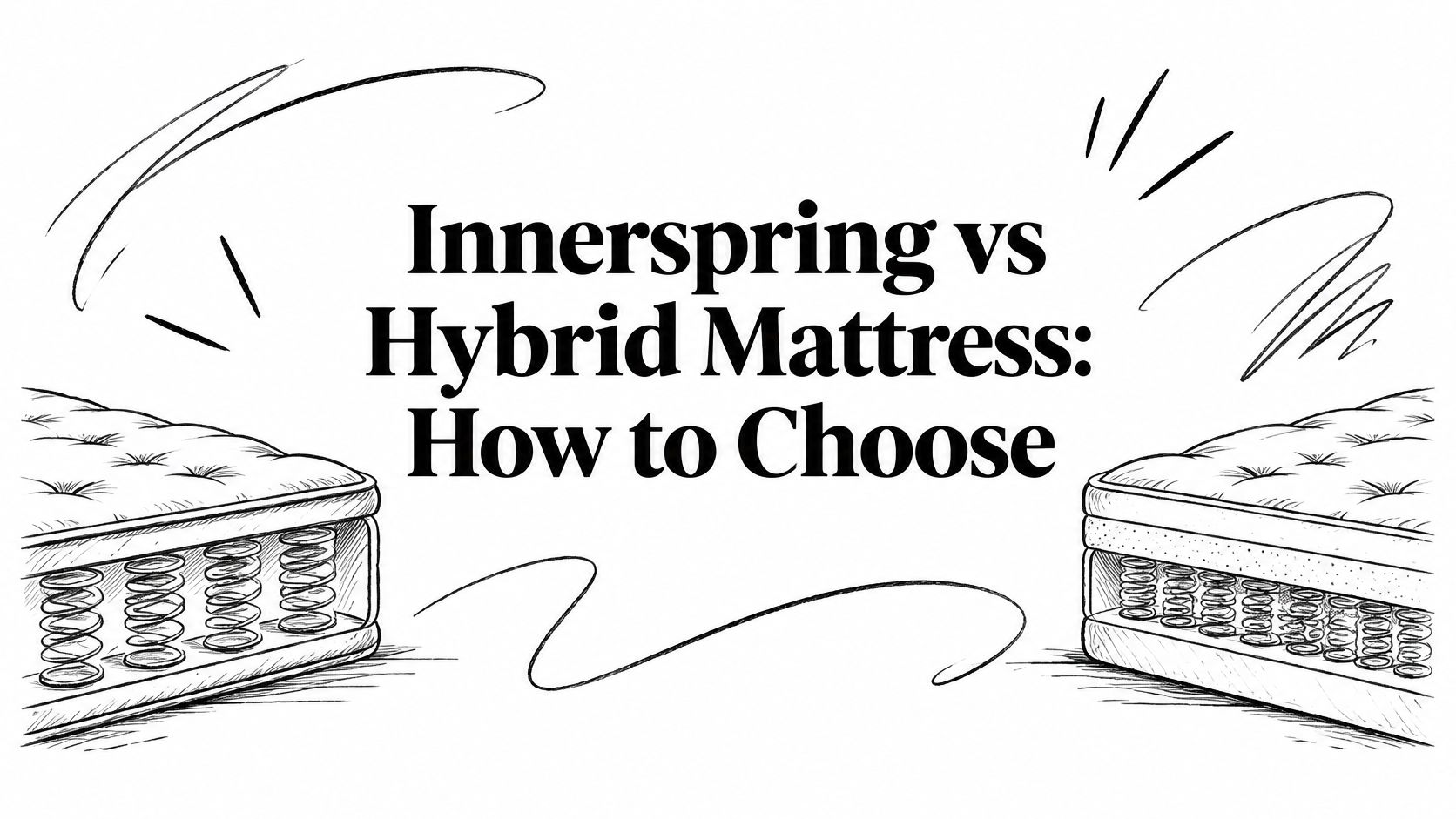
Two coil mattresses can feel like they came from different planets. One bounces you back the instant you roll over. The other lets your shoulder sink and your hip settle. Both have steel springs inside, so what changed?
The comfort layer changed, and that's the whole ballgame in the innerspring vs hybrid mattress question. A traditional innerspring keeps the padding thin and close to the springs. A hybrid stacks real cushioning on top of the same kind of coil unit.
Here's the part most shoppers never hear. The word "hybrid" isn't a grade or a guarantee. It's a construction style, and two beds wearing that label can feel completely different. This guide walks through what's inside each build, how they sleep, how long they last, and who should start where. It's the conversation we've had with Milwaukee families for decades, minus the sales pitch.
Table of Contents
- Innerspring vs Hybrid Mattress Side by Side
- Comfort Layers That Change the Feel
- Bounce Heat and Motion Between Partners
- How Many Years Each Build Usually Lasts
- Price Value and What Raises the Cost
- Who Should Choose Each Mattress
- Questions to Ask Before You Buy
- Test Both Mattresses in Our Greenfield Showroom
Innerspring vs Hybrid Mattress Side by Side
Start with the piece that decides everything else: how much material sits above the coils. A traditional innerspring keeps it lean, usually around 1 to 2 inches of foam, fiber, cotton, or quilting, as this comparison of hybrid and innerspring construction describes. A hybrid carries 3 inches or more of memory foam, polyfoam, latex, or a blend over the springs.
That gap changes how the bed meets your body. Thin padding lets the coil unit do most of the talking, so you feel the pushback. A deep comfort stack spreads weight across the shoulders and hips before the springs ever take the load.
The label is a starting point, not a grade. There's no industry-wide rule that makes every hybrid one way and every innerspring another. Manufacturers vary coil count, foam density, zoning, and edge support while using the same word on the tag.
Innerspring vs hybrid mattress at a glance
| What to compare | Innerspring | Hybrid |
|---|---|---|
| Comfort layer | About 1 to 2 inches of foam, fiber, cotton, or quilting | Commonly more than 2 inches, often about 3 inches or more of memory foam, polyfoam, latex, or a mix |
| Coil role | Steel coil core creates most of the feel | Coil core, usually pocketed, supports a thicker comfort stack |
| Feel | Bouncy and buoyant, easier to roll and reposition | Spring support plus more cushion at shoulders and hips |
| Motion transfer | Higher with interconnected coils; pocket coils reduce it | Upper foam absorbs more movement on top of pocket coils |
| Temperature | Open coil spaces move air; a thin top stays breathable | Coils still breathe, but thick memory foam can sleep warmer than latex or thin foam |
| Edge support | Depends on the perimeter coils and can feel abrupt | Often reinforced, yet still needs a sit-on-the-edge test |
| Typical lifespan | About 5.5 to 6.5 years on average | Often about 6.5 to 7.5 years; density and coil quality decide |
| Relative price | Usually the lower starting price | Usually higher because of the extra comfort materials |
Read those rows as averages across a category, not a promise about the specific bed in front of you. A well-built innerspring with a firm perimeter and honest padding can outlast a budget hybrid with a soft, low-density foam cap. A firm hybrid can also feel harder than a plush innerspring sitting two aisles away.
Spring design deserves its own minute. If you want the short version on wrapped coils and why they behave differently from a connected wire grid, our explainer on what a pocket coil mattress is covers the mechanics.
Our family has sold beds in Metro Milwaukee since 1928, long enough to watch the hybrid label arrive and long enough to know it isn't automatically the better buy. That's why the answer here is always the same: shop the build, then lie down on it.
Comfort Layers That Change the Feel
Every coil mattress starts with the same engine at the bottom. Steel springs compress when weight lands on them and push back when it lifts, and that pushback is where bounce comes from. What separates the two builds is how much work the springs are asked to do.
The cutaway tells the story in one glance. Same coil idea underneath. Very different stack on top.
What sits above the springs
A traditional innerspring holds the coil unit close to the surface with thin upholstery, which is exactly why it feels direct and springy. A hybrid keeps the coils for support and adds a genuine comfort system. RTINGS researchers draw a practical line at more than 2 inches of comfort foam as the point where a bed is generally treated as a hybrid, and they note that the category isn't an official standard.
The material choice inside that stack matters as much as the thickness. Memory foam contours slowly and holds a shape. Polyfoam gives a lighter, quicker cushion. Latex pushes back with a springier hug. Microcoils sometimes sit as a transition zone between the soft top and the main springs, adding one more response layer rather than replacing the support core.
Coil wrapping decides how locally the bed reacts. Pocket coils are wrapped one at a time, so a hip can sink without dragging its neighbors down. Interconnected coils share the load across the whole unit and pass more movement along with it.
Four specs worth asking for
Ask these while you're standing on the floor, before you lie down:
- Comfort-layer thickness and material. Two inches of soft foam and three inches of firm latex solve different problems.
- Foam type and density. A thin, low-density cap softens early even over a strong coil unit.
- Whether the coils are pocketed or interconnected. This one spec decides most of the motion story.
- Whether the edge is reinforced. Perimeter support matters if you sit on the bed to put on socks.
Coil count and gauge belong on that list too. A lower gauge number means thicker wire and a firmer feel, while a high count of very thin coils isn't automatically better than a lower count of sturdier ones.
Practical rule: Judge the comfort stack first, the coil unit second, and the marketing word last.
Every mattress in our Mattress Center is USA made, 100% handmade, brand new, and factory fresh, so the tag and the spec sheet are describing a bed you can lie on that day. Our pillow-top comparison, pillow top vs euro top, is a useful next read if you're weighing how the top of the stack is sewn.
Specs tell you what a bed is made of. Lying on it tells you what those layers do to your shoulder, your temperature, and your partner's tossing.
Bounce Heat and Motion Between Partners
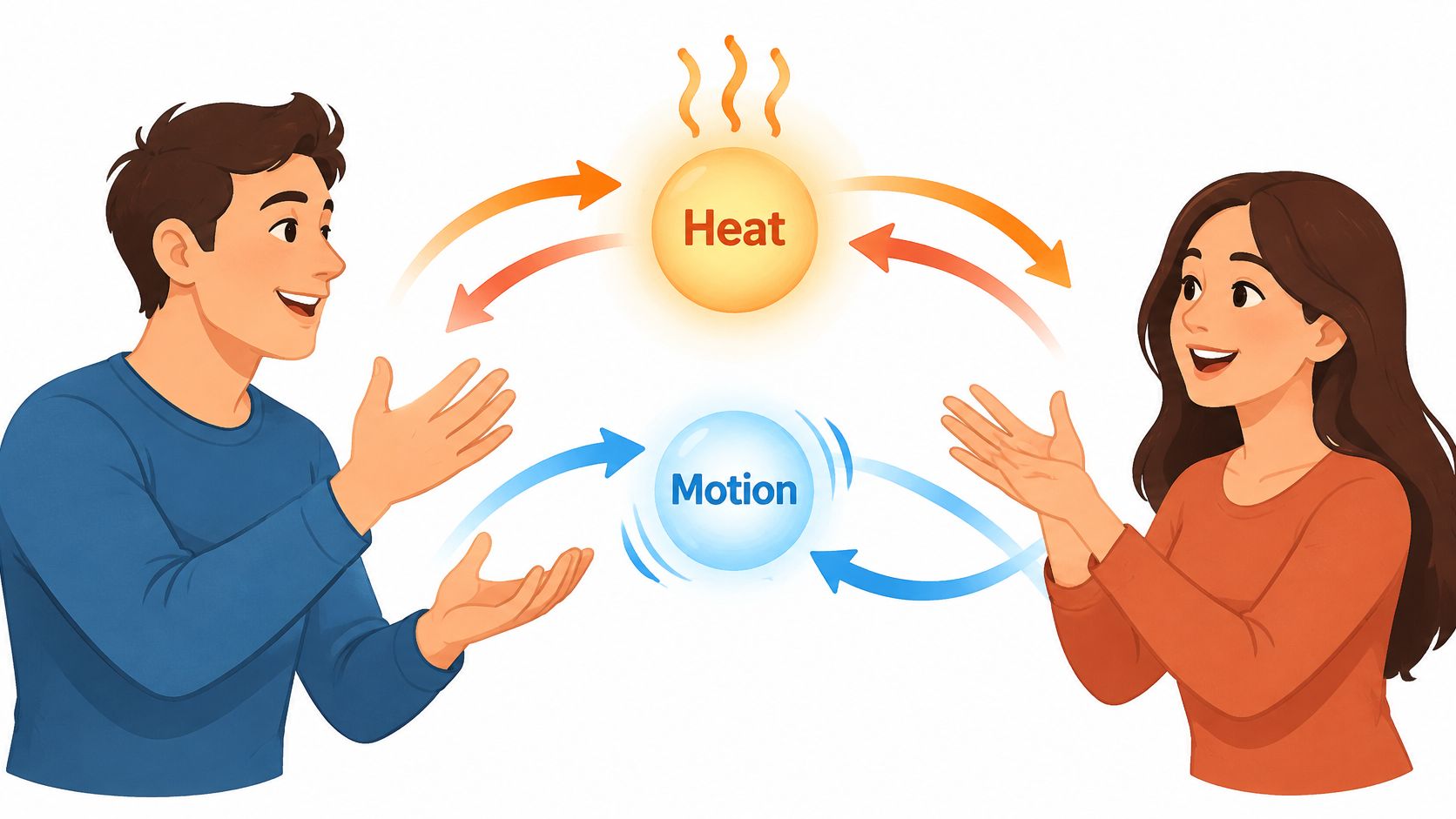
Feel is the easiest thing to test and the hardest thing to describe. A thin innerspring top lets the coils answer immediately, so turning over and getting out of bed takes little effort, and the surface stays close to a classic spring bed. A hybrid keeps some of that pushback while the thicker top spreads weight at the shoulder and hip.
That cushion helps side sleepers. It can also work against a restless sleeper. A very slow memory-foam top can feel like it's holding you in place when all you want to do is roll.
Where the heat goes
Open space inside a coil core moves air better than a solid block of foam, which is why both builds can sleep cooler than an all-foam bed. The top still decides the rest. Thick heat-retaining memory foam can feel warmer than latex or a thinner polyfoam layer, and the cover changes the result again. Two hybrids made from the same material words can sleep at different temperatures.
What couples actually feel
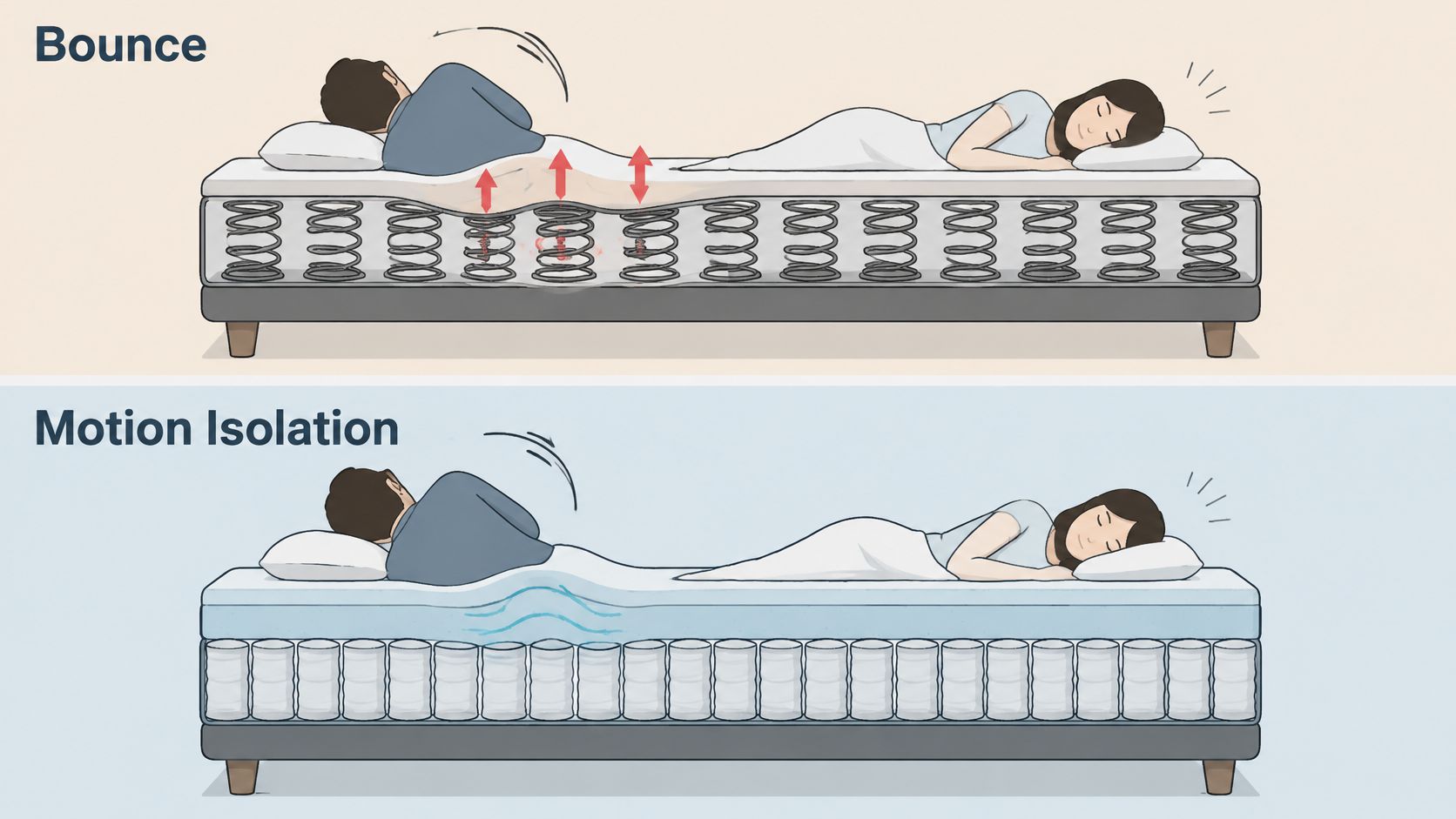
Coils transmit vibration, and how much depends on the design. Interconnected wire passes more of it across the surface. Pocket coils keep the response local, and a hybrid's foam layers soak up still more of a partner's turn. The Sleep Foundation's comparison of foam and hybrid construction frames it as a real trade-off, since coil cores support breathability and bounce while carrying more potential for motion transfer and noise than non-coil builds.
So more bounce often means more disturbance, and more cushion can mean slightly less snap. Neither is a flaw. They're the two ends of the same lever.
The four-part store test
Run these in order on any bed you're considering:
- Lie in your usual sleep position for several minutes. Not thirty seconds. Long enough for the foam to respond.
- Check that your spine stays level. Shoulder and hip pressure should ease without your midsection dropping into a hammock.
- Have your partner roll over and get out. You stay still on the far side and note what you feel.
- Sit and lie near the perimeter. Watch how far the edge compresses under you.
A hybrid is the stronger default when cushion and easy movement both matter. An innerspring fits when maximum bounce, airflow, and a firmer traditional surface outweigh isolation. Couples comparing notes on this will find more detail in our guide to finding a mattress that works for two sleepers.
How Many Years Each Build Usually Lasts
Coil beds go back to the 1870s, which gives the innerspring roughly 150 years as a proven support platform. Hybrids arrived much later, gaining ground in the 2010s once foam comfort layers became common. Newer doesn't automatically mean better built, and older doesn't mean outdated.
The averages, as reported in this sleep-product comparison, put an innerspring at about 5.5 to 6.5 years. Shape-retention estimates cited by the National Council on Aging put hybrids at roughly 6.5 to 7.5 years, while memory foam on its own lands around 6 to 7 years.
Average lifespan by mattress type
| Mattress type | Average lifespan |
|---|---|
| Innerspring | About 5.5 to 6.5 years |
| Hybrid | Often about 6.5 to 7.5 years; coil and foam quality decide |
| Memory foam | About 6 to 7 years |
Those figures are averages. A thick, low-density foam top can soften early even on a solid coil unit, and a well-built innerspring with sturdy gauge wire can outlast a cheap hybrid by years. Construction quality moves the number more than the category name does. For the maintenance side of that number, our guide on how long mattresses last covers what owners can control.
What you can control
Care decisions are where owners have real influence:
- Use the right foundation. A proper base or heavy-duty frame keeps the coil unit from flexing where it shouldn't.
- Add a protector. Spills and sweat break down foam faster than body weight ever will.
- Rotate when the maker allows it. One-sided pillow-tops get rotated, never flipped, unless the label says otherwise.
- Choose two-sided when even wear matters. A flip-able bed spreads use across both surfaces. That feature isn't standard, so confirm it on the specific model. We keep flip-able and two-sided styles in the Mattress Center for families who want that option.
Replace either type when a body impression lingers after you get up, when you wake with new aches, when you can feel coils through the top, or when a partner's movement registers more than it did when the bed was new.
The longer-lasting bed is the one whose foam density, coil build, and care plan match the sleeper, not the one with the thicker marketing story.
Price Value and What Raises the Cost
Price follows materials, not category loyalty. An innerspring often starts lower because there's less comfort material to build and fewer layers to assemble. A hybrid usually costs more because it adds inches of foam or latex, pocket-coil construction, and sometimes zoned or edge-specific coils.
Paying extra for the word hybrid helps nobody if the foam cap is thin and soft. Paying less for an innerspring is a smart family move when the coil unit, the perimeter, and the padding are built.
Comfort level is a separate decision from type. Extra firm, firm, medium, plush, and ultra plush all show up in more than one construction, so a plush innerspring and a firm hybrid can cross on price in the same showroom.
Ask what the extra dollars buy:
- Thicker comfort material, which usually means more pressure relief at the shoulder and hip.
- A stronger edge, which matters for anyone who sits on the bed to stand up.
- A two-sided build, which can spread wear across both faces.
- A heavier-duty coil unit, the kind that holds up under more weight and more years.
Then handle the paperwork side of the ticket. Sales tax runs 5.9% on pickup at BILTRITE in Greenfield and on delivery to Milwaukee County, so it belongs in your budget rather than in the surprise column. Select model sets include a free mattress protector or a free heavy duty bed frame. If a lower price turns up within 30 days after purchase, the store refunds 110% of the difference.
Floor-model pricing, delivery timing, and financing terms change with promotions, so confirm them in person rather than assuming last month's deal still stands.
Ask before you commit: what does this price include beyond the mattress, and what happens if I find it cheaper next week?
We aim for affordable, better-quality beds rather than the cheapest tag in town. Those aren't the same thing, and the difference usually shows up in year four.
Who Should Choose Each Mattress
Construction sets the primary trade-off, and the Sleep Foundation's testing guidance treats pressure relief, ease of movement, temperature control, edge support, and motion isolation as separate scores. A bed that feels supportive isn't automatically strong in every one of them. That's why the question isn't which type wins. It's which trade-off fits your body.
Which mattress to try first
| Your situation | Start with | Check in the store |
|---|---|---|
| Side sleeper with shoulder or hip pressure | Hybrid with a thicker comfort layer | Spine stays level and pressure eases without a deep sink |
| Stomach sleeper | Firmer innerspring with a thinner top | Hips stay level with the shoulders |
| Back sleeper | Either type in medium or firm | Lower back stays supported, not hammocked |
| Couple with a restless partner | Pocket-coil hybrid | Far-side partner barely feels turns and get-ups |
| Hot sleeper | Innerspring, or a hybrid with latex or thinner foam | Cover and foam type, not the hybrid label alone |
| Heavier sleeper | Reinforced hybrid or heavy-duty innerspring | Edge and center do not collapse under a full sit and lie |
| Senior who sits to get in and out | Strong-edge hybrid or firm innerspring | Edge holds while sitting and standing is easy |
| Budget-first family | Well-built innerspring | Coil feel, padding thickness, and whether it is two-sided |
A side sleeper with a sore shoulder should start on a hybrid whose comfort layer is meaningfully thicker than two inches, then confirm the spine stays level. A stomach sleeper usually does better on a firmer, thinner-topped innerspring so the hips don't drop out of line. Back sleepers can go either way as long as medium-to-firm support keeps the lower back from sagging.
Hot sleepers should ignore the category and read the specs. Favor open coils plus latex or a thinner foam top rather than assuming every hybrid runs warm or every innerspring runs cool. Heavier sleepers and anyone who needs a stable edge should look for reinforced coils, whether the tag says hybrid or heavy-duty innerspring.
When two sleepers want opposite feels
One person wants to sink in. The other wants to float on top. That's a common household, and it's solvable. Try each position on both builds before anyone compromises, and consider that a pocket-coil hybrid with a medium top often splits the difference better than either extreme.
The Mattress Center carries hybrid, innerspring, memory foam, latex, adjustable base, flip-able, heavy duty, and semi-heavy duty beds, in extra firm, ultra plush, plush, medium, and firm comfort levels. Sizes run from twin through California king, including two-piece king and California king sets. That range exists so a hybrid stays a choice rather than the only path in the building.
Seniors who sit on the edge to stand deserve the same edge test as everyone else, plus a comfort level that's easy to move across. Budget-first families can be happy with a well-made innerspring when the padding and coils are honest.
Questions to Ask Before You Buy
Bring this list into the showroom and ask each one while you're lying on the bed, not while you're standing next to it. The answers land differently when your shoulders are in the mattress.
- What is the comfort-layer thickness, and what is it made of? A number and a material name, not "plenty of foam."
- Are the coils individually pocketed or interconnected? This single answer predicts the motion story.
- What is the coil count and gauge, and where are the edge coils? Gauge tells you wire thickness; placement tells you whether the perimeter is reinforced.
- Is the edge reinforced, and does it hold when I sit here? Sit down while you ask.
- Does the cover breathe, and does this foam run warm? Memory foam holds heat differently than latex or a thin polyfoam.
- Is this model two-sided or flip-able, and does the maker allow rotation? Get the care instruction for this specific bed.
- What does the warranty cover? Ask about body impressions specifically, since that's the failure most owners experience.
- What does the final price include? Delivery, removal of the old mattress, and sales tax all belong in the number you compare.
Write the answers down and set them side by side. Two beds with the same label will usually separate fast once the specs are on paper.
A clear, honest answer to each of these tells you more than any label on the foot of the bed ever will.
Test Both Mattresses in Our Greenfield Showroom
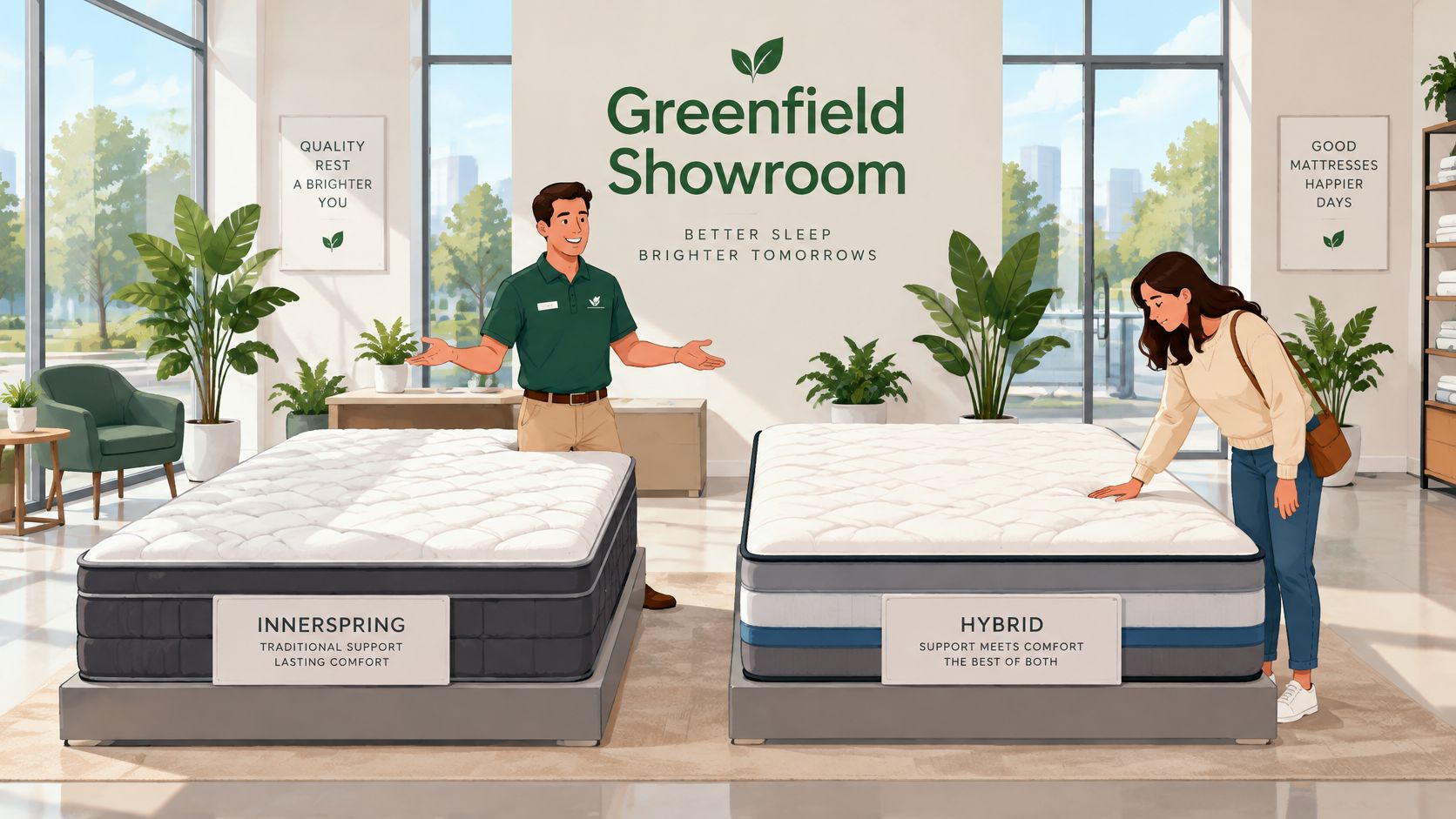
We don't sell mattresses online, so the decision happens on the floor. Come in and our associates will pull both an innerspring and a hybrid in the size and feel your household needs, then step back and let you work.
Plan the visit like this. Wear something comfortable and lie in your real sleep position for several minutes on each bed. Run the partner test if someone came with you. Sit on the edge of both and notice how far it gives. Ask about a two-sided model if even wear matters to you, since over 60 mattress models are on sale, including 36 flip-able styles.
Ask about delivery and disposal before you buy, too. A thicker hybrid can be harder to haul up a narrow stairway than a simpler spring unit, and recycling outcomes vary by build. In California's 2024 mattress-waste data, recyclers recovered 73.7% of received mattress weight and sent 26.3% on as residue, according to the Mattress Recycling Council's waste characterization study. The thicker bed isn't automatically the greener one.
Practical extras help here. Free white glove delivery applies on mattress-only purchases of $999 or more, and old mattress removal is free when the old bed is in donatable condition, with the bedding donated to charity. Our sales team has hundreds of years of combined experience and won't hurry you toward a decision.
If you want a head start on the hands-on part, our guide on how to test a mattress in a store walks through the same checks we use on the floor.
We're closed on Sundays so our family can be with theirs.
BILTRITE Furniture-Leather-Mattresses has been a fourth-generation, family-owned showroom on West Layton Avenue since 1928, and the Mattress Center here holds over 60 models in hybrid, innerspring, latex, memory foam, and two-sided builds, so you can lie on both constructions in the same afternoon instead of guessing from a product page. Come see the difference for yourself at BILTRITE Furniture-Leather-Mattresses, ask every question on your list, and let our team help you find the bed that fits how you sleep.