How to Rotate a Mattress: Expert Tips 2026

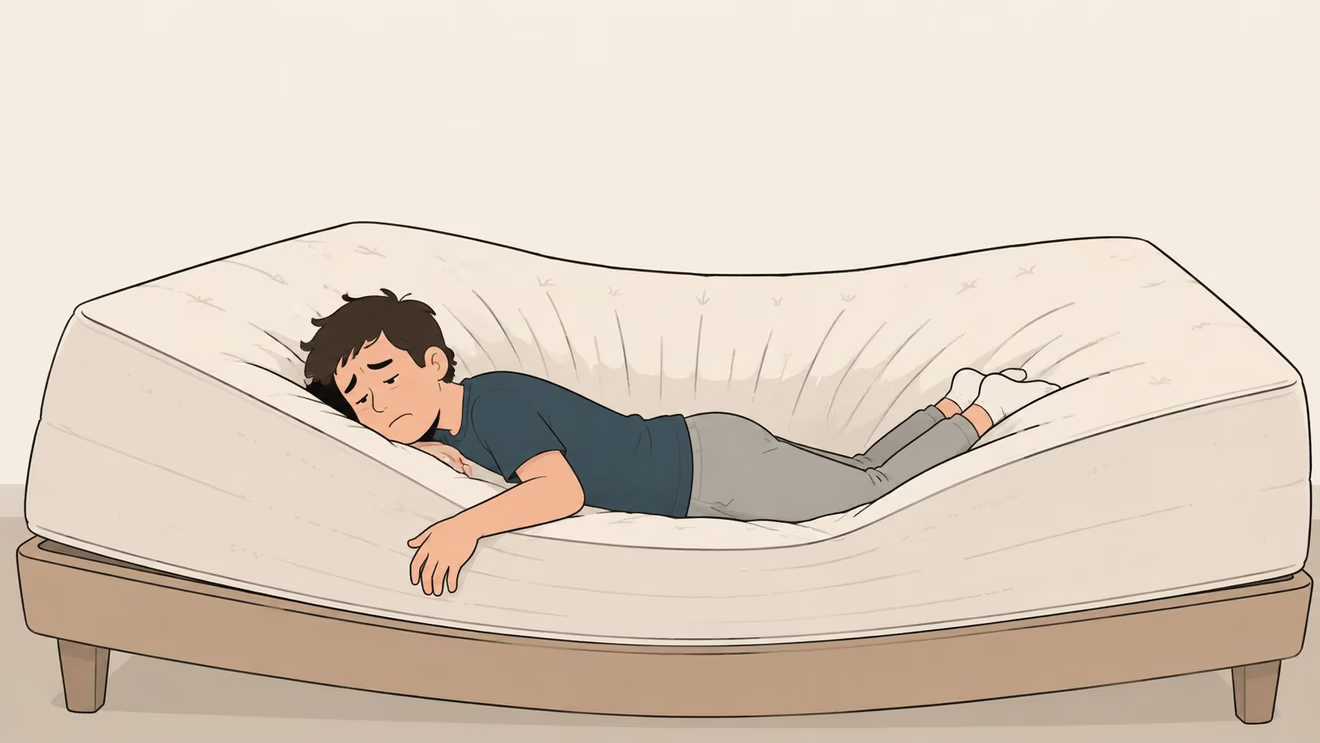
A lot of people start thinking about mattress rotation at the same moment. They crawl into bed, settle into their usual spot, and feel that little dip under the hips or shoulders. The bed still looks fine from across the room, but it doesn't feel as even as it used to.
That's usually the mattress asking for a little attention, not a panic replacement. In a family business that's served Metro Milwaukee since 1928, plenty of mattresses have come through the showroom, and one lesson keeps holding up. Good care matters. A quality mattress can give years of comfortable support, but only if the wear gets spread around instead of piling up in the same sleeping zone night after night.
Table of Contents
- Why Bother Rotating Your Mattress Anyway
- The When and How Often of Mattress Rotation
- One-Sided vs Two-Sided Mattresses
- The Safe and Easy Way to Rotate Your Mattress
- Troubleshooting and Warranty Considerations
- Your Questions Answered and a Final Friendly Word
Why Bother Rotating Your Mattress Anyway
That sinking feeling in bed usually doesn't show up all at once. It sneaks in. First the mattress feels a little less level. Then one side starts feeling more familiar than comfortable. Before long, sleepers are drifting toward the same worn area every night.
Rotating fixes a simple problem. Human bodies don't land on a mattress evenly. Hips, shoulders, and the side of the bed a person uses most all create repeated pressure in the same places. Turning the mattress 180 degrees changes where that pressure lands, so the head end becomes the foot end and wear gets spread across the surface instead of collecting in one zone. That basic head-to-foot turn is the core of how to rotate a mattress properly.
It's like rotating tires
A mattress and a set of tires have more in common than people think. Neither one stays in top shape if the same spots take all the work.
A mattress doesn't need complicated maintenance. It needs consistency. Rotate it on schedule, and the materials get a fairer chance to settle evenly as they break in and age.
Practical rule: Rotation is small effort now that helps prevent bigger comfort problems later.
Why quality still needs care
Better-quality mattresses are built with sturdier materials, and that's a big reason local families look for durable, USA-made options. But durable doesn't mean maintenance-free. Heavier, better-built mattresses can hold up beautifully, yet they still respond to repeated body weight in the same area.
That's why rotation matters whether the bed is in a guest room, a main bedroom, or a teenager's room that sees nightly use. A mattress is a comfort investment. Giving it a regular turn helps protect support, surface feel, and the years a household gets out of it.
The When and How Often of Mattress Rotation
A mattress can look fine on the surface and still be starting to settle unevenly underneath. I see that a lot in the store. Someone says, “We just bought it last year. How could it already feel different?” In many cases, the answer is timing. The mattress was never put on a rotation schedule during the months when the materials were doing most of their early settling.
For many households, a good starting point is simple. Rotate the mattress every 3 to 6 months. New mattresses often do better with closer attention during the first year, especially in the first several months, because that is when foams, fibers, and quilting layers are adjusting to regular body weight.
New mattresses need closer attention
The first year is usually the one that gets missed.
A new mattress has not fully settled yet, even if it felt perfect on day one. If two people sleep in the same spots every night, those comfort layers begin to conform there first. Rotating earlier helps spread that wear before a pattern gets too established. For heavier, better-built mattresses, this is especially helpful because once they are fully set up on the frame, people tend to leave them alone for years.
Some manufacturers advise more frequent rotation during the break-in period for certain one-sided hybrids and fiber-padded models. That is good common-sense guidance. Denser comfort materials and hand-built tops can take time to level out evenly.
A practical schedule that fits the mattress
Use the care tag and the maker's instructions first. Then match the schedule to the mattress design and how it is used.
- Brand-new mattress: Check it sooner than you think. A rotation within the first few months is often smart if the manufacturer allows it.
- Main bedroom mattress: Rotate on a steady 3 to 6 month rhythm if the bed is used every night.
- Guest room mattress: Rotate less often, but still inspect it for body impressions if the same guest uses it regularly.
- Single-sided modern models: Many memory foam and hybrid mattresses can go longer between rotations, often closer to the longer end of the usual schedule, if wear is staying even.
- Early signs of uneven comfort: Rotate sooner instead of waiting for the next date on the calendar.
If you want a quick reference for timing by mattress style, this guide on how often you should flip a mattress is a helpful companion.
One practical tip from our family's years helping Milwaukee customers: tie mattress care to something you already remember. Daylight saving time works well. So do the first furnace filter change in spring and fall, or the points in the year when you switch bedding for the season. A schedule people follow always beats a perfect schedule they forget.
One-Sided vs Two-Sided Mattresses
A lot of mattress confusion starts with one simple mistake. People treat rotation and flipping like they mean the same thing. They do not. The right care depends on how the mattress is built.
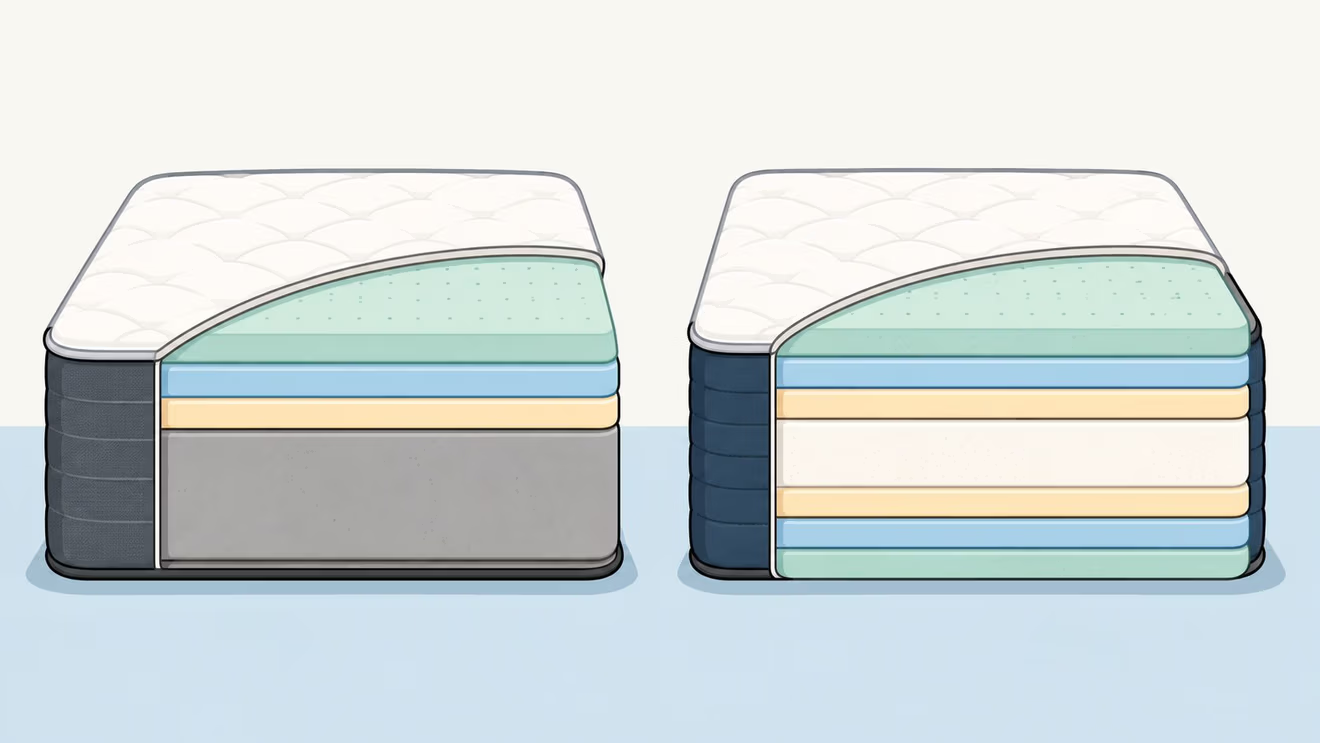
One-sided mattresses
Most mattresses sold today are one-sided. The comfort materials belong on top, and the support system belongs underneath. On this type, rotation is often part of normal care if the maker allows it. Flipping is usually wrong for the mattress.
In plain terms, a one-sided mattress is built to work in one direction. If you turn it upside down, your body ends up on the support core instead of the comfort layers. That can make the bed feel hard, awkward, and unsupported. It can also create wear the mattress was never designed to handle.
For one-sided models, the usual rule is simple. Rotate head to foot. Do not flip unless the manufacturer specifically says you can.
Two-sided mattresses
A two-sided mattress is built for use on both sleeping surfaces. That means it can be rotated and flipped as part of regular maintenance. My family has sold these for decades, and they still make a lot of sense for households that value longevity over convenience.
Using both sides spreads wear more evenly across the mattress. Instead of asking one quilt panel and one comfort stack to absorb years of nightly use, you share that work between two sleeping surfaces. That is a big reason many people who grew up with older, heavier mattresses still ask for a flippable model today.
Two-sided beds do ask more from the owner. They are often heavier, and flipping one safely is usually a two-person job. Still, for shoppers who want longer, more balanced use from a quality mattress, the benefits of a two-sided mattress are worth reading.
Why the difference matters in real homes
This choice is not just about maintenance instructions. It affects daily use, long-term wear, and how much effort it takes to care for the bed.
A one-sided mattress suits people who want simpler upkeep and a lighter lift on rotation day. A two-sided mattress often appeals to families who do not mind a heavier mattress if it gives them another usable sleeping surface and a more traditional, durable build. In our Milwaukee showroom, that trade-off comes up all the time, especially with customers shopping for a primary bedroom set they plan to keep for years.
If you are not sure which type you own, check the law tag and the manufacturer label before doing anything. That quick step can save a lot of trouble.
| Mattress type | Rotate | Flip |
|---|---|---|
| One-sided mattress | Yes, if manufacturer allows | No |
| Two-sided mattress | Yes | Yes |
Identify the mattress type first. Rotation is standard care for many models. Flipping is only for mattresses built for use on both sides.
The Safe and Easy Way to Rotate Your Mattress
Rotating a mattress shouldn't turn into a wrestling match with the bed frame. A little prep makes the job much easier, and a second person usually makes it much safer.
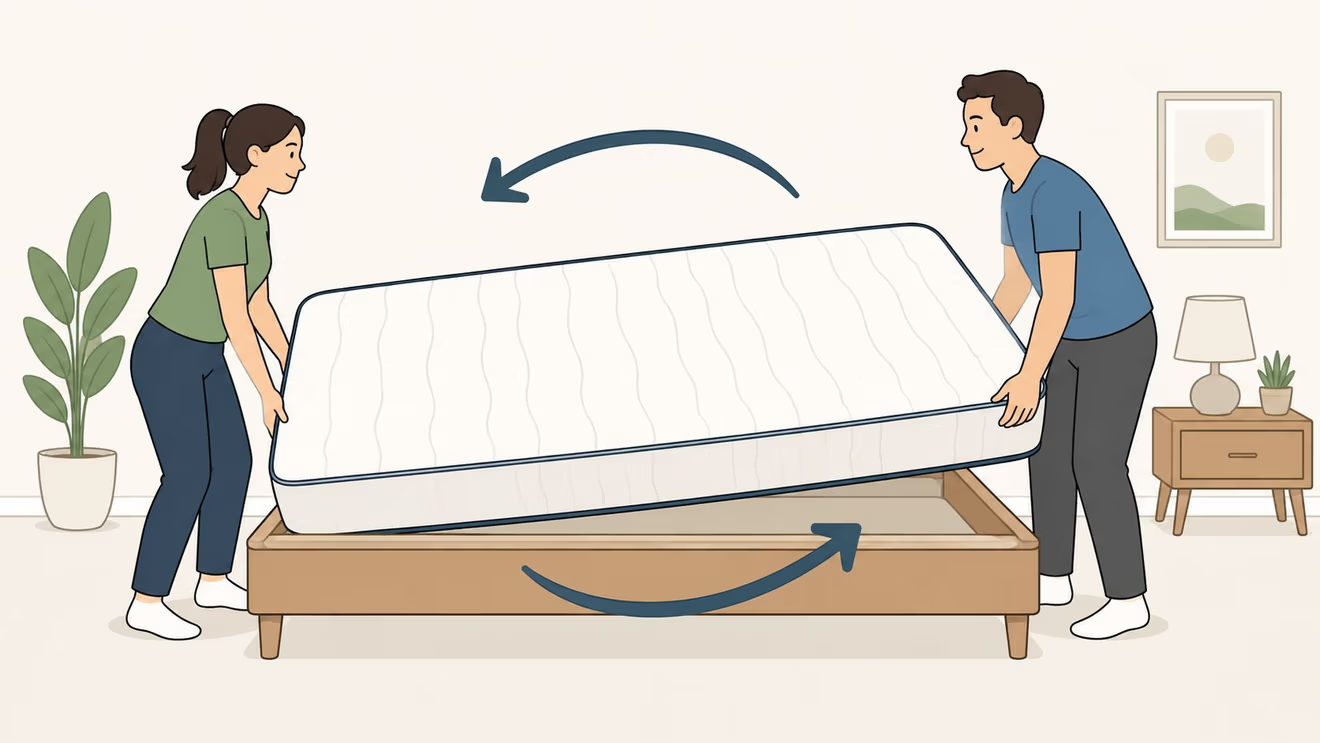
Casper's mattress rotation instructions put it plainly: strip all bedding, clear the surrounding area of breakables, use two people to lift the mattress slightly off the frame, and pivot it 180 degrees so the head and foot positions swap. The same guidance warns against using built-in handles for lifting because they're designed for positioning, not carrying the mattress weight.
Start with setup, not muscle
Before anyone lifts a corner, clear the room around the bed. Remove lamps, clocks, baskets, and anything fragile sitting on a nightstand edge. If the mattress can rotate while staying on the frame, make sure there's nothing sharp underneath that could snag or puncture it.
The law tag can also help keep orientation straight. If the tag starts near the headboard, it should end near the footboard after the turn. That quick check helps confirm the mattress got a full head-to-foot rotation.
A simple step-by-step method
- Strip the bed completely. Sheets and protectors only get in the way.
- Move nearby breakables. Give the mattress room to pivot.
- Work with a second person. One person at each side keeps the movement controlled.
- Lift slightly, then pivot. The goal isn't to haul the mattress high into the air. It's to raise it just enough to turn it.
- Set it down squarely. Make sure the corners sit evenly on the frame or foundation.
- Re-center before remaking the bed. A crooked mattress wears poorly and feels odd.
A practical follow-up is this mattress maintenance and cleaning guide, especially for households that want to combine rotation day with a quick mattress check.
For heavy mattresses, use the slide-and-wedge approach
Some better-quality mattresses are heavy. That's often a sign of high-quality materials, but it also means the rotation method matters.
Instead of dead-lifting the whole mattress, slide it gradually toward the edge of the frame, pivot one end at a time, and use the footboard or open frame space as a temporary wedge point while the second person guides the far side. That “slide-and-wedge” approach reduces awkward twisting and keeps the mattress from crashing into a headboard, wall, or nightstand.
Don't treat the fabric handles like moving straps. They help position the mattress once it's lined up, but they're not the place to put full lifting force.
Troubleshooting and Warranty Considerations
Rotation day is also inspection day. Once the sheets are off, it's easier to notice the early signs of wear that get hidden during everyday use. A slight body impression, a stain, a corner that isn't sitting flat, or a surface that feels softer on one side than the other all deserve a closer look.
One problem gets more expensive when people ignore it. Galleria Furniture notes that skipping regular rotation can accelerate sagging by 25% within 3 years. That doesn't mean every dip is a warranty issue. It does mean neglect can make small comfort changes turn into bigger structural complaints faster than expected.
What to check while the mattress is bare
- Look for developing impressions: A shallow wear pattern may improve with proper rotation, especially if caught early.
- Check the support underneath: A mattress can't perform well on a weak or uneven base.
- Notice stains or damage: Cleanliness and condition often matter if a warranty claim ever comes up.
- Watch the edges: If one side is taking all the traffic getting in and out of bed, that side may need extra attention.
When rotation won't solve it
Rotation helps with uneven wear. It won't undo a mattress that has aged out, lost support, or developed a deeper permanent sag. If the bed still feels lopsided after being rotated and given a little time to settle, it may be time to start shopping instead of troubleshooting.
Warranty terms vary, but care matters. Households that want the details should review mattress and furniture warranty information so they understand what maintenance, support systems, and condition standards apply.
Your Questions Answered and a Final Friendly Word
A few mattress questions come up again and again in the Greenfield showroom, and they usually boil down to safety, mattress type, and whether a simple care habit is really worth the trouble. It is.
Can one person do this alone
Sometimes, yes. That doesn't make it wise. Purple reports on a 2025 ergonomic study showing that 40% of DIY mattress rotators suffer minor injuries due to improper lifting angles, especially when they rely on non-reinforced handles meant only for positioning. If the mattress is thick, heavy-duty, or hard to grip, a second person is the smarter call.
What if a one-sided mattress got flipped by mistake
Flip it back to the proper sleeping side and check that it's centered on the frame. One accidental flip doesn't automatically ruin a mattress, but continuing to use a one-sided model upside down can interfere with comfort and support.
Does rotation really affect long-term value
Absolutely. Rotation is one of the simplest habits that helps a mattress wear more evenly and stay comfortable longer. It also shows that the owner has taken reasonable care of the product, which can matter if warranty questions ever come up.
For families around Metro Milwaukee, comfort at home has always been personal. Since 1928, a fourth-generation, family-owned business has helped neighbors choose better-quality furniture and mattresses that fit real homes and real budgets. The showroom in Greenfield is still the place to see the difference in person, talk with a team that brings over 400 years of combined experience, and find something built for the way a household lives. The store is closed on Sundays and Mondays for family time, and that family-first approach still shapes how customers are treated every day.
If mattress rotation has raised questions about wear, support, or whether it's time for a different kind of bed, BILTRITE Furniture-Leather-Mattresses is a helpful place to start. Come visit the Greenfield showroom, see the mattress options in person, and talk with a friendly team about one-sided, flip-able, heavy-duty, and USA-made choices that fit your home.