3 DAY MATTRESS SALE! THURSDAY - FRIDAY - SATURDAY!
LABOR DAY SALE HELD OVER ENDS SATURDAY, SEPTEMBER 19 AT 5PM!
NO CREDIT CARD FEES!
1000's of Items IN-STOCK + 500 Mattresses!
Largest selection of USA Made Furniture & Mattresses + Amish Made!
FREE In-Store Design Services!
BUY LOCAL & LOVE YOUR HOME!
3 DAY MATTRESS SALE! THURSDAY - FRIDAY - SATURDAY!
LABOR DAY SALE HELD OVER ENDS SATURDAY, SEPTEMBER 19 AT 5PM!
NO CREDIT CARD FEES!
1000's of Items IN-STOCK + 500 Mattresses!
Largest selection of USA Made Furniture & Mattresses + Amish Made!
FREE In-Store Design Services!
BUY LOCAL & LOVE YOUR HOME!
OPEN LABOR DAY | Tuesday-Thursday 10am to 6pm | Friday 10am to 7pm | Saturday 10am to 5pm | Sunday Closed To Be With Family & Friends | Monday Showroom Closed
5430 West Layton Ave, Greenfield - Metro Milwaukee
Move-in day has a way of exposing every inch of a dorm room. A student drags in bedding, a couple of storage bins, maybe a lamp, and then everyone standing in the room notices the same thing, the closet is tiny and the floor disappears fast. That's where bed risers for dorm rooms start to matter, because the space under the bed can become the storage zone that keeps the rest of the room livable.
Why Every Dorm Room Needs Vertical Storage
A dorm room can feel generous on paper and cramped in real life. Once a Twin XL bed, a desk, and a wardrobe land in place, there's not much left to work with, which is why families start looking upward instead of outward. The simplest fix is often lifting the bed and using the space underneath for bins, shoes, bedding, and the things that always seem to pile up by midsemester.
That vertical approach makes sense because the clearance under a Twin XL bed platform can reach about 27 to 33 inches when it's raised to the highest setting, and one dorm guide notes that 30 inches of clearance can create almost 53 cubic feet of under-bed storage space (Ithaca College residence life guidance). That's not just extra room, it's a more orderly way to live in a small footprint. Parents usually see the benefit right away, because fewer piles on the floor means fewer tripping hazards and less clutter.
In practice, bed risers for dorm rooms act like a small structural lift that turns dead space into usable storage. A modest raise can make room for bins sized to slide under the frame, and that can change how a student organizes the whole room. BILTRITE often helps families think the same way about small spaces, using vertical storage first and then choosing furniture around the space that's left. A useful starting point is this guide to small space furniture solutions.
Practical rule: If a dorm room feels crowded before the unpacking is done, the first question shouldn't be what to add. It should be where the room can work harder.
When students think in levels instead of square feet, the room starts to make sense. That's the core value of bed risers, they help small rooms behave more like organized ones.
Comparing Bed Riser Types and Materials
The material matters because the bed is not just sitting there, it has to carry weight that shifts every time someone gets in or out. A riser that looks steady in the box can behave very differently once a mattress, frame, and sleeper are all on top of it. That is why the choice usually comes down to three practical categories, plastic, wood, and steel.
What each material does differently
Plastic risers are the lightest and easiest to move around. They are often the budget-friendly pick, and they work well when the goal is simple height rather than a heavy-duty setup. The trade-off is that lightweight construction can feel less reassuring under a loaded bed, especially if the fit under the leg is not tight.
Wood risers tend to feel more substantial and can pair nicely with solid-wood furniture styles. They give a warmer look than plastic and can blend into a room that already has wood tones. They make sense when appearance matters as much as function, but they still need the same careful check for fit and stability.
Steel risers are the most mechanically serious option. Dorm-oriented products in this category are often built for higher load capacity, and some designs offer adjustable heights. They usually cost more, but they are the natural choice when stability and durability matter more than keeping the setup minimal. For families who want a practical overview before buying, a guide to furniture riser options helps frame the decision around support, fit, and room use.
The basic lift range students usually see is 6 to 8 inches. That is enough to change storage options without making the bed feel extreme. One dorm-focused listing says a riser set can add about 8 inches of extra storage space, which is why that range shows up so often in residence halls.
Bed Riser Types at a Glance
Material
Typical Height Added
Weight Capacity Per Riser
Best For
Plastic
Usually in the common dorm lift range
Varies by product
Light storage needs and simple setup
Wood
Usually in the common dorm lift range
Varies by product
Solid-wood looks and steadier feel
Steel
Often adjustable, depending on model
Commonly higher capacity
Heavier loads and more demanding fit
A good question for families is not, “Which one looks strongest?” It is, “Which one fits the bed frame, the room rules, and the student's daily routine?” That practical mindset matters because a riser has to support the bed cleanly, not just look sturdy in a photo.
A higher rating on paper does not help if the riser and the bed leg do not mate cleanly in real life.
How to Measure Your Dorm Bed for Risers
Start with the bed frame, not the storage plan. A riser only works when the cup and the leg fit closely enough to keep the bed centered under weight. If that connection is loose, the frame can shift, and that is the kind of problem families would rather catch before move-in day than after the room is full of boxes.
The checklist that prevents a bad purchase
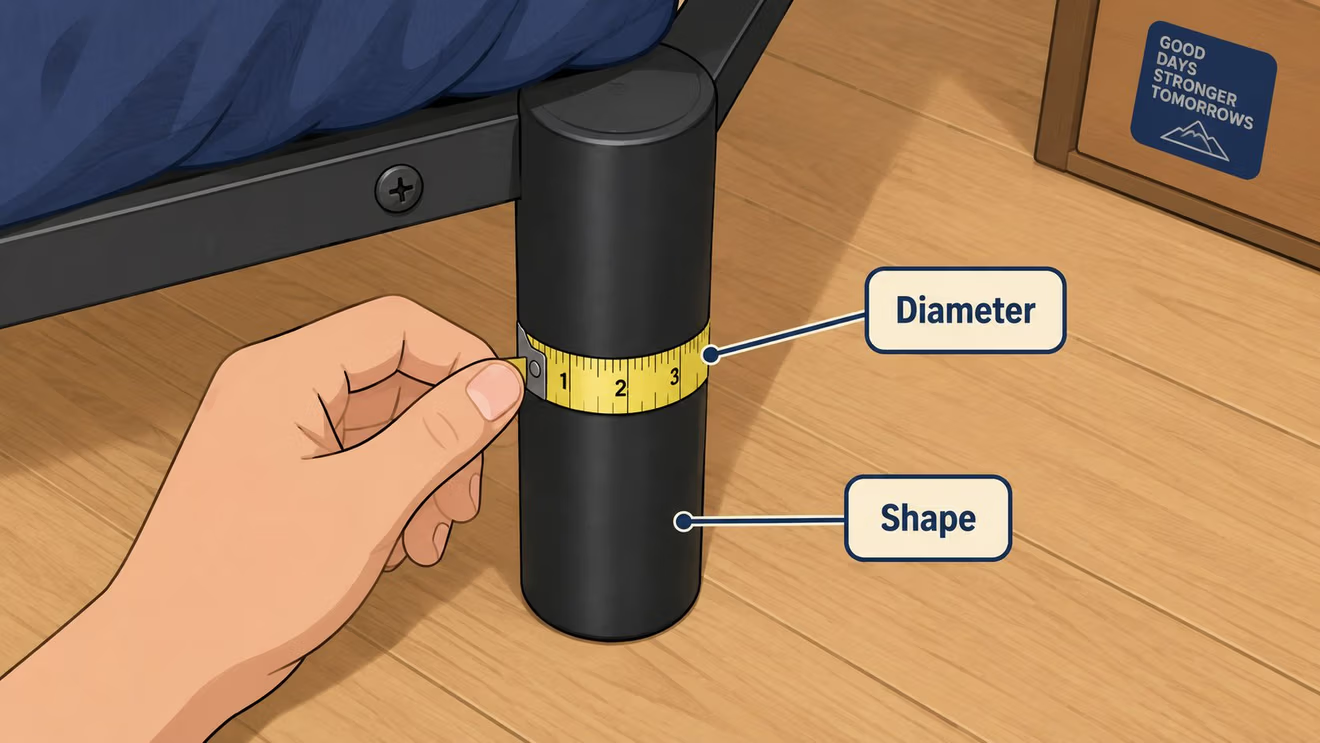
First, identify the leg shape. Some dorm frames use square wooden posts, while others use round or metal legs, and many risers are made for only one type of frame. One dorm-oriented riser product is made for square wooden frames and supports bed posts up to 3 inches with a minimum width of 1.5 inches (DormCo bed riser specifications). That kind of fit matters because a post that sits too loosely can rock inside the cup, much like a chair leg that never quite settles flat on the floor.
Next, measure the width or diameter of each leg. Dorm-use risers commonly specify a fit range of about 2 to 3 inches in diameter because the post has to sit securely inside the cup to reduce lateral slip (DormCo steel riser specifications). If the measurement is off, even by a little, the frame can wobble when someone gets in bed or shifts during the night.
Then check the load rating. Some dorm-oriented risers are rated around 350 pounds per riser, or 1,400 pounds for a four-riser set (DormCo steel riser specifications). That rating shows how the weight is meant to be shared across all four corners, the same way a table stays steadier when each leg carries its share instead of one corner doing all the work.
One adjustable model fits legs of 2.75 inches or less and can be set to 3, 5, or 8 inches (DormCo adjustable riser specifications). Adjustable height can help if a school room has tight clearance or if a student wants a little extra storage without raising the bed higher than necessary.
Measurement habit that saves money: Measure twice, buy once, then check the housing rules before anything gets opened.
Students shopping for a Twin XL frame can also benefit from knowing the mattress footprint they're working around. A quick reference to Twin XL size basics helps put the riser height and bed dimensions into context without guessing.
Campus Policies and Safety Rules You Must Know
A lot of families assume bed risers are a standard dorm item, but campus housing rules can make the choice much narrower than expected. Some schools allow them only on certain beds, some ban them altogether, and some add details that only show up when a student reads the housing handbook closely. That is why the fit has to be checked in two ways, the physical fit under the bed and the policy fit with the school.
Lehigh University states that beds may only be lifted off the ground by bed risers, that only one set is permitted per bed, and that risers cannot be used with bunk beds (Lehigh University bed policy). Ithaca College allows residents to lift a bed with bed risers or a cinder block under each leg, but says risers with electrical outlets are prohibited as a fire hazard (Ithaca College beds and linens policy). Those examples show why the handbook matters, because a riser that looks sturdy in a store can still be the wrong choice for a specific room.
Why schools draw the line
Safety is the main reason. A bed that sits too high can be harder to get into, harder to get out of quickly, and more likely to create a fall risk. Electrical outlets built into risers add another layer of concern because dorm rooms already have enough cords, chargers, and adapters without putting power access at the base of the bed.
The common dorm height limit is 6 to 8 inches total, because many colleges restrict how high a bed may be raised to reduce fall risk. Product design often follows those limits, which is why risers are usually sold in that same range. A higher setup may look appealing on paper, but if a student has to climb awkwardly every night, the extra height can create more trouble than storage space.
A simple pre-purchase checklist helps:
Check the housing handbook: Look for rules about riser height, bunk beds, and allowed accessories.
Ask about outlets: Confirm whether built-in electrical features are prohibited.
Verify bed type: Make sure the bed is not a bunk or a frame that already has limits.
Confirm removal rules: Some schools expect accessories to come off before move-out.
The smartest move is to treat policy as part of the fit test. If a school says no, the product choice is over, no matter how useful it seems on the shelf. A little advance checking saves parents from buying something that wobbles, violates housing rules, or has to be removed right away.
For families comparing options at the same time, a guide on how to move heavy furniture upstairs can also help if the bed frame or other dorm furniture needs careful handling during move-in.
Installing and Removing Bed Risers Safely
The cleanest installation is a two-person job. One person steadies the frame while the other places each riser, and that makes the whole process feel controlled instead of awkward. The point is to protect the bed, the floor, and the people doing the lifting.
A simple setup routine
Clear the area first. Shoes, bins, cords, and loose bedding should be out of the way so no one trips while lifting a corner of the frame. Then raise one leg at a time, position the riser directly underneath, and lower the leg into the cup so the bed sits centered.
Once all four corners are in place, test the frame before loading anything underneath. A quick sit, a gentle shift, and a visual check for wobble are enough to catch a bad placement early. If the bed rocks, the riser likely needs to be reseated or replaced with a better-fitting option.
Furniture sliders can help protect dorm floors when the bed needs to be nudged into place. They also make it easier to make small adjustments without scraping wood or tile. That matters in a dorm where the room has to go back to its original condition at move-out.
Removal is just the reverse, but it deserves the same care. Pull the storage bins out first, strip the bedding, and have one person lift while the other slides each riser free. Packing them in a labeled bag or bin makes summer storage easier, especially when the family needs to bring them home after the semester ends.
A good general rule is to move slowly and keep the weight balanced. BILTRITE's advice on how to move heavy furniture upstairs lines up with that mindset, because controlled movement prevents damage better than rushing ever will.
If the frame shifts while the risers are going in, stop and reset it. Stability comes before speed.
Bed Risers Versus Lofting and Other Storage Alternatives
Bed risers solve one problem very well, they create usable space under a bed without turning the room into a construction project. That makes them different from lofting, which raises the bed much higher and changes how the entire room functions. Families often get the most value by matching the solution to the student's habits, not just the square footage.
How the options compare in daily life
Bed risers are the low-friction option. They're easier to install than lofting, and they usually preserve comfortable bed access while still opening room for bins. That makes them especially useful when a student wants storage without making the bed feel like a climb.
Lofting creates the most dramatic floor-space change, but it also demands more effort and may not be allowed in every residence hall. It can make sense in some rooms, but it can also feel too tall for students who want easy access or who don't like sleeping high off the floor.
Under-bed storage bins are the natural partner to risers. Without enough clearance, bins won't slide in cleanly, and that's where the lift becomes practical rather than theoretical. Over-door organizers help with smaller items, but they don't solve the larger storage challenge under the bed.
The best setups usually combine a few tactics instead of relying on one fix. Risers create the clearance, bins use the clearance, and other organizers handle the overflow. That layered approach works well in dorms because every item needs a place, not just a spot on the floor.
A useful way to think about it is this. If the student needs better organization with minimal change to the bed, risers are usually enough. If the room is exceptionally tight, lofting might be considered, but only after checking the housing rules and the student's comfort with height.
BILTRITE's beds for small spaces content fits that same logic, because small rooms reward smart sizing and simple planning more than oversized furniture choices.
Visit BILTRITE for Expert Dorm Furniture Advice
Families shopping for dorm gear often want one thing above all, honest guidance from people who've seen a lot of rooms and a lot of furniture setups. That's where we come in at BILTRITE. We're a fourth-generation, family-owned showroom in Greenfield, and we've been helping Metro Milwaukee families since 1928, with a team that brings over 400 years of combined experience to the floor.
Our focus is on affordable, better-quality furniture, with a strong mix of USA-made, Amish-made, and solid wood pieces that hold up well in real homes and real student spaces. We also keep small-scale furniture and mattress options on hand, including a large Mattress Center with over 60 models, so families can compare choices in person instead of guessing from a screen. We're closed on Sundays so our team can be with their families, and that family-first value shapes how we help every shopper who walks in.
Ready to make dorm shopping easier? Come visit our showroom in Greenfield, ask questions, and let us help you sort through bed risers, mattresses, and space-saving furniture without pressure.
If dorm storage is on the list, BILTRITE Furniture-Leather-Mattresses has the kind of in-store guidance that helps families choose with confidence. Visit BILTRITE Furniture-Leather-Mattresses in Greenfield to talk through bed risers, small-space furniture, and mattress options with a team that knows how to help college rooms work better.