Leather Sofa Brown Styling and Buying Guide for Homes


A Milwaukee family settles in after a long day. One child curls up with a book, someone reaches for a blanket, and the brown leather sofa holds the room together. It works with the wood floor, welcomes muddy paws and busy evenings, and still looks at home when the room changes around it.
That's the appeal of a leather sofa brown homeowners can live with for years. Brown isn't one color. It ranges from golden cognac and red-toned chestnut to tobacco, espresso, and modern mocha. The leather itself matters just as much. A beautiful shade can disappoint if the grade or finish doesn't match a household's children, pets, mobility needs, or daily habits.

Brown remains the dominant color family in leather sofa sales. One 2026 industry summary reports that brown represents 53% of leather sofa sales, compared with 24% for neutrals and 11% for gray, making it the clear category leader (leather sofa color data). The question, then, isn't whether brown is in style. It's which brown will continue to feel right, which leather will age gracefully, and how the sofa will fit into a real Metro Milwaukee home.
The guide ahead starts with undertones, then compares leather grades and finishes. It also covers color pairings, furniture scale, placement, care, and the questions shoppers can bring to the BILTRITE showroom in Greenfield. For additional room-planning ideas, homeowners can explore living room design with a leather sofa.
Table of Contents
- Introduction Why Brown Leather Sofas Still Anchor the Living Room
- Understanding Brown Tones and Undertones That Stay Timeless
- Leather Types and Finishes and How They Age in Real Homes
- Styling Your Brown Leather Sofa With Color Texture and Wood
- Durability Care and Placement That Keeps Brown Leather Beautiful
- How to Choose and Customize Your Brown Leather Sofa at BILTRITE
- Visit Us in Greenfield and Find Your Favorite Brown Leather Sofa
Introduction Why Brown Leather Sofas Still Anchor the Living Room
After a busy Milwaukee day, the living room often becomes the place where children read, pets settle, and grandparents rest. A leather sofa brown can support that shared routine while giving the room a steady visual center. Its natural surface adds warmth, and its color works comfortably with wood floors, bookcases, rugs, blankets, and baskets.
Brown also has staying power beyond a single decorating cycle. Leather furniture use has been documented as far back as 3100 BC, while widespread use in high-end upholstery is associated with the 18th century (history of brown leather sofas). The Chesterfield remains a familiar early brown leather style, recognized by its low back, rolled arms, and button-tufted upholstery. Those features still suit traditional rooms, while simpler shapes bring brown leather into contemporary homes.
The lasting choice is more specific than “brown.” Chestnut, cognac, and tobacco usually have warm, established character that can remain comfortable as wall colors and accessories change. Trendier mocha undertones may feel fresher today, though their gray, taupe, or cooler influence can date more quickly. Leather grade and finish matter just as much. A sealed surface may be easier around spills, children, and pets, while a more natural finish develops visible variation that some families welcome.
Daily comfort deserves equal attention. A senior may benefit from supportive cushions and an easier seat height. A smaller Milwaukee apartment may require a compact frame or sections that separate for delivery. Families who lounge often should also consider how the leather will respond to scratches, oils, sunlight, and repeated use.
The useful question is which brown and which leather will fit this home for the long haul.
Room planning helps complete the decision. Wall color, wood, texture, rugs, and metal accents can keep a brown sofa from feeling heavy. For practical ideas, explore living room design with a leather sofa. The right sofa should look welcoming on day one and continue making sense as family life changes.
Understanding Brown Tones and Undertones That Stay Timeless
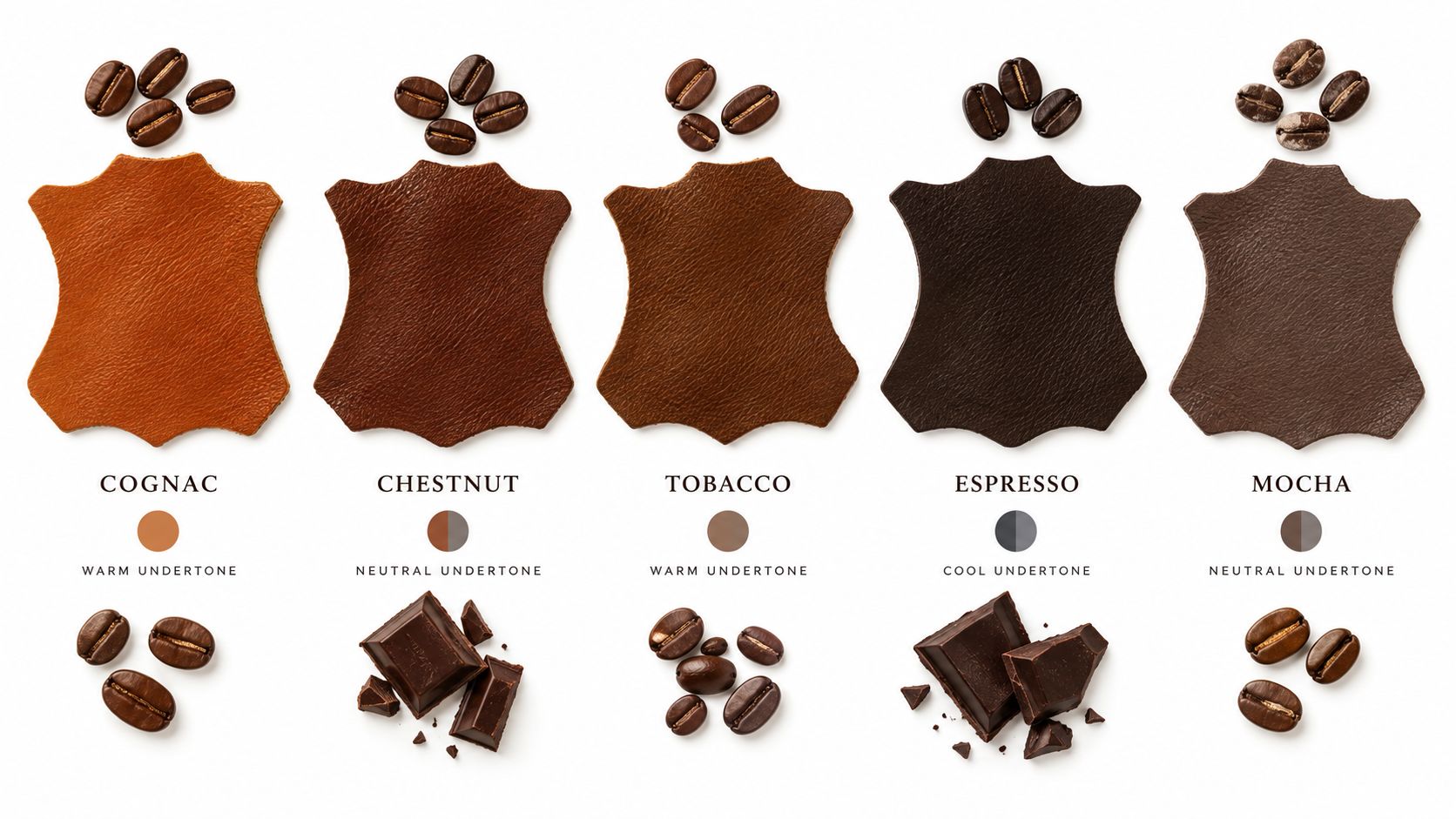
Brown becomes easier to choose when it's treated like a family of colors rather than a single swatch. Cognac resembles a warm amber drink, chestnut often carries a reddish wood note, and tobacco sits in a deeper, earthy middle. Espresso is darker and more dramatic. Mocha can range from warm to cool, depending on the gray, red, or taupe influence beneath the surface.
Warm, cool, and red undertones
Undertones are the quiet colors underneath the main brown. A warm brown may lean golden, orange, or honey-colored. A cooler brown may contain gray or a muted taupe quality, while a red undertone gives chestnut and certain tobacco shades a richer, more traditional character.
A simple comparison helps. Warm brown resembles honeyed wood in late-afternoon light. Cool mocha is closer to coffee blended with cream and gray. Red-toned chestnut feels like a darker wood stain. None is automatically right or wrong, but each creates a different relationship with the room.
In 2026 trend coverage, brown leather is described as returning strongly, while coverage distinguishes timeless chestnut, cognac, and tobacco tones from trendier mocha shades that may date faster as the 2025–26 color cycle moves on (brown sofa trend coverage). That doesn't make mocha a poor choice. It means shoppers who want a sofa to feel steady through future decorating changes may prefer a more established undertone.
A practical showroom test
Color changes with the room around it, especially in homes that receive different amounts of daylight through the year. A brown that looks golden under showroom lighting may appear more muted near a north-facing window or more orange beside warm wood trim.
Before choosing, shoppers should:
- View the leather beside existing flooring and trim. Look for clashing orange, red, or gray tones.
- Check it in more than one light condition. Morning light, afternoon light, and evening lamps can reveal different undertones.
- Compare the sofa with a fabric sample. A rug or upholstered chair may soften or intensify the brown.
- Step back from the swatch. Close inspection shows grain, but distance reveals the room's overall impression.
- Consider future changes. A chestnut or cognac sofa may adapt more easily if wall paint, rugs, or accent chairs change later.
A dark espresso sofa can make a large open room feel intimate, but it may visually dominate a compact apartment. Cognac can brighten a darker room, while tobacco often bridges traditional wood furniture and relaxed modern pieces. The best color is the one that supports the home's light, architecture, and furnishings instead of competing with them.
Leather Types and Finishes and How They Age in Real Homes
Color gets attention first, but leather grade controls much of the sofa's long-term behavior. Full-grain leather preserves the hide's natural grain and is described as the most durable common option. Top-grain leather is slightly corrected or sanded and remains highly durable. Corrected-grain leather receives more surface treatment for a uniform appearance, while split and bonded leather are generally the least durable of these common categories (leather grade guidance).
Comparing grades and finishes
The same brown color can look and age very differently depending on its surface treatment. Full-grain leather may develop visible patina and natural variation. Top-grain often offers a balance between a refined appearance and everyday resilience. Corrected-grain leather can provide a consistent look, while split or bonded materials may require more careful expectations about wear.
Finish adds another layer. A sealed finish usually creates a more protected surface that suits busy households. A distressed finish is designed to welcome variation, so small marks may become part of the look rather than an immediate visual problem. Aniline leather has a natural, less heavily protected surface that feels distinctive but can be more vulnerable to light, oils, and spills.
| Leather Type or Finish | Durability and Aging | Best For and Watch Outs |
|---|---|---|
| Full-grain | Preserves natural grain and can develop character over time. | Buyers who value durability and authentic patina. Natural markings are part of the surface. |
| Top-grain | Highly durable, with some surface correction for a more even appearance. | Families wanting a refined look with strong everyday performance. |
| Corrected-grain | More uniform and coated, with a consistent visual finish. | Rooms where appearance consistency matters. The surface may feel less natural. |
| Split or bonded | Generally the least durable of these common categories. | Buyers focused on a lower entry point who understand the tradeoff in longevity. |
| Distressed | Designed to show variation and develop a lived-in appearance. | Patina lovers, but not shoppers seeking a spotless, uniform surface. |
| Aniline | Natural-looking and tactile, but more sensitive to light, oils, and marking. | Lower-risk rooms where owners can manage placement and care carefully. |
A family with young children may favor sealed leather, while a household that appreciates character may choose distressed leather. Pet owners should ask how the surface handles claws and body oils rather than assuming every brown sofa will hide the evidence. Senior shoppers and caregivers should also test seat support, arm height, and ease of standing.
Ask the associate to explain the leather grade and finish in plain language, then sit on the actual sofa. The hand feel, cushion support, and surface response matter more than a label alone.
BILTRITE's guide to the difference between top-grain and full-grain leather can help shoppers prepare before visiting. In the showroom, the useful questions are direct: Is the leather sealed? Will it develop patina? How should it be cleaned? Which areas are most likely to show wear? Those answers turn a color preference into a practical decision.
Styling Your Brown Leather Sofa With Color Texture and Wood
Because brown leather has anchored rooms since the Chesterfield era, it works best with contrast, texture, and carefully chosen wood rather than a room full of matching brown. Smooth leather feels more welcoming beside a nubby chair, woven rug, linen curtains, or a soft throw. These materials act like a quiet counterweight, giving the sofa warmth without allowing it to dominate.
Three palettes that work
Modern and collected
Set a medium brown sofa against warm white walls, a stone-colored rug, black lighting, and simple wood furniture. Blue-gray pillows add a cooler note while keeping the room comfortable rather than stark. This approach suits a newer home or a Milwaukee living room that needs traditional leather to feel current.
Traditional and layered
Chestnut and tobacco leather pair naturally with deep blue, muted green, medium-tone wood, and aged brass. A patterned rug can connect the sofa to a nearby bookcase or dining area. These brown tones tend to remain easy to live with because their warm undertones complement changing accents.
Cozy family room
Use warm white or soft beige walls, a textured ivory rug, rust or olive pillows, and baskets made from natural fibers. A solid wood coffee table adds a practical surface for family life while softening the room's overall appearance. Cognac leather can bring a lighter, welcoming feel, while mocha works well when its undertone suits the wall color and surrounding fabrics.
Use texture to lighten the composition
Boucle, linen, wool, and woven cotton break up leather's smooth surface. A fabric accent chair can reduce the sofa's visual weight, while a soft throw adds comfort for reading or movie nights. Plants, ceramic lamps, and framed artwork interrupt broad areas of brown without competing with the leather's natural warmth.
Wood needs a deliberate choice. BILTRITE's solid wood and Amish-made furniture can complement brown leather when the tones either relate clearly or create useful contrast. Matching every brown and stain too closely can flatten the room. Lighter oak-like wood beside espresso leather creates definition, while richer wood beside cognac gives the setting a deeper, traditional feel.
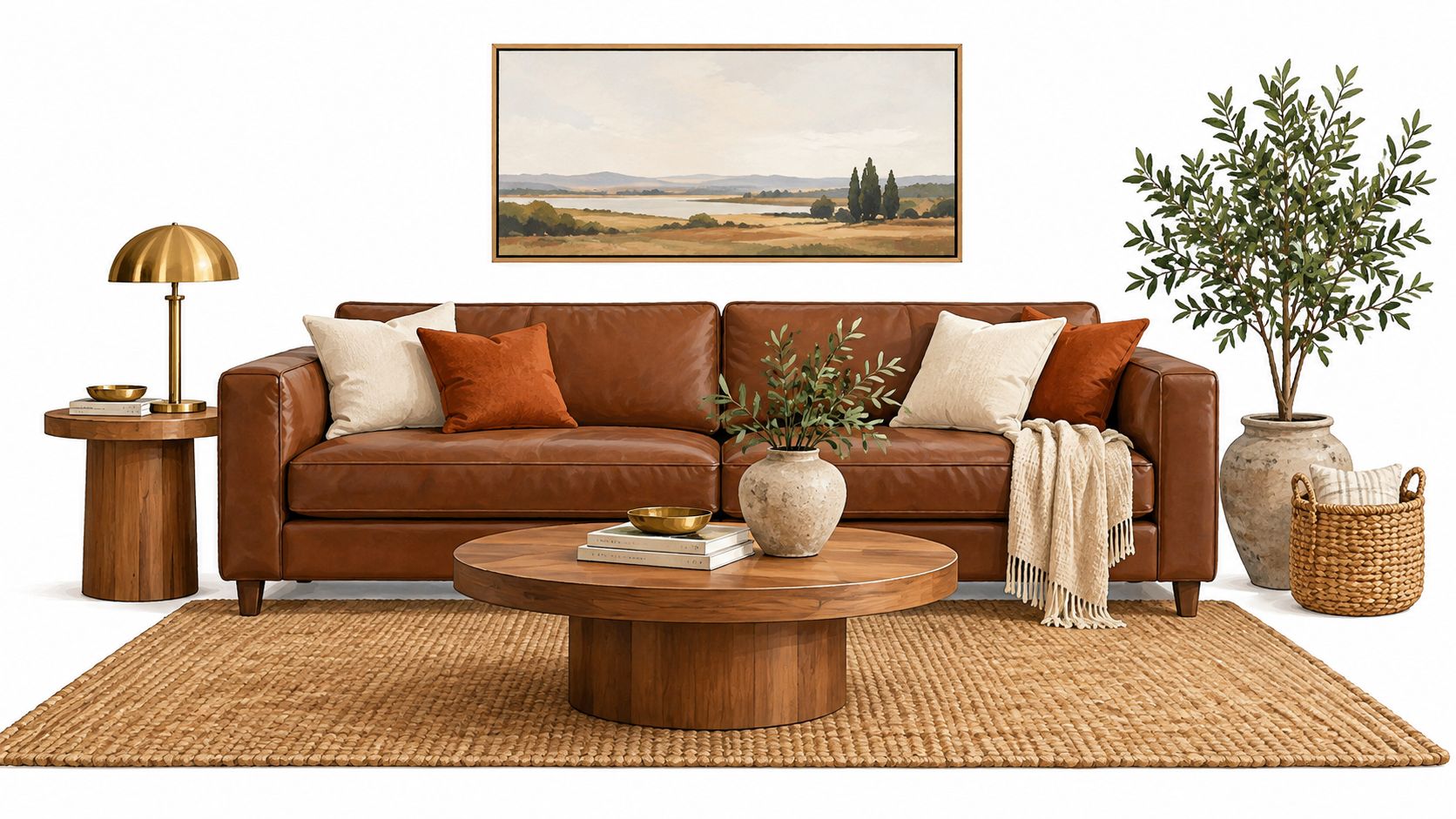
Scale matters as much as color. In an apartment or smaller home, a compact sofa with raised legs can leave more visible floor and breathing room. In an open living room, a deeper sofa or sectional can define the seating area, especially with a rug placed beneath the front legs. Families and senior household members may prefer firmer cushions, supportive arms, and a more upright profile over a very deep lounging design.
For more ideas, explore how to decorate with leather furniture. Strong rooms usually combine brown leather, contrasting texture, useful lighting, and wood with a clear purpose.
Durability Care and Placement That Keeps Brown Leather Beautiful
Brown leather can be practical, but it isn't maintenance-free. The surface still needs regular dust removal, prompt spill care, and protection from harsh placement conditions. A consistent routine helps the sofa age evenly instead of leaving high-use areas dull, dry, or visibly marked.
A simple care rhythm
Care guidance commonly recommends dusting or vacuuming leather weekly with a soft brush attachment, blotting spills immediately rather than rubbing them, and conditioning the surface about every 6 to 12 months to help prevent drying and cracking (leather sofa care guidance).
A practical household routine looks like this:
- Weekly cleaning: Remove crumbs and dust from cushions, seams, and the space beneath the sofa.
- Immediate spill response: Use a clean cloth to blot. Rubbing can spread the liquid and work it further into the surface.
- Periodic conditioning: Use a product appropriate for the leather finish and test it in a discreet area first.
- Regular inspection: Check high-contact areas such as arms, seat fronts, and headrests for dryness or changing color.
- Gentle habits: Keep sharp objects, rough hardware, and heavily soiled clothing from creating avoidable marks.
Protect the sofa from its surroundings
Direct sunlight and heat can fade leather, dry it, and eventually contribute to cracking. UV exposure is a concern even with darker brown dyes, because fading may appear uneven and a surface near a window, radiator, or heat vent can become brittle (leather placement risks).
Aniline leather needs particular care in bright rooms. Premium aniline leather can have a lightfastness rating of 2–3 under EN ISO 105-B02 and abrasion resistance of 500–1,000 Martindale cycles, so bright-room placement calls for UV control and routine rotation (aniline leather care considerations). Curtains, blinds, UV-filtering window treatments, and a thoughtful distance from heat sources can reduce exposure.
Darker brown may disguise soil, but it won't make leather immune to sunlight, heat, scratches, or drying.
Families with pets and children should weigh finish protection more heavily than color. A sealed surface may offer simpler day-to-day ownership, while distressed leather can make small marks feel like part of the design. For intensive family use, shoppers can also ask about performance evidence such as a double-rub rating of at least 50,000, as noted in independent buying guidance. The right choice depends on the entire construction, not one rating in isolation.
BILTRITE's leather furniture care guide offers a useful reference for owners who want to protect their investment. A brown sofa that receives suitable care can become more comfortable and characterful without losing its place as the room's foundation.
How to Choose and Customize Your Brown Leather Sofa at BILTRITE
Choosing a brown leather sofa starts at home, before a shopper enters a showroom. Measurements should include the room, the path through the front door, hallways, stair turns, and any tight corners. A sofa that fits the floor plan but can't make the delivery path won't help anyone.
Start with the household
A small apartment, condo, or senior living space may call for small-scale furniture with a shallower footprint and easier movement around the room. A large family may need deeper seating, stronger support, or heavy-duty construction for frequent use. Come-apart sofas and sectionals can help when narrow doorways or difficult turns make delivery challenging.
Seat height and depth deserve a real test. Older adults and caregivers may prefer a design that makes standing easier, while a household that mainly lounges may want a deeper seat. Children and pets also change the practical requirements. A sofa with a protected finish and stable cushions may suit a busy family better than a delicate surface chosen only for its showroom appearance.
Compare in-stock and custom paths
BILTRITE offers a large in-stock selection as well as custom options involving leather, fabric, wood, finish, and hardware. That gives shoppers two useful paths. An in-stock sofa can solve an immediate need, while a custom order can better match a room's dimensions, color direction, and preferred material.
The showroom experience matters because leather's grain, softness, cushion support, and undertone are difficult to judge from a screen. BILTRITE Furniture-Leather-Mattresses serves the Greenfield and Metro Milwaukee community as a fourth-generation family-owned business dating to 1928, with sales associates who have over 400 years of combined experience. The team's role is to help shoppers compare choices without pressure.

Shoppers considering a custom color or material can review custom leather upholstery options. During the visit, bringing room measurements, photos, paint or flooring samples, and a list of must-have features can make the conversation more productive.
The store doesn't sell online, so the showroom is where shoppers can sit, compare, and feel the differences for themselves. BILTRITE is closed on Sundays and Mondays for family time, a practice that reflects its local, family-first approach. A call ahead can help confirm hours and availability before making the trip.
Visit Us in Greenfield and Find Your Favorite Brown Leather Sofa
A brown leather sofa can be a dependable centerpiece, but the best choice goes beyond a familiar color. Shoppers should first identify the undertone that works with the room, then match the leather grade and finish to the household's actual routines. Kids, pets, senior needs, sunlight, and doorway measurements all deserve attention before a purchase is made.
Styling completes the decision. Warm whites, stone, blue, green, brass, black accents, textured fabrics, and solid wood can keep brown leather comfortable rather than heavy. Regular dusting, prompt blotting, conditioning, and careful placement help preserve the surface over time.
BILTRITE has served Metro Milwaukee from its Greenfield showroom since 1928 as a fourth-generation family-owned business. The store focuses on affordable, better-quality furniture, including USA-made and Amish-made solid wood pieces, with options ranging from small-scale furniture to heavy-duty living room seating. The mattress department includes over 60 models, giving households another reason to make the showroom part of a larger home-comfort visit.
Qualifying purchases may also include white-glove delivery, old mattress removal when the mattress is in donatable condition, or a complimentary protector or heavy-duty frame on select sets. Details can vary, so the showroom team can explain what applies to each purchase.
BILTRITE Furniture-Leather-Mattresses offers brown leather seating, custom upholstery choices, solid wood furniture, and home-comfort guidance in one local showroom. Visit BILTRITE Furniture-Leather-Mattresses in Greenfield to sit on different brown leather sofas, compare finishes, and talk with the experienced team about a piece that fits the family's home.