Heavy Duty Recliners Near Me: A Milwaukee Buying Guide


The old recliner still looks comfortable, until Dad struggles to stand up or the footrest refuses to close smoothly. A family starts searching for heavy duty recliners near me, hoping to find something sturdier, only to discover another worry: a bigger chair might never make it around that tight hallway turn.
The right purchase needs to solve both problems. For Metro Milwaukee households, that means matching the recliner to the person, checking the route into the home, and trying the actual chair before making a decision.
Table of Contents
- What Most Milwaukee Shoppers Really Mean by Heavy Duty Recliners Near Me
- What Heavy Duty Really Means in a Recliner
- Who Actually Needs a Heavy Duty Recliner
- How to Test a Heavy Duty Recliner in the Showroom
- Will It Actually Fit in Your Milwaukee Home
- Manual, Power, and Power Lift Recliners Compared
- Why Buying Local in Metro Milwaukee Actually Matters
- Visit the Greenfield Showroom and Try One for Yourself
What Most Milwaukee Shoppers Really Mean by Heavy Duty Recliners Near Me
A caregiver shopping for a parent might arrive with a phone full of recliner pictures. A larger shopper might arrive tired of seats that feel cramped. A family replacing its movie-night chair might want something that doesn't wobble whenever someone settles in.
Those shoppers aren't asking the same question, even when they type the same search phrase. One needs help with standing, another needs appropriate capacity and usable seat width, and another wants dependable everyday construction.

Start With the Household, Not the Label
A useful showroom conversation starts with the person who'll use the chair most. Their height, usual sitting position, mobility needs, and room arrangement matter more than choosing the biggest-looking recliner on the floor.
The need for thoughtful seating isn't unusual. The United States had 61.2 million adults age 65 or older in 2024, representing 18.0% of the population, according to the Census Bureau's older-adult population report. For families furnishing a parent's home, comfort and accessibility belong in the same conversation.
A productive shopping list sounds like this:
- Personal fit: Can the intended user sit comfortably without sliding forward or feeling squeezed?
- Everyday operation: Can that person reach and operate the controls without help?
- Home access: Can the delivery team get the specific model into the intended room?
- Long-term ownership: What does the warranty cover, and who handles service questions?
Practical rule: A nearby showroom is useful only if the visit answers questions that a photograph can't.
BILTRITE's hands-on approach gives shoppers room to investigate those questions without treating every household alike. A caregiver can bring a parent, a couple can compare preferences, and a shopper can explain what went wrong with the previous chair.
The goal isn't the largest recliner. It's a chair that suits the actual person and the actual home.
What Heavy Duty Really Means in a Recliner
A higher weight rating isn't a complete construction report. Think of a porch: strong-looking boards don't tell the whole story if the supports and connections underneath aren't up to the job. A recliner deserves the same closer look.
Start with its rated capacity, then examine the structure and moving parts behind that number. BILTRITE's guide to lift chair weight capacity provides a useful starting point for that discussion.
Look Beneath the Cushion
Frame and joinery deserve attention before fabric color. Ask what the frame is made from, how load-bearing connections are assembled, and where reinforcement is used. If a description mentions kiln-dried hardwood, ask which components use it rather than assuming the entire chair shares that construction.
The reclining mechanism needs separate scrutiny. A reinforced mechanism should be documented for the particular model, not inferred from the chair's appearance. Ask how the footrest, back, base, and moving connections are supported.
Repeated movement matters because reclining changes the forces acting on those parts. The General Services Administration's upholstered-furniture testing method uses a 200-pound test load and cycles a recliner through its operating positions 25,000 times or until failure. That test load isn't a shopping recommendation or a substitute for the manufacturer's occupant limit.
Read the Rating Without Guessing
A spec sheet should help shoppers separate the following details:
- Occupant limit: Confirm the limit for the exact model and configuration being considered.
- Testing information: Request the applicable standard, cycle testing information, and any differences between manual and powered versions.
- Warranty coverage: Ask which terms apply to the frame, mechanism, motor, controls, and upholstery.
- Covering details: Discuss cleaning instructions and suitability for the household's normal use.
Upholstery belongs in the conversation, but thick padding doesn't establish structural strength. Neither does a substantial-looking arm or an oversized back cushion.
A chair can feel plush during a short sit without providing convincing evidence of durable construction.
Skip any comparison that stops at a weight number and a fabric swatch. The stronger buying decision comes from understanding what supports the user, what moves, and what the manufacturer documents.
Who Actually Needs a Heavy Duty Recliner
A heavy-duty recliner isn't a single answer for every household. A person who needs additional seat width has different priorities from someone who needs assistance standing. Combining those needs without checking fit can produce an expensive mismatch.
Seniors and Households Managing Recovery
For an older adult with reduced leg strength, the important distinction may be lift assistance, not just size. A lift recliner changes the seat's position to assist the transition toward standing; it isn't merely a larger version of an ordinary recliner.
A motion-analysis study involving 30 adults over age 65 found that lower seat height increased movement demands, while lift assistance reduced lower-extremity joint moments and forward trunk lean. The practical lesson is straightforward: the chair's geometry and controlled movement deserve as much attention as its capacity.
For someone recovering from surgery, the treating clinician's transfer instructions should guide the shopping conversation. A showroom associate can demonstrate furniture operation, but shouldn't prescribe a recovery position or promise a medical outcome.
Larger Users and Shared Family Seating
For plus-size or bariatric shoppers, capacity and usable space must work together. A chair may have an appropriate rating yet leave too little room between the arms or place the controls awkwardly. BILTRITE's recliner guidance for plus-size people helps frame those model-specific questions.
Different households should emphasize different priorities:
- Larger users: Compare usable seat width, depth, arm placement, and the documented occupant limit.
- Multigenerational families: Identify the primary user instead of selecting dimensions that fit nobody especially well.
- Pet-and-kid households: Discuss cleaning, covering care, and rules around the operating mechanism.
- Caregiving households: Consider whether the user can manage the hand control independently and whether assistance remains accessible.
A shared chair deserves an honest conversation. If a shorter grandparent and a taller adult have very different needs, a compromise may be less useful than choosing seating around the person who relies on it most.
Household safety also extends beyond the recliner. The Consumer Product Safety Commission's furniture tip-over report concerns furniture, televisions, and appliances broadly, not recliners specifically. It reinforces a sensible distinction: buying a sturdy chair doesn't replace evaluating the furniture around it.
How to Test a Heavy Duty Recliner in the Showroom
The intended user should do the testing whenever possible. A caregiver can compare specifications, but can't fully judge another person's seat pressure, reach, or comfort through a photograph.
Bring the person's knee-to-floor height, hip width, lower-leg length, and seated shoulder height. Those measurements give the associate useful context before the first test sit.
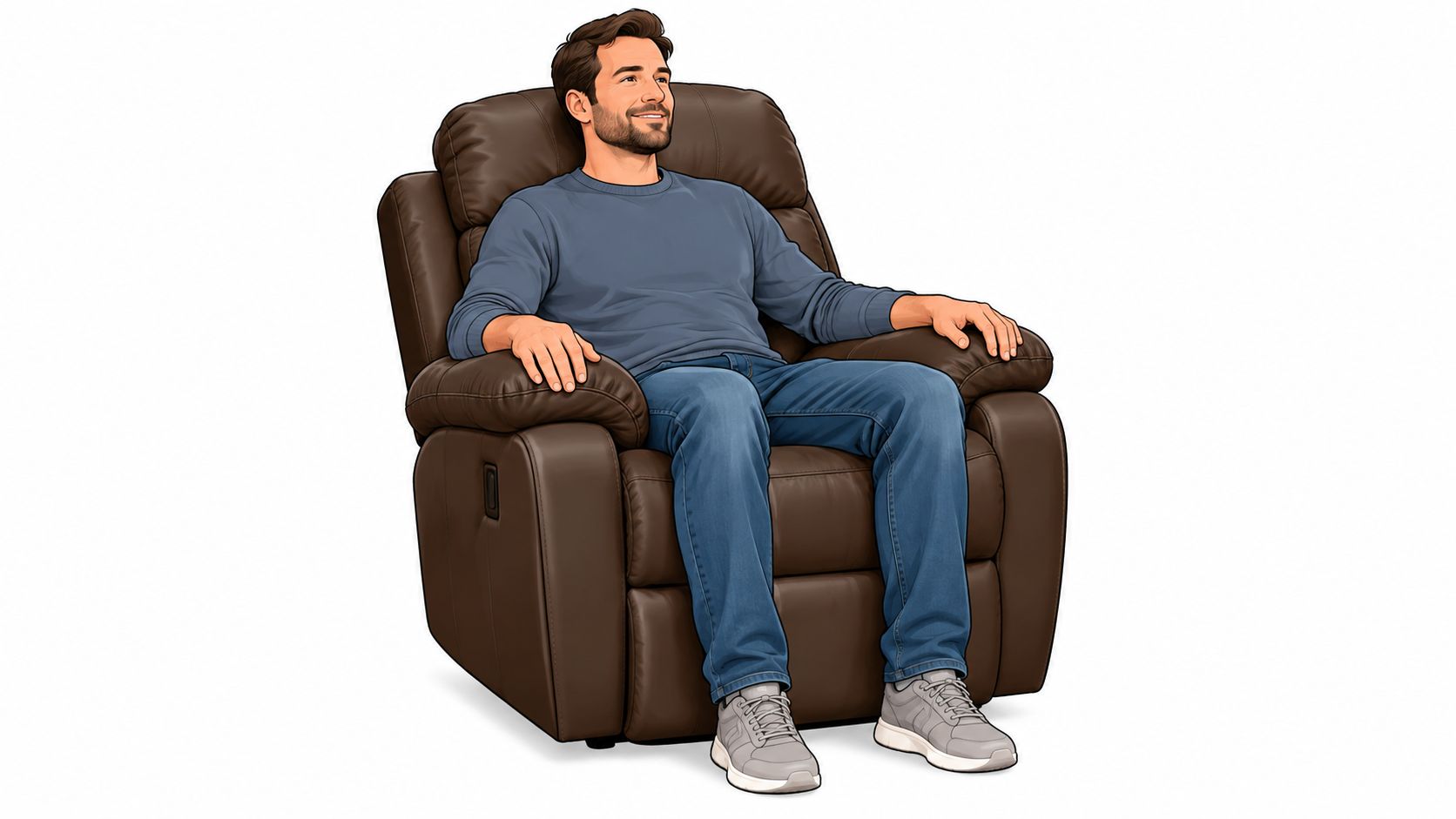
Begin Upright and Move Slowly
Start with the chair closed. The user should settle against the back rather than perch at the front edge to reach the floor.
- Check foot contact: Both feet should rest securely, with the knees near a right angle.
- Assess seat depth: The user shouldn't have to choose between back support and comfortable leg placement.
- Find the controls: Test the normal operating hand, especially if grip strength or dexterity is limited.
- Check the armrests: Confirm that they provide accessible, stable support without forcing the shoulders upward.
Next, test an ordinary sit-to-stand movement using the person's usual safe method. Someone who needs assistance shouldn't attempt an unsupported transfer just to test a chair.
For a lift model, have the associate demonstrate the controls first. Then assess whether the lift progresses gradually, can stop at useful intermediate positions, and avoids an uncomfortable forward pitching sensation.
Test the Entire Reclining Movement
Operate the chair through its available positions, not just the first comfortable setting. Check whether head and lumbar support remain comfortable as the back and footrest move.
Listen for binding, scraping, or an unexpected change in sound. Confirm that the footrest returns fully and smoothly rather than stopping short or requiring an awkward shove.
Showroom reminder: A chair that requires an awkward workaround during a demonstration deserves another look before purchase.
The surrounding setup matters, too. A study of fall risks in older adults' homes identified 299 researcher-observed risks, compared with 37 reported by residents, including hazards involving furniture and walkways. That difference is a good reason to discuss the chair's operating space, not just its seated comfort.
Finish by asking the associate to explain any unfamiliar function without taking over the controls. The shopper should leave knowing how the chair works, which adjustments feel useful, and whether daily operation feels manageable.
Skip the model that looks appealing but repeatedly feels awkward. Upholstery choices can't correct a poor physical fit.
Will It Actually Fit in Your Milwaukee Home
Measure the delivery route before falling in love with the recliner. A comfortable chair in a showroom still has to pass through the entrance, negotiate corners, and operate without blocking the room.
For an older home in Milwaukee, Wauwatosa, or Shorewood, the difficult spot might be a vestibule turn rather than the front door itself. In a condo, elevator access and the route from the elevator to the unit need equal attention.
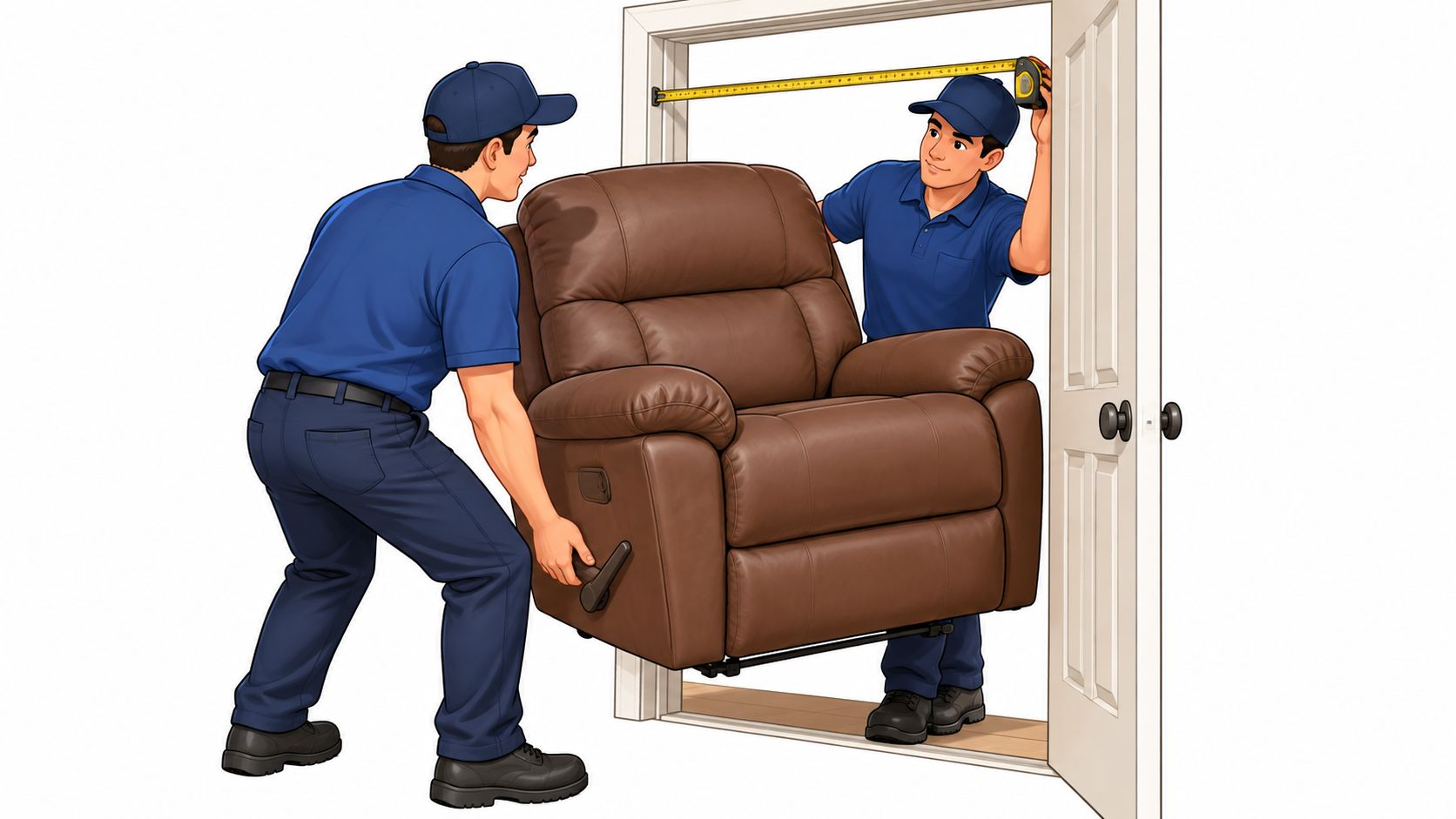
Measure the Entire Route
BILTRITE's furniture measuring guide is a useful companion for gathering measurements before a showroom visit. A simple sketch and clear photographs can help explain the route, but they shouldn't replace measurements.
- Exterior entrance: Record the usable opening with the door open, including obstructions from handles, trim, or a storm door.
- Hallways and corners: Measure narrow sections and the space available to turn.
- Stairs and landings: Include clearance overhead and the landing where the furniture must change direction.
- Elevator: Record the opening and usable interior dimensions.
- Final room: Mark the proposed chair location, nearby furniture, and primary walking route.
Home-access details deserve verification rather than optimism. Research on home-environment assessments and accessibility highlights entrances, doors, and furniture arrangements as relevant concerns, including areas where assessment methods can disagree.
Removable Backs Aren't the Whole Answer
A removable back and a come-apart chair aren't interchangeable descriptions. Removing the back may reduce a delivery dimension, but the remaining base still has to make every turn. Ask exactly which parts separate and request the relevant delivery dimensions.
BILTRITE carries come-apart seating options, including recliners. Those options deserve attention for tricky spaces, but the particular model still needs a route check.
Inside the room, compare the chair's closed dimensions with its fully reclined dimensions and required wall clearance. Locate the outlet for powered seating and plan cord placement without crossing a walkway.
Before ordering, clarify who verifies access, who handles assembly, and what happens if delivery can't be completed. A documented fit plan is more useful than an assumption that the delivery team will somehow manage.
Manual, Power, and Power Lift Recliners Compared
The choice should follow the user's abilities and priorities, not the number of buttons. Manual, power, and power lift recliners solve different problems, and extra functions aren't automatically extra value.
A manual push-back recliner relies on the user's movement to change position. Powered seating uses controls to operate its available adjustments, while a power lift recliner adds assistance for the transition toward standing.
Heavy Duty Recliner Types at a Glance
| Type | Typical Price Range | Best For | Key Questions to Ask |
|---|---|---|---|
| Manual | Model-specific; request current pricing | Users comfortable operating and closing a manual mechanism | Can the intended user recline and close it without strain? |
| Power | Varies with construction and adjustment options | Users who prefer button-operated positioning | Which functions adjust separately, and how accessible are the controls? |
| Power lift | Model-specific; compare the complete configuration | Users who need lift assistance as well as reclining | How does the lift travel, and what happens during a power interruption? |
A useful price comparison requires actual models and current quotes. Fabric, construction, operating features, and configuration all belong in that comparison; unsupported dollar brackets don't help a family choose.
Choose Functions That Will Actually Get Used
Power designs may use different motor arrangements for reclining, headrest, or lumbar adjustments. A model described as having two or three motors needs a demonstration of exactly what each motor controls. BILTRITE's overview of power reclining seating types provides context for those distinctions.
- Manual shoppers: Test the effort required in both directions, particularly closing the footrest.
- Power shoppers: Compare useful adjustment positions rather than counting switches.
- Lift shoppers: Evaluate the lifting movement separately from reclining comfort.
Wisconsin exempts power lift recliners from sales tax, an important consideration when comparing the final purchase. Ordinary powered reclining shouldn't be confused with the power lift category.
The strongest recommendation is simple: choose the least complicated operation that meets the user's needs. A feature that sounds appealing but feels difficult during the demonstration may become a frustration at home.
Why Buying Local in Metro Milwaukee Actually Matters
Buying locally matters when the showroom helps connect product selection with real household details. The value isn't a shorter drive. It's the opportunity to discuss fit, delivery, operation, and service with people who can examine the actual furniture.
Family Ownership With Practical Experience
BILTRITE is a fourth-generation, family-owned business serving Metro Milwaukee since 1928. Its sales associates bring over 400 years of combined experience, with an emphasis on helping shoppers ask useful questions rather than rushing a decision.
The showroom's broader selection includes USA-made, Amish-made, and real solid wood furniture. Those categories reflect BILTRITE's craftsmanship focus, but shoppers should still confirm the construction and origin of each recliner rather than assuming every piece shares identical specifications.
- Look for identification: The showroom's heavy-duty furniture icon helps shoppers locate relevant options for closer comparison.
- Discuss availability: Compare in-stock selection with custom options and confirm the status of the specific configuration.
- Clarify delivery: Ask about white-glove delivery, assembly, applicable charges, and purchase qualifications.
- Consider the whole household: Small-scale furniture and a mattress department with over 60 models allow related comfort needs to be discussed during the same visit.
Value Beyond the Lowest Price
BILTRITE's focus is affordable, better-quality furniture, not being the cheapest option. A useful value comparison includes construction, fit, operating ease, and ownership support alongside the ticket price.
The same practical approach appears in BILTRITE's explanation of why buying a mattress locally matters: hands-on evaluation gives shoppers information that a website cart can't supply.
BILTRITE doesn't sell online, and the showroom is closed Sundays and Mondays to support family time. That family-first approach gives a visit its purpose: a comfortable place to ask questions, compare furniture in person, and make a considered choice.
Visit the Greenfield Showroom and Try One for Yourself
BILTRITE's showroom at 5430 West Layton Avenue in Greenfield welcomes shoppers from Milwaukee, New Berlin, Franklin, Oak Creek, Waukesha, and surrounding communities. Bringing the intended user, room measurements, and delivery-route photographs makes the visit more productive.
Quick Answers Before a Visit
- What warranty applies? Coverage depends on the model and component. Ask for the written terms before ordering.
- Can delivery be arranged? Discuss access, assembly, service options, and applicable delivery terms with the team.
- Are heavy-duty recliners in stock? BILTRITE offers in-stock furniture; confirm availability of the desired recliner and covering.
- Does the Wisconsin tax exemption apply? Ask the associate to identify qualifying power lift seating and explain the purchase paperwork.
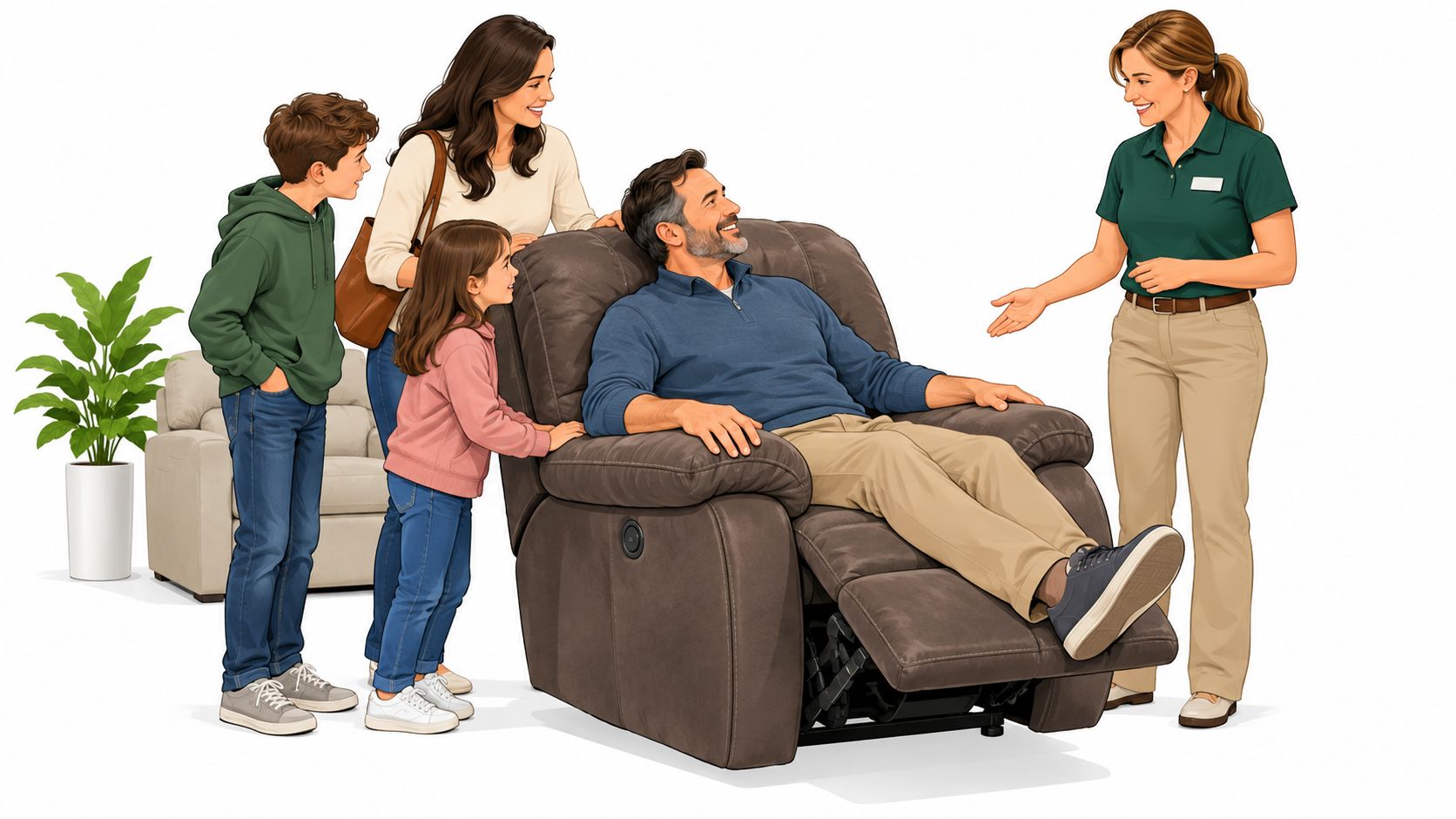
There's no substitute for testing the chair that will become part of daily life. A relaxed showroom visit gives the household time to compare comfort, ask follow-up questions, and leave with clearer answers rather than pressure.
For supportive heavy-duty seating, power lift options, and hands-on help with fit, BILTRITE Furniture-Leather-Mattresses offers a family-owned showroom experience. Visit the Greenfield showroom with measurements and questions for a no-pressure opportunity to sit, compare, and find a recliner that suits both the person and the home.