Lift Chair Weight Capacity: A Friendly Buyer’s Guide


A daughter walks into the Greenfield showroom with her dad, and the first thing she asks about is comfort. The first thing that usually matters, though, is whether the chair can help him stand safely every day without wearing out too soon. That's where lift chair weight capacity stops being a number on a tag and starts being a real safety choice.
The tricky part is that the right chair is rarely just the one with the highest rating. It has to fit the person, support the way they move, and hold up to daily use in a home that doesn't slow down for paperwork or technical jargon. That's why the smartest shoppers look at capacity, size, and construction together, not one at a time.

A Moment That Makes Weight Capacity Real
A family sits down in a showroom, and the conversation starts the way most good conversations do, with comfort. Then the questions get more serious. Will this chair help Dad stand without strain? Will it still feel solid after daily use? Will it support him if he gains a little weight or wears heavier clothes in winter?
That's the point where weight capacity becomes more than a catalog line. It's a structural limit, tied to safety and durability, not just a comfort preference. A lift chair that matches the user's body on paper can still be the wrong choice if it leaves no room for normal daily loading, repeated use, or long-term wear.
Practical rule: A lift chair should be chosen to support the user safely every day, not just to “barely pass” the scale on delivery day.
For many households, the right question isn't “What's the lowest number that works?” It's “What chair gives enough margin to feel steady, day after day?” That's especially true for caregivers who need a chair that helps with standing assistance without adding another worry to the routine. The chair has to do its job on busy mornings, on tired evenings, and on the days when getting up already feels hard.
For shoppers comparing options online and in person, a useful starting point is a model built for larger seating and stronger support, like the Large Destin power lift recliner. The name on the tag matters less than the fit underneath it, but seeing a real chair helps people connect the number to an actual body and an actual home.
What Lift Chair Weight Capacity Really Means
A lift chair's published capacity tells you how much load its frame, motor, seat support, and lift motion are engineered to handle through repeated sit, recline, and rise cycles. In plain English, it's the chair's working limit. It is not a comfort label, and it is not just a marketing number.
Standard residential lift chairs commonly fall in the 300 to 350 pound range, while heavy-duty models move higher as the frame and lift system get stronger. That range matters because the rating is part of the chair's structure, the same way frame strength matters in a bed or table. If the rating is too close to the user's actual weight, the chair may still function, but it's working harder than it should.
A shopper also has to read the number correctly. A chair rated for 325 pounds is not the same as a chair that feels stable for a 325-pound person plus blankets, outerwear, or a bag left on the seat. The published figure is a structural guide, not a promise that every real-life use case will feel the same.
The safest way to think about it is simple. The capacity should exceed the user's body weight, not merely match it. That's why experienced guidance often points buyers toward a healthy cushion above the number they see first.
A chair that only barely fits the scale can still be the wrong chair for daily use.
That idea shows up again and again in the showroom. Families don't just need a chair that lifts. They need one that keeps lifting well after the first week, after the first season, and after the home routine changes a little.
Standard, Heavy-Duty, and Bariatric Tiers Explained
Lift chairs are sold in clear tiers, and that helps buyers stop guessing. Standard models usually serve everyday residential use in the 300 to 350 pound range, heavy-duty models move up to around 400 pounds and beyond, and bariatric configurations can climb much higher, including models that reach 500 and 600 pounds or more in larger builds, as outlined in the supporting product guidance and industry materials.
| Tier | Typical Capacity | Best Fit For | What Sets It Apart |
|---|---|---|---|
| Standard | 300 to 350 lb | Most everyday home users | Common residential sizing, familiar footprint, and balanced comfort |
| Heavy-Duty | 400 lb and up | Users who need more margin and stronger construction | Reinforced frame, stronger lift system, and often wider seating |
| Bariatric | 500 lb, 600 lb, or more | Heavier users who need broader support | Expanded platform, more robust mechanism, and larger overall build |
The tier matters because the chair changes as the rating rises. Stronger models usually need more reinforcement in the frame and lift mechanism, and the seat often gets broader to match the structure underneath. A buyer can think of capacity as one part of a design package, not a single upgrade tacked onto the same chair.
For a home that needs stronger seating, heavy-duty living room furniture built to last is a useful way to think about the broader category. A lift chair doesn't stand alone in that conversation, it sits inside the same idea of durable seating that should hold up through daily life.
The practical takeaway is clear. Standard works for many people. Heavy-duty gives more breathing room. Bariatric builds are there for users whose support needs go well beyond the everyday range.
What Actually Determines a Chair's Capacity
A lift chair's rating comes from the parts that carry the load together. The frame, the actuator, the seat support, the lift geometry, and the way the footrest and back move all affect how much weight the chair can handle without stressing the mechanism. A higher number usually means the chair was built with stronger materials and a more reinforced structure, not just a different fabric.
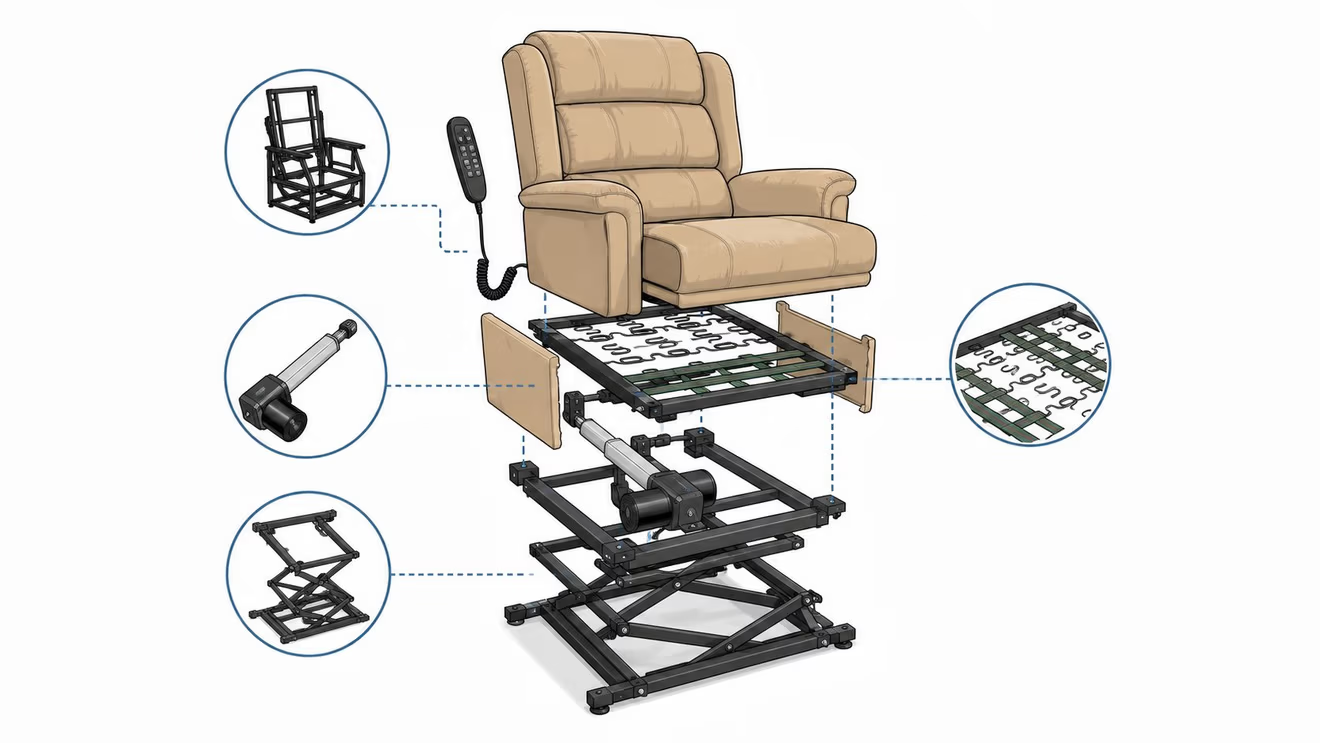
Static limit and moving load are not the same thing
Static capacity is the published number on the chair tag. Moving load is what happens when someone sits unevenly, shifts forward, rises with force, or uses the chair many times a day. Those movements add stress even when the chair is technically under its printed limit.
That's why a chair that “supports” a person on paper can still feel strained in real life. Daily use is not a one-time test. It is dozens of small load changes, each one asking the mechanism to do its job again.
Good buying habit: Treat the published capacity as the starting point, then think about how the chair will be used during the day.
One more detail matters here. A published rating doesn't guarantee that every part of the chair is equally strong. The overall system is what matters, and footrest stress, seat suspension, and lift action all play a role in real durability.
For a simple look at how construction quality supports that kind of use, the dowel construction overview is a useful reminder that sturdy furniture starts with how the pieces are joined and supported. Lift chairs follow the same logic, stronger structure tends to give a more dependable feel.
How to Choose the Right Capacity for the Person
The best way to choose a lift chair is to start with the user's real body weight, then add room for daily life. That means clothing, blankets, and any items that might stay on the chair during normal use. Guidance in the market often points buyers toward a chair that exceeds current weight by 50 to 100 pounds for extra durability and safer operation, and some fit guidance recommends at least 20% above body weight.
A simple selection order
- Measure carefully. Use the actual current weight, not an old estimate from months ago.
- Add everyday margin. Think about outerwear, medical devices, and anything else that may be part of the lift cycle.
- Check the chair's rating. Match the person to a chair that has room to spare, not just one that fits today.
- Sit in the chair if possible. Capacity alone never tells the whole story.
A good fit also has a body-position test. The user should be able to sit upright with their back against the backrest and their feet resting on the floor. That matters because a lift chair has to help someone rise in a stable, natural position, not force them to slide, tip, or reach awkwardly.
The lift chairs for elderly category is where many families begin that conversation, but age is only part of the picture. Height, leg length, and daily routines matter just as much as the number on the scale.
A helpful way to think about it is this. Weight capacity tells you whether the chair can support the body. Fit tells you whether the body can use the chair safely and comfortably.
Warranty, Safety, and Daily Use Considerations
A chair that carries more weight should also be backed by the kind of construction and warranty coverage that makes sense for long-term home use. Frame strength, lift mechanism reliability, and electronics all matter because those are the parts doing the work every time someone stands up. A stronger chair from a trusted maker is often a more sensible long-term choice than a bargain model that looks similar at first glance.
Daily habits matter too. The chair should not be bounced on, overloaded with extra items, or forced through a lift cycle while the path in front of it is blocked. Those are small choices that can affect how smoothly the chair moves and how long it holds up.
A family choosing a chair should also think about who is using it, and how often. A chair used once in a while has a different workload than one that helps with standing every single day. Repeated motion near the limit can wear a system down faster, even if the chair still seems functional in the moment.
That's why showroom advice is so useful. A person can compare build feel, lift motion, and seating comfort in one visit instead of guessing from a screen.
Why a Bigger Rating Is Not Always a Better Fit
A heavier rating can sound safer, but a bigger number is not automatically a better chair. If the seat is too wide, too deep, or too tall, the user may lose the very support the lift chair is meant to provide. Feet that don't rest flat on the floor and a back that doesn't meet the backrest can make standing harder, not easier.
Fit parts that must work together
- Seat width: If it's too wide, the body can slide instead of staying centered.
- Seat depth: If it's too deep, shorter legs may not anchor well.
- Seat-to-floor height: If it's too tall, the feet may hang instead of planting firmly.
- Back height: If it doesn't support the upper body well, posture suffers during the rise.
The sizing lesson is simple, the chair has to match the person, not just the number on the scale. That's why a smaller person may do better in a lower-capacity chair that fits properly than in a heavier-duty model that looks stronger but sits wrong.
A fitting guide for smaller seating options, like the small lift chairs selection, shows how much shape matters. Capacity and fit work together, and ignoring one usually causes trouble in the other.
The right chair feels steady before the lift ever starts.
That's the feeling families should look for. Confidence comes from a chair that supports the body in the right places, not from a number that sounds impressive at first glance.
Visiting Our Greenfield Showroom
A good lift chair decision gets clearer when someone sits in the chair, feels the lift, and checks the fit in person. That's why our showroom matters. We're a fourth-generation, family-owned furniture store in Metro Milwaukee, serving the community since 1928, and we keep the experience focused on real people, real rooms, and real needs. We're also closed on Sundays and Mondays so our team can be with their families.
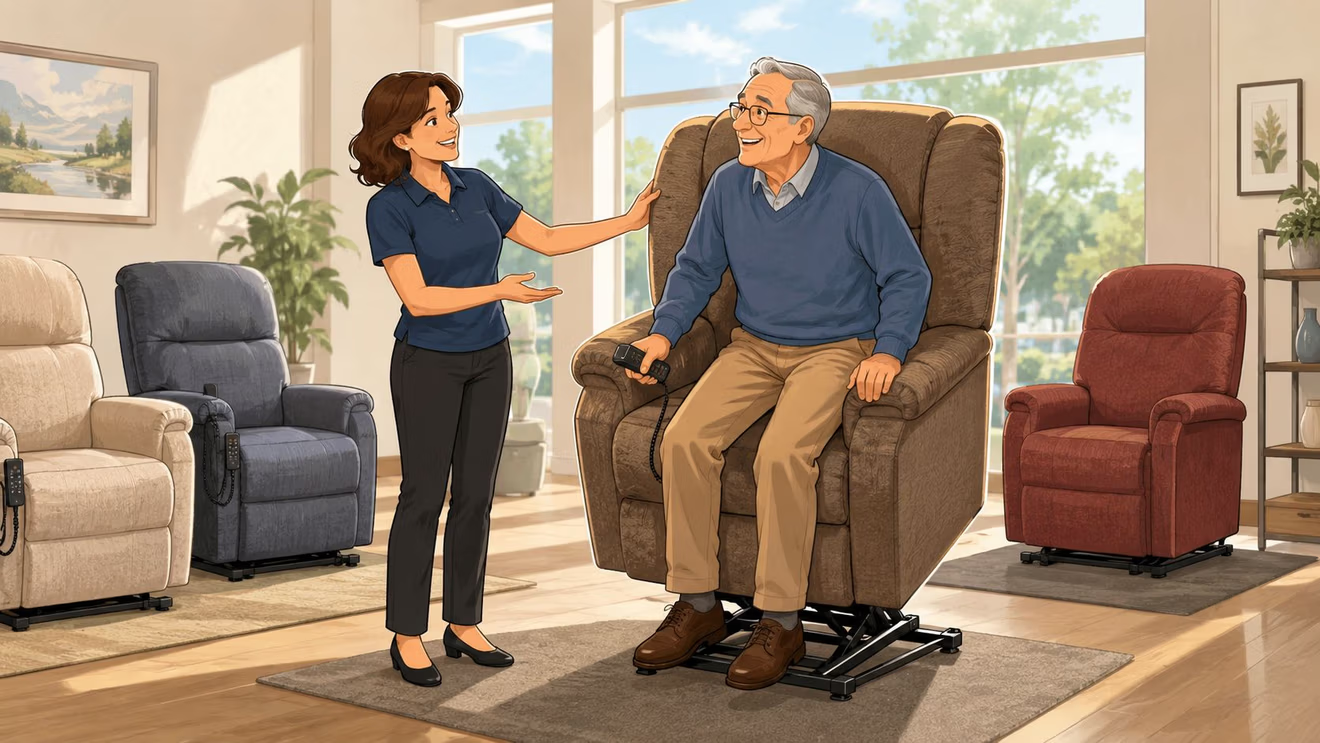
That in-store visit matters because lift chair weight capacity is only one piece of the decision. Shoppers can compare size, seating feel, and the way different builds handle daily use. Our team can also talk through fabric, leather, and finish options, along with the heavy-duty choices that make sense for larger users or homes that need more durable seating.
What to remember: Capacity, fit, and construction should be checked together every time.
BILTRITE Furniture-Leather-Mattresses carries lift chairs as part of a broader selection that includes heavy-duty home furniture, small-scale pieces, and custom options. The best next step is simple, sit in the chair, ask questions, and see what feels right in person.
Ready to narrow down the right lift chair for your home? Visit BILTRITE Furniture-Leather-Mattresses in Greenfield and sit with our team for real, hands-on guidance. We'll help you compare capacity, fit, and comfort so you can choose a chair that feels steady in daily use.