Flat Box Spring Guide: Choosing the Right Foundation


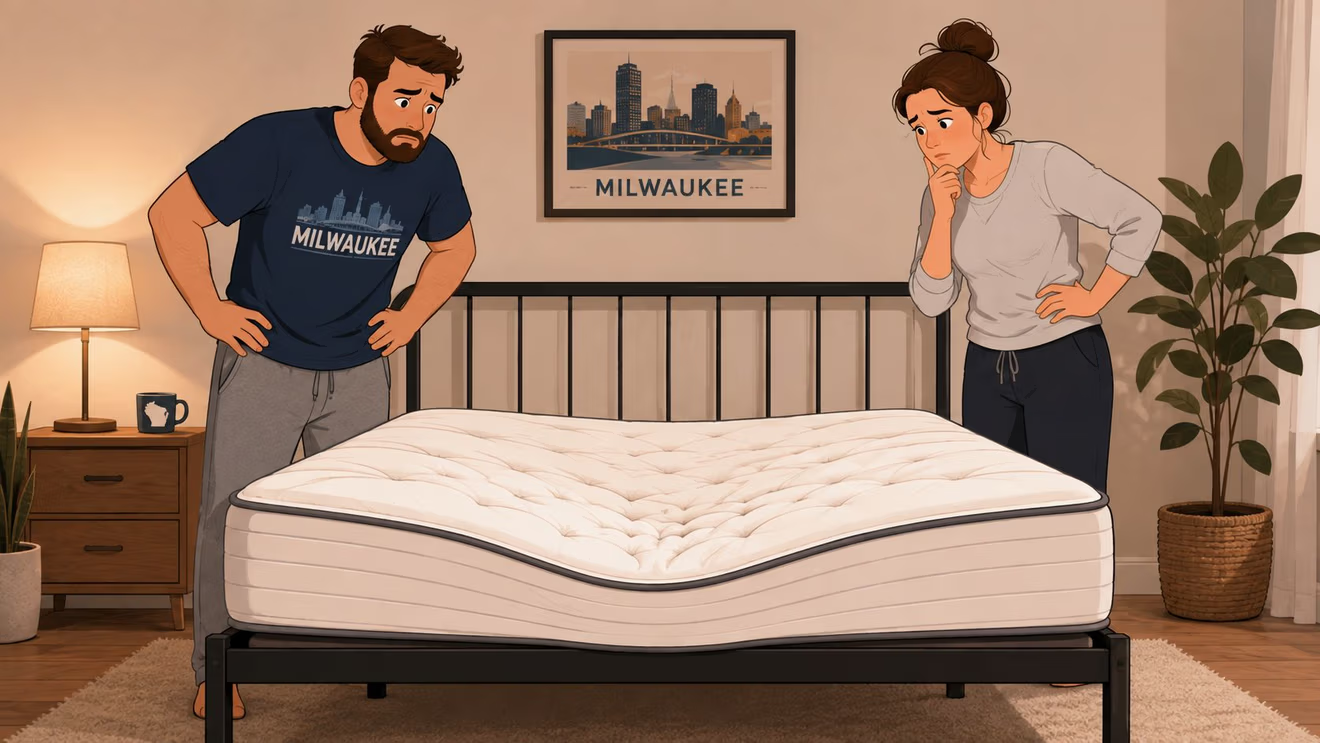
A Milwaukee couple notices a dip in the middle of their mattress and hears a faint creak whenever someone sits on the edge. The mattress has been in the bedroom for several years, so replacing it seems like the obvious answer. Before ordering a new one, though, there's another question worth asking: what's underneath the mattress?
A foundation affects how evenly a mattress carries weight, how high the bed sits, and whether the support system matches the mattress warranty. A flat box spring can be the right answer for some beds, but the name causes plenty of confusion. It may describe a rigid foundation rather than the flexible, coil-filled box spring many shoppers remember.
Why Your Bed Foundation Matters More Than You Think
The mattress gets most of the attention in a bedroom showroom, but the foundation influences the way that mattress performs. A mattress can feel comfortable on the showroom floor and behave differently at home if the base underneath allows uneven movement or doesn't support the mattress across its full footprint.
Consider the couple with the sagging bed. If the mattress is removed and the foundation already dips, creaks, or feels soft in the center, placing a new mattress on top won't solve the underlying problem. The support system needs to provide a level plane so the mattress can distribute body weight instead of bending into weak spots.
Three jobs the foundation performs
First, the foundation affects comfort and pressure relief. A flexible base can add movement and give, while a rigid base creates steadier support beneath foam, latex, hybrid, and other mattress designs that depend on consistent contact.
Second, it helps prevent the mattress from bowing between frame supports. A mattress that bridges unsupported areas may develop uneven wear, feel less stable, or create discomfort around the hips and lower back.
Third, the foundation can affect warranty protection. Mattress manufacturers commonly specify requirements involving a firm surface, center support, or approved slat spacing. Ignoring those requirements can create problems if the mattress develops a defect and the support system doesn't meet the stated conditions. Guidance on proper support is also covered in BILTRITE's explanation of why a box spring may be needed for a bed.
Practical rule: A new mattress deserves a foundation that matches its construction, not simply the foundation that came with the old mattress.
A mismatched base may shorten the useful life of a mattress, create noise, or contribute to a morning feeling of stiffness around the back and hips. The right choice also depends on the frame, headboard clearance, preferred bed height, and the kind of mattress resting above it.
What Exactly Is a Flat Box Spring
A flat box spring is a rigid, level foundation placed between the bed frame and mattress. Think of it as a sturdy upholstered platform shaped to match the mattress, with a frame made from wood or metal and an internal support system such as wooden slats, a steel wire grid, or a solid deck.
Some models may contain a thin layer of coils, but modern flat foundations more often rely on a stiff grid or deck. That construction gives the mattress a uniform surface rather than the springy deflection associated with a traditional coil box spring. A manufacturer's flat foundation overview describes this type of product as a non-sprung support base designed to replace a traditional box spring and sit on a standard frame.
Why the name creates confusion
The term “box spring” has lasted through several stages of bedding design. The first box springs appeared in the 1890s, and they became standard in North American bedrooms by the 1950s, according to historical information about flat box springs. A patent for a “box spring-bed” was filed on October 27, 1900, showing that the basic design had already been formalized by the beginning of the twentieth century.
Older versions were associated with coils and a bouncy feel. Today, shoppers may see similar products labeled flat foundation, low-profile box spring, or flat mattress foundation, even when the inside no longer resembles a traditional coil unit.
Flat versus traditional construction
A traditional tapered box spring generally has a raised or flexible top surface and adds noticeable height. A flat foundation has a more even, rigid top and usually creates a cleaner, lower visual profile.
The distinction matters because support isn't only about appearance. Foam and latex mattresses often need a firm, level substrate, while some older innerspring mattresses were designed to work with a flexible foundation. A flat design can also help when a thick mattress or tall frame already makes the sleeping surface difficult to access.
Flat Box Spring vs Other Support Options
Shoppers usually encounter four main ways to support a mattress. Each one changes the feel, height, airflow, and frame requirements of the finished bed.
| Foundation Type | Typical Height | Best For | Frame Compatibility |
|---|---|---|---|
| Flat box spring | About 5.5 or 9 inches, depending on profile | Foam, latex, hybrid, and many innerspring mattresses that need firm, level support | Standard bed frames, including suitable metal frames |
| Traditional coil box spring | About 8 to 9 inches | Traditional innerspring mattresses that benefit from spring-based flex | Taller headboards, legacy metal frames, and frames designed for a box spring |
| Platform bed | Built into the frame, usually a lower profile | Foam, latex, hybrid, and many innerspring mattresses | Works as a complete bed system, so no separate foundation is needed |
| Bunkie board | About 2 to 3 inches | Low-profile setups and mattresses needing a firm layer over a compatible frame | Platform frames, bunk beds, and frames where headboard clearance is limited |
A flat box spring offers a separate foundation without the pronounced bounce of a coil unit. It suits a shopper who already owns a compatible bed frame but wants a firm, upholstered support surface under a modern mattress. Standard and low-profile versions also let the shopper adjust the finished height.
A traditional coil box spring still has a place. Its spring system can complement an older innerspring mattress, and its added height may work well with a tall headboard. It's less suitable when a mattress manufacturer calls for a rigid, non-flexing base.
The other two choices
A platform bed combines the frame and foundation in one piece. Its slats or solid deck support the mattress directly, so the shopper doesn't need to purchase a separate box spring. The trade-off is that changing the support later may require changing the entire bed.
A bunkie board is thinner and simpler. It can help create a firm surface when a frame's slats are too widely spaced, or when a thick mattress already brings the bed close to the desired height. It still needs proper support beneath it and shouldn't be treated as a universal fix for a weak frame.
For a closer look at the structural differences, BILTRITE's guide to platform beds versus box springs offers another useful comparison.
The final decision comes down to four questions:
- Mattress construction: Does the mattress need flex, or does it need a firm plane?
- Frame compatibility: Does the frame support a separate foundation properly?
- Desired height: Will the finished bed be comfortable to enter and leave?
- Budget and scope: Is replacing the support layer enough, or is a complete platform bed more practical?
Matching a Flat Box Spring to Your Mattress Type
The mattress construction should lead the decision. A flat foundation shifts the support system toward a firmer, more uniform feel, which can be helpful for modern mattress materials but may change the feel of a mattress designed around spring-based movement.
The safest starting point is the mattress warranty. Check the manufacturer's requirements for foundation type, slat spacing, center support, and weight distribution before purchasing. Guidance comparing flat foundations with traditional box springs emphasizes that traditional coil box springs were designed for innerspring mattresses, while rigid foundations are often intended for foam, latex, hybrid, and many current innerspring builds.
| Mattress Type | Compatibility | Why It Works or Doesn't |
|---|---|---|
| Traditional innerspring | Usually compatible, subject to warranty terms | It can work on a flat foundation, though some models are designed around the feel of a flexible coil base |
| Hybrid | Often compatible | Hybrid mattresses commonly need even support beneath foam comfort layers and pocketed springs |
| Memory foam | Often a strong match | Foam benefits from a firm, level surface that reduces uneven compression |
| Latex | Often compatible | Latex needs consistent support and may perform poorly on a base that flexes unpredictably |
| Pillow-top | Depends on the construction below the comfort layers | The pillow-top label describes the surface, not the support requirements, so the internal mattress design matters |
| Two-sided mattress | Often compatible | A rigid foundation can provide steady support, but the warranty still controls the final pairing |
Why mismatches cause trouble
A flexible foundation under a mattress that needs firm support may allow the comfort layers to compress unevenly. Over time, that can contribute to a soft center, sagging, or a change in pressure relief. A rigid base under a mattress intended to work with coil flex may feel firmer and less lively than expected.
Noise can also come from the frame rather than the foundation. Before blaming the mattress, check the rails, center supports, fasteners, and contact points. A flat foundation itself has fewer moving parts than a coil unit, but the whole bed still needs a stable structure.
Three quick checks before buying
- Read the warranty language. Look for approved foundation types and support requirements.
- Measure the frame support area. Confirm that the foundation rests fully on the rails or ledges.
- Verify slat spacing and center support. A rigid foundation still needs the frame below it to carry weight correctly.
BILTRITE's overview of mattress types can help shoppers identify the construction they own before choosing a foundation. Mattresses that require a specific adjustable base or another specialized system should follow those instructions instead of being paired with a standard foundation.
Sizing, Heights, and How to Measure Right
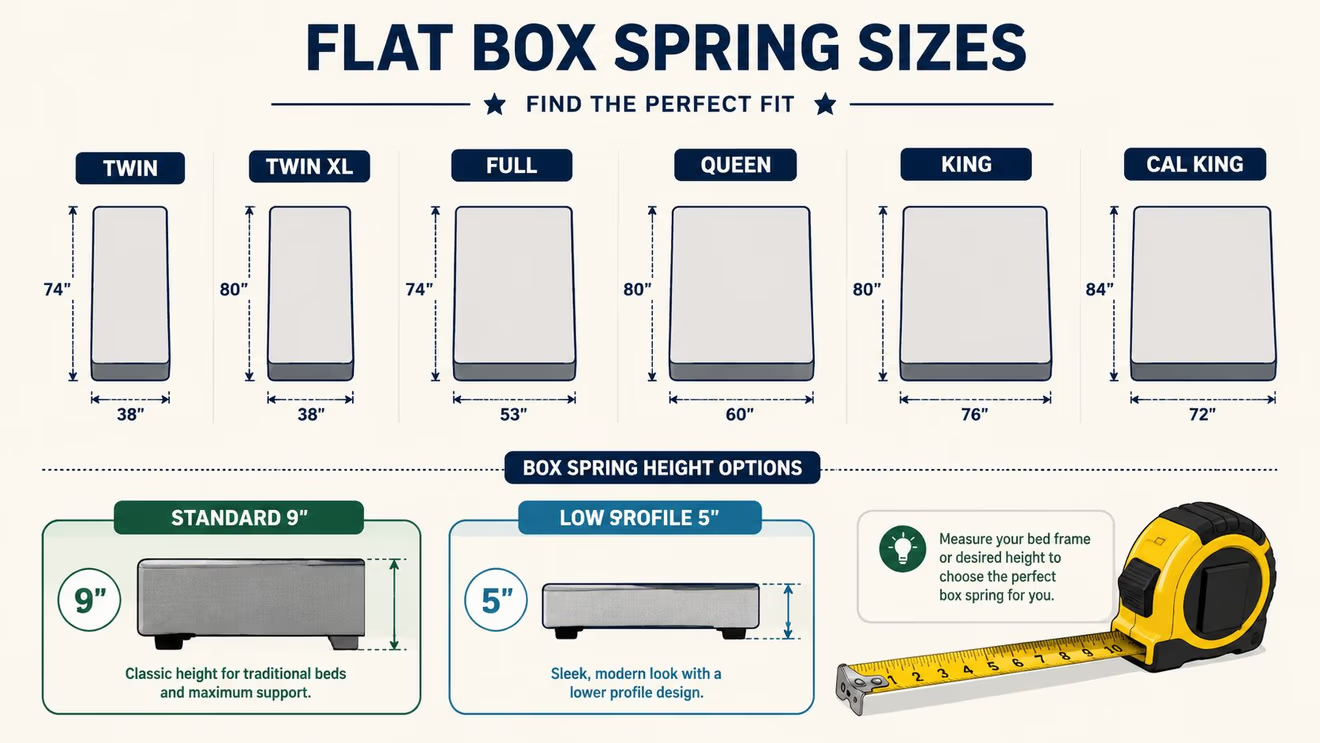
A foundation should match the mattress footprint exactly. Twin, twin XL, full, queen, king, and California king each need a foundation built for that size. A full foundation beneath a queen mattress leaves parts of the mattress unsupported, even if the bed frame looks wide enough. For a quick reference, compare the common dimensions in our mattress size chart.
Choose the profile before measuring the room
Flat foundations commonly come in two heights, 9 inches for a standard profile and 5.5 inches for a low profile. Standard box springs are generally about 8 to 12 inches tall, while low-profile versions are about 4 to 6 inches tall.
Height changes how easy the bed is to enter, exit, and make. A low foundation can balance a thick mattress, a tall frame, or a headboard with limited clearance. A standard foundation may work better with a lower mattress, a traditional metal frame, or a sleeper who prefers a higher sitting position.
A simple home measurement routine
- Measure the mattress: Confirm its labeled size, then check the actual length and width if it is an older model.
- Measure the frame rails: Measure the inside opening where the foundation will sit, rather than relying on the frame's outside dimensions.
- Measure the current bed height: Record the distance from the floor to the mattress surface.
- Check headboard and footboard clearance: Make sure the selected profile leaves the headboard visible and does not rise awkwardly above the footboard.
- Inspect support points: Confirm the rail height, center support, and the foundation's full contact area.
A bed's finished height combines the frame, foundation, and mattress. Guidance on mattress size and bed-height planning notes that a sleeping surface around 24 to 28 inches from the floor suits many adults. Use that range as a reference, not a fixed rule.
At a BILTRITE showroom in the Milwaukee area, you can compare foundation profiles beside mattresses and discuss fit before ordering. Staff can also help confirm measurements and arrange white-glove delivery, so the foundation arrives ready for the bedroom rather than becoming a guessing exercise.
Lifespan, Care, and When to Replace
A flat foundation has a straightforward job, but it still experiences daily compression, movement, dust, and humidity. Its useful life depends on construction quality, frame support, mattress weight, and how often the bed is used. A sound wood or steel structure can remain dependable for years, while a poorly supported or damaged unit may show problems much earlier.
Age alone doesn't decide whether replacement is needed. The more useful test is whether the foundation remains level, quiet, dry, and structurally firm with the mattress removed. A foundation that passes those checks may still be serviceable, while an older unit with a visible dip may already be affecting the bed.
Care that protects the structure
Keep maintenance simple:
- Rotate the foundation occasionally: Change its orientation every few months if the design and frame allow it, helping distribute repeated loading.
- Keep it dry: Avoid placing the foundation where spills or persistent room moisture can soak into the fabric or frame.
- Vacuum the cover: Use a suitable upholstery attachment to remove dust from the surface and perimeter.
- Inspect the underside: Look for cracked slats, loose joints, torn fabric, or signs of moisture.
- Listen during use: New squeaks, pops, or shifting may indicate a frame connection or internal support problem.
A flat foundation usually won't need the same attention as a coil-based unit because it has fewer moving parts. Still, a damaged slat or weak joint can create an uneven load path beneath the mattress.
Warning signs that shouldn't wait
Remove the mattress and check for:
- Visible sagging: A dip, bow, or uneven top surface means the mattress isn't receiving consistent support.
- Soft or spongy areas: Press across the center and edges. The feel should remain stable rather than collapsing in one spot.
- New noise: Persistent creaking or popping can signal loose hardware, a cracked support, or a failing frame.
- Musty odor: A lingering smell may indicate trapped moisture or material breakdown.
- New morning stiffness: If the mattress and sleeping position haven't changed but the bed suddenly feels uneven, inspect the foundation before replacing the mattress.
The same bottom-up diagnosis applies when deciding whether the mattress itself needs attention. BILTRITE's guide to when a mattress should be replaced helps separate mattress wear from foundation problems. If both parts are worn, replacing them together may make sense. If the mattress remains even and comfortable, a properly matched flat foundation may address the issue.
Finding the Right Flat Box Spring at BILTRITE Furniture
Choosing a foundation from a measurement list can feel simple until the frame, mattress, headboard, and delivery path all enter the picture. A showroom gives shoppers a chance to discuss those details before a heavy foundation arrives at the home.
At BILTRITE's Greenfield showroom, sleep specialists can review standard and low-profile heights, compare foundation construction, and check whether the existing frame can carry the selected model. The store's mattress department includes over 60 models, with a broad in-stock selection for shoppers who want to test different mattress and foundation combinations in person.
What to bring to the showroom
A few details make the conversation more useful:
- Mattress information: Bring the brand, model, size, and warranty requirements if available.
- Frame measurements: Record the inside rail width, length, support ledge height, and center support arrangement.
- Current height: Note how high the mattress sits now and whether getting into bed feels easy.
- Room constraints: Consider headboard clearance, footboard height, stairways, hallways, and doorways.
- Comfort preferences: Explain whether the sleeper wants a firmer, steadier feel or the movement of a traditional coil foundation.
BILTRITE stocks flat box springs and foundations in twin, full, queen, and king sizes, along with low-profile choices for modern platform-style frames and taller 9-inch options for legacy metal frames. Staff can help confirm the profile and support arrangement instead of leaving the shopper to guess from a product label.
Local help from a family-owned showroom
BILTRITE is a fourth-generation, family-owned business serving Metro Milwaukee since 1928. The store focuses on affordable, better-quality furniture and mattresses, including USA-made, Amish-made, and solid-wood pieces, with options ranging from small-scale furniture for apartments to heavy-duty choices for larger households.
The sales associates bring over 400 years of combined experience to the showroom, and the goal is practical guidance rather than pressure. Qualifying purchases may include white-glove delivery, and replacement orders can include old foundation removal when that service is arranged. That can make a bulky foundation change easier, especially when a rigid unit must move through narrow stairs or doorways.
The Greenfield location serves shoppers from Milwaukee, West Allis, Wauwatosa, Greendale, Franklin, New Berlin, Brookfield, and nearby communities. BILTRITE doesn't sell online, so the in-store visit is the place to compare heights, test mattress feel, check compatibility, and ask questions face to face.
Ready to sort out a sagging bed or choose a foundation for a new mattress? Visit BILTRITE's Greenfield showroom, bring the frame measurements, and let the local team help match the support system to the mattress and room.
BILTRITE Furniture-Leather-Mattresses offers a large mattress selection, flat box springs, foundations, USA-made furniture, Amish-made pieces, and white-glove delivery options for qualifying purchases. Visit BILTRITE Furniture-Leather-Mattresses in Greenfield to compare foundation heights in person, ask about frame compatibility, and find the right support for the bed.