Platform Bed vs Box Spring: Find Your Perfect Sleep Setup

A lot of shoppers start in the same place. They're excited about a new mattress, then suddenly hit a question that feels oddly complicated. Should that mattress sit on a platform bed or a box spring?
For many Milwaukee families, that choice affects more than style. It changes how the bed feels, how high it sits, how long the mattress lasts, and whether the support underneath matches the way the mattress was built. That's why the platform bed vs box spring conversation matters so much in real homes, not just in furniture showrooms.
Since 1928, BILTRITE has helped Metro Milwaukee families sort through these decisions with honest guidance and a family-first approach. As a fourth-generation, family-owned business, the store has seen the industry change from traditional innerspring-and-box-spring setups to today's foam, hybrid, heavy-duty, and flip-able mattress systems. A lot has changed, and some of the old advice doesn't apply anymore.
This guide breaks the topic down in plain language. No jargon. No pressure. Just the kind of practical explanation that helps a household choose a setup that fits the mattress, the room, and everyday life.
Table of Contents
- Introduction The Great Bed Base Debate
- What Are Platform Beds and Box Springs Anyway
- A Side by Side Comparison
- The Most Important Question What About the Mattress
- Finding Your Fit Scenarios for Every Home
- The BILTRITE Difference Built for Milwaukee
- So Which One Should You Choose
Introduction The Great Bed Base Debate
The confusion is understandable. A bed base seems simple until a shopper starts comparing options. One setup looks lower and cleaner. Another sits taller and feels more traditional. One works with modern foam mattresses. Another still makes sense for some classic innerspring designs.
That's where many people get stuck. They assume the choice is mostly about appearance, when it's really about support, compatibility, and long-term use.
In the platform bed vs box spring debate, the first mistake is treating both as interchangeable. They aren't. They're built differently, they feel different, and they solve different problems in a bedroom.
Practical rule: The bed base should match the mattress first, then the room, then personal style.
That order helps clear up a lot of mixed advice. A household buying a modern hybrid mattress usually needs a very different support system than someone keeping a traditional innerspring. A senior deciding on bed height may value easier entry more than a low-profile look. A family in a smaller Bay View or downtown space may care just as much about footprint and storage as they do about feel.
That's also why generic articles often miss the mark. They tend to flatten everything into one simple answer. Real homes don't work that way. Some families need a sturdy solid-wood frame. Some need a low bed for a compact room. Some need a dependable setup for a heavy mattress that gets rotated regularly.
The good news is that the core ideas are simple once they're explained clearly.
What Are Platform Beds and Box Springs Anyway
A good starting point is the structure itself. Once that's clear, the rest of the decision gets much easier.
The core structural difference
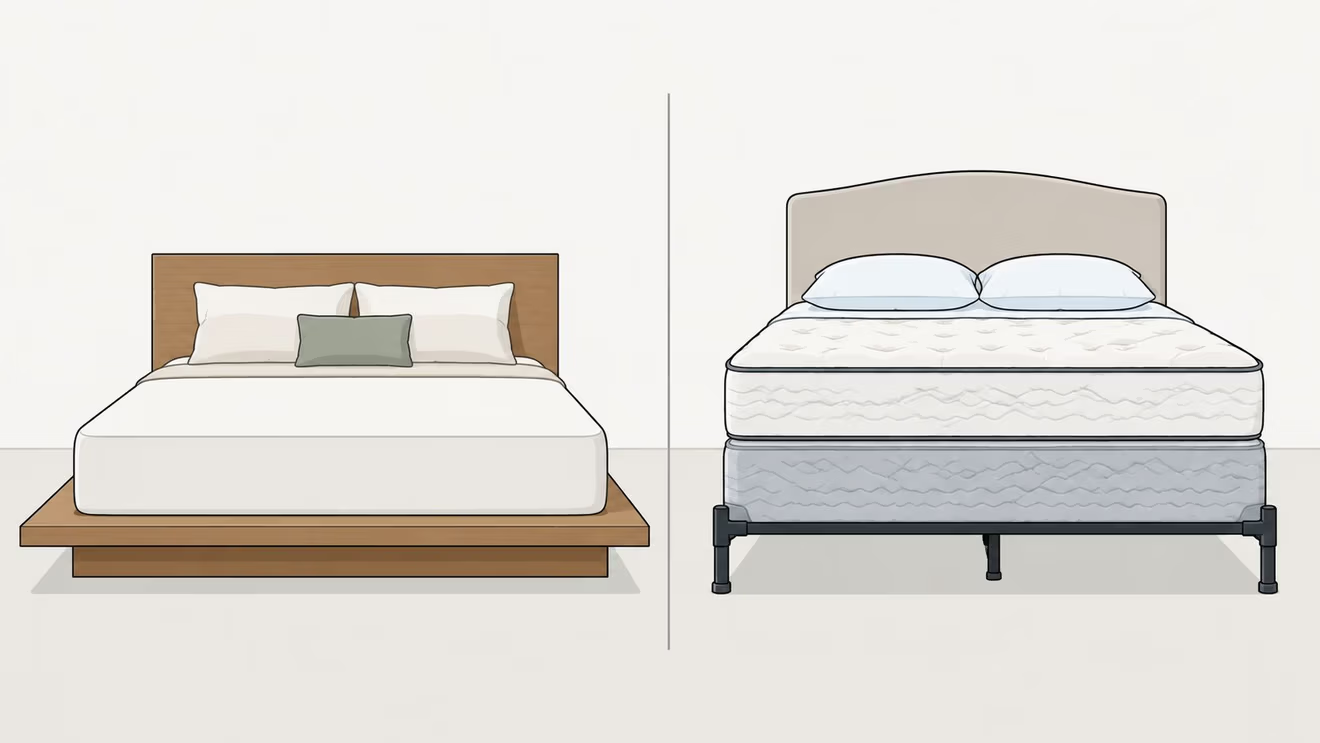
A platform bed is an all-in-one setup. It includes the bed frame and the mattress support in the same piece. The mattress rests directly on slats or a solid surface built into the frame.
A box spring is different. It's a separate foundation that sits between the mattress and a metal or wood bed frame. It doesn't serve as a complete bed by itself.
According to this explanation of platform beds and foundations, platform beds use wood or metal slats, typically spaced no more than 3 inches apart, or a solid base, while box springs are standalone wooden foundations with internal coils or metal grids. That same source explains why platform beds work with a wider range of mattress types, while box springs are mainly optimized for traditional innerspring mattresses.
Readers who want a more detailed local overview can also look at this guide to what a platform bed frame is.
Why that difference matters
That structure changes the whole experience of the bed.
With a platform bed, the mattress gets direct support from a sturdier, flatter surface. With a box spring, the mattress sits on a support layer that has some give or flex. That extra layer used to be standard in many bedrooms, but it isn't automatically useful for every mattress sold today.
A simple house analogy helps. A platform bed is like a home with the foundation already built into the structure. A box spring setup is more like stacking a separate support layer between the house and the ground. Both can work in the right situation, but they're not the same kind of build.
A lot of shoppers use the phrase “box spring” to mean any base under a mattress. That's where confusion starts. A true box spring is a specific kind of spring-supported foundation.
That small vocabulary shift helps explain why many people think they need a box spring when what they really need is a firm foundation or a platform-style frame.
A Side by Side Comparison
A side by side view helps clear up the confusion fast. Once you line the two up, the tradeoffs are easier to spot.
Platform Bed vs. Box Spring At a Glance
| Feature | Platform Bed | Box Spring |
|---|---|---|
| Basic design | Frame with built-in support | Separate support unit that needs a frame |
| Feel | Firm, steady, more solid | More responsive, with some bounce |
| Mattress compatibility | Supports many modern mattress types | Best matched with traditional innerspring setups |
| Height profile | Lower overall look | Taller overall setup |
| Visual style | Cleaner, more modern appearance | More traditional appearance |
| Extra pieces needed | Usually no separate foundation needed | Requires a separate frame underneath |
| Space use | Can reduce vertical bulk and may help smaller rooms feel more open | Adds height and another component |
The easiest way to understand the difference is to focus on what you feel first thing at night. A platform bed gives the mattress a flatter, steadier surface, so the whole bed tends to feel more planted. A box spring has more flex, which can add a little bounce and a more traditional feel under an innerspring mattress.
That difference matters in everyday use.
Support and feel
Platform beds usually create a firmer, more even feel. For sleepers who want less motion and a bed that feels stable when they sit or turn, that can be a real advantage. Box springs have more give, and some families still prefer that familiar softness under a classic innerspring.
Height and getting in and out of bed
A lower platform setup can make a room look less crowded, especially in smaller Milwaukee bedrooms, condos, and bungalows where every inch counts. A box spring raises the mattress higher off the floor, which some people prefer because the bed feels easier to get into and more substantial.
Number of parts
A platform bed often simplifies the setup. Fewer layers usually means fewer pieces to move during a remodel, a move across town, or a trip up a narrow staircase in an older home. A box spring setup adds another component, so there is more to fit, carry, and replace over the years.
Long-term frame strength
This point gets missed in a lot of online comparisons. The base category matters, but the strength of the frame matters too. A light frame can wobble no matter what sits on top of it. For families who want something built to last, heavy-duty support makes a real difference, especially in primary bedrooms that get used every single day. That is one reason we spend so much time helping shoppers look at Amish-made wood frames and stronger construction, not just the label that says platform or box spring.
A good comparison also leaves room for older setups that still make sense. Households using a traditional innerspring mattress, or keeping an older bed designed around that system, may still benefit from a box spring. Our guide on when you really do need a box spring for your bed walks through those cases clearly.
One more practical note for Milwaukee families. If you are buying for a guest room, a growing teen, or a main bedroom you plan to keep for years, durability should carry more weight than trends. A sturdy base paired with a mattress you can flip, rotate, or count on for the long haul often serves a household better than chasing whatever style looks current this year.
The Most Important Question What About the Mattress
Your mattress usually answers the platform bed vs box spring question faster than any style preference can.
Why old advice no longer fits every mattress
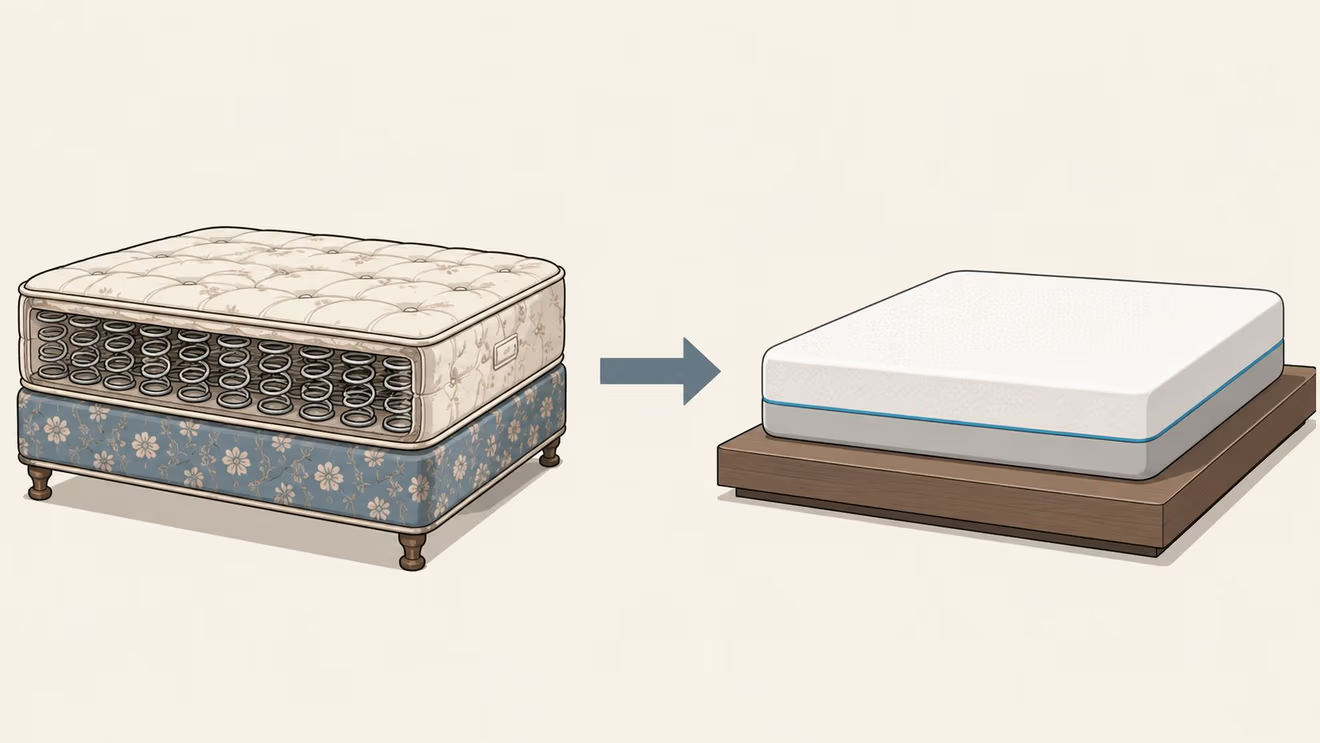
For a long time, the standard advice was simple. Buy a mattress, add a box spring. That guidance made sense back when many beds used traditional innerspring mattresses built for a more flexible support system.
A lot of mattresses sold now are different. Foam, latex, and many hybrids need a flatter, steadier surface underneath. Put one of those mattresses on a springy base, and the support can feel off from the start. Over time, that can lead to uneven wear, sagging, or warranty trouble.
The easiest way to sort it out is to match the base to the mattress design.
- Traditional innerspring mattress: may work well with a box spring, depending on the manufacturer's support requirements.
- Memory foam mattress: usually needs a firm, even foundation.
- Latex mattress: usually performs better on a rigid, level surface.
- Hybrid mattress: often benefits from steadier support than a traditional box spring provides.
A mattress works a lot like a house floor. If the surface underneath has extra give in the wrong places, everything above it has to absorb that movement.
That matters even more for Milwaukee families who plan to keep a mattress for years instead of replacing it at the first sign of wear. We regularly help shoppers look beyond the label on the bed frame and ask a more useful question. What kind of support will help this mattress hold its shape over time? Our guide to choosing the right mattress for your sleep style and support needs can help you sort through those details.
The mattress and base need to work together. If the support is wrong, comfort and longevity usually suffer together.
Why flip-able mattresses need extra attention
This point gets skipped in a lot of generic online advice, but it matters in real homes.
A flip-able mattress is built for long-term use. You turn it. You rotate it. In many households, that is part of the value. But for both sleeping surfaces to wear evenly, the support underneath needs to stay consistent across the whole mattress.
If the base flexes too much or gives unevenly, one side of the mattress can start wearing differently from the other. That defeats the whole purpose of buying a two-sided mattress in the first place. Families investing in a heavier, flip-able mattress often do better with a solid platform or another rigid foundation that keeps the feel consistent every time the mattress is turned.
That is one reason we spend so much time talking through mattress design, not just bed style. At BILTRITE, many Milwaukee shoppers are looking at durable, two-sided mattresses and heavier Amish-made frames built for everyday use. In that kind of setup, the support system is not a small detail. It is part of how you protect the mattress, keep it comfortable, and get more useful years out of the whole bed.
Finding Your Fit Scenarios for Every Home
Saturday morning in Milwaukee often looks the same. One family is trying to make a small Bay View bedroom feel open. Another is helping a parent find a bed that is easier to get in and out of. Someone else wants a setup that can handle kids, pets, and a mattress that weighs more than the average online model. The right base depends on how the room gets used every day.
For smaller homes and apartments
In a tighter bedroom, bed height changes how the whole room feels. A lower-profile setup usually keeps sightlines more open, which can make a condo, apartment, or smaller bungalow bedroom feel less crowded.
Platform beds often fit that goal well because the support is built into the frame. You are not stacking mattress, box spring, and frame on top of each other. It is a little like choosing a low, well-built dresser instead of adding another chest on top. The room can feel calmer because the bed is not taking up as much visual space.
Storage and traffic flow matter too. If you are working around narrow walkways or a shorter wall, our bed options for small spaces can help you compare practical layouts before you buy.
For seniors and easier entry
For many older adults, the question is simple. Can I sit down comfortably, then stand up without strain?
That is where a taller sleep setup can help. A box spring can raise the mattress to a height that feels easier for sitting and standing, especially for someone who does not want to drop down low at the end of a long day. In real homes, we see this come up often in senior apartments, downsizing moves, and guest rooms used by grandparents.
Of course, height alone does not decide the whole setup. The mattress still has to pair correctly with the support underneath. But if a bed looks beautiful and sits too low for the person using it, that beauty wears thin fast.
A comfortable bed starts before you lie down. It starts with how the bed meets you when you sit, stand, and move through your day.
For busy family homes
Family homes put more stress on furniture. Kids plop down sideways. Dogs jump up. Sheets get changed in a hurry. Over time, those small moments test the frame and foundation just as much as nighttime sleep does.
That is why many Milwaukee families look past style first and ask about staying power. A solid platform setup can make sense if you want straightforward support and fewer pieces to manage. A box spring setup can still be a good fit if the household already has a mattress designed for it and likes the taller feel.
Heavier mattresses deserve extra thought here. So do two-sided mattresses that get flipped regularly. In those cases, the base is part of the long-term value, not just the thing hidden under the mattress. That is one reason families shopping at BILTRITE often ask about Amish-made heavy-duty frames and other stronger support options. Those details rarely get much attention in generic articles, but they matter in a house that expects furniture to last for years, not just look good on delivery day.
The BILTRITE Difference Built for Milwaukee
Online advice often stops too early. It explains the basic difference, then leaves out the harder questions Milwaukee families pose. How does a bed hold up with a heavy mattress? What works in a senior living apartment? What support should go under a two-sided mattress that gets flipped regularly?

Local guidance changes the decision
That's where local showroom experience matters. A family-owned business that has served Metro Milwaukee since 1928 sees how these products perform in actual homes, not just in product descriptions.
BILTRITE Furniture-Leather-Mattresses offers guidance across small-scale furniture, senior living needs, solid-wood bedroom pieces, heavy-duty options, and a mattress center with over 60 models. That kind of range matters because platform bed vs box spring isn't one question for every shopper. It changes based on the mattress, the room, and who will use the bed each day.
Readers interested in long-lasting wood bedroom construction can also see why American-made bedroom furniture is worth considering.
Why construction quality matters over time
This is especially important with flip-able mattresses and heavier sleep setups.
Recent data from the Sleep Quality Institute indicates that 40% of warranty claims for 2-sided mattresses are linked to uneven support flexing from box springs, while solid platform decks retain 95% stability. That tells a household something important. The base under the mattress can directly affect how well that mattress holds together over time.
For Milwaukee-area shoppers, that often leads to a more specific conversation. Not just “platform or box spring,” but “what kind of platform,” “how are the slats built,” “is the frame solid wood,” and “will this support a heavier mattress and regular flipping?” Those are better questions. They lead to better long-term decisions.
Strong support isn't only about comfort tonight. It helps protect the mattress from avoidable wear.
That practical side often gets overlooked in broad online guides. It matters a lot in real homes.
So Which One Should You Choose
The answer gets simpler once the key factors are clear.
Choose a platform bed if the mattress is memory foam, latex, hybrid, or two-sided and needs a stable, flatter support surface. It also makes sense for shoppers who want a lower-profile look, fewer parts in the setup, and a clean fit for smaller bedrooms.
Choose a box spring if the household has a traditional innerspring mattress and prefers that taller, more classic bed height. For some sleepers, especially those who find a higher entry easier, that setup can still be the right call.
A few questions usually settle it fast:
- What type of mattress is going on the bed?
- How high should the bed sit for daily comfort?
- Is the room tight on space or visually crowded already?
- Will the setup need to handle a heavier mattress or regular flipping?
That's why seeing the options in person still helps. A family can look at the frame height, feel the support, compare wood and metal construction, and talk with an experienced team without pressure. Since the showroom doesn't sell online and stays closed on Sundays and Mondays for family time, the in-store experience stays personal and focused on real conversation.
A visit to BILTRITE Furniture-Leather-Mattresses in Greenfield gives Milwaukee-area shoppers a chance to compare platform beds, box springs, solid-wood bedroom furniture, and a wide range of mattresses side by side. Come on down to the showroom, say hi, and let the experienced team help match the bed base to the way the home really lives.