Box Spring Memory Foam: Why We Recommend Against It


Memory foam mattresses generally need a rigid, flat foundation, with slat spacing of roughly 3 inches or less serving as a stronger support benchmark. Traditional box springs usually don't provide the steady surface that foam needs, so a box spring memory foam setup can create comfort, durability, and warranty problems.
Why does a familiar mattress setup sometimes create trouble with newer materials? Many shoppers grew up with a mattress sitting on a spring-filled box, so it seems natural to use the same arrangement for every bed. The hidden issue is that traditional box springs and memory foam are built around different support principles.
A traditional box spring flexes beneath the mattress. Memory foam depends on consistent support beneath its entire surface. That difference can affect how the mattress contours around the body, how evenly it wears, and whether the foundation meets the mattress warranty requirements.
Table of Contents
- Why Traditional Box Springs Don't Work Well With Memory Foam
- The History and Purpose of Box Springs
- How Memory Foam Needs Different Support
- Comparison of Foundation Types for Memory Foam
- Warranty and Longevity Implications
- Recommended Setups for Memory Foam Owners
- How to Choose the Right Foundation for Your Bed
Why Traditional Box Springs Don't Work Well With Memory Foam
A traditional box spring usually contains flexible coils or wire components inside a covered frame. That design worked well with many older innerspring mattresses because both layers were intended to move together. Memory foam has a different job. It compresses under body weight and slowly conforms to pressure, so it performs more consistently when the surface below stays firm and level.
A springy foundation can create small areas of uneven movement. One part of the mattress may sink farther than another, especially where a sleeper places the most weight. Over time, that uneven response may contribute to sagging, pressure points, and reduced contouring performance, as described in this guide to mattress foundation requirements.
Why the mismatch matters at bedtime
A memory foam mattress is designed to distribute pressure through its layers. If the foundation bends or dips below it, the mattress can't maintain the same support pattern from one night to the next. A sleeper may notice a softer spot, a hammock-like feeling, or less dependable support around the hips and lower back.
That doesn't mean every product labeled a “box spring” is automatically unsuitable. Modern rigid foundations may look similar from the outside while using panels or firm structural materials inside. The important question is whether the base is non-flexing, flat, stable, and approved for the specific mattress.
Practical rule: If the foundation visibly bows, has broken springs, or allows the mattress to dip between supports, it deserves inspection before a new foam mattress is placed on top.
A platform bed or a properly built foundation generally offers a more suitable starting point. Shoppers comparing those options with a traditional box spring can also review this platform bed versus box spring guide before choosing a frame.
The History and Purpose of Box Springs
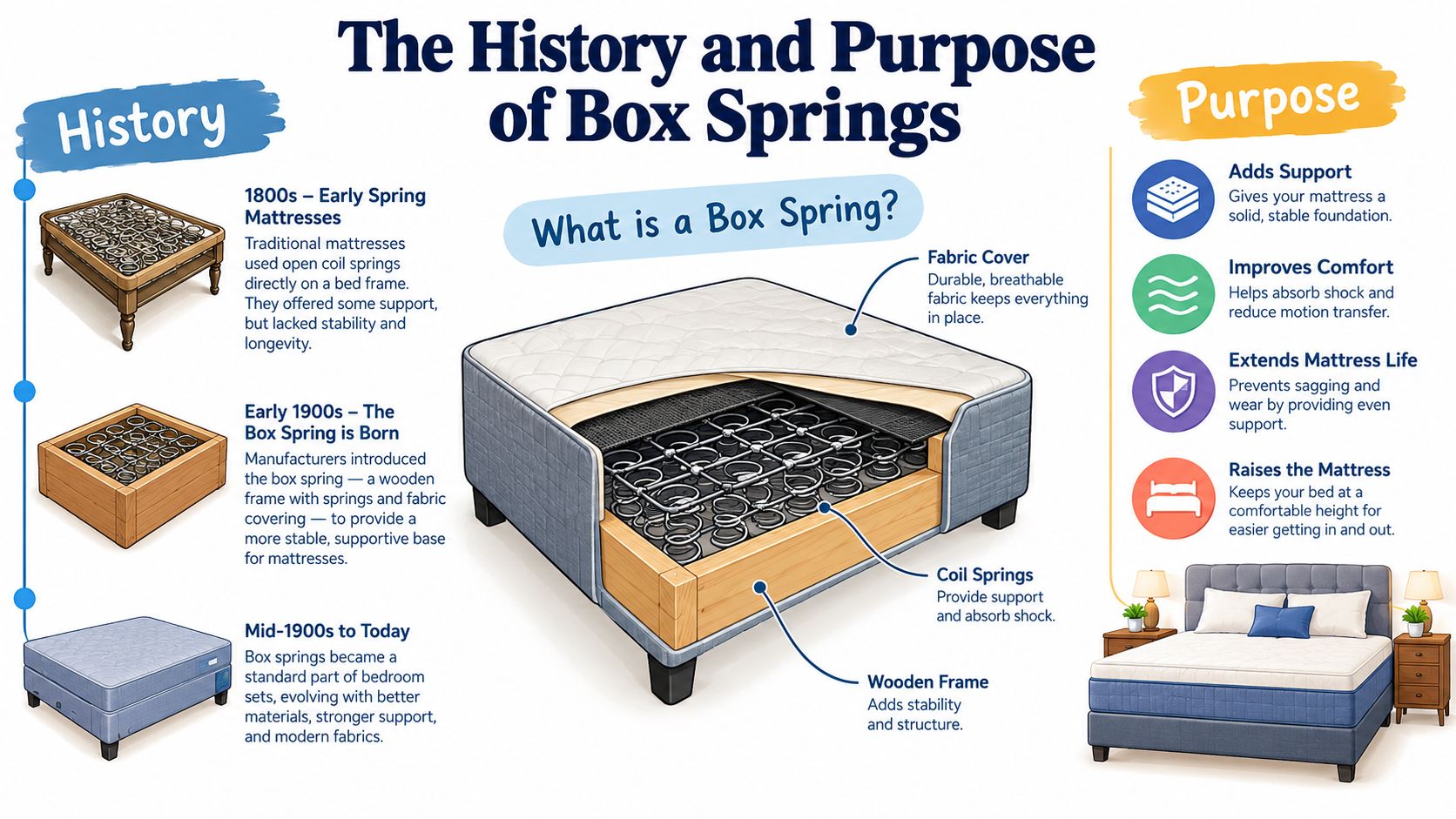
Box springs made sense because mattress construction once called for them. Their roots reach from the late 18th to early 19th century, when the design addressed support problems associated with older mattress styles. Later, in the mid-1800s, James Marshall's coil spring mattress created a new need for a supportive base because placing springs directly on a rigid frame could lead to sagging over time. These historical details are also outlined in this account of box spring development.
Traditional versions combined a wooden frame, heavy-gauge steel springs, and fabric covering. The result was a raised, flexible platform that could absorb some movement while giving an innerspring mattress a more buoyant feel. The mattress and base functioned as a pair, rather than as two unrelated products stacked together.
Why the old pairing became familiar
By the 1950s, traditional box springs and innerspring mattresses had become standard in North America, creating a higher sleep system with a floating feel. For families replacing one innerspring set with another, keeping the same type of foundation was an easy decision.
The confusion begins when shoppers carry that assumption into a foam purchase. Memory foam became a major mattress category much later, as consumers moved toward pressure-relieving materials that generally rely on dense, uniform support. The global memory foam mattress market was estimated at about $8.09 billion in 2023 and projected to reach $13.45 billion by 2032, with a 5.8% compound annual growth rate from 2025 through 2032, according to the cited industry reporting. That expansion means more households are pairing modern foam with older bedroom furniture.
A historical overview in this explanation of why a box spring may still be needed can help separate a traditional spring base from a modern rigid foundation. The outside appearance may be similar, but the support behavior is what determines compatibility.
How Memory Foam Needs Different Support
Memory foam responds to pressure rather than bouncing back immediately like a spring surface. A sleeper's shoulders, hips, and other heavier areas press into the comfort layers, while the support core helps keep the body from sinking too far. That process works best when the foundation beneath the mattress offers continuous, even support.
A rigid platform creates one stable plane. Closely spaced slats can create a similar effect when they remain level, strong, and properly supported. An older coil box spring introduces another layer of movement, which can make the mattress feel less even and may interfere with its intended pressure relief.
Three foundations, three different results
A rigid foundation gives foam a steady surface. It can preserve the mattress's designed contour and reduce movement beneath the sleeper.
A slatted base can work well when the slats are close enough together and don't flex excessively. The frame must also support the slats securely, because loose or weak components can create isolated dips.
A traditional coil box spring adds bounce and give below the foam. That combination may feel pleasant at first, but it can also allow uneven compression and create more stress in areas that carry heavier body weight.
The distinction is easier to understand with a simple example. A glass of water placed on a sturdy table stays level. The same glass placed on a flexible trampoline shifts whenever the surface moves. Memory foam isn't a glass, of course, but the comparison shows why a stable plane makes support more predictable.
What shoppers should notice
Poor compatibility may show up as a mattress that feels softer than expected, a visible dip, or pressure concentrated in one region. A sleeper might also sense that the mattress contours unevenly from one side to the other. Those signs don't always prove that the foundation caused the problem, but they justify checking the base before replacing the mattress.
Plain guidance on the material itself is available in this explanation of what a memory foam mattress is. The central point is simple: foam needs a foundation that supports its full footprint without adding unwanted flex.
Comparison of Foundation Types for Memory Foam
Foundation choice becomes clearer when the options are compared by how they behave under a foam mattress. Support level matters first, but airflow, height, and intended use also influence the decision. A shopper who wants a low modern profile may choose differently from someone who needs extra height for easier bed access.
| Foundation Type | Support Level | Airflow | Best For |
|---|---|---|---|
| Platform bed | Firm when solid or properly built | Often good, depending on the design | Shoppers who want an integrated frame and foundation |
| Closely spaced slatted base | Strong when slats are level and properly supported | Usually good around the mattress underside | Foam owners who prefer visible structure and ventilation |
| Low-profile rigid foundation | Firm and even | Depends on panel and fabric construction | Traditional bedroom styles with a lower overall height |
| Traditional coil box spring | Flexible and variable | May allow movement beneath the mattress | Compatible innerspring setups, not most memory foam mattresses |
Reading the support details
A slatted base isn't automatically suitable. Major mattress guidance commonly treats roughly 3 inches or less between slats as a stronger support benchmark, while broader retail guidance may allow up to 6 slats only when the structure remains flat, firm, and free from sagging. These specifications and cautions appear in this foundation comparison for memory foam mattresses.
Airflow can be useful beneath a mattress, but ventilation doesn't compensate for weak support. A frame with generous gaps may circulate air while still allowing the foam to bow between supports. A solid platform may offer more uniform contact, although the bedroom's moisture conditions and the foundation's construction still deserve attention.
Matching the base to the room
Height is another practical consideration. A low-profile foundation can keep a room looking open, while a taller setup may make sitting down and standing up easier. Families should also consider whether the frame can handle the mattress and sleepers without shifting, creaking, or flexing.
Anyone uncertain about whether an existing base qualifies can review this guide to box spring needs. The right decision comes from the mattress requirements and the foundation's actual construction, not from the name printed on the fabric cover.
Warranty and Longevity Implications
Could an old box spring make a new memory foam mattress ineligible for warranty coverage? It can, because the foundation must provide the kind of support the mattress maker specifies. A traditional spring base may flex too much or leave unsupported areas beneath the foam. That mismatch can affect both warranty eligibility and sleeping posture.
Reusing an older box spring also carries practical risks. Its springs may have weakened, its frame may have shifted, or its surface may no longer be level. Like a slightly bent shelf under a heavy object, a foundation can look fine while placing uneven stress on the mattress.
The cost of overlooking compatibility
An unsuitable foundation can create several problems:
- Warranty exposure: The owner may have difficulty obtaining coverage if the base fails the stated requirements.
- Uneven wear: Foam above weak or flexible sections may compress differently from the rest of the mattress.
- Comfort changes: Pressure relief and spinal alignment may become less consistent.
- Premature replacement: Uneven wear can shorten the mattress's useful life.
Guidance on mattress foundations warns that older sprung box springs may contribute to sagging and pressure points, and could void a warranty, while rigid-panel foundations may be acceptable in some cases. The same guidance reports a projected market increase from $6.18 billion in 2025 to $6.67 billion in 2026 at an 8% compound annual growth rate, according to this discussion of what belongs under a mattress. The broader point is practical: as memory foam becomes more common, shoppers need to check compatibility rather than trust the word “box spring” on a product label.
A sensible verification step
Before buying a new mattress, locate its warranty and identify the approved foundation types. This guide to foundations for Tempur-Pedic mattresses shows how manufacturer requirements may be written. Then inspect the existing frame, slats, center support, legs, and surface for visible sagging or movement.
A showroom sleep specialist can help compare those written requirements with the physical setup. The manufacturer's warranty terms remain the final authority, especially when a foundation's support system is difficult to identify from its exterior.
Recommended Setups for Memory Foam Owners
The strongest general choices for memory foam are platform beds, rigid low-profile foundations, and properly spaced slatted bases. Each option gives the mattress a more even surface than a traditional spring base, provided the structure stays level and meets the mattress maker's requirements.
A platform bed suits shoppers who want a simple all-in-one arrangement. The mattress rests directly on a solid deck or a carefully designed slat system, so there are fewer separate components to inspect. This style also works well in rooms where a clean, lower profile supports the furniture layout.
Selecting by lifestyle
A low-profile foundation offers a more familiar bedroom appearance without relying on flexible coils. It can suit a household that prefers the look of a raised bed but wants a firm surface beneath a foam mattress.
A slatted base may be useful for shoppers who value open space beneath the mattress. The slats should be close enough together, properly secured, and strong enough to remain flat under the intended load. A wide gap, bowed slat, or missing center support changes the performance of the entire setup.
Better buying habit: Choose the mattress and foundation as a pair, then confirm that the frame supports both components.
The BILTRITE showroom in Greenfield offers flat foundations and platform-style options for shoppers comparing support systems in person. Its Mattress Center includes over 60 models, along with furniture for apartments, larger families, senior living spaces, and rooms that need a more substantial build.
A traditional box spring still has a place with a compatible innerspring mattress or a frame designed specifically for a flexible base. The mistake is treating that historical pairing as a universal rule for every foam mattress.
How to Choose the Right Foundation for Your Bed
A short checklist can prevent most box spring memory foam mistakes. The shopper doesn't need to memorize every construction detail, but the foundation should pass several practical checks before the mattress arrives.
Start with the mattress requirements. The warranty and care materials should identify acceptable foundations. If the instructions require a solid or non-flexing base, an old coil box spring should not be treated as an automatic match.
Measure slat spacing. Slats with gaps of roughly 3 inches or less provide a stronger support benchmark, according to the cited mattress guidance. The spacing should be consistent across the bed, not just near the head or foot.
Check for flex and sagging. Press on the support surface and inspect it from the side. A frame that bows, rocks, or leaves the center unsupported may create trouble for foam.
Consider height and access. A low setup can suit a compact bedroom, while a taller foundation may make getting into bed easier. The mattress thickness and frame height should work together rather than creating an awkwardly tall arrangement.
Match the foundation to daily use. Families, couples, and heavier sleepers may need a sturdier frame than a single adult using the room occasionally. The foundation must remain stable under the actual household's routine.
Inspect the complete system. The mattress, foundation, frame, center support, and floor contact all contribute to the result. Replacing only the mattress may not solve a problem caused by a weakened base.
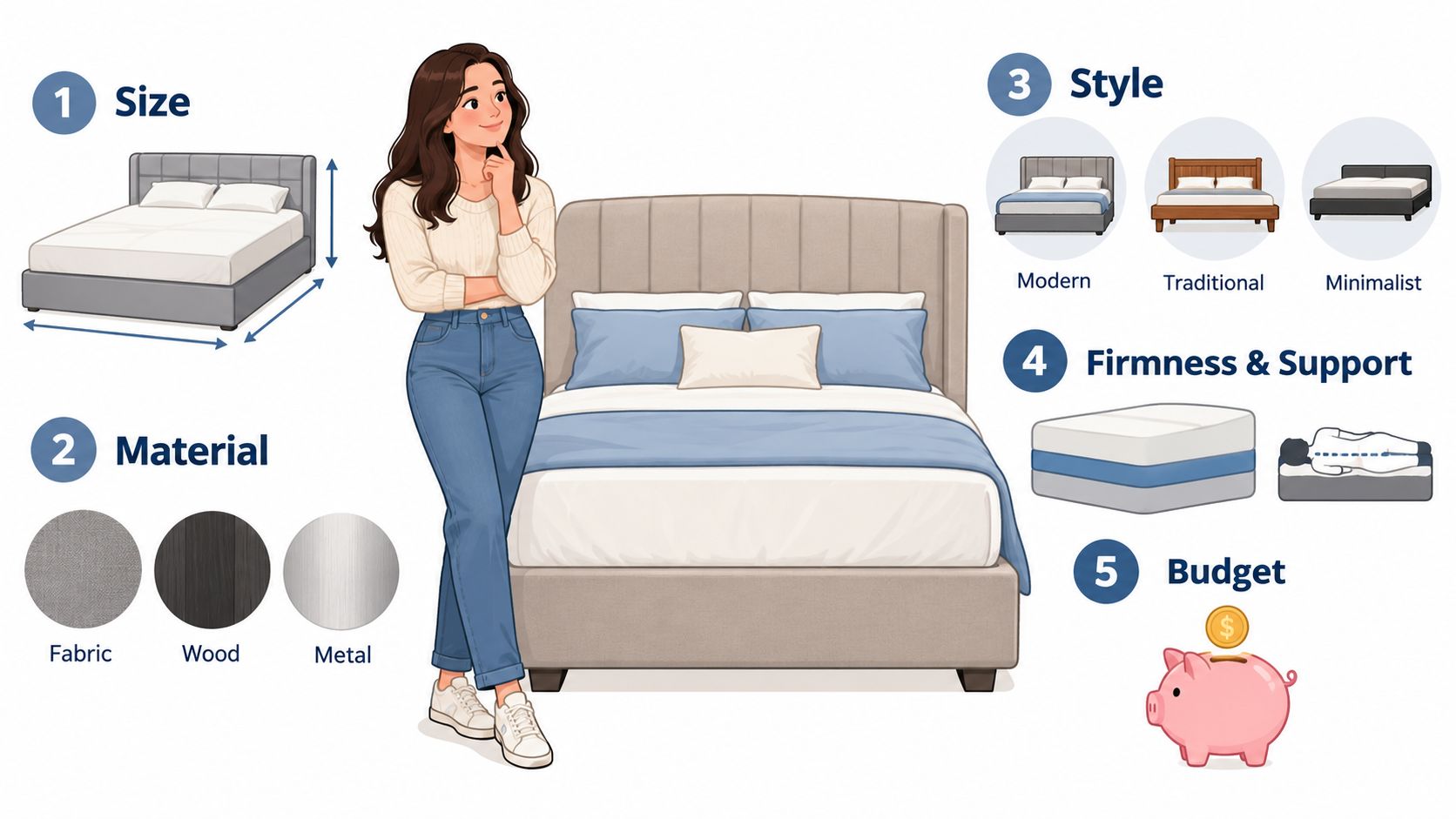
A local showroom visit can make the comparison easier because shoppers can discuss support needs, room dimensions, mattress feel, and budget in one conversation. BILTRITE Furniture-Leather-Mattresses is a fourth-generation, family-owned business serving the Metro Milwaukee community since 1928, with a large mattress department, USA-made and Amish-made furniture, solid-wood options, and sales associates with over 400 years of combined experience. The store is closed on Sundays and Mondays to support family time.
Come to BILTRITE Furniture-Leather-Mattresses in Greenfield to compare memory foam mattresses with flat foundations, platform beds, and properly supported frames. The team can help shoppers check compatibility, comfort, and bedroom fit in person, without pressure, so the next sleep setup supports both the mattress and the household.