3 DAY MATTRESS SALE! THURSDAY - FRIDAY - SATURDAY!
LABOR DAY SALE HELD OVER ENDS SATURDAY, SEPTEMBER 19 AT 5PM!
NO CREDIT CARD FEES!
1000's of Items IN-STOCK + 500 Mattresses!
Largest selection of USA Made Furniture & Mattresses + Amish Made!
FREE In-Store Design Services!
BUY LOCAL & LOVE YOUR HOME!
3 DAY MATTRESS SALE! THURSDAY - FRIDAY - SATURDAY!
LABOR DAY SALE HELD OVER ENDS SATURDAY, SEPTEMBER 19 AT 5PM!
NO CREDIT CARD FEES!
1000's of Items IN-STOCK + 500 Mattresses!
Largest selection of USA Made Furniture & Mattresses + Amish Made!
FREE In-Store Design Services!
BUY LOCAL & LOVE YOUR HOME!
OPEN LABOR DAY | Tuesday-Thursday 10am to 6pm | Friday 10am to 7pm | Saturday 10am to 5pm | Sunday Closed To Be With Family & Friends | Monday Showroom Closed
5430 West Layton Ave, Greenfield - Metro Milwaukee
You're standing in a bedroom with a tape measure in one hand and a coffee in the other, trying to answer a simple question that somehow isn't simple at all. Will a 60 x 80 mattress make the room feel open and easy, or will it crowd out everything else you need in your life, like a dresser, nightstand, and a clear path to the closet?
The queen size has stayed the everyday standard in U.S. homes for a reason. It gives two adults real sleeping room without pushing bedroom layout into king-size territory, and it usually fits better in the kinds of rooms most families live in. For shoppers who want a practical, familiar starting point, that matters. The trick is not just picking queen, it's picking the right queen for the room, the frame, and the way someone sleeps.
If the mattress search feels bigger than it should, that's normal. The smartest buyers slow down, measure first, and then try beds in person before they make a decision. Our mattress selection guide is a good place to start if the basics still feel fuzzy.
Picture the Mattress That Fits Your Life
A 60 x 80 mattress works because it hits the middle ground that most households need. It's wide enough for two adults, but it still leaves a fighting chance for walking space, a nightstand, and a room that doesn't feel like it was built around the bed.
Start with who's sleeping there
For couples, queen is the clean, sensible choice unless the room is unusually large or one sleeper really needs extra space. For a guest room, it gives visitors a bed that feels generous without taking over the house. For someone upgrading from a full, queen usually feels like a real improvement without forcing a full bedroom makeover.
That balance is why queen stays such a common residential format. It isn't flashy, but it solves the daily problem better than a lot of bigger or smaller options.
Practical rule: If the room still needs to function as a room after the bed arrives, queen is usually the move.
BILTRITE families often come in with the same story. They want more sleeping comfort, but they don't want to wreck circulation in a Milwaukee bedroom, condo, or guest space. That's the right instinct.
Use the room, not the label
A mattress label only tells part of the story. The bed has to work with drawers, doors, baseboards, and the way people move around the room. A queen often wins because it gives enough bed without stealing the whole floor plan.
A bed that fits on paper can still feel wrong in daily life if the room gets cramped around it.
The better question isn't, “Can it fit?” It's, “Can the room still feel easy to live in?” That's where the queen shines. It usually gives the bedroom enough breathing room to feel calm instead of crowded.
What 60 x 80 Really Means in Real Numbers
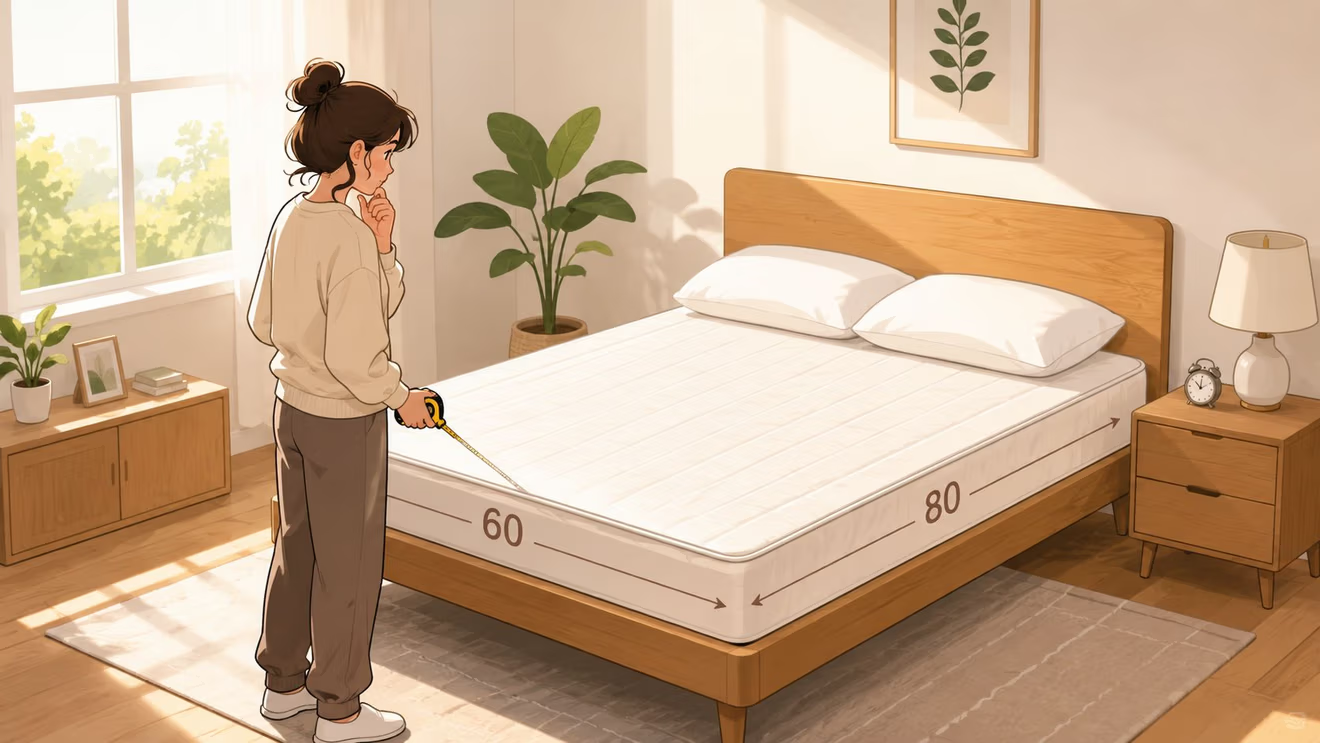
A 60 x 80 mattress measures 5 feet wide by 6 feet 8 inches long, or about 152.4 by 203.2 centimeters. That footprint helps you see the bed as a real object in the room, not just a label on a tag. A queen also covers about 33.3 square feet, or 4,800 square inches of sleeping surface, which is the kind of number that helps when you are deciding how much floor space you are giving up. For a straightforward local reference, see BILTRITE's queen mattress dimensions guide.
Where queen sits among standard U.S. sizes
Queen is one of the six standard U.S. mattress sizes, alongside twin, twin XL, full, king, and California king. That matters because standard sizing usually makes bedding easier to buy, frames easier to match, and delivery less complicated. A standard-size chart places queen squarely in the middle of the residential lineup.
Size
Dimensions (inches)
Best For
Twin
38 x 75
Children, solo sleepers, tight rooms
Twin XL
38 x 80
Taller single sleepers, narrow rooms
Full
53 x 75
Solo sleepers who want more room
Queen
60 x 80
Couples, guest rooms, everyday adult use
King
76 x 80
Couples who want more space
California King
72 x 84
Taller sleepers who want more length
Why the footprint feels so familiar
Queen is the default two-adult format in a lot of U.S. homes because it gives a useful balance of width, room fit, and bedding availability. It gives you enough bed to sleep comfortably without taking over the room. That is why so many shoppers settle there after looking at full and king.
For a Milwaukee bedroom, condo, or guest space, that balance matters more than the label. A queen feels like a clear upgrade, but it still leaves room for nightstands, walking space, and the rest of the furniture that makes a bedroom work.
Which Mattress Construction Feels Right for You
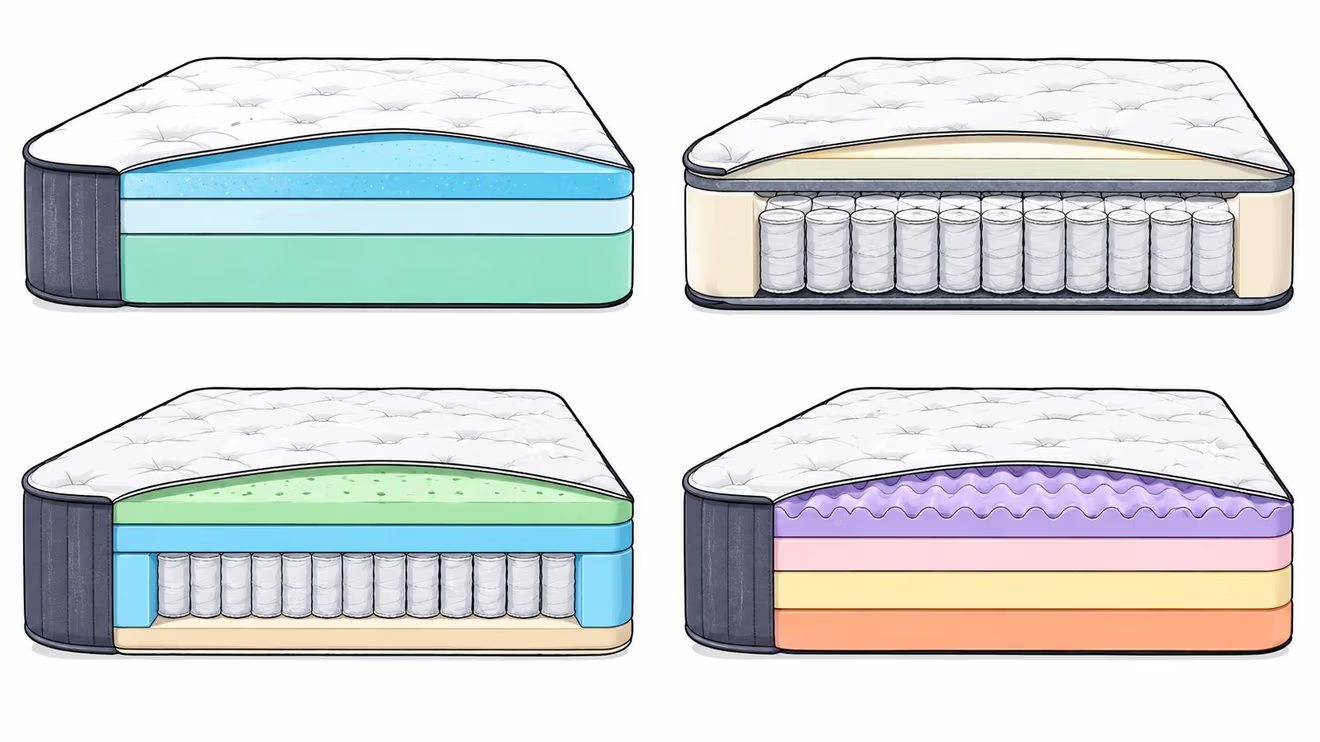
Two queen mattresses can share the same footprint and still feel completely different once someone lies down. Construction matters more than the label on the side, and the right pick comes down to support, motion control, airflow, and how much maintenance the household wants to deal with over time. If you want a plain-English rundown of the main build types before you shop, BILTRITE's friendly guide to mattress construction is the right place to start.
The feel starts inside the mattress
A queen memory-foam model can be built with a layered feel that includes a comfort layer, a transition layer, and a support core, while an air-based design can be much lighter and built around adjustable support chambers. Those model details show why thickness and layer design matter just as much as size.
That difference changes how the bed behaves night after night. Denser support layers usually feel steadier and cut down on motion transfer, which helps when one person tosses and turns. Lighter air-based designs are easier to move and store, but they depend on inflation staying intact and they bring puncture concerns that foam and coil beds do not face.
Match the construction to the sleeper
Innerspring is the straightforward bounce-and-airflow choice. It feels familiar, responds quickly, and makes it easier to shift position during the night.
Memory foam is the quiet option, and it usually suits people who want more contouring and less partner motion. Hybrid sits in the middle. It blends support and comfort in a way that works for a lot of households, especially when one person wants a cushioned surface and the other wants more structure.
Two-sided flip-able mattresses are a different category altogether. They are built for rotation and even wear, which can help a bed stay more balanced over time. BILTRITE's flip-able and two-sided mattresses belong in that conversation because they give buyers a practical long-term maintenance advantage. That is a real design choice with real wear-pattern benefits.
Use this rule of thumb: hot sleepers usually care more about airflow, restless partners care more about motion control, and anyone who hates a saggy feel should pay close attention to support layers.
Don't shop by tag alone
A queen innerspring, queen memory foam, queen hybrid, and queen two-sided bed can all share the same size on paper and feel completely different in daily use. The honest move is to lie down on them and pay attention to what your body notices in the first few minutes. Comfort is personal, but construction gives the clues.
Measuring Your Room, Frame, and Doorways Like a Pro
A queen mattress is easy to buy and a little more work to place well. The smart move is to measure the room, the frame, and the path to the bedroom before the truck ever shows up.
Measure the space people actually use
A 10 x 10-foot room is a common starting point for a queen, and 10 x 12 feet usually gives a little more breathing room around the bed. A bedroom has to do more than hold a mattress. It has to leave space to walk, dress, open drawers, and move around without banging knees.
The quickest check is to lay out the bed in your head with the rest of the furniture still in the room. If that setup already feels cramped, the room may need a different size or a smarter furniture arrangement before you buy. BILTRITE's measuring guide is a good place to start before you commit.
Check the measurements people forget
Mattress fit is not just width and length. The frame, foundation, and route into the room matter just as much. Doorways, hallway turns, stairwells, and even ceiling height for a taller headboard all deserve a look before purchase.
Measure the mattress itself, not just the label. Many buyers get tripped up by the gap between nominal size and real-world dimensions.
That warning matters because mattress and foundation sizes can vary by manufacturer by about 1 to 2 inches, and that difference can decide whether a bed feels snug, loose, or awkward in a frame. Check the specific model and the foundation dimensions. Do not assume every queen lands exactly the same way.
Use a simple check before ordering
Room width and length: Confirm that the bed leaves usable walking space on both sides and at the foot.
Doorframe and hallway clearance: Make sure the mattress, box, or compressed carton can make the trip inside.
Frame interior size: Verify the inside dimensions of the bed base, not only the outside footprint.
Depth and headboard height: Check how thick the mattress is and whether the setup will sit too high or too low.
A queen should fit the life around it, not just the square footage on a listing. That is the difference between a mattress that feels right and one that turns into a return headache.
Why Shopping Local at BILTRITE Changes the Experience
The queen-size question gets easier when the shopper can lie on the mattress and ask somebody who knows the product line. That's the advantage of a local showroom, and it's where BILTRITE Furniture-Leather-Mattresses fits naturally into the decision.
In-stock choices beat guessing from a screen
BILTRITE's mattress center offers over 60 models and more than 500 mattresses in stock, along with free white-glove delivery on qualifying purchases, old mattress removal in donatable condition, and a complimentary protector or heavy-duty frame on select sets. Those in-stock and delivery details are listed by BILTRITE. That means a queen mattress purchase can turn into a real in-home setup instead of a long wait and a lot of guesswork.
For a shopper comparing a standard queen, a heavier build, or a two-sided design, the local showroom matters. The physical feel of the bed, the ease of getting it home, and the setup help all belong in the same conversation.
Advice from people who actually sell mattresses all day
BILTRITE has been family-owned in Greenfield since 1928, and our sales associates bring more than 400 years of combined experience to the floor. That doesn't just sound nice, it changes the way shoppers get helped. The conversation is about matching the bed to the sleeper, the bedroom, and the delivery path, not pushing someone toward a random tag.
The right mattress gets easier to spot when someone can explain the trade-offs in plain language.
That's why in-store shopping still makes sense for a queen. A mattress is something people live with every night, so it deserves more than a quick scroll and a hope for the best.
The BILTRITE difference is practical, not flashy
Our showroom is built around real-life use, including sturdy options, American-made and Amish-made furniture throughout the store, and mattress choices that suit everything from small bedrooms to heavy-duty needs. BILTRITE's approach is simple. Let people test the bed, answer the questions clearly, and help them leave with a setup that works.
Your BILTRITE Buying Checklist Before You Visit
A good mattress trip goes faster when the buyer shows up with a plan. The wrong approach is wandering in with no measurements and hoping the right feel magically appears. The better approach is to know the room, the sleeper, and the setup needs before stepping onto the showroom floor.
Bring the facts that matter
Frame size and type: Confirm whether the current frame is already a queen and whether it needs a box spring, platform base, or foundation.
Room measurements: Bring the bedroom width and length, plus doorway and hallway notes if the path is tight.
Sleep style: Side sleeper, back sleeper, stomach sleeper, hot sleeper, restless sleeper, or a mix of all of them, because that changes what feels right.
Comfort concerns: Back pain, pressure relief, or overheating should all be mentioned up front.
Delivery needs: If old mattress removal matters, say so early so the logistics are clear.
That last point is worth taking seriously. A smooth delivery is part of the purchase, not an afterthought.
Ask questions that save a second trip
Foundation compatibility should be first on the list. So should mattress height, especially if the buyer wants the bed to sit lower or higher than the old one. If a household is considering a two-sided flip-able mattress, it's smart to ask how rotation and flipping fit into long-term care.
BILTRITE shoppers can also ask about value extras on qualifying sets, including white-glove delivery and removal of the old mattress in donatable condition. Those services change the day-of-delivery experience in a very real way.
Know what not to overcomplicate
A queen mattress decision does not need a thousand tabs open. It needs a clear room measurement, a feel preference, and a little honesty about how the bed will be used. If the buyer has those three things before arriving, the showroom visit gets a lot easier.
Bring the measurements, bring the questions, and let the mattress do its job when you lie down on it.
Queen Mattress Questions and Your Next Steps
Milwaukee shoppers usually come in with practical questions, and the best ones are the ones that save trouble later. A 60 x 80 mattress can sit on the floor, but that should be a choice, not the default, because airflow, bed height, and long-term support all come into play. A queen will usually make it through a standard doorway, yet the doorframe, hallway turns, stair landings, and delivery path still need a real measurement before anyone commits.
A smaller bedroom can still work with a queen if the layout is honest. If the room feels tight, the buyer needs to measure for walking space, dresser clearance, and where the bed will land in the room. Queen sizing is a room-fit decision as much as a mattress decision, so the measurements should lead the conversation.
Construction matters just as much as size. A two-sided mattress gives the household a way to rotate and flip the bed for more even wear, which is why some people like it for long-term value. Buyers who want a bed that lasts without feeling lumpy too soon should ask about how the mattress is built, how it should be cared for, and whether the feel they want matches the model on the floor.
A queen works best when it fits the room and fits the routine.
The shopping trip gets easier when the store visit is done with a plan. At BILTRITE, that means testing the queen selection in person, checking room fit before the purchase, and talking through delivery details while the mattress is still on the showroom floor. Our showroom at 5430 West Layton Avenue in Greenfield is set up for those conversations, and we're closed on Sundays and Mondays so our families get time together too. Come in during the week, compare the feel of different queen models, and get a straight answer on what will work in your home.
Ready to narrow down your 60 x 80 mattress choice without guesswork? Visit BILTRITE Furniture-Leather-Mattresses in Greenfield, and let us help you compare queen options, room fit, and delivery details in one stop. We can also talk through the white-glove delivery and old-mattress removal options that make the handoff much easier. Bring your measurements, bring your questions, and leave with a clear next step.