Solid Wood Entryway Furniture: A BILTRITE Family Guide

Wet boots by the door. A pile of backpacks on the floor. Keys tossed on whatever surface is closest. That's how a lot of entryways work in real homes around Milwaukee, and it's also why this room deserves more thought than it usually gets.
The entryway has one job that branches into several others. It should welcome guests, catch daily clutter, handle moisture, and still look good after years of hard use. Cheap furniture struggles there fast. Good furniture earns its keep there every single day.
Your Guide to a Welcoming Entryway
A strong entryway starts with honesty about how the space is used. If the front door is the family launch pad, then the furniture near it has to handle shoes, bags, coats, mail, and the daily in-and-out that comes with school, work, pets, and Wisconsin weather.
That helps explain why demand keeps climbing. The global entryway furniture market was valued at USD 11.2 billion in 2024 and is projected to reach USD 16.1 billion by 2030, with North America leading demand, according to Strategic Market Research on the entryway furniture market. People aren't just decorating this area. They're trying to solve a daily problem with furniture that lasts.
Start with the mess, not the style
Most entryway mistakes happen because shoppers begin with color or shape. Function should come first.
A better approach is simple:
- Watch the traffic pattern. Notice where people drop shoes, where bags land, and whether anyone needs a place to sit.
- Measure walking space. The furniture has to organize the room without turning it into an obstacle course.
- Match the piece to the habit. A family that kicks off boots needs storage. A smaller condo may just need a narrow landing spot for keys and mail.
Practical rule: If a piece doesn't improve the daily routine at the front door, it's decoration first and furniture second.
A narrow wall near the entrance may call for a console. A busy family entry may need a bench with storage. An empty corner might be better served by hooks and a compact cabinet than by a big statement piece.
Give the room one clear purpose
The best entryways don't try to do everything at once. They do a few things well.
Some households need a clean drop-zone. Others need seating and shoe storage. Some want that first look into the home to feel warm and orderly instead of chaotic. A useful primer on proportions and layout can be found in this guide to entry table elements that make an entryway work.
That first room doesn't need to be fancy. It needs to be dependable.
And that's why solid wood entryway furniture matters. This is one of the few spots in the house where furniture gets tested every day by weight, moisture, abrasion, and neglect. If a piece can handle that and still look sharp, it belongs in the home.
Why Solid Wood is a Smart Family Investment
A lot of furniture looks decent on day one. That's not the standard that matters. The standard is what the piece looks like after years of shoes scraping the base, kids dropping bags on top, and adults leaning on it while pulling off boots.
That's where solid wood earns its reputation.
It lasts longer and ages better
Solid wood isn't just about a classic look. It holds up under family life in a way disposable furniture often doesn't. Scratches can become part of the character. Minor wear usually doesn't mean the piece is finished. Many solid wood pieces can be repaired or refinished instead of replaced.
That long-view value is part of a much bigger shift. The global solid wood furniture market was valued at USD 33.25 billion in 2025 and is projected to grow to USD 47.64 billion by 2032, showing steady demand tied to sustainable, eco-friendly, and long-lasting furniture, according to Global Information, Inc. research on the solid wood furniture market.
Shoppers who want better quality for their money are moving toward furniture that doesn't feel temporary.
It makes more sense for family budgets
A lower price tag upfront can be misleading. If a cheap entry bench loosens, chips, swells, or sags after a few seasons, that “deal” gets expensive fast. A well-built solid wood piece often costs more at the start, but it usually gives more years of use and more confidence day to day.
That's especially true in an entryway, where furniture gets knocked into, sat on, loaded up, and ignored. This room isn't gentle.
A good overview of the long-term advantages appears in this article on the benefits of solid wood furniture.
Solid wood works best for families who want furniture they can live with, not furniture they have to babysit.
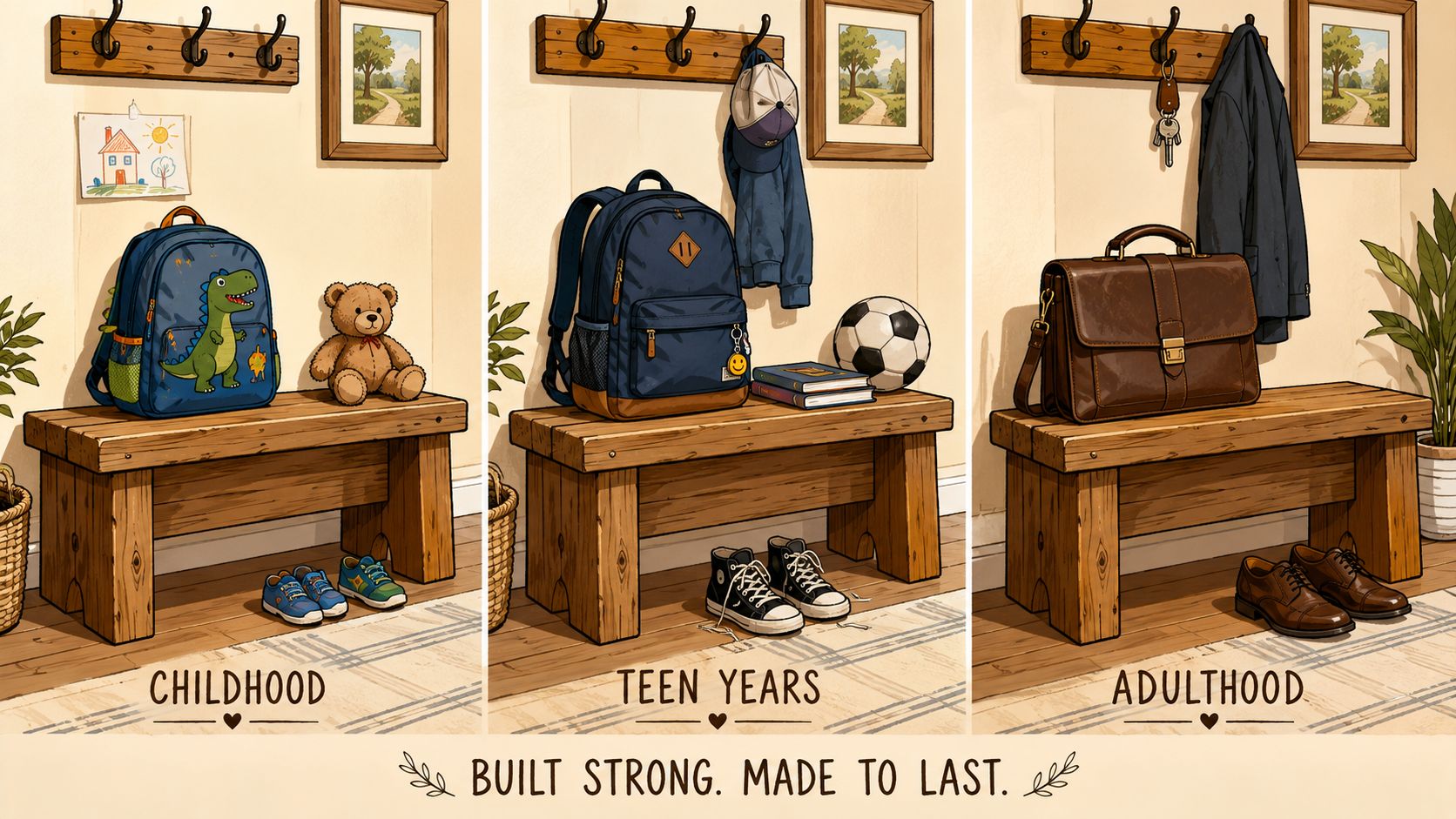
It grows with the household
The same bench can serve different jobs over time. At first it may hold tiny shoes and a diaper bag. Later it catches sports gear and winter gloves. After that, it becomes the steady spot where someone sets down groceries, changes boots, or drops the mail.
That kind of flexibility matters. So does appearance. Real wood develops depth and warmth that printed surfaces and thin materials just can't fake for long.
A smart family investment isn't the cheapest thing in the showroom. It's the piece that still makes sense years later.
Finding Your Entryway Furniture All Star
Some entryways need a quiet helper. Others need a workhorse. The right choice depends less on trend and more on what the household asks that space to do every day.
The console table
A console table is the clean, narrow answer for homes that need a landing spot without a bulky footprint. It works well for keys, mail, a lamp, or a tray, and it keeps the front door area from feeling overcrowded.
This piece shines in condos, smaller foyers, and long narrow halls where every inch counts. It's also a strong pick for households that don't need a lot of concealed storage.
The storage bench
A bench earns its place by doing two jobs at once. It gives people a place to sit while taking off shoes, and it helps hide the clutter that otherwise spreads across the floor.
For active households, this is often the most useful option in the room. It's also the piece where shoppers need to ask tougher questions. Many buying guides obsess over dimensions and skip the issue that matters for daily safety and durability. Load capacity. Families and seniors often need to know whether a bench can support 300+ lbs of dynamic weight, and that technical guidance is frequently missing, as noted in this entryway and console table buying guide.
A bench in the entryway isn't decor. It's seating. It should be treated like a structural piece.
The hall tree
The hall tree is the all-in-one answer. It combines seating or lower storage with vertical organization for coats, bags, and hats. In homes without a coat closet near the door, this piece can bring order fast.
It's also a smart use of vertical space. Instead of spreading storage outward, it stacks function upward.
Which one fits the household best
| Furniture Type | Primary Job | Best For | BILTRITE Specialty Match |
|---|---|---|---|
| Console Table | Drop-zone and display surface | Apartments, narrow foyers, minimalist households | Small-scale furniture |
| Storage Bench | Seating plus hidden storage | Families, pet owners, seniors, busy side entries | Heavy-duty furniture |
| Hall Tree | Full entry organization | Homes needing hooks, seating, and shoe storage in one piece | Amish-made and solid wood pieces |
A household with kids and winter gear usually gets more value from a bench or hall tree than from a slim table. A smaller entry may benefit from a console and a mirror. A mudroom-style entrance often needs the heavier-duty answer right away.
Choosing the all star means choosing the piece that solves the biggest problem first.
Choosing the Right Wood and Finish for Real Life
Wood species and finish matter more in the entryway than in a lot of other rooms. This space deals with wet shoes, temperature swings, keys, bags, pet leashes, and repeated impact in a tight area. A nice silhouette alone won't save a poorly chosen material.
Harder woods make more sense near the door
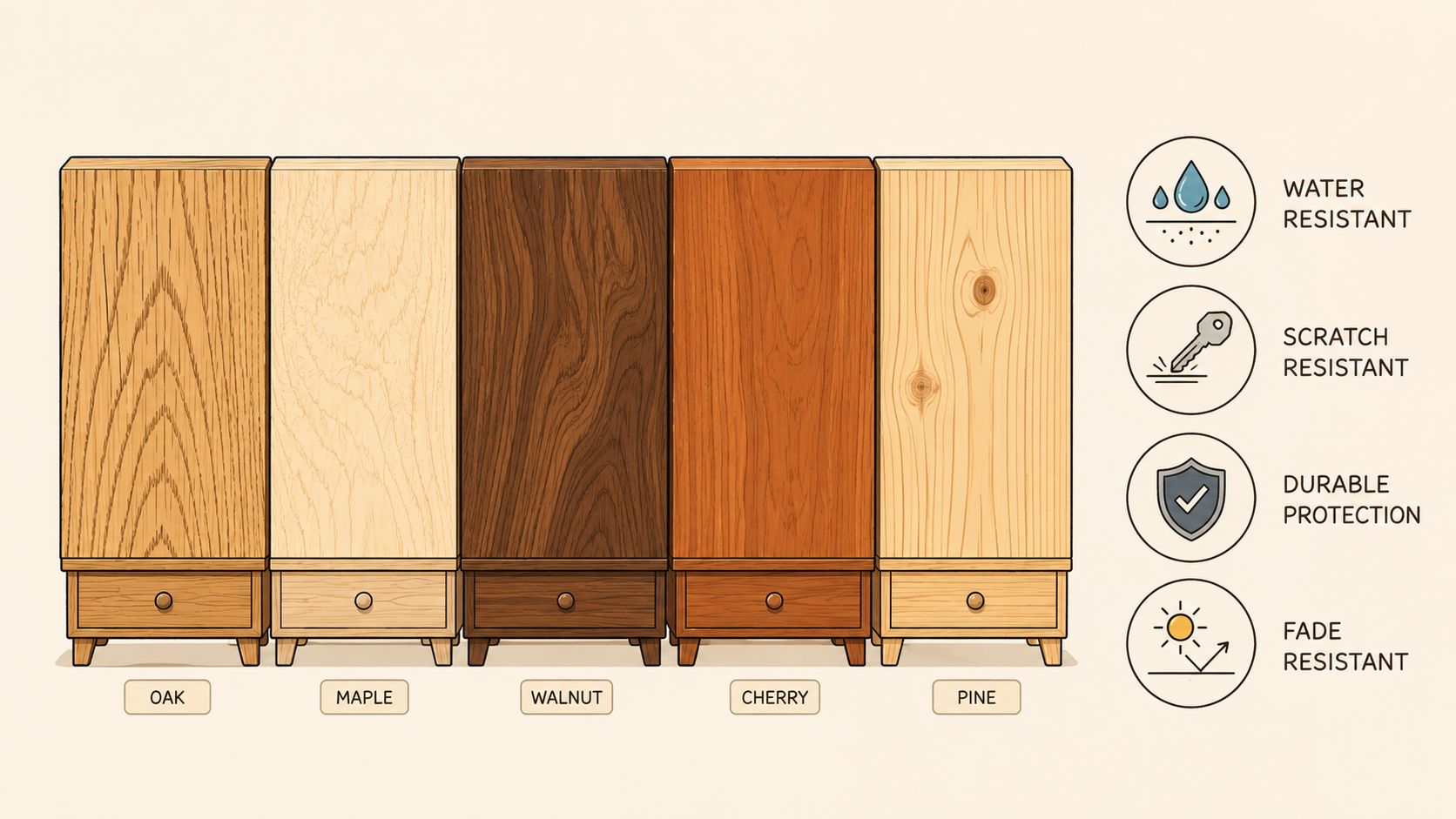
For high-traffic use, hardwoods are the safer bet. Quarter-sawn white oak and hard maple carry Janka hardness ratings of 1,360 to 1,450 lbf, while pine sits at 380 lbf. That difference matters when shoes kick table legs, keys drag across tops, and bags clip corners on the way in.
Harder woods resist denting and abrasion better, and that helps a piece stay attractive longer. Oak also brings visible grain and a grounded, traditional look. Maple tends to read cleaner and smoother. Neither is “better” in every room, but both are strong choices for solid wood entryway furniture that has to take abuse.
Finish is protection, not just color
Many shoppers choose finish by stain sample alone. That's only half the story.
In hard-use entry areas, durable topcoats matter. Pieces finished with petroleum-based conversion varnishes or UV-cured acrylics can reach 5,000+ cycles on the Taber abrasion test (ASTM D4060). By contrast, water-based lacquers are listed at 2,000 to 3,000 cycles. That extra abrasion resistance helps protect against moisture and wear from daily traffic.
There's another practical factor. Humidity can do real damage over time. In weaker constructions, moisture exposure can contribute to glue-line failure and panel delamination within 2 to 3 years. Better finishes help slow that kind of trouble.
A helpful read on surface protection appears in this guide about the best wood finish for a dining table. The room is different, but the lesson carries over. Finish should match the abuse.
Shop-floor advice: In an entryway, ask what will protect the top and the base, not just what stain looks nicest under the lights.
The honest Midwest truth about humidity
Solid wood has real strengths, but it is important to be straightforward. It isn't automatically the best answer for every single component in every single entryway.
Solid wood is sensitive to humidity and extreme temperatures, which can cause warping. In entryways where wet shoes bring in moisture, furniture-grade plywood can resist warping better than solid wood, according to Woodstock Outlet's explanation of what to expect from solid wood furniture. That's a nuance many guides skip, and it matters in Midwest homes.
That doesn't mean solid wood should be avoided. It means shoppers should think more carefully. A solid wood frame, top, or face may be an excellent choice, while certain storage-box components may benefit from furniture-grade plywood for better stability in fluctuating conditions.
What to ask before buying
- Ask about the wood species. Oak and maple make more sense than softer woods for a hard-working entry.
- Ask about the finish system. A durable protective finish is worth more than a trendy stain name.
- Ask where moisture will hit. Lower shelves, interior storage bottoms, and side panels often take the first hit from wet gear.
The smartest choice is the one built for the life that happens at the front door.
The Enduring Quality of USA and Amish Made
Construction tells the truth. A piece can look solid from ten feet away and still be built with shortcuts that show up once the household starts using it hard.
That's why USA-made and Amish-made entryway furniture stands out. The difference isn't just the label. It's the way the furniture is put together.
Joinery matters more than shoppers think
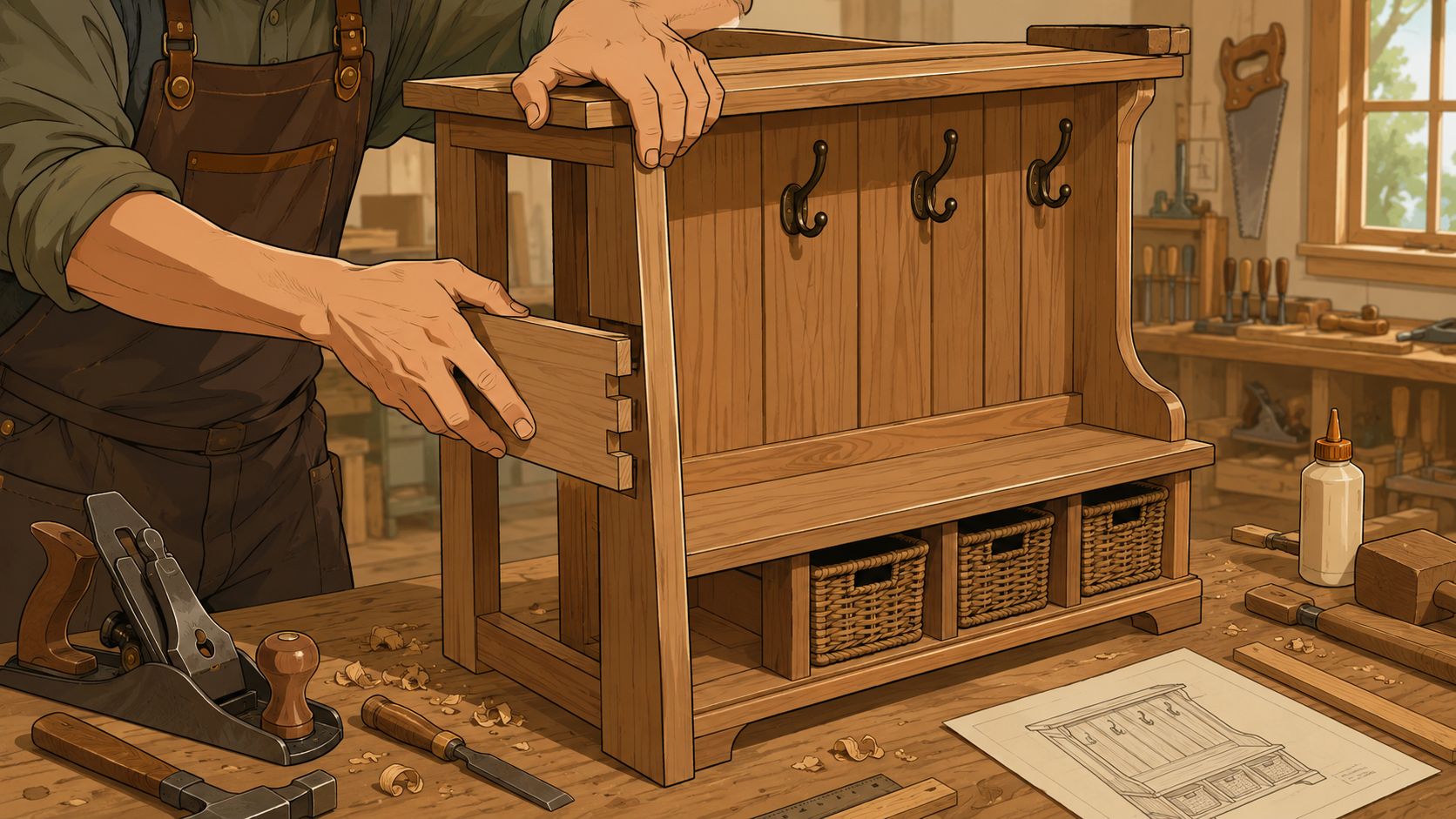
Good joinery is what keeps a bench from wobbling and a storage piece from loosening up under daily strain. Traditional mortise-and-tenon construction locks parts together mechanically instead of depending mainly on fast assembly methods.
That old-school approach still matters because entryway furniture takes side stress all the time. People lean on it, slide bags across it, brace against it, and sit down hard when they're tired. Better joints handle that abuse more confidently.
A deeper look at that craftsmanship appears in this article explaining what Amish furniture is and why it stands apart.
Thickness and structure are part of the value
Well-made pieces from Amish craftsmen in the United States typically use a minimum wood thickness of 3/4 inch, and construction methods like mortise-and-tenon provide 40% greater load-bearing capacity compared to common particleboard alternatives, as noted in Milwaukee Magazine's profile on BILTRITE as a Wisconsin staple.
That's not showroom fluff. Thickness affects rigidity. Better structure affects confidence. Those details help explain why one bench feels planted and another feels hollow.
The strongest furniture usually doesn't need to announce itself. A shopper can feel it in the weight, the steadiness, and the way the joints meet.
Why this craftsmanship fits Milwaukee homes
Homes around Milwaukee need furniture that can handle seasons, family traffic, and long ownership. USA-made and Amish-made furniture tends to align with that mindset because it's built for use first, trends second.
That's also why these pieces often feel calmer in a room. They aren't trying to disguise weak materials with flashy finishes or oversized styling. They rely on sound wood, sound joinery, and sensible design.
For shoppers who care about buy-local values, American craftsmanship, and furniture that still feels dependable years down the road, this category is hard to beat.
Style Your Space and Come Say Hi
A practical entryway can still look warm and polished. In fact, it usually looks better because it isn't fighting clutter all day.
The styling part should stay simple. The furniture does the heavy lifting. Accessories should support the room, not crowd it.
Small entryways need restraint
In a tighter foyer, scale matters more than decoration. Choose one main piece and let it breathe. A slim table or compact bench often works better than trying to cram in too many functions at once.
A mirror helps bounce light and makes the area feel more open. A tray keeps keys and mail from spreading. A basket underneath can corral shoes or scarves without making the room look busy.
For readers sorting through looks, shapes, and room moods, this overview of types of furniture styles can help narrow the direction.
Larger entryways need balance
A bigger entrance can handle more layers, but it still needs discipline. Pairing a bench with a console can work well if the layout leaves easy walking space. A runner can ground the area and make it feel intentional. A lamp or a small piece of art can soften all the hard surfaces that entryways often have.
Try this basic formula:
- Anchor the floor with a runner or mat that can handle traffic.
- Use one vertical element such as a mirror, art, or hooks to draw the eye up.
- Keep one surface clear so the room still feels tidy when life gets busy.
Make it livable, not staged
The best entryways look like someone actually lives there. They just look organized while doing it.
That means using furniture that fits the household. Seniors may need a firmer, sturdier bench. Families may need hidden storage. Smaller homes may need a narrow profile with smart function. A beautiful room that doesn't support the routine won't stay beautiful for long.
Milwaukee shoppers who want to compare wood species, test how sturdy a bench feels, and see USA-made and Amish-made quality up close should do that in person. It's easier to judge comfort, scale, finish, and craftsmanship when standing right in front of the piece.
BILTRITE Furniture-Leather-Mattresses has been serving Metro Milwaukee since 1928 as a fourth-generation family-owned showroom focused on affordable, better-quality furniture and mattresses. Shoppers will find USA-made, Amish-made, real solid wood, small-scale, and heavy-duty options, plus a mattress center with over 60 models and a team with over 400 years of combined experience. The store doesn't sell online, and that's part of the point. This is furniture worth seeing, touching, and trying in person. Stop into the Greenfield showroom at BILTRITE Furniture-Leather-Mattresses, say hello, and let the team help find a lasting piece for the entryway. Closed Sundays and Mondays for family time, and proud of it.