Find Mattress Firmness for Back Pain Relief


A lot of people reach the same point in the same way. They wake up, swing their legs over the side of the bed, and pause for a second because their lower back is already talking back. By breakfast, they're wondering whether the mattress is too soft, too hard, too old, or just plain wrong.
That confusion is common in Metro Milwaukee homes, and it's one reason this topic matters so much. Mattress firmness for back pain sounds simple until someone starts shopping and finds labels like plush, medium, cushion firm, firm, and extra firm scattered across a showroom floor with no clear standard behind them.
BILTRITE has served local families since 1928, and four generations of mattress conversations have taught one big lesson. People usually don't need more hype. They need a calm, practical way to figure out what their body is asking for. The good news is that the right starting point is clearer than many shoppers think, especially when clinical research and hands-on showroom testing are used together.
Table of Contents
- That Morning Backache Is Telling You Something
- The Goldilocks Principle of Mattress Support
- How Your Sleep Style and Body Type Change the Rules
- Looking Beyond the Firmness Label
- How to Test a Mattress the BILTRITE Way
- When to Talk to Your Doctor and Our Final Thoughts
That Morning Backache Is Telling You Something
Morning back pain rarely feels dramatic at first. It often shows up as stiffness while standing up, a careful walk to the bathroom, or that little hand pressed against the lower back while coffee brews. Many people blame age, stress, or a long workday. Sometimes those factors matter. Sometimes the mattress is part of the problem.
Families often notice a pattern before they notice a cause. They feel better later in the day once they've moved around. They feel worse after a full night in bed. They may even sleep fine at a hotel or in a guest room and then come home to the same old ache. That kind of pattern is worth paying attention to.
BILTRITE has been part of the Metro Milwaukee community since 1928, and that long history has meant helping neighbors sort through this exact issue in plain language. A mattress isn't just about softness or brand labels. It's about whether the body stays supported long enough to rest instead of fighting the surface all night.
Some back pain starts with daytime strain. Some starts with poor sleep posture. Many people deal with both at the same time.
That's why mattress firmness for back pain shouldn't be treated like a guessing game. A mattress can feel comfortable for two minutes while still putting the spine in a poor position for eight hours. On the other hand, a mattress that feels a little more supportive at first can leave someone far less sore in the morning.
The most helpful approach starts with one simple question. What is the body doing on the mattress through the night? Once that question is answered, the shopping process gets much less stressful.
The Goldilocks Principle of Mattress Support
The body usually does best on a mattress that lands in the middle. Not too soft. Not too hard. That middle zone is what many people mean when they talk about the Goldilocks idea.
Why too soft and too hard can both cause trouble
A too-soft mattress can let the heavier parts of the body sink too far. For many people, that means the hips drop lower than the upper back and legs. The spine bends out of its natural shape, and muscles stay busy all night trying to stabilize the body.
A too-hard mattress creates a different problem. It may hold the body up, but it doesn't give enough at the shoulders, hips, and other pressure points. That can flatten natural curves and create soreness from concentrated pressure.
A simple way to picture it is this:
- Too soft: the body falls in and twists out of line
- Too hard: the body rests on top and gets pushed at the wrong spots
- Balanced support: the mattress lets the body settle just enough while keeping the spine steady
Practical rule: Support and pressure relief need to happen together. One without the other usually leads to a rough morning.
Where medium-firm fits
For individuals dealing with non-specific low back pain, medium-firm is the starting point with the strongest clinical support. Clinical research found that medium-firm mattresses improved sleep quality by 55% and reduced back pain intensity by 48%, with benefits building during the first four weeks of use, according to this clinical study on medium-firm mattresses and chronic low back pain.
That finding lines up with what experienced showroom teams often see. People who arrive expecting to need the hardest bed in the store are often surprised that a middle firmness feels more supportive once they lie down long enough to notice spinal alignment and pressure relief working together.
For readers who want a simple breakdown of firmness ranges before visiting a store, BILTRITE's mattress firmness guide gives a useful overview of how these comfort levels are commonly described.
The big takeaway is simple. Mattress firmness for back pain is not a contest to find the hardest surface. It's a search for the firmness that keeps the spine in a more neutral position without beating up the shoulders and hips.
How Your Sleep Style and Body Type Change the Rules
Medium-firm is a strong starting point, but it's still only a starting point. The body doesn't meet the mattress in the same way if someone sleeps on their side, back, or stomach. Body type changes the feel too.
Sleep position changes what support feels like
Medical guidance suggests a medium-firm mattress rated 6 to 7 on a 10-point firmness scale is a strong fit for those with back pain because it helps maintain neutral spinal position while reducing pressure at the hips and shoulders, as explained in this Spine-health overview of mattress firmness and lower back pain.
That doesn't mean every sleeper should choose the exact same feel.
| Sleep Position | Body Weight | Recommended Firmness (1-10 Scale) |
|---|---|---|
| Side sleeper | Lighter body type | 4-6 |
| Side sleeper | Average body type | 5-6 |
| Side sleeper | Heavier body type | 6-7 |
| Back sleeper | Lighter body type | 5-6 |
| Back sleeper | Average body type | 6-7 |
| Back sleeper | Heavier body type | 7-8 |
| Stomach sleeper | Lighter body type | 6-7 |
| Stomach sleeper | Average body type | 7-8 |
| Stomach sleeper | Heavier body type | 7-8 |
This chart is a guide, not a rulebook. A side sleeper usually needs more cushioning at the shoulders and hips. A back sleeper often does well with a slightly steadier surface under the lower back. A stomach sleeper usually needs enough firmness to keep the midsection from sinking too far.
For readers comparing comfort needs by sleep posture, BILTRITE's guide to the best mattress for your sleep position is a helpful next step.
Body type changes how firmness feels
The same mattress can feel very different from person to person.
A lighter sleeper may lie on a firm mattress and barely compress the comfort layers. To that person, the bed can feel stiff and unyielding. A heavier sleeper may compress those same layers further and feel better contouring from the exact same model.
That's why mattress firmness for back pain isn't just about the label. It's also about how far the body settles into the bed.
A practical showroom pattern often looks like this:
- Lighter individuals usually need a touch more surface give to feel pressure relief
- Average-weight sleepers often land near the classic medium-firm zone
- Heavier individuals often need a sturdier build and a firmer feel to keep the body from dipping too far
This is also where mattress construction matters. A heavy-duty model may be appropriate for a larger body, not because “harder is better,” but because durable support materials help maintain alignment over time.
A mattress should meet the body where it carries weight. Shoulders, hips, and midsection don't all press down the same way.
People get confused when they expect one universal answer. There isn't one. There is, however, a reliable process. Start in the medium-firm range, adjust for sleep position, then fine-tune based on body type and how the spine feels after several minutes on the bed.
Looking Beyond the Firmness Label
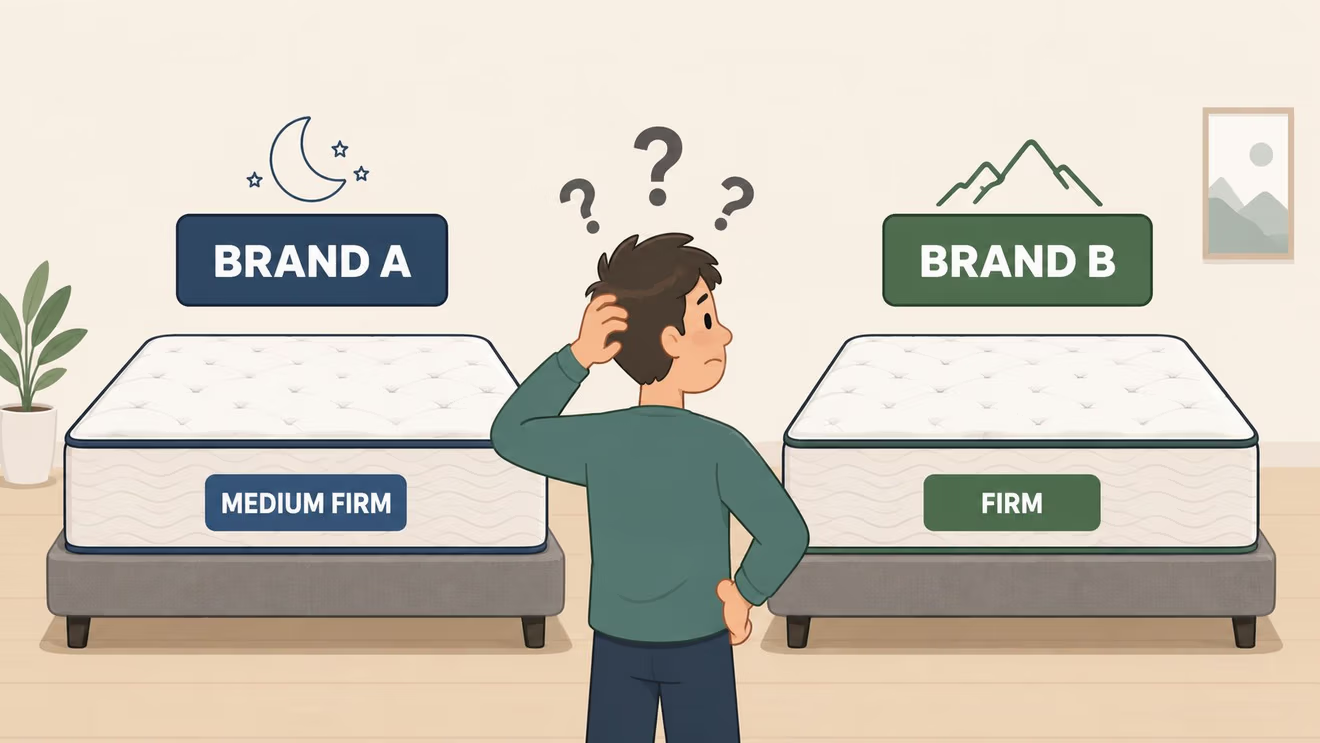
The firmness label on a mattress can be useful, but it isn't a universal measuring stick. One brand's “medium” may feel like another brand's “firm,” which is exactly why shoppers often end up frustrated when they try to compare models across a showroom.
Why labels confuse shoppers
Recent reporting has highlighted that a brand's “medium” can equal another brand's “firm,” which means the tag alone isn't enough to identify the true medium-firm feel many back-pain shoppers are seeking. That same reporting notes that people should rely on trial periods or professional guidance rather than the label by itself, as discussed in this article on mattress firmness scale inconsistency.
That explains why two mattresses with similar names can feel completely different.
A better shopping habit is to ask a few questions beyond the label:
- What supports the body underneath? Springs, dense foam, or a mix?
- How thick are the comfort layers? A thicker top can soften the first impression.
- Does the surface bounce back quickly or slowly? Response changes how easy it is to move and reposition.
- Will the mattress wear evenly over time? Durability affects long-term support, not just first-night comfort.
How mattress materials change the feel
Different mattress builds can create very different versions of “firm” or “medium-firm.”
An innerspring mattress often feels more buoyant and lifted. It can be a good match for shoppers who like sleeping more on top of the bed than in it.
A memory foam mattress tends to contour more closely. That can feel comforting to some people, especially around pressure points, but shoppers should still watch for enough support through the midsection.
A hybrid mattress blends features from both styles. It often gives some contouring at the surface with stronger support below, which is why many back-pain shoppers gravitate toward that balanced feel.
There's also a category many shoppers overlook. Two-sided flip-able mattresses can be valuable for households that care about even wear and long-term support. Rotating and flipping can help the comfort surface wear more evenly over time.
For readers wondering whether a comfort layer can change the feel of an existing bed, this short piece on what a mattress topper does explains where toppers can help and where they can't.
BILTRITE Furniture-Leather-Mattresses carries flip-able and 2-sided mattress options alongside other constructions, which gives shoppers a way to compare feel, support, and durability in person instead of relying on labels alone.
How to Test a Mattress the BILTRITE Way
Reading about mattress firmness helps. Lying on a mattress the right way helps more. A mattress that seems fine during a quick sit on the edge can feel completely different after ten quiet minutes in an actual sleep position.

What to do in the showroom
The most useful showroom visit is slow and specific. That's especially true for mattress firmness for back pain, because the body often needs a few minutes before pressure points and alignment issues show up.
A practical test looks like this:
Lie down in the usual sleep position
Side sleepers should stay on their side. Back sleepers should stay on their back. Testing in the “wrong” position gives misleading feedback.Stay there long enough to notice pressure
A quick bounce test won't reveal much. The body needs time to settle.Pay attention to three areas
Shoulders, hips, and lower back usually tell the story first.Notice gaps or sagging
A visible gap under the lower back can mean too firm. Hips dipping too far can mean too soft.Roll and reposition
Some mattresses support well but make movement awkward. That matters for combination sleepers.
A good mattress test feels quiet. If someone keeps adjusting every few seconds, the body is often telling them something.
For shoppers who want a more detailed checklist before visiting the showroom, BILTRITE's article on how to test a mattress lays out a simple process.
BILTRITE's mattress department includes over 60 models, and the sales associates bring over 400 years of combined experience. That kind of in-person guidance matters because a trained team can notice things shoppers may miss, such as shoulder pressure on a side sleeper or too much midsection sink on a stomach sleeper.
Signs a mattress is past its useful life
Sometimes the firmness issue isn't about choosing a new comfort level. It's about recognizing that the old bed is no longer supporting the body well at all.
Statistical analysis has shown a significant relationship between longer mattress use and greater low back pain severity, and researchers recommend replacing a mattress used for over nine years to improve rest and reduce discomfort, according to this research summary on mattress age and low back pain.
Common warning signs include:
- Visible body impressions that don't bounce back
- Worsening morning soreness that improves after getting up
- A “roll toward the middle” feeling when sharing the bed
- Noise, sagging, or edge collapse that wasn't there before
An old mattress can fool people because they've adapted to it little by little. Once they test a supportive new model in person, the difference is often easier to feel than to explain.
When to Talk to Your Doctor and Our Final Thoughts
A mattress can make a real difference, but it can't diagnose the reason for pain. Severe pain, pain that keeps getting worse, or pain that travels down the leg deserves medical attention. The same goes for numbness, weakness, or pain that doesn't line up with a clear mattress problem.
A mattress can help, but it can't diagnose
Most general advice points people toward medium-firm support. That's a useful starting place for many cases of non-specific back pain. But not every spinal condition follows that pattern.
Clinical insight suggests that for conditions such as scoliosis, the standard medium-firm advice may not fit well. People with asymmetrical spinal curvature often do better on a medium-soft to soft mattress that eases pressure on uneven areas, as discussed in this clinical discussion of scoliosis and mattress firmness.
That's one reason a doctor or physical therapist can be so helpful when the pain pattern seems unusual. They may identify scoliosis, disc issues, nerve involvement, or another condition that changes what support should feel like.
For some shoppers, sleep position and mattress firmness aren't the only variables worth adjusting. An adjustable base that can help alleviate several health concerns may also be worth discussing in the showroom.
A smarter way to shop for relief
The most reliable path usually looks like this:
- Start with the middle and test medium-firm first
- Adjust for sleep position and body type
- Ignore labels when the feel says otherwise
- Replace an old mattress when support has clearly faded
- Get medical guidance when symptoms seem more serious or unusual
BILTRITE has been family-owned since 1928, and that local history still shapes how the showroom works today. The focus stays on affordable, better-quality options, many of them USA-made or Amish-made, with an in-store experience built around conversation rather than pressure. The store is closed on Sundays and Mondays for family time, which says a lot about the values behind the business.
For anyone in Greenfield or the greater Milwaukee area who's tired of waking up sore, the next step doesn't need to feel complicated. A careful mattress test, a little guidance, and the right firmness range can make mornings a whole lot easier.
Shoppers who want hands-on help with mattress firmness for back pain can visit BILTRITE Furniture-Leather-Mattresses in Greenfield to try different feels in person, compare constructions side by side, and talk with an experienced team that serves Metro Milwaukee families with affordable, better-quality furniture and mattresses.