How to Choose a Coffee Table: A Complete Guide


That empty spot in front of the sofa tends to stay empty longer than people expect. The rug is down, the seating is in place, the lamps are working hard, and the room still feels like it's waiting for one more piece to pull everything together. Then the coffee table search starts, and suddenly every option looks either too big, too tiny, too sharp-cornered, too delicate, or just plain wrong.
That's where practical furniture shopping matters more than showroom daydreaming. Since 1928, BILTRITE has helped Metro Milwaukee families furnish homes that need to work for real life. Not just for photos. Real living rooms need a place for mugs, remotes, puzzle pieces, snack bowls, tired feet, and sometimes a grandkid who thinks every flat surface is a craft station. A coffee table has to earn its place.
This guide keeps the focus where it belongs. On size that fits, shapes that make sense, materials that hold up, and features that help the whole household. Anyone browsing living room essentials for a comfortable, usable space usually reaches the same conclusion. The center of the room matters more than people think.
Table of Contents
- Finding the Centerpiece of Your Living Room
- Getting the Measurements Right for Your Space
- Finding Your Shape and Matching Your Style
- Choosing Your Material for Real Life Durability
- Adding Functionality for Your Family
- The Final Steps with Our BILTRITE Family
Finding the Centerpiece of Your Living Room
A family can do everything right in a living room and still feel like the space is unfinished. The sofa is comfortable. The rug softens the floor. The chairs are in place. But without something in the middle, the seating area can feel like it's floating instead of gathering people together.
That missing piece usually needs to do two jobs at once. It has to look right, and it has to live well. A coffee table is where daily life lands. Drinks during movie night. A stack of mail that needs sorting. Board games on a rainy afternoon. Reading glasses, remotes, and the occasional plate of cookies when company stops by.
A good coffee table doesn't just fill space. It gives the room a reason to work together.
Families often start by shopping with their eyes. That's normal. The trouble starts when a beautiful table turns out to be awkward to walk around, too high for the sofa, or too fragile for busy evenings. That's why the smartest way to approach how to choose a coffee table is to think about the room's habits first.
Start with everyday life
Some living rooms are quiet and tidy most of the day. Others are command centers. Kids play there. Guests pass through. Someone props up a laptop there after dinner. The right coffee table for one home can be a daily nuisance in another.
A few questions make the choice much clearer:
- Who uses the room most often. Adults relaxing at night need something different from a family with small children.
- What lands on the table every day. Drinks, books, toys, or work materials all point toward different shapes and surfaces.
- How the room feels now. If it already feels crowded, a heavy table can make it worse. If it feels bare, a stronger visual anchor helps.
Think of it as furniture that hosts life
The most successful coffee tables act like quiet helpers. They support the room without demanding attention every second. In a family home, that often matters more than chasing a trend or matching every finish exactly.
Getting the Measurements Right for Your Space
Most coffee table mistakes start with guessing. A table can be stylish and still be wrong for the room if the proportions fight the sofa or the walking path. Measurements solve that quickly.
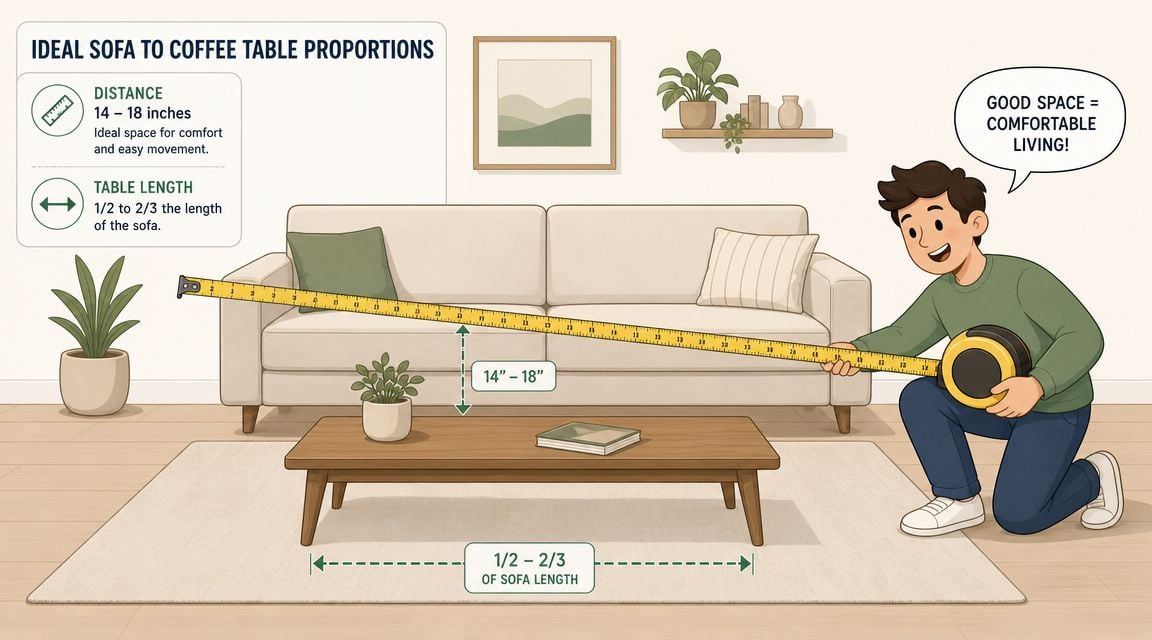
A widely repeated baseline rule is to choose a table that's about half to two-thirds the length of the couch, with a height that's the same as or slightly lower than the seat cushions, and to leave about 18 inches of clearance between the sofa and table for comfortable movement, as noted in this coffee table sizing guide.
Measure three things first
Before looking at finishes or shapes, grab a tape measure and write down:
Sofa length
This is the number that keeps the table from looking lost or oversized. If the table is too short, it feels disconnected from the seating. If it stretches too far, it can overpower the whole arrangement.Seat height
The tabletop should feel easy to reach. When it sits close to cushion height or a little lower, drinks and books are within easy range and the room stays visually open.Distance from sofa to table
This is knee room, walking room, and comfort all at once. Too tight, and everyone bumps into it. Too far, and people lean and stretch every time they set something down.
Practical rule: If people have to turn sideways to get around the coffee table, the table is probably too large for the layout.
Why these numbers matter
These aren't fussy designer rules. They're comfort rules.
The table length affects balance. A too-small table can make a full sofa look even larger and emptier. A too-large table pulls attention away from the seating and can make the room feel crowded.
The height affects usability. A coffee table that sits much higher than the sofa seat can block sightlines and feel clunky. A surface that's too low may look interesting, but it won't feel as convenient for everyday use.
Clearance affects how the room moves. That small stretch between sofa and table is where people sit down, stand up, tuck in their feet, and pass by with laundry baskets, toys, or snacks.
A simple measuring habit that helps
Use painter's tape on the rug or floor to mark the table footprint before buying. That quick outline shows whether the size makes sense faster than any product description can. It's one of the easiest ways to avoid bringing home a table that looked fine in theory but feels awkward in the room.
For anyone tackling a full-room setup, this guide on how to measure furniture before you buy helps prevent the same problem with other pieces too.
Finding Your Shape and Matching Your Style
Once the size is in the right range, shape does a lot of the heavy lifting. It changes how the room flows, how safe it feels, and how formal or relaxed the seating area looks.
For homes with toddlers, seniors, or mobility concerns, shape isn't just a design choice. It affects circulation and safety. This guide to coffee table shapes notes that round or oval tables are often recommended to reduce the risk of injury from sharp corners in family spaces.
Coffee Table Shape Guide
| Shape | Best For | Things to Consider |
|---|---|---|
| Round | Smaller rooms, homes with kids, tighter walkways | Less surface area than some larger shapes |
| Oval | Busy family rooms, softer looks, traffic flow | Can be a nice middle ground between round and rectangular |
| Square | Balanced seating groups, larger open centers | Can feel bulky in narrow spaces |
| Rectangle | Standard sofas, long rooms, entertaining | Corners need more care in active households |
What works well in real homes
A round table helps soften a room with lots of straight lines. It's especially useful when people frequently walk past the seating area. No sharp corners means fewer bumped legs and less stress in a room where people are always on the move.
An oval table keeps some of the length of a rectangle but relaxes the feel. This shape often works nicely when a household wants more tabletop space without the harder edges.
A square table can make sense in a room with a larger central seating area, especially where chairs and sofas gather evenly around it. In a long, narrow living room, though, it can feel blocky.
A rectangular table remains the classic choice for a reason. It pairs naturally with a standard sofa and gives plenty of room for trays, books, and everyday use. It just needs enough breathing room around the edges.
Rounded shapes tend to solve more problems in busy family rooms than people expect.
Match the table to the room's personality
Style still matters. A coffee table shouldn't feel like it wandered in from another house. If the room leans warm and rustic, real wood grain and softer edges often feel at home. If the room is cleaner and more polished, a simpler shape with a more sleek base may fit better.
The easiest way to narrow it down is to look at the furniture already in the room. Is it casual, traditional, modern, or mixed? The coffee table doesn't need to match every wood tone exactly, but it should make sense with the room's overall mood. For shoppers comparing silhouettes and occasional-table looks, browsing different types of tables for living spaces can help make those style decisions less abstract.
Choosing Your Material for Real Life Durability
Material is often what decides whether a coffee table becomes a dependable part of family life or a piece everybody tiptoes around. In a busy living room, that table will catch cups, feet, board games, homework, snack spills, and the occasional bumped knee. A good material makes that normal wear easier to live with.
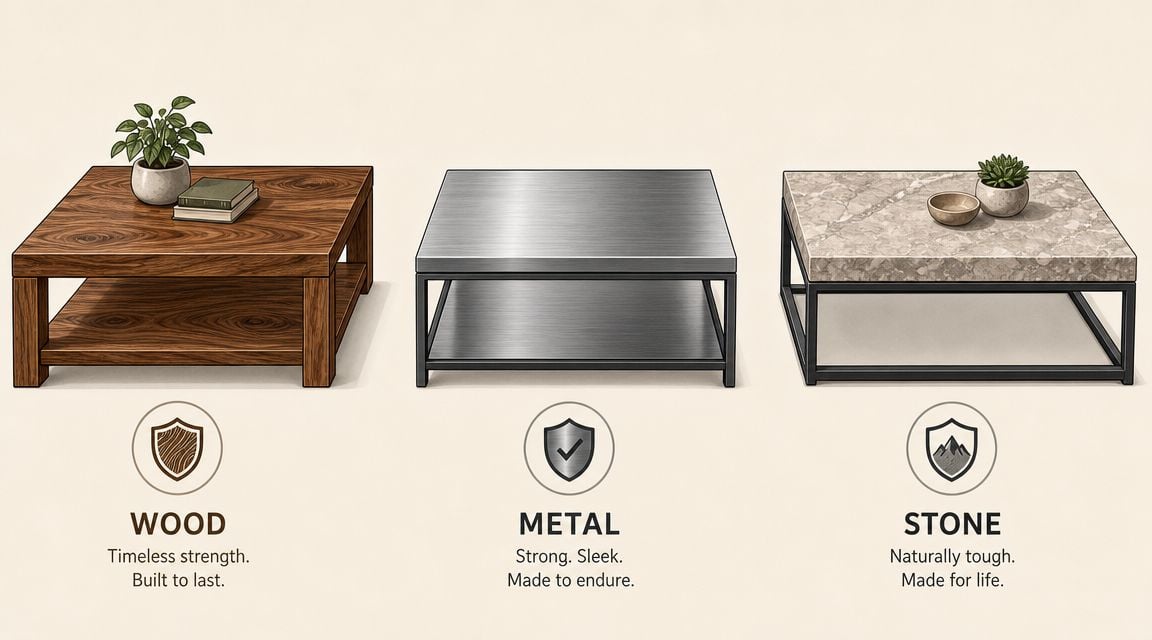
The smart way to compare materials is simple. Ask what your household will do to the table in real life, then choose the surface that can handle it without constant fuss.
Solid wood for long-term living
Solid wood deserves its reputation. It feels warm, sturdy, and comfortable in a family room, and it usually looks better over time than materials that chip, peel, or start looking tired after a few hard years. Minor dents and scratches often read as character, especially on well-made pieces with a forgiving finish.
That matters even more for households with children, pets, or older family members. A substantial solid wood table tends to stay put, which helps in rooms where stability counts. Rounded corners and a softened edge profile also make a real difference for little heads, shins, and anyone who needs a safer path around the seating area.
Many families also like knowing where their furniture came from. USA-made and Amish-crafted coffee tables often stand out for joinery, wood quality, and repairability. If you are comparing long-term ownership against short-term savings, the benefits of solid wood furniture are worth reviewing.
Other materials and their trade-offs
Every material asks for a different kind of compromise.
- Wood veneer can work well at a lower price point, especially in lighter-use rooms, but thinner surfaces usually give you less margin for rough treatment.
- Glass keeps the room feeling open and airy. It also shows fingerprints fast, and families with young kids often decide they are tired of wiping it before they are tired of looking at it.
- Metal holds up well structurally and fits certain looks nicely, but it can feel visually cold and may show scratches or dents depending on the finish.
- Stone or stone-look tops bring weight and presence. They can also be harder on knees, tougher to move, and less forgiving if someone in the home needs a table with gentler edges.
I usually tell shoppers to pay close attention to the finish, not just the base material. A durable top with a fussy finish can still become a headache.
A table that fits your family's habits will stay attractive longer than a delicate one that looked perfect under showroom lights.
Match the material to the household
Families do better when they choose based on daily behavior. If the living room is where kids color and build forts, easy cleanup beats a precious surface. If grandparents visit often or live in the home, stable construction, smoother edges, and a finish that does not show every touch can make the room more comfortable to use.
Pets change the equation too. A dog with a strong tail or a fast turn around the sofa can test a lightweight table in a hurry. Heavier construction and a less fragile top usually hold up better.
Seeing materials in person still helps more than any product photo. At BILTRITE Furniture-Leather-Mattresses, shoppers can compare grain, finish, edge detail, and overall heft side by side, which makes it easier to spot the difference between a table that only looks good today and one that will keep serving the family well for years.
Adding Functionality for Your Family
A coffee table can do much more than hold a drink. In many homes, it becomes a helper piece that takes pressure off the rest of the room. That's where function can matter just as much as size and material.
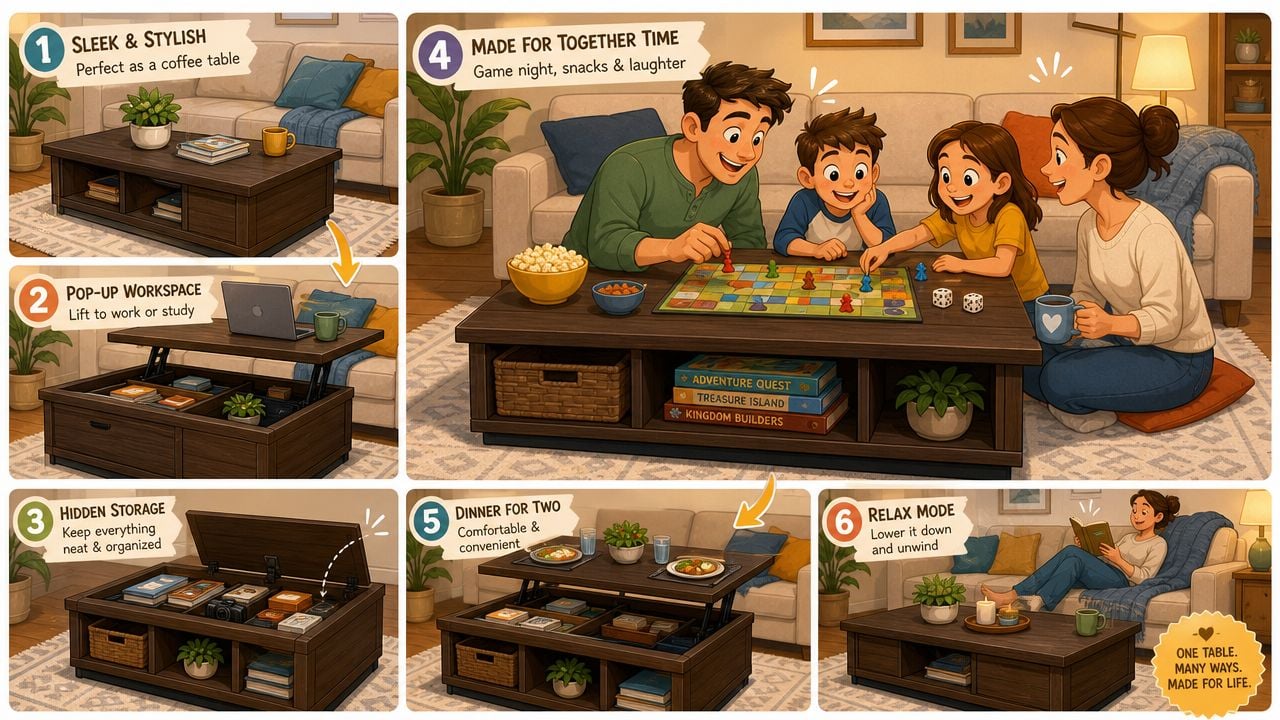
For smaller rooms or spaces with frequent traffic, nesting tables can outperform a single oversized piece because they preserve surface area while improving circulation and flexibility, according to this expert guide to choosing a coffee table.
When one surface isn't enough
Some households need a coffee table that changes roles during the day. Morning might call for coffee mugs and a newspaper. Afternoon might bring homework or puzzles. Evening might mean takeout containers and a family movie.
That's where a few features earn their keep:
- Lift-top designs work well for people who like to eat, write, or use a laptop from the sofa.
- Shelves and drawers help contain remotes, coasters, chargers, and those odds and ends that always seem to gather in the living room.
- Nesting tables give extra surface when needed, then tuck back in when floor space matters more.
Match the feature to the habit
A family with young kids may care most about hidden storage. A condo owner may care more about flexibility. Someone furnishing a den or apartment might prefer a smaller-scale table that can shift with the room instead of dominating it.
Shoppers often improve a room by asking one simple question. What problem should this table solve?
A coffee table becomes more useful when it answers a daily need, not just a decorating one.
Function without visual clutter
The smartest functional pieces don't feel fussy. They subtly make life easier. A shelf can hold baskets. A lift top can reduce the awkward lean over dinner. A nesting setup can open the room back up after company leaves.
Families looking for practical pieces that do more than one job often benefit from comparing layouts and features in a broader guide to choosing multi-functional furniture for modern homes. Coffee tables fit that conversation better than many people realize.
The Final Steps with Our BILTRITE Family
After size, shape, material, and function are sorted out, the final choice usually comes down to two things. Value and confidence. A coffee table should feel like money well spent, not like something that needs replacing the minute family life gets busy.
That doesn't mean choosing the cheapest option in the room. It means choosing the one that gives the household the best mix of durability, comfort, and everyday usefulness. Better-quality furniture often shows its value in the details people notice later. The steadiness of the frame. The feel of the finish. The way the table still suits the room after the novelty wears off.
Don't forget the practical side
Delivery matters too. Plenty of Milwaukee-area homes and apartments come with tight entries, tricky stairways, or rooms that need thoughtful planning. That's why it helps to shop with people who understand real homes, not just floor displays.
BILTRITE has been family-owned since 1928, and that long view shapes how the team helps people shop. The conversation usually goes beyond style alone. Is the piece easy to live with? Does it fit the household? Does it make sense for the room and the way the family uses it?
Why in-person shopping still helps
A coffee table is one of those pieces that benefits from being seen in person. The finish can read differently up close. The corners may feel softer or sharper than expected. A wood top may feel richer, sturdier, or more natural than it looked in a photo.
That's where a knowledgeable showroom team can make the process easier. BILTRITE's sales associates bring over 400 years of combined experience, and that kind of guidance helps when a shopper is torn between two sizes, two shapes, or two materials. No pressure. Just useful help from people who know furniture and know family homes.
Ready to find a coffee table that fits your room and your real life? Visit BILTRITE Furniture-Leather-Mattresses in Greenfield and talk with a team that's been helping Metro Milwaukee families furnish their homes since 1928. Come see the finishes, test the scale in person, and get friendly guidance on a piece that works for your family's space.