48 Inch Rectangular Dining Table: Your Family’s Guide


You're probably in one of these situations right now. Your kitchen table feels too big for the room, too small for family life, or just not sturdy enough for what your home asks of it every day. In Metro Milwaukee, we see that all the time. A classic bungalow dining nook, a condo with an open layout, a downsized space that still needs to handle dinner, homework, coffee, and company.
That's why the 48 inch rectangular dining table gets so much attention. It's one of those sizes that lands in a very practical middle ground. It gives you a real dining surface without taking over the room.
Our family has been helping Milwaukee-area neighbors furnish their homes since 1928. We're a fourth-generation business, and we still believe furniture is easier to choose in person. You should be able to walk around the table, touch the wood, sit in the chair, and see whether it feels right for your home and your family.
Your Guide to Finding a Great Family Dining Table
A dining table isn't just another piece in the room. It's where the day starts and ends. It's cereal before school, takeout on Friday, birthday candles, bills, card games, and the talk that happens after everyone should've gotten up already.
That's why choosing a 48 inch rectangular dining table takes a little more thought than just measuring one wall. You're matching space, seating, material, and daily use. If one of those is off, the table can feel awkward no matter how nice it looks.

We've learned over generations that families do better when they slow down and look at the whole picture. The table shape matters. The chair width matters. The wood species matters. Even the way the legs attach can matter if your doorway is tight or you're furnishing a senior living space.
If you want a broader starting point before zeroing in on this size, our five key steps to picking a dining table can help you compare table types in plain language.
Practical rule: Buy for the way you live on ordinary Tuesdays, not just for holidays.
That's where a 48 inch rectangular dining table often shines. It's compact, useful, and easy to fit into real Milwaukee homes.
Sizing and Seating for Your 48-Inch Table
The first question is simple. Will a 48 inch rectangular dining table seat the people you need it to seat without crowding the room? For many households, the answer is yes.
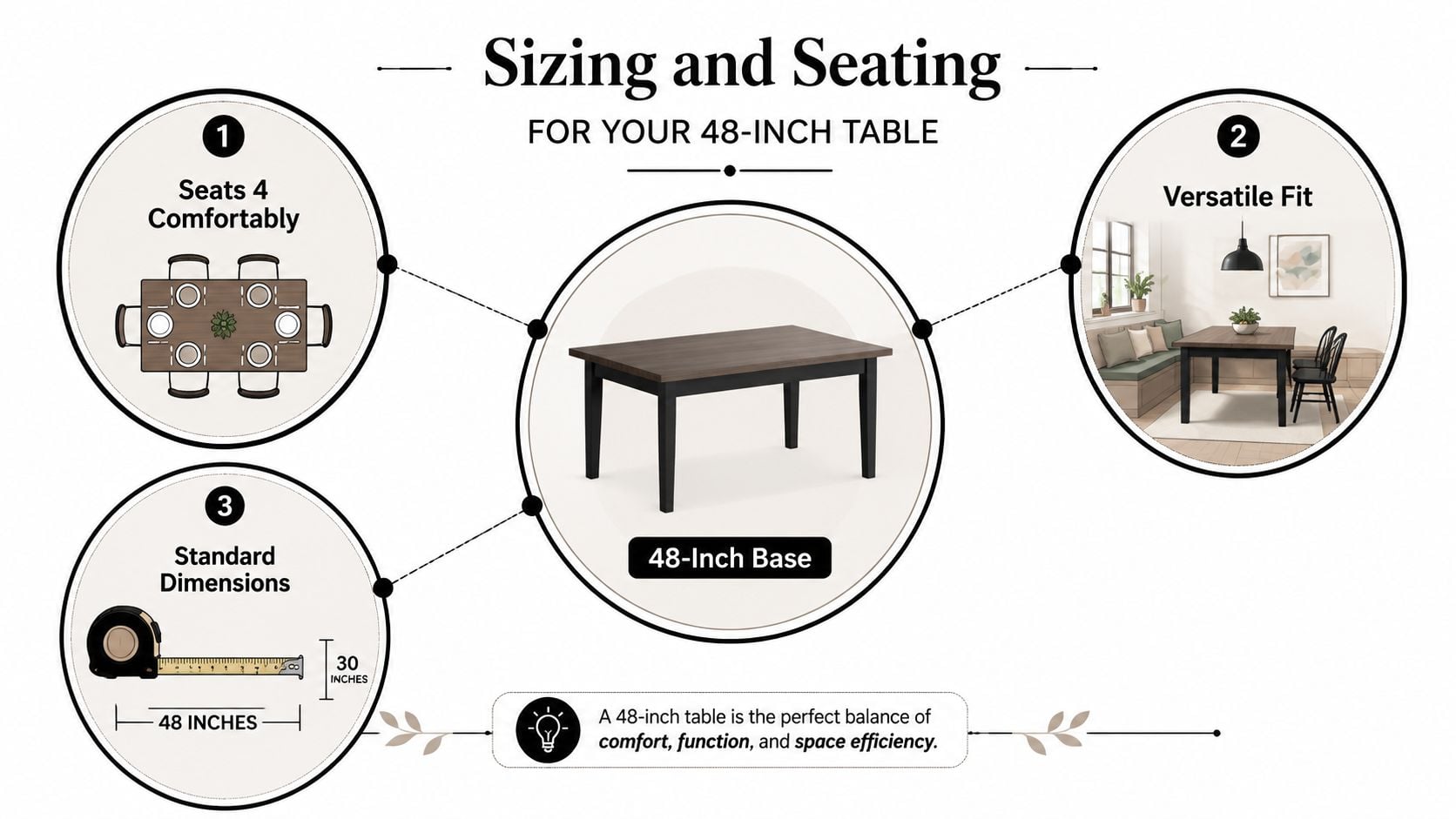
According to this dimension and seating reference, the 48-inch rectangular table typically seats 4 people comfortably, and that lines up with U.S. Census Bureau statistics showing 68% of households have 2-4 members. That's one reason this size works so well for many families around Milwaukee.
What the size usually looks like
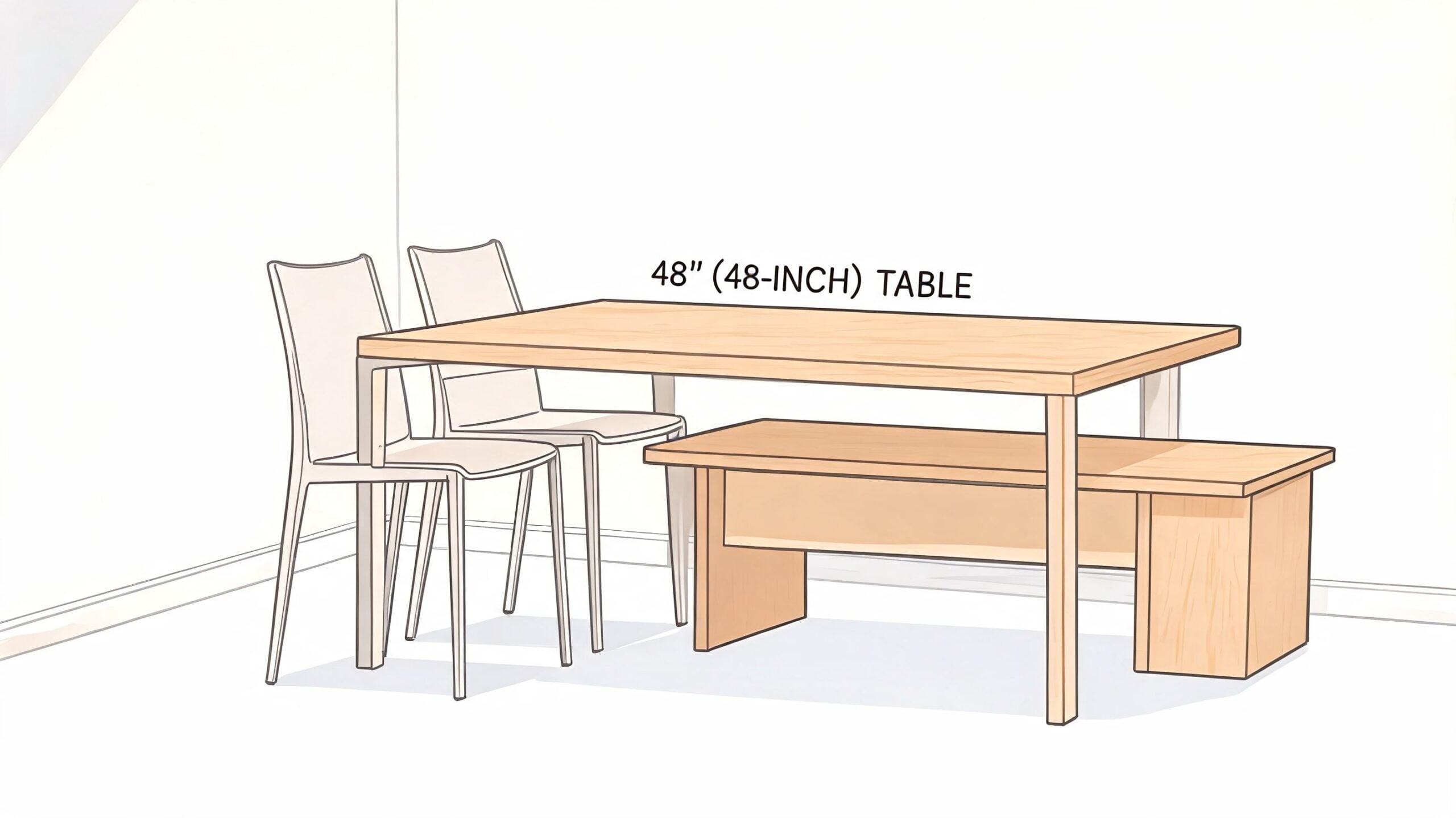
A 48 inch rectangular dining table usually falls into a familiar range. Think of a top that's around 48 inches long, roughly 30 to 32 inches wide, and around 30 inches high. In everyday use, that means:
- Two people can sit on each long side without the table looking oversized
- The narrower width helps in smaller rooms, especially open kitchen and dining areas
- The standard height works with most dining chairs you'll see in stores
That's why this size often feels comfortable in apartments, condos, bungalows, and homes where the dining area has to do more than one job.
Why it works in smaller Milwaukee spaces
A lot of shoppers worry that a smaller table will feel temporary or undersized. Usually, the opposite happens. A room feels calmer when the table matches the footprint instead of swallowing it.
In practical terms, a 48 inch rectangular dining table works well when you want:
| Need | Why this size helps |
|---|---|
| Everyday family meals | It seats four without spreading everyone too far apart |
| A homework or laptop spot | The top is usable, but not so large that it becomes clutter central |
| Better flow around the room | The rectangular shape tucks neatly into many layouts |
| A dining nook that feels intentional | It looks like a real dining setup, not a folding-table fix |
A good small-space table should feel settled in the room, not squeezed in.
If you're unsure whether this size fits your floor plan, our dining table size guide is a helpful next step.
Where people get confused
The most common mix-up is thinking table length tells the whole story. It doesn't. People focus on the 48-inch length and forget about the width of the top, the chair size, and the space around it.
The second mix-up is trying to make a 48 inch rectangular dining table do the job of a much larger entertaining table. It's a strong everyday choice for four. It's not the right answer if your routine includes large seated dinners.
For daily family living, though, this size is often the sweet spot. Big enough to use. Small enough to live with.
Why Solid Wood and USA-Made Is Worth It
A dining table earns its keep the hard way. It sees hot plates, cereal spills, school projects, elbows during long conversations, and chairs getting bumped in and out day after day. Two 48 inch rectangular tables can look similar under showroom lights, but after a few Wisconsin winters and humid summers, the better-built one usually makes itself known.
The biggest difference is often in the material itself.
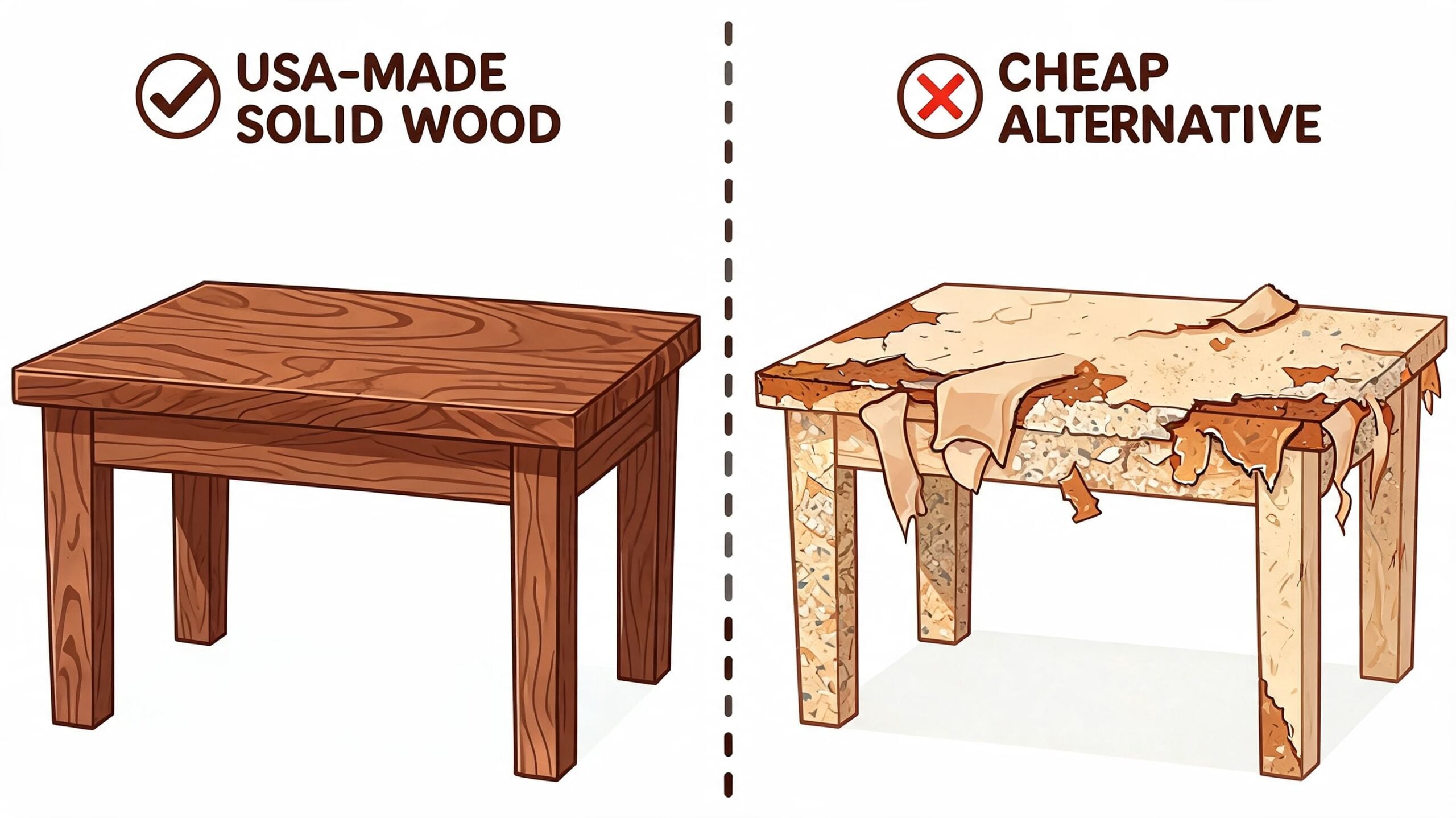
The strongest argument for solid wood is that it holds up to real family use and gives you more ways to maintain it over time. A scratch in solid wood is usually a repair question. A chip or peel in a thin surface layer is often a replacement question.
What matters more than a quick first impression
Shoppers sometimes focus on color, shape, and price first. That makes sense. Those are the easiest things to notice. The harder part is construction, and construction decides how a table feels after five or ten years of daily use.
Solid wood has a few practical advantages:
- It can often be touched up or refinished. That matters if the top gets marked by keys, homework, or everyday sliding dishes.
- It tends to feel steadier and more substantial. You notice that when the table does not shimmy every time someone leans on it.
- It ages in a more forgiving way. Small dents and wear marks often read as normal use instead of obvious failure.
By contrast, veneer, particle board, and lower-grade composites can look attractive at first but leave you with fewer repair options later. Once a corner swells, an edge chips, or the top layer starts lifting, there is usually less a craftsperson can do.
Why Milwaukee families often prefer USA-made pieces
Around Milwaukee, many families are not shopping for a table they plan to replace in a couple of years. They want one piece that fits the room, works hard, and still looks right when the kids are older. That is one reason USA-made and Amish-made dining furniture keeps getting attention in our showroom.
People like knowing who built the table, what species of wood was used, and how the joinery was done. Buying in person helps with all of that. You can put a hand on the top, check the grain, pull the chair in, and feel whether the table is solid or hollow. That is hard to judge from a product page on a national website.
If you want to compare construction details side by side, our solid wood dining table collection gives you a good sense of what better materials and American craftsmanship look like up close.
A simple way to compare table materials
A good comparison is kitchen flooring. A surface can look nice on day one, but its true test is how it handles years of feet, spills, and cleaning. Dining tables work the same way.
| Table type | What owners often notice over time |
|---|---|
| Solid wood | Better repair potential, sturdier feel, and a longer ownership cycle |
| Veneer over engineered core | Good early appearance, but edge wear and surface damage are harder to fix |
| Particle board or low-grade composite | Lower starting cost, but less confidence for heavy everyday use |
For a 48 inch rectangular dining table, solid wood and USA-made construction make extra sense because this size often becomes the everyday center of the home. In our part of Wisconsin, that usually means one table doing a lot of jobs well. Buying a better one once is often the simpler path.
Choosing Your Style Finish and Hardware
The table starts to feel like yours here. Same size, same shape, totally different personality.
A 48 inch rectangular dining table can lean farmhouse, modern, traditional, shaker, or mid-century depending on three big choices. Wood tone, base style, and small details. People sometimes think style lives in the tabletop shape alone, but that's only part of it.
The farmhouse version
A farmhouse look usually comes from warmth and visual texture. Think a thicker-looking top, visible grain, and a finish that feels inviting rather than formal. In a Milwaukee-area home with older trim, hardwood floors, or a cozy kitchen, that kind of table often settles in naturally.
Pair it with slat-back chairs or a bench and the whole setup feels relaxed. Not sloppy. Just lived-in and welcoming.
The cleaner modern look
Now take the same 48 inch rectangular dining table and change the lines. Use a smoother top, a deeper stain or a lighter natural finish, and legs with a straighter profile. Suddenly the table feels sharper and more architectural.
That's a great direction for condos, open-concept homes, or rooms where you don't want the dining set to feel visually heavy.
Small tables still have presence. Finish and leg style decide whether that presence feels warm, crisp, casual, or dressy.
The little details that change everything
Hardware isn't always part of the table itself, but it often matters if you're coordinating with the rest of the room, especially nearby hutches, buffets, or cabinets. Finishes matter too. A warm oak can feel timeless. A darker stain can feel dressier. A painted base with a wood top can bridge traditional and current style nicely.
When shoppers get stuck, we usually suggest starting with the room, not the sample chip. Look at your floor color, wall tone, and the furniture nearby. Then narrow the finish.
A helpful place to compare wood tones is our guide to the best wood finish for a dining table.
A quick way to decide
If you're torn between styles, use this filter:
- Choose lighter or natural finishes if the room feels tight or doesn't get a lot of light
- Choose richer stains if you want the table to anchor the room
- Choose simpler legs if your space already has a lot of visual detail
- Choose a more textured look if the room feels flat and needs warmth
The nice part about this size is that it adapts. A 48 inch rectangular dining table doesn't demand one style. It takes on the style you give it.
Matching Chairs and Benches
A lot of people spend weeks picking the table and five minutes picking the chairs. That's backwards. Seating decides whether your dining set feels easy to use or annoying every single day.
With a 48 inch rectangular dining table, chair width matters a lot. If the chairs are too bulky, the table stops feeling efficient and starts feeling cramped.
The chair mistake people make
According to this chair-fit reference, it's best to use armless chairs that are 18-20 inches wide with a 48-inch rectangular table if you want to avoid a cramped feel. The same reference notes that without that kind of sizing attention, a standard four-chair setup can feel too tight for comfortable dining.
That tracks with what we see in person. A chair can look modest by itself, then eat up too much room once four are pushed around the table.
Why armless usually works better
Arms take up visual and physical space. On a larger table, that may not matter much. On a 48 inch rectangular dining table, it often does.
Armless chairs usually help because they:
- Slide in farther, which keeps walkways cleaner
- Fit side by side more naturally
- Make the table look lighter, especially in a small room
That doesn't mean every armless chair is a fit. The back shape, seat depth, and leg style still matter. But it's a strong starting point.
When a bench makes more sense
Benches are a practical move in tight dining areas. They tuck in neatly and can soften the whole setup visually because you don't have chair backs on every side.
They're also handy for households with kids. People can slide over without moving four separate chairs around.
Here's a quick comparison:
| Seating type | When it works well |
|---|---|
| Armless chairs | Everyday use, easy movement, cleaner fit around all sides |
| Bench on one side | Tight spaces, casual family use, simpler visual footprint |
| Mixed setup | Good if you want flexibility and a less matched look |
If a table fits the room but the chairs don't, the set doesn't fit the room.
One detail people appreciate after delivery
Some chairs and seating pieces are easier to move into older homes, upstairs spaces, condos, or narrower entries than others. That matters in Milwaukee homes with character and not-always-generous stairwells.
If you want more guidance on comfort, scale, and style, our article on how to choose dining chairs walks through the decision in a practical way.
A good 48 inch rectangular dining table deserves seating that matches it. Not just in color, but in proportion.
From Our Showroom to Your Dining Room
A dining table can look right in the store and still create problems if nobody talks through delivery, setup, and long-term use. Local guidance helps with such issues.
The structure under the table matters. According to this table construction reference, tables with 29.5-30-inch heights and cross-bar reinforced legs offer superior stability and can enhance delivery options through modular shipping, which is useful for white-glove service into tight spaces. That's a practical detail, not showroom trivia.
What we check before a table comes home
When someone is choosing a 48 inch rectangular dining table, the conversation usually goes beyond the tabletop. We ask about:
- Room shape so the table works with traffic flow
- Doorways and stairwells so delivery goes smoothly
- Leg style and support design so the table feels steady in daily use
- Who's using it because a senior household, a young family, and a condo owner may need different things from the same size table
That's one reason people still like buying in person. You can sort out the practical stuff before the truck arrives.
Why setup matters
A table isn't done when it reaches the house. It needs to be placed correctly, leveled if needed, and paired with chairs that work around it. A stable base and sensible leg design can make that process simpler, especially when the home has tighter access points.
For some shoppers, the value is peace of mind. They don't want to wrestle a heavy carton through the front door, guess at assembly, and hope the result feels solid. They want the table in the room, set up properly, ready for dinner.
Good furniture service doesn't stop at the sale. It continues until the piece works in your home.
A 48 inch rectangular dining table is one of the smartest sizes for everyday living. If you choose the right material, the right seating, and the right construction, it can serve your home for a long time without asking for much besides normal care.
If you'd like to compare a few options in person, BILTRITE Furniture-Leather-Mattresses in Greenfield offers Metro Milwaukee shoppers a way to see solid wood, USA-made, Amish-made, small-scale, and heavy-duty dining furniture up close. We'd love to say hi, help you test the fit with real chairs, and make choosing your next dining table feel a whole lot easier.