Your Round to Oval Dining Table Guide

Some tables are easy to live with on an ordinary week. Fewer tables still work when cousins show up, extra chairs come out, and somebody asks if there's room for one more.
That's why so many families ask about the round to oval dining table. They want a table that feels cozy on a regular Tuesday, when it's just dinner, homework, and a quick catch-up. But they also want something that can open up when it's time for birthdays, holidays, or a big Sunday meal with the whole crew.
We've been helping Milwaukee-area families think through this kind of decision since 1928, and this question comes up for good reason. A dining table isn't just a surface. It's where daily life happens. If a table is too large, the room feels cramped. If it's too small, hosting becomes a puzzle every single time.
A round to oval design sits in that sweet spot. Closed, it keeps the room softer and easier to walk around. Open, it gives you more serving space and more seats without making your dining area feel like it's taken over by furniture.
From Cozy Dinners to Family Feasts
A lot of us live this same routine. On weekday evenings, you don't need a giant dining table. You need a comfortable place for a few people to eat, talk, sort mail, or help with schoolwork. Then a holiday rolls around, or friends come over, and suddenly that same table has to do much more.
That's where a round to oval table earns its keep.
Why families like the shape-shifting idea
A round table feels friendly. Nobody's stuck at a sharp corner, and conversation tends to flow naturally because everyone faces each other. That's a big part of why round tables are popular in breakfast nooks, condos, and smaller dining rooms.
An oval table gives you some of that same warmth, but with more length when you need it. So a round to oval dining table lets you live small most days and host bigger when the occasion calls for it.
A good dining table should fit your everyday life first, then stretch when your guest list does.
That's a big difference from buying a large fixed table and just living with it all year. Many people do that, then spend the next several years squeezing around it, bumping chairs, and wondering why the room feels tighter than it should.
A familiar real-life example
Think about a Milwaukee bungalow dining room, or a condo dining area where the table is close to a walkway. On a normal day, a compact round table keeps traffic moving. On a holiday, though, you may need extra room for a couple more guests, serving bowls, or that one big casserole dish that never seems to fit anywhere.
A round to oval design handles both moments.
It also feels less formal than a long rectangular table. For many families, that matters. They don't want the room to feel stiff. They want it to feel welcoming.
When this style makes the most sense
A round to oval dining table often works well for households that want:
- Daily comfort: A smaller footprint for regular meals
- Flexible hosting: More room when guests stop by
- Softer lines: A table with fewer hard edges in busy rooms
- Better use of space: A shape that adapts instead of dominating
If that sounds like your home, this style is worth a closer look.
How These Clever Tables Change Shape
A round to oval table earns its keep when the change feels easy enough to use on an ordinary Tuesday, not just on holidays. After helping Milwaukee families choose dining sets for generations at BILTRITE, we can tell you that the mechanism matters just as much as the wood species or finish. If the table fights you in the showroom, it usually keeps fighting you at home.
The mechanism most people like best
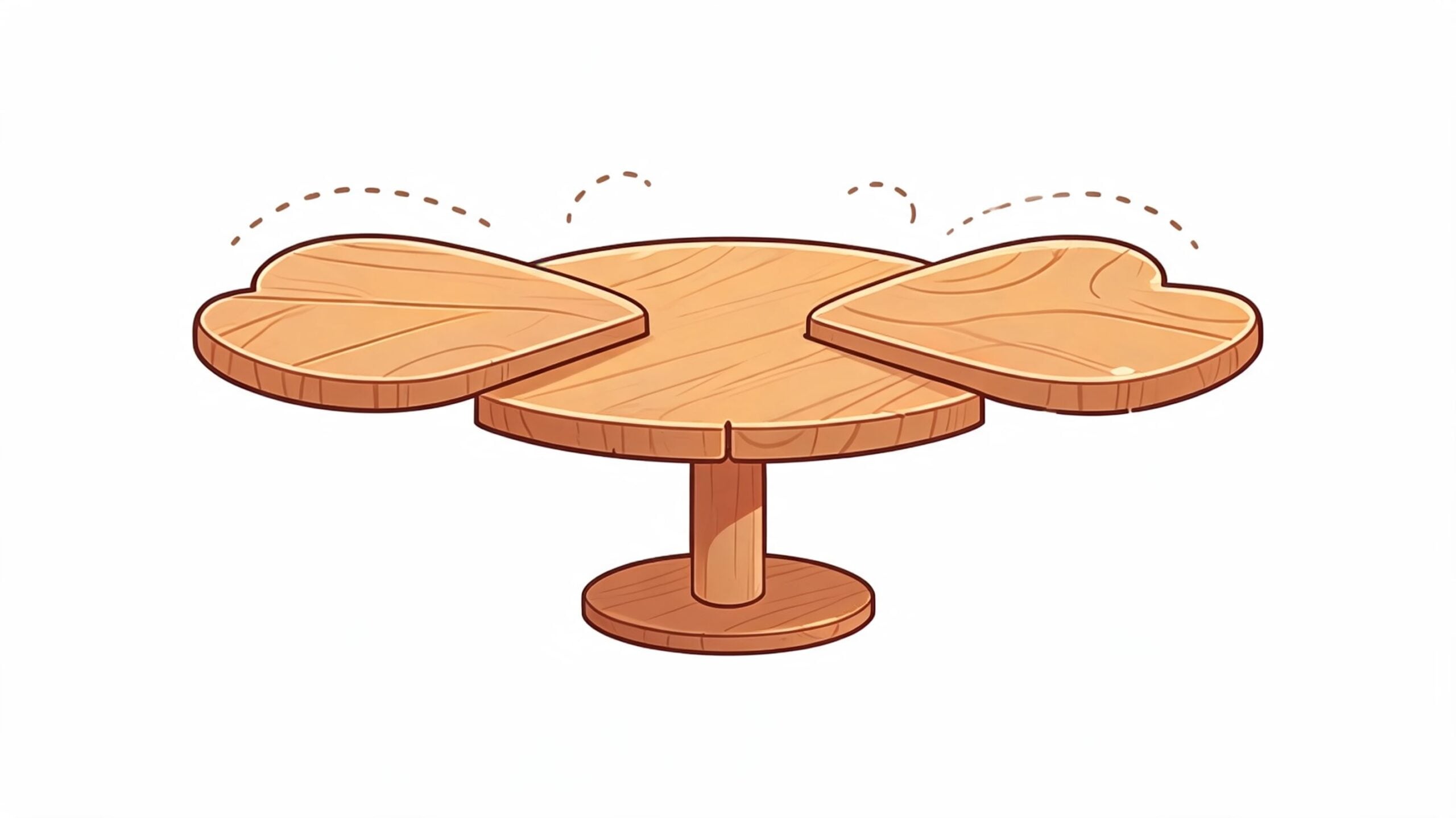
One design we often see families respond to is the single-pull rotation mechanism. The top turns, the hidden leaf opens into place, and the table shifts from round to oval in one connected motion. In this round-to-oval mechanism demonstration, the design adds two seats, gives better legroom with a pedestal base, and avoids some of the extra complication you get with other extension styles.
That simpler action is a big deal.
A dining table should work like a well-made pocket door. It should move with control, line up cleanly, and stop where it belongs. Cheap extension hardware often feels loose, stiff, or uneven. Better-built tables feel steady in your hands, which usually means they get used instead of ignored.
Why the base matters as much as the top
Families often focus on the top shape first, but the base changes how the table lives day to day. A pedestal base usually makes a round to oval table more comfortable because chairs can slide around without table legs blocking knees and feet.
You notice that fast when one more person pulls up a chair.
With a four-leg table, somebody often ends up off-center, bumping a post, or sitting with one knee twisted to the side. A pedestal opens that space up. For busy family meals, card games, and long holiday dinners, that extra freedom feels better than it looks on a spec sheet.
What to test in person
If you visit a showroom, use your hands and sit down for a minute. That tells you more than a finish sample ever will.
- Open and close the table yourself: The motion should feel controlled and easy to line up.
- Check the top when fully extended: The leaf should sit level, with joints that meet neatly.
- Sit at the sides and ends: Make sure knees, toes, and chair placement feel natural.
- Look underneath the table: Cleaner joinery and sturdier hardware usually point to better long-term performance.
- Ask where the leaf goes: Self-storing designs are handy for real family life because there is less to carry off and keep track of.
If you're comparing different ways to save space, a small drop-leaf round dining table can be useful to see alongside extension models. It solves a similar problem in a different way, which helps many families decide what fits their routine best.
Practical rule: If the table feels awkward to open in the store, there is a good chance it will stay closed at home.
Finding the Right Fit for Your Milwaukee Home
Saturday night in a Milwaukee bungalow. Two kids are carrying plates in from the kitchen, somebody slides a chair back without looking, and everyone is trying to pass through the same narrow opening at once. A table can look perfect in the store and still feel too big once real family life starts happening around it.
We have helped local families sort this out since 1928, and the pattern is pretty consistent. People often shop by tabletop size first. The better starting point is the room itself, plus the way your family moves through it.
Start with the room, not the catalog photo
Older Milwaukee homes often give us charming dining rooms with tight corners, radiator placements, or a doorway that cuts right through the traffic path. Condos and open layouts bring a different issue. The table may fit on paper but still crowd the walkway.
That is why we always suggest grabbing a tape measure before falling in love with a shape or finish.
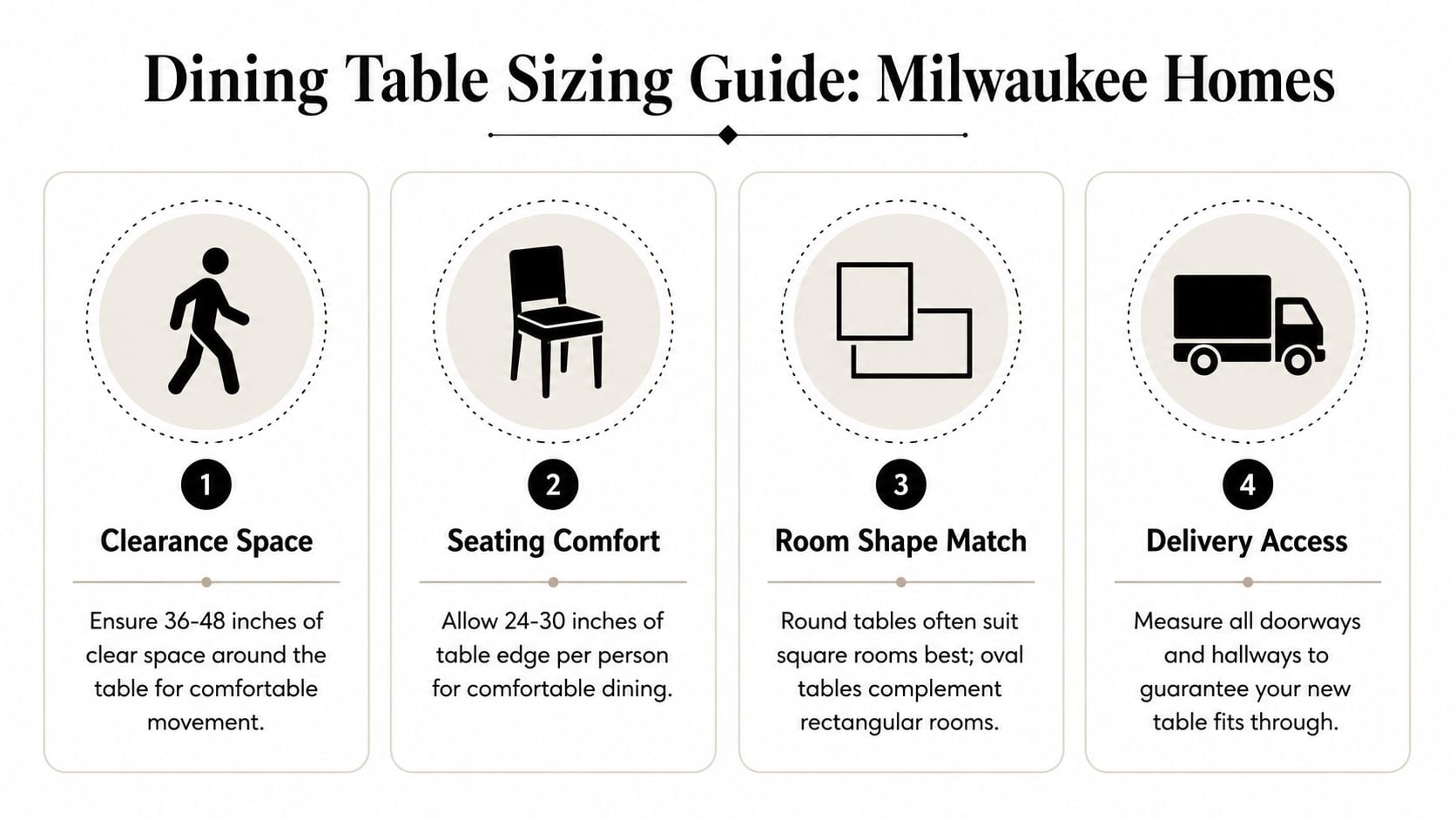
A helpful next step is to review a dining table size guide with room layout tips while you measure. It makes it easier to picture chair space, walking room, and how the table will sit once people are using it.
Why oval often works well in narrower spaces
Round tables are friendly and compact. Rectangular tables use length well. A round to oval table often lands right in the middle, which is why so many families end up liking it once they see one in person.
The curved ends soften the path around the table. In a narrower room, that can mean fewer bumped hips, easier trips past seated guests, and less of that sideways squeeze near the wall. It is a small design detail, but it changes how the room feels.
We see this a lot in Milwaukee homes where the dining room needs to do more than one job. Maybe it is a weeknight dinner spot, homework table, puzzle table, and holiday gathering space all in one. An oval shape usually helps the room stay useful without feeling boxy or crowded.
A simple measuring routine
Use this quick checklist before you visit a showroom:
Measure the room length and width
Write the numbers down. Memory gets fuzzy fast.Mark the table area on the floor
Painter's tape works well and gives you a true footprint.Pull out a few chairs if you can
This helps you judge how much space people need to sit and stand comfortably.Walk the natural paths through the room
Go from kitchen to table. Table to doorway. Doorway to buffet or cabinet. That tells you more than a floor plan does.
Match the table shape to the room
A good fit usually follows the shape of the room.
| Room shape | Usually works best |
|---|---|
| Square room | Round table |
| Long rectangular room | Oval table |
| Tight apartment dining area | Round or round to oval |
| Open dining zone | Depends on traffic and seating needs |
If your room is longer than it is wide, an oval table often looks more at home than a round one. It follows the lines of the room, keeps the edges softer, and usually makes everyday movement feel easier.
That balance is a big reason many of us in the furniture business still like this shape for real family homes. It is practical, comfortable, and easier to live with day after day.
Choosing Materials That Last for Generations
The shape of the table matters. The material matters just as much.
A round to oval dining table has moving parts, daily wear, spills, heat, chair bumps, and all the little abuses that come with family life. If the table is made from weaker materials, those stresses show up sooner.
Solid wood versus look-alike construction
A frequent point of confusion for shoppers arises. Many tables look similar from across the room. Up close, and over time, the differences become clearer.
Solid wood has depth, repairability, and staying power. Veneered or particleboard-based pieces can look attractive at first, but they usually give you less forgiveness if the top gets nicked, the finish wears, or the mechanism is used often.
According to this article on dining table shapes and construction, Amish-made solid wood tables can withstand 20+ years of heavy family use with proper care, while veneered extendables often show wear or warp within 5 to 7 years. The same source notes that high-quality models with metal-glide extensions can reduce mechanism failure rates by up to 40% compared to imported particleboard alternatives.
Those numbers tell a story many families already know from experience. Better construction usually feels better on day one, and it also keeps working years later.
What to look for under the surface
A durable extension table should have more than a nice stain color. Pay attention to the working parts and the basic build.
- Solid wood top and base: Better for long-term use and repair
- Metal glides: Smoother action and better durability
- Sturdy joinery: Less wobble over time
- Quality finish: Helps the surface handle everyday messes
If you want to compare examples side by side, this guide to solid wood dining table options is a useful place to start.
Why this matters for family budgets
Sometimes a lower sticker price looks tempting, especially if you're furnishing a whole room. But a table that needs replacing much sooner isn't usually the better value.
Buy the table you can live with for years, not the one you're already worried about by next winter.
That doesn't mean everyone needs the fanciest table in the store. It means it's smart to focus on the things that affect daily use most. The top. The slides. The base. The overall build quality.
A dining table should earn its place in your home for a long time.
Is a Convertible Table Right for Your Family
You're sitting down on a Tuesday night with four place settings, school papers off to one side, and enough room for everyone to pass the potatoes without bumping elbows. Then Sunday comes, the cousins stop by, and suddenly that same table needs to welcome a much bigger crowd. That everyday-to-holiday shift is exactly why many families ask us about convertible dining tables.
At BILTRITE, we've been helping Milwaukee families furnish real homes since 1928. Over those years, we've learned that the best table is not the one with the flashiest feature. It's the one that fits the way your family gathers, eats, celebrates, and lives.
Why many families choose one
A round to oval table solves a very practical problem. It keeps a room feeling open on ordinary days, then gives you added surface area when more people join in.
That shape change matters in daily life. A round table encourages easy conversation because everyone feels included. An oval gives you more elbow room and more serving space without the sharp corners that can make a room feel tighter. For families with children, grandparents, or busy walkways, that softer outline often feels easier to live with.
In other words, it works a bit like a good guest room sofa bed. You do not need the larger footprint every day, but you are glad to have it when the house fills up.
Where it makes the most sense
We usually recommend a convertible table to families who live somewhere between two extremes. They do not need a big fixed table every day, but they also do not want to squeeze guests around a too-small one when company comes over.
It can be a strong fit if you:
| Good fit for you if… | Maybe skip it if… |
|---|---|
| You host now and then | You need full seating every day |
| You want more open floor space most of the week | You prefer a fixed top with no moving parts |
| Your dining area needs softer edges for easier flow | Your room easily handles a large permanent table |
| You like furniture that adapts as family needs change | You want the lowest-cost basic option |
That middle-ground role is the core appeal. A convertible table does two jobs well, instead of forcing your room to serve only one.
A few honest questions to ask yourself
Here's the conversation we often have with shoppers in our Milwaukee showroom.
- Do you host often enough to use the extension? A few times a year can still justify it if those gatherings matter to your family.
- Do you want the dining room to feel less crowded day to day? The smaller round setup can help with that.
- Will people be walking around the table frequently? Curved edges are often friendlier in active homes.
- Do you mind a little extra mechanism in exchange for flexibility? Some families love that trade. Others would rather keep things as simple as possible.
If your room is especially compact, our guide to dining tables and chairs for small spaces can help you sort through sizes and layouts before you choose.
The honest trade-off
A convertible table asks more from its construction than a fixed table does. The top has to align properly. The leaves have to fit well. The base has to stay steady through years of opening, closing, homework, holiday meals, and everyday wear.
That is one reason we put so much value on well-built solid wood tables, especially USA-made and Amish-made pieces. In our experience, families are happiest when the table feels dependable first and clever second.
So, is a convertible table right for your family?
If you want one table that feels comfortable on a quiet weeknight and capable when the whole family shows up, the answer is often yes. If you need maximum seating every single day, a larger fixed table may serve you better. The right choice comes down to your routines, your room, and how you want your home to feel when people gather around it.
Your Guide to Buying and Caring for Your New Table
Buying a dining table online from photos alone can be tricky. Extension movement, wood character, edge shape, finish texture, and chair fit are all things you understand better in person.
That's especially true with a round to oval dining table. You want to feel how it opens. You want to sit at it. You want to see whether the size feels right, not just whether the numbers sound right.

What to check before you buy
Before you commit, take a minute to walk through the practical stuff.
- Test the extension action: It should open smoothly and feel secure.
- Check the finish in person: Some woods and stains look very different than they do on a screen.
- Bring measurements: Room size, chair count, and doorway width all matter.
- Ask about delivery access: Especially if you live in a condo, apartment, or older home.
Delivery matters more than people expect. For shoppers in urban areas, many non-disassemblable tables fail delivery in buildings with narrow doorways. This round-to-oval table product page highlights that challenge, and it's why come-apart heavy-duty options can be such a practical solution in tight spaces.
Easy habits that help your table age well
Daily care doesn't have to be complicated. Consistency matters more than fancy products.
Try these habits:
- Wipe spills promptly: Especially around seams and extension areas
- Use pads or trivets: Helpful for hot dishes and serving pieces
- Open the table gently: Don't force the mechanism
- Clean with finish-friendly products: Harsh cleaners can dull the surface over time
If you're comparing stain and surface options, this guide to the best wood finish for a dining table can help you narrow down what fits your household best.
The value of seeing it in person
A dining table is one of those purchases where touch tells you a lot. You can feel whether the wood is substantial. You can see how the leaf lines up. You can notice whether the table feels steady when someone leans on it.
That kind of confidence is hard to get from a product photo.
The right table should feel easy to use, comfortable to sit at, and ready for daily life.
If you're shopping for a piece that has to work hard and still look good doing it, taking the time to test it in person is well worth it.
If you're ready to compare round, oval, and round-to-oval options in person, we'd love to help at BILTRITE Furniture-Leather-Mattresses. We're a fourth-generation family business serving Metro Milwaukee since 1928, and helping people find affordable, better-quality furniture is what we do every day. Stop by our Greenfield showroom, say hi, and let our experienced team help you find a table that fits your room, your family, and your everyday life.