Your Guide to the Montana King Size Bed

What are you buying when you shop for a montana king size bed? A bigger mattress than a regular king, or just a style with a big-sky name?
That confusion trips up a lot of shoppers. The name sounds like some oversized specialty bed, but most of the time it isn’t. It’s usually a standard king bed frame sold under a rustic, substantial collection name. If you don’t know that going in, it’s easy to focus on the name and miss the details that really matter. Frame strength, material quality, room fit, and mattress support.
We’ve been helping Milwaukee-area families sort through bedroom furniture choices since 1928, and this is one of those topics where plain English helps. A bed name can sound impressive. The construction tells the real story.
Hello Neighbor Your Guide to Bedroom Bliss
We’ve heard this question a lot lately. “What exactly is a montana king size bed?” It’s a fair question, because the name sounds official. It sounds like it should sit in the same category as an Alaskan King or Texas King. In most cases, it doesn’t.
A montana king size bed is usually about style, not a separate mattress dimension. That means your job as a shopper isn’t to chase a catchy label. Your job is to figure out whether the bed fits your room, supports your mattress correctly, and holds up to real family life.
That’s where experience matters. Four generations into the furniture business, we’ve seen the same pattern over and over. Families are happiest when they slow down and judge a bed by the build, not the brochure name.
Start with the right question
Instead of asking, “Is a Montana King better?” ask these:
- What mattress size does it fit? If it takes a standard king mattress, then the “Montana” part is just the collection or style name.
- How is the frame built? Slats, center supports, joinery, wood species, and finish tell you far more than the label.
- Will it work in my room and daily routine? A handsome bed that crowds the room or sits too low for easy access becomes a headache fast.
If you’re planning a full bedroom refresh, our advice is simple. Think through the whole setup before you buy. Bed, mattress, nightstands, walking space, and how the room needs to function for your family. A little planning saves a lot of frustration, and these dream bedroom ideas from our team are a good place to get your thoughts organized.
A bed should serve your life. If the name is flashy but the construction is weak, skip it.
Decoding the Montana King Bed Mystery
Let’s clear this up directly. “Montana King” is not a recognized standard mattress size in major bedding markets. It’s usually a product or collection name attached to a bed frame that fits a standard king mattress.
That’s the key point. When you see “Montana King,” don’t assume it means an oversized king. Assume it means you need to read the specifications.

What the name usually means
Manufacturers often use regional names like Montana to signal a look. Usually that means:
- Rustic character with visible grain, knots, or weathered finishes
- Substantial proportions that feel grounded and sturdy
- Wood-forward design with panel beds, platform beds, or framed headboards
That can be a good thing. Plenty of these beds look warm and inviting. The problem starts when shoppers mistake the style name for a special size category.
If you want a quick reference for actual mattress dimensions, this king bed dimensions guide helps separate marketing names from real sizing.
What to inspect before you buy
A Montana-named bed can be a smart buy if the construction is solid. One concrete example is the Steve Silver Company Montana King Bed, which uses a five-slat system with dual center supports, is built with Asian hardwoods and veneers, weighs 135 lbs, and implicitly supports up to 800 lbs total weight according to the Steve Silver Montana King Bed product details. Those details matter because center support and slat strength are what help prevent sagging.
Here’s what I’d focus on in the showroom:
| Feature | Why it matters |
|---|---|
| Slat system | Better support under the mattress helps reduce sagging |
| Center supports | Critical on a king because the span is wide |
| Material mix | Solid wood, veneers, and engineered components all perform differently |
| Overall weight | Heavier beds often feel more planted, though weight alone isn’t quality |
| Box spring requirement | Changes bed height, support setup, and total cost |
Practical rule: If a bed frame seller can’t explain how the king center is supported, keep shopping.
A good montana king size bed isn’t defined by its name. It’s defined by whether the frame does the hard work a king bed needs to do.
King Size Beds A Quick Comparison
Once you know a montana king size bed is usually a style name, the next step is simple. Compare it against the king categories that are real.
For most shoppers, the fog lifts, and you stop chasing labels to start comparing actual footprints, room demands, and bedding realities.
The cheat sheet that matters
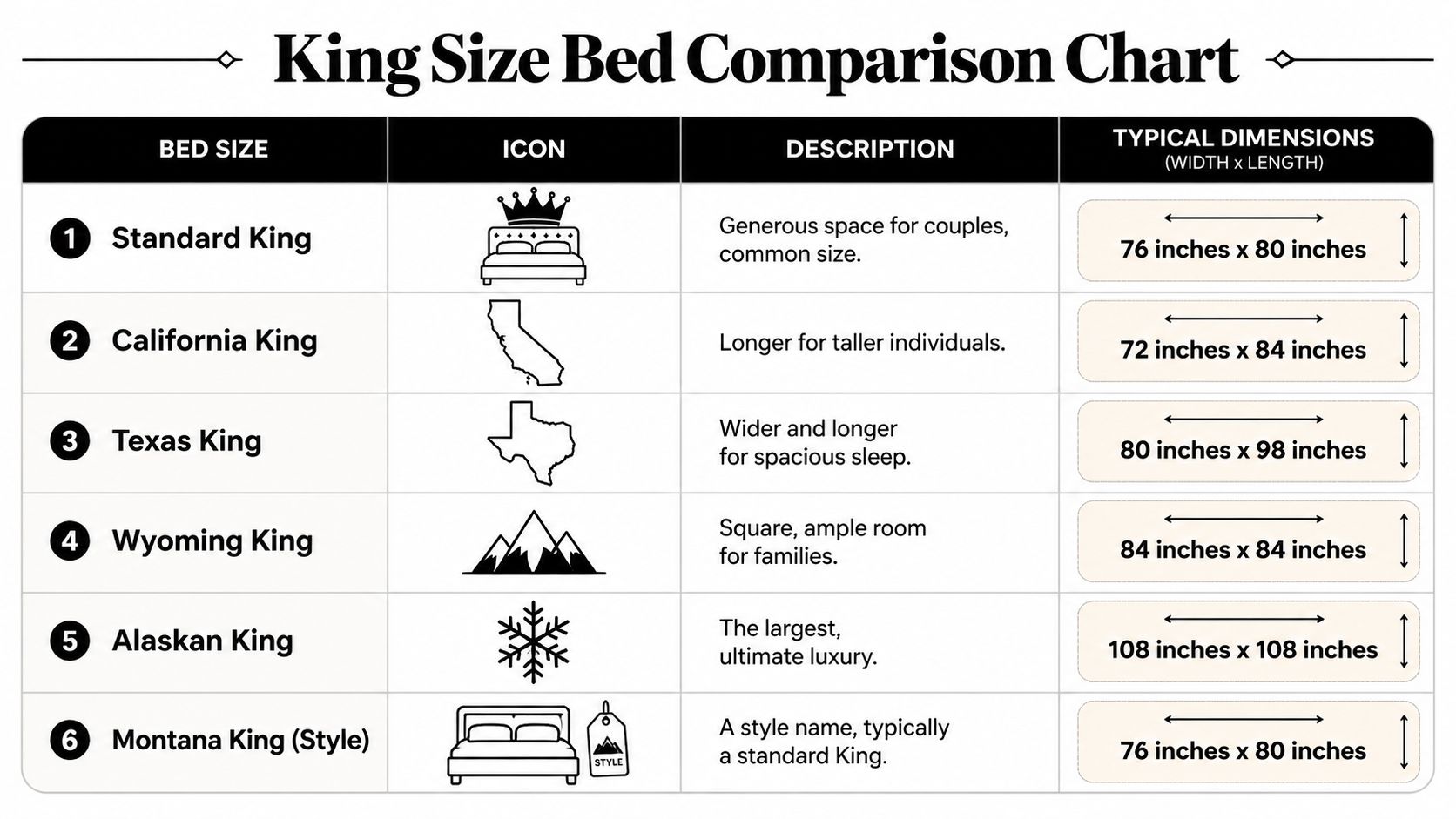
| Bed type | Typical dimensions | Best fit |
|---|---|---|
| Standard King | 76 x 80 inches | Couples who want broad sleeping space |
| California King | 72 x 84 inches | Taller sleepers who want extra length |
| Wyoming King | 84 x 84 inches | Families wanting a square oversized bed |
| Texas King | 80 x 98 inches | People wanting extra width and length |
| Alaskan King | 108 x 108 inches | Shoppers building a room around the bed |
| Montana King | Usually a style name, commonly fitting a standard king | Anyone who likes the look, not a different size |
According to this oversized king comparison from Amerisleep, the Wyoming King measures 84 x 84 inches, the Texas King measures 80 x 98 inches, and the Alaskan King measures 108 x 108 inches. That same source notes that oversized beds like the Wyoming King and Alaskan King serve niche needs, often require specialty bedding, and need at least 14 x 14-foot rooms for Wyoming and 16 x 16-foot rooms for Alaskan models. It also notes that the standard King remains the most popular choice for couples and accounts for about 35% of U.S. mattress sales.
My honest recommendation
Most Milwaukee homes do better with a standard king. It gives couples plenty of room, bedding is easier to find, and you won’t need to redesign the whole bedroom around the bed.
Oversized kings sound fun. They’re also a commitment.
- You’ll need more floor space
- You’ll need specialty bedding
- You’ll usually pay more for accessories and support pieces
The right king bed is the one that still leaves your bedroom easy to live in.
If you love the rustic look of a montana king size bed, great. Just make sure you’re buying a frame style you love around a mattress size that makes sense for your room.
Choosing Your Frame Solid Wood and USA-Made Quality
Here's my strong opinion: If you want a bed that feels good on day one and still feels good years later, start with the frame materials. Don’t let a handsome finish distract you from what’s underneath.
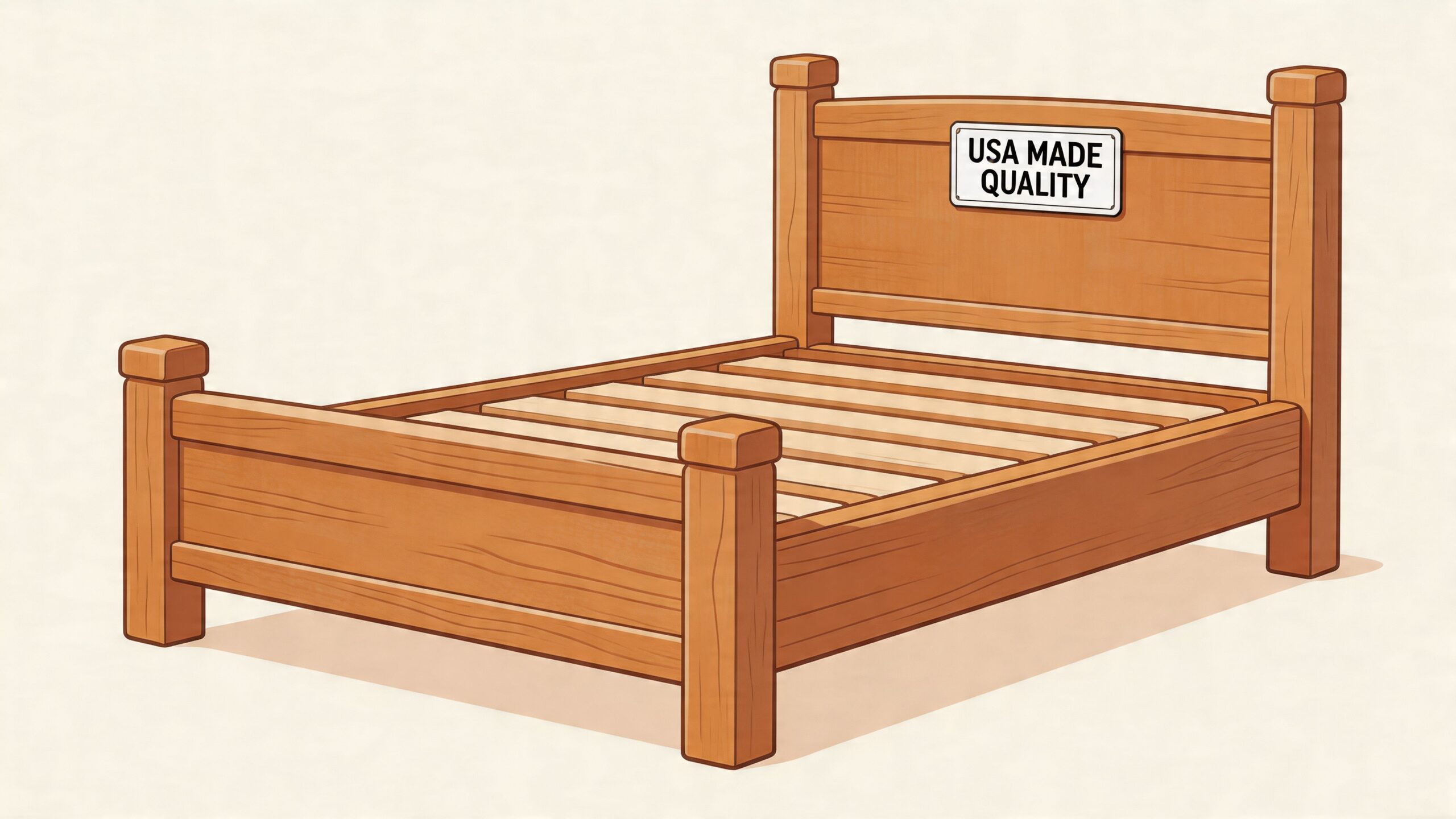
A lot of Montana-style beds look similar from across the room. Up close, they’re not similar at all. Some use a mix of veneers and engineered components. Others use solid wood construction that holds up better over time.
Why solid wood earns its keep
Beds made from 100% solid pine with a multi-step lacquer finish have a real advantage. According to this Montana king platform bed product information, that finish can reduce moisture absorption by 60% and help the bed endure for 15 to 20 years, which is far longer than many veneered alternatives. In Wisconsin, where humidity swings can be tough on furniture, that matters.
That’s not just technical talk. It shows up in daily use.
- Rails stay tighter
- Panels resist seasonal movement better
- Finishes hold their look longer
- The bed keeps feeling steady instead of fussy
If you like furniture that ages gracefully, real solid wood is worth your attention. If you like furniture that stays quiet and planted under a king mattress, it’s worth even more attention.
Imported look versus built-for-the-long-haul quality
Imported beds aren’t automatically bad. Some are attractive and useful. But if you’re choosing between a style-first import and a stronger USA-made or Amish-made solid wood frame, I’d lean toward the better build almost every time.
Here’s the lens I’d use:
- Buy for structure first. A king bed has a big span. That means weak support shows up faster.
- Check the joinery and hardware. Tight, well-designed connections usually age better than bare-minimum fasteners.
- Ask what the frame is made of. “Wood” is not a useful answer. You want specifics.
- Look past the finish color. Rustic gray, sand, brown, or weathered oak tones are easy to copy. Construction quality isn’t.
You can browse examples of USA-made bedroom furniture styles to get a feel for what better-built options look like.
The frame should match real life
A bed frame doesn’t live in a catalog photo. It lives with kids, pets, shifting seasons, moving day, mattress rotations, and years of daily use.
That’s why I like frames with these traits:
| Quality cue | Why I like it |
|---|---|
| Solid wood construction | Better long-term stability |
| Protective multi-step finish | Helps the wood handle changing indoor conditions |
| Strong center support | Essential under a king mattress |
| Simple, serviceable design | Easier to maintain and live with |
A bed can be rustic and still be refined. Good craftsmanship doesn’t need to show off.
Planning Your Bedroom Layout for Comfort
A king bed can look great in a showroom and feel enormous once it lands in a real bedroom. That’s why room planning matters just as much as frame choice.
This gets even more important in condos, apartments, older Milwaukee homes, and senior living settings. Space has to work hard. The bed can’t eat the whole room.
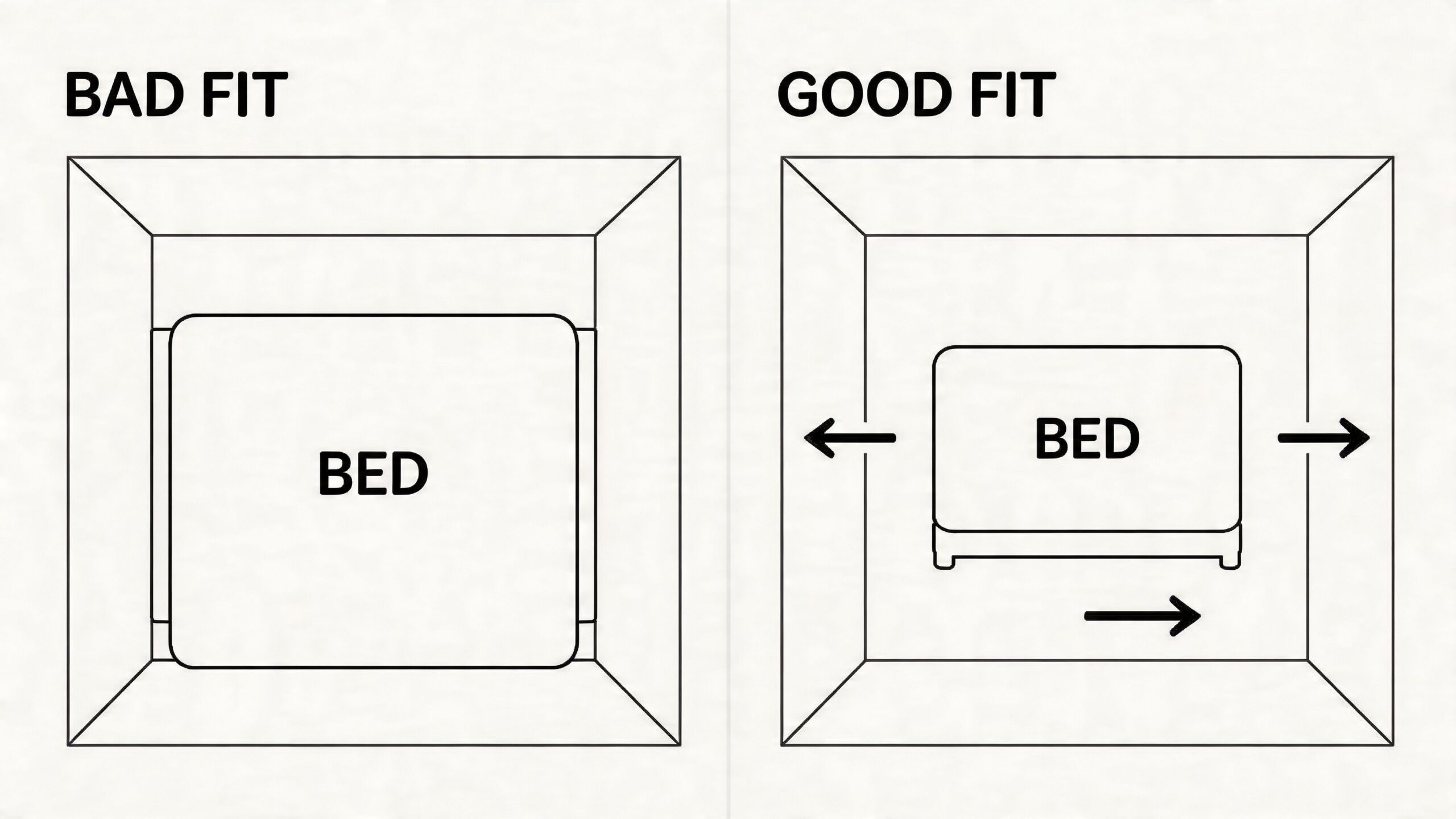
Measure the room like you mean it
Don’t stop at wall-to-wall dimensions. Measure the room the way you’ll live in it.
- Mark the bed footprint on the floor. Painter’s tape works well.
- Add your nightstands. People forget these all the time.
- Check walking paths. You want comfortable movement, not a squeeze-by.
- Think about drawers and doors. Bedroom doors, closet doors, and dresser drawers all need room to open.
A king frame with a thick headboard or footboard can eat more visual and physical space than shoppers expect. That’s why a montana king size bed needs more than a style decision. It needs a layout decision.
Low beds aren’t right for everyone
A lot of Montana-style beds are low-profile panel beds. They can look clean and relaxed, but they aren’t automatically a smart choice for every household.
This Old Brick Furniture product discussion points to an often-missed issue. Many rustic king beds don’t address small-scale living or senior accessibility well, and lower profiles may not suit seniors who want easier entry and exit. That concern is real.
If accessibility matters, ask these questions before you buy:
- How high will the mattress sit once everything is assembled?
- Will getting in and out feel easy every day, not just in the store?
- Does the room still leave clear paths for walking aids or caregiving needs?
Don’t choose bed height by looks alone. Choose the height your knees and hips will thank you for.
For more practical planning help, this guide on how to arrange bedroom furniture is useful before you commit to a king setup.
Watch the delivery path too
A bed can fit the room and still be miserable to deliver. Check stair turns, narrow halls, and bedroom door openings. Headboards, side rails, and boxed parts all need a clean path.
That’s especially true in older homes and compact buildings. A smart bedroom plan starts at the front door, not just the back wall.
The Foundation of Good Sleep Our Mattresses
A sturdy frame is only half the story. If the mattress isn’t right, the whole setup falls flat.
Many shoppers make an expensive mistake. They spend all their energy picking the bed style and then treat the mattress like an add-on. Wrong approach. A king bed is a sleep system, and the mattress does most of the daily work.
Match the mattress to the frame
Not every king mattress and king frame make a great pair. Support needs, profile height, edge feel, and total load all matter. That’s especially important if you’re considering a heavier-duty setup.
One gap in the market is clear. Shoppers often don’t get enough guidance on pairing imported bed frames with stronger, longer-lasting mattresses. This product discussion of Montana bed alternatives highlights that need and notes that some shoppers specifically want guidance on matching frames to heavy-duty, flip-able mattresses, including options that support 1200+ lbs.
That’s smart shopping. You don’t want a weak frame under a serious mattress, and you don’t want a mattress that outclasses the support system under it.
Why I like flippable mattresses
I’m a big fan of two-sided, flippable mattresses for people who care about longevity. Even wear matters. A mattress that can be rotated and flipped gives you more ways to keep comfort consistent over time.
That matters even more on a king, where two sleepers can create different wear patterns. The mattress should help your frame perform well, not expose its weaknesses.
A few good questions to ask in person:
- Does this frame need a box spring, foundation, or just slats?
- Will this mattress sit too high or too low on this bed?
- Is this a good match for heavier daily use?
- Can I rotate or flip this mattress to spread out wear?
If you want help sorting those pieces out, this guide on how to choose the right mattress is a strong starting point.
A good-looking bed gets attention. A well-matched mattress setup earns loyalty, because you feel it every night.
Come Say Hi and Find Your Dream Bed
So here’s the plain truth. A montana king size bed usually isn’t a special mattress size at all. It’s a style name, and that means you need to shop with your eyes open.
Judge the frame. Check the support system. Think about room fit, bed height, and how the mattress will work with it. If the bed is solid, practical, and comfortable in your space, the name can be whatever it wants.
We still believe the best furniture decisions happen in person. You should see the wood tone under real light. You should feel the bed’s stability. You should sit on the mattress and judge the height for yourself. That’s especially true with king beds, where scale and comfort are hard to judge from a screen.
And we’re old-fashioned enough to think that’s a good thing. We’ve been part of this community since 1928, and we still believe helping families furnish their homes is personal work. We’re closed on Sundays because family time matters to us too.
If you’re sorting through king beds, rustic styles, solid wood choices, or mattress pairings, come talk with real people who’ve spent decades helping neighbors make smart decisions.
Visit BILTRITE Furniture-Leather-Mattresses in Greenfield and see the difference for yourself. We’d love to help you compare king beds, test mattress comfort, and find a setup that fits your room, your routine, and your family for the long haul.