3 DAY MATTRESS SALE! TUESDAY - WEDNESDAY - THURSDAY!
LABOR DAY SALE EXTENDED ENDS SATURDAY, OCTOBER 3RD AT 5PM!
NO CREDIT CARD FEES!
1000's of Items IN-STOCK + 500 Mattresses!
Largest selection of USA Made Furniture & Mattresses + Amish Made!
FREE In-Store Design Services!
BUY LOCAL & LOVE YOUR HOME!
3 DAY MATTRESS SALE! TUESDAY - WEDNESDAY - THURSDAY!
LABOR DAY SALE EXTENDED ENDS SATURDAY, OCTOBER 3RD AT 5PM!
NO CREDIT CARD FEES!
1000's of Items IN-STOCK + 500 Mattresses!
Largest selection of USA Made Furniture & Mattresses + Amish Made!
FREE In-Store Design Services!
BUY LOCAL & LOVE YOUR HOME!
OPEN LABOR DAY | Tuesday-Thursday 10am to 6pm | Friday 10am to 7pm | Saturday 10am to 5pm | Sunday Closed To Be With Family & Friends | Monday Showroom Closed
5430 West Layton Ave, Greenfield - Metro Milwaukee
The sofa is in place. The lamp looks good. The rug helps. But every time you sit down, your drink ends up on the floor, the remote disappears into the cushions, and the room still feels a little unfinished.
That’s usually the moment people realize they don’t just need “a table.” They need the right coffee table and end tables for the way they live.
In our family, this conversation has been happening for a long time. We’ve been helping Metro Milwaukee families furnish their homes since 1928, and after four generations, we’ve learned that these smaller pieces can make a huge difference in comfort, function, and the overall feel of a room. They’re not extras. They’re part of how a living room works day after day.
Some homes need sturdy solid wood that can handle kids, grandkids, snacks, and game night. Some need smaller-scale pieces that fit a condo or apartment without crowding the space. Some need easy reach for seniors and caregivers. Good table choices solve all of that in a quiet, practical way.
Welcome to Your New Living Room
A living room usually tells on itself.
You can walk in and tell right away whether it’s working for the family who lives there. Maybe the sofa is comfortable, but there’s nowhere to set a mug. Maybe one person has claimed the nearest chair because it’s the only seat with a lamp and a place for glasses. Maybe the room looks nice, but it doesn’t feel easy.
We see that a lot around Milwaukee. A family moves into a bungalow, a condo, or a first apartment. They get the big pieces home first. Then they realize the room still needs support pieces that make everyday life smoother. That’s where coffee and end tables earn their keep.
For us, furniture has always been personal. We’re a fourth-generation family business, and we still think the best part of this work is helping neighbors create homes that feel comfortable, useful, and welcoming. We’re not interested in pushy furniture talk. We like helping people make smart choices they’ll enjoy living with.
If your living room feels close, but not quite there, start with the tables. They often fix more than people expect. A well-placed coffee table can anchor the whole seating area. A well-sized end table can make your favorite chair feel complete.
A good living room works when everything you reach for has a place to land.
If you want more ideas for pulling the whole room together, our guide on how to style a living room is a helpful next step.
The Real Difference Between a Coffee Table and an End Table
People sometimes use these names like they’re interchangeable. They’re not. A coffee table and end tables do different jobs, and when you understand those jobs, shopping gets much easier.
The coffee table anchors the room
Your coffee table usually sits in front of the sofa or in the middle of the main seating group. It acts like the hub of the room. It gives everyone a shared surface for drinks, books, snacks, or that one puzzle nobody wants to put away.
Visually, it also helps the room feel settled. Without it, the seating area can seem like it’s floating.
The funny part is that this low table style is fairly modern. The modern coffee table took shape during the Victorian Era in Britain, and one of the earliest documented uses of the term came in 1867, when British designer E.W. Godwin created a piece specifically called a “coffee table,” as noted in this history of the coffee table. Those early versions were around 27 inches high, much taller than what we expect today.
End tables support the people using the room
End tables are the helpers. They sit beside a sofa, loveseat, or chair. Their job is more personal than shared.
One might hold a lamp, reading glasses, and a coaster. Another might be the landing spot for a phone, a book, or a bowl of popcorn during movie night. They don’t need to dominate the room. They need to be useful right where you sit.
That’s why end tables often make or break comfort. If they’re too low, you’re reaching down every time. If they’re too high, they feel awkward and bulky.
Why coffee tables got lower
Furniture changes when life at home changes. Coffee tables became especially important in the 1950s, when television sets became common in American homes. Their low profile worked well because people could place drinks, remotes, and magazines on the table without blocking the screen. Before that, furniture historian Joseph Aronson wrote in 1938 that there was “no historical precedent” for these low, wide tables, according to this coffee table history summary.
That little bit of history explains a lot. Coffee tables aren’t just decorative. They rose with more casual living, TV watching, and gathering in a shared family room instead of a formal parlor.
A simple side-by-side view
Piece
Main job
Usual spot
Best use
Coffee table
Anchors the seating area
In front of the sofa or centered between seats
Shared surface for everyday living
End table
Supports a specific seat
Beside a sofa arm or chair
Easy-reach spot for personal items
If you want to compare more table styles beyond these two, our page on types of tables can help you sort out the options.
Getting the Size and Placement Just Right
Often, rooms go awry with tables. A table can be beautiful on its own and still feel wrong once it’s in your home. Most sizing mistakes come down to two things. The table is too big for the room, or it sits at the wrong height for the seating around it.
The good news is that you don’t need fancy software. A measuring tape, a few notes, and a little planning go a long way.
Start with the sofa and the room
Before you shop, measure the sofa, the open floor space in front of it, and the width beside the arms. Those simple numbers help you avoid a table that overwhelms a smaller room or disappears in a larger one.
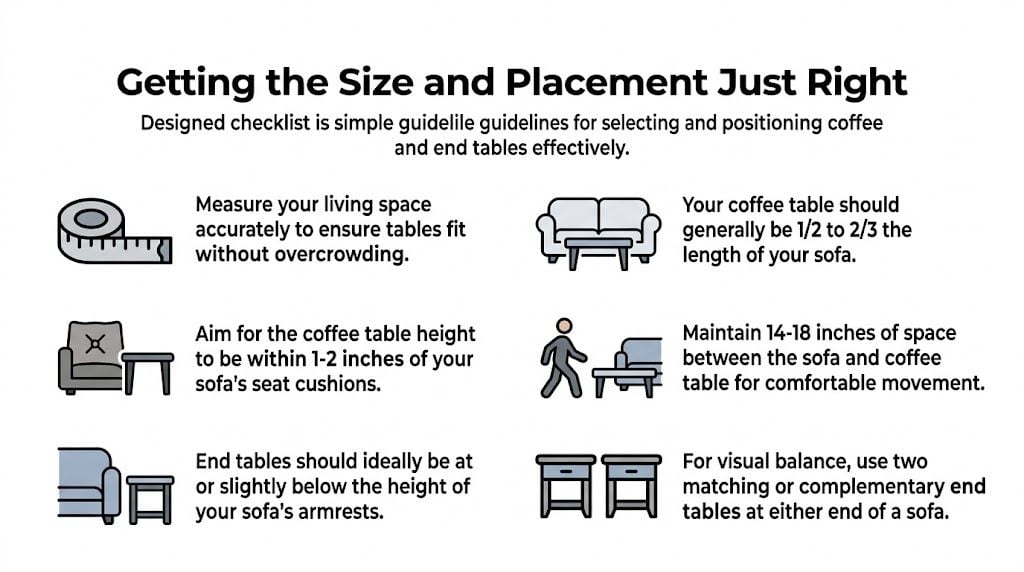
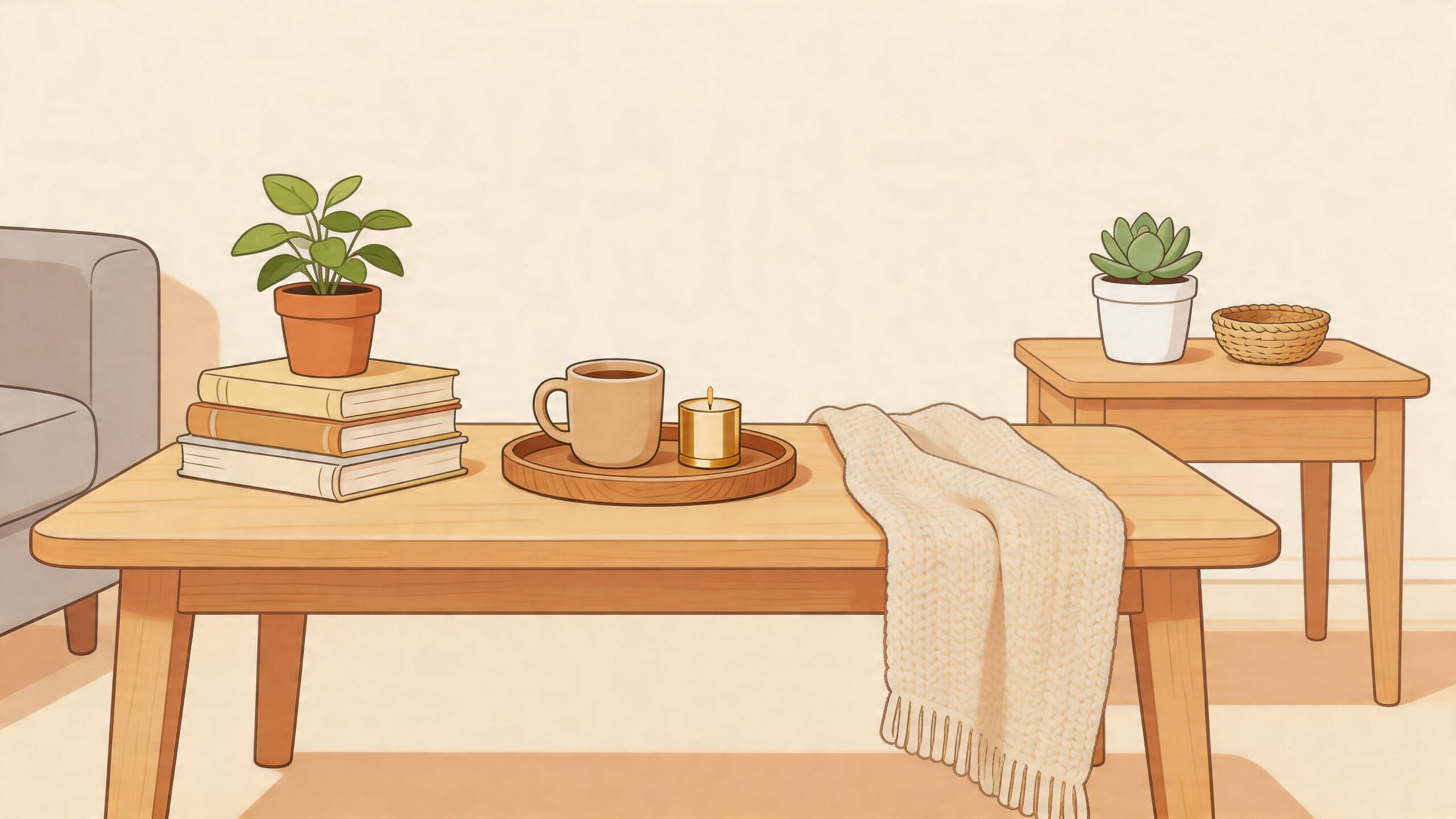
This quick visual can help as you plan:
A few easy rules of thumb make the process less stressful:
Coffee table length: A coffee table usually looks balanced when it’s about 1/2 to 2/3 the length of your sofa.
Coffee table height: Aim to keep it within 1 to 2 inches of your sofa seat cushions.
Walking space: Leave about 14 to 18 inches between the sofa and the coffee table so people can move comfortably.
End table placement: Put end tables close enough to reach naturally from a seated position, not tucked far away in the corner.
These are practical guidelines, not strict law. A room with a sectional, a recliner, or a smaller apartment layout may need a few adjustments.
Practical rule: If you have to lean, twist, or scoot forward every time you set something down, the table placement isn’t helping you enough.
End table height matters more than people think
This one is especially important for comfort. Expert design standards say that an end table should match the armrest height of the nearby seating within a 2-inch tolerance. End tables typically fall in the 18-24 inch range, while sofa arms often run 24-32 inches, according to this end table dimensions guide.
That alignment matters because it reduces awkward reaching. A table that’s too low makes you bend and drop your arm downward every time you set something down. A table that’s too high can get in the way and feel clunky beside the seat.
For seniors, caregivers, and anyone who wants a more supportive setup, this is a comfort issue, not just a decorating detail.
Common room setups that work well
Different rooms call for different table plans. Here are a few layouts we often suggest:
Standard sofa setup: One coffee table centered in front, with one or two end tables at the sides.
Chair-and-sofa mix: Use the coffee table as the shared center, then place an end table by the seat used most for reading or relaxing.
Open family room: A larger coffee table can anchor the space, while matching or complementary end tables create balance at the edges.
Cozier apartment layout: Choose slimmer tables and keep pathways clear so the room still feels easy to move through.
A good measuring step before shopping is to mark the table footprint on the floor with painter’s tape. That gives you a quick preview of how much space the piece will take up.
If you need help gathering the right measurements before you visit a showroom, our guide on how to measure furniture keeps it simple.
Finding Your Style from Solid Wood to Heavy Duty
Style is the fun part. It’s also where people sometimes get distracted by looks alone and forget to ask how the table is going to hold up after years of daily use.
That’s a big miss. A table isn’t just something you admire from across the room. It gets leaned on, wiped down, bumped by toys, used for board games, and asked to hold everything from coffee cups to holiday platters.
Why material matters in real life
Most design content spends a lot of time on color, shape, and trend. It often skips material quality, construction, and long-term durability. That leaves families with a real gap in the decision process. As noted in this discussion of coffee table material and durability, many guides focus on appearance while overlooking the trade-offs between affordability and longevity.
We think that’s backwards.
If you have kids, grandkids, pets, or regular company, your tables need to do more than look nice on day one. They should still feel solid after years of everyday use. That’s one reason many shoppers gravitate toward solid wood, especially when they want something that can age gracefully instead of feeling disposable.
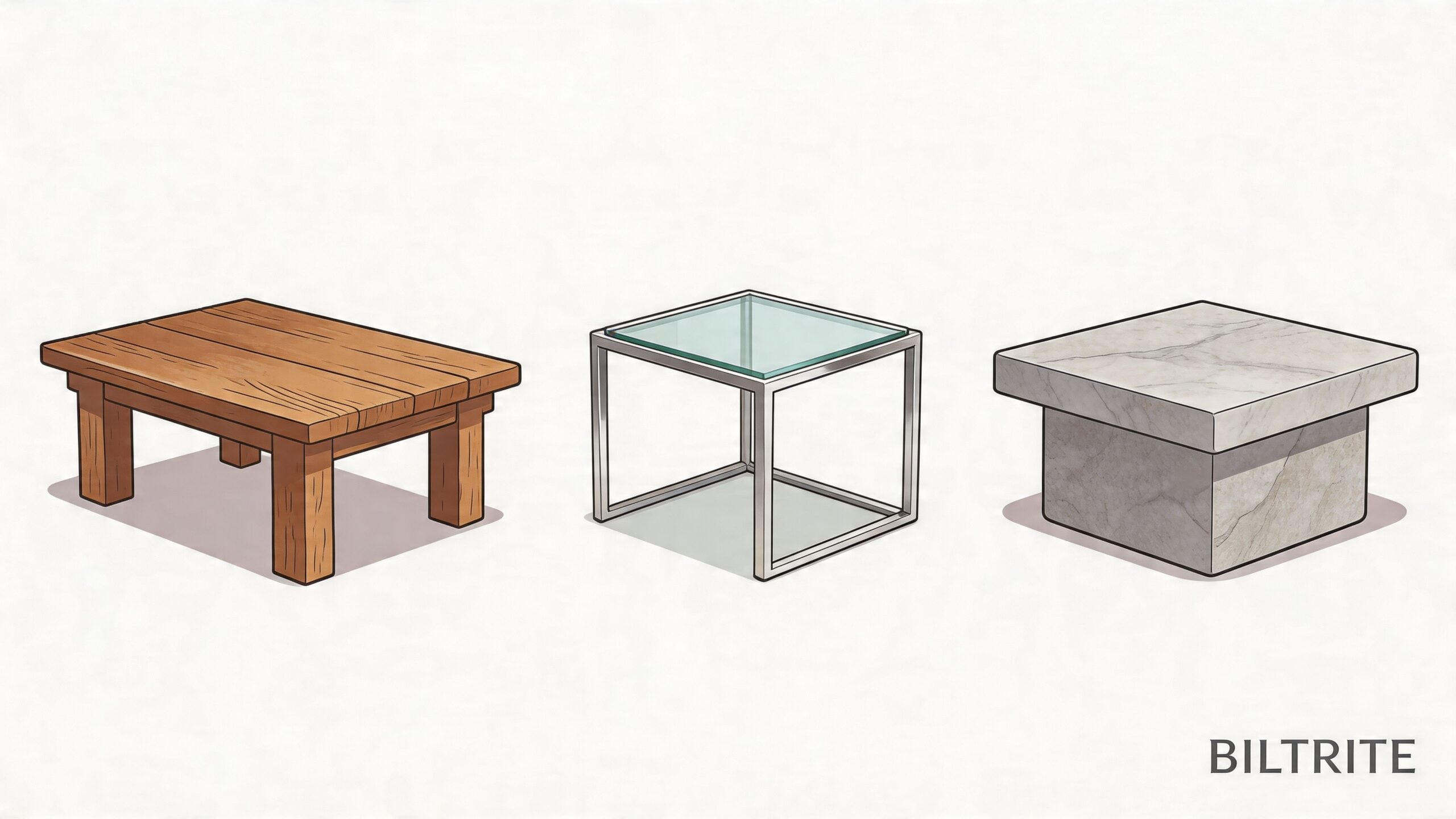
A quick material comparison
Material
What people like
What to think about
Solid wood
Warm look, durable feel, often repairable over time
Great for long-term use and everyday living
Glass
Light visual feel, can help a small room look open
Shows fingerprints and needs regular cleaning
Metal
Clean lines, sturdy structure, often works in modern spaces
Can feel colder depending on the room
Mixed materials
Flexible style, easy to coordinate
Build quality matters a lot
What to look for in craftsmanship
When families come in looking for better-quality living room tables, we usually talk through a few basics first. You don’t have to be a furniture expert to notice these things.
Feel the weight and steadiness: A table shouldn’t wobble when lightly touched.
Check the joinery and edges: Better-made pieces usually feel cleaner, tighter, and more intentional.
Look at the finish: It should feel even and durable, not thin or overly plastic-looking.
Think about repairability: Solid wood often gives you more options over time than materials that can’t be refinished or touched up.
USA-made and Amish-made furniture often stands out. Many shoppers like knowing where the piece came from, how it was built, and that the construction was meant for real households, not just showroom photos.
Better-quality furniture often costs more upfront, but many families prefer that trade when the piece feels sturdy, useful, and worth keeping.
Matching style to your household
A sleek glass table might be the right fit for a quiet condo with a modern look. A substantial solid wood cocktail table may make more sense in a family room where people put their feet up and use the furniture every day.
If your home sees a lot of traffic, think about heavier construction, forgiving finishes, and shapes that don’t feel delicate. If your goal is warmth and character, wood tones and handcrafted details usually bring that in right away.
One local option people compare in person is BILTRITE Furniture-Leather-Mattresses, which features USA-made, Amish-made, solid-wood, and heavy-duty furniture categories in its Greenfield showroom. Seeing those materials up close often makes the differences easier to understand than reading about them online.
Don’t force a matching set
A coffee table and end tables don’t have to be identical to belong together. In fact, rooms often feel more relaxed and lived-in when the pieces coordinate without being too matchy.
Try pairing:
a substantial wood coffee table with lighter side tables
a round coffee table with square end tables
one finish that leads and another that supports it
That kind of mix adds personality while still keeping the room cohesive.
Solutions for Small Spaces and Tricky Deliveries
Small living rooms have their own rules. A table that looks completely reasonable in a large suburban family room can feel oversized fast in a Third Ward condo, a Bay View apartment, or a cozy bungalow den.
A lot of online advice doesn’t help much here. It gives broad decorating rules, but not much guidance for compact layouts. As noted in this small-space furniture discussion, many resources don’t really address how to scale coffee and end tables proportionally for apartments and condos.
What works in a tighter room
In a smaller home, every piece has to earn its place. That usually means looking for tables that offer flexibility, lighter visual weight, or extra function.
A few smart choices:
Nesting tables: Pull them out when you need more surface space, then tuck them back in.
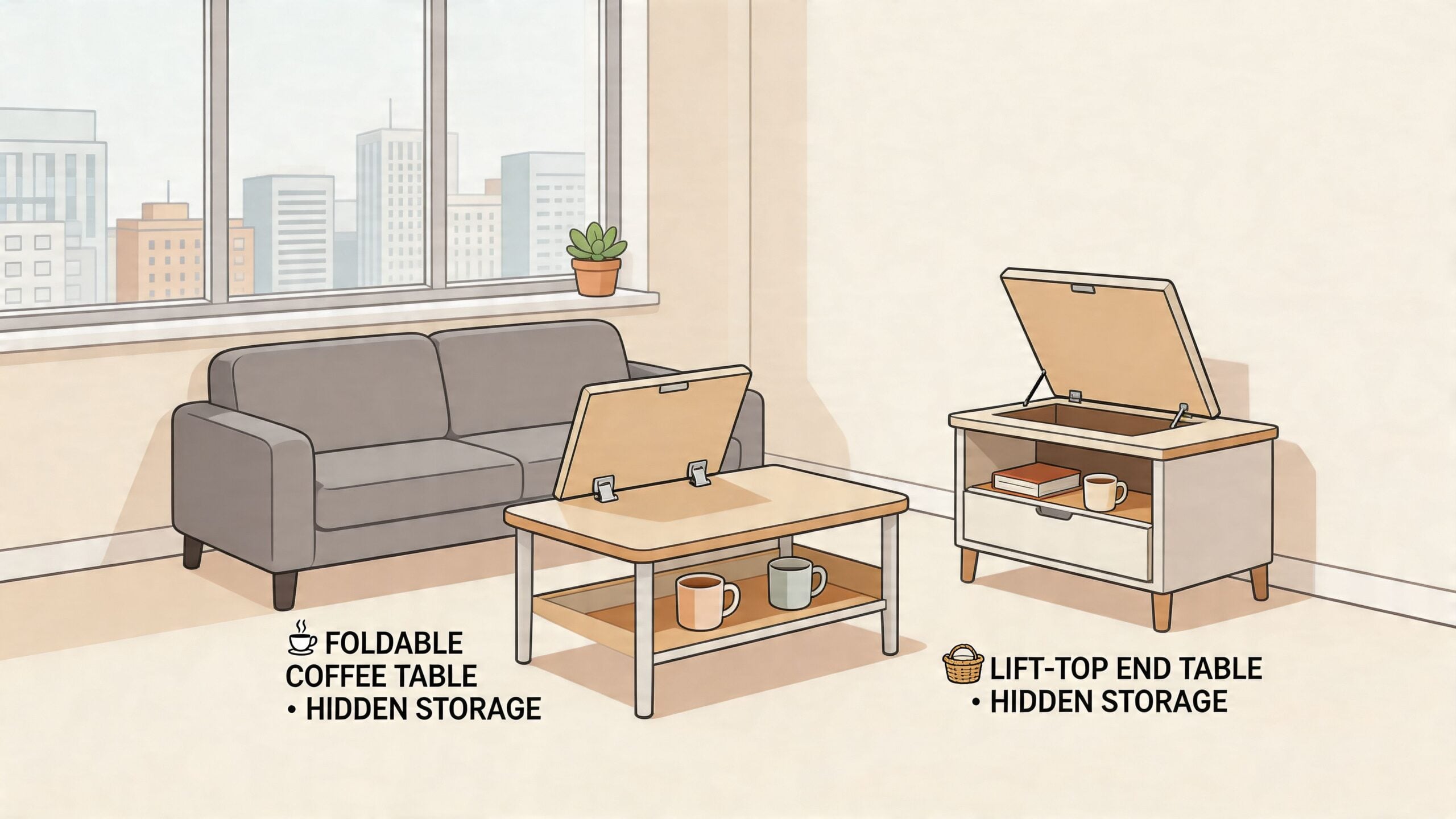
Lift-top or storage tables: Handy when you want hidden space for remotes, chargers, or blankets.
Round tables: Softer edges can help a room feel easier to move through.
Open-base designs: These often feel less bulky than a chunky solid block shape.
Small-scale furniture: Better proportions make a room feel intentional instead of crowded.
Sometimes the answer isn’t one big coffee table at all. In a compact room, a pair of smaller tables can be easier to move around and more adaptable for everyday use.
Keep the room from feeling stuffed
When a space is tight, scale matters just as much as style. A room can have beautiful pieces and still feel stressful if there’s no breathing room.
Here’s a simple checklist we often use mentally:
Challenge
Better choice
Narrow walkway
Slimmer table profile
Tight seating group
Smaller round or oval coffee table
Need more storage
Lift-top or shelf table
Multi-use room
Nesting or movable side tables
In small rooms, “less bulky” usually works better than “more impressive.”
The delivery question nobody wants to deal with
Then there’s the part nobody thinks about until buying day. Will the piece make it through the doorway, around the turn, and up the stairs?
That’s a real issue in older Milwaukee homes, apartment buildings, and upper-level condos. This is why some shoppers ask about smaller-scale designs or furniture that’s easier to maneuver before they choose a style. It’s also why delivery service matters.
Once the tables are in place, the room starts getting its personality back.
This is the stage people either love or avoid. Some folks can style a tabletop in five minutes. Others set down one candle, one remote, one mail pile, and call it a day. Most homes land somewhere in the middle, and that’s completely fine.
A simple formula that feels natural
A good tabletop usually has a mix of function and personality. One easy decorating trick is the Rule of Three. Group three items that vary in height, shape, or texture so the arrangement feels balanced without looking stiff.
That might mean:
a small stack of books
a candle or plant
a tray for coasters or remotes
The grouping gives the eye somewhere to land, but it still leaves room to use the table.
What real families actually use
The nicest coffee table styling usually isn’t fussy. It looks like the people in the house live there.
Try using pieces that mean something to your family:
favorite books
a framed photo
a bowl from a trip
a small plant
a tray that corrals daily clutter
End tables can be even simpler. A lamp, a coaster, and one personal object is often enough. If the table is next to a reading chair, add a book. If it’s beside the family sofa, leave some open space for drinks and phones.
A table looks more inviting when part of it is styled and part of it is ready for real life.
Mix shapes and textures
If everything on the table is the same height or made of the same material, it can look flat. Mixing helps.
Pair a smooth tray with a woven coaster. Set a ceramic vase on top of hardcover books. Use something vertical, something low, and something useful. The combination makes the arrangement feel easy instead of overly planned.
One thing we always tell people is this: don’t decorate every inch. Leave breathing room. Your coffee table still needs to work for movie nights, snacks, card games, and all the little moments in between.
Easy Care for a Lifetime of Memories
Good furniture is meant to be used. It’s also meant to be cared for, and that doesn’t have to be complicated.
Most table care comes down to a few steady habits. Dust regularly with a soft cloth. Use coasters. Wipe spills promptly. Don’t let moisture sit. Those small steps prevent a lot of common wear before it starts.
Solid wood care made simple
Solid wood is popular for a reason. It has warmth, character, and a lasting feel. It also responds well to consistent, gentle care.
A few easy habits help:
Dust softly: Use a clean, dry or slightly damp soft cloth.
Use coasters and pads: Hot mugs, cold drinks, and rough-bottom décor can all leave marks.
Clean spills quickly: Water rings and sticky spots are easier to prevent than remove.
Skip harsh cleaners: Strong chemicals can damage the finish.
If your table gets a minor scratch or small scuff, don’t panic. One of the nice things about better-quality wood furniture is that it often remains serviceable and attractive even as it gathers a little life experience.
Glass and metal need care too
Glass is simple to wipe down, but it shows fingerprints fast. A soft cloth keeps it looking cleaner with less streaking. Metal bases usually just need light dusting and occasional wiping with a gentle cleaner that suits the finish.
If your table combines materials, take care of each part according to what it is, not with a one-cleaner-fits-all approach.
Make maintenance part of the routine
The easiest furniture care doesn’t happen once a year. It happens in tiny moments. Someone grabs a coaster. Someone wipes up the splash from watering a plant. Someone moves a rough ceramic piece onto a tray.
That’s how tables stay part of family life for the long haul. They host coffee, homework, holiday visits, quiet mornings, and all the little everyday moments that turn furniture into memory-holders.
Come Say Hi at Our Greenfield Showroom
A living room feels better when the tables fit the way you live. That’s really the whole story.
The right coffee table gives the room a center. The right end tables make seats more comfortable and useful. Good sizing keeps the space easy to move through. Better materials help the furniture stay with your family for years instead of feeling temporary.
That’s also why so many people still prefer shopping for these pieces in person. You can tell a lot by seeing the scale with your own eyes, touching the finish, checking the height next to a sofa arm, and getting a feel for whether a piece seems sturdy enough for your home.
We’ve been helping Metro Milwaukee families do that since 1928, and we still believe the showroom experience matters. We don’t sell online because this kind of furniture shopping is easier when you can sit, compare, and talk things through with real people. Our team brings over 400 years of combined experience, and they’re here to help, not hover.
If you’re furnishing a smaller apartment, looking for durable family-friendly tables, or hoping to find USA-made or Amish-made solid wood pieces you can count on, we’d love to help. We’re proud to be family-owned, proud to be local, and proud to be closed on Sundays so our families can be together too.
Come see us in Greenfield. Walk the floor. Open the drawers. Check the heights. Bring your room measurements. Say hi.
Ready to find coffee table and end tables that fit your room and your everyday life? Visit BILTRITE Furniture-Leather-Mattresses in Greenfield and let our family help your family choose pieces you can see, touch, and enjoy at home.