Unique Living Room Furniture Ideas for Your Home

Some living rooms work fine, but they still feel flat. The sofa does its job. The lamp turns on. The coffee table holds remotes. Yet the room doesn’t feel like you.
That’s common in Milwaukee homes of every size. We see it in condos, bungalows, ranch homes, and family rooms that have slowly become a mix of hand-me-downs and “good enough” purchases. A room can be functional and still feel unfinished.
We’ve been helping local families furnish their homes since 1928, and one thing hasn’t changed. The most memorable rooms aren’t built from random trendy pieces. They come together when comfort, scale, craftsmanship, and personality all line up.
Tired of Your Living Room Feeling a Little… Blah?
A lot of people can spot the problem before they can name it.
You walk into the room and nothing is exactly wrong. But nothing feels inviting either. The sofa is safe. The tables match a little too well. The wall color fades into the background. It starts to feel more like a showroom set from years ago than the center of your home.

That “blah” feeling usually comes from one of three things. The room has no focal point, the furniture doesn’t fit the way you live, or every piece plays it too safe.
What blah usually looks like
- A sofa that disappears: Neutral can be beautiful, but sometimes a plain sofa with no texture, shape, or contrast makes the whole room feel sleepy.
- Tables with no character: If every surface is flat, dark, and boxy, the room starts to feel heavy.
- A layout that never got finished: Chairs pushed to the walls and empty space in the middle can make even a nice room feel awkward.
- Decor that means nothing: A room gets warmer when it holds pieces with a story, not just filler.
We hear this from neighbors all over Metro Milwaukee. They’re not asking for something wild. They just want a room that feels more lived-in, more welcoming, and more personal.
A unique room doesn’t have to be complicated
You don’t need to replace everything. Most of the time, one strong piece changes the direction of the whole room. That might be a solid wood cocktail table, a curved accent chair, a patterned sofa, or a bookcase with real presence.
A living room starts to wake up when at least one piece has personality and at least one piece has substance.
If your room feels stuck, start with one change that adds shape, texture, or warmth. Then build from there. If you want a few easy starting points, our tips to refresh your interior can help you spot where the room needs a lift.
Discover Your Unique Living Room Style
A lot of folks get hung up on style labels. They worry about choosing the “right” one, then freeze and buy nothing.
That’s not how a home comes together. Style is just a direction. It helps you decide what belongs in the room and what doesn’t.
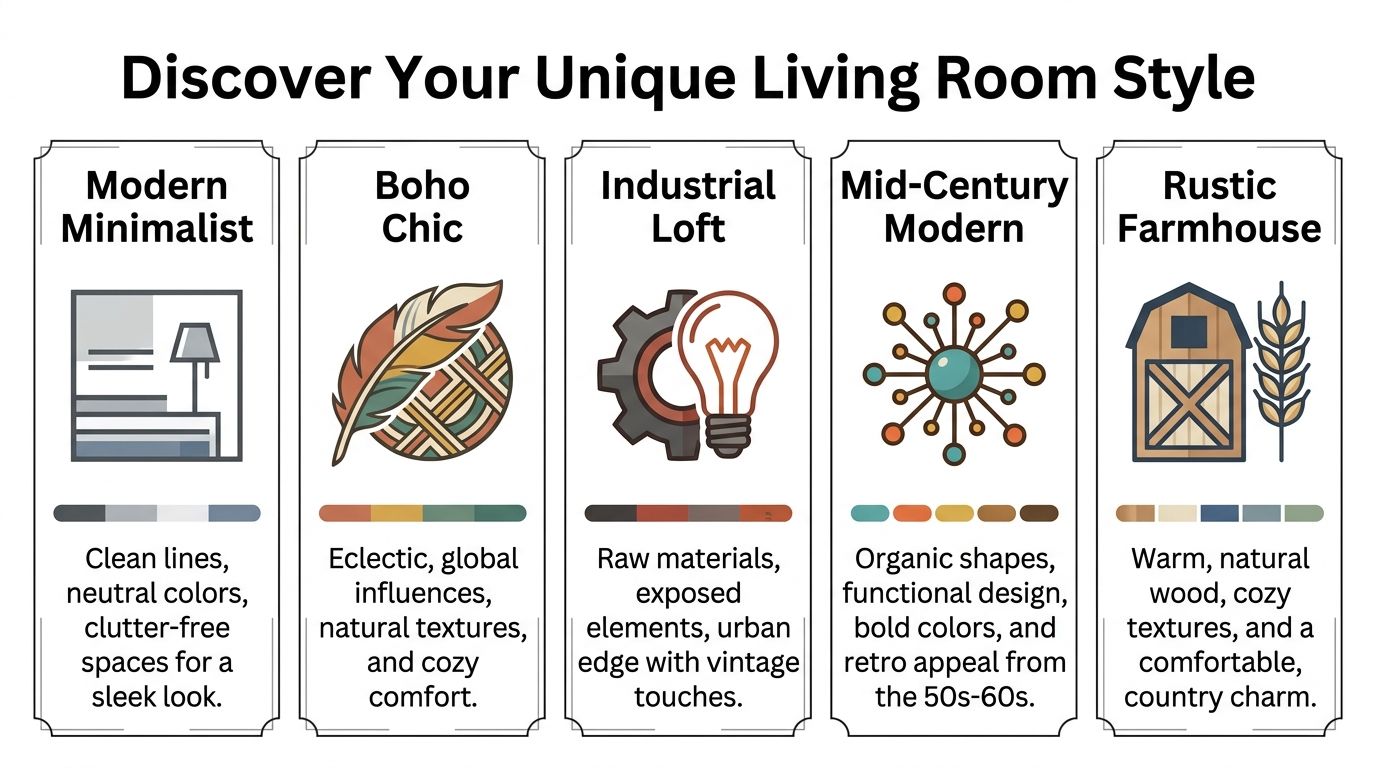
Start with the feeling, not the furniture
Ask yourself a simpler question than “What style am I?”
Ask, “How do I want this room to feel when I walk in?”
That answer usually lands in one of these directions.
| Style direction | Feels like | Furniture that helps create it |
|---|---|---|
| Modern rustic | Warm, grounded, relaxed | Solid wood tables, textured upholstery, earthy colors, sturdy bookcases |
| Cozy maximalism | Collected, expressive, cheerful | Patterned seating, layered accent tables, floral fabrics, art-filled walls |
| Timeless transitional | Calm, polished, easy to live with | Clean-lined sofas, classic wood finishes, well-fitted chairs, balanced shapes |
Modern rustic for warmth and texture
This style works especially well in Wisconsin homes because it doesn’t fight the architecture. It feels natural in a bungalow, a suburban family room, or a condo that needs some warmth.
Start with real wood. A cocktail table or console with visible grain instantly adds life. Then pair it with upholstery that feels soft and welcoming, not stiff.
Good pieces for this look include:
- A solid wood coffee table: It anchors the room and adds visual weight in a good way.
- A comfortable fabric sofa: Choose a shape that feels relaxed, not formal.
- A bookcase or entertainment wall in a medium wood tone: It adds storage and character at the same time.
Cozy maximalism for personality
Some rooms need more than calm. They need energy.
That’s where cozy maximalism shines. It doesn’t mean clutter. It means letting pattern, color, and collected pieces make the room feel alive. One sign of this shift is that floral sofas saw a 35% increase in designer specifications in 2025-2026 trend reporting, alongside a growing interest in laid-back curved seating that softens sharper modern lines, according to Decorilla’s living room trends report.
If you love this direction, you don’t need to go all-in overnight.
Try these moves first:
- Pick one statement seat. A floral sofa or patterned accent chair can do a lot of work.
- Use curves to soften the room. Rounded chairs, curved arms, and softer ottomans feel friendlier than rigid square shapes.
- Mix old and new. A fresh upholstered piece next to a vintage-style table keeps the room from looking too staged.
Practical rule: If you bring in one bold pattern, repeat its color somewhere else in the room so it feels intentional.
If you want a broader look at common style families before choosing pieces, our guide to types of furniture styles is a helpful place to sort out what you’re drawn to.
Timeless transitional for everyday ease
A lot of Milwaukee homeowners land here, even if they don’t call it that.
Transitional style blends classic shapes with simpler lines. It’s a smart choice if you want a room that feels current without chasing every trend. It also gives you room to update pillows, rugs, or accent chairs later without starting over.
This look often includes:
- a sofa with clean arms and a defined silhouette
- wood furniture with classic proportions
- a pair of chairs that complement the sofa instead of matching it exactly
- neutral foundations with a few stronger accents
How to know you picked the right direction
You picked the right style if it helps you say yes faster and no faster.
If a chair is lovely but doesn’t fit the feeling you want, skip it. If a table has the warmth or shape your room is missing, pay attention. That’s how unique living room furniture ideas become a real room instead of a folder full of saved photos.
The Secret to a Unique Look Is Quality Craftsmanship
A room can have interesting colors and smart styling and still fall flat if the furniture feels flimsy.
People notice quality, even when they can’t explain it. They see it in the shape of a table edge, the steadiness of a chair, the way a drawer closes, and the way a sofa keeps its form after real daily use.

Why well-made furniture stands out
Mass-produced furniture often aims to blend in. It’s built to be broadly acceptable. That’s different from furniture with craft behind it.
A handcrafted solid wood table has variation in the grain. An Amish-made bookcase has a sense of substance. A USA-made sofa often has a better feel in the seat and arms because the materials and build matter from the inside out.
That’s one reason quality pieces tend to look more distinctive. They weren’t made only to hit a price point. They were made to be used.
What to look for when you shop
You don’t need to be a furniture maker to spot strong craftsmanship. You just need to slow down and check a few basics.
- Weight and stability: A table or chair shouldn’t wobble when you touch it.
- Joinery and construction: Look at corners, drawers, and connections. Clean construction usually tells you a lot.
- Material honesty: Real solid wood looks and feels different from printed surfaces or heavily disguised materials.
- Seat support: On upholstery, sit for a moment. A good sofa should feel supportive, not hollow.
Better furniture usually reveals itself in the details you can touch, not in the tag line hanging off the arm.
Why solid wood changes the room
Wood furniture often becomes the quiet hero of a living room.
It adds texture without needing pattern. It gives the eye somewhere to rest. It also helps a room feel established instead of temporary. A media console in real wood, an Amish-made end table, or a substantial cocktail table can give a living room its backbone.
That’s why so many homeowners who start with upholstery eventually come back to add stronger wood pieces. The room starts to feel complete.
If you want to understand what separates real wood furniture from look-alikes, our article on the benefits of solid wood furniture breaks it down in plain language.
Unique often means lasting
Here’s something people don’t always expect. Furniture becomes more unique over time when you keep it.
The sofa where your family piles in for movies. The chair everyone picks first. The solid wood table that picks up a little life and character instead of falling apart. Those pieces become part of your home’s story.
That’s hard to get from furniture built for a short run. It’s much easier to get from pieces made with care, especially when they come from makers known for solid wood, thoughtful upholstery, and craftsmanship that holds up through everyday life.
Smart Furniture Ideas for Every Milwaukee Home
Not every living room challenge is about style. A lot of them are about fit.
Milwaukee homes come with all kinds of real-life issues. Tight staircases. Older doorways. Long narrow rooms. Condo layouts where every inch matters. Family rooms that need to handle kids, guests, naps, and movie nights all in one day.
That’s why some of the smartest unique living room furniture ideas start with flexibility.
When smaller scale makes the room feel bigger
Oversized furniture can swallow a modest room fast. The strange part is that people often buy large pieces because they’re worried small pieces will look skimpy.
Usually, the opposite happens. A room feels better when the scale is right.
Small-scale furniture helps because it leaves breathing room around each piece. That open space matters visually. It also makes the room easier to move through, easier to clean, and easier to enjoy.
A few smart choices for tighter spaces:
- Apartment-sized sofas: These keep seating comfortable without pushing too far into walkways.
- Narrow console tables: Great behind sofas or along walls where deeper storage would crowd the room.
- Smaller swivel chairs: They add seating without the visual weight of bulky recliners.
For more ideas focused on compact homes, you can browse our tips on best furniture for small spaces.
Why modular pieces make sense now
Modular and multifunctional furniture isn’t just a design buzzword. It solves real space problems. In one consumer survey, 46% of consumers preferred modular sofas, and that trend lines up with the rise of smaller urban living spaces, which have affected over 50% of new urban housing starts since 2015, according to Living Spaces.
That matters in practical terms.
A modular sectional can help you:
- Adapt the layout: Rearrange the room when your needs change.
- Handle tricky delivery paths: Some designs come apart for narrow halls or stair turns.
- Use corners better: Instead of forcing a standard sofa into a difficult room, modular pieces can follow the space more naturally.
Tougher furniture for busier households
Some households need more than style and scale. They need durability.
If you’ve got energetic kids, frequent guests, pets, or family members who need firmer support, heavy-duty furniture can make daily life easier. Stronger frames, supportive seat construction, and durable materials tend to hold their shape better under regular use.
That matters in senior living settings too. A chair that’s easier to get out of can be every bit as important as a chair that looks nice.
One room can solve more than one problem
Thoughtful shopping helps in such situations.
One well-chosen space can include:
| Need | Smart furniture move |
|---|---|
| Tight entry or stairs | Come-apart sofa or sectional |
| Smaller floor plan | Small-scale seating and slimmer tables |
| Busy family use | Heavy-duty upholstery and durable frames |
| Changing needs over time | Modular seating and movable ottomans |
BILTRITE Furniture-Leather-Mattresses offers categories like small-scale furniture, heavy-duty seating, and come-apart sofas and sectionals that address those exact fit issues in Milwaukee-area homes.
A distinctive room usually starts looking better when it starts working better too.
Make It Yours With Custom Options
Some of the most interesting living rooms don’t come from buying a full matching set off the floor.
They come from making a few smart choices that turn a good piece into your piece. That’s where customization helps.
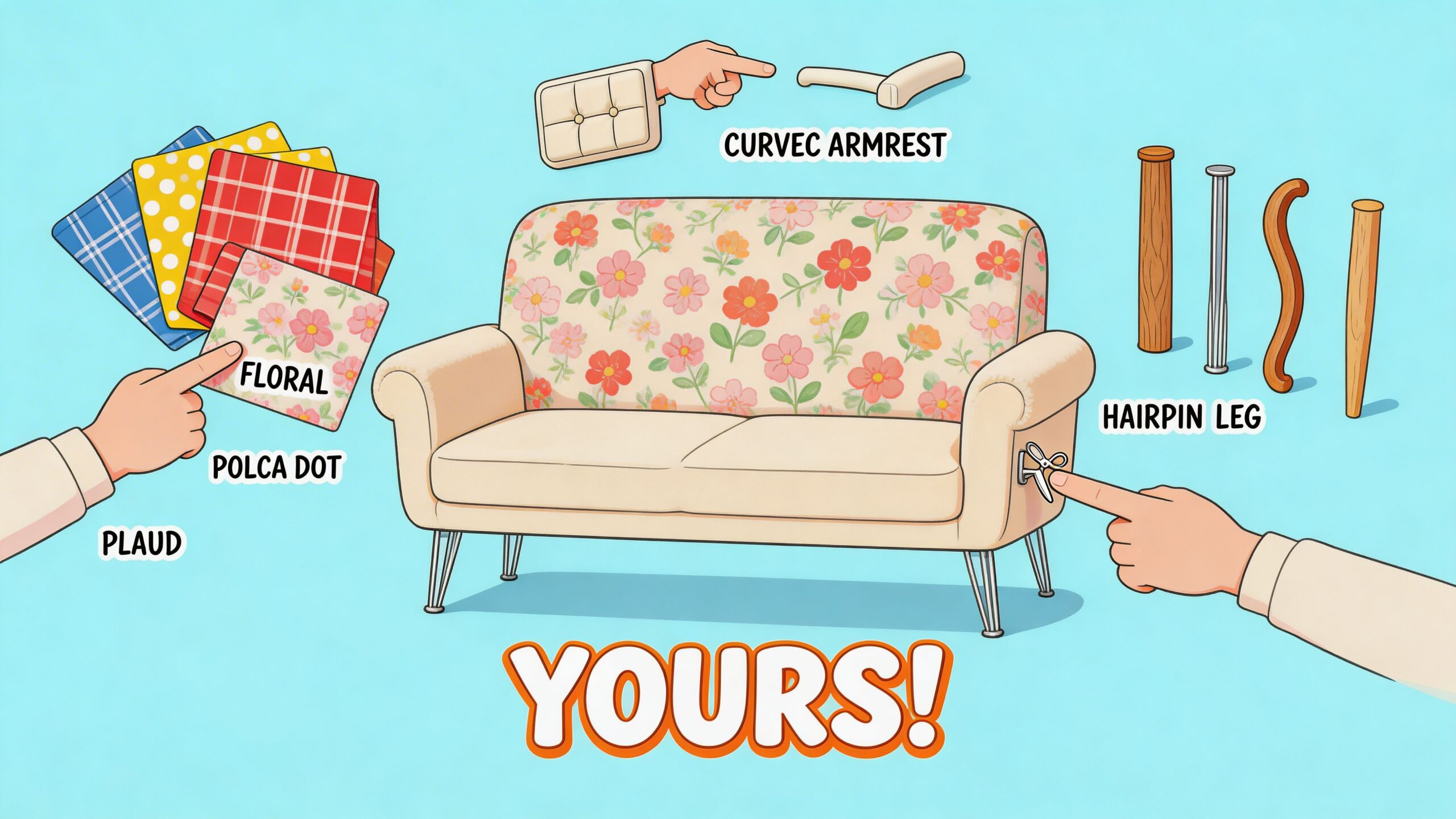
Why custom feels less intimidating than people expect
A lot of shoppers hear “custom” and think long delays, complicated decisions, and sky-high pricing.
Sometimes custom is much simpler than that. You begin with a frame or silhouette you already like. Then you choose the fabric, leather, wood finish, or hardware that fits your home better.
That approach has become more appealing. Since 2021, demand for custom and artisanal furniture has been described as rising sharply, with a 25% year-over-year surge in demand for handcrafted decor and 65% of high-end projects incorporating vintage or custom-made pieces, as noted earlier in the Decorilla trend reporting.
A simple way to customize without getting overwhelmed
If you’re new to custom furniture, use this order.
Choose the shape first
Start with comfort and size. Do you want deeper lounge seating, a cleaner defined look, or a smaller-scale frame?Pick the material for your life
A family with pets may want a forgiving fabric. Someone furnishing a formal sitting room may go in another direction.Think about the room’s quiet pieces
If the rug and walls are calm, your sofa fabric can speak up more. If the room already has pattern, a textured solid may work better.Finish with the details
Leg style, wood tone, nailheads, and hardware seem small, but they can push a piece traditional, casual, or more current.
Custom doesn’t have to mean loud
Personalized furniture isn’t only about making a bold statement.
Sometimes the smartest custom choice is subtle. A sofa in a warmer neutral. A recliner scaled a little better for the room. A solid wood table in a finish that works with your floor instead of fighting it. Those choices help the room feel cohesive, and cohesion is a big part of what people read as style.
One good custom decision can fix three problems at once: size, color, and personality.
Good customization starts with honest questions
Before you choose anything, ask:
- Who uses this room most often?
- Do I want this piece to blend in or lead the room?
- Will this material still make sense a few years from now?
- Am I choosing it because I love it, or because it feels safe?
Those questions lead to better answers than trend-chasing does.
If the process feels unfamiliar, our page on custom furniture made simple shows how to narrow options without making it stressful.
Solving Awkward Layouts with Smart Placement
Some living rooms are easy. Four walls, one focal point, no surprises.
Others have a half wall, a traffic path to the kitchen, a window exactly where the sofa should go, or a long narrow shape that makes every arrangement feel off. That doesn’t mean the room is doomed. It means placement matters more.
Start with movement, not the coffee table
Many individuals place the biggest sofa first and deal with the rest later. In awkward rooms, that can backfire.
Begin with how people move through the room. For a functional layout, walkways between large furniture pieces should generally stay at 30 to 36 inches, according to Coleman Furniture’s layout guidance. In tighter spaces, keeping clear paths still matters even when you can’t make everything roomy.
That one rule helps explain why some rooms feel calm and others feel cramped.
Common room problems and smarter fixes
| Layout problem | What often goes wrong | Smarter move |
|—|—|
| Long and narrow room | All furniture gets pushed against the walls | Float the sofa and create a conversation area |
| Open-concept space | The living area feels undefined | Use a sectional or console to mark the zone |
| L-shaped room | One corner becomes wasted space | Break the room into two useful areas |
| Tight doorway or turn | Furniture choice gets limited before layout even starts | Choose pieces that fit access points more easily |
Use furniture to shape the room
In open layouts, the back of a sofa can act like a soft boundary. It tells the eye where the living space begins without closing the room off.
In long rooms, two chairs facing a sofa can create a real destination. Suddenly the room feels like a conversation space instead of a hallway with cushions.
Modular furniture can help a lot here. It can reduce wasted square footage by 15% to 25% compared with fixed arrangements, which is especially useful in apartments, condos, and senior living spaces, according to the same Coleman guidance above.
Don’t force the room to behave like a square if it isn’t one. Let the layout respond to the architecture you have.
A few placement habits worth keeping
- Pull furniture off the walls when possible: Even a small gap can make a room feel more intentional.
- Match table size to seat depth: Tiny tables beside deep chairs often look accidental.
- Use ottomans flexibly: They can act as a coffee table, extra seating, or a soft edge in a tighter plan.
- Keep one visual anchor: A fireplace, media console, big window, or bookcase gives the arrangement a reason to exist.
Awkward rooms usually improve when you stop trying to copy a catalog layout and start reading the room itself.
Come Find Your Unique Style at BILTRITE!
A memorable living room usually comes together one good decision at a time.
You find a style direction that feels natural. You choose furniture with real substance. You solve the fit problems that make daily life annoying. Then you add the details that make the room feel like home instead of a display.
That process should feel exciting, not stressful.
We’ve been part of the Metro Milwaukee community since 1928, and we still believe furniture shopping works better when you can sit in the chair, feel the fabric, open the drawer, and talk with someone who knows the difference between a piece that looks good for a season and one that will serve your family well for years.
What many shoppers appreciate most
Some people come in with photos and paint swatches. Others walk in saying, “I know I need something different, but I don’t know where to start.”
Both are normal.
What helps is being able to compare real options side by side, especially if you’re looking for:
- USA-made upholstery
- Amish-made solid wood furniture
- Small-scale pieces for condos, apartments, or senior living
- Heavy-duty seating and mattresses
- Affordable custom choices in fabric, leather, wood, and finish
Why in-person still matters
Furniture is tactile. Comfort is personal. Scale is easier to judge when you’re standing in front of the piece.
That’s one reason we don’t sell online. We’d rather help you make a confident choice in person than ask you to guess from a screen. It’s also why our showroom experience matters so much to us.
Our team brings generations of knowledge to those conversations, and the goal is simple. Help you find furniture that fits your room, your routine, and your taste.
A room you enjoy every day is worth the effort
The nicest compliment we hear isn’t about trends. It’s when someone says their living room finally feels comfortable, welcoming, and like their family.
That’s the sweet spot.
Unique living room furniture ideas don’t need to be flashy. They need to feel honest, well chosen, and suited to the home they’re in. For some homes that means a custom sofa. For others it means a come-apart sectional, a smaller-scale recliner, or an Amish-made wood piece that gives the room its backbone.
If you’re in Greenfield or anywhere around Metro Milwaukee, we’d love to help you sort through the options in person.
Come see BILTRITE Furniture-Leather-Mattresses in Greenfield and explore living room furniture that fits your space, your style, and your everyday life. Our family has been helping Milwaukee-area neighbors since 1928, and we’re always happy to talk through layouts, materials, comfort, and custom options with you.