Small Space Baby Furniture: A Milwaukee Parent’s Guide


A lot of Milwaukee-area parents start in the same spot. They stand in a small spare bedroom, a corner of the primary bedroom, or a former office and think, “How is a crib, storage, and a safe changing spot all supposed to fit in here?” The good news is that a nursery doesn't need a huge footprint to work well. It needs a smart plan.
That's where thoughtful small space baby furniture choices make a real difference. Families are clearly investing in nursery spaces that feel safe and practical. The global baby furniture market is projected to reach USD 68.5 billion by 2034, with cribs accounting for 32.5% of sales, and North America reached USD 14.86 billion in 2024 according to baby furniture market data from Market.us. That tells a simple story. The crib is still the center of the room, and the rest of the layout has to work around it.
For local families, the challenge usually isn't style. It's fitting daily life into a tight room without creating hassle at 3 a.m. Since 1928, BILTRITE has helped Metro Milwaukee families think through real rooms, real measurements, and real long-term value. A nursery can be charming, calm, and functional without stuffing every inch with furniture.
Table of Contents
- Welcome to Your Wonderful Small Nursery Journey
- Measure Twice Buy Once A Practical Plan
- Choosing Your Crib The Heart of the Nursery
- Smart Storage and Changing Station Solutions
- Safety Materials and Finding The Right Mattress
- Why USA and Amish Made Is a Smart Investment
- Your Milwaukee Shopping Questions Answered
Welcome to Your Wonderful Small Nursery Journey
A small nursery can feel limiting at first. Then the room starts to reveal its possibilities. One wall fits the crib. A dresser can double as a changing station. A narrow shelf can hold the items used every day. The room doesn't have to do everything. It just has to support daily care in a calm, safe way.

Many parents get stuck because they shop by label instead of function. “Mini crib,” “compact dresser,” and “nursery set” can sound helpful, but those labels don't answer the question that matters most. Will the room still work when someone is tired, carrying a baby, reaching for a swaddle, and trying not to trip over a basket?
What a small nursery really needs
The strongest nursery plans usually focus on a few basics:
- A safe sleep zone: The crib needs to fit the room and still allow comfortable access.
- A changing spot nearby: Late-night diaper changes are easier when supplies stay within reach.
- Closed or tidy storage: Fewer loose items on the floor means less visual clutter and fewer obstacles.
- A clear walking path: The center or main route through the room should stay easy to use.
A beautiful nursery matters, but a useful nursery matters more during the first sleepy weeks at home.
Why smart choices matter more than room size
A larger room can hide bad decisions. A small room can't. That proves helpful, because it pushes families to choose furniture with a clear job. One strong piece often beats two flimsy ones. A dresser that stores clothing and supports a changing pad may serve the room better than a separate changing table plus extra bins.
That practical mindset fits how many local shoppers already think. They want value, solid construction, and furniture that still feels useful after the newborn stage passes. That's especially true in condos, bungalows, duplexes, and smaller Milwaukee-area homes where every room has to earn its keep.
Measure Twice Buy Once A Practical Plan
Before any family picks finishes or styles, the room needs a map. This step saves frustration later. It also prevents the classic small-room mistake of buying furniture that technically fits, but blocks a door swing, outlet, or caregiving path.
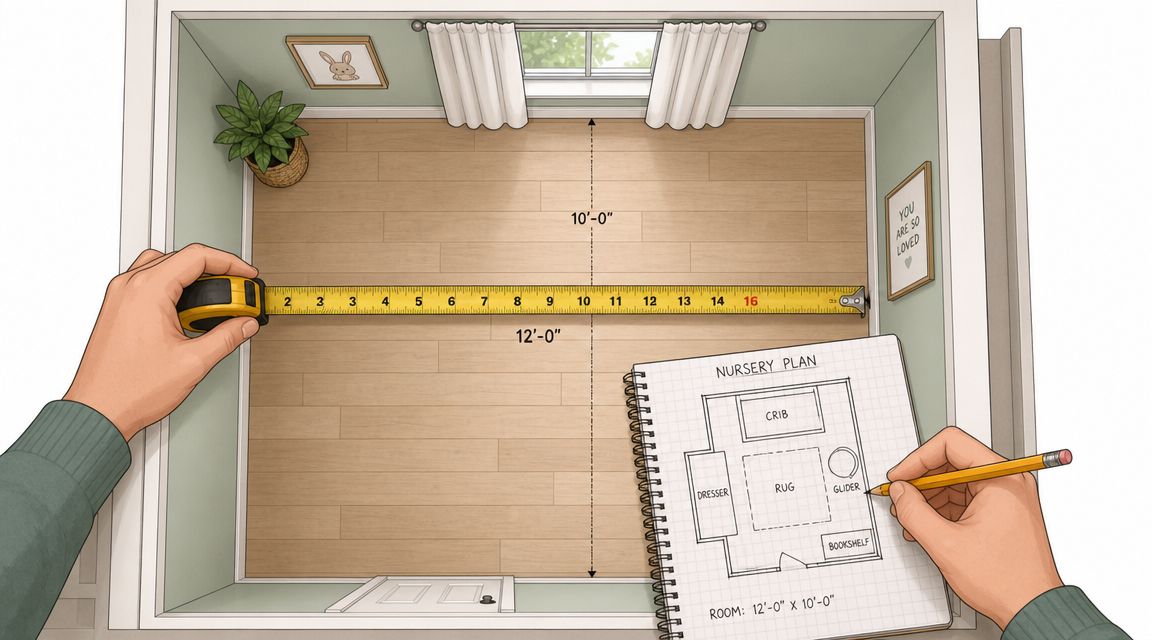
Many nursery guides focus on furniture dimensions alone, but the bigger issue is caregiver workflow. As noted in small nursery planning guidance from Mamas and Papas, the room has to support safe, efficient movement during nighttime care. In plain terms, a room can look good on paper and still be annoying or unsafe to use.
Start with a basic floor sketch
A hand-drawn sketch is enough. It doesn't need to be fancy. It just needs to show what can't move.
Mark these on paper first:
- Walls and overall room size: Write down length and width.
- Door swings: A door that opens into the room affects placement more than many people expect.
- Windows and trim: Crib placement should respect those fixed features.
- Radiators, vents, and outlets: These shape where furniture can safely go.
- Closet doors or access points: Don't trap storage behind another piece.
Families that need help with the basics can use BILTRITE's guide on how to measure furniture before delivery and placement to think through both room fit and access into the home.
Think in walking routes, not just rectangles
A nursery gets easier when the layout follows the order of real tasks. Someone walks in. Someone reaches the crib. Someone changes a diaper. Someone grabs a clean sleeper. That path should feel simple.
Try this room test:
- Stand at the doorway: Is there a clean path to the crib?
- Pretend it's dark: Would a basket, stool, or toy bin catch a foot?
- Reach the changing area: Are wipes, diapers, and extra clothes close enough to grab one-handed?
- Check outlet access: Chargers, sound machines, or lamps shouldn't require awkward furniture placement.
Practical rule: The room should support tired adults just as much as it supports a sleeping baby.
Leave room around the crib
Compact furniture helps, but clearance matters too. One nursery planning guide recommends leaving at least two feet of space around the crib for easier movement and caregiving, and it also notes the importance of a snug mattress fit and safe spacing details for crib construction. That advice appears in this crib selection guide.
That doesn't mean every wall needs wide open space. It means the useful side of the crib, the side where a caregiver stands, shouldn't be squeezed by another piece.
Keep the center calmer than expected
A small nursery often works better with less in it. Parents sometimes try to solve a storage problem by adding more containers, more shelves, and more little furniture. The result can be a room that feels busy and harder to move through.
A calmer setup usually includes:
- One main storage piece
- One crib
- One changing surface
- A small chair or none at all, depending on the room
That simple plan gives the room breathing room. In a small nursery, open floor space isn't wasted space. It's functional space.
Choosing Your Crib The Heart of the Nursery
The crib drives almost every other decision in the room. Once its size, shape, and placement are set, the dresser, storage, and walking path tend to fall into place. That's why crib shopping in a smaller nursery should start with use case first and looks second.
There's also a clear market shift toward flexible crib designs. The baby cribs and cots category has been valued at USD 1.87 billion in 2026 and projected to reach USD 3.16 billion by 2034, while another analysis projects growth of USD 701.2 million between 2023 and 2028 at a 4.5% CAGR. The same research highlights product mix details such as portable cribs holding about 26% of the market, and it notes that the wood segment held 45.7% of the global baby cribs market in 2025. Those figures from Fortune Business Insights on baby cribs and cots suggest that families still value durability even while seeking compact options.
Three crib types that solve different problems
A small room doesn't always need the smallest crib. It needs the right crib.
Mini or non-full-size crib
This option works well when the room is very tight and every inch counts. It can free up wall space for a dresser or make it easier to preserve a walking path. The tradeoff is that mattress fit becomes more specific, and long-term use can differ by model.
Portable crib
This choice makes sense for renters, shared sleeping arrangements, or rooms that need flexibility. A portable crib can be useful when the baby's setup may move between spaces. It's often less visually heavy, which helps a compact room feel less crowded.
Convertible crib
This is often the strongest long-view choice for families who want one purchase to serve more than one stage. A crib that transitions into the next stage of childhood can reduce replacement cycles and make better use of the money spent.
A simple way to choose
Shoppers often narrow the crib choice faster by asking one honest question: what problem is the crib solving?
- If the biggest problem is floor space, a mini crib may fit the room better.
- If the biggest problem is flexibility, a portable crib may make daily life easier.
- If the biggest problem is replacing furniture too soon, a convertible crib often deserves the closest look.
The right crib should reduce stress in the room, not just reduce inches on a spec sheet.
Why material still matters in a compact nursery
Smaller furniture doesn't have to mean temporary furniture. That's where many families get tripped up. They buy for footprint alone, then end up replacing the piece sooner than expected.
Wood remains a leading choice in the crib market, and that makes sense for practical reasons. A well-built wood crib often feels steadier, ages more gracefully, and blends better with future room updates. In a nursery that may later become a toddler room or child's bedroom, that kind of staying power matters.
Smart Storage and Changing Station Solutions
A small nursery gets easier when each piece handles more than one job. That's why the most useful rooms often skip the old idea of a separate changing table plus a separate dresser plus extra floor bins. In a tight layout, furniture has to pull double duty.
A common example works well because it's simple. A medium dresser sits against the wall. A secure changing pad goes on top. Drawers hold sleepers, burp cloths, swaddles, and diaper supplies. The family gains storage and a changing area without dedicating precious floor space to another stand-alone piece.
The pieces that usually earn their place
These storage choices tend to work well in compact nurseries:
- Dresser with changing pad: This combines everyday storage with diaper-duty convenience.
- Tall narrow storage: Vertical pieces use wall height instead of spreading across the room.
- Wall shelves: These keep books, baskets, or keepsakes off the floor.
- Under-crib or tucked-away bins: Soft goods and backup supplies can stay nearby without crowding the main path.
Families comparing drawer layouts and organizing features may find helpful ideas in BILTRITE's overview of bedroom furniture storage features to know before buying.
Changing Station Options for Small Nurseries
| Feature | Dresser with Changing Pad | Dedicated Changing Table |
|---|---|---|
| Floor space use | Uses one footprint for two jobs | Adds another furniture footprint |
| Storage | Usually better for clothes and supplies | Often limited to shelves or baskets |
| Long-term usefulness | Can stay useful after diaper years | May lose its purpose sooner |
| Room flexibility | Easier to style as the room changes | More specialized |
| Best fit | Families who want efficiency | Families who want a dedicated station |
Keep the diaper zone tight and tidy
The changing area works best when the most-used items are close by and the extras are stored elsewhere. A room doesn't need every diaper box, every cream, and every extra blanket visible at once.
A practical setup often includes:
- Top drawer: Daily diapering supplies
- Second drawer: Clothes and backup sleepers
- Shelf or small basket nearby: A few essentials for quick grabs
- Higher shelf: Less-used extras
A good changing setup saves steps. A great one saves steps while keeping the floor clear.
That's the hidden power of smart storage in a nursery. It doesn't just make the room look neat. It makes caregiving easier.
Safety Materials and Finding The Right Mattress
Safety gets more important in a small nursery, not less. Furniture sits closer together. The baby is close to walls, windows, cords, and storage. A mattress that doesn't fit right or a crib that isn't matched to the proper mattress size can create a serious problem in a room where there isn't much margin for error.
For that reason, shoppers should treat non-full-size cribs as their own regulated category, not as a casual smaller version of a standard crib. The U.S. Consumer Product Safety Commission explains that a non-full-size baby crib has specific dimensional criteria and must meet rules that incorporate ASTM F406. The same guidance also means parents need a mattress designed for that specific crib model so gaps don't develop. That information appears in CPSC guidance for non-full-size baby cribs.
What shoppers often miss about mattress fit
The mattress question confuses people because crib names vary so much. A family sees “compact,” “mini,” or “space-saving” and assumes the mattress search will be simple. It often isn't.
The most important checks are straightforward:
- Match the mattress to the crib model: Don't assume a mattress labeled for mini cribs fits every non-full-size crib.
- Look for a snug fit: A mattress should sit firmly within the crib without dangerous gaps.
- Check construction details: Safe crib design includes proper spacing and secure components.
- Read measurements carefully: Exterior crib size and interior sleep surface are not the same thing.
Families comparing support, construction, and fit across sleep products can use BILTRITE's guide on how to choose the right mattress for long-term comfort as a starting point for asking better questions in-store.
Why materials deserve close attention
In a nursery, finishes and construction aren't small details. They're everyday details. Hands touch rails. Babies teethe on edges. Parents lean over the crib and changing area several times a day. Quality materials matter because this furniture gets close, frequent contact.
Solid wood furniture often appeals to families for practical reasons. It tends to feel sturdier, and it usually holds up better through years of use. In a compact nursery, that stability can be reassuring because each piece is used hard and seen constantly.
Safety starts with fit. After that, it continues with sound construction and materials a family can trust in daily use.
Why USA and Amish Made Is a Smart Investment
Small-space shopping sometimes pushes families toward the cheapest option on the floor. That reaction makes sense in the moment. A tiny room can feel temporary, especially when the baby stage moves so quickly. But short-term thinking often costs more when a piece wobbles, chips, or stops being useful too soon.
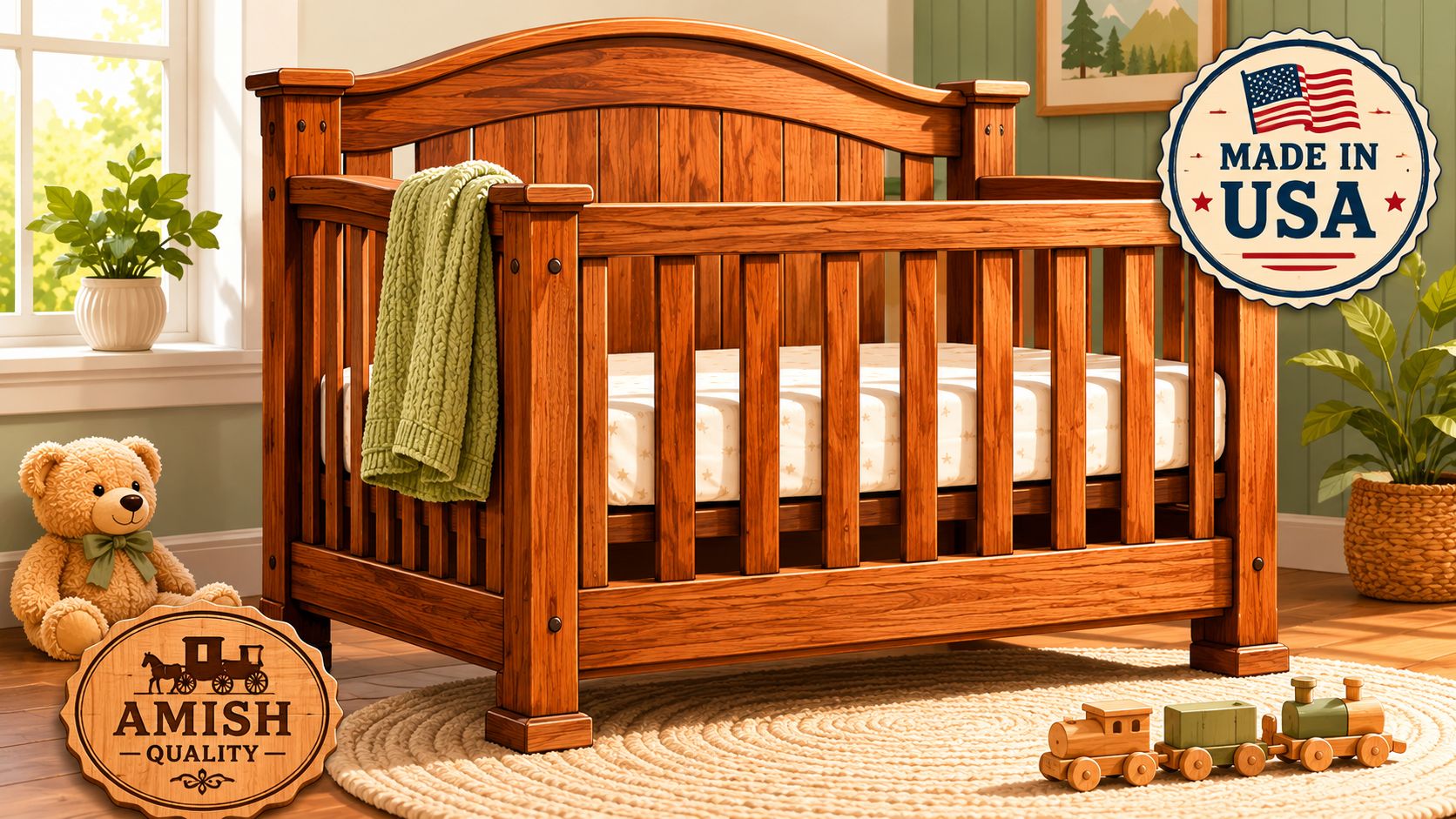
One overlooked question is how long the furniture will stay valuable. A practical nursery may benefit more from a smaller, better-built piece than from the absolute smallest item available. That idea appears clearly in this look at small-space nursery hacks and long-term value, which notes that a better-built solid-wood piece can remain useful for years instead of being replaced after 12 to 24 months.
Why durability matters more in a smaller room
In a large room, one weak piece can hide among other furniture. In a small nursery, every piece gets more use and more attention. A dresser opens constantly. A crib anchors the whole layout. Storage has to stay dependable because there isn't extra room for backup solutions.
That's why USA-made and Amish-made furniture often makes sense for this category. The focus is usually on lasting construction, solid materials, and cleaner function over throwaway trends. For families trying to stretch a furniture budget wisely, that can be a stronger value than buying a lower-cost piece twice.
A smarter way to think about cost
The true comparison isn't always “small crib versus big crib” or “dresser versus changing table.” Often it's this:
- Temporary fix: Lower upfront cost, shorter usefulness
- Longer-life piece: Better materials, broader usefulness over time
That long-view mindset fits what many Metro Milwaukee shoppers want from a nursery. They may be furnishing a first home, a condo, or a smaller bungalow, but they still want pieces that feel grounded and dependable.
BILTRITE Furniture-Leather-Mattresses offers furniture with a strong emphasis on USA-made, Amish-made, and solid-wood construction, and families exploring that route can read more about the advantages of buying furniture made in the USA.
What long-term value can look like
A crib that converts. A dresser that stays in the child's room later. A solid-wood piece that still looks at home after the nursery décor changes. That's where investment starts to feel practical instead of fancy.
For many families, the smartest small-space baby furniture isn't the tiniest option. It's the option that still makes sense a few years from now.
Your Milwaukee Shopping Questions Answered
Why shop for nursery furniture in person
Small-space furniture is hard to judge from a photo alone. Drawer depth, rail height, finish tone, and overall scale can look very different on a screen than they do in a room. That's one reason many local shoppers still want to visit a showroom, open drawers, walk around pieces, and compare sizes side by side.
For Milwaukee-area families who want to plan an in-person visit, BILTRITE's Milwaukee furniture store information page covers location details and helps shoppers prepare before heading to Greenfield.
What to bring to the showroom
The most helpful thing a shopper can bring isn't a paint swatch. It's a set of measurements.
A strong visit usually starts with:
- Room dimensions: Length and width of the nursery
- Doorway measurements: Both inside the home and into the nursery
- Window and radiator notes: These can affect crib placement
- A quick sketch or phone photo: Even a simple snapshot helps
- A short priority list: Storage, convertibility, or footprint
That information helps narrow choices fast. It also keeps the conversation focused on what will work in the room.
Why Sundays matter to this family business
BILTRITE has been family-owned since 1928, and that family-first identity still shapes how the business operates. The showroom is closed on Sundays and Mondays, a choice that reflects the value placed on time with family. For many shoppers, that isn't just a scheduling note. It tells them something about the kind of business they're walking into.
What kind of help shoppers can expect
Some furniture shopping feels rushed. A better experience feels like a useful conversation. Local families often want help answering practical questions such as whether a dresser can double as a changing station, whether a crib will overpower the room, or whether a solid-wood piece is worth the extra spend.
BILTRITE's team brings more than 400 years of combined experience, and the store's mattress department includes over 60 models. Those facts matter because shoppers with a small nursery usually don't need more options thrown at them. They need somebody to help narrow the field.
The best store visit for a small nursery usually starts with measurements and ends with fewer regrets.
Is this only for large homes or bigger budgets
Not at all. Smaller homes often benefit the most from thoughtful furniture choices because each piece has to do more. A compact nursery can still hold quality furniture, especially when the family focuses on fewer, more capable pieces instead of trying to buy an entire matching set.
That approach fits a lot of homes across Metro Milwaukee, from apartments and condos to classic family houses with smaller bedrooms.
If a small nursery is starting to feel like a puzzle, that's exactly the kind of challenge BILTRITE enjoys helping families solve. Since 1928, this fourth-generation, family-owned business has served Metro Milwaukee with affordable, better-quality furniture, including USA-made, Amish-made, and solid-wood options that suit real homes and real life. Visitors are welcome to bring room measurements, ask questions, and explore pieces in person at the Greenfield showroom. Learn more or plan a visit at BILTRITE Furniture-Leather-Mattresses.