How to Get Urine Smell Out of a Mattress

That sinking feeling when you discover a pet accident or a potty-training mishap on the mattress is something we all dread. Don't panic! Here at BILTRITE, we've been helping Milwaukee families create comfortable, long-lasting homes since 1928, and we know a thing or two about keeping furniture fresh.
Think of us as your friendly neighborhood furniture experts. Our team has over 400 years of combined experience, and we’ve heard just about every furniture-related story you can imagine! The single most important thing to remember is that speed is your best friend.
Your Immediate Action Plan for Mattress Accidents
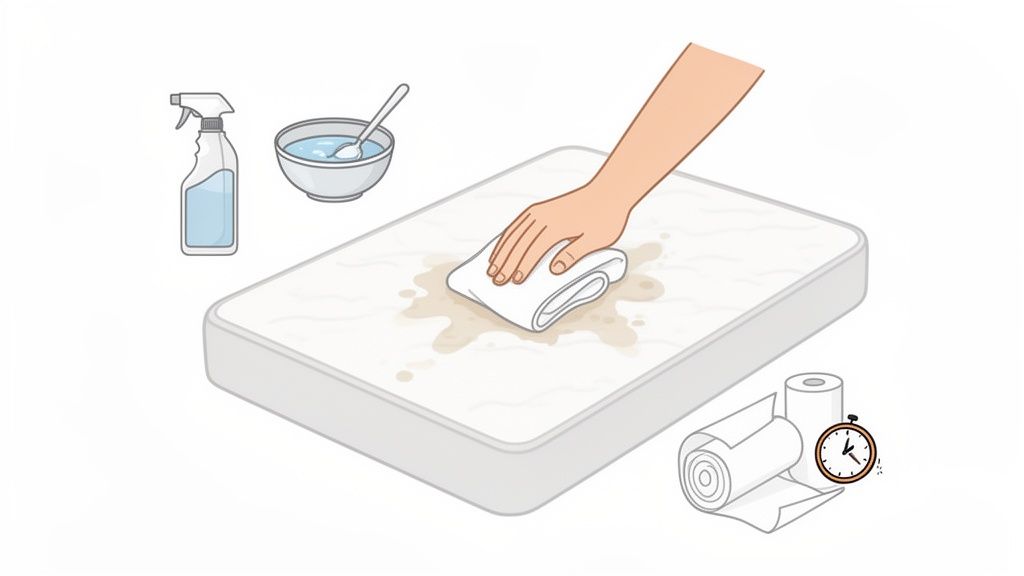
Blot, Don't Scrub
Your first instinct might be to grab a wet cloth and start scrubbing furiously. Please don't! Scrubbing actually grinds the urine deeper into the mattress fibers, which locks in the stain and smell, making them much harder to remove later.
Instead, your new mantra is: blot, blot, blot.
- Grab a few clean, dry towels or a thick stack of paper towels.
- Press down firmly on the wet spot to soak up as much liquid as you can.
- Lift, move to a dry section of the towel, and press again.
- Keep doing this until you can't pull any more moisture out of the mattress.
This one step makes a world of difference in preventing the urine from setting deep into the core of your mattress. It's a lot like stopping a spill before it becomes a permanent part of the carpet—quick containment is everything.
Why Quick Action Is So Important
Urine contains uric acid crystals, which are stubborn little things that don't dissolve in water. Once the liquid part of the urine evaporates, these sharp crystals are left behind. They're the real source of that persistent, unpleasant odor that seems to reappear on humid days.
By blotting immediately, you're physically removing as much of the uric acid as possible before it has a chance to bond with the mattress fibers. This simple act sets you up for a much more successful deep clean later.
Acting fast not only tackles the smell but also helps prevent permanent staining, especially on lighter-colored mattresses. Taking just a few minutes for this initial damage control will save you a ton of headaches down the road.
For more advice on keeping your bed in great shape, check out our guide on mattress maintenance and cleaning tips. A little bit of care goes a long way in preserving the life of your mattress.
Using DIY Solutions to Neutralize Urine Odors
Alright, you’ve blotted up the initial mess—great job! Now, before you think about reaching for harsh chemicals, let's head to the pantry. As a family-owned business serving the Milwaukee area since 1928, we’ve learned that some of the most effective solutions are the simplest and safest for your home.
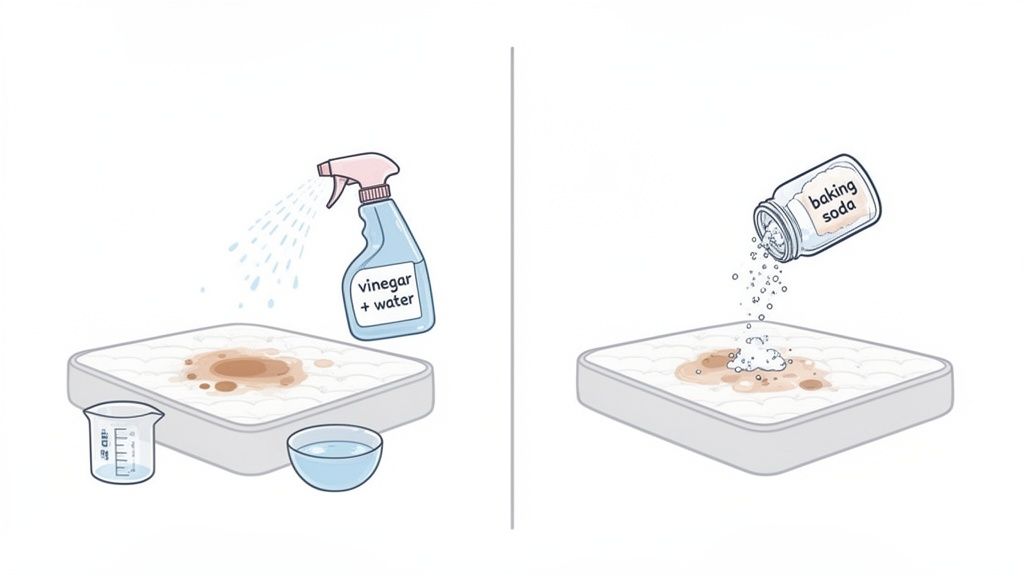
You don't need a complicated concoction to get that smell out. Two household superstars, white vinegar and baking soda, are about to become your best friends in this cleaning adventure.
The Vinegar Solution: A Natural Odor Neutralizer
First up is good old white vinegar. You might be thinking, "Won't that just make my mattress smell like a salad?" It's a fair question! But the vinegar smell completely disappears as it dries, and what it does in the meantime is pure magic.
The acidic nature of vinegar works to break down the alkaline uric acid crystals in urine—the very things causing that stubborn, lingering odor. It neutralizes the smell at its source rather than just masking it.
Here’s how to mix and use it:
- Find a clean, empty spray bottle.
- Fill it with a simple 50/50 mixture of white distilled vinegar and cool water.
- Lightly mist the affected area. You want it damp, but not soaked through.
Let that solution sit for about 10-15 minutes. This gives the vinegar time to really work on those pesky uric acid crystals. Don't worry about blotting this up just yet; the next step will take care of the moisture.
The Baking Soda Trick: Absorbing Lingering Smells
Now it’s time for the heavy lifter of odor absorption: baking soda. This isn't just for baking; it's a fantastic, all-natural deodorizer that will pull the remaining moisture and the neutralized urine smell right out of your mattress.
Baking soda is a household hero because its alkaline pH of 8.3 directly counters urine's acidic nature, allowing it to absorb up to 2-3 times its weight in smells. One study found that 78% of people successfully removed fresh urine odors using this method after blotting, reducing the smell by 95% when the baking soda was left on for 5-10 hours.
A Tip from the BILTRITE Team: We tell our customers all the time—don't be shy with the baking soda! A thin dusting won't cut it. You want a generous, even layer that completely covers the damp, vinegar-treated area. More is definitely more here.
Once you’ve applied the baking soda, the hardest part begins: waiting. For the best results, you need to let it sit for at least 8-10 hours, or even overnight if possible. This extended time allows it to fully absorb all the moisture and any remaining odors.
After it has sat for several hours, grab your vacuum cleaner with the upholstery attachment and thoroughly vacuum up all the dried baking soda. Your mattress should be left smelling fresh and clean. For a deeper dive, you can also learn how to remove smells from your mattress with our other tips.
Time to Bring in the Big Guns: Enzyme Cleaners
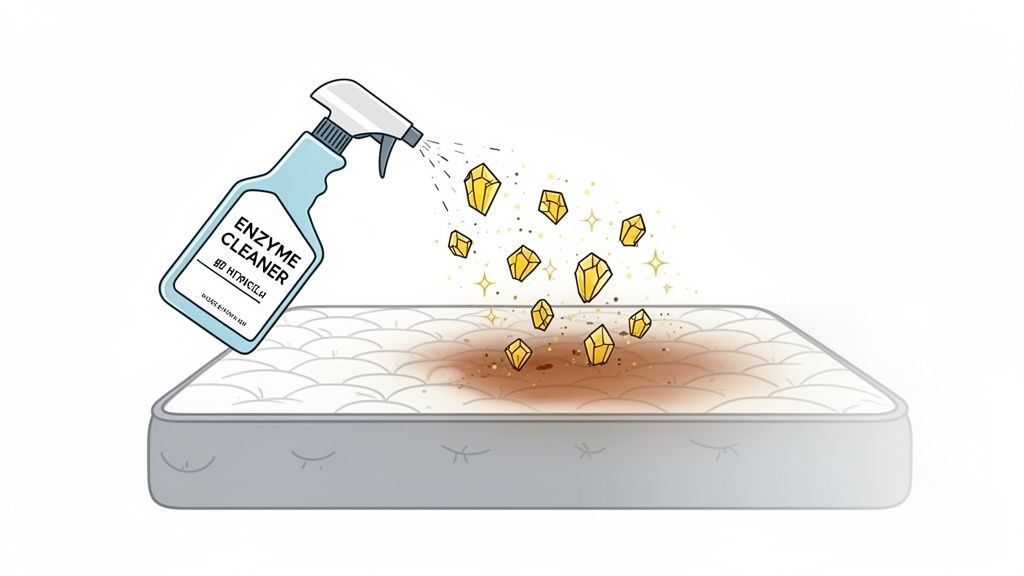
Sometimes, no matter what you try, a faint, lingering odor just won't go away. Or maybe you’ve just stumbled upon an old, dried stain from a pet or child you never knew was there. This is the moment you stop messing around and grab the secret weapon for stubborn, set-in urine smells: an enzyme cleaner.
Here at BILTRITE, we’ve been helping Milwaukee families find the right furniture since 1928, so we've heard it all. We know some problems require a bit more firepower. Think of enzyme cleaners as your microscopic cleanup crew, ready to get to work when vinegar and baking soda just aren't cutting it against an old, deep-set stain.
What Makes Them So Different?
Unlike standard cleaners that just mask odors with perfumes, enzyme cleaners operate on a whole different level. They contain beneficial bacteria that produce enzymes, which are biological catalysts designed to break down and literally "eat" organic messes.
When it comes to urine, these enzymes specifically target and destroy uric acid crystals—the real source of that sharp, persistent smell that seems to come back on humid days. The cleaner isn’t just covering up the smell; it's eliminating the source. This is why it’s so incredibly effective on old stains that have had months, or even years, to bond with mattress fibers.
One analysis showed these cleaners can achieve a 98% odor elimination rate on old stains, a huge jump compared to the 55% effectiveness of typical peroxide solutions. That's because they digest the proteins at a molecular level, getting rid of the uric acid that can linger in 65% of untreated stains.
How to Choose and Use an Enzyme Cleaner
When you’re browsing the cleaning aisle, look for a formula specifically made for pet or human urine. These will have the correct enzymes to break down uric acid effectively.
Using an enzyme cleaner isn't a simple spray-and-wipe job. To get the results you want, you need to give the enzymes the right environment and plenty of time to work their magic.
- Saturate, Don't Just Spritz: You have to apply enough cleaner to soak the stained area completely. The goal is to reach as deep as the original urine did, ensuring the enzymes make contact with all the uric acid crystals.
- Keep It Damp: The enzymes are living organisms and need moisture to stay active. After soaking the spot, cover it with a damp towel or even a piece of plastic wrap. This stops the cleaner from evaporating too quickly, giving the enzymes more time to work.
- Be Patient: This is not a quick fix. You need to let the cleaner sit for at least 12-24 hours. For really old or powerful odors, you might need to leave it for a couple of days. Don't rush it!
- Let It Air Dry: Once the time is up, remove the cover and let the mattress air dry completely. This can take a while, but it's a non-negotiable step for the process to succeed.
We always tell our customers that using an enzyme cleaner is a "low and slow" process, kind of like good Wisconsin barbecue! You have to give it time to work properly, but the results are absolutely worth the wait, especially when it means saving a mattress you thought was a goner.
Once the mattress is bone dry, that nasty smell should be gone for good. And if you're looking for other ways to keep your bed fresh, you might be interested in our tips for creating your own DIY mattress cleaner.
The Final Step: Drying and Deodorizing Your Mattress
You've successfully treated the stain and neutralized the initial odors—great work! But hold on, the job isn't quite finished. This final stage is just as important as the cleaning itself because a damp mattress is a recipe for mold and mildew. As a family business that’s been helping Metro Milwaukee folks since 1928, we want to make sure your hard work pays off and you're left with a truly clean and fresh bed.
The key to this step is simple: patience. Rushing the drying process can trap moisture deep within the mattress fibers, leading to a musty smell that's a whole new problem. You need to ensure your mattress is bone-dry all the way through before putting any bedding back on it.
Getting It Completely Dry
Your goal here is to get as much air circulating around the mattress as possible to speed up evaporation. The more air that moves over the surface, the faster it will dry.
Here are a few friendly, practical ways to do it:
- Open the Windows: If it’s a nice day in Milwaukee, open the windows in the room to get a natural cross-breeze going. Fresh air is your best friend.
- Bring in the Fans: Position one or two fans to blow directly across the damp area. This is the most effective way to keep air moving and pull moisture out of the mattress.
- Use a Dehumidifier: If you have a dehumidifier, now is the time to use it! Place it near the bed to help pull moisture out of both the mattress and the air, which can significantly speed up drying time.
- Sunlight Can Help: If you can safely move the mattress to a spot where it can get some direct sunlight for a few hours, this is a fantastic natural disinfectant and drying aid. Just be careful not to leave it out for too long, as prolonged sun exposure can sometimes damage certain mattress materials.
Here’s a little tip from our team: To check for deep dampness, press down firmly on the treated area with a dry towel. If the towel picks up any hint of moisture, it’s not ready yet. Keep the air flowing and give it more time!
One Last Deodorizing Pass
Once you're absolutely certain the mattress is completely dry, it's time for one final touch to ensure it smells wonderfully fresh. We're going to circle back to our trusty friend, baking soda, for a final deodorizing treatment. This step will absorb any faint, lingering odors that might have survived the cleaning process.
Simply sprinkle another generous, even layer of baking soda over the entire mattress surface, not just the treated spot. Let it sit undisturbed for several hours—the longer, the better. This gives it plenty of time to work its magic.
Afterward, use your vacuum's upholstery attachment to thoroughly vacuum up all the baking soda. And that's it! Your mattress should be clean, dry, and odor-free, ready for fresh linens and a great night's sleep. For more helpful hints, explore our mattress care tips to keep your bed cool and clean all year round.
When to Clean vs. When to Replace Your Mattress
It’s always better to stop a problem before it starts, right? When you’re dealing with mattress accidents, the absolute best strategy is prevention. Here at BILTRITE, we’re all about helping you protect the furniture you love, and that starts with being proactive.
Think of it this way: a quality mattress protector is the single most important accessory for your bed. It’s a complete game-changer, especially for families with young children, anyone with pets, or even just those of us who enjoy a morning coffee in bed. A good waterproof—yet breathable—protector acts as a shield, stopping spills and accidents before they can soak into your mattress and cause lasting damage and odors.
The Power of Prevention
Choosing a protector isn't like putting a plastic sheet on your bed anymore. Today’s protectors are soft, quiet, and comfortable. They don’t make that crinkly sound you might remember from childhood, and they allow air to circulate, helping you stay cool all night long.
It’s a small investment that can save you a ton of time, stress, and cleaning solution down the road. It also plays a huge role in routine mattress care by keeping dust mites and other allergens at bay.
The chart below shows a key decision point in the cleaning process—making sure the mattress is bone dry is critical to avoiding bigger problems like mold.
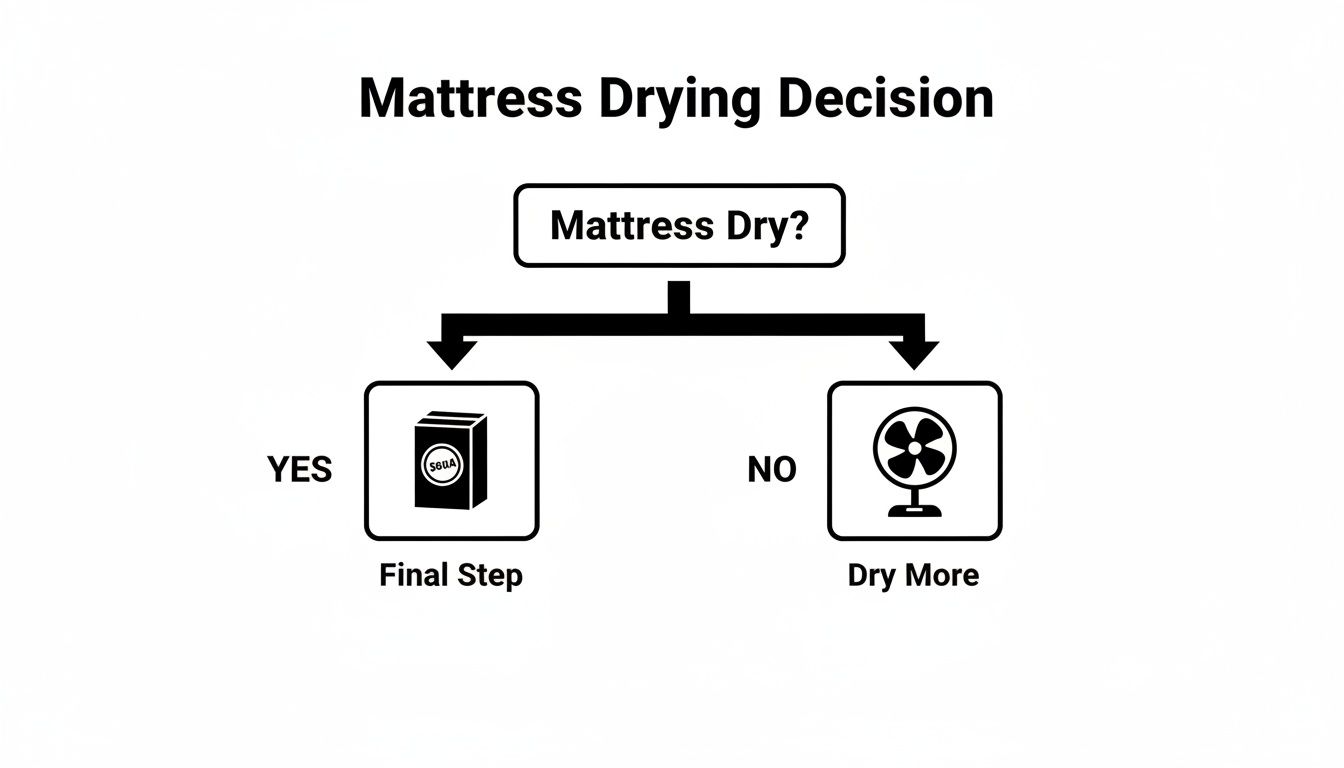
This simple check highlights why patience is key. You only want to move on to the final deodorizing step after you're certain the mattress is completely dry, ensuring you're not just trapping moisture inside.
Knowing When It's Time for a New Mattress
As a family-owned business, we’re always going to give you honest advice. While the cleaning methods we’ve gone over are incredibly effective, the hard truth is that sometimes a mattress is just beyond saving. This isn't about pushing a sale; it's about helping you make the right choice for your family's health and comfort.
It might be time for a replacement if you notice any of these signs:
- The odor just won't go away. If you’ve tried enzyme cleaners multiple times and the smell keeps coming back, the urine has likely soaked deep into the mattress core where you can't reach it.
- You can see mold or mildew. A large, untreated accident can quickly lead to mold growth inside the mattress, which is a serious health hazard.
- The mattress is old and unsupportive anyway. If your mattress is already sagging, lumpy, or well over 8-10 years old, a major cleaning might be the final sign that it's time to upgrade.
- The structure is compromised. Excessive moisture can break down the foams and fibers that provide support, leaving you with a bed that’s no longer comfortable or good for your back.
There's a reason stubborn odors are so hard to beat. Traditional soaps and chemicals fail in about 90% of cases because they can’t break down the uric acid crystals that cause the smell. For the 25% of American households with young children reporting a major bedwetting accident, this can feel like an impossible cleaning battle.
At BILTRITE, our approach is simple: we're here to help, not to pressure. We want you to love your home, and that means sleeping on a mattress that is truly clean, comfortable, and supportive.
If you’re on the fence about what to do, our team has over 400 years of combined experience and is always happy to talk you through it. We can help you figure out if your current mattress is still serving you well or if it might be time for a fresh start. You can also learn more by reading about the 7 signs it's time to replace your mattress.
When that time does come, we're proud to offer a huge selection of over 60 models right here in our Greenfield showroom. From our durable, two-sided flippable mattresses—a smart choice for longevity—to heavy-duty options built for real family life, we have something for everyone. We’d love to see you in our store! Come say hi, and let us help you find the right foundation for a great night’s sleep.
Common Questions About Mattress Cleaning
We get a lot of questions from our friends and neighbors here in the Metro Milwaukee area about keeping mattresses fresh and clean. As a family business that’s been doing this since 1928, we’ve heard just about everything! Our team, with over 400 years of combined experience, genuinely loves helping people find real solutions.
Here are straightforward answers to a few common questions we hear all the time in our Greenfield showroom.
Should I Use Bleach or Harsh Chemicals?
When you're staring down a tough stain, it’s so tempting to reach for the strongest cleaner under the sink. We get it. But when it comes to your mattress, our advice is always a firm no to bleach and other harsh, industrial-strength chemicals.
Think of it this way: you wouldn't pour bleach on your favorite sweater, right? Those potent chemicals can do serious harm, breaking down the delicate foams and fabrics inside your mattress. This can lead to permanent damage you can't just flip over and ignore. On top of that, chemical residues can linger long after you're done, releasing fumes while you sleep—definitely not what you want for a healthy night's rest.
A friendly tip from our family to yours: Stick with gentle, proven solutions. Things like vinegar, baking soda, and specialized enzyme cleaners are incredibly effective without damaging your mattress or leaving behind harmful residues. It's the safer, smarter choice for your family and your furniture.
What if I Can Still Smell Urine After Cleaning?
This is a really common frustration, especially with older, set-in stains. If you’ve gone through the whole cleaning process and a faint odor is still hanging around, it usually means one of two things: the cleaning solution didn't get as deep as the original accident, or the mattress never had a chance to dry completely.
Here’s what to do next:
- Go for Round Two. Don't be afraid to repeat the process, especially with an enzyme cleaner. This time, really make sure you saturate the area so the cleaner can reach and break down those deep-down uric acid crystals.
- Focus on Drying. Be patient and give it more time to air dry. Aim a fan directly at the spot and open a window if you can. Trapped moisture is almost always the culprit behind that stubborn musty smell.
- The Final Baking Soda Treatment. Once the mattress is bone dry, and we mean completely dry, apply a very generous layer of baking soda over the entire surface. Let it sit for a full 24 hours before vacuuming it up. This final step is fantastic for absorbing those last few stubborn odor molecules.
If you’ve tried these steps a couple of times and that smell just won’t budge, it might be a sign that the urine has permanently saturated the core of the mattress. Unfortunately, at that point, it’s impossible to fully clean.
Can I Use These Methods on a Memory Foam Mattress?
Yes, absolutely! The methods we’ve talked about—using vinegar, baking soda, and enzyme cleaners—are generally safe for memory foam, latex, and traditional innerspring mattresses. The key difference with foam is how absorbent it is.
Foam soaks up liquids much more readily and holds onto moisture for longer than a traditional mattress. Because of this, you just need to be a little more careful during the cleaning and drying stages.
- Use Less Liquid. When you're spraying your cleaning solution, try not to completely drench the foam. Apply just enough to dampen the stained area thoroughly.
- Blot, Blot, and Blot Again. Spend extra time blotting with clean, dry towels. The goal is to pull out as much moisture as you possibly can before letting it air dry.
- Allow for Extra Drying Time. This is crucial. Memory foam can take significantly longer to dry out completely. If you trap moisture inside, you risk creating a perfect environment for mold or mildew, so give it all the time it needs.
We know these situations can be stressful, but with a little know-how, you can handle most accidents yourself. But if you find yourself fighting a losing battle or realize your mattress is simply past its prime, that’s where we come in.
At BILTRITE Furniture-Leather-Mattresses, we're not here to just sell you something; we're here to help your family find real, lasting comfort and quality. If it’s time for a new mattress, come on down to our showroom in Greenfield. With over 60 models to choose from, including our durable two-sided flippable mattresses, we have something for every family and every budget. Come say hi and let us help you find a great night's sleep. Find out more at https://www.biltritefurniture.com.