Queen Mattress Dimensions: The Definitive Size & Fit Guide

A standard queen mattress measures exactly 60 inches wide by 80 inches long. In decimal terms, that is 5 feet by 6 feet 8 inches, giving each sleeper roughly 30 inches of width when sharing with a partner.
While these numbers are a fixed industry standard, “queen mattress dimensions” often causes confusion because the mattress footprint is smaller than the total space a bed frame occupies. A queen bed frame, rails, and headboard can easily add several inches to the width and length, pushing the actual furniture footprint well beyond the mattress size.
This guide distinguishes between the mattress dimensions you buy bedding for and the bed footprint you must measure your room against. We also cover variant sizes—like the Olympic and California queens—and provide room-planning tables so you can verify your space before purchasing.
Your Quick Guide To Queen Mattress Dimensions
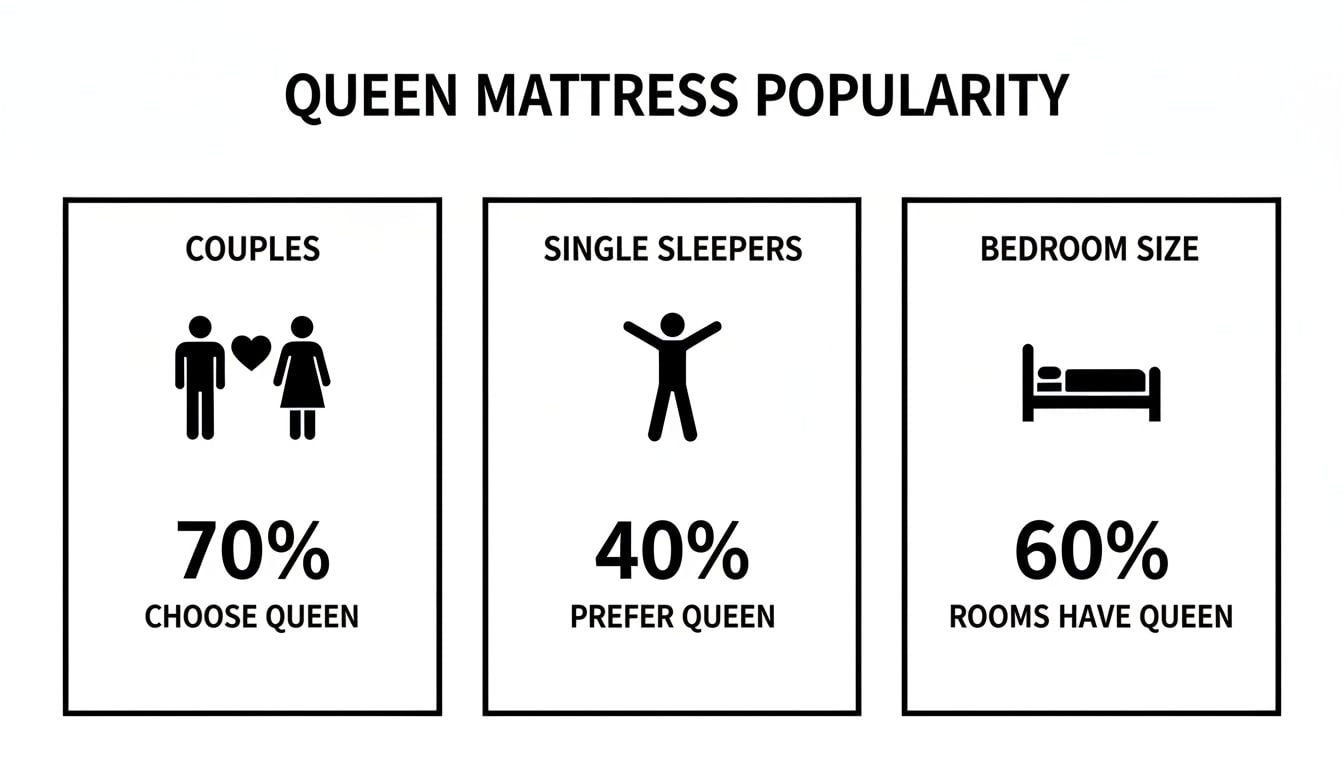
The standard queen is the dominant size in the United States because it balances shared sleeping space with practical room fit. It provides 60 inches of width, which breaks down to 30 inches per person. This is significantly more personal space than a Full (double) mattress, which only offers 38 inches total width (19 inches per person).
In the major U.S. market, queen is one of the six standard mattress sizes, sitting between full and king, and it is commonly recommended for couples because it balances shared sleeping space with practical room fit mattress size chart.
The popularity of this size is driven by its versatility. As noted in recent market forecasts, the queen mattress remains one of the most searched and purchased categories due to its balance of comfort and space efficiency (mattress market trends). The global recognition of this size means that bedding, frames, and accessories are universally available, unlike specialized variants that may require custom orders.
However, “queen mattress dimensions” strictly refers to the sleep surface. A “queen bed” or “queen bed frame” describes the entire assembly. If you are planning a bedroom layout, you must account for the frame’s outer dimensions, not just the mattress size. Shoppers who measure only the mattress often find their bed frame blocks closet doors or leaves insufficient walking clearance.
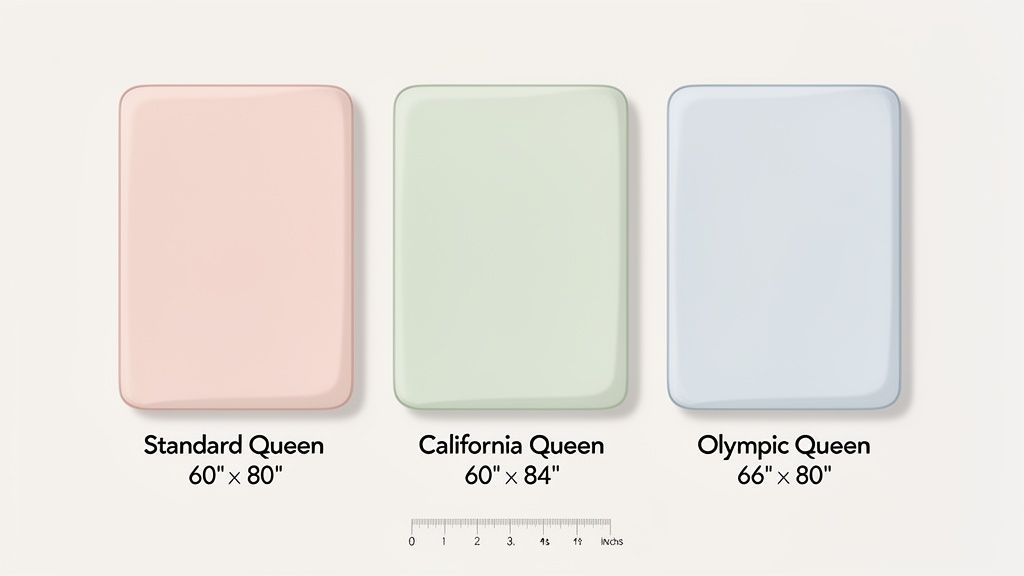
If you have a taller partner or prefer extra legroom, a California Queen (60" x 84") adds four inches of length. If you prefer more width than length, an Olympic Queen (66" x 80") adds six inches of width but requires a frame specifically designed for its broader footprint.
For a deeper dive into how a queen compares to other sizes like a full or king, check out our complete guide on choosing the correct mattress size.
How We Evaluated Queen Mattress Dimensions And Fit
To ensure this guide addresses real-world installation issues rather than just textbook measurements, we evaluated queen mattress options using a specific set of criteria focused on fit, clearance, and availability.
Our evaluation methodology prioritizes physical clearance over nominal size. A mattress that fits the room on paper may fail delivery or daily use if the frame overhang exceeds the available floor space. We tested these dimensions against common North American bedroom layouts, focusing on the gap between the mattress edge and walls, dressers, and closets.
We also assessed accessory compatibility, verifying that standard sheets and frames labeled “queen” accommodate the specific variant (Standard, California, or Olympic). In our experience, a frequent customer confusion is assuming all “queen” frames are interchangeable; they are not. An Olympic queen requires a frame with a 66-inch inner width, while a standard queen frame will be too narrow.
Finally, we cross-referenced room planning assumptions against top-performing sleep industry resources to validate minimum room size recommendations. Our goal is to provide data that prevents the common regret of buying a bed that technically fits the bedroom door but not the room itself.
Queen Mattress Size Vs. Queen Bed Dimensions
Understanding the difference between queen mattress size and queen bed dimensions is critical for accurate room planning. The mattress is the insert; the bed is the structure. Confusing the two is the primary reason homeowners underestimate the space a new bed will require.
Queen mattress dimensions also influence global buying decisions because the size is widely recognized in North American retail and is often converted into metric as approximately 152 by 203 centimeters. That conversion helps shoppers compare products across markets, especially when brands sell internationally or ship online, and the queen size is frequently positioned as the best fit for couples, solo sleepers who want extra room, and bedrooms that cannot comfortably handle a king. The market logic is clear: queen offers a 60-inch width that is large enough for two sleepers, while its 80-inch mattress dimensions guide length accommodates most adult heights.
The Footprint Gap
A standard queen mattress is 60" x 80". However, a queen bed frame typically extends beyond these edges. Headboards often project 2 to 4 inches past the foot of the mattress, and footboards can extend similarly. Side rails usually add 1 to 2 inches of width on each side depending on the wood thickness and style.
| Component | Approximate Width | Approximate Length | Notes |
|---|---|---|---|
| Standard Queen Mattress | 60" (5 ft) | 80" (6 ft 8 in) | The sleep surface only. |
| Standard Queen Frame | 62" – 66" | 84" – 88" | Varies by headboard/footboard depth. |
| Olympic Queen Mattress | 66" (5.5 ft) | 80" (6 ft 8 in) | 6" wider than standard; needs specific frame. |
| California Queen Mattress | 60" (5 ft) | 84" (7 ft) | 4" longer than standard. |
When measuring your room, you must plan for the frame’s outer boundary, not the mattress. If your room is exactly 10 feet wide, a queen mattress fits comfortably, but a queen bed with a bulky wooden headboard and footboard may leave only inches of clearance, making the room feel cramped and blocking access to walls or windows.
This distinction explains why top SERP results pair dimensions with fit/layout guidance: knowing the mattress size is step one, but knowing the bed footprint is step two.
Exploring Different Queen Mattress Types
While the standard 60" x 80" queen is the default choice, other variants exist to address specific spatial or physical needs. Choosing the wrong variant can lead to ordering bedding that doesn’t fit or a frame that doesn’t exist on the shelf.
Queen Size Comparison Table
The following table details the decision tradeoffs for each queen variant. The key difference lies in how each size affects room clearance and accessory availability.
| Queen Type | Dimensions (Inches) | Dimensions (Feet) | Primary Benefit | Room/Planning Tradeoff | Availability |
|---|---|---|---|---|---|
| Standard Queen | 60" x 80" | 5' x 6'8" | Balanced space for couples. | Fits most bedrooms (min 10×10 ft). | Universally stocked. |
| California Queen | 60" x 84" | 5' x 7' | Extra length for tall sleepers. | Requires 4 extra inches of length clearance. | Common, but frame options vary. |
| Olympic Queen | 66" x 80" | 5.5' x 6'8" | Extra width for generous sleepers. | Requires 6 extra inches of width; niche frames. | Limited; often custom order. |
| Short Queen | 60" x 75" | 5' x 6'3" | Fits RVs and tiny spaces. | Not for permanent bedrooms; niche use. | RV-specific; rare in homes. |
Availability Constraints
Olympic and California queen options are less universally stocked than standard queen, which affects accessory shopping and delivery planning. While standard queen sheets and frames are available at big-box retailers, Olympic queen frames must often be sourced from specialty furniture stores or ordered directly from manufacturers.
If you choose a non-standard variant, verify frame availability before purchasing the mattress. In our showroom, we frequently see customers who fall in love with an Olympic mattress only to discover that compatible bed frames are backordered for weeks. This is why we keep detailed measurements for every model we carry.
And if you want to dive deeper into how mattresses are built across these different sizes, you can learn more in our article explaining what a hybrid mattress is.
How To Measure Your Room For A Queen Bed
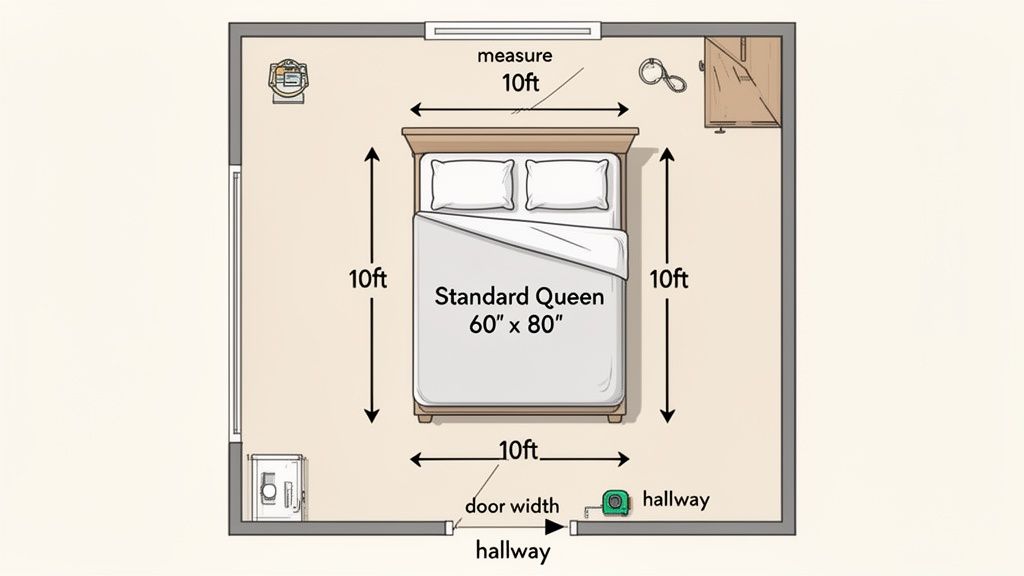
Accurate room measurement prevents delivery disasters and ensures your bedroom feels spacious. The general rule of thumb is a minimum room size of 10 feet by 10 feet for a standard queen setup, but this assumes a minimalist frame and no additional furniture.
Calculating Clearance
To determine if a queen bed fits your specific room, you must calculate clearance on each side. Start with the mattress width (60 inches) and add the frame overhang. Then, add the space required for walking and furniture.
| Scenario | Required Room Width (Approx) | Required Room Length (Approx) | Notes |
|---|---|---|---|
| Mattress Only | 60" (5 ft) | 80" (6 ft 8 in) | theoretical minimum; not a lived-in room. |
| Standard Queen Bed | 96" – 108" (8 – 9 ft) | 108" – 120" (9 – 10 ft) | Includes frame + 18-24" walking clearance. |
| Queen Bed + Nightstands | 120" – 132" (10 – 11 ft) | 120" (10 ft) | Adds ~24-30" per side for nightstands. |
How to calculate:
- Measure the inner width of your bed frame (usually 62-66 inches for standard queen including rails).
- Add 24-30 inches for each side where you plan to place a nightstand or walk.
- Add the length of the mattress plus any footboard projection (typically 84-88 inches total).
Shoppers should measure the bed frame footprint separately from the mattress because the frame can add several inches to both width and length. A bulky wooden headboard can add 3 inches to the width and 6 inches to the length compared to a slim metal frame.
Delivery Path Measurement
Measuring your bedroom is a great start, but don't stop there! Our delivery team has been doing this since 1928, and trust us, we’ve seen it all. The most common hiccup isn't the room itself—it’s the path to get there.
So, grab your tape measure and check every part of the delivery route.
- Doorway Width and Height: Will the mattress clear the frame easily, or will it be a tight squeeze? Queen mattresses are rigid; they cannot be bent around corners.
- Hallway Width: Keep an eye out for any sharp turns or narrow passages that could be trouble spots.
- Stairwell Clearance: Measure the width, but also look up. Low ceilings and awkward landings can be real showstoppers.
Taking a few minutes for these measurements makes our white-glove delivery smooth and efficient. For more of our family-tested tips, check out our complete guide on how to measure furniture for delivery.
How Mattress Depth Affects Your Bedroom Setup
You’ve nailed down the width and length, but what about the height? The depth of your queen mattress is a huge part of the equation, and it impacts everything from how comfortable you are to the overall look of your bedroom. Queen mattresses can range anywhere from a slim 8 inches to a super-plush 16 inches or even more.
This overall thickness plays a surprisingly big role in how easy it is to get in and out of bed. For many customers, especially those with mobility concerns, finding that “just right” height can make a meaningful difference. Here at BILTRITE, we carry a wide variety of depths because we know one size doesn’t fit all.
A thicker mattress also directly affects the kind of sheets you’ll need. If you fall in love with a deeper model, you’re going to want to look for deep-pocket sheets. They’re designed to wrap all the way around without popping off the corners in the middle of the night.
Finding The Right Depth For You
The materials packed inside a mattress are what usually determine its thickness. You’ll notice that our heavy-duty and two-sided, flip-able mattresses have a more substantial depth—that’s because they’re filled with better quality, more durable materials built for years of solid support.
When you’re thinking about depth, keep these points in mind:
- Ease of Use: A lower-profile bed can be a fantastic choice for kids' rooms or for anyone who finds taller beds a bit of a challenge to climb into.
- Aesthetics: There’s no denying it, a thicker, taller mattress can create a luxurious, grand look that really anchors a master bedroom.
- Support: Our USA and Amish-made mattresses use every inch of their depth to layer supportive coils and comfortable foams, giving you a great night's sleep.
Ultimately, the best way to know what works for you is to try it out in person. Come on down to our Greenfield showroom and let our friendly, experienced team help you feel the difference for yourself. You can also check out our tips on how to find the best bed height to learn even more.
Choosing The Right Bed Frame And Accessories
A great mattress is only half the battle; it needs an equally great support system underneath it. A standard queen bed frame is built to match the classic 60" x 80" queen mattress, giving you a solid, reliable foundation for a restful night. But what if you’re looking at one of the non-standard queen sizes?
If you decide on a variation like an Olympic Queen, you’ll absolutely need a specific frame to handle its wider dimensions. Here at BILTRITE, our team can walk you through exactly what to look for. We’ve got everything from sturdy, USA-made solid wood frames to heavy-duty options built to offer incredible durability for years to come.
Don't Forget The Sheets
And of course, you can’t forget the sheets! When you’re picking out bedding, your mattress's depth is just as important as its width and length. Standard sheets are usually designed for mattresses up to about 12 inches deep.
If your new mattress is on the thicker side—which many of our better-quality, more supportive models are—you'll need to look for deep-pocket sheets. These are made to fit mattresses up to 16 inches or even more, ensuring they stay snug and secure all night long. Getting these little details right makes a world of difference in your comfort.
Picking the right accessories isn't just about looks; it's about making sure your whole sleep setup works together. A proper frame provides support, and the right sheets provide comfort—it's a team effort!
Our friendly team, with over 400 years of combined experience, can help you find everything you need to complete your bed. You can also explore the different types of beds and frames we offer to get some ideas before you stop by our showroom.
Frequently Asked Questions About Queen Mattresses
We get a ton of great questions in our showroom every single day, and we love answering them. Our family has been helping folks in Metro Milwaukee sleep better since 1928, so we've heard it all! To help you out, here are a few of the most common questions we get about queen mattress dimensions.
Can Two Adults Sleep Comfortably On A Queen Mattress?
Absolutely! A standard queen gives each person 30 inches of personal space. For the vast majority of couples, this is more than enough room to sleep soundly without bumping elbows all night. It’s no surprise it's the most popular mattress size for partners.
Do I Need New Sheets For A Queen Mattress?
If you're moving up from a full-size bed or anything smaller, then yes, you'll definitely need a new set of queen sheets. A queen is both wider and longer, so your old sheets won't stretch to fit.
Don't forget to check the mattress depth, either. Many of our better-quality, more supportive mattresses are thicker and require deep-pocket sheets to ensure a snug, proper fit.
What Is The Minimum Room Size For A Queen Bed?
To keep your bedroom from feeling cramped, we always recommend a room that's at least 10 feet by 10 feet. This generally leaves you with about 30 inches of walking space on three sides of the bed, which is enough room to move around comfortably and add a pair of nightstands.
Is A California Queen Wider Than A Standard Queen?
This is a common mix-up, but no, it isn't. A California Queen is longer than a standard queen (84 inches vs. 80 inches), but they share the exact same width of 60 inches. That extra length is a fantastic feature for taller people who are tired of their feet hanging off the end of the bed. We'd love to see you in our store! Come say hi and let us help you find the right piece for your home.
| Mattress Type | Width (Inches) | Length (Inches) | Best For |
|---|---|---|---|
| Standard Queen | 60" | 80" | Couples, guest rooms, and most master bedrooms. |
| California Queen | 60" | 84" | Taller individuals who need extra legroom. |
| Olympic Queen | 66" | 80" | Couples who want a little extra width to spread out. |